Quick Answer
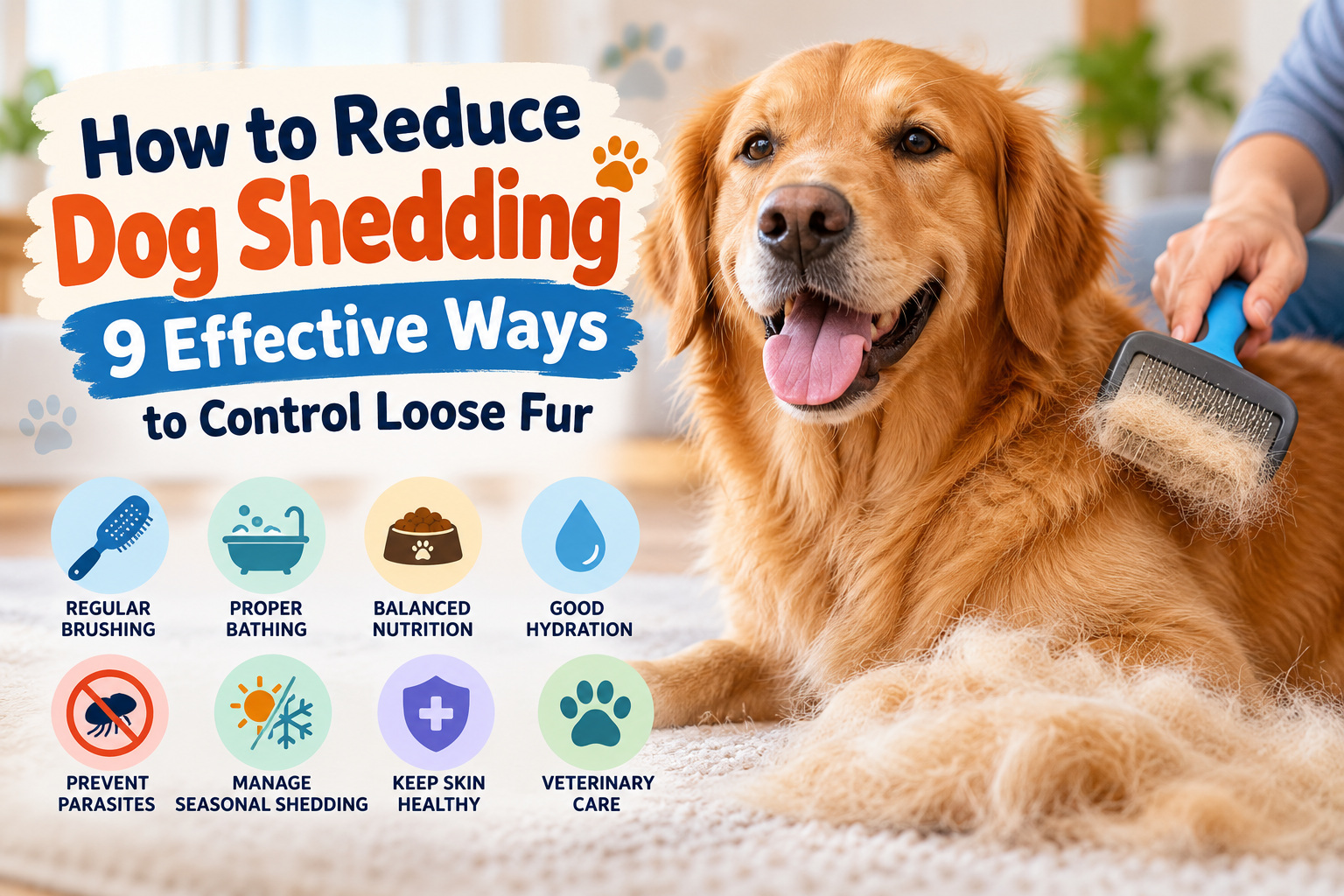
To reduce dog shedding, brush your dog regularly with a coat-appropriate tool, remove loose undercoat, maintain a balanced diet, and bathe your dog when needed. Keep the skin healthy and address unusual hair loss with your veterinarian. You cannot completely stop natural shedding, but consistent dog deshedding can noticeably reduce loose fur around your home.
9 Ways to Reduce Dog Shedding
- Brush regularly: Collect loose hair before it reaches furniture.
- Choose the right tool: Match the brush to your dog’s coat.
- Bathe appropriately: Wash away released hair without drying the skin.
- Feed balanced nutrition: Support normal skin and hair growth.
- Maintain hydration: Provide fresh water throughout the day.
- Control parasites: Prevent fleas and other skin irritants.
- Manage seasonal shedding: Increase gentle brushing when needed.
- Avoid coat damage: Never overbrush or shave a healthy double coat unnecessarily.
- Check for health problems: Seek veterinary advice for abnormal hair loss.
Finding dog hair on your furniture, clothing, and floors can become frustrating. Fortunately, a consistent grooming routine can make shedding much easier to manage.
I recommend starting with your dog’s coat type rather than purchasing every shedding product available. This guide explains nine practical methods, appropriate tools, and warning signs that deserve veterinary attention.
What Causes Dog Shedding?
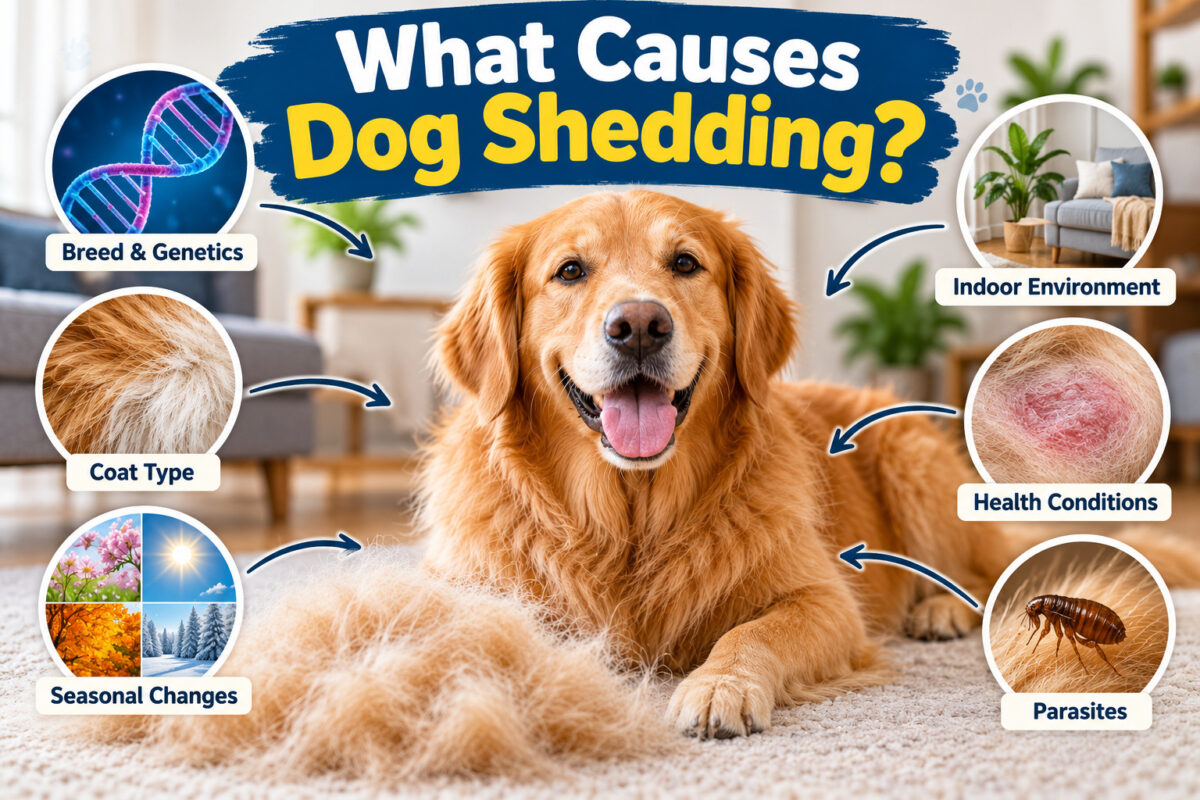
Dog shedding is the natural process of releasing old or damaged hairs as part of the hair growth cycle. All dogs lose hair, although the amount varies considerably.
Some breeds release noticeable amounts of fur throughout the year. Others experience heavier seasonal shedding or retain loose hairs within their coats.
Why Do Some Dogs Shed More Than Others?
Genetics, coat structure, seasonal changes, and individual health all influence shedding. A thick undercoat often produces more visible loose fur than a smooth, single-layer coat.
- Breed and genetics: Different breeds have different hair growth and shedding patterns.
- Coat type: Double-coated breeds often release large amounts of undercoat.
- Seasonal changes: Daylight and temperature changes can influence coat renewal.
- Indoor environment: Artificial lighting and indoor temperatures may affect seasonal patterns.
- Health conditions: Allergies, parasites, infections, and hormonal disorders can cause abnormal hair loss.
The American Kennel Club’s shedding guidance explains how breed, coat type, and seasonal changes affect normal shedding.
What Is Normal Shedding Versus Excessive Shedding?
Normal shedding usually involves loose hairs distributed across an otherwise healthy coat. Abnormal shedding may involve sudden thinning, bald patches, inflammation, or persistent itching.
- Usually normal: Loose hair without redness, bald spots, or noticeable discomfort.
- Possibly abnormal: Sudden increases in hair loss beyond your dog’s usual pattern.
- Concerning: Bald patches, sores, strong odors, excessive scratching, or skin discoloration.
Knowing your dog’s normal shedding pattern makes unusual changes easier to identify. When hair loss looks different or comes with skin symptoms, schedule a veterinary examination.
How to Reduce Dog Shedding: 9 Effective Methods

The best approach combines gentle coat maintenance with good overall health care. These nine methods address loose fur, grooming habits, and common causes of abnormal hair loss.
1. Brush Your Dog Regularly
Regular brushing is one of the simplest ways to reduce loose dog hair around your home. A suitable brush collects released hairs before they fall onto furniture or clothing.
The ideal brushing frequency depends on coat length, density, and shedding activity. Start gently and increase frequency when loose hair becomes more noticeable.
- Short, smooth coats: Try brushing once or twice weekly.
- Moderate shedding: Try two or three sessions weekly.
- Heavy seasonal shedding: Consider brief daily brushing when comfortable.
- Long or curly coats: Brush and comb frequently enough to prevent matting.
I prefer short, controlled grooming sessions rather than trying to remove every loose hair at once. This approach also makes it easier to monitor skin comfort.
The exact technique depends on your dog’s coat. For dense coats, follow this guide to brushing double-coated dogs.
2. Choose the Right Deshedding Tool
Different coat types require different grooming tools. The wrong brush may remove little hair or cause unnecessary irritation.
For example, rubber curry brushes suit many smooth-coated dogs. Undercoat rakes can help release trapped loose hair from suitable double coats.
- Rubber curry brush: Useful for smooth, short coats.
- Slicker brush: Helps remove loose hair and manageable tangles.
- Undercoat rake: Reaches loose undercoat in dense, double-coated breeds.
- Deshedding edge: Can remove released undercoat when matched to the coat and used carefully.
- Metal comb: Helps identify remaining tangles in longer coats.
Never force a grooming tool through tight mats. Stop immediately when brushing causes redness, pulling, or obvious discomfort.
For more detailed handling instructions, read the safe dog deshedding guide.
3. Bathe Your Dog With a Gentle Dog Shampoo
Appropriate bathing can loosen and wash away released hair. It also removes dirt and debris that accumulate within the coat.
However, frequent bathing is not automatically better. Overbathing can remove protective skin oils and contribute to dryness.
- Brush out manageable tangles before bathing.
- Wet the coat thoroughly with comfortably warm water.
- Apply a gentle shampoo formulated for dogs.
- Massage gently without scratching the skin.
- Rinse thoroughly until shampoo residue disappears.
- Dry the coat carefully and brush again if appropriate.
Bathing frequency should reflect coat characteristics, activity, and skin condition. Dogs with skin disorders may need a veterinarian-directed bathing schedule.
The AKC bathing guidance explains why bathing schedules should be individualized.
4. Feed a Complete and Balanced Diet
Good nutrition supports normal skin health and hair growth. Nutrient deficiencies or an inadequate diet can contribute to a dull coat and abnormal shedding.
Choose a complete and balanced dog food suitable for your dog’s life stage. Ask your veterinarian about dietary concerns before adding supplements.
- Protein: Provides building blocks needed for hair growth.
- Essential fatty acids: Support normal skin and coat function.
- Vitamins: Contribute to normal body processes, including skin maintenance.
- Minerals: Help maintain healthy tissues when supplied in appropriate amounts.
More supplementation does not necessarily mean a healthier coat. Excessive intake of certain nutrients can create additional health problems.
For a dog already eating an appropriate diet, extra supplements may offer little benefit. Discuss persistent coat problems with your veterinarian.
5. Keep Your Dog Properly Hydrated
Fresh drinking water supports your dog’s overall health and normal body functions. Adequate hydration is important, although extra water will not stop natural shedding.
Keep clean water available throughout the day. Watch for noticeable changes in drinking habits, particularly during hot weather.
- Refill the water bowl regularly.
- Wash drinking containers frequently.
- Provide easy access to water after exercise.
- Contact a veterinarian if drinking behavior changes unexpectedly.
Hydration should be part of routine health care, not treated as a standalone shedding remedy.
6. Prevent Fleas, Ticks, and Skin Irritation
Fleas, mites, allergies, and skin infections can lead to scratching and abnormal hair loss. Controlling underlying irritation helps protect the coat.
Use parasite prevention recommended by your veterinarian. Products must be appropriate for your dog’s age, weight, and health status.
- Check the skin: Look for redness, sores, or unusual hair loss.
- Monitor itching: Repeated scratching may indicate irritation.
- Maintain prevention: Follow veterinary recommendations for parasite control.
- Avoid harsh products: Do not apply unapproved treatments or household chemicals.
Skin allergies can produce excessive hair loss in patches or across the body. The VCA Animal Hospitals guide to healthy skin and coats explains several possible medical causes.
7. Adjust Grooming During Seasonal Shedding
Many double-coated dogs release additional undercoat during seasonal changes. Gentle, more frequent brushing helps collect this hair before it spreads throughout your home.
Dogs living indoors may shed throughout the year. Their seasonal patterns can also differ from dogs spending more time outdoors.
- Increase gentle brushing during heavier shedding.
- Work through dense fur in small sections.
- Use an appropriate undercoat tool only as needed.
- Monitor for skin irritation after grooming.
- Reduce intensive grooming as seasonal shedding settles.
A larger pile of removed fur does not always indicate better grooming. Healthy skin and your dog’s comfort matter more than the volume collected.
For a more specific routine, see how often to deshed a dog.
8. Avoid Overbrushing and Unnecessary Shaving
Overbrushing can irritate the skin and damage healthy hair. Sharp-edged grooming tools require particular care.
Shaving a healthy double coat is generally not an effective solution for normal shedding. The protective outer coat serves purposes beyond appearance.
- Use light pressure during brushing.
- Avoid repeated scraping over the same area.
- Never pull aggressively through mats.
- Stop grooming when the skin becomes irritated.
- Ask a professional before clipping or shaving a double coat.
Some medical conditions or severe matting may require clipping under professional guidance. Routine shedding alone usually does not justify removing a healthy protective coat.
9. Visit Your Veterinarian for Unusual Hair Loss
Not every shedding problem can be solved with a brush. Sudden or abnormal hair loss may indicate an underlying medical condition.
Veterinary evaluation is particularly important when shedding accompanies itching, changes in energy, or unusual skin appearance.
- Bald or noticeably thinning patches
- Persistent scratching, licking, or chewing
- Redness, scabs, or recurring skin infections
- Unexplained weight changes or lethargy
- Strong odors, flaky skin, or greasy patches
For example, hypothyroidism can cause coat thinning and excessive shedding in some dogs. Diagnosis requires veterinary assessment rather than visual inspection alone.
See VCA’s overview of hypothyroidism in dogs for additional information.
Which Dog Shedding Control Tool Works Best?
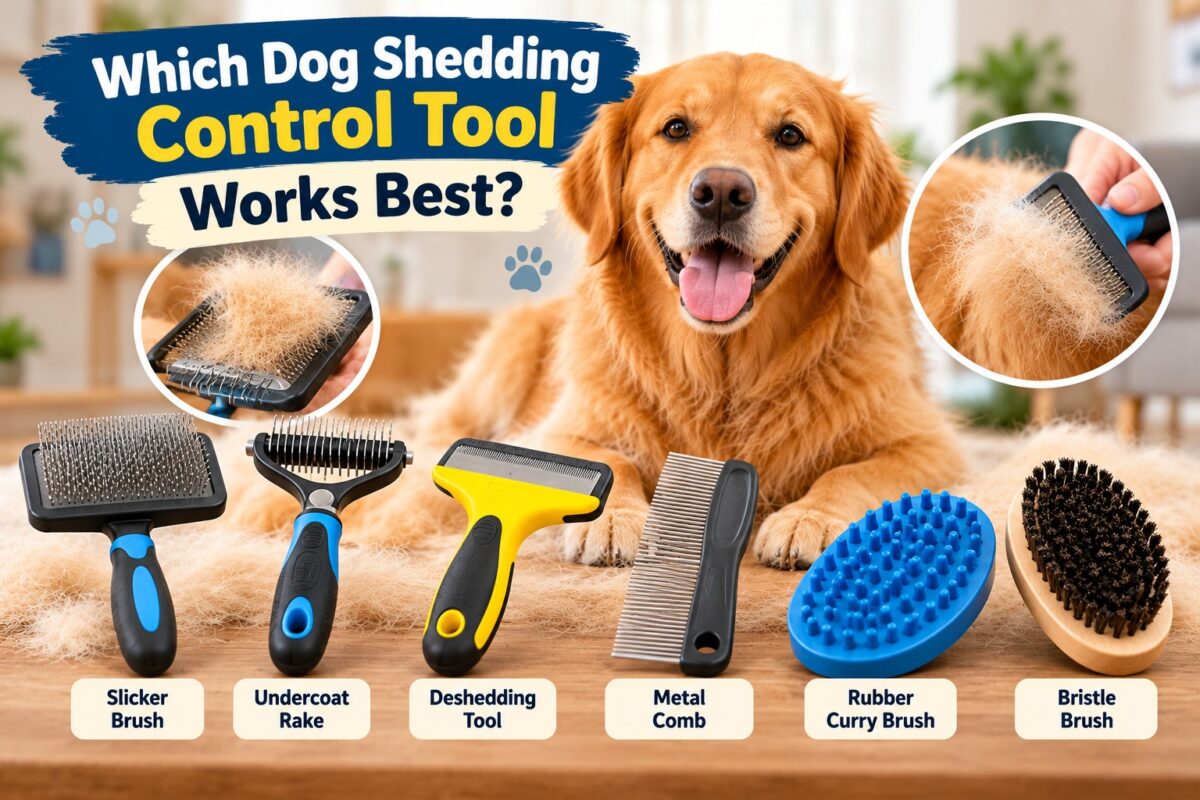
The best tool depends on coat structure rather than shedding volume alone. A dense double coat requires different care from a short, smooth coat.
Use this comparison to identify a practical starting point.
| Coat Type | Recommended Tool | Starting Frequency |
|---|---|---|
| Short, smooth | Rubber curry brush | 1–2 times weekly |
| Short, dense | Bristle brush or suitable deshedding tool | 2–3 times weekly |
| Long double coat | Slicker brush and undercoat rake | Several times weekly; more during shedding season |
| Long, silky | Pin or slicker brush and comb | Frequently, based on tangling |
| Curly | Slicker brush and metal comb | Frequently to prevent mats |
Important: These frequencies are starting guidelines, not fixed medical recommendations. Adjust them according to your dog’s comfort, coat condition, and professional grooming advice.
How Can You Reduce Dog Hair Around Your Home?
Grooming controls loose fur at its source, while regular cleaning removes hair that has already fallen. Combining both approaches usually works better than relying on household cleaning alone.
- Vacuum frequently: Focus on carpets, upholstery, and favorite resting places.
- Wash bedding: Clean dog blankets and washable covers regularly.
- Use washable covers: Protect furniture that collects large amounts of hair.
- Try rubber cleaning tools: Rubber brushes or brooms can help gather hair from some surfaces.
- Groom in one area: Choose a washable surface where loose fur is easy to collect.
I suggest keeping a dedicated grooming area and cleaning it immediately after each session. This makes the routine easier to maintain.
Remember that household cleaning does not change your dog’s natural hair growth cycle. It simply keeps released fur from accumulating.
What Dog Shedding Mistakes Should You Avoid?
Some common shedding-control attempts can make coat care more difficult. Avoid aggressive techniques and products that promise to stop normal shedding completely.
- Using the wrong brush: Match the tool to coat length and density.
- Brushing too aggressively: Excessive pressure can damage skin and hair.
- Bathing too often: Frequent washing may contribute to skin dryness.
- Ignoring skin symptoms: Abnormal hair loss may require medical treatment.
- Adding unnecessary supplements: More nutrients do not automatically improve coat health.
- Shaving without guidance: Removing a double coat may create avoidable coat problems.
One useful rule is to prioritize comfort over the quantity of hair removed. If grooming causes pain or irritation, change the technique or seek professional advice.
How Long Does It Take to Reduce Dog Shedding?
Brushing can remove loose hair immediately, but lasting household improvements depend on maintaining the routine. Natural shedding will continue as part of normal coat renewal.
Seasonal shedding may last several weeks or longer, depending on the dog. Medical causes of abnormal hair loss require diagnosis and treatment before improvement can be expected.
- After one session: Loose fur is removed from the coat.
- With repeated grooming: Less released hair may accumulate between cleaning sessions.
- During shedding season: Additional maintenance may be necessary.
- With a medical problem: Improvement depends on treating the underlying cause.
A realistic goal is reducing loose fur around your home, not eliminating normal shedding altogether.
Recommended Dog Shedding Control Tools
If you’re choosing grooming equipment, these three established products cover different coat types and grooming needs. Check the manufacturer’s current size and coat recommendations before purchasing.
Disclosure: As an Amazon Associate, this website may earn from qualifying purchases.
🏆 Best for Loose Undercoat
FURminator Undercoat deShedding Tool for Dogs
★★★★☆ 4.5/5 editorial fit
Designed to remove loose undercoat from suitable shedding coats, with variants for different coat lengths and dog sizes. I’d consider this when trapped undercoat is the main issue, provided the skin is healthy and the tool is used gently.
⭐ Best for General Brushing
Hertzko Self Cleaning Slicker Brush
★★★★☆ 4/5 editorial fit
A slicker brush with retractable pins for easier hair removal from the brush head. I’d consider it for routine grooming on compatible medium or longer coats, while avoiding pressure on sensitive skin.
🐕 Best for Short, Smooth Coats
KONG ZoomGroom Dog Brush
★★★★☆ 4/5 editorial fit
A flexible rubber grooming brush that helps collect loose surface hair and can be used during bathing. I’d consider this for many short-coated dogs that don’t need intensive undercoat removal.
Product scores are editorial suitability assessments based on intended use, not verified customer averages or hands-on test scores. Product availability and prices may change.
Frequently Asked Questions
Can You Completely Stop a Dog From Shedding?
No, you cannot completely stop normal dog shedding because hair replacement is part of the natural growth cycle. Regular brushing, appropriate bathing, and coat maintenance can reduce the amount of loose fur accumulating in your home, but they will not permanently prevent healthy hair from falling out.
What Is the Fastest Way to Reduce Dog Shedding?
A careful brushing session using a tool suited to your dog’s coat can remove loose hair immediately. For dense double coats, appropriate undercoat grooming may help further. The fastest safe approach should never involve forceful brushing, skin scraping, or attempting to remove every loose hair.
Does Coconut Oil Help Reduce Dog Shedding?
There is insufficient reliable evidence that coconut oil stops normal dog shedding. Adding oils without veterinary guidance can introduce unnecessary calories or cause digestive problems. A complete and balanced diet is a better starting point, and persistent coat problems should be assessed by a veterinarian.
How Often Should You Bathe a Dog That Sheds a Lot?
Bathing frequency depends on coat type, skin health, activity, and individual needs. Bathing can remove loose hair, but excessive washing may dry the skin. Follow a schedule appropriate for your dog, and ask your veterinarian about bathing frequency when skin conditions or allergies are present.
Why Is My Dog Suddenly Shedding So Much?
Sudden shedding may result from seasonal coat changes, but allergies, parasites, infections, stress, or hormonal disorders can also contribute. Look for itching, bald patches, redness, lethargy, or other unusual symptoms. Contact your veterinarian if shedding changes abruptly or your dog’s skin appears unhealthy.
Final Thoughts: What Is the Best Way to Reduce Dog Shedding?
The best way to reduce dog shedding is to maintain regular, gentle grooming while supporting healthy skin and nutrition. Choosing the correct brush and adjusting care to your dog’s coat makes the routine more effective.
Start with a manageable brushing schedule and monitor your dog’s comfort. If shedding suddenly changes or comes with skin symptoms, seek veterinary advice instead of relying on additional grooming products.
Your next step: Identify your dog’s coat type, choose one suitable brush, and establish a consistent grooming routine. Small, regular efforts can make loose fur much easier to control.