Quick Answer
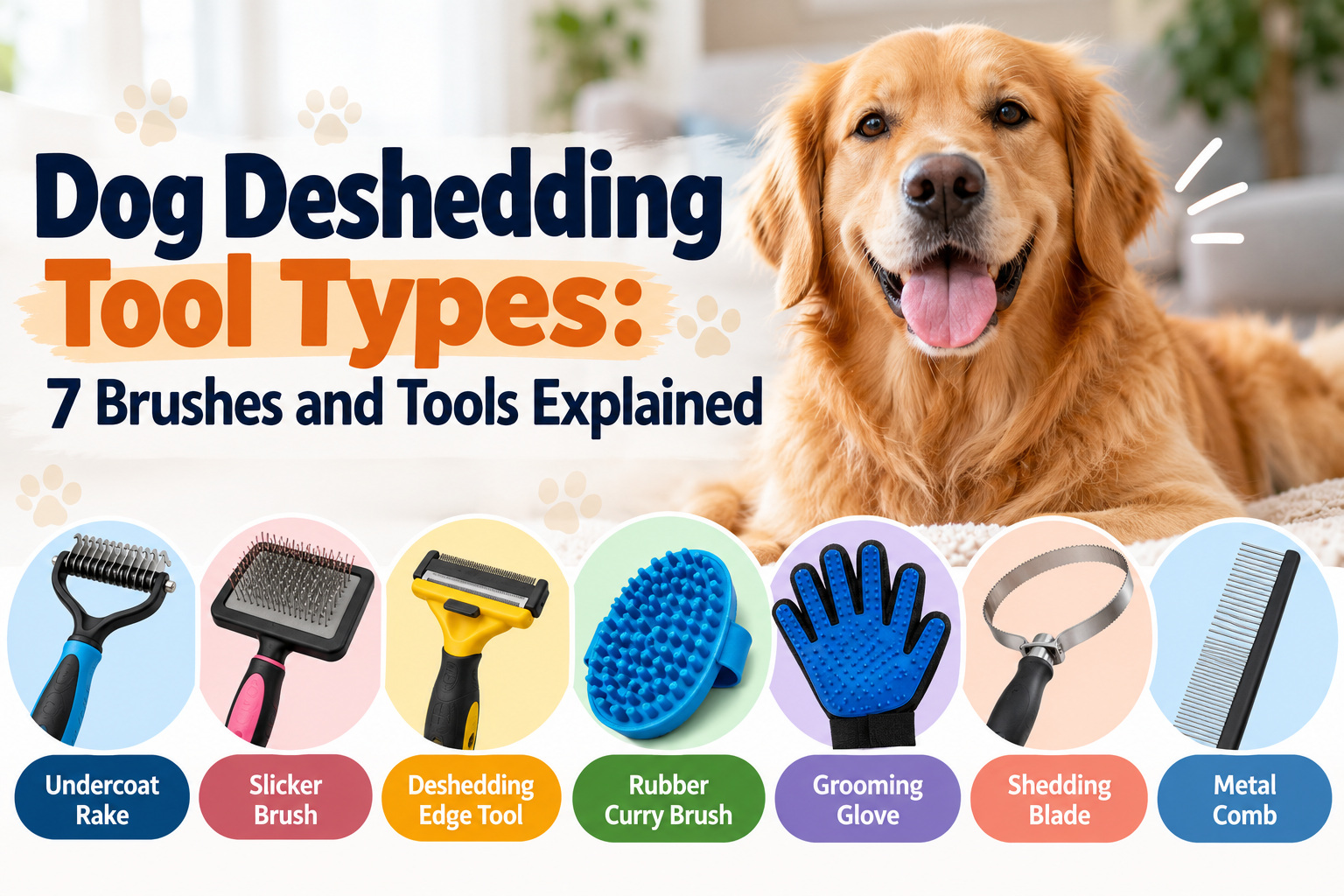
The main dog deshedding tool types are undercoat rakes, slicker brushes, deshedding edge tools, rubber curry brushes, grooming gloves, shedding blades, and metal combs. Each removes loose hair differently, so the best choice depends on coat length, density, and sensitivity. For safe grooming techniques, see this complete dog deshedding guide.
Which Tool Should You Choose?
- Undercoat rake: Best for removing loose hair from thick double coats.
- Slicker brush: Helps collect loose fur and manage minor tangles in longer coats.
- Deshedding edge tool: Targets released undercoat in compatible shedding breeds.
- Rubber curry brush: Works well on many short, smooth coats.
- Grooming glove: Offers gentle surface grooming for sensitive dogs.
- Shedding blade: Collects loose surface hair on suitable short coats.
- Metal comb: Checks for remaining loose hair and tangles in medium or long coats.
Important Safety Tip
- Never force a tool: Use light pressure and stop if you notice redness, pain, or skin irritation.
If your dog leaves loose fur on your couch, clothing, and carpets, you’ve probably considered buying a deshedding brush. However, not every brush removes the same type of hair.
I prefer choosing grooming tools based on coat structure rather than marketing claims. This guide compares seven tool categories, explains their limitations, and helps you build a safe grooming routine.
What Are Dog Deshedding Tools?
Dog deshedding tools are grooming devices that remove loose, dead, or naturally released hair from a dog’s coat. Some reach the undercoat, while others collect surface hair or help separate tangles.
Deshedding doesn’t stop natural hair growth or eliminate future shedding. It helps remove loose hair before more of it falls around your home.
Understanding the coat layers makes choosing a tool easier:
- Topcoat: The outer guard hairs protect the skin from environmental exposure.
- Undercoat: The softer, denser layer provides insulation in double-coated breeds.
- Loose surface hair: Released hair may remain on the outer coat until brushing removes it.
- Trapped hair: Shed hairs can collect beneath longer fur or become caught in tangles.
A Labrador Retriever and a Poodle have different grooming requirements. Both benefit from grooming, but an aggressive undercoat tool isn’t appropriate for every coat.
The American Kennel Club’s dog brush guide explains how brush design and coat type influence grooming results.
What Are the 7 Main Types of Dog Deshedding Tools?
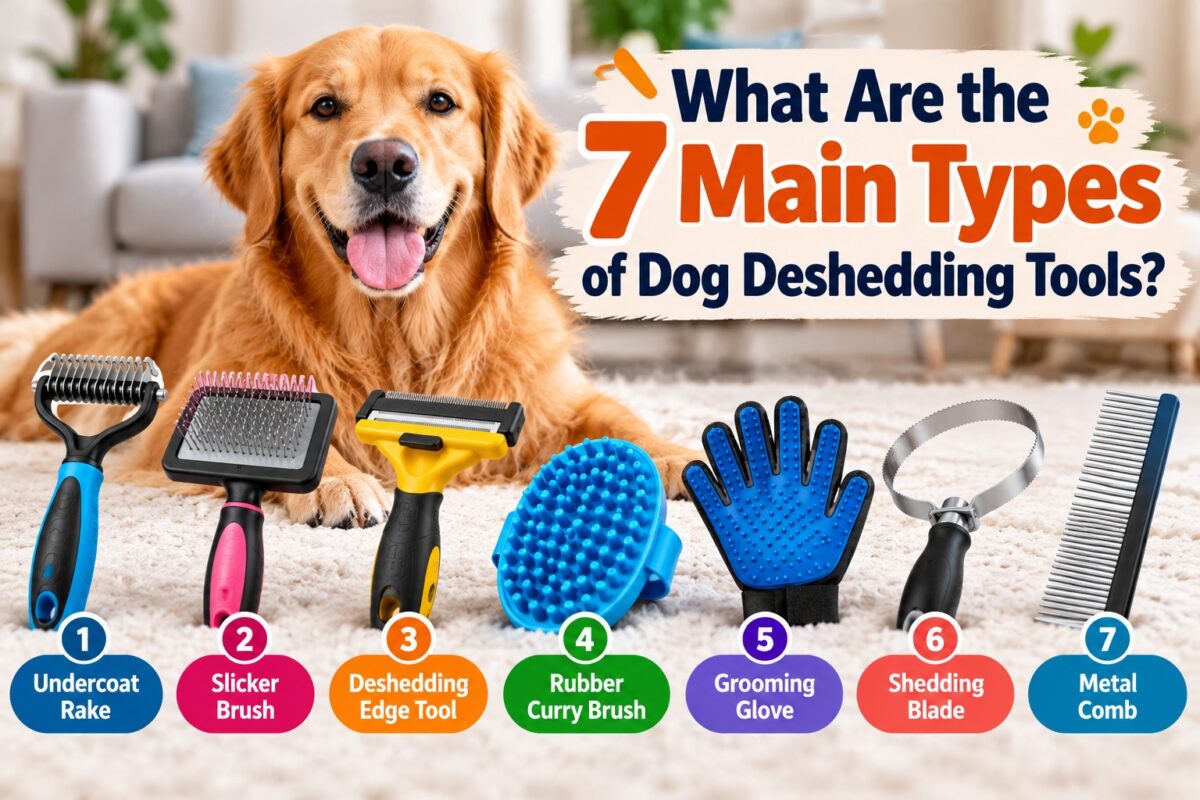
Seven common grooming tool categories cover most everyday shedding and coat-maintenance needs. Their effectiveness depends on matching the tool to the dog’s coat.
1. Undercoat Rakes
Undercoat rakes have spaced metal teeth designed to reach loose hair within dense coats. Some models use rotating teeth to help them move through thick fur.
These tools are particularly useful for dogs that release substantial undercoat during seasonal shedding.
Best suited for:
- Huskies with dense double coats
- Golden Retrievers with substantial undercoat
- German Shepherds with loose undercoat
- Other thick-coated breeds with compatible coat textures
Choose tooth length according to coat depth. Very long or closely spaced teeth may pull when used on an unsuitable coat.
I would start with gentle, short strokes rather than trying to remove every loose hair in one session. The goal is comfortable undercoat maintenance.
2. Slicker Brushes
A slicker brush contains many fine wire pins arranged across a flat or curved head. It helps separate hair, remove loose fur, and work through manageable tangles.
Slickers are especially useful for medium, long, and curly coats. Different pin lengths and firmness levels suit different grooming needs.
Common advantages:
- Collects loose hair from many coat types.
- Helps maintain longer fur between professional grooming sessions.
- Supports gentle detangling when used correctly.
- Can prepare suitable coats for follow-up combing.
A slicker isn’t automatically gentle because it looks like an ordinary brush. Excessive pressure can scratch or irritate the skin.
For longer coats, I prefer working through small sections and checking progress with a comb. This approach helps identify areas the slicker may have missed.
3. Deshedding Edge Tools
Deshedding edge tools use specially shaped metal edges to collect loose undercoat beneath the topcoat. Many are sold in different sizes for short- and long-haired dogs.
The FURminator Undercoat deShedding Tool is a recognizable example. Its dog models are designed around pet size and coat length.
Potential advantages:
- Targeted removal of released undercoat
- Different edge sizes for different dogs
- Efficient collection of loose hair on compatible coats
- Convenient hair-release features on certain models
These tools require more restraint than everyday brushing. Repeated passes or excessive pressure can irritate the skin and damage hair.
Avoid using specialized deshedding edges on non-shedding coats or particularly sensitive skin. Follow the manufacturer’s instructions for suitability and frequency.
4. Rubber Curry Brushes
Rubber curry brushes use flexible rubber teeth or ridges to loosen and collect surface hair. They’re useful for many dogs with short, smooth coats.
Unlike an undercoat rake, a rubber curry doesn’t need to penetrate deeply through long fur.
Ideal situations include:
- Routine grooming for many Boxers
- Removing loose surface hair from smooth-coated dogs
- Gentle coat massage where appropriate
- Finishing a grooming session after other tools
Some rubber brushes are suitable for bathing, but this depends on their design. Check the product instructions before wet use.
I often consider a rubber curry before a metal deshedding tool for a smooth-coated dog. It’s a simple option when deep undercoat removal isn’t necessary.
5. Grooming Gloves
Grooming gloves have flexible rubber or silicone grooming surfaces attached to a wearable glove. They collect loose surface fur through gentle petting motions.
They can be helpful for dogs that dislike conventional brushes. However, a glove generally cannot replace an undercoat rake for a very dense coat.
Why owners choose them:
- Familiar hand movements during grooming
- Gentle contact on suitable short coats
- Easy access around some body contours
- Convenient removal of loose surface hairs
Introduce the glove gradually and reward calm behavior. Even soft grooming tools can cause discomfort when used repeatedly against irritated skin.
6. Shedding Blades
Shedding blades are curved or straight metal grooming tools designed to collect loose hair from suitable coats. Some resemble looped strips with small teeth.
They’re commonly used on short or relatively flat coats rather than delicate, curly, or heavily tangled hair.
Important considerations:
- Use only a blade designed for dog grooming.
- Avoid excessive pressure.
- Keep the blade away from sensitive body areas.
- Don’t use it to pull through mats.
- Stop immediately if the skin becomes irritated.
Shedding blades aren’t my first choice for sensitive dogs. A softer grooming glove or rubber brush is often a better starting point.
7. Metal Grooming Combs
Metal grooming combs use rows of teeth to separate hair and identify remaining tangles. They’re valuable finishing and inspection tools for suitable medium or long coats.
Combs vary in tooth spacing. Wider teeth help work through thicker hair, while finer sections can reveal smaller tangles.
Useful applications:
- Checking whether longer hair is tangle-free
- Removing small amounts of remaining loose hair
- Inspecting areas behind the ears
- Checking the chest, legs, and tail
Never force a comb through a tight mat. Pulling against the skin can be painful and may require professional assistance.
A comb is particularly useful after slicker brushing. It helps confirm whether you’ve worked through the entire coat rather than just its surface.
Dog Deshedding Tool Types Comparison Table
The following table compares seven tools by their primary purpose and suitable coat types. These are practical starting points, not universal rules.
| Tool Type | Best Coat Type | Primary Function | Main Limitation |
|---|---|---|---|
| Undercoat rake | Dense double coat | Removes loose undercoat | Unsuitable for many fine coats |
| Slicker brush | Medium, long, curly | Loose hair and tangles | Pins can irritate skin |
| Deshedding edge | Compatible shedding undercoat | Targeted loose-fur removal | Overuse can irritate skin |
| Rubber curry | Short, smooth | Collects surface hair | Limited deep-coat reach |
| Grooming glove | Short, smooth | Gentle surface grooming | Limited detangling ability |
| Shedding blade | Suitable short, flat coats | Collects loose surface hair | Needs careful handling |
| Metal comb | Medium and long | Finishing and tangle checks | Not efficient for heavy shedding alone |
Which Deshedding Tool Is Best for Your Dog’s Coat?
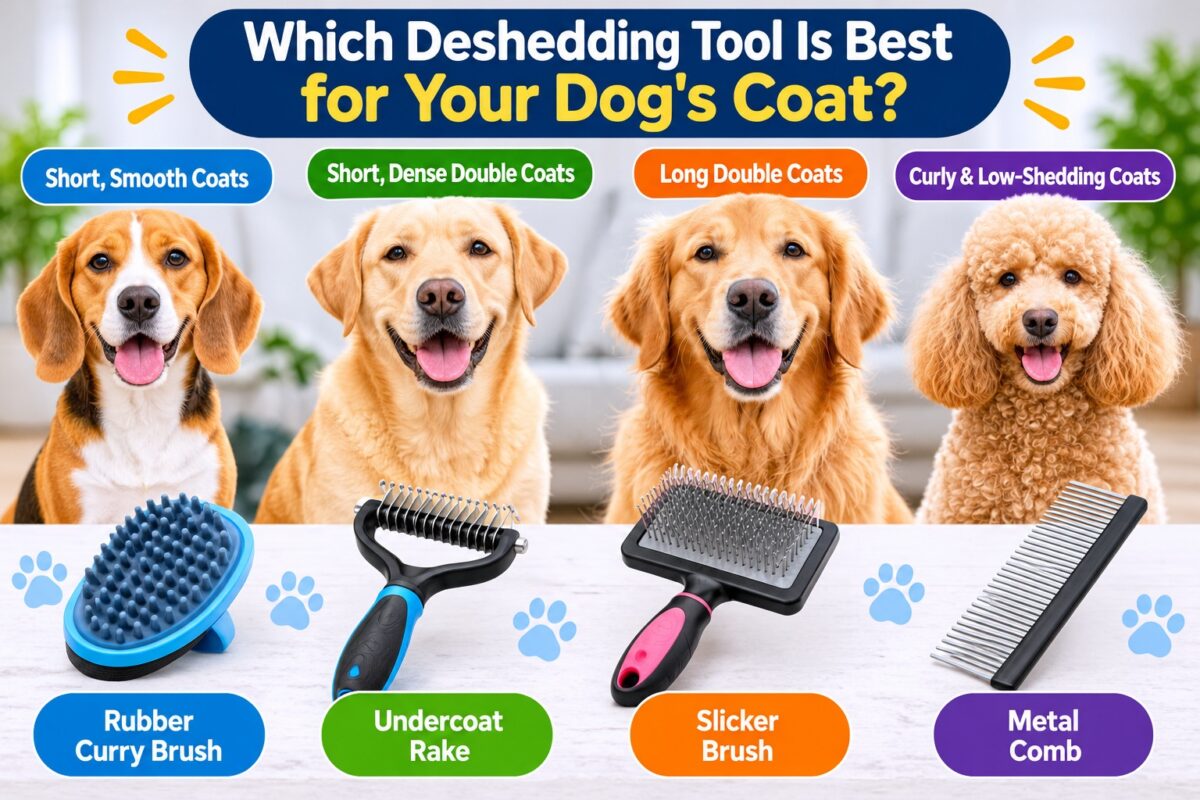
The best deshedding tool depends on the dog’s coat structure, not just breed size. Two similarly sized dogs may need completely different brushes.
Short, Smooth Coats
Many Boxers and smooth-coated hounds benefit from rubber brushes, soft bristle brushes, or grooming gloves. These tools collect surface hair without requiring deep undercoat penetration.
Short, Dense Double Coats
Labrador Retrievers can have substantial undercoat despite their relatively short fur. A suitable deshedding edge or undercoat tool may help when used according to its instructions.
Long Double Coats
Golden Retrievers and Huskies often benefit from a combination of slicker brushing, combing, and suitable undercoat care. Work in sections to remove loose hair without pulling healthy coat.
Curly and Low-Shedding Coats
Poodles and Bichon Frises generally need regular detangling and combing rather than aggressive undercoat removal. Their loose hairs can remain caught in curls and contribute to matting.
For related coat-care methods, see what deshedding means for dogs.
How Do You Use a Dog Deshedding Tool Safely?
Start with a suitable tool, a manageable coat, and light pressure. A successful grooming session removes loose fur without causing skin irritation.
- Inspect the skin: Look for redness, wounds, mats, parasites, and painful areas.
- Choose the tool: Match the brush or comb to coat length, density, and texture.
- Remove minor tangles: Gently separate manageable knots before deeper brushing.
- Work in sections: Start near the shoulders and follow the direction of hair growth.
- Use minimal pressure: Let the grooming tool collect loose hair without scraping the skin.
- Clear collected fur: Remove hair from the tool regularly to maintain control.
- Finish and inspect: Check for irritation, smooth the coat, and reward your dog.
I prefer stopping when the amount of loose fur decreases rather than chasing a completely empty brush. Healthy dogs continue shedding naturally.
The VCA Animal Hospitals grooming guide also recommends choosing tools according to coat characteristics and avoiding excessive pulling.
How Often Should You Use Deshedding Tools?
Regular brushing and intensive undercoat removal don’t require identical schedules. Frequency depends on the individual dog, tool, coat condition, and shedding season.
- Short, smooth coats: Start with gentle weekly brushing and adjust to shedding.
- Medium shedding coats: Try brushing a few times weekly as needed.
- Heavy double coats: Increase gentle grooming during seasonal coat changes.
- Curly or mat-prone coats: Brush and comb frequently enough to prevent knots.
- Specialized deshedding edges: Follow the manufacturer’s frequency instructions rather than using them daily without guidance.
For example, FURminator recommends using its undercoat deshedding tools approximately once or twice weekly for suitable pets. Session length depends on coat thickness and individual needs.
Learn more in this dog deshedding frequency guide.
What Dog Deshedding Tool Mistakes Should You Avoid?
Using the wrong tool or excessive force can make grooming uncomfortable. The amount of fur removed isn’t a reliable measure of grooming quality.
- Choosing by price alone: A costly tool may still be unsuitable for your dog’s coat.
- Pressing too hard: Metal teeth and edges can irritate sensitive skin.
- Brushing through tight mats: Pulling may cause pain or injury.
- Repeating too many passes: Overworking an area can damage hair or skin.
- Ignoring discomfort: Flinching, growling, or repeated avoidance should prompt a break.
- Expecting permanent results: Deshedding cannot stop natural hair replacement.
- Shaving a double coat unnecessarily: This can interfere with its natural protective function.
The AKC’s double-coat care guidance explains why preserving the protective coat layers matters.
Can Different Deshedding Tools Be Used Together?
Yes, combining complementary tools can improve coat maintenance when each tool suits the dog. However, combining more tools doesn’t automatically produce better results.
For a healthy, thick double coat, a practical sequence might include:
- Use a suitable slicker brush to remove loose surface hair.
- Gently address manageable tangles with an appropriate comb.
- Use an undercoat rake only where loose undercoat remains.
- Finish with light brushing and inspect the skin.
For a smooth-coated dog, a rubber brush alone may be sufficient. Avoid unnecessary tool changes when grooming is already effective.
If you want to understand the results, read whether deshedding actually reduces shedding.
When Should You Stop Deshedding and Contact a Veterinarian?
Stop grooming if your dog shows pain, develops skin irritation, or has unexplained hair loss. Unusual coat changes can sometimes indicate an underlying health problem.
Signs that need professional attention include:
- Sudden bald patches or noticeably thinning fur
- Red, inflamed, bleeding, or painful skin
- Severe itching or repeated scratching
- Unexpected changes in shedding patterns
- Persistent dandruff, odor, or skin discomfort
- Severe matting close to the skin
Regular grooming can help you notice problems early. However, brushing tools don’t diagnose or treat allergies, infections, or hormonal conditions.
The AKC’s shedding management resource describes warning signs that deserve veterinary attention.
Recommended Dog Deshedding Tools for Different Needs
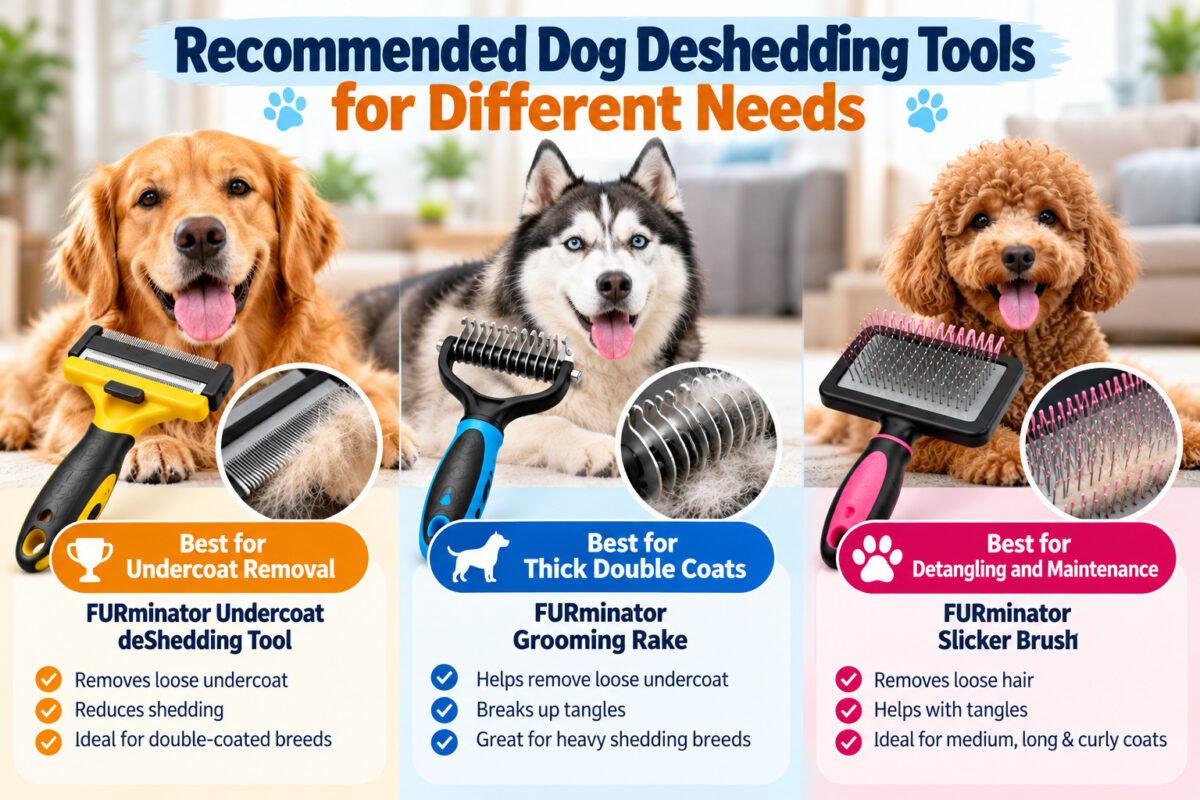
If you’re ready to choose a grooming tool, these three products represent different coat-care priorities. They’re recommendations based on product design and intended use, not personal hands-on performance tests.
🏆 Best for Targeted Undercoat Removal
FURminator Undercoat deShedding Tool for Dogs
★★★★☆ 4/5
Available in size and coat-length variants, this tool uses a stainless-steel edge and a hair-release mechanism. I would consider it for compatible shedding coats, with careful attention to frequency and skin comfort.
🐕 Best for Thick Double Coats
FURminator Grooming Rake
★★★★☆ 4/5
Its rotating metal teeth help collect loose undercoat and manage tangles in thick fur. I would prioritize this style for dense coats needing routine undercoat care.
🪮 Best for Detangling and Maintenance
FURminator Large Firm Slicker Brush
★★★★☆ 4/5
This slicker has a flexible dual-head design and stainless-steel pins for suitable medium, long, and curly coats. I would use this category for regular detangling rather than intensive undercoat extraction.
Affiliate disclosure: This article contains Amazon affiliate links. As an Amazon Associate, we may earn from qualifying purchases at no additional cost to you. The star scores are editorial suitability assessments, not verified customer review averages or laboratory test results.
Frequently Asked Questions About Dog Deshedding Tool Types
What is the best type of deshedding tool for a dog?
The best deshedding tool depends on coat type. Undercoat rakes suit many thick double coats, while rubber curry brushes work well on smooth coats. Slicker brushes and combs help maintain longer or curly hair. Choose based on coat texture, skin sensitivity, and the manufacturer’s instructions.
Are undercoat rakes better than slicker brushes?
Neither tool is universally better. Undercoat rakes target loose hair within dense coats, while slicker brushes help remove surface hair and manage tangles. Many double-coated dogs benefit from both. The safest choice depends on coat density and whether detangling or deeper undercoat removal is needed.
Can deshedding tools damage a dog’s coat?
Yes, incorrect use can irritate skin or damage hair. Excessive pressure, repeated strokes, and pulling through mats increase the risk. Use a coat-appropriate tool with gentle movements. Stop immediately if your dog shows pain, develops redness, or repeatedly attempts to escape grooming.
Can I use a deshedding tool every day?
Gentle daily brushing may suit some long or mat-prone coats, but specialized deshedding edges generally require less frequent use. For example, FURminator recommends one or two sessions weekly for its undercoat tool. Follow the product directions and adjust grooming according to your dog’s comfort.
Do deshedding brushes completely stop dog shedding?
No, deshedding brushes cannot stop the natural shedding cycle. They remove loose hair before it falls around your home, which can help control visible fur. Dogs continue growing and releasing hair afterward. Consistent grooming and appropriate coat care are more realistic goals than eliminating shedding entirely.
Final Takeaway: Choose the Right Tool for the Coat
Understanding dog deshedding tool types helps you avoid buying an unsuitable brush. The most useful tool is the one that removes loose hair comfortably without damaging healthy skin or fur.
Start with coat type, choose gentle grooming methods, and monitor your dog’s response. Consistency and comfort matter more than collecting the largest possible pile of hair.
For healthy long-term results, build a grooming routine that suits your individual dog. Seek professional advice whenever you encounter painful mats, irritated skin, or unusual shedding.