Quick Answer
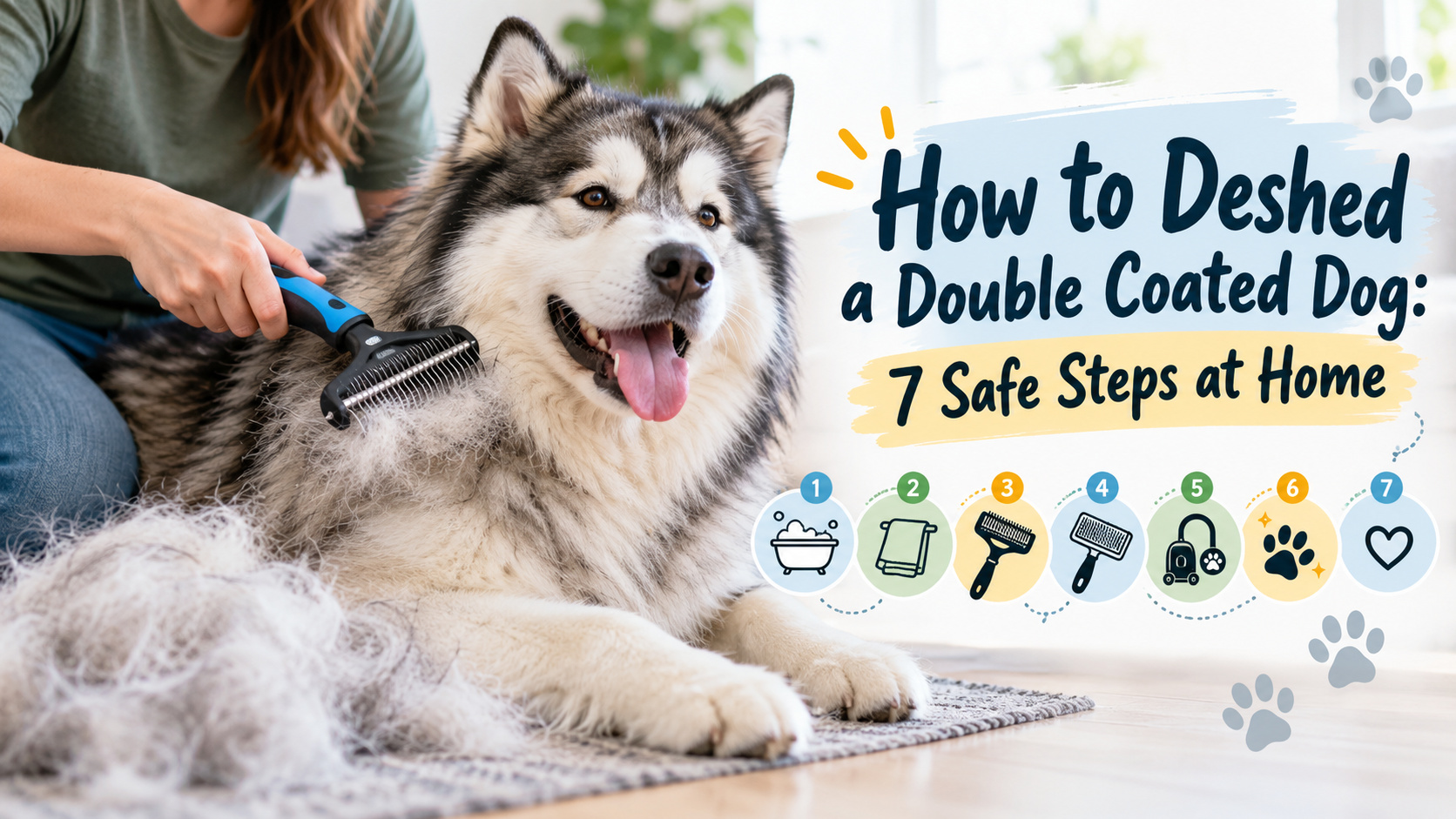
To deshed a double coated dog, gently remove loose undercoat hair with a suitable slicker brush, undercoat rake, or metal comb. Work in small sections, follow the direction of hair growth, and avoid scraping the skin. Never shave a healthy double coat simply to reduce shedding. For general grooming techniques, see this dog deshedding guide.
7 Quick Deshedding Steps
- Prepare the area: Choose a quiet location with secure footing.
- Inspect the coat: Check for tangles, mats, redness, and sensitive skin.
- Choose appropriate tools: Match your brush or rake to the coat’s length and density.
- Remove loose surface fur: Begin with gentle brushing before deeper undercoat work.
- Work in sections: Lift loose undercoat without pulling healthy hair.
- Check sensitive areas: Use extra care around the belly, legs, and tail.
- Finish gently: Comb through the coat and check for irritation.
Important Safety Rule
- Never force the tool: Stop if your dog shows pain, redness, or discomfort.
Living with a double-coated dog often means finding loose fur on your clothes, floors, and furniture. I’ve found that choosing a gentle grooming technique matters more than trying to remove the largest possible pile of hair.
In this guide, I’ll explain how to deshed a double coated dog safely, which grooming tools suit different breeds, and how often to groom without damaging the coat.
What Is a Double Coat on a Dog?
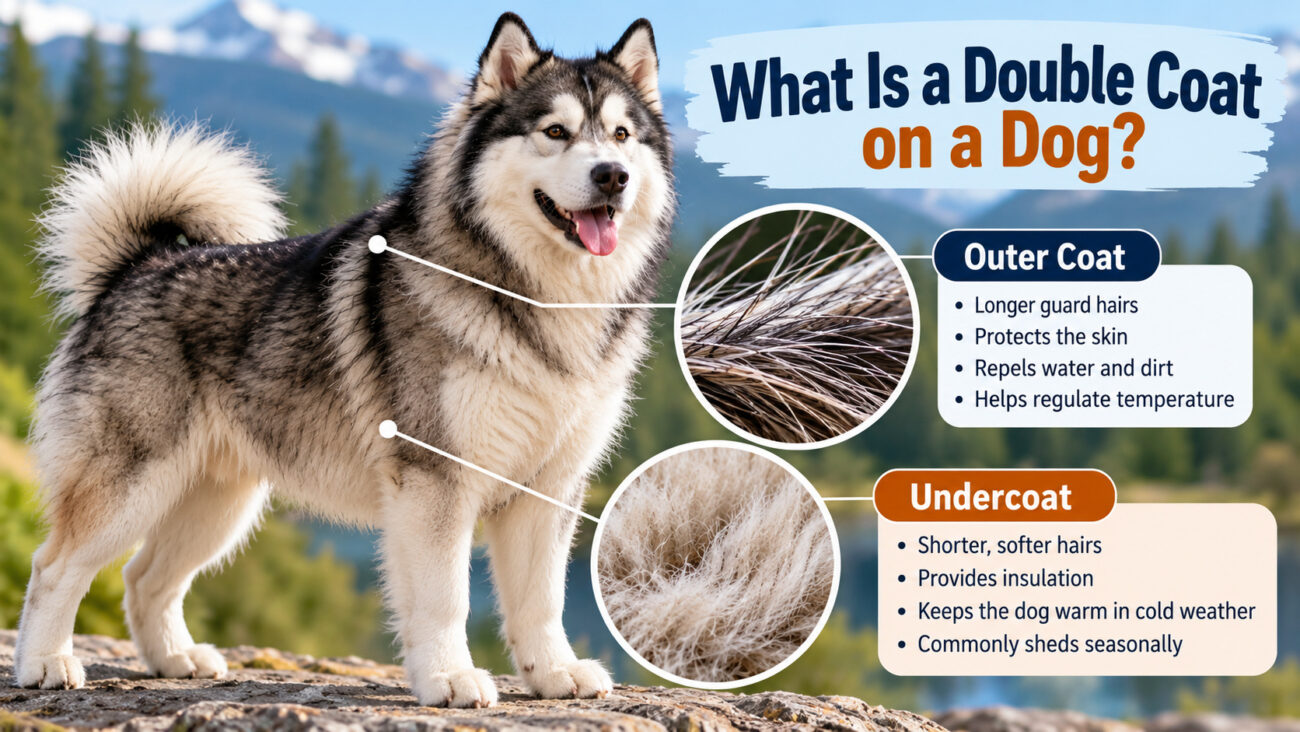
A double coat consists of two layers of hair: a protective outer coat and a softer, denser undercoat. These layers work together to protect the skin and help the dog manage changing temperatures.
Understanding the difference is important because deshedding should focus on removing loose hair, not stripping away healthy coat.
- Outer coat: Longer guard hairs help shield the skin from sunlight, moisture, and environmental exposure.
- Undercoat: Shorter, softer hairs provide insulation and commonly shed during seasonal changes.
- Loose undercoat: Dead or naturally released hairs can become trapped beneath the outer layer.
According to the American Kennel Club’s double-coat grooming guidance, coat type determines which grooming techniques are most appropriate.
Which Dog Breeds Have Double Coats?
Double coats appear in many working, herding, sporting, and northern dog breeds. Their length and thickness vary considerably.
- German Shepherd: Dense double coat with substantial seasonal undercoat shedding.
- Siberian Husky: Thick undercoat that can release heavily during coat-blowing periods.
- Golden Retriever: Medium-to-long coat with feathering that needs regular detangling.
- Labrador Retriever: Short, dense, water-resistant double coat.
- Pembroke Welsh Corgi: Compact body covered by a surprisingly dense shedding coat.
- Samoyed: Long, abundant coat that benefits from careful section-by-section grooming.
A Labrador and a Samoyed both have double coats, but they need different grooming approaches. Coat length, density, and skin sensitivity matter more than breed names alone.
Why Do Double Coated Dogs Need Deshedding?
Double-coated dogs need deshedding because loose undercoat can remain trapped beneath healthy guard hairs. Gentle removal helps manage shedding and prevents released fur from collecting within the coat.
Deshedding cannot stop the natural hair-growth cycle. It simply removes hair that is already ready to come away.
What Are the Main Benefits?
- Less loose fur indoors: Brushing collects hair before much of it falls onto furniture and floors.
- Reduced coat buildup: Removing released undercoat helps prevent excessive accumulation in dense areas.
- Easier coat maintenance: Regular grooming makes seasonal shedding more manageable.
- Better coat inspection: Brushing gives you opportunities to notice skin changes, parasites, or tangles.
- Preserved protective layers: Proper deshedding removes loose fur without deliberately shaving healthy guard hairs.
A useful distinction is that effective grooming doesn’t require removing every available hair. A comfortable dog with an intact coat is a better outcome than an oversized pile of fur.
What Tools Do You Need to Deshed a Double Coated Dog?
The essential tools are a coat-appropriate brush, a suitable undercoat rake, and a comb for checking tangles. Not every dog needs a bladed deshedding tool.
I recommend starting with the gentlest effective equipment. Add specialized tools only when the coat requires them.
Double-Coat Deshedding Tool Comparison
| Tool | Best Use | Example Coats | Precaution |
|---|---|---|---|
| Slicker brush | Surface hair and manageable tangles | Golden Retriever, Collie | Avoid scraping skin |
| Undercoat rake | Loose hair within thick undercoats | Husky, Samoyed | Choose correct tooth length |
| Steel comb | Checking tangles and finishing | Long and medium coats | Never force through mats |
| Rubber grooming brush | Collecting loose short hair | Labrador Retriever | Use gently on sensitive skin |
| Deshedding-edge tool | Targeted loose undercoat removal | Compatible shedding double coats | Limit repeated passes |
For thick coats, an undercoat rake and slicker brush often complement each other. One reaches loose material deeper in the coat, while the other helps manage surface hair.
Dogs with short, dense coats may need a smaller selection of tools. Avoid assuming that stronger equipment always produces better results.
How to Deshed a Double Coated Dog Step by Step
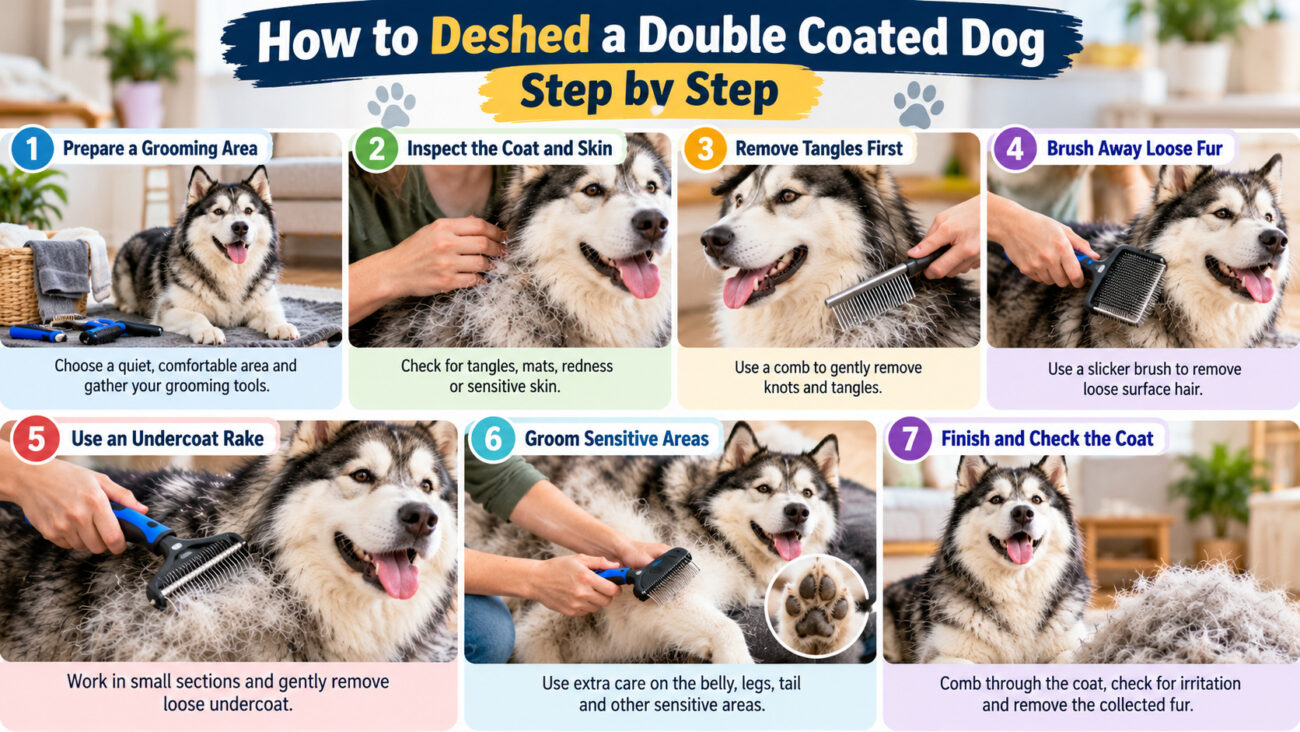
To deshed safely, prepare the dog, check the coat, remove manageable tangles, and work gently through small sections. Finish by checking that both the coat and skin remain comfortable.
This seven-step process works as a starting point for healthy dogs with normal shedding. Adjust it for your dog’s coat and tolerance.
Step 1: Prepare a Comfortable Grooming Area
Choose a quiet space where your dog can stand or lie comfortably. A nonslip surface makes grooming safer, especially for larger dogs.
Keep your equipment within easy reach before beginning.
- A suitable slicker brush or grooming brush
- An undercoat rake matched to coat length
- A wide-tooth or appropriately spaced steel comb
- Small treats for positive reinforcement
- A towel or washable mat for loose fur
- A container for collecting removed hair
Allow your dog to sniff the tools before starting. Rewarding calm behavior can help build a positive grooming routine.
Step 2: Inspect the Skin and Coat
Run your hands gently through the coat and look for anything that could make brushing painful. Pay particular attention to dense areas where problems are harder to see.
- Redness, sores, or inflamed skin
- Tight mats or compacted tangles
- Fleas, ticks, or unusual debris
- Bald patches or unexpected thinning
- Areas that cause pain when touched
Skip intensive grooming over damaged or inflamed skin. Ask your veterinarian about unusual hair loss, persistent irritation, or unexplained tenderness.
Step 3: Remove Small Tangles Before Deshedding
Use a suitable comb or brush to loosen manageable tangles before reaching for an undercoat tool. Hold the surrounding hair gently to reduce pulling against the skin.
Never drag a rake through a tight mat. Severe matting is better handled by a qualified professional groomer.
- Begin at the ends of longer hair.
- Separate small tangles with your fingers when possible.
- Use short, gentle movements.
- Stop if the hair pulls tightly against the skin.
The goal is to make the coat manageable, not to remove every knot through force. Painful grooming can also make future sessions more difficult.
Step 4: Brush Away Loose Surface Fur
Start with a gentle brush suited to your dog’s coat. Work mainly in the direction of hair growth and use minimal pressure.
I suggest beginning around the shoulders and upper back, where many dogs tolerate handling well. Watch your dog’s reaction before moving toward sensitive areas.
- Use short, controlled strokes.
- Remove collected hair from the brush regularly.
- Check that the brush moves without snagging.
- Avoid repeated brushing over one small patch.
Some loose undercoat may come away during this stage. That’s useful because it can reduce the need for more intensive grooming later.
Step 5: Remove Loose Undercoat in Small Sections
Divide thicker fur into manageable sections and use a suitable undercoat rake to lift released hair. Keep the tool moving gently in the direction of coat growth.
Section-by-section grooming gives you better control than repeatedly dragging a tool across the entire back.
- Start near the shoulders: Choose a comfortable area with loose undercoat.
- Lift a small coat section: Separate longer hair gently to expose the undercoat.
- Use light strokes: Allow the tool to collect released hair without digging into the skin.
- Clear the tool: Remove collected hair before continuing.
- Check your progress: Move on when the amount of loose hair decreases.
- Repeat carefully: Continue across the body without repeatedly scraping the same area.
Pay special attention to the neck, shoulders, chest, and hindquarters where loose hair may accumulate. The amount of undercoat varies by breed and individual dog.
For example, a Husky may release large clumps during seasonal shedding. That doesn’t mean every remaining tuft needs to be pulled out immediately.
Step 6: Groom Sensitive Areas Carefully
The belly, armpits, legs, and tail require extra care because the skin may be more delicate. Switch to a gentler brush or suitable comb when necessary.
- Belly: Avoid sharp-edged tools and use minimal pressure.
- Armpits: Check for tangles but avoid pulling thin skin.
- Legs: Support the limb naturally without forcing its position.
- Tail: Hold longer fur gently to prevent tugging.
- Face and ears: Use appropriate gentle equipment rather than aggressive deshedding edges.
Watch for lip licking, repeated attempts to leave, stiffening, or flinching. These behaviors can indicate that your dog needs a break.
Step 7: Finish With a Comb and Skin Check
Once the loose undercoat decreases, finish with a gentle brush or suitable comb. The coat should feel manageable without obvious pulling or discomfort.
Check the skin for redness and make sure your dog remains relaxed. End with praise, a treat, or a favorite activity.
- Remove remaining surface hair.
- Check longer areas for hidden tangles.
- Look for irritated or sensitive patches.
- Clean and dry your grooming equipment.
- Dispose of collected fur safely.
You don’t need to finish the entire dog in one session. Several comfortable sessions are preferable to one stressful experience.
How Often Should You Deshed a Double Coated Dog?
Most double-coated dogs benefit from regular brushing at least weekly, with more frequent gentle grooming during heavy shedding periods. Intensive undercoat removal should depend on coat condition, tool instructions, and skin tolerance.
As of 2026, there is no single grooming schedule that suits every double-coated breed. Climate, hair length, and seasonal shedding all affect the routine.
Suggested Grooming Schedule
| Coat Type | Regular Brushing | Targeted Deshedding |
|---|---|---|
| Short double coat | 1–3 times weekly | When loose undercoat builds |
| Medium double coat | 2–4 times weekly | As needed with a suitable tool |
| Long, thick double coat | 3–5 times weekly | Gentle sessions when loose fur accumulates |
| Heavy seasonal shedding | Possibly daily light brushing | Follow tool-specific guidance |
These are practical starting ranges, not strict medical recommendations. Learn more in this guide to how often you should deshed your dog.
Should You Deshed More During Shedding Season?
Yes, gentle brushing may be needed more often when a dog releases large amounts of undercoat. However, daily brushing doesn’t justify aggressive daily use of deshedding blades.
Double-coated dogs often shed more noticeably during spring and fall. Dogs living indoors or in warmer climates may show different shedding patterns.
- Increase gentle brushing when loose hair builds up.
- Keep specialized deshedding sessions controlled.
- Stop when the tool collects noticeably less hair.
- Monitor the skin after grooming.
- Return to lighter maintenance when shedding slows.
Should You Bathe a Double Coated Dog Before Deshedding?
Bathing can loosen trapped hair and help remove dirt, but it isn’t required before every deshedding session. Routine grooming can often be completed on a clean, dry coat.
Gentle brushing before bathing helps remove surface hair and manageable tangles. Avoid soaking a heavily matted coat without professional guidance.
What Is the Best Bathing and Drying Order?
- Inspect the coat: Check for mats and skin problems before introducing water.
- Brush gently: Remove loose surface hair and manageable tangles.
- Use dog shampoo: Bathe according to your dog’s cleaning needs.
- Rinse thoroughly: Remove shampoo residue from the dense coat.
- Dry carefully: Use towels and dog-safe drying methods.
- Finish grooming: Use tools intended for dry coats only after the coat is dry.
Professional groomers may use specialized dryers to help release loose undercoat. At home, prioritize safe airflow, comfortable temperatures, and your dog’s tolerance.
Avoid directing hot air close to the skin. Dense coats can trap moisture, so check that the coat dries adequately after bathing.
Can You Deshed a Double Coated Dog Without Shaving?
Yes. Proper deshedding removes naturally released undercoat while preserving healthy guard hairs. Shaving is generally unnecessary for routine shedding control.
The protective outer coat and insulating undercoat perform different functions. Removing both layers can interfere with their normal protection and may affect coat regrowth.
The AKC’s guidance on shaving dogs explains why most healthy double coats should remain intact.
Why Is Shaving Usually a Bad Idea?
- Reduced skin protection: The dog loses part of its natural barrier against sunlight and environmental exposure.
- Possible uneven regrowth: Guard hairs and undercoat may return at different rates.
- Continued shedding: Shaving doesn’t stop the hair-growth cycle.
- Potential skin problems: Close shaving can increase vulnerability to irritation and sun exposure.
Severe matting and certain medical procedures may require clipping under professional supervision. Those situations differ from ordinary grooming to control shedding.
What Deshedding Mistakes Should You Avoid?
The biggest mistakes involve excessive pressure, inappropriate tools, and grooming beyond the dog’s tolerance. Removing more hair isn’t always better.
According to the AKC’s double-coated dog grooming advice, regular, coat-appropriate maintenance helps prevent problems caused by trapped hair and tangles.
7 Common Deshedding Mistakes
- Using too much pressure: Scraping the skin can cause irritation.
- Brushing the same spot repeatedly: Excessive passes may damage healthy hair.
- Using the wrong tooth length: An unsuitable rake may snag hair or fail to reach the undercoat.
- Pulling through mats: Tight tangles can make brushing painful.
- Ignoring skin irritation: Redness or tenderness signals that grooming should stop.
- Shaving unnecessarily: Removing healthy coat layers doesn’t prevent future shedding.
- Forcing long sessions: Stressful grooming can increase resistance to future brushing.
Pay attention to your dog’s behavior throughout each session. Calm cooperation and comfortable skin matter more than how much fur you collect.
When Should You Stop Deshedding and Contact a Veterinarian?
Stop deshedding if grooming causes pain, visible redness, or skin injury. Unexplained hair loss or abnormal skin changes also warrant veterinary advice.
Normal seasonal shedding should not produce obvious bald patches or persistent inflammation.
- Sudden or unusual hair loss
- Distinct bald or thinning patches
- Persistent redness, itching, or sores
- Unusual odor, discharge, or crusting
- Pain when the coat or skin is touched
- Heavy shedding accompanied by other signs of illness
Underlying allergies, parasites, infections, or hormonal conditions can sometimes affect coat health. Grooming tools cannot diagnose or treat those problems.
For additional background, see the AKC’s guide to managing dog shedding.
Which Deshedding Tools Are Worth Considering?
If you’re choosing equipment for home grooming, start with your dog’s coat length and density. I would prioritize a gentle brush or rake before considering an intensive deshedding edge.
These three established grooming products address different needs. The suitability scores below are editorial assessments of their intended uses, not verified customer ratings or hands-on test results.
Affiliate disclosure: As an Amazon Associate, we may earn from qualifying purchases made through eligible links, at no additional cost to you.
🏆 For Thick Undercoats
Safari Undercoat Rake for Dogs
★★★★☆ Editorial suitability: 4.5/5
This rake-style grooming tool is designed for removing loose undercoat hair. I’d consider it for suitable thick-coated breeds, provided its teeth match the coat length and grooming stays gentle.
🐾 For Routine Brushing
Hertzko Self Cleaning Slicker Brush
★★★★☆ Editorial suitability: 4.3/5
This slicker-style brush helps collect loose hair and maintain manageable coats, with a mechanism for releasing collected fur. I’d consider it for regular maintenance on compatible coats rather than aggressive undercoat removal.
⭐ For Targeted Deshedding
FURminator Undercoat deShedding Tool for Dogs
★★★★☆ Editorial suitability: 4.1/5
The FURminator uses a stainless-steel deshedding edge to collect loose undercoat from compatible shedding dogs. I’d reserve it for controlled sessions and select the correct size and coat-length version.
Frequently Asked Questions
Can you deshed a double coated dog every day?
Gentle daily brushing may help during heavy shedding periods, especially when loose undercoat accumulates quickly. However, intensive daily use of sharp-edged deshedding tools can irritate the skin or damage healthy hair. Follow the tool manufacturer’s instructions and adjust the schedule to your dog’s tolerance.
What is the best brush for a double coated dog?
The best brush depends on coat length and density. A slicker brush suits many medium and long coats, while an undercoat rake helps remove loose hair from thick undercoats. Short-coated dogs may benefit from a rubber grooming brush. Choose the gentlest tool that works effectively.
Should you deshed a double coated dog before or after bathing?
Gentle brushing before bathing helps remove loose hair and manageable tangles. After bathing, the coat should be properly dried before using tools designed for dry fur. Both stages can help manage shedding, but a bath isn’t necessary before every routine grooming session.
Will deshedding stop a double coated dog from shedding?
No. Deshedding removes loose, naturally released fur but does not stop the hair-growth cycle. Regular grooming can reduce loose hair around the home, especially during seasonal shedding. Dogs will continue to shed according to their breed, coat characteristics, health, and environment.
Can a deshedding tool damage a dog’s double coat?
Yes. Excessive pressure, repeated passes, and unsuitable grooming edges can irritate skin or damage healthy hair. Choose equipment designed for the coat, remove tangles first, and stop if your dog shows discomfort. Ask a professional groomer if you’re unsure which tool is appropriate.
Final Takeaway: How to Deshed a Double Coated Dog Safely
Learning how to deshed a double coated dog starts with understanding the two protective coat layers. Effective grooming removes loose undercoat without unnecessary shaving or aggressive brushing.
Choose appropriate equipment, work gently in small sections, and adjust your routine during seasonal shedding. Always prioritize your dog’s comfort and skin condition.
Start with short, positive grooming sessions and build a consistent schedule. With the right approach, managing loose fur becomes easier for both you and your dog.