Quick Answer
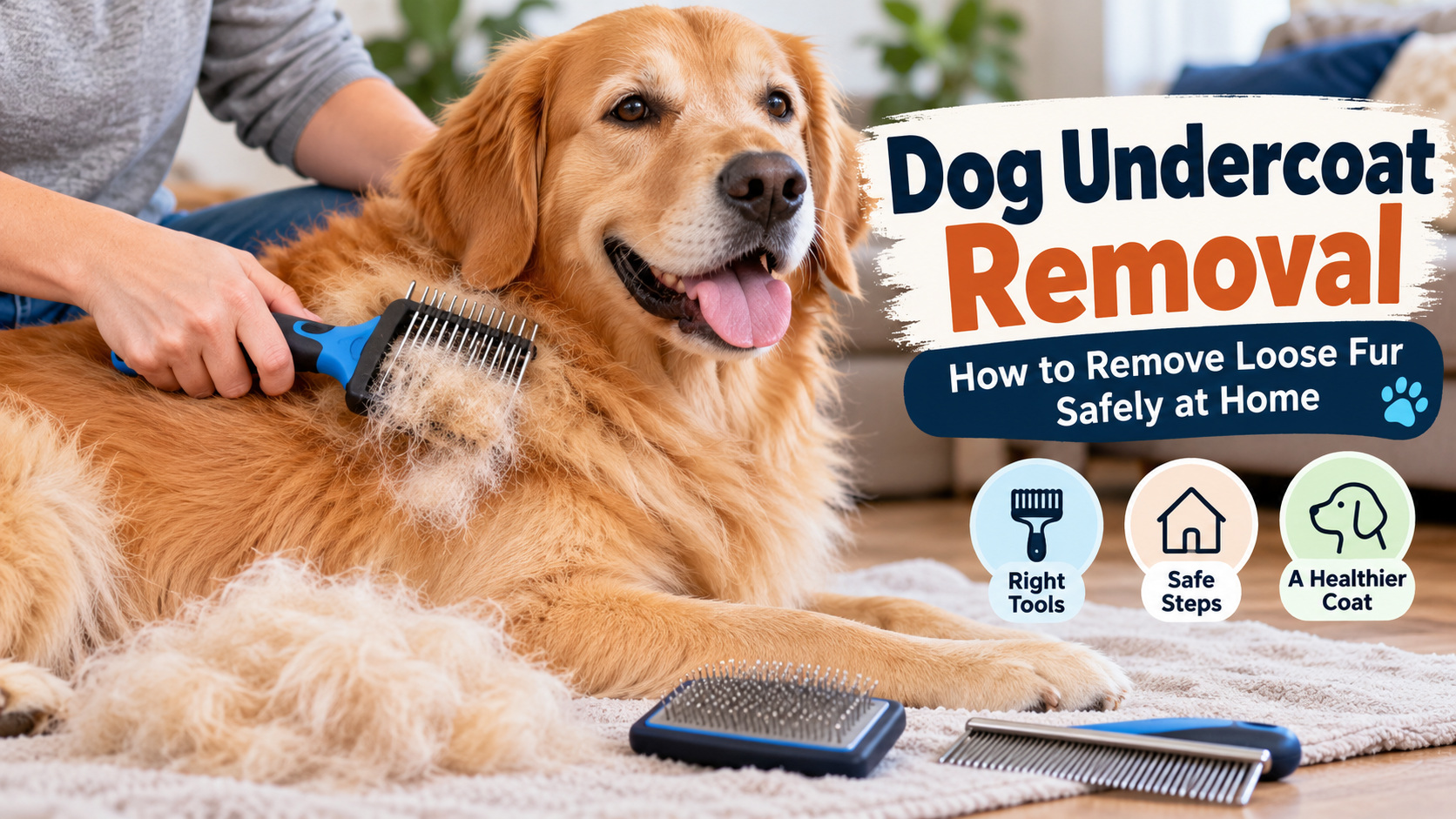
Dog undercoat removal means gently removing loose, dead fur from beneath a dog’s protective outer coat. The safest home method combines a suitable undercoat rake, gentle brushing, and careful combing. Regular grooming reduces loose hair and helps prevent tangles without shaving the coat. The American Kennel Club’s double-coat grooming guidance explains why protecting both coat layers matters.
How to Remove Your Dog’s Undercoat Safely
- Check the coat: Look for mats, irritated skin, and sensitive areas before grooming.
- Loosen tangles: Use a suitable slicker brush or wide-tooth comb without pulling.
- Remove loose fur: Gently move an undercoat rake in the direction of hair growth.
- Work in sections: Groom the shoulders, back, sides, and hindquarters carefully.
- Finish gently: Check remaining tangles with a comb and stop if the skin becomes irritated.
Important Safety Tip
- Never force a tool through mats: Severe tangles, painful skin, or unusual hair loss need professional attention.
Finding fluffy clumps of fur around your home can be frustrating, especially when your dog has a thick double coat. Fortunately, dog undercoat removal becomes easier when you understand the right tools and techniques.
I’ll explain how to remove dead undercoat safely, choose grooming equipment, and build a routine that protects your dog’s skin.
What Is Dog Undercoat Removal?
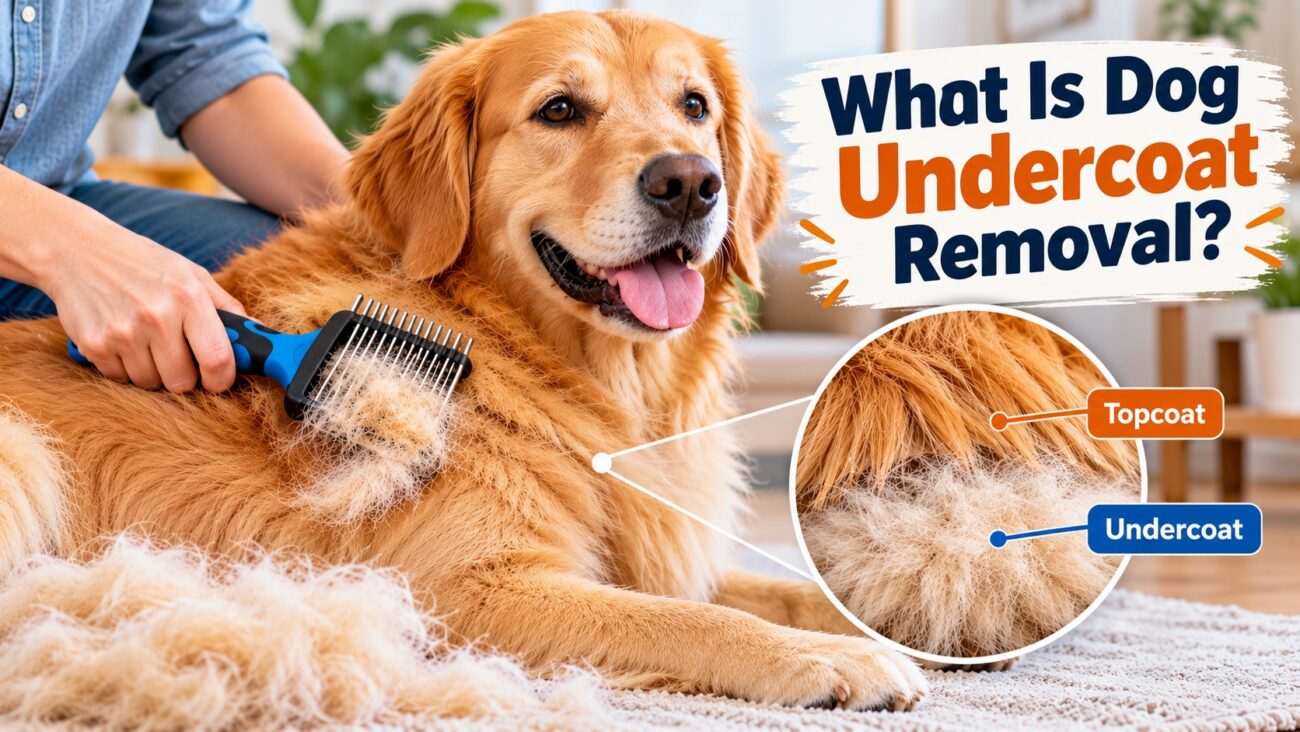
Dog undercoat removal is the grooming process of lifting and removing loose, dead hairs from the soft layer beneath a dog’s outer coat. It is also called undercoat deshedding.
Unlike shaving, proper undercoat removal targets fur that is already shedding. Healthy, attached hair should remain in place.
Understanding Your Dog’s Double Coat
Double-coated dogs have two distinct layers that work together to protect their skin. Each layer performs a different function.
- Undercoat: Soft, dense fur that provides insulation and helps regulate temperature.
- Topcoat: Longer, stronger guard hairs that help protect against moisture, sunlight, dirt, and environmental exposure.
Both layers matter. Removing loose undercoat is helpful, but stripping away healthy protective hair can create problems.
Which Dog Breeds Have an Undercoat?
Many familiar breeds develop dense undercoats, although thickness varies among individual dogs. Seasonal shedding can make these layers especially noticeable.
- German Shepherd: Dense undercoat beneath a protective outer layer.
- Siberian Husky: Thick insulating fur with pronounced seasonal shedding.
- Golden Retriever: Soft undercoat beneath a longer outer coat.
- Labrador Retriever: Short but dense double coat.
- Samoyed: Abundant insulating undercoat beneath a long outer coat.
- Pembroke Welsh Corgi: Dense undercoat that can shed heavily.
Not every dog needs the same grooming tool. Coat length, density, skin condition, and tolerance should guide your choice.
Why Is Dog Undercoat Removal Important?
Regular undercoat grooming removes loose hair before it accumulates in the coat or around your home. It also helps you notice tangles and skin changes earlier.
1. Reduces Loose Fur Around Your Home
Dead undercoat hairs eventually fall onto furniture, clothes, and floors. Grooming collects some of that hair before it spreads.
You cannot eliminate natural shedding completely. Consistent brushing simply makes it easier to manage.
2. Helps Prevent Matting and Coat Compaction
Loose undercoat can become trapped beneath longer fur, creating tangles and compacted areas. These may eventually pull on the skin.
Removing shedding fur regularly reduces this buildup. Early attention is much easier than dealing with tightly matted hair.
3. Makes Skin Inspection Easier
Brushing separates the coat so you can check for redness, parasites, unusual lumps, and irritated areas. Thick fur can otherwise hide these problems.
If you discover sores or unexplained hair loss, consult your veterinarian before continuing with aggressive grooming.
4. Supports a Comfortable Grooming Routine
A well-maintained coat is easier to brush and less likely to contain uncomfortable tangles. Gentle grooming can also become a positive bonding activity.
The goal is comfort, not collecting the largest possible pile of fur.
How Do You Remove a Dog’s Undercoat Step by Step?
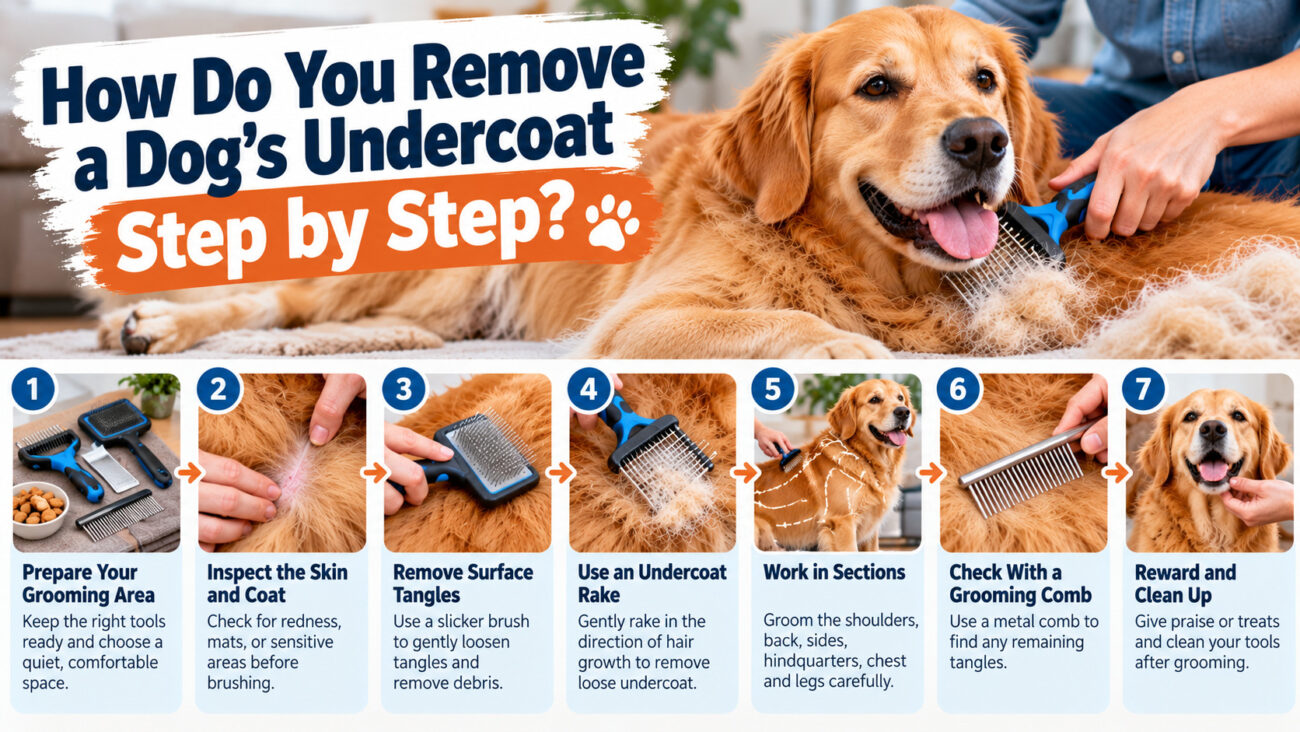
The safest approach combines preparation, gentle brushing, targeted undercoat removal, and a final coat check. Work slowly and adjust to your dog’s comfort.
Step 1: Prepare Your Grooming Area
Choose a quiet location with a nonslip surface. Keep your tools nearby so you can maintain control without leaving your dog unattended.
Before starting, gather these essentials:
- A suitable undercoat rake or deshedding tool
- A soft or medium slicker brush
- A wide-tooth metal grooming comb
- Small training treats
- A towel and container for collected fur
Step 2: Inspect the Skin and Coat
Part the fur gently and look at the skin beneath it. Check for redness, cuts, painful areas, and tightly attached mats.
Avoid using metal grooming tools over damaged or inflamed skin. Painful areas require veterinary guidance.
Step 3: Remove Surface Tangles
Begin with gentle brushing to loosen surface tangles and remove debris. Use short, controlled strokes rather than pulling through resistance.
Support longer fur near the skin when working through small tangles. This reduces uncomfortable tugging.
Step 4: Use an Undercoat Rake
Choose an undercoat rake with pins suitable for your dog’s coat length. Move it gently through the coat in the direction of hair growth.
Keep pressure light and avoid repeated strokes over the same spot. The rake should move through loose fur without scraping the skin.
Step 5: Work Through the Coat in Sections
Divide the grooming session into manageable sections instead of brushing randomly. This helps prevent overworking one area.
- Shoulders: Begin where your dog tolerates brushing comfortably.
- Back: Use smooth strokes following hair growth.
- Sides: Lift longer hair gently to reach loose undercoat.
- Hindquarters: Work carefully around thick fur and sensitive skin.
- Chest and legs: Switch to gentler tools where needed.
Pause whenever your dog becomes restless or uncomfortable. Several short sessions can be better than one exhausting session.
Step 6: Check With a Grooming Comb
Use a suitable metal comb to check for remaining tangles. The comb should pass comfortably through sections of the coat.
Don’t force it through a resistant area. Stop and reassess the tangle or ask a professional groomer for help.
Step 7: Reward Your Dog and Clean the Tools
Finish with praise, a small treat, and a positive interaction. Clean collected fur from brushes and combs after use.
Check the skin once more for redness or irritation. If anything looks abnormal, avoid further deshedding until the problem is addressed.
What Are the Best Tools for Dog Undercoat Removal?
The right tool depends more on coat type than marketing claims. Undercoat rakes, slicker brushes, and deshedding tools each serve different purposes.
Use this comparison to choose a practical combination rather than relying on one tool for every grooming task.
| Grooming Tool | Best Use | Main Advantage | Important Caution |
|---|---|---|---|
| Undercoat rake | Dense, medium-to-long double coats | Reaches loose fur beneath the topcoat | Choose suitable pin length and avoid pulling |
| Slicker brush | Surface tangles and routine coat care | Helps separate fur and collect loose hair | Excess pressure may irritate the skin |
| Deshedding-edge tool | Compatible shedding coats | Collects loose undercoat efficiently | Overuse can damage hair or irritate skin |
| Metal grooming comb | Checking tangles and finishing | Reveals areas a brush may miss | Never pull through stubborn mats |
| Rubber grooming mitt | Short coats and gentle grooming | Flexible contact and easy handling | May not reach dense, long undercoats |
The AKC guide to dog brush types explains how different tools work with different coat textures. Matching the tool to the coat is essential.
How Often Should You Remove a Dog’s Undercoat?
Many double-coated dogs benefit from brushing at least weekly, with more frequent attention during heavy shedding. The ideal schedule depends on coat thickness and condition.
A deshedding-edge tool may need less frequent use than a regular brush. Always follow the manufacturer’s instructions.
Practical Grooming Frequency by Coat Type
- Short double coat: Begin with brushing once or twice weekly, adjusting to shedding.
- Medium double coat: Brush several times weekly when loose fur accumulates.
- Long, dense double coat: Check for tangles frequently and groom in manageable sections.
- Heavy seasonal shedding: Add gentle brushing sessions as needed without overusing deshedding blades.
These are starting points rather than rigid rules. Your dog’s skin condition and grooming tolerance matter more than a fixed calendar.
What Happens During Seasonal Undercoat Shedding?
Some double-coated dogs shed large amounts of undercoat during seasonal changes. Owners often call this process blowing coat.
Loose fur may appear in clumps, especially around the hindquarters and shoulders. Gentle, regular grooming can make the process more manageable.
Should You Bathe Your Dog Before Removing the Undercoat?
A bath can help loosen dirt and shedding hair, but brushing and detangling should begin before bathing. Tight mats may become harder to manage when wet.
For routine undercoat care, I recommend this order:
- Inspect the coat and remove manageable tangles gently.
- Brush out accessible loose fur.
- Bathe with a suitable dog shampoo when needed.
- Rinse thoroughly to remove shampoo residue.
- Dry the coat fully using a comfortable, dog-safe method.
- Finish with gentle brushing and combing.
Dense coats can retain moisture close to the skin. Take extra care to dry thick areas thoroughly.
For bathing fundamentals, the AKC dog shampoo guide explains why coat type matters when choosing bathing products.
Can You Remove a Dog’s Undercoat Without Shaving?
Yes. Routine dog undercoat removal should focus on loose hair rather than shaving away healthy coat layers.
Shaving a double-coated dog can affect its protective topcoat and expose skin to environmental risks. It also does not stop the natural shedding cycle.
Why Shaving Is Usually the Wrong Solution
- Coat protection: Guard hairs help shield the skin from environmental exposure.
- Uneven regrowth: Different coat layers may regrow at different rates.
- Skin exposure: Clipping can increase vulnerability to sunburn.
- Shedding continues: Cutting hair shorter does not prevent the shedding cycle.
Medical procedures or severe matting may sometimes require clipping. Those situations need professional judgment rather than routine home shaving.
What Dog Undercoat Removal Mistakes Should You Avoid?
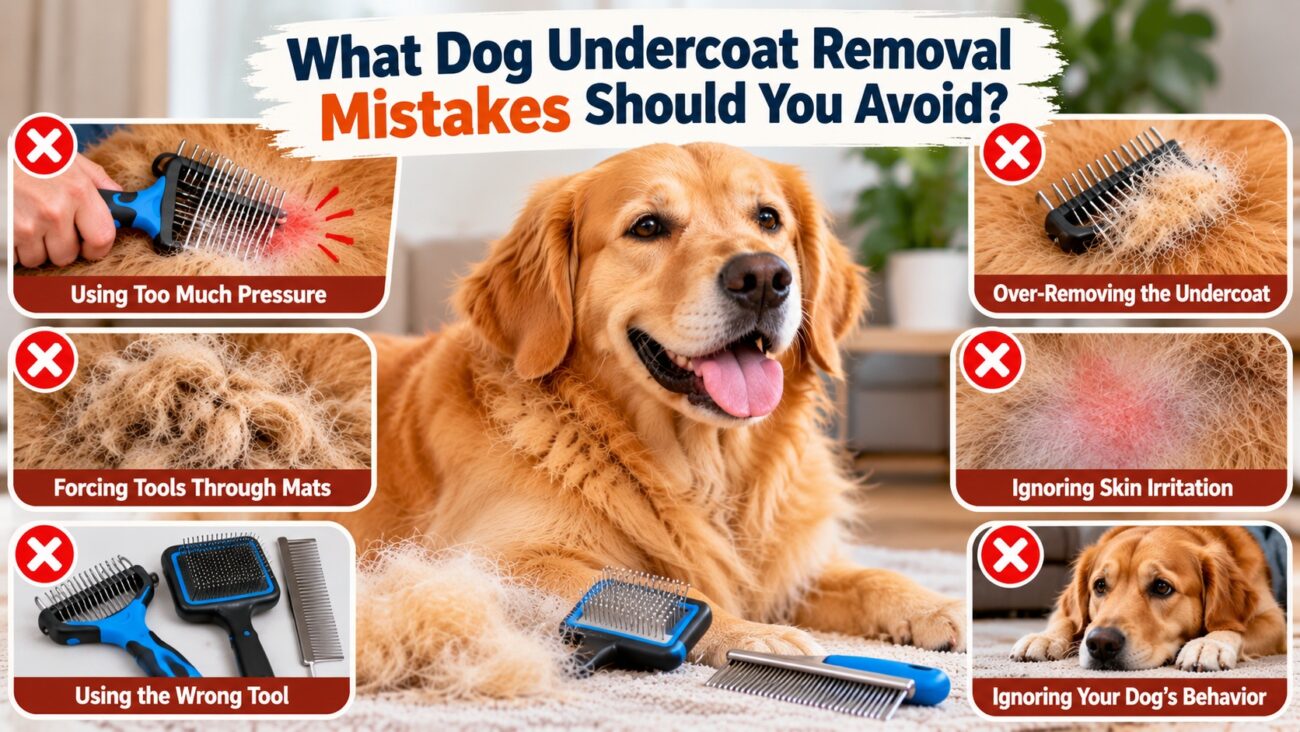
The biggest mistakes involve excessive force, poor tool selection, and ignoring skin irritation. More brushing does not always mean better grooming.
Using Too Much Pressure
Metal pins and deshedding edges should glide through loose fur. Pressing firmly can scrape the skin or pull attached hair.
Repeating Strokes on One Area
Brushing repeatedly over the same spot increases the risk of irritation. Move between sections and check the skin regularly.
Forcing Tools Through Tight Mats
Tightly matted fur can pull painfully on the skin. Forcing a rake through these areas can cause injury.
Ask a professional groomer to assess severe or skin-tight matting.
Using the Wrong Tool for the Coat
A tool designed for dense double coats may be inappropriate for a fine, single-coated dog. Pin length and tool design should match the coat.
Ignoring Your Dog’s Behavior
Repeated pulling away, yelping, snapping, or sudden restlessness may indicate discomfort. Stop and assess the cause.
Short sessions with rewards often work better than forcing a dog to remain still.
When Should You Stop Undercoat Removal and Get Professional Help?
Stop home grooming when the process becomes painful or the coat cannot be managed safely. Skin problems may require veterinary care rather than additional brushing.
- Severe matting: Dense tangles are tightly attached near the skin.
- Redness or wounds: Grooming reveals irritated or damaged skin.
- Unusual hair loss: Bald patches or unexpected thinning appear.
- Persistent scratching: Your dog shows signs of ongoing discomfort.
- Behavioral distress: Your dog becomes fearful or aggressive during handling.
Excessive shedding is not always a simple grooming problem. The AKC overview of hair loss in dogs explains why unusual coat changes deserve attention.
How Can You Make Dog Undercoat Removal Easier?
A consistent routine usually works better than occasional intensive sessions. Focus on comfort, appropriate tools, and small grooming goals.
Start With Short Sessions
Begin with a few minutes of comfortable brushing. Increase the duration gradually as your dog becomes accustomed to grooming.
Use Positive Reinforcement
Reward calm behavior with treats and praise. Pairing grooming with pleasant experiences can improve cooperation over time.
Follow a Consistent Order
Use the same general grooming sequence each time. Familiar routines can help your dog anticipate what happens next.
Measure Success by Comfort
One useful rule I recommend is to judge grooming by the coat’s condition, not the amount of collected hair. A comfortable dog with an untangled coat is a better result than an oversized pile of fur.
If you remove less fur during a later session, that may simply mean fewer loose hairs remain.
Best Dog Undercoat Removal Tools to Consider
If you’re choosing grooming equipment, start with the type of coat you need to maintain. These three real products serve different grooming purposes.
The star scores below are editorial suitability assessments, not verified customer review averages or hands-on test results.
Affiliate disclosure: As an Amazon Associate, we may earn from qualifying purchases made through eligible affiliate links, at no additional cost to you.
🏆 Targeted Deshedding
FURminator Undercoat deShedding Tool for Dogs
★★★★☆ 4.5/5 Editorial Suitability
This tool features a stainless steel deshedding edge and a hair-release button. I recommend considering it for compatible shedding coats when you can follow the manufacturer’s light-pressure instructions.
🐕 Dense Coat Grooming
Safari by Coastal Double Row Undercoat Rake With Rotating Pins
★★★★☆ 4.5/5 Editorial Suitability
This rake uses two rows of rotating pins designed for thicker coats. I would consider this style for dense, longer undercoats where controlled raking is more suitable than a deshedding blade.
✨ Routine Brushing
Safari by Coastal Dog Self-Cleaning Slicker Brush
★★★★☆ 4/5 Editorial Suitability
A self-cleaning slicker brush helps collect loose hair during routine brushing. I would pair this brush type with a suitable undercoat rake when maintaining a thick double coat.
Frequently Asked Questions About Dog Undercoat Removal
Does removing a dog’s undercoat stop shedding?
No. Undercoat removal collects loose hairs but does not stop your dog’s natural hair-growth cycle. Regular grooming can reduce the amount of fur that accumulates around your home.
Double-coated dogs may continue shedding throughout the year, with heavier periods during seasonal coat changes.
Is an undercoat rake safe for dogs?
An appropriately selected undercoat rake can be safe when used gently on a suitable coat. Choose the correct pin length, follow hair growth, and avoid irritated skin.
Stop if the tool snags, causes pain, or leaves redness. Never force it through tightly matted hair.
Can you remove too much undercoat?
Yes. Excessive brushing, repeated passes, or inappropriate tools may pull healthy hair and irritate the skin.
Remove fur that releases easily rather than trying to thin the entire coat. Stop when loose hair decreases or your dog becomes uncomfortable.
Should I remove my dog’s undercoat in winter?
Gentle removal of loose, dead undercoat can continue during winter. However, avoid aggressively thinning the healthy insulating coat.
Maintain a routine suited to your dog’s breed, climate, and coat condition. Adjust grooming frequency to actual shedding rather than the season alone.
Can I remove a dog’s undercoat without a special tool?
Yes. A suitable slicker brush and metal comb can remove some loose undercoat, especially when used regularly.
Very dense coats may benefit from a properly sized undercoat rake. Never substitute sharp household tools, and seek professional help with severe matting.
Final Takeaway: Keep Dog Undercoat Removal Gentle and Consistent
Safe dog undercoat removal focuses on clearing loose fur while preserving healthy hair and protecting the skin. The right tools and a consistent brushing routine can make shedding easier to manage.
Start gently, work in small sections, and respond to your dog’s comfort. If the coat becomes severely tangled or the skin looks unhealthy, contact a qualified professional.
Ready to improve your dog’s grooming routine? Choose one suitable brush, establish a manageable schedule, and focus on comfortable, regular coat care.