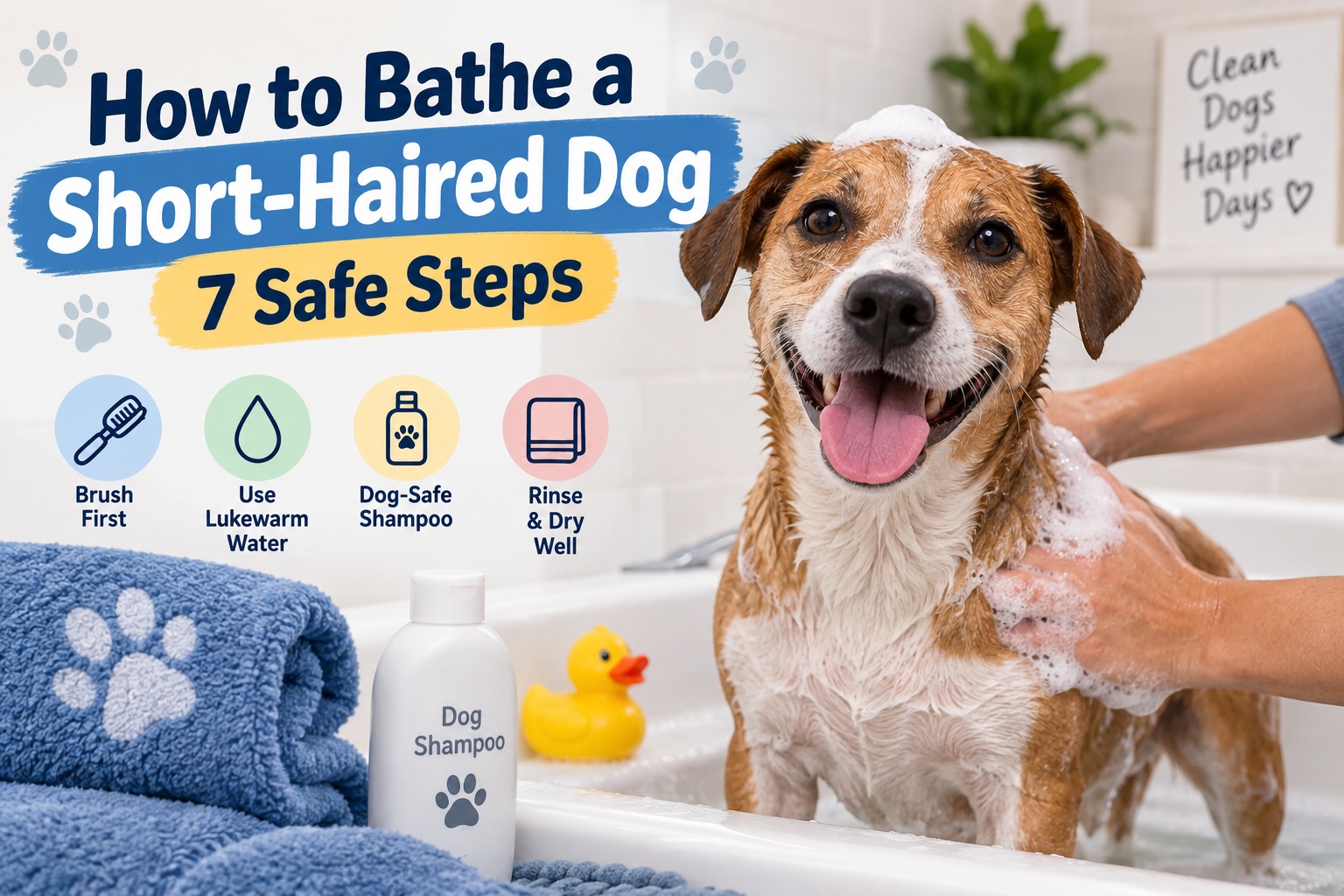
⚡ Quick Answer
Bathing a short-haired dog is simple with calm handling and proper supplies. Brush loose hair first. Use lukewarm water and dog-safe shampoo. Wash from the neck down. Rinse every trace of shampoo. Then towel-dry the coat and keep your dog warm until fully dry.
Your short-haired dog bath in six quick steps
- 1Brush loose fur and check the skin.
- 2Use secure footing and lukewarm water.
- 3Wet the coat from the neck down.
- 4Massage in shampoo made for dogs.
- 5Rinse until the water stays clear.
- 6Towel-dry well and reward calm behavior.
Avoid these short-coat bath mistakes
- ✓Don’t use human shampoo.
- ✓Don’t spray the eyes or ears.
- ✓Don’t leave shampoo on the skin.
Warm water splashes while short fur darkens against your dog’s skin. Wet paws shift quickly when the tub feels slippery.
Bathing gets easier when each step feels safe and predictable. Ashraful uses a simple coat-first routine for home grooming.
Short hair dries quickly, but skin care still matters. Good rinsing protects the coat and reduces post-bath irritation.
📌 Key Takeaways
- →Brush first. Removing loose short hair makes washing and rinsing easier.
- →Use lukewarm water. Hot water can make sensitive skin less comfortable.
- →Rinse fully. Shampoo residue can irritate skin after bathing.
- →Check the skin. Short coats make redness, sores, and lumps easier to spot.
What Do You Need Before Bathing a Short-Haired Dog?
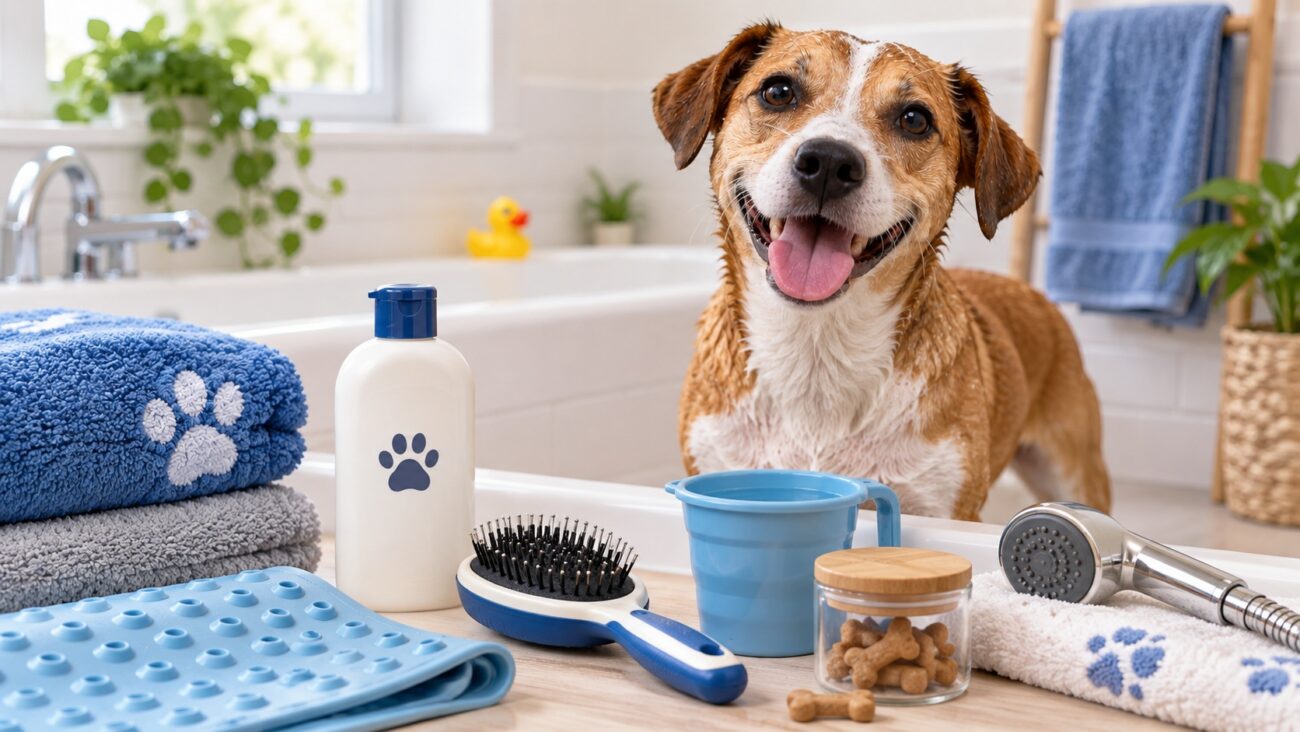
Gather every bath item before your dog enters the tub. Use dog shampoo, towels, treats, and a non-slip mat. Keep a cup or gentle sprayer within reach. A bristle brush suits many smooth, short coats. Rubber grooming tools also help lift loose short hair.
Brush the dry coat before adding water. This removes dirt, loose fur, and dead skin. It also gives you time to inspect the skin. Look for cuts, sores, ticks, lumps, or tender spots.
Set the water to a mild, lukewarm feel. Never copy a hot human shower setting. This dog bath temperature guide explains the comfort check in detail. AKC and VCA guidance also recommends warm or lukewarm bathing water.
Preparation matters more than owning lots of grooming tools. Your goal is control, comfort, and easy rinsing.
This simple supply list covers most healthy short-haired dogs.
Place everything within one arm’s reach before starting the bath.
How Do You Bathe a Short-Haired Dog Step by Step?
Start with a dry, brushed coat and secure footing. Wet your dog’s body slowly with lukewarm water. Keep direct spray below the head. Work dog shampoo gently through the short coat. Massage down to the skin without scratching it.
Clean the chest, belly, legs, paws, and tail. Use a damp cloth around the face. Keep shampoo away from the eyes and ear canals. Then rinse longer than you think is needed. Short fur makes hidden suds easier to find.
Finish by pressing towels against the wet coat. Don’t rub sore or irritated skin. Reward your dog when the bath ends. AKC, ASPCA, and PetMD all stress gentle washing and complete rinsing.
A nervous dog needs a slower process. Use this guide for dogs scared of bath time before forcing a stressful wash.
🔢 Seven Steps for a Short-Haired Dog Bath
- Brush the dry coat. Remove loose fur and surface dirt.
- Secure the tub. Use a non-slip mat beneath the paws.
- Wet the body. Start near the shoulders and work backward.
- Add dog shampoo. Massage gently through the coat and skin.
- Clean sensitive areas. Use a damp cloth around the face.
- Rinse completely. Check the belly, legs, chest, and tail.
- Dry and reward. Blot with towels and praise calm behavior.
You may think stronger scrubbing removes more dirt. Short coats rarely need harsh scrubbing.
Gentle contact cleans while protecting the skin. Next, decide when another full bath is needed.
How Often Should You Bathe a Short-Haired Dog?
There is no single bath schedule for every short-haired dog. Coat type is only one factor. Lifestyle, skin health, odor, dirt, and activity also matter. Many short-haired dogs need fewer baths than long-coated dogs. However, oily coats can need different care.
Bathe when your dog’s coat becomes dirty or develops noticeable odor. Mud, pond water, or messy outdoor play can justify an earlier bath. Indoor dogs often need fewer full washes. A damp cloth can handle small dirty areas between baths.
AKC says bath frequency depends on coat and lifestyle. VCA also recommends occasional bathing based on individual needs. Frequent unnecessary washing can remove helpful skin oils.
That means the calendar should not control every bath. Your dog’s skin and coat give better clues.
- Mostly indoor dog: Bathe when dirt or odor makes cleaning necessary.
- Active outdoor dog: Wash after mud or dirty-water exposure when needed.
- Dry or sensitive skin: Avoid extra baths without a clear reason.
- Skin treatment: Follow your veterinarian’s medicated shampoo schedule.
If bathing often causes scratching, review your products and rinsing method. The skin response matters more than a rigid schedule.
What Shampoo Should You Use on a Short-Haired Dog?
Choose a mild shampoo made specifically for dogs. The product should match your dog’s skin needs. Short hair does not make human shampoo safer. Canine skin differs from human skin. Human and baby shampoos can feel too harsh.
For routine baths, simple dog shampoo usually works well. Sensitive dogs can need fragrance-free or gentle formulas. Dogs with diagnosed skin disease need veterinarian-directed products. Flea, tick, and medicated shampoos also need careful label use.
VCA advises using shampoo formulated for dogs. AKC gives the same core guidance. Both sources warn against routine human shampoo use.
Read the bottle before wetting your dog. Follow dilution and contact-time directions exactly. More shampoo does not create a better bath.
Recommended Product
Wahl USA Dry Skin & Itch Relief Pet Shampoo for Dogs – Oatmeal Formula with Coconut Lime Verbena Scent & Pet Friendly Formula, 24 Oz – Model 820004A
★★★★☆ 4.6 out of 5 stars on Amazon
This dog-specific oatmeal formula can suit routine cleaning when dry skin is a concern.
As an Amazon Associate, we earn from qualifying purchases.
Skin disease changes the choice completely. Ask your veterinarian before treating ongoing redness, sores, or severe itching.
How Do You Dry a Short-Haired Dog After a Bath?
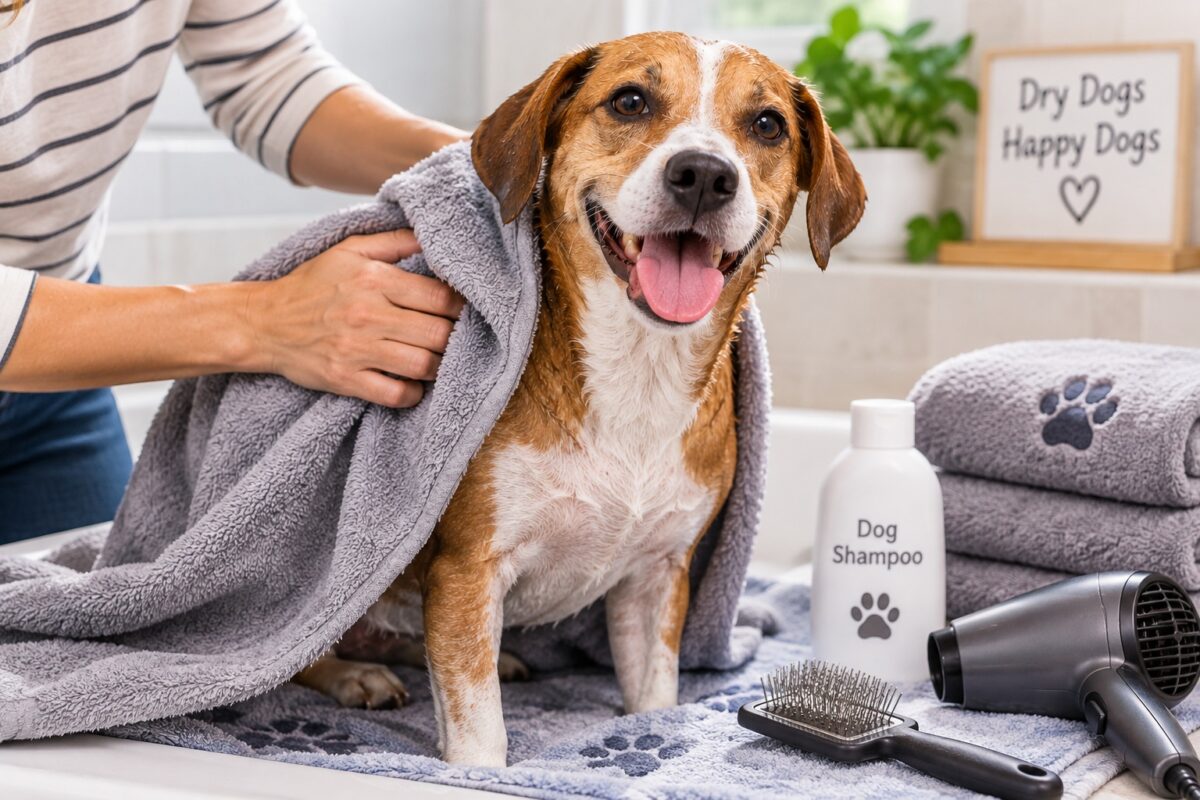
Short-haired dogs usually dry faster than dogs with dense coats. Start before your dog leaves the tub. Let excess water drain for several seconds. Then press a dry towel against the coat. Work from the neck toward the tail.
Use a second towel when the first becomes soaked. Check the belly, paws, armpits, and skin folds. These areas can stay damp after the back feels dry. Keep your dog inside until the coat feels dry and comfortable.
A dryer is optional for many short coats. If you use one, avoid the hottest setting. Keep enough distance to protect the skin. AKC advises avoiding high heat during dog drying.
Complete drying also helps control normal wet-dog odor. See why a dog can smell after a bath when dampness stays behind.
You may think vigorous rubbing speeds the job. Gentle blotting gives you better control around sensitive skin.
Once the coat feels dry, let your dog rest somewhere warm. Then clean and dry the bath area.
What Most People Get Wrong About Bathing a Short-Haired Dog
Short fur creates the false idea that bath technique barely matters. The coat is easier to wash, but skin still needs protection. Shampoo reaches short-haired skin quickly. That makes correct product choice and rinsing especially important.
Another mistake is skipping brushing because the coat cannot mat easily. Brushing still removes loose fur and debris. It also lets you inspect the skin before water hides small changes. Short-haired dogs can shed throughout the year.
The third mistake is using extra shampoo for a deeper clean. More product creates more residue to remove. Complete rinsing matters more than thick foam. VCA and AKC both stress proper rinsing and dog-safe shampoo.
- Wrong belief: Short-haired dogs never need brushing before a bath.
- Correction: Brushing removes loose hair and exposes skin problems early.
- Wrong belief: Human shampoo works because short fur rinses quickly.
- Correction: Use shampoo designed for canine skin instead.
- Wrong belief: More shampoo means a cleaner dog.
- Correction: Extra product only makes complete rinsing harder.
The coat length changes grooming effort. It does not remove basic skin-care rules.
When Should Bath-Time Skin Problems Need a Vet?
Contact your veterinarian when skin trouble lasts after the coat dries. Watch for strong itching, redness, swelling, sores, or hair loss. A strong unusual odor also deserves attention. These signs can point beyond normal bath irritation.
Stop using a new shampoo if symptoms begin after bathing. Rinse the coat with clean lukewarm water when residue seems likely. Don’t keep testing new products on sore skin. Repeated washing can make some irritation harder to assess.
VCA advises veterinary guidance for dogs needing frequent therapeutic bathing. Skin allergies and other conditions can require prescribed shampoos. The treatment schedule can differ from routine grooming.
If scratching starts after washing, review this guide to a dog becoming itchy after a bath. Persistent symptoms still need professional assessment.
- Persistent or intense scratching
- Red, swollen, or painful skin
- Open sores, scabs, or bleeding
- Unexpected hair loss
- Strong musty or foul odor
- Recurring problems after every bath
A bath should improve cleanliness without creating lasting discomfort. Skin changes tell you when routine grooming is no longer enough.
What Should You Do Before Your Dog’s Next Bath?
Brush first, use lukewarm water, and choose shampoo made for dogs. Rinse carefully, then dry every damp area. Keep the routine calm so future baths become easier. Right now, place a non-slip mat beside your dog’s bath supplies.
Frequently Asked Questions
Can I use human shampoo on my short-haired dog?
No. Use shampoo made for dogs during routine baths. Human shampoo is designed for different skin needs. It can leave canine skin dry or irritated. Short fur does not change that difference. Choose a mild dog formula and rinse it completely.
Can I use baby shampoo on my dog?
VCA advises against baby shampoo for normal dog bathing. Dogs have different skin thickness and acidity from people. A dog-specific shampoo gives you a safer routine choice. Ask your veterinarian for product advice when your dog has allergies or diagnosed skin disease.
Should I brush a short-haired dog before bathing?
Yes. Brush before wetting the coat. Brushing removes loose hair, dirt, and dead skin. It also lets you inspect the skin closely. A bristle brush works for many short coats. Rubber grooming tools can also lift loose hair during grooming.
What water temperature should I use for a dog bath?
Use comfortably lukewarm water for a routine bath. Avoid water that feels distinctly hot or cold. Test the stream before it touches your dog. Recheck after changing the faucet. Watch for shivering, distress, or attempts to escape the water.
How long should a short-haired dog bath take?
A short coat often makes washing and drying faster. Don’t race the bath, though. Give yourself enough time for brushing, wetting, shampooing, rinsing, and drying. Complete rinsing matters more than finishing quickly. Nervous behavior or heavy dirt can also extend the bath.
Can I bathe my short-haired dog every week?
Some dogs need frequent baths, but weekly bathing is not universal. Coat, lifestyle, skin health, and treatment needs change the answer. Unneeded frequent washing can dry some dogs’ skin. Follow your veterinarian’s schedule when prescribed shampoo requires weekly or more frequent use.
Why is my dog itchy after a bath?
Post-bath itching can follow shampoo residue, dry skin, or product sensitivity. An existing skin problem can also become more obvious after bathing. Rinse thoroughly and avoid harsh products. Contact your veterinarian when itching persists or comes with redness, sores, odor, swelling, or hair loss.