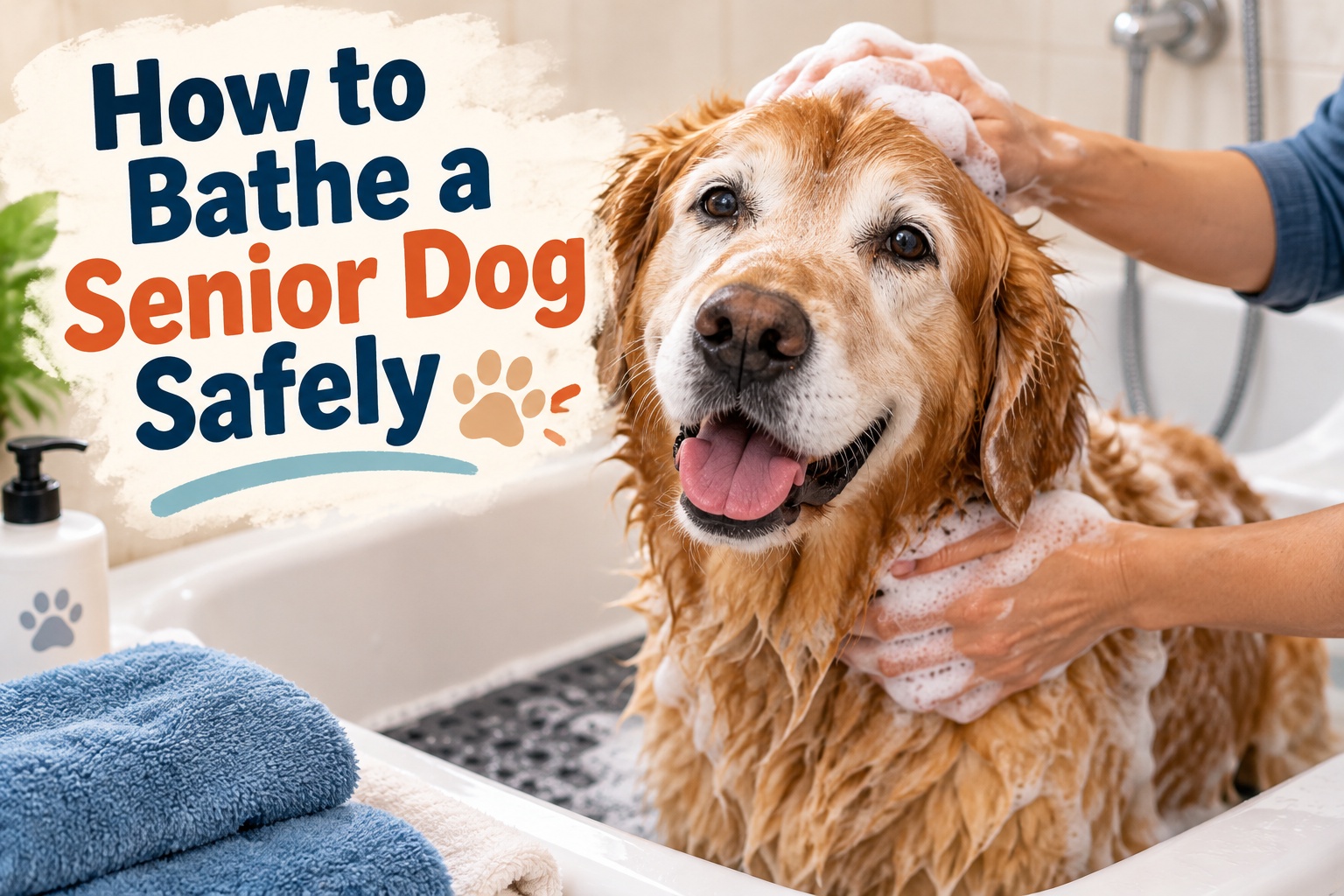
Quick Answer
To bathe a senior dog safely, focus on secure footing, lukewarm water, gentle handling, a short bath, complete rinsing, and careful drying. Older dogs with arthritis, weakness, anxiety, skin problems, or poor balance may need extra support, so adapt the normal safe dog bathing routine to your dog’s mobility and comfort.
Senior Dog Bath in 7 Quick Steps
- Check your dog: Look for pain, stiffness, wounds, skin irritation, or unusual weakness before starting.
- Add secure traction: Place a non-slip mat where your dog will stand before bringing them into the bath.
- Use lukewarm water: Keep the water comfortably warm rather than hot or cold.
- Wash gently: Use dog-specific shampoo and avoid hard rubbing over painful joints or sensitive skin.
- Rinse completely: Remove shampoo from the belly, legs, paws, skin folds, and dense coat areas.
- Dry without chilling: Blot with absorbent towels and keep your senior dog comfortably warm.
- Stop when needed: End the bath if your dog becomes painful, exhausted, panicked, weak, or unable to stand safely.
Bathing an older dog can feel different from bathing a young, energetic adult. A senior dog may tire faster, lose traction more easily, or feel uncomfortable when you move stiff joints.
My rule is simple: comfort matters more than speed. A calm, well-prepared ten-minute bath is better than forcing an older dog through a long grooming session.
- Main goal: Get the dog clean without creating unnecessary pain, fear, fatigue, or slipping.
- Main difference: Senior dogs often need more support before, during, and after the bath.
- Most important tool: A secure non-slip bathing surface.
What Does Bathing a Senior Dog Safely Mean?
Safe senior dog bathing means adapting normal bathing steps to an older dog’s mobility, skin, joints, stamina, senses, and medical needs. The dog’s age alone does not determine the routine.
Dogs enter their senior years at different times depending on size, breed, and individual health. What matters during bath time is how comfortably your dog can stand, turn, balance, and tolerate handling.
AAHA notes that senior pets may experience reduced mobility from conditions such as arthritis. It also recommends gentle grooming, secure traction, and environmental changes that help older pets move safely.
- Mobility: Can your dog stand without slipping or collapsing?
- Pain: Does touching the hips, back, neck, or legs cause discomfort?
- Skin: Are there sores, lumps, redness, flakes, or irritated areas?
- Stamina: Can your dog comfortably remain standing long enough for a bath?
- Behavior: Does your dog become frightened, confused, or defensive when handled?
Why Do Senior Dogs Need Extra Care During Baths?
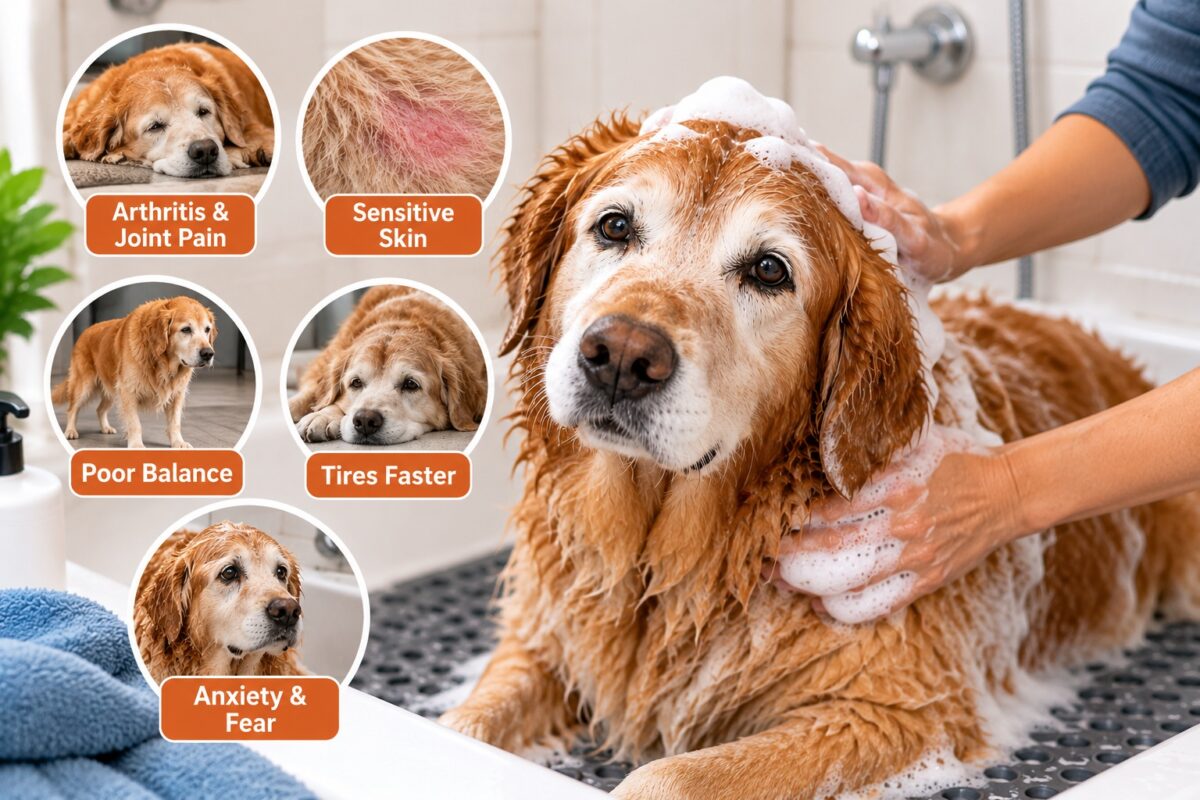
Older dogs may have arthritis, muscle loss, weaker balance, reduced vision, or reduced hearing. These changes can make a wet and slippery bathroom harder to navigate.
A senior dog may also take longer to recover from stressful handling. This is why I prepare the entire bathing area before the dog enters it.
Arthritis and Stiff Joints Can Make Standing Difficult
Arthritis can cause pain, stiffness, difficulty rising, and reluctance to move. AAHA lists these among common signs owners may notice in older pets.
A slippery tub makes this problem worse because the dog must constantly adjust their feet. A secure rubber mat reduces that unnecessary effort.
Older Dogs May Tire Faster
Standing through brushing, wetting, shampooing, rinsing, and drying can become a long physical task. Keep the bath efficient and let your dog rest when needed.
If your dog cannot comfortably stand for the whole bath, ask your veterinarian or professional groomer about safer alternatives.
Senior Skin May Need Gentler Handling
Check the skin before adding water because an older dog may have lumps, irritated patches, wounds, or other changes hidden beneath the coat. Avoid aggressively scrubbing anything painful or abnormal.
If your dog already has easily irritated skin, follow the gentler techniques in this sensitive-skin dog bathing guide.
What Should You Prepare Before Bathing an Older Dog?
Prepare everything first so your senior dog does not spend extra time standing on a wet surface. Keep every item within one arm’s reach.
- Non-slip bathtub or shower mat
- Dog-specific shampoo
- Two or more absorbent towels
- Soft washcloth for the face
- Brush or comb suited to the coat
- Gentle handheld sprayer or rinse cup
- High-value treats if your dog enjoys them
- Extra floor towel for traction outside the tub
Brush loose fur and easy tangles before the bath. Never pull aggressively through painful mats or force an older dog to stand through a difficult dematting session.
ASPCA grooming guidance recommends brushing before bathing and using shampoo made for pets. It also recommends keeping direct water away from the eyes, ears, and nose.
How Do You Bathe a Senior Dog Step by Step?
Use the same basic order every time: inspect, secure the footing, wet slowly, shampoo gently, rinse completely, dry carefully, and let the dog rest. Predictability can make the experience easier for both of you.
Check your dog’s condition first.
Look for unusual pain, weakness, limping, skin wounds, redness, swelling, or breathing difficulty. Delay a routine bath and contact your veterinarian when your dog appears unwell.
Set up a non-slip surface.
Cover the standing area with a secure mat. Also place a towel or grippy surface outside the tub so wet paws do not immediately land on a slick floor.
Help your dog enter safely.
Avoid pulling on the collar or lifting by the legs. Large or weak dogs may need a ramp, walk-in shower, or another setup that avoids stepping over a high bathtub wall.
Use comfortably lukewarm water.
Test the water before it touches your dog. AKC grooming guidance recommends warm water and complete rinsing during routine dog baths.
Wet the body gradually.
Start near the shoulders and work backward. Keep strong spray away from the face, ears, and eyes.
Massage in dog shampoo gently.
Work through the coat without hard scrubbing. Be especially careful around the hips, knees, spine, neck, and other areas where your dog seems stiff.
Rinse every area completely.
Check the chest, belly, armpits, legs, paws, tail, skin folds, and dense coat areas. Shampoo left against the skin can contribute to irritation.
Wash the face separately.
Use a damp washcloth rather than spraying the head. For extra ear protection, see how to keep water out of a dog’s ears during bathing.
Blot the coat with towels.
Press clean towels against the fur instead of rubbing aggressively. Replace soaked towels so the dog does not remain wet longer than necessary.
Move your dog to a warm resting area.
Keep your senior dog away from cold drafts until the coat and skin are comfortably dry. Give them secure footing and an easy place to lie down.
Senior Dog Bathing: What Should You Change?
The biggest difference between bathing a healthy adult and an older dog is the amount of physical support you provide. The table below shows where I would adjust the routine.
| Bathing Factor | Healthy Adult Dog | Senior Dog |
|---|---|---|
| Footing | Non-slip surface recommended | Secure traction is especially important |
| Bath length | Normal grooming session | Keep efficient and allow rest when needed |
| Joint handling | Normal gentle handling | Avoid forcing stiff or painful joints |
| Entry and exit | May step into tub independently | Ramp or walk-in area may be safer |
| Drying | Towel or suitable dryer | Blot gently and prevent chilling |
| Stress monitoring | Watch normal body language | Watch fatigue, confusion, pain, and balance closely |
How Can You Bathe a Senior Dog With Arthritis?
A dog with arthritis needs strong traction and minimal unnecessary movement. Avoid repeatedly repositioning the legs or asking the dog to step over a high tub wall.
AAHA recommends addressing mobility and pain in senior pets and notes that low-stress handling can be useful. Your veterinarian can help you build a pain-management plan if everyday tasks are becoming difficult.
- Use a walk-in shower: It can remove the need to climb over a tub wall.
- Keep the mat secure: Check that it cannot slide underneath the dog.
- Support without squeezing: Steady the body gently when needed.
- Keep supplies close: Reduce unnecessary standing time.
- Allow breaks: Do not force a tired dog to remain standing.
Never give human pain medication before grooming unless a veterinarian has specifically prescribed or approved it for your dog.
What If Your Senior Dog Is Scared of the Bath?
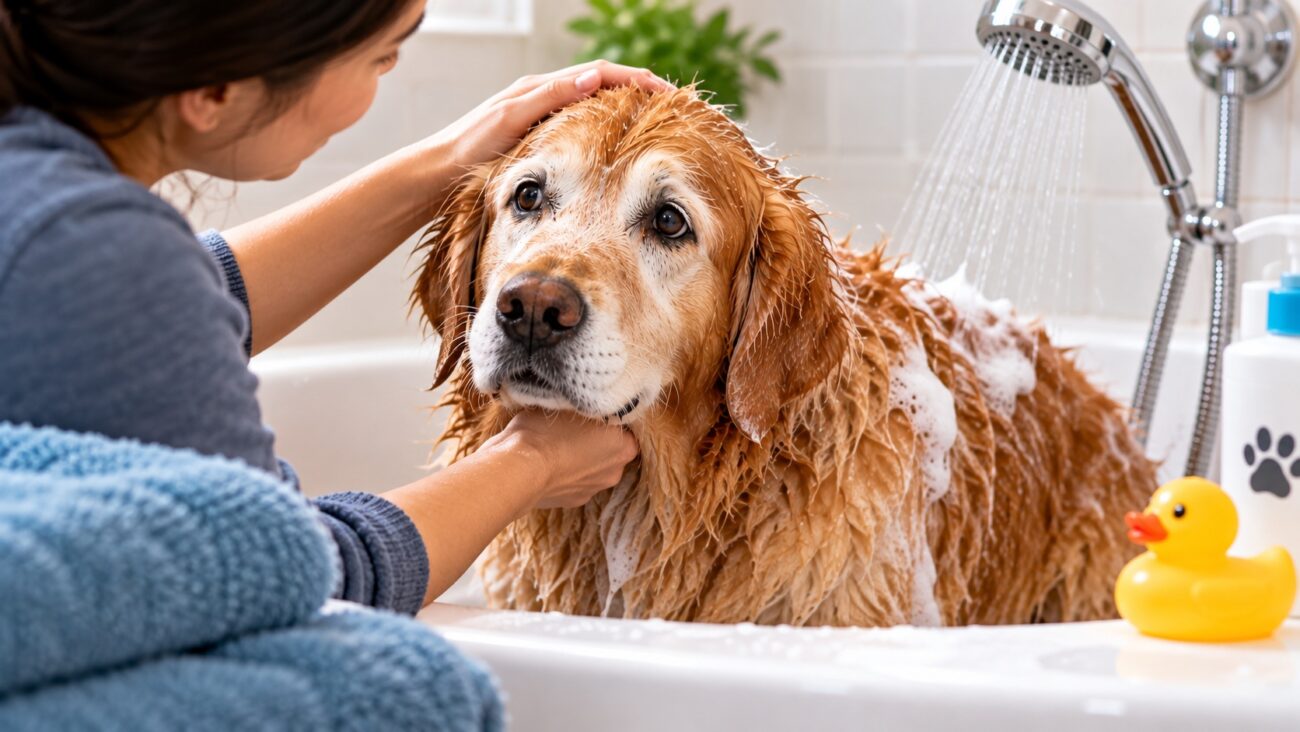
Fear and physical discomfort can look similar during grooming. A dog may freeze, tremble, scramble, refuse treats, or try to escape.
Do not turn routine bathing into a struggle. If fear is the main problem, use the gradual approach in this guide for a dog scared of bath time.
- Introduce the bathroom without water.
- Let the dog stand on the dry non-slip mat.
- Reward calm behavior.
- Introduce gentle water gradually.
- Stop before fear becomes overwhelming.
A sudden new fear of handling deserves extra attention. Pain, reduced vision, hearing changes, or another health problem may alter how an older dog reacts.
How Often Should You Bathe a Senior Dog?
There is no single bathing schedule that fits every senior dog. Coat type, skin health, activity, incontinence, medical conditions, and veterinary instructions all affect frequency.
Do not increase baths simply because your dog is older. Too much washing may irritate dry or sensitive skin in some dogs.
Between full baths, small cleanups may be easier. A damp cloth can handle muddy paws, light dirt, or a small dirty area without putting a frail dog through a complete bath.
- Healthy coat: Bathe when hygiene and coat condition require it.
- Skin disease: Follow the shampoo and frequency your veterinarian recommends.
- Incontinence: Keep soiled fur and skin clean and dry while avoiding unnecessary full-body washing.
- Reduced mobility: Consider spot cleaning between full baths.
When Should You Skip a Home Bath and Call a Veterinarian?
Skip a routine home bath when your senior dog appears medically unstable or bathing could worsen pain. Cleaning can wait when health is the bigger concern.
- Sudden inability to stand or walk normally
- Severe pain when touched or moved
- Labored or unusual breathing
- Repeated collapsing or extreme weakness
- Open wounds or significant skin infection
- Large painful, bleeding, or rapidly changing skin masses
- Severe ear pain or discharge
- Sudden major behavior change during handling
As of 2026, AAHA senior-care guidance continues to emphasize monitoring changes in mobility, behavior, skin, joints, and general health. Regular veterinary care becomes especially important as those changes appear.
Senior Dog Bath Supplies I Would Consider
If you’re improving a senior dog’s bathing setup, I would prioritize products that reduce slipping, shorten drying time, and improve water control. Comfort-focused tools matter more than complicated grooming accessories.
🏆 Best for Traction
Gorilla Grip Shower and Bathtub Mat
★★★★½
A grippy bathtub mat can give an older dog a more secure standing surface. For senior bathing, traction is the first upgrade I would make before buying specialized washing tools.
🚿 Best for Water Control
Aquapaw Dog Bathing Tool
★★★★☆
This wearable rinsing tool keeps water control close to your hand while washing. That can help you work deliberately around an older dog’s body without broadly spraying the face or bathroom.
💧 Best for Gentle Drying
The Absorber Dog Lover’s Towel
★★★★½
A highly absorbent towel can remove water without prolonged rubbing. I prefer blotting for senior dogs because it limits extra handling around stiff or sensitive body areas.
Frequently Asked Questions
Can I bathe an old dog with arthritis?
Yes, many dogs with arthritis can still be bathed at home if they can stand safely and tolerate handling. Use secure traction, avoid forcing painful joints, keep the bath short, and ask your veterinarian for guidance if mobility or pain has become significant.
What water temperature is safest for a senior dog?
Use comfortably lukewarm water rather than hot or cold water. Test it before wetting your dog, and keep checking the temperature during the bath if you adjust the faucet.
How do I bathe a senior dog that cannot stand for long?
Keep the session short, use a safe walk-in bathing area when possible, and allow breaks. If your dog cannot stand securely even with support, ask your veterinarian or an experienced professional groomer about safer cleaning methods.
Can I use human shampoo on my senior dog?
Use shampoo formulated for dogs unless your veterinarian gives different instructions. ASPCA grooming guidance recommends pet-specific shampoo because some ingredients or fragrances in human products may irritate canine skin.
Should I use a hair dryer on an elderly dog?
Towel drying is often a comfortable first choice. If you use a dryer, avoid hot concentrated airflow, keep the air moving, monitor your dog’s comfort closely, and stop if the noise or airflow causes distress.
Final Takeaway: Make the Bath Easier on Your Senior Dog
Bathing a senior dog safely is less about adding complicated steps and more about removing unnecessary risks. Give your dog secure footing, lukewarm water, gentle handling, a thorough rinse, and enough support to remain comfortable.
Watch your dog rather than the clock. If pain, weakness, slipping, confusion, or panic appears, stop and choose the safer option.
Aging changes how some dogs handle routine grooming, but a thoughtful setup can make bath time much easier. Start by putting a non-slip mat in place before your senior dog ever steps onto the wet floor.
For general bathing fundamentals, the American Kennel Club grooming guide, ASPCA dog grooming guidance, and AAHA senior care guidance provide useful supporting information.