
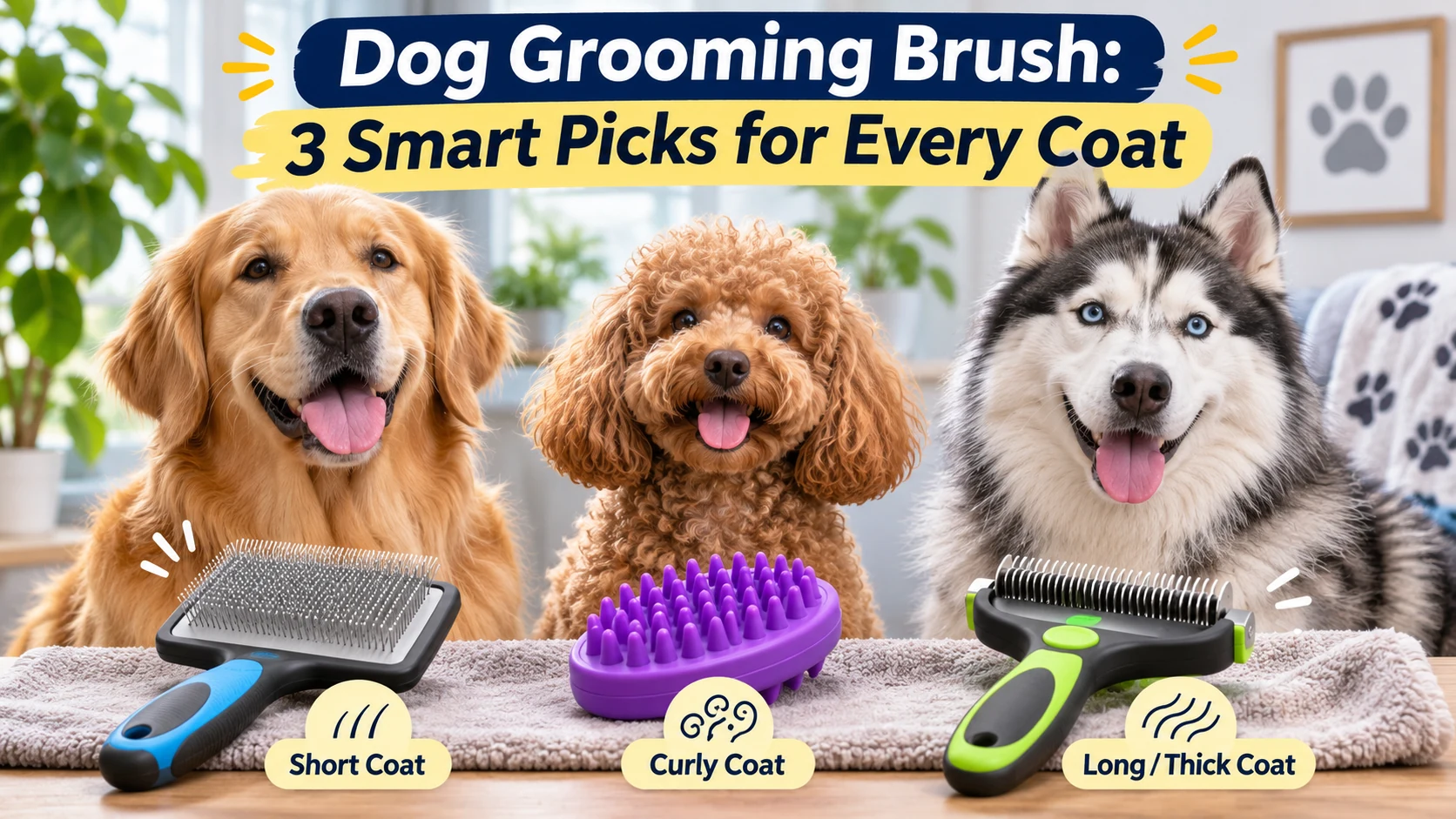
The best dog grooming brush for convenient everyday care is the Hertzko Self-Cleaning Slicker Brush (Original), thanks to its retractable pins and easy cleanup. We evaluated three options based on coat suitability, handling, and cleaning convenience using documented product features. A brush that works well on long curls may be uncomfortable or unnecessary on a short, smooth coat. This guide helps you choose an appropriate tool for your dog’s coat and grooming needs.
Our Top Pick
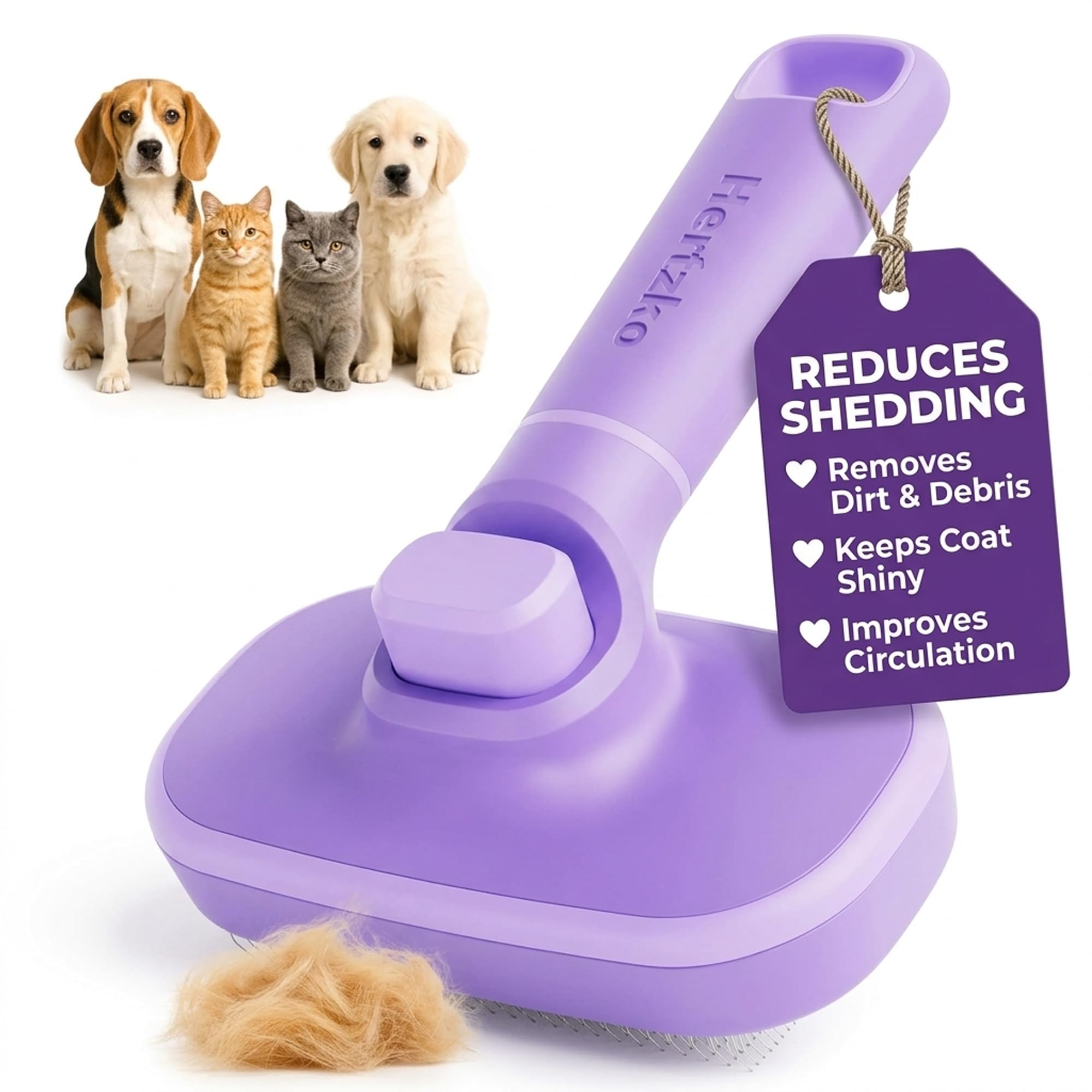
Hertzko Self-Cleaning Slicker Brush (Original)
The retractable-pin mechanism makes removing trapped fur straightforward, while the angled wire pins help collect loose hair and work through manageable tangles. It is best suited to regular grooming rather than severe mat removal.
Quick Comparison: All 3 Dog Grooming Brushes Ranked
| Rank | Product | Best For | Editorial Score | Action |
|---|---|---|---|---|
| 1 | Hertzko Self-Cleaning Slicker Brush (Original) | Everyday grooming and easy cleanup | 4.6/5 | Buy → |
| 2 | Hartz Groomer’s Best Slicker Brush for Dogs | Budget-conscious grooming | 3.9/5 | Buy → |
| 3 | Chris Christensen Big G Slicker Brush | Long, dense, curly coats | 4.3/5 | Buy → |
These are editorial suitability scores, not customer ratings or results from physical product testing.
How We Chose These Dog Grooming Brushes
We examined manufacturer-described features and intended coat applications, then compared them against established grooming principles. We did not conduct physical product tests or interview a veterinarian specifically for this review.
Coat Suitability
Matching pin design, brush type, and intended use to different coat lengths and textures.
Handling and Control
Comparing grip design, head shape, and expected control during gentle grooming.
Cleaning Convenience
Considering how collected fur is removed and how the brush should be maintained.
We excluded unverified copies and products that function primarily as cutting undercoat blades rather than traditional grooming brushes.
What to Look for When Buying a Dog Grooming Brush
The right brush depends more on your dog’s coat characteristics than on advertising claims. Consider coat length, density, skin sensitivity, and how frequently the brush will be used.
1. Coat Type and Pin Length
Long and curly coats often benefit from a suitable slicker brush and a separate grooming comb. Short, smooth coats may be better maintained with a rubber curry or soft-bristle brush, while some dense double coats benefit from specialized undercoat tools.
For more guidance, read our dog deshedding tool selection guide.
2. Gentle Pins and Skin Safety
Fine angled pins can remove loose hair and help separate small tangles, but excess pressure may scratch or irritate skin. Brush lightly, inspect the skin frequently, and stop if your dog shows discomfort.
3. Handle and Brush Head Design
A secure, comfortable handle makes brushing easier to control. Large heads can cover broad areas efficiently, while smaller heads are often better around legs and narrower body sections.
4. Cleaning and Maintenance
Self-cleaning brushes simplify removing accumulated fur. Traditional brushes require manual cleaning but have fewer moving components. Remove trapped hair regularly, inspect pins for damage, and follow product-specific cleaning instructions.
See our guide to cleaning grooming tools for hygiene tips.
Quick Decision Guide
Choose Hertzko Original.
Choose Hartz Groomer’s Best.
Consider Chris Christensen Big G.
Consider a rubber curry instead.
#1 Best Overall
Hertzko Self-Cleaning Slicker Brush (Original)
Best for: Routine brushing and convenient fur removal
Collected fur can make cleaning a traditional slicker brush frustrating. The Hertzko Original addresses this problem with a push-button mechanism that retracts its fine wire pins, allowing hair to be lifted from the brush head more easily.
Its angled pins can collect loose hair and address light, manageable tangles on suitable coats. The comfort-grip handle supports controlled everyday brushing, but this is not a tool for severe mats or highly sensitive skin.
What We Loved
- Push-button retractable pins simplify fur removal.
- Angled fine pins collect loose hair.
- Comfort-grip handle supports controlled brushing.
What Could Be Better
- Not appropriate for severe skin-level matting.
- Excessive pressure can irritate or scratch skin.
- The moving mechanism requires appropriate maintenance.
Quick Specs
Pin DesignFine, angled wire pins
Hair ReleaseRetractable pins
HandleComfort grip
Coat UseCompatible medium and longer coats
Matting RoleLight tangles only
Editorial Suitability Scores — Not Hands-On Testing
Coat suitability: 4.4/5
Handling: 4.6/5
Easy cleaning: 4.8/5

#2 Best Budget
Hartz Groomer’s Best Slicker Brush for Dogs
Best for: Budget-conscious owners with longer or thicker coats
Not everyone needs a grooming brush with moving parts. Hartz Groomer’s Best Slicker Brush for Dogs uses a conventional fixed-pin head with fine coated-tip wire bristles and an ergonomic handle.
The manufacturer positions it for heavy, long, curly, or wiry coats. It is a reasonable entry-level choice for appropriate dogs, although trapped fur must be removed manually and the design is not as specialized for dense, cottony coats as a premium long-pin slicker.
What We Loved
- Coated bristle tips reduce sharp contact.
- Simple fixed-head design.
- Ergonomic handle supports controlled strokes.
What Could Be Better
- Collected hair requires manual removal.
- Less specialized for particularly dense long curls.
- Gentle technique remains important despite coated tips.
Quick Specs
Pin DesignCoated-tip fine wire bristles
Hair ReleaseManual removal
HandleErgonomic grip
Coat UseLong, heavy, curly, or wiry
Main FunctionLoose fur and small tangles
Editorial Suitability Scores — Not Hands-On Testing
Coat suitability: 4.1/5
Handling: 4.0/5
Easy cleaning: 3.6/5

#3 Best for Dense Coats
Chris Christensen Big G Slicker Brush
Best for: Poodles, Doodles, and long, dense coats
Thick curly coats can appear smooth at the surface while developing tangles underneath. Chris Christensen Big G is designed for longer, denser coats, using 27 mm stainless-steel pins, a curved head, and a cushioned pin pad.
Its longer pins make it a more targeted option for carefully brushing dense curls section by section. Multiple head sizes accommodate different grooming areas. However, the pins require gentle handling, trapped hair needs manual removal, and the brush can be excessive for short smooth coats.
What We Loved
- Long 27 mm stainless-steel pins.
- Curved head for directional control.
- Multiple head sizes for different grooming areas.
What Could Be Better
- Long pins demand careful pressure control.
- No automatic hair-release mechanism.
- More brush than many short-coated dogs need.
Quick Specs
Pin Length27 mm
Pin MaterialStainless steel
Head DesignCurved cushioned head
Available SizesLarge, medium, Baby G
Coat UseLong, dense, curly coats
Editorial Suitability Scores — Not Hands-On Testing
Coat suitability: 4.9/5
Handling: 4.6/5
Easy cleaning: 3.4/5
Top 3 Head-to-Head: Hertzko vs. Hartz vs. Chris Christensen
All three are slicker brushes, but their designs solve different grooming problems. The most important difference is not the overall score; it is how the head and pins match your dog’s coat.
| Feature | Hertzko | Hartz | Big G |
|---|---|---|---|
| Main Advantage | Easy fur removal | Simple design | Long-pin coat reach |
| Best Coat Fit | Suitable medium/long coats | Long, heavy, wiry coats | Long dense curls |
| Pin Design | Retractable fine pins | Fixed coated-tip pins | Long stainless-steel pins |
| Cleaning | Push-button | Manual | Manual |
| Best Choice When | Cleanup is the priority | Simplicity matters | Coat density is the priority |
Verdict: Hertzko is the most convenient general pick of these three. Hartz is appropriate when you want a simple traditional slicker. The Big G is more purposeful for long, dense curly coats, provided it is used correctly.
Who These Dog Grooming Brushes Are Not For
Slicker brushes are not universally appropriate. Dogs with very short smooth hair may benefit more from a rubber curry or soft-bristle brush. Dogs with painful skin conditions, sores, or significant matting need more careful assessment before brushing.
For longer coats, make sure the hair can be gently separated without pulling. Our safe pre-haircut brushing checklist explains preparation steps and when to stop.
Common Dog Brushing Mistakes to Avoid
- Using too much pressure: Gentle, controlled strokes are safer than scraping across the skin.
- Ignoring the undercoat: Surface brushing alone may miss tangles in long, dense coats.
- Brushing through painful mats: Tight knots can pull skin and may need professional attention.
- Using the wrong brush: A slicker intended for long fur may not suit a short smooth coat.
- Skipping brush maintenance: Bent pins, trapped debris, or damaged handles can make grooming less safe.
- Rushing the session: Short, calm sessions are often better than forcing an unwilling dog to remain still.
Introduce grooming gradually, reward calm behavior, and stop whenever your dog becomes distressed or uncomfortable.
Frequently Asked Questions About Dog Grooming Brushes
What type of brush is best for my dog?
The answer depends on coat length, density, and skin sensitivity. Slickers are useful for many longer or curly coats, while rubber curry brushes often suit short smooth coats. Double-coated dogs may require an appropriate undercoat tool as part of their grooming routine.
Are slicker brushes safe to use on dogs?
Yes, when the brush is appropriate for the coat and used with light pressure. Metal pins can scratch or irritate skin if used roughly or repeatedly over the same area. Stop if you notice discomfort, redness, or broken skin.
How often should you brush a dog?
Frequency varies by coat type. Long, curly, or mat-prone coats may need daily attention, while some short smooth coats need less frequent brushing. Shedding seasons, activity, and coat condition can also affect the schedule.
Is a self-cleaning dog brush better than a regular slicker?
A self-cleaning brush makes collected hair easier to remove, but that does not automatically make it better for every coat. A conventional slicker may be simpler mechanically, while a specialist long-pin brush may better address dense, curly hair.
Can a dog grooming brush remove mats?
A suitable brush may help loosen minor manageable tangles. It should not be forced through severe or skin-level mats. Tight matting can pull painfully on the skin and may require professional grooming.
Should you brush your dog before or after a bath?
Check for tangles before bathing and gently work through manageable knots where appropriate. Some long or curly coats also benefit from careful brushing after thorough drying. Never pull through tight wet mats.
How do you clean a dog grooming brush?
Remove trapped hair, inspect the pins, and clean the brush according to the manufacturer’s instructions. Allow appropriate parts to dry thoroughly. Do not soak retractable mechanisms unless the manufacturer specifically permits it.
Our Final Verdict
For most owners choosing between these three slickers, Hertzko Self-Cleaning Slicker Brush (Original) is the most convenient general-purpose pick. Its retractable pins make routine fur removal simpler without requiring additional accessories.
Choose Hartz Groomer’s Best if you prefer a straightforward, budget-conscious slicker. Choose Chris Christensen Big G if your priority is maintaining a long, dense, curly coat and you can use longer pins gently.
Our Overall Pick
Hertzko Self-Cleaning Slicker Brush (Original)
A practical everyday brush for compatible coats, with an easy-release design that reduces the effort involved in cleaning trapped hair.
A well-chosen grooming brush should make coat maintenance easier without causing discomfort. Match the tool to the coat and use patient, gentle technique rather than assuming one brush will suit every dog.


