⚡ Quick Answer
Most puppies do best with a full bath about once a month. Bathe sooner after mud, waste, strong odors, or sticky dirt. Puppies under eight weeks need extra care because they chill fast. Use warm water, puppy-safe shampoo, full rinsing, and thorough drying.
What Sets Your Puppy’s Bath Schedule?
- Age: Start full baths around eight weeks unless your vet advises otherwise.
- Coat: Long, oily, or dirty coats can need more frequent care.
- Skin: Dryness, redness, or itching means the routine needs review.
Keep Puppy Baths Safe
- ✓Use shampoo made for puppies.
- ✓Rinse until no shampoo remains.
- ✓Dry the coat and skin fully.
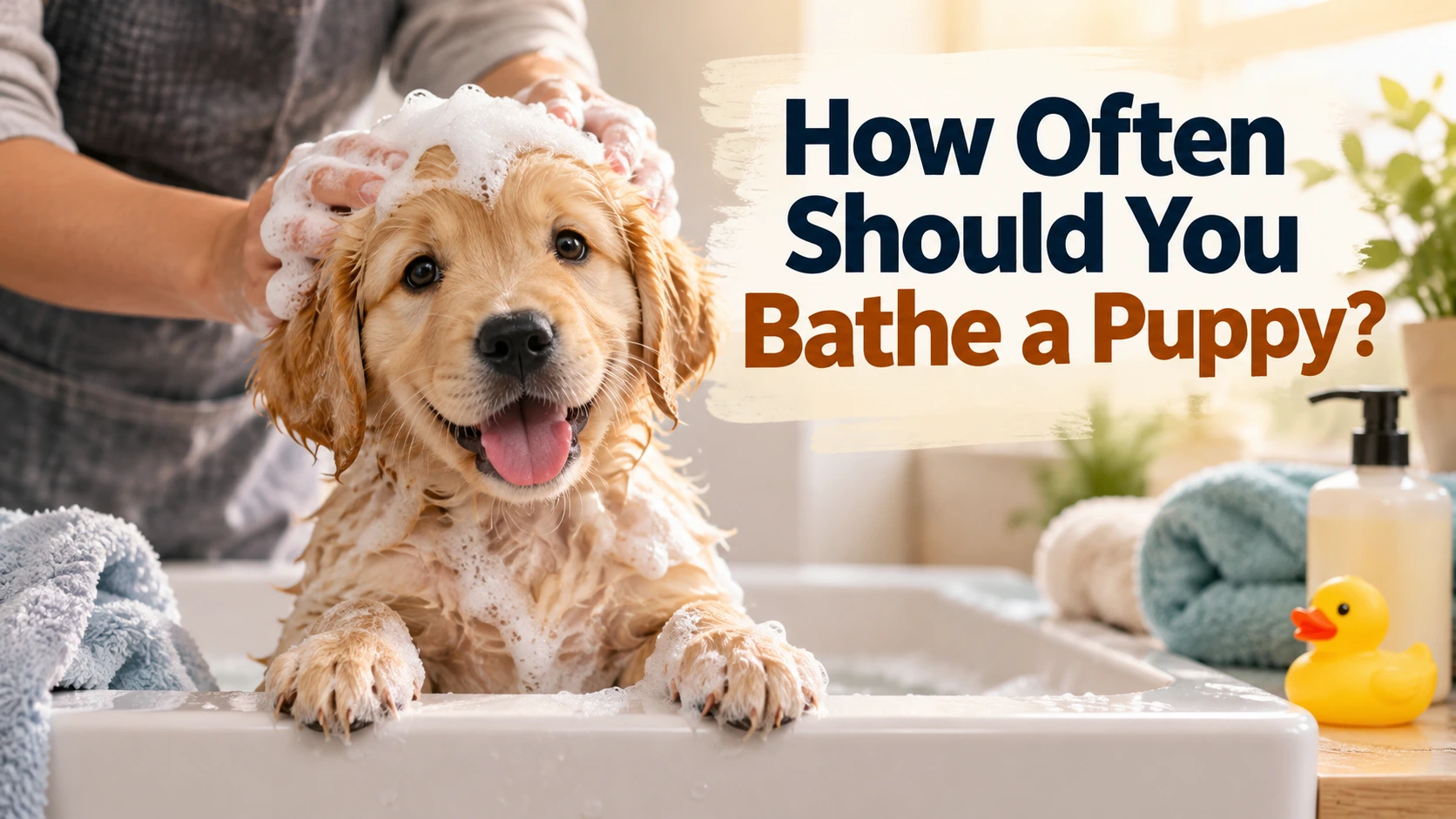
Warm water hits the tub while your puppy wriggles against your hands. That tiny coat can get dirty fast.
Yet frequent washing isn’t always better for young skin. Ashraful writes about dog grooming with safe, simple home care in mind.
Bath frequency depends on age, coat, activity, and skin health. A good schedule keeps your puppy clean without needless washing.
📌 Key Takeaways
- →Monthly baths work as a useful starting point for most healthy puppies.
- →Eight weeks is a common starting age for a normal full bath.
- →Dirty puppies should be cleaned when waste, mud, or harmful dirt coats them.
- →Skin signs like flakes, redness, or itching can signal excessive bathing.
How Often Should You Bathe a Puppy?
Most healthy puppies can start with one full bath about every four weeks. That schedule isn’t a strict medical rule. Your puppy’s coat and daily life matter more than the calendar. Mud, urine, feces, or strong odors justify an earlier bath. Indoor puppies with clean coats often need fewer baths. Active puppies can need washing more often. Long coats also collect more dirt and debris. Skin problems can change the schedule as well.
Trusted dog-care sources also avoid one fixed schedule for every dog. VCA links bath needs with age, coat, lifestyle, and health. AKC also notes strong differences between breeds and coat types. So if your puppy stays clean, don’t wash just because four weeks passed.
This guide gives you a simple starting point for common situations.
Use this table to adjust bath timing without overthinking the calendar.
Your puppy’s condition should guide each bath more than a fixed date.
💡 Key Insight
Use the calendar as a guide. Let your puppy’s coat decide the final timing.
A good schedule starts with age, which changes how safely puppies handle baths.
When Can a Puppy Have Its First Bath?

Around eight weeks is a common starting point for a puppy’s first bath. Younger puppies lose body heat faster and need more care. Their mother also handles much early cleaning. Use a warm damp cloth for small messes before eight weeks. Dry the puppy right after each wipe. A full bath can become necessary after serious soiling. In that case, warmth and fast drying matter most.
AKC grooming guidance starts early bath training near two months old. Another AKC guide suggests warm cloth cleaning during early puppy life. The goal isn’t only clean fur. Early gentle care also teaches puppies that handling feels safe.
For a weak, sick, chilled, or very young puppy, call your vet first.
⚠️ Warning
Never leave a wet young puppy cold. Towel dry and keep the puppy warm.
Once bath age feels clear, coat and lifestyle become the next big factors.
What Changes How Often a Puppy Needs a Bath?
Four main factors change how often your puppy needs bathing. Coat type affects how fast oil, dust, and debris build up. Outdoor play raises dirt exposure. Skin health can limit normal shampoos or require special care. Your puppy’s home life matters too. A clean indoor puppy often needs fewer full baths. A puppy that rolls in mud needs quicker cleaning.
VCA says age, lifestyle, coat type, and health all affect bath needs. AKC also stresses breed, coat, and lifestyle differences. That explains why one schedule cannot fit every puppy.
Watch your puppy instead of copying another dog’s routine.
📋 Four Bath-Timing Factors
- Coat type: Long and dense coats can hold dirt near the skin.
- Outdoor play: Mud and dirty water can bring bath day forward.
- Skin health: Dry or sore skin needs a vet-guided plan.
- Home routine: Brushing and spot cleaning can delay full baths.
Regular brushing also removes loose dirt between baths. These dog grooming gloves can help during simple coat care.
Frequency matters, but your bath method can affect puppy skin just as much.
How Do You Bathe a Puppy Without Drying Its Skin?
Use warm water, gentle puppy shampoo, careful rinsing, and complete drying. Brush longer coats before water touches them. Wet the body slowly so your puppy stays calm. Keep water away from the eyes, nose, and ear canals. Apply only enough shampoo to clean the coat. Massage with gentle hand strokes. Never scrub young skin hard. Rinse until the water runs free of product.
The ASPCA advises pet shampoo instead of products made for people. AKC also stresses gentle handling and complete rinsing. Those steps lower the chance of leftover shampoo causing discomfort.
You can review the ASPCA dog grooming guidance for more safe bath steps.
🔢 Step-by-Step: Give Your Puppy a Gentle Bath
- 1
Prepare the bath
Set out shampoo and towels before bringing your puppy.
- 2
Wet the coat slowly
Use lukewarm water and avoid the face and ears.
- 3
Wash and rinse
Use puppy shampoo and rinse every trace from the coat.
- ✓
Dry your puppy fully
Towel dry first, then keep your puppy warm.
Need help choosing a wash? Compare these puppy shampoos for bath time before buying one.
Recommended Product
Burt’s Bees for Pets Tearless Puppy Shampoo with Buttermilk and Flaxseed Oil, 16 Fl Oz – 2 Pack
★★★★½ 4.5 out of 5 stars
This puppy wash offers a gentle option for routine baths after eight weeks.
As an Amazon Associate, we earn from qualifying purchases.
The product data showed a 4.5-star rating during research. The listed ASIN was B09NWBZ5CF.
GoPetZone also has an Earthbath shampoo review for sensitive coat needs.
Good technique protects skin, but owners still ask whether weekly baths go too far.
Is Bathing a Puppy Once a Week Too Much?
Weekly bathing is more than most healthy puppies need. Yet it isn’t unsafe in every case. Some dogs need frequent baths for dirt or skin care. Product choice also matters. Harsh shampoo can strip oils and dry the skin. Gentle dog shampoo lowers that risk. Your vet can also set a weekly wash plan for skin disease.
VCA warns that frequent bathing can lead to irritation and itching. AKC notes that gentle dog shampoo can support more frequent washing. Those points aren’t at odds. They show why shampoo choice and skin condition matter.
You can also review VCA’s coat and grooming guidance.
✅ Tip
If your puppy stays clean, brush or spot-clean instead of adding another bath.
Watch for flakes, redness, dull fur, or scratching after frequent baths. Reduce normal bathing and speak with your vet if those signs persist.
One common mistake starts when owners think clean always means freshly shampooed.
What Most People Get Wrong About Puppy Bathing
Many owners believe puppies need baths on the same schedule as people. Dogs have different skin and coat needs. Another myth says short-haired puppies never need much grooming. Coat length alone doesn’t set bath frequency. Activity, oil, skin health, and dirt exposure also matter.
Some owners also reach for human shampoo when puppy shampoo runs out. Dog skin has different needs from human skin. AKC advises products made for dogs for routine washing.
- Myth: A puppy needs a bath every week to stay healthy.
- Fact: Most healthy puppies can start near a monthly schedule.
- Myth: Human shampoo works the same as puppy shampoo.
- Fact: Dog-safe products better match canine skin needs.
- Myth: More shampoo makes a puppy cleaner.
- Fact: Too much product makes complete rinsing harder.
Bathing also affects later grooming. Always dry the coat before using normal clippers.
See why in this guide about using dog clippers on wet hair.
Knowing the myths helps. Skin changes after bathing tell you when professional care matters.
When Should You Call a Vet After Bathing Your Puppy?
Call your vet when skin problems keep returning after baths. Watch for ongoing redness, swelling, sores, flakes, or strong itching. Hair loss also deserves attention. A bad smell that returns fast can point beyond normal dirt. Ear pain or discharge also needs a vet check. Don’t keep adding baths to hide these signs.
Skin disease can require a special shampoo and a custom bathing schedule. VCA notes that vets can prescribe frequent baths for some skin conditions. That differs from routine cosmetic washing.
If you live in Bangladesh, this vet and animal doctor list can help with local care.
For a healthy puppy, the goal stays simple. Keep the coat clean while protecting comfortable skin.
What Is the Best Puppy Bathing Routine?
Start with about one bath every four weeks for a healthy puppy. Adjust that schedule when dirt, coat needs, or skin health changes. Use warm water and puppy-safe shampoo. Rinse fully and dry your puppy before the coat gets cold.
Don’t chase a perfect calendar. Your puppy’s clean coat and comfortable skin matter more.
Right now, check your puppy’s coat and skin for dirt, odor, redness, or flakes.
Frequently Asked Questions
Can I Bathe My Two-Month-Old Puppy?
Yes, most healthy two-month-old puppies can have a gentle bath. Eight weeks is a common starting age. Use lukewarm water and puppy-safe shampoo. Keep water away from the face and ears. Dry the puppy fully afterward. Ask your vet first when the puppy feels weak or sick.
Can I Bathe My Puppy Once a Week?
A healthy puppy usually doesn’t need a weekly bath. Monthly bathing works as a better starting point. Weekly washing can suit some dirty dogs or vet-led skin plans. Use gentle dog shampoo when baths happen often. Reduce baths if you notice flakes, redness, itching, or a dry coat.
Can I Use Human Shampoo on a Puppy?
Use shampoo made for dogs instead of normal human shampoo. Dog products suit canine skin and coat needs better. Human shampoo can cause dryness or irritation with repeat use. Choose a mild puppy formula for routine bathing. Ask your vet before using skin products on a puppy with an active rash.
Can I Use Dawn Dish Soap to Bathe My Puppy?
Don’t use dish soap for normal puppy baths. Dish soap targets grease on dishes, not routine skin care. It can remove protective oils and leave skin dry. Use a mild puppy shampoo instead. Contact your vet when your puppy contacts oil, chemicals, or another hard-to-remove substance.
How Can I Keep My Puppy Clean Between Baths?
Brush your puppy often and wipe small dirty areas with a damp cloth. Clean muddy paws after walks before dirt spreads through the coat. Wash bedding when it smells dirty. These habits can reduce needless full baths. Use only pet-safe wipes when you choose a cleaning wipe.
What If My Puppy Gets Muddy Right After a Bath?
Clean your puppy again when mud heavily coats the fur or skin. You don’t need to wait four weeks. For light dirt, rinse the affected area with water instead. Spot cleaning prevents needless shampoo use. Always dry wet fur well, especially during cool weather or in air-conditioned rooms.
Do Puppies Need Conditioner After Shampoo?
Some puppies benefit from dog conditioner, especially those with long or dry coats. It can help keep fur soft and easier to comb. Choose a product made for dogs. Rinse it fully unless the label says otherwise. Your vet or groomer can guide you for special coat needs.