
⚡ Quick Answer
Most healthy puppies can have their first bath at about eight weeks old. Younger puppies lose body heat more easily during bathing. Use a warm cloth instead when a younger puppy needs light cleaning.
What matters before your puppy’s first bath
- Age: Eight weeks is a common starting point.
- Health: Bathe only when your puppy feels well.
- Warmth: Keep the room warm and dry the coat fully.
Make the first bath safer
- ✓Use lukewarm water and puppy-safe shampoo.
- ✓Keep water away from eyes and ears.
- ✓Towel dry your puppy as soon as bathing ends.
Your puppy smells like mud, and tiny paws track dirt across the floor. That first bath can feel urgent when you’re a new puppy parent.
I’m Ashraful, and I prefer making a puppy’s first bath calm and simple. Age matters, but warmth, health, shampoo, and drying matter just as much.
The goal isn’t only a clean coat. Your puppy should also learn that grooming feels safe.
📌 Key Takeaways
- →Start near eight weeks when your puppy is healthy and warm.
- →Spot-clean younger puppies with a warm damp cloth instead.
- →Use dog shampoo because human products can irritate canine skin.
- →Dry the coat fully to keep your puppy comfortable after bathing.
When Can Puppies Have Their First Bath?
Most healthy puppies can start full baths when they reach about eight weeks. At this age, puppies handle normal temperature changes better than newborn puppies. Purina also recommends starting a puppy’s first bath at around eight weeks.
Puppies younger than eight weeks need more care around water and cold. Their small bodies can lose heat faster during washing and drying. A warm damp cloth handles most small messes without a full bath.
Here’s why that matters. A bath should never leave a young puppy wet and shivering. Keep the bathing room warm and free from cold drafts.
⚠️ Bathing a puppy under eight weeks
Use a warm cloth for routine dirt instead of a full bath. Contact your veterinarian when a young puppy needs urgent deep cleaning.
The eight-week point isn’t permission to ignore your puppy’s condition. Delay the bath when your puppy seems sick, weak, chilled, or stressed. Your veterinarian should guide bathing when health problems affect the skin.
For more first-bath guidance, see Purina’s puppy first-bath guide. Next, vaccination status needs a separate answer.
Can You Bathe a Puppy Before Vaccinations Are Complete?
A healthy puppy can usually receive a careful bath at home before all vaccines. Vaccination status doesn’t make clean bath water dangerous by itself. The bigger concern involves exposure to places visited by unfamiliar dogs.
Shared wash stations and grooming shops can create contact with contaminated areas. Purina advises full vaccination before using a public self-wash station. Grooming businesses can also set their own vaccine rules.
So what does this mean for you? An eight-week-old puppy doesn’t need a salon for its first bath. A clean home bathroom gives you more control over exposure.
Keep the first experience quiet and short. Puppies around eight weeks also enter an important learning and socialization period. Gentle experiences during this stage can build better grooming habits.
If your puppy just received vaccines and feels unwell, skip unnecessary bathing. Follow your veterinarian’s aftercare advice when your puppy has any reaction.
The next question is practical. You need a safe routine before turning on the water.
How Do You Give a Puppy Its First Bath Safely?
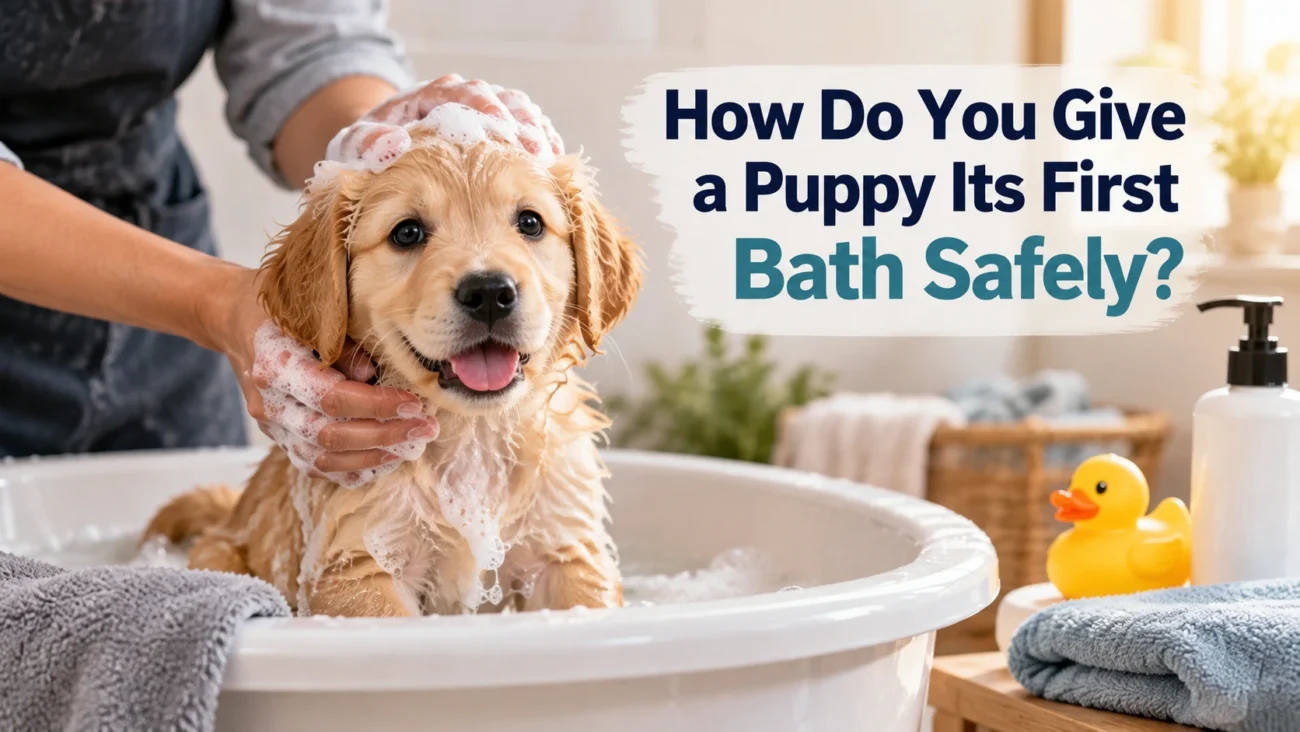
Prepare everything before your puppy enters the tub or sink. Use lukewarm water, a nonslip surface, towels, treats, and puppy-safe shampoo. Keep the room warm so your puppy stays comfortable.
Start slowly and keep your hands gentle. Avoid spraying water directly around the puppy’s face. A damp washcloth works better around the eyes and muzzle.
Rinse every trace of shampoo from the coat. Leftover shampoo can irritate sensitive skin. Dry your puppy fully before allowing play in colder areas.
🔢 Your puppy’s first bath in 7 steps
- Brush loose dirt and gentle tangles before getting the coat wet.
- Place your puppy on a secure nonslip surface.
- Wet the body slowly using comfortable lukewarm water.
- Massage a small amount of puppy shampoo through the coat.
- Clean the face separately with a damp cloth.
- Rinse until the water runs completely free of shampoo.
- Towel dry well, then keep your puppy warm.
Treats can help your puppy connect bathing with a positive experience. Keep praise calm rather than turning bath time into exciting play. The AKC also recommends gradual and gentle puppy bathing routines.
Thick coats need extra attention during drying. Moisture can remain near the skin after surface fur feels dry. Check the coat with your fingers before ending the drying process.
If grooming follows the bath, dry the coat first. Our guide explains why dog clippers shouldn’t be used on wet hair. Choosing the correct shampoo comes next.
What Should You Wash a Puppy With?
Use shampoo made for dogs when your puppy needs shampoo. Dog skin differs from human skin in structure and acidity. Human shampoo can disrupt the puppy’s skin barrier and cause irritation.
VCA recommends pet-formulated shampoos instead of human or baby shampoo. A simple moisturizing puppy shampoo suits many routine baths. Skin problems can require a product selected by your veterinarian.
Don’t choose shampoo because the scent smells strong or lasts longest. Mild cleansing matters more during a puppy’s first bath. Fragrance-free options can suit puppies with sensitive skin.
If you’re comparing formulas, see our guide to puppy shampoos for bath time. It gives you a starting point for product research.
You can also review our Earthbath pet shampoo review before choosing that formula. Always check the product’s minimum age before use.
Here’s another key point. Medicated shampoo isn’t a routine upgrade over normal puppy shampoo. Use medicated products when your veterinarian recommends them for a skin problem.
Once you choose a safe product, don’t overuse it. Bath frequency matters for skin and coat comfort.
How Often Should You Bathe a Puppy?
Many puppies don’t need frequent full baths. About once monthly works as a simple starting routine. Bathe sooner when dirt, odor, or another clear need makes cleaning necessary.
Coat type and daily activity can change that schedule. Long coats collect debris and develop tangles faster than some short coats. Outdoor puppies also get dirty faster than indoor puppies.
Still, more bathing isn’t automatically better. Frequent shampooing can remove protective oils from the skin and coat. Your puppy’s skin should guide the schedule.
For example, muddy paws don’t require a full bath every time. Clean the paws with water or a damp cloth. Brush dry dirt from the coat when brushing solves the problem.
Call your veterinarian when your puppy develops redness, flakes, hair loss, or persistent itching. Those signs can need diagnosis instead of another shampoo. VCA advises veterinary review for significant skin changes.
That leads to several common bath myths. Some can make a first bath harder than necessary.
What Most People Get Wrong About Puppy First Baths
The biggest mistake is treating one rule as suitable for every puppy. Age gives you a useful starting point, not the whole safety check. Health, warmth, environment, and drying also shape the decision.
Another mistake is confusing home bathing with public grooming exposure. A home bath doesn’t require a puppy to finish every vaccine first. Shared dog facilities create a different exposure question.
A third mistake involves using human baby shampoo because it sounds gentle. Products designed for human skin don’t match canine skin needs. VCA recommends shampoo formulated for pets instead.
- Myth: Every puppy needs a bath as soon as it comes home.
- Fact: Clean puppies can settle into the new home first.
- Myth: Full vaccination is required before any home bath.
- Fact: Public dog areas create the larger vaccination concern.
- Myth: Human baby shampoo is always safe for puppies.
- Fact: Pet-formulated shampoo is the safer routine choice.
There’s one simple theme behind all three myths. A gentle first experience matters more than getting a perfect-looking coat. Your puppy has years of grooming ahead.
What Is the Bottom Line on a Puppy’s First Bath?
Start around eight weeks when your puppy is healthy, warm, and comfortable. Use lukewarm water and a gentle dog shampoo. Rinse well and dry the coat fully. Right now, place a towel beside your puppy’s future bathing spot.
Frequently Asked Questions
First-bath questions often focus on age, shampoo, vaccines, and drying. The same safety rule connects them all. Keep your puppy warm, use pet-safe products, and make the experience gentle.
Can I bathe my 8-week-old puppy?
Yes, most healthy eight-week-old puppies can have a careful bath at home. Use lukewarm water and puppy-safe shampoo. Keep the room warm, rinse the coat well, and dry your puppy fully before leaving the bathing area.
Can I bathe a puppy younger than 8 weeks?
Avoid routine full baths for puppies younger than eight weeks. Young puppies lose heat more easily during washing. Use a warm damp cloth for small messes, then dry the cleaned area carefully and keep the puppy warm.
Can I bathe my puppy before all vaccinations?
A healthy puppy can usually have a controlled home bath before finishing vaccinations. Avoid shared bathing stations until vaccination protection is adequate. Ask your veterinarian about local disease risks and follow any groomer’s vaccine rules.
How often should you bathe a puppy?
About once monthly works as a simple starting point for many puppies. Coat type and lifestyle can change that schedule. Spot-clean small messes between baths instead of shampooing the entire coat whenever your puppy gets slightly dirty.
What shampoo should I use for my puppy?
Choose a gentle shampoo made specifically for dogs or puppies. Check the label’s minimum age before using it. Ask your veterinarian before using medicated shampoo or changing products when your puppy has redness, itching, hair loss, or flaky skin.
Can I use baby shampoo on a puppy?
Don’t use human baby shampoo as your regular puppy shampoo. Human and canine skin have different needs. VCA recommends pet-formulated shampoo because human products can affect a dog’s skin barrier and contribute to irritation.
Can I shower a puppy instead of using a bath?
Yes, a gentle handheld shower can work for a puppy. Keep the water pressure low and the temperature lukewarm. Direct the water toward the body rather than the face, then rinse thoroughly and dry the puppy completely.