Quick Answer
To bathe a dog with sensitive skin, use lukewarm water, a mild dog-specific shampoo, gentle hand pressure, and a thorough rinse. Avoid hot water, human shampoo, heavy fragrances, and rough scrubbing, and follow a careful dog bathing routine that protects the skin barrier.
Sensitive-Skin Bath Steps
- Brush first: Remove loose hair, surface debris, and easy tangles before wetting the coat.
- Use lukewarm water: Keep the water comfortable instead of hot, which may worsen irritation.
- Choose dog shampoo: Use a gentle formula designed for canine skin and your dog’s specific needs.
- Massage gently: Work shampoo through the coat without scratching or aggressively rubbing irritated areas.
- Rinse completely: Keep rinsing until the coat feels clean and no slippery shampoo residue remains.
- Dry carefully: Blot instead of rubbing and make sure dense fur and skin folds don’t stay damp.
Stop and Call Your Vet If
- Your dog has open sores, severe redness, swelling, discharge, persistent odor, hair loss, or intense itching.
A bath should leave your dog more comfortable, not itchier than before. With sensitive skin, small choices like shampoo type, water temperature, rinsing, and drying matter more than creating lots of lather.
I focus on keeping the whole process simple and gentle. This guide shows you how to wash sensitive skin without turning normal grooming into another source of irritation.
What Does Sensitive Skin Mean in Dogs?

Sensitive skin in dogs describes skin that becomes irritated, dry, itchy, or uncomfortable easily. It isn’t a diagnosis by itself, because allergies, parasites, infections, environmental triggers, and grooming products can create similar symptoms.
A dog with sensitive skin may react after bathing even when another dog tolerates the same product. That makes observation important.
- Dryness: The skin may look flaky or feel less supple after washing.
- Redness: Pink or inflamed areas can appear after contact with an irritating product.
- Scratching: Increased itching after a bath can mean irritation or leftover shampoo.
- Licking: Dogs may repeatedly lick paws, legs, belly, or other uncomfortable areas.
- Recurring skin trouble: Allergies and other skin conditions can make ordinary bathing more complicated.
The American Animal Hospital Association notes that hypoallergenic or moisturizing shampoos may be useful for dogs with allergy-related skin problems, while over-bathing can dry the skin.
How Do You Prepare a Sensitive-Skin Dog for a Bath?
Prepare everything before your dog gets wet. A shorter, calmer bath reduces unnecessary handling and keeps you from leaving a wet dog standing in the tub.
My approach is to remove every avoidable source of friction before turning on the water. That includes tangles, slippery footing, missing towels, and searching for shampoo halfway through the bath.
Gather These Supplies First
- A gentle dog-specific shampoo
- A non-slip bath mat
- Two or more soft absorbent towels
- A cup or low-pressure handheld sprayer
- A brush or comb suited to the coat
- A soft washcloth for the face
- Treats if your dog responds well to food rewards
Brush gently before bathing when the coat allows it. Removing loose hair and manageable tangles helps water and shampoo move through the coat without excessive rubbing.
If your dog becomes frightened around water, work on comfort separately instead of combining fear training with an urgent bath. This guide on helping a dog that’s scared of bath time explains how to introduce the tub more gradually.
What Shampoo Should You Use for a Dog With Sensitive Skin?
Choose shampoo made specifically for dogs and suited to the skin problem you’re trying to manage. For routine washing, I favor simpler formulas over heavily perfumed products when sensitivity is already a concern.
The American Kennel Club recommends dog-formulated shampoos and notes that sensitive-skin products are designed to clean without unnecessarily worsening dryness or irritation.
Ingredients and Features Worth Looking For
- Colloidal oatmeal: Commonly used in soothing shampoos for dry or itchy skin.
- Aloe: Often included in moisturizing and soothing dog shampoos.
- Dog-appropriate pH: Products formulated for canine skin are preferable to routine human shampoo.
- Soap-free cleansers: These are common in shampoos intended for dry or sensitive skin.
- Low or no fragrance: A useful option when perfumes appear to make your dog’s skin uncomfortable.
The American Kennel Club’s shampoo guidance also recommends selecting products based on the dog’s coat and skin needs rather than treating every shampoo as interchangeable.
What Should You Avoid?
Don’t automatically reach for your own shampoo when the dog bottle is empty. Human products are formulated around human skin rather than canine skin.
- Routine use of human shampoo
- Strong household soaps or degreasers
- Products that previously caused redness or itching
- Unnecessary fragrances when your dog reacts to scented formulas
- Medicated shampoo chosen without understanding what it treats
Medicated shampoo isn’t simply a stronger sensitive-skin shampoo. It can contain antimicrobial, antifungal, antiseptic, or other active ingredients meant for specific conditions.
How Do You Bathe a Dog With Sensitive Skin Step by Step?
Keep the technique gentle from start to finish. The goal is to remove dirt and allergens without creating extra friction or leaving irritating residue behind.
- Brush before bathing. Remove loose coat, debris, and easy tangles without pulling irritated skin.
- Place a non-slip mat in the tub. Secure footing reduces scrambling and unnecessary skin friction.
- Use lukewarm water. Wet the body gradually while avoiding direct spray into the eyes, nose, and ears.
- Apply a small amount of shampoo. Follow the label instead of assuming more shampoo will clean better.
- Massage with your fingertips. Use gentle pressure rather than scratching with your nails.
- Follow the required contact time. Some soothing or medicated products need to remain on the coat for a specific period.
- Rinse thoroughly. Work through thick fur until no obvious shampoo residue remains.
- Blot with towels. Press water from the coat instead of aggressively rubbing sensitive areas.
- Dry completely. Check the roots, folds, paws, belly, and other places where moisture can remain trapped.
The ASPCA’s dog grooming guidance also recommends keeping water away from the eyes, ears, and nose while thoroughly rinsing shampoo from the coat.
How Much Rinsing Does Sensitive Skin Need?
Rinsing is one of the steps I would never rush on a sensitive dog. Even a mild shampoo can become irritating when enough product stays behind on the skin.
Work through one area at a time. Pay extra attention to dense or hidden sections where foam can remain after the surface looks clean.
- Armpits
- Chest
- Belly
- Groin
- Under the collar area
- Behind the ears
- Legs and paws
- Dense undercoat
The AKC also emphasizes thorough rinsing because leftover shampoo can contribute to dryness and irritation. Run your fingers through several areas before deciding the rinse is finished.
Which Bathing Approach Is Gentlest on Sensitive Skin?
The best method depends on whether your dog needs routine cleaning, soothing care, or treatment for a diagnosed condition. Don’t treat those situations as the same problem.
| Bath Type | Best Fit | Key Feature | Main Caution |
|---|---|---|---|
| Gentle routine shampoo | Dogs needing ordinary cleaning | Mild dog-specific cleansing | May not address an underlying skin disease |
| Oatmeal or moisturizing shampoo | Dry, mildly itchy, sensitive skin | Ingredients aimed at soothing and moisture support | Itching can still have a medical cause |
| Medicated shampoo | Diagnosed skin conditions | Condition-specific active ingredients | Use according to veterinary and label directions |
As of 2026, veterinary dermatology guidance continues to include topical bathing as part of management for some allergic skin diseases. The exact formula and frequency depend on the dog and diagnosis.
How Often Should You Bathe a Dog With Sensitive Skin?
There isn’t one safe schedule for every sensitive dog. Coat type, lifestyle, the cause of the sensitivity, shampoo choice, and veterinary treatment can all change the answer.
A healthy dog that becomes mildly dry after frequent washing may need fewer routine baths. A dog following a veterinary skin-treatment plan may need bathing much more often.
- Routine dirt: Bathe when the coat genuinely needs cleaning.
- Dryness after baths: Review the shampoo, technique, and frequency.
- Environmental allergies: Your veterinarian may recommend a specific bathing schedule.
- Medicated shampoo: Follow the prescribed frequency and contact time.
AAHA’s guidance on allergic skin disease includes bathing with moisturizing factors such as oatmeal, ceramides, lipids, or fatty acids as a possible supportive therapy. That doesn’t mean every itchy dog needs frequent baths.
How Should You Dry a Dog With Sensitive Skin?
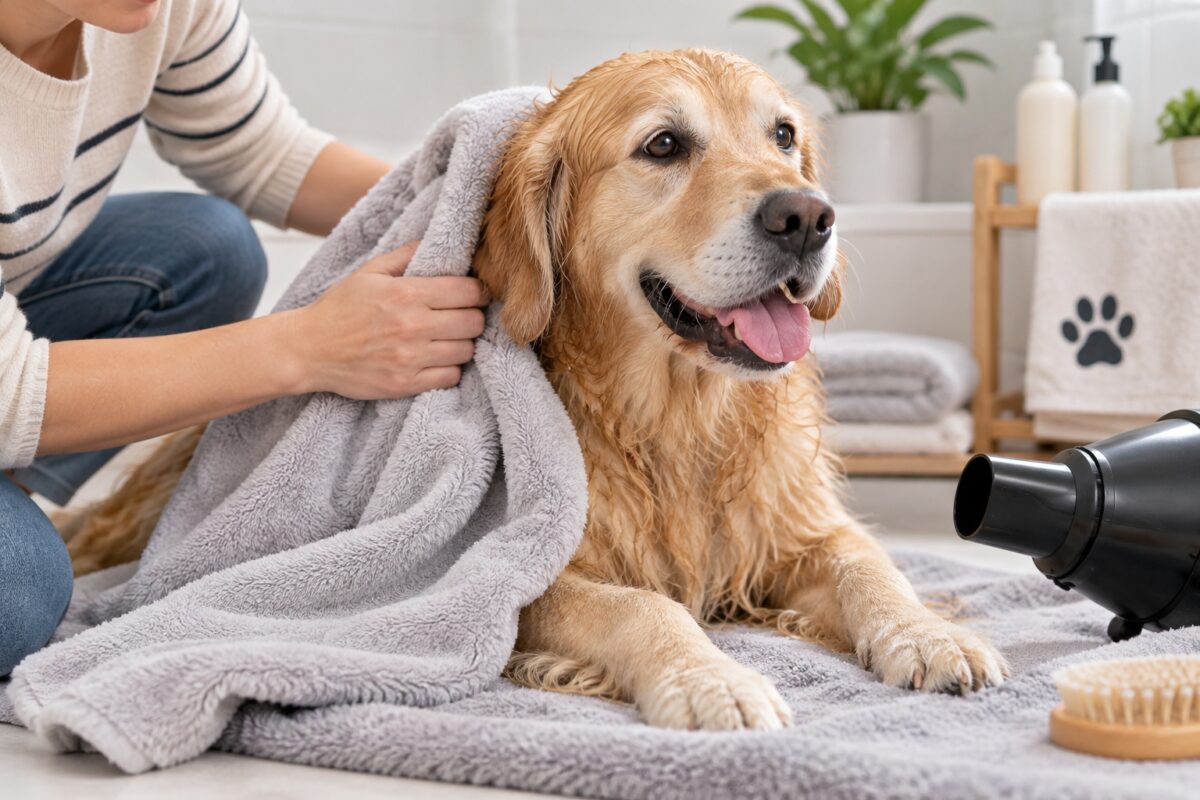
Dry gently but completely. Leaving moisture hidden against irritated skin can create another source of discomfort, while hard towel rubbing adds friction.
Start by gently squeezing water from longer fur. Then press absorbent towels into the coat instead of scrubbing back and forth.
- Change towels once they become saturated.
- Check beneath dense undercoats.
- Dry skin folds carefully.
- Blot around paws and between toes.
- Use cool or low-warmth airflow if your dog tolerates a dryer.
- Stop using heat if the skin becomes uncomfortable.
For thicker coats, follow a complete dog drying routine after bathing. The top of the coat can feel dry while moisture remains close to the skin.
Why Is My Dog Itchy After a Bath?
Post-bath itching can come from shampoo residue, a harsh product, excessive washing, dry skin, or an existing condition that the bath didn’t cause. Look at the timing and other symptoms before assuming your dog is simply dirty again.
Start by checking whether you changed products or rushed rinsing. Those are two factors you can investigate immediately.
- Itching only after one new shampoo: Stop using that product until you understand the reaction.
- Dry flakes after frequent washing: Review how often you’re bathing and what cleanser you’re using.
- Itching plus odor: Look for redness, greasy skin, sores, ear symptoms, or other signs of disease.
- Constant scratching between baths: Ask your veterinarian to investigate the underlying cause.
A bath also can’t cure every source of odor. If smell returns quickly, this guide explains why a dog may still smell after a bath and when skin or ear problems deserve attention.
When Should You Stop Home Bathing and Call a Veterinarian?
Routine sensitive skin and active skin disease aren’t the same thing. Stop experimenting with ordinary grooming products when your dog shows signs that suggest pain, infection, or ongoing inflammation.
- Open sores or bleeding
- Raw or intensely red skin
- Pus, crusting, or unusual discharge
- Strong musty or foul odor
- Persistent chewing or scratching
- Noticeable hair loss
- Greasy or thickened skin
- Ear odor, discharge, or repeated head shaking
- Swelling or obvious pain
- Symptoms that worsen after each bath
Those signs need more than a gentler shampoo. Your veterinarian can check for allergies, parasites, bacterial or yeast problems, and other causes of dermatitis.
If you’re ready to choose a shampoo for sensitive-skin bath days, these are three formulas I’d consider based on their intended uses and verified product information.
🏆 Best for Itchy Sensitive Skin
DOUXO S3 CALM Shampoo
★★★★½ 4.5/5
This veterinary-focused formula is designed for itchy, irritated, and sensitive skin and uses Ophytrium to support the skin barrier. I’d consider it when soothing irritated skin matters more than fragrance or heavy cleansing.
🌾 Best Oatmeal Formula
Virbac EPI-SOOTHE Shampoo
★★★★☆ 4/5
EPI-SOOTHE is a soap-free shampoo containing colloidal oatmeal and is intended for dry, sensitive skin and routine cleansing. I like this type of formula when a dog needs gentle washing without moving immediately to a more aggressive medicated cleanser.
🌿 Best Fragrance-Free Pick
Earthbath Oatmeal & Aloe Fragrance Free Shampoo
★★★★½ 4.5/5
This soap-free formula combines colloidal oatmeal and aloe without added fragrance and is marketed for dry, itchy, sensitive skin. I’d start here when fragrance avoidance is one of the main priorities for routine baths.
Frequently Asked Questions
What is the best way to bathe a dog with sensitive skin?
Use lukewarm water, mild dog-specific shampoo, gentle massage, thorough rinsing, and careful drying. Avoid rough scrubbing and unnecessary fragrance. If your dog has recurring redness, sores, odor, hair loss, or severe itching, ask your veterinarian whether a medicated bathing plan is more appropriate.
Can I use human shampoo on a dog with sensitive skin?
Human shampoo isn’t a good routine choice for a sensitive dog. Products made for people are formulated for human skin rather than canine skin. Use a mild dog-specific shampoo instead, and ask your veterinarian about product selection when your dog already has a diagnosed skin condition.
Is oatmeal shampoo good for dogs with sensitive skin?
Colloidal oatmeal appears in many dog shampoos designed for dry, itchy, or sensitive skin and can provide soothing, moisturizing care. It isn’t a cure for parasites, infections, or allergies, so persistent itching still needs veterinary evaluation.
How often should a sensitive-skin dog be bathed?
There is no single schedule that fits every dog. Bathe according to coat condition, lifestyle, shampoo type, and veterinary guidance. Healthy dogs may need only occasional washing, while dogs receiving treatment for allergic or other skin disease may follow a more frequent veterinarian-directed schedule.
Why does my dog scratch more after a bath?
Post-bath scratching can result from leftover shampoo, a product that irritates the skin, excessive bathing, dryness, or an underlying skin problem. Rinse thoroughly and stop using a new product if symptoms repeatedly follow it. Persistent or severe scratching deserves veterinary attention.
Final Takeaway
Bathing a dog with sensitive skin should be gentle, simple, and focused on protecting comfort. Use dog-specific shampoo, lukewarm water, light hand pressure, a complete rinse, and careful drying.
Don’t keep changing shampoos to solve persistent itching, odor, redness, or sores. Those signs can point to a problem that grooming alone can’t fix.
For the next bath, start with one improvement: prepare everything first and give rinsing the time it deserves. That simple habit can make sensitive-skin bath day much easier on your dog.