Quick Answer
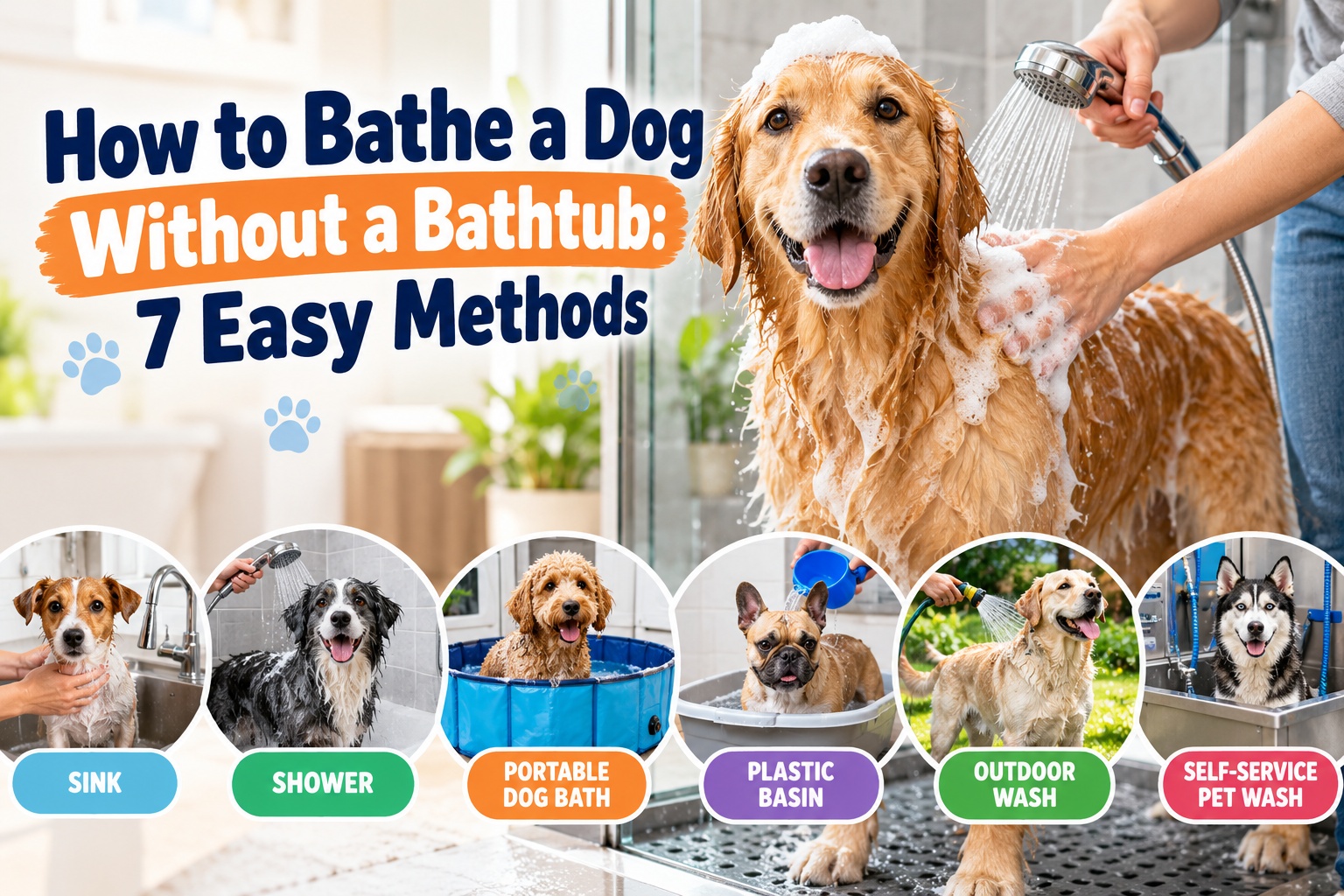
You can bathe a dog without a bathtub by using a walk-in shower, large sink, portable dog bath, outdoor washing area, plastic basin, or self-service pet wash. The basic process stays the same: brush first, use lukewarm water and dog shampoo, rinse thoroughly, then follow a proper dog drying routine.
Quick No-Tub Bath Steps
- Choose a safe spot: Use a shower, sink, basin, portable tub, or warm outdoor area with drainage.
- Add traction: Put down a rubber mat or towel so wet paws don’t slide.
- Brush first: Remove loose hair, dirt, and manageable tangles before adding water.
- Use lukewarm water: Wet the coat slowly without spraying directly into the eyes, nose, or ears.
- Shampoo and rinse: Use dog-specific shampoo and remove every trace of product.
- Dry completely: Blot with absorbent towels and check thick fur, paws, belly, and folds.
One Important Rule
- Don’t use cold outdoor hose water just because you’re bathing outside. Keep the water comfortably lukewarm whenever possible.
You don’t need a traditional bathtub to get a muddy or smelly dog properly clean. I’ve found that the washing location matters far less than secure footing, comfortable water, good rinsing, and calm handling.
As of 2026, veterinary guidance also recognizes sinks, showers, outdoor washing areas, and dedicated pet-wash stations as practical alternatives. Here’s how to make each option work safely.
What Does Bathing a Dog Without a Bathtub Mean?
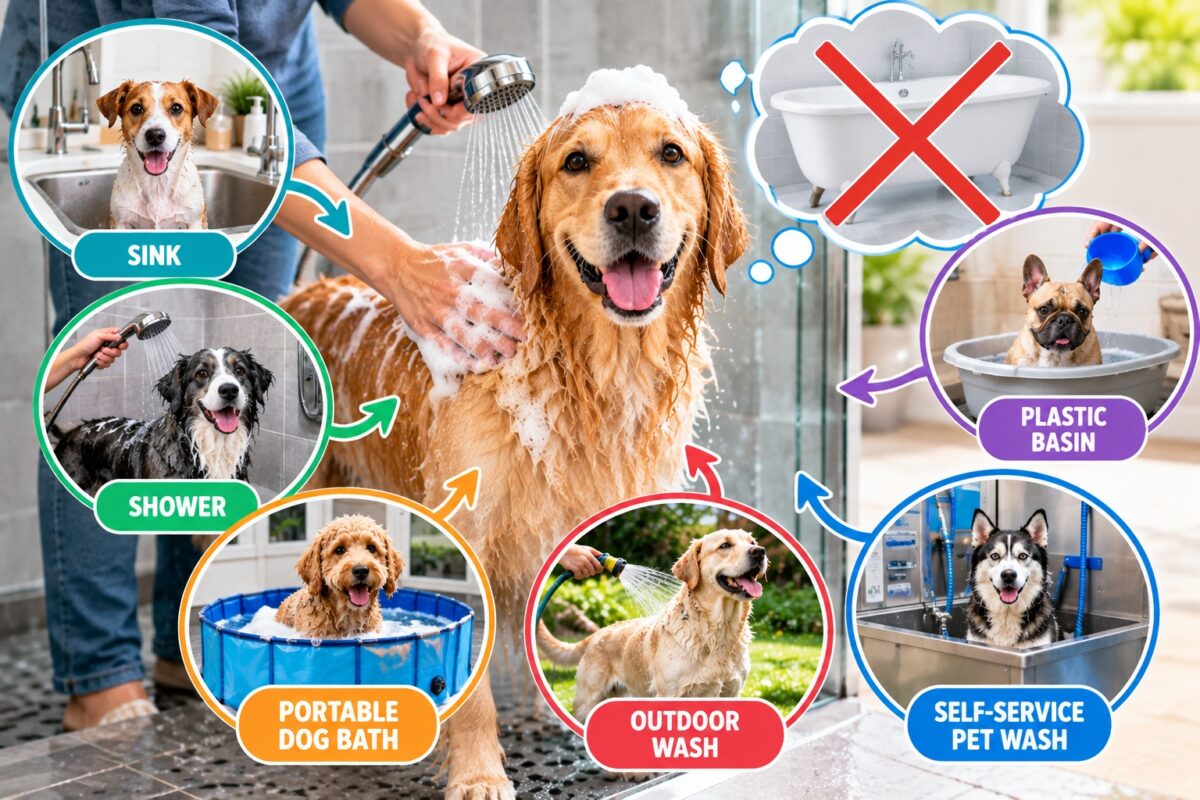
Bathing a dog without a bathtub means completing the normal wet-wash-rinse-dry process in another safe location. You might use a shower stall, utility sink, portable basin, outdoor area, or commercial pet-wash station.
The important part isn’t the shape of the container. Your dog still needs secure footing, dog-safe shampoo, comfortable water, complete rinsing, and thorough drying.
- Small dogs: A deep utility or bathroom sink can work well.
- Medium dogs: A walk-in shower or portable dog bath is often easier.
- Large dogs: A shower, outdoor wash station, or self-service pet wash gives you more room.
- Nervous dogs: Choose the location where your dog feels most secure and least confined.
VCA Animal Hospitals specifically notes that a traditional bathtub isn’t the only option. Their guidance includes sinks for smaller dogs, warm-weather outdoor areas for larger dogs, and commercial pet-wash facilities.
What Do You Need to Bathe a Dog Without a Tub?
Gather everything before bringing your dog into the washing area. Once the coat is wet, leaving your dog unattended to hunt for shampoo usually creates unnecessary stress and mess.
- Dog-specific shampoo
- Two or more absorbent towels
- Rubber non-slip mat or thick towel
- Dog brush or comb
- Handheld shower sprayer, hose attachment, pitcher, or plastic cup
- Washcloth for the face
- High-value treats
- Portable basin or container, if needed
- Dog-safe conditioner, if appropriate for the coat
I also keep one towel on the floor outside the washing area. Wet paws can become surprisingly slippery the moment a dog steps onto tile.
If you’re unsure about water heat, review this safe dog bath temperature guide before starting.
What Are the Best Ways to Bathe a Dog Without a Bathtub?
The best method depends on your dog’s size, coat, temperament, weather, and the plumbing available in your home. These seven approaches cover most situations.
1. Use a Walk-In Shower
A walk-in shower is my first choice for many medium and large dogs. You don’t have to lift the dog over a high bathtub wall, and a handheld showerhead gives excellent control during rinsing.
- Place a rubber mat across the shower floor.
- Set the water to comfortably lukewarm.
- Walk your dog into the dry shower before turning on the water.
- Wet from the shoulders backward first.
- Massage dog shampoo through the coat.
- Rinse slowly until the coat feels completely free of shampoo.
Keep water pressure moderate. A powerful stream often scares nervous dogs and makes the bath harder than necessary.
2. Bathe a Small Dog in a Sink
A kitchen, bathroom, or utility sink can be ideal for a small dog. VCA also lists sinks as a practical alternative for smaller dogs.
Never assume a smooth sink is safe for wet paws. Put a rubber mat or folded towel on the bottom before your dog goes inside.
- Keep one hand on your dog whenever they’re elevated.
- Don’t leave the dog unattended on a counter.
- Use a cup or gentle sprayer when a detachable faucet isn’t available.
- Keep shampoo and water away from the eyes and ear canals.
A sink works best when the dog can stand comfortably without being squeezed against the sides.
3. Use a Portable Dog Bath or Folding Tub
A portable dog bath gives you bathtub-like control without permanently installing anything. Many models fold or collapse for storage after the coat is clean and dry.
This option works especially well in apartments, laundry rooms, garages, patios, and homes where the main bathtub isn’t dog-friendly.
- Choose a tub large enough for the dog to turn and stand naturally.
- Place it near a drain when possible.
- Check its maximum supported weight.
- Add a non-slip surface if the base feels slick.
- Plan how you’ll empty the water before starting.
The last point matters. A large container full of dirty water becomes difficult to move safely.
4. Use a Large Plastic Basin
A sturdy plastic basin can be an inexpensive solution for puppies and smaller breeds. The dog doesn’t need to be fully submerged.
Add only enough water to help with washing. You can use a pitcher to wet and rinse the coat instead of filling the container deeply.
Check the edges before using any household container. Avoid cracked plastic, sharp edges, unstable tubs, or containers that flex under your dog’s weight.
5. Wash Your Dog Outdoors in Suitable Weather
Outdoor bathing can work for larger dogs when the weather is comfortably warm and you have good drainage. The main mistake is assuming cold garden-hose water is automatically suitable.
VCA advises choosing a comfortably warm location with access to warm water. AKC guidance likewise recommends cool-to-lukewarm rather than hot bathing water.
- Choose a sheltered, non-slip surface.
- Avoid cold or windy conditions.
- Use comfortably lukewarm water when possible.
- Keep your dog away from muddy runoff.
- Bring towels outside before starting.
Don’t tether a frightened dog tightly and force the bath. If your dog panics around running water, this guide to helping a dog that’s scared of bath time explains a slower approach.
6. Use a Self-Service Dog Wash
Self-service pet-wash stations are useful when your dog is too large for your sink or shower. They usually provide an elevated washing area, sprayer, drainage, and enough room to handle a large coat.
VCA specifically recognizes commercial pet-wash facilities as another bathing option. They can also save your bathroom from the aftermath of a heavily shedding or muddy dog.
- Bring your dog’s usual shampoo if the facility allows it.
- Check how the restraint system works before starting.
- Test the water temperature yourself.
- Introduce the dryer gradually if your dog dislikes noise.
7. Give a Partial Bath When a Full Bath Isn’t Needed
Sometimes your dog doesn’t need to become completely wet. Muddy paws, a dirty belly, or one soiled area can often be cleaned with a localized wash.
Use a basin of lukewarm water, damp cloth, and dog-safe cleanser if needed. Rinse any shampooed area completely afterward.
This approach can also reduce unnecessary full baths for dogs prone to dry skin. Frequent bathing isn’t automatically better for every coat.
Which No-Bathtub Method Is Best?
Choose the method that gives you the most control without making your dog feel trapped. Bigger isn’t automatically better.
| Method | Best For | Main Advantage | Main Limitation |
|---|---|---|---|
| Walk-in shower | Medium and large dogs | Easy entry and controlled rinsing | Floor can become slippery |
| Sink | Small dogs and puppies | Comfortable working height | Unsafe for dogs that can jump out |
| Portable dog bath | Small to large dogs | Flexible location and storage | Requires drainage planning |
| Plastic basin | Small dogs | Low-cost setup | Limited space |
| Outdoor wash | Large or muddy dogs | Easy cleanup | Weather and water temperature matter |
| Self-service wash | Large or thick-coated dogs | Purpose-built equipment | Costs money and requires travel |
How Do You Bathe a Dog Without a Bathtub Step by Step?
The safest routine is to prepare the location first, brush the dry coat, wet gradually, shampoo gently, rinse completely, and dry thoroughly. The sequence doesn’t change much between a shower, sink, or portable basin.
- Brush the dry coat. Remove loose fur, debris, and manageable tangles before they become soaked.
- Prepare secure footing. Put down a rubber mat or thick towel before bringing your dog in.
- Test the water. Use comfortably lukewarm water rather than hot or cold water.
- Wet from the neck downward. Introduce water gradually and keep strong spray away from the face.
- Apply dog shampoo. Massage it through the coat with your fingertips rather than scratching with your nails.
- Clean the face separately. A damp washcloth gives you better control around the eyes and muzzle.
- Rinse thoroughly. Pay extra attention to the chest, belly, armpits, paws, groin, and dense coat.
- Squeeze excess water gently. Don’t twist long hair.
- Blot with towels. Press moisture from the coat instead of aggressively rubbing it.
- Keep your dog warm until dry. Check the roots of thick coats rather than judging only the surface.
AKC bathing guidance stresses thorough rinsing because suds can remain hidden in the coat. ASPCA guidance also recommends avoiding direct water around the dog’s eyes, ears, and nose.
For the complete general routine, see our dog bathing guide for safe home baths.
Can You Bathe a Dog With Just a Bucket of Water?
Yes, a bucket or basin can supply the water, but don’t put your dog inside a deep bucket. Use the container as a water source and pour with an unbreakable cup or pitcher.
This is especially useful when you don’t have a detachable showerhead. VCA and ASPCA both describe a cup, bowl, or pitcher as an alternative way to wet and rinse a dog.
- Prepare one container with clean lukewarm water.
- Use a plastic cup to wet the coat slowly.
- Apply dog shampoo as directed.
- Refill with clean water for rinsing when needed.
- Continue until no shampoo residue remains.
Don’t rinse with visibly dirty wash water. Fresh water gives you a much better chance of removing all shampoo and debris.
Can You Use Human Shampoo When Bathing Without a Tub?
Human shampoo isn’t the recommended choice for routine dog bathing. Use a product formulated specifically for dogs.
VCA Animal Hospitals explains that canine skin differs from human skin and recommends dog-formulated shampoo. The ASPCA’s dog grooming guidance likewise recommends pet-specific products.
That rule matters whether you’re washing in an expensive grooming tub or a $10 plastic basin. The location doesn’t change your dog’s skin needs.
How Do You Keep a Dog Calm During a No-Tub Bath?
Make the environment predictable before adding water. Secure footing, gentle water flow, treats, and short sessions can make a major difference.
- Let your dog inspect the dry washing area first.
- Reward calm standing before turning on water.
- Keep supplies within reach so the process stays smooth.
- Avoid sudden sprays near the head.
- Use a calm voice and relaxed handling.
- Stop when fear escalates into panic.
A bathtub itself may be part of the problem for some dogs. I’ve seen dogs resist a high-sided tub but tolerate a walk-in shower because they feel less trapped.
That makes a no-tub setup more than a workaround. For certain dogs, it can become the easier long-term bathing routine.
What Mistakes Should You Avoid?
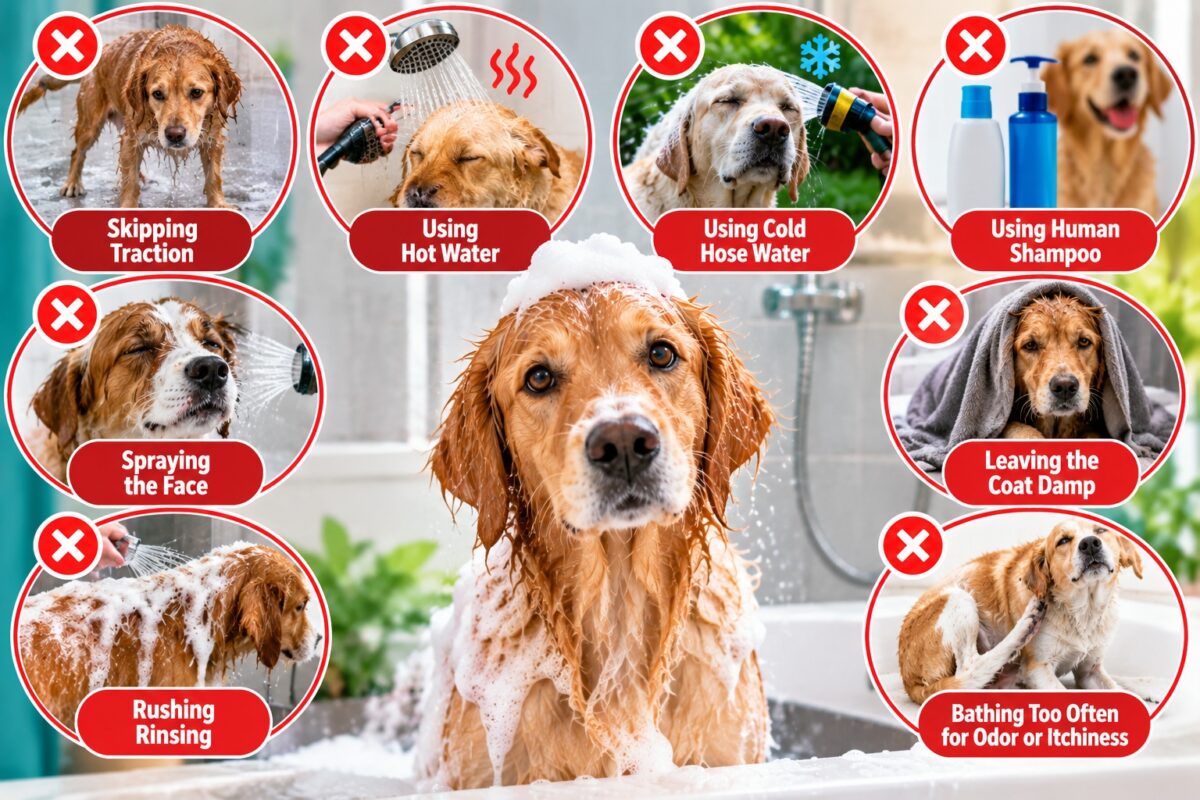
Most no-bathtub problems come from rushing the setup rather than choosing the wrong washing location. Fix the environment before the dog gets wet.
- Skipping traction: Sliding paws can make a calm dog panic.
- Using hot water: Keep routine bath water comfortably lukewarm.
- Using cold hose water: Outdoor convenience doesn’t make cold water comfortable.
- Using human shampoo: Choose dog-specific grooming products.
- Spraying the face: Clean sensitive facial areas with a damp cloth.
- Rushing rinsing: Shampoo left in dense fur can irritate the skin.
- Leaving the coat damp: Check the roots, folds, paws, and undercoat carefully.
- Bathing repeatedly for odor: Persistent odor can indicate a skin or ear problem.
If your dog starts scratching after washing, read our guide explaining why dogs can become itchy after a bath.
When Should You Skip the Home Bath and Call a Veterinarian?
Routine dirt is a grooming problem. Painful, inflamed, infected, or damaged skin may be a medical problem.
Contact your veterinarian when you notice concerning symptoms before or after bathing.
- Open sores or bleeding
- Severe or spreading redness
- Swelling
- Pus or unusual discharge
- Persistent foul or yeasty odor
- Heavy hair loss
- Constant scratching or chewing
- Greasy or thickened skin
- Pain when the skin is touched
- Strong ear odor or repeated head shaking
Don’t keep washing these symptoms away. A veterinarian can investigate allergies, parasites, yeast, bacteria, and other possible causes.
If you’re ready to make no-tub bath days easier, these are three practical tools I’d consider:
🏆 Best Shower Attachment
Waterpik Pet Wand PRO
★★★★½
This dog-washing wand uses targeted and wider spray settings with adjustable flow control. I like this style of tool for walk-in showers because controlled rinsing is much easier than pouring repeated cups of water over a thick coat.
🖐 Best One-Handed Control
Aquapaw Pet Bathing Tool
★★★★☆
Aquapaw combines a wearable sprayer with a silicone scrubber and can connect to suitable indoor or outdoor water sources. I prefer this design when keeping one hand free to steady the dog matters more than having several spray patterns.
🛁 Best Flexible Setup
Folding Portable Dog Bath
★★★★☆
A collapsible pet bath creates a contained washing area in a shower, laundry room, patio, or garage. I’d choose one with a drain, stable sides, and enough floor space for the dog to stand naturally.
Frequently Asked Questions
How can I bathe my dog if I don’t have a bathtub?
Use a walk-in shower, sink for a small dog, portable dog bath, sturdy basin, suitable outdoor washing area, or self-service pet wash. Add secure footing, use lukewarm water and dog shampoo, rinse thoroughly, and dry the coat completely afterward.
Can I wash my dog in the shower instead of a bathtub?
Yes. A walk-in shower can be easier than a bathtub, especially for medium and large dogs. Use a non-slip mat and a gentle handheld sprayer if available. Keep water away from the eyes and ear canals, then rinse every trace of shampoo.
Can I bathe my dog outside with a garden hose?
You can bathe some dogs outdoors during comfortably warm weather, but cold hose water isn’t ideal for routine bathing. Use a safe surface with good drainage and comfortably lukewarm water whenever possible. Avoid outdoor baths during cold, windy, or otherwise unsuitable weather.
Can I clean my dog without getting the whole body wet?
Yes. A localized wash can clean muddy paws, the belly, or one dirty area without a full bath. Use a damp cloth or small amount of dog-safe shampoo when needed, then rinse any shampooed area thoroughly and dry it completely.
What should I use if I don’t have a shower sprayer?
Use a large plastic cup, bowl, or unbreakable pitcher to pour lukewarm water over the coat. Work slowly from the neck toward the body. Refill with clean water as needed so you can rinse until no shampoo remains.
Final Takeaway
You don’t need a bathtub to give your dog a safe, effective bath. A shower, sink, portable basin, outdoor wash area, or self-service station can work just as well when the setup is appropriate for your dog.
Focus on the fundamentals: secure footing, lukewarm water, dog-specific shampoo, complete rinsing, and thorough drying. Those details matter more than the container you’re using.
Choose the method that keeps your dog safest and calmest. Once you’ve found it, stick with a predictable routine so each bath becomes easier than the last.