⚡ Quick Answer
To bathe a dog scared of the tub, start without water. Build comfort with treats and short tub visits. Add water only after your dog stays relaxed. Use a non-slip mat, gentle water flow, and dog shampoo. Never force a panicked dog through the bath.
A calmer way to introduce bath time
- 1Let your dog explore the dry bathroom.
- 2Reward calm visits near and inside the tub.
- 3Introduce a small, gentle water flow.
- 4Wash, rinse, towel-dry, and reward calm behavior.
Bath mistakes that increase fear
- ✕Don’t drag your dog into the tub.
- ✕Don’t start with loud, fast water.
- ✕Don’t punish fearful behavior.
Your dog’s paws hit the tub, then scramble for grip. Their body stiffens. They want out.
A dog scared of bath time isn’t being difficult. Fear can come from slipping, noise, restraint, or past bad experiences. As Ashraful, I prefer making the tub predictable before making the dog clean.
The goal isn’t one perfect bath. The goal is teaching your dog that bath time stays safe and manageable.
📌 Key Takeaways
- →Start dry. Let your dog learn the tub before adding water.
- →Add traction. A non-slip surface can help your dog feel secure.
- →Reward calmness. Pair small bath steps with treats your dog loves.
- →Respect fear. Stop when your dog becomes too stressed to learn.
Why Is My Dog Scared of the Bath?
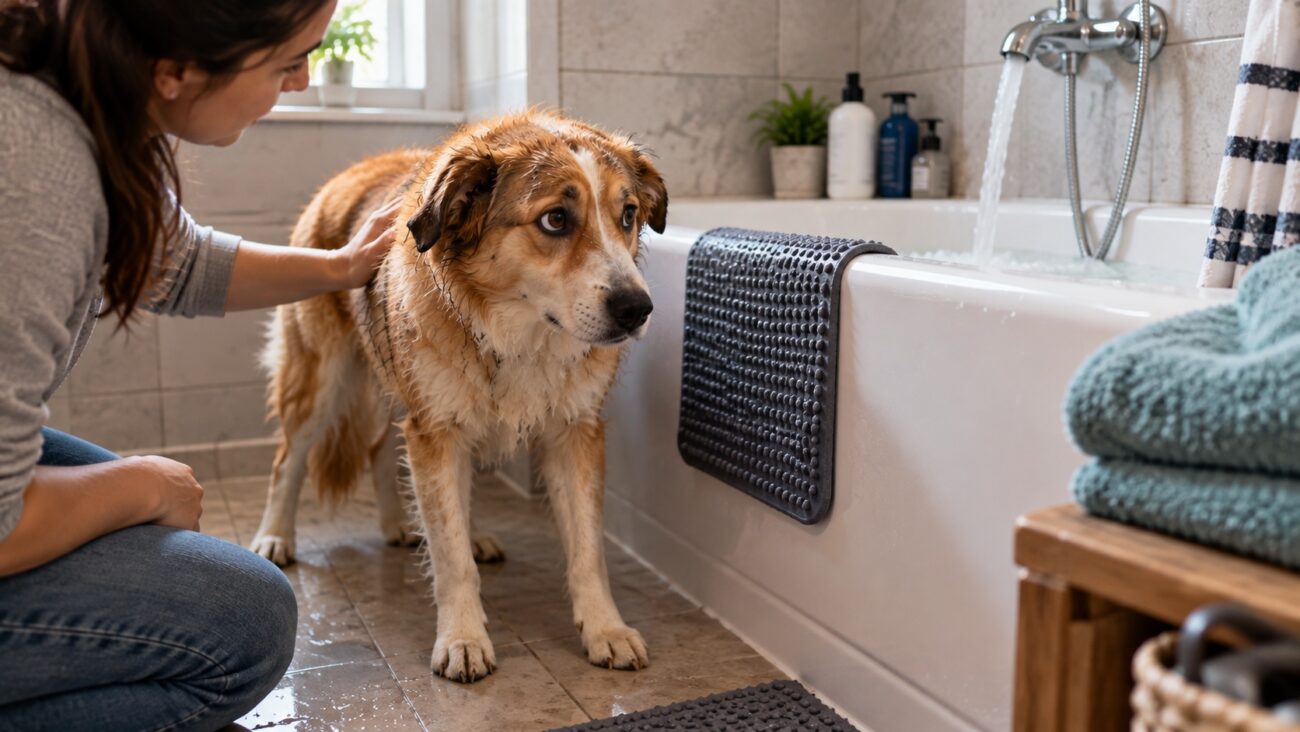
Dogs can fear baths because the experience combines several stressful triggers. Slippery floors reduce secure footing. Running water adds strange noise and movement. Handling can feel restrictive. Water near the face can also scare some dogs. A previous stressful bath can strengthen these negative associations.
Look at the bath from your dog’s level. The tub feels smooth and hard. Water echoes around a small room.
Your dog also loses control over the situation. That matters when fear already exists.
📋 Common bath-time fear triggers
- Slippery footing: Your dog can’t brace their paws with confidence.
- Running water: Spray, sound, and movement can feel intense.
- Forced handling: Restraint can increase fear in an anxious dog.
- Past experience: One frightening bath can create a lasting association.
AKC guidance recommends gradual exposure rather than pushing dogs through fear. Fear Free guidance also recommends non-slip footing and positive rewards.
Finding your dog’s main trigger makes the next step much easier.
How Do I Get My Dog Used to the Bathtub?
Start by changing what the tub predicts. For several sessions, don’t give a bath. Let your dog enter the bathroom, investigate the tub, eat treats, and leave. Next, reward contact with the tub. Progress toward standing inside it while everything stays dry and quiet.
This process uses desensitization and counterconditioning. Desensitization introduces a feared trigger at a low level. Counterconditioning pairs that trigger with something the dog enjoys.
Start below your dog’s fear threshold. Your dog should still take food and respond normally.
🔢 Step-by-Step: Make the Tub Feel Safe
- 1
Visit the bathroom
Give treats, then leave without approaching the tub.
- 2
Explore the dry tub
Reward looking at, approaching, or touching the tub.
- 3
Stand inside briefly
Use a non-slip mat and reward relaxed standing.
- ✓
Leave while calm
Finish before your dog becomes worried or tries escaping.
Fear Free specifically suggests making the dry tub fun with treats and toys.
Once the dry tub feels normal, you can carefully introduce water.
How Do You Bathe a Dog That Is Afraid of Water?
Introduce water in tiny stages instead of starting a normal bath. Begin with your dog standing securely in the dry tub. Turn on a gentle water flow without wetting them. Reward calm behavior. Later, wet one easy area, such as a paw or lower leg, then stop.
Keep the water lukewarm and the flow gentle. ASPCA bathing guidance recommends lukewarm water and avoiding direct water around the eyes, ears, and nose.
Once your dog accepts light wetting, increase the wet area slowly. Don’t rush toward the head.
What Should You Prepare Before Starting?
Gather everything before bringing your dog into the bathing area. This keeps the session short and predictable.
- Non-slip rubber mat
- Dog-specific shampoo
- High-value treats
- Large absorbent towels
- Washcloth or gentle sprayer
- Brush for pre-bath grooming
AKC recommends brushing first and checking that water feels warm, not hot. It also recommends shampoo made for dogs.
⚠️ Warning
Don’t spray water straight into your dog’s eyes, nose, or ears. Keep facial washing gentle.
The next challenge is knowing when discomfort has become genuine distress.
How Can I Tell When My Dog Is Too Scared to Continue?
Stop increasing the challenge when your dog’s fear rises sharply. Watch for desperate escape attempts, freezing, refusing valued food, intense trembling, or defensive behavior. Your goal is not to prove your dog can endure the bath. Your goal is to keep training below overwhelming fear.
A dog who stops taking favorite treats often needs less intensity. Reduce the challenge or end the session.
AKC guidance warns against pushing fearful dogs beyond their comfort level. Doing so can worsen their response to the trigger.
You might be thinking you must finish once the dog gets wet. You don’t.
When cleaning isn’t urgent, stopping can protect future progress. A short successful session beats one long battle.
💡 Key Insight
Progress means your dog feels safer. It doesn’t mean you finished the bath faster.
That difference also explains why forcing the bath often backfires.
Should You Force a Dog to Take a Bath?
Don’t force a frightened dog through a routine bath. Physical force can make the tub predict restraint and fear. That association can make later baths harder. Instead, reduce the intensity, reward calm behavior, and build tolerance through short sessions your dog can handle.
Forcing can also create a safety problem. A panicked dog can scratch, fall, escape, or bite.
Counterconditioning works differently. It changes the emotional meaning of the trigger by pairing it with something positive.
If your dog shows aggression during bathing, don’t experiment with stronger restraint. Ask your veterinarian or a qualified behavior professional for help.
AKC recommends professional guidance when fear-related behavior involves aggression.
Removing force is important, but several other common mistakes also slow progress.
What Most People Get Wrong About Bathing a Scared Dog
The biggest mistake is treating fear as stubborn behavior. A scared dog isn’t refusing the tub to win an argument. Another mistake is completing every bath despite escalating distress. The better approach changes the dog’s association with each bath trigger before demanding more.
Mistake 1: “My Dog Just Needs to Get Used to It”
Exposure alone isn’t always useful. Intense exposure can strengthen fear.
Start at an intensity your dog can handle. Increase it only after calm behavior appears consistently.
Mistake 2: “Treats Are Just a Distraction”
Food can serve a bigger purpose. It can help create a positive association with the bath trigger.
Fear Free materials describe positive reinforcement and non-slip footing as ways to reduce bath stress.
Mistake 3: “I Have to Finish Once I Start”
You can stop a routine bath when fear becomes excessive. Training success matters more than finishing quickly.
That approach creates a much clearer path for future bath sessions.
How Long Does It Take a Dog to Get Used to Baths?
There isn’t one fixed timeline for overcoming bath fear. Progress depends on the dog’s history, fear level, triggers, and training pace. Some dogs adjust after repeated calm sessions. Dogs with strong or long-standing fear can need much more gradual work before accepting a complete bath.
Don’t measure progress only by complete baths. Smaller changes matter.
Your dog entering the bathroom willingly counts. Standing on the bath mat calmly also counts.
AKC notes that desensitization and counterconditioning can take substantial time. Long-standing negative associations often require longer training.
Move forward when your dog remains relaxed at the current step. Go backward when fear rises.
Consistency matters more than speed. That principle leads to the simplest bath plan.
What Is the Best Bath Routine for a Nervous Dog?
The best routine starts before water touches your dog. Brush the coat and prepare your supplies first. Add secure footing. Keep water lukewarm and gentle. Wet the body gradually, apply dog shampoo, rinse thoroughly, and towel-dry. Give rewards throughout the process when your dog stays comfortable.
ASPCA recommends brushing before bathing and using shampoo formulated for pets. It also recommends avoiding direct water around sensitive facial areas.
- Brush first. Remove loose fur, dirt, and mats.
- Prepare the tub. Add a secure non-slip surface.
- Bring rewards. Use food your dog values highly.
- Start gently. Use lukewarm water with low pressure.
- Wash gradually. Avoid rushing toward the face.
- Rinse well. Remove shampoo from the coat and skin.
- Towel-dry. Finish with another positive reward.
For general dog grooming guidance, the ASPCA dog grooming guide covers bathing, shampoo, and facial care.
The AKC guide for dogs scared of baths also describes gradual tub training and rewards.
A calm routine won’t always solve severe fear. Some dogs need professional support.
When Should You Ask a Vet or Behavior Professional for Help?
Seek professional help when bath fear becomes severe, dangerous, or suddenly appears without explanation. Get help if your dog tries to bite, injures themselves escaping, or cannot stay below their fear threshold. Sudden behavior changes also deserve veterinary attention because pain or health problems can affect behavior.
A veterinarian can assess health concerns and discuss anxiety management. AKC also recommends veterinary guidance when dealing with significant anxiety.
A qualified behavior professional can then build a safer training plan. This becomes especially important when aggression enters the picture.
Don’t turn severe fear into a contest of strength. Professional help protects both you and your dog.
For most mildly nervous dogs, though, slow positive practice remains the foundation.
Conclusion: Make the Next Bath Easier, Not Faste
A scared dog needs safety before shampoo. Build comfort with the dry tub, traction, treats, and gentle water.
Stop before fear becomes overwhelming. Each calm session can make the next one easier.
Do this right now: place a non-slip mat in the dry tub. Toss in several treats, then let your dog leave.
Frequently Asked Questions
Why does my dog hate taking a bath?
Your dog can hate baths because of slippery footing, water noise, handling, or past fear. The tub can combine several uncomfortable triggers at once. Watch your dog’s behavior before and during bathing. Finding the strongest trigger helps you create a slower training plan.
How do I calm my dog down in the bath?
Use secure footing, gentle handling, and a low water flow. Reward calm behavior with high-value treats. Keep the session short enough for your dog to cope. If fear keeps increasing, stop and return to an easier training step during the next session.
How can I get my dog into the bathtub?
Teach bathtub entry separately from bathing. Reward your dog for approaching the tub first. Next, reward touching or entering the dry tub. Keep water off during these early sessions. Once your dog enters willingly, you can start introducing water in small stages.
Should I force my dog into the bath?
Don’t force a frightened dog through a routine bath. Force can connect the tub with restraint and greater fear. Instead, break bathing into smaller steps. Reward calm responses and stop before panic. Seek professional help if your dog becomes aggressive or unsafe during handling.
What water temperature is best for bathing a dog?
Use lukewarm water for a normal dog bath. Water that feels too hot can make bathing uncomfortable. Test the temperature before wetting your dog. Keep the water flow gentle too. For a fearful dog, both temperature and water pressure can affect the experience.
Can treats help a dog that is scared of baths?
Yes. Treats can help create a positive association with bath-related triggers. Start while the trigger remains mild enough for your dog to eat. Pair calm tub visits and gentle water exposure with valued rewards. If your dog refuses favorite food, reduce the challenge.
What should I do if my dog tries to bite during a bath?
Stop treating the problem as a normal bathing challenge. Biting can signal intense fear or defensive behavior. Avoid escalating physical restraint. Ask your veterinarian or a qualified behavior professional for guidance. They can help identify triggers and create a safer handling and training plan.