Quick Answer
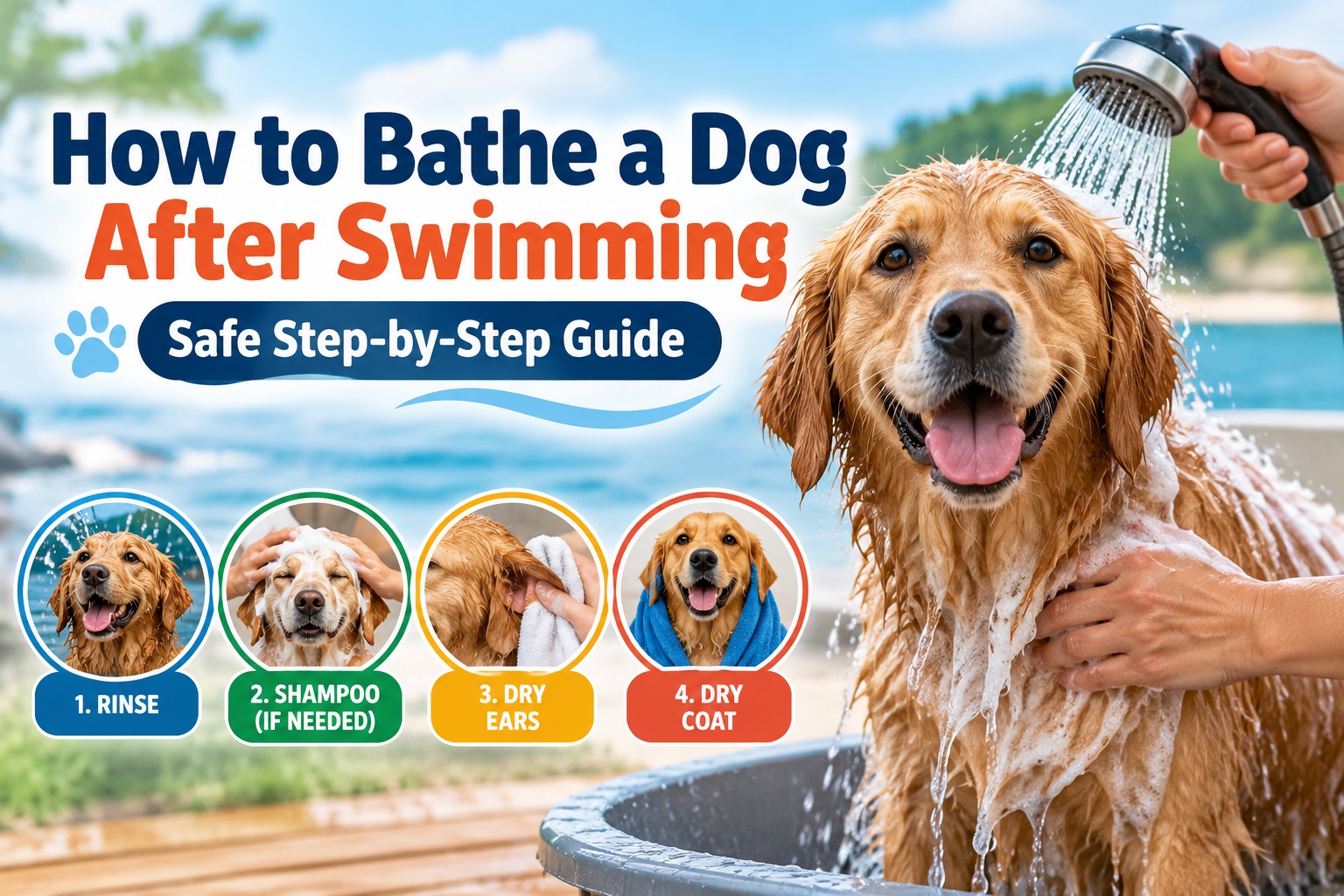
After swimming, rinse your dog thoroughly with fresh lukewarm water, paying attention to the belly, legs, paws, and underside. Use dog shampoo only when the coat is dirty, oily, smelly, or needs a more complete wash, then dry the coat and ears carefully. For the basic washing technique, follow this safe dog bathing guide.
Quick Post-Swim Steps
- Check the coat: Look for mud, sand, plants, cuts, redness, or anything caught in the fur.
- Rinse thoroughly: Use fresh water to remove chlorine, salt, lake residue, sand, and debris.
- Shampoo if needed: Use a dog-specific shampoo when rinsing alone does not leave the coat clean.
- Rinse again: Remove every trace of shampoo, especially from dense fur and hidden areas.
- Dry the ears: Gently dry the visible ear flap and surrounding fur without pushing objects into the canal.
- Dry the coat: Blot with towels and check thick fur near the skin for trapped moisture.
Call Your Vet If
- Your dog develops persistent itching, painful skin, unusual discharge, a strong ear odor, repeated head shaking, or worsening redness.
A swim can leave much more than clean water in your dog’s coat. Pool chemicals, sea salt, sand, mud, algae, and organic debris can all remain after your dog climbs out.
My practical rule is simple: rinse first and decide whether shampoo is necessary second. That avoids turning every swim into an unnecessary full bath.
Should You Bathe a Dog After Swimming?
Yes, you should at least rinse your dog with fresh water after swimming in a pool, ocean, lake, or other outdoor water. A full shampoo bath is useful when the coat remains dirty, oily, sticky, smelly, or contaminated after rinsing.
The American Kennel Club recommends rinsing a dog’s coat after swimming to remove residual pool chemicals. VCA also recommends rinsing away chlorine, sea salt, and other debris after swimming.
Definition: A post-swim bath is a cleaning routine used after swimming to remove water residue, chemicals, salt, dirt, and debris from a dog’s skin and coat. It may involve only a fresh-water rinse or a complete shampoo bath depending on the dog’s condition.
How Do You Bathe a Dog After Swimming Step by Step?
Start with a coat and skin check, then rinse before reaching for shampoo. This lets you see how much cleaning your dog actually needs.
1. Check Your Dog Before Starting the Bath
Run your hands gently over the coat before adding more water. Look closely at the paws, belly, armpits, tail area, and skin beneath wet fur.
- Check for cuts: Look for scratches, abrasions, or tender spots.
- Remove debris: Pick out leaves, grass, burrs, twigs, or visible plant material.
- Inspect the paws: Sand and small debris often collect between the toes.
- Look at the skin: Note unusual redness, swelling, or irritation.
- Check the ears: Watch for discharge, strong odor, pain, or excessive head shaking.
If the skin looks badly irritated or injured, avoid aggressive washing. Veterinary advice may be more appropriate than another round of shampoo.
2. Rinse the Coat With Fresh Lukewarm Water
Rinse from the neck toward the tail using a gentle water flow. Keep working until the water reaches through the coat rather than running only across the surface.
Comfortably mild water works well for routine cleaning. You can use this dog bath temperature guide if you’re unsure how warm the water should feel.
- Rinse the shoulders and back.
- Work down the chest and sides.
- Flush sand from the legs and paws.
- Rinse the belly and underside.
- Part dense fur so clean water reaches the skin.
A fresh-water rinse is especially useful after chlorinated pools and salt water. It also helps remove loose dirt from lake or pond swimming.
3. Decide Whether Your Dog Needs Shampoo
Not every swim needs shampoo. If a thorough fresh-water rinse leaves the coat clean and comfortable, you can often move directly to drying.
Use a dog-specific shampoo when the coat still has noticeable dirt, odor, oil, mud, or stubborn residue.
| Swimming Situation | Fresh-Water Rinse | Shampoo Bath | Main Priority |
|---|---|---|---|
| Maintained swimming pool | Recommended | As needed | Remove pool residue and dry ears |
| Ocean or salt water | Recommended | If salt, odor, or grime remains | Remove salt and sand |
| Clean freshwater swim | Recommended | Usually only when dirty | Remove organic debris |
| Muddy water | First step | Often useful | Remove mud from skin and coat |
4. Use Dog Shampoo Only When Needed
Apply shampoo formulated for dogs and follow its label instructions. Avoid assuming that extra shampoo will clean faster.
If your dog reacts easily to grooming products, follow the gentler approach in this guide to bathing a dog with sensitive skin.
- Apply a small amount through the wet coat.
- Massage gently with your fingertips.
- Work through the neck, back, chest, belly, legs, and tail.
- Avoid getting shampoo into the eyes, mouth, nose, and ear canals.
- Follow any stated contact time before rinsing.
The ASPCA grooming guidance also recommends dog-appropriate bathing practices and lukewarm water.
5. Rinse Until No Shampoo Remains
Give rinsing at least as much attention as washing. Dense fur can hide shampoo even when the outer coat looks clean.
- Part thick fur while rinsing.
- Check beneath the collar area.
- Rinse the chest and armpits carefully.
- Flush the belly and groin area gently.
- Check every leg and paw.
- Continue until the coat no longer feels slippery from shampoo.
Dogs with thick or double coats need extra time. Water and residue can remain close to the skin long after the surface appears clean.
How Is Post-Swim Care Different After a Pool, Ocean, or Lake?
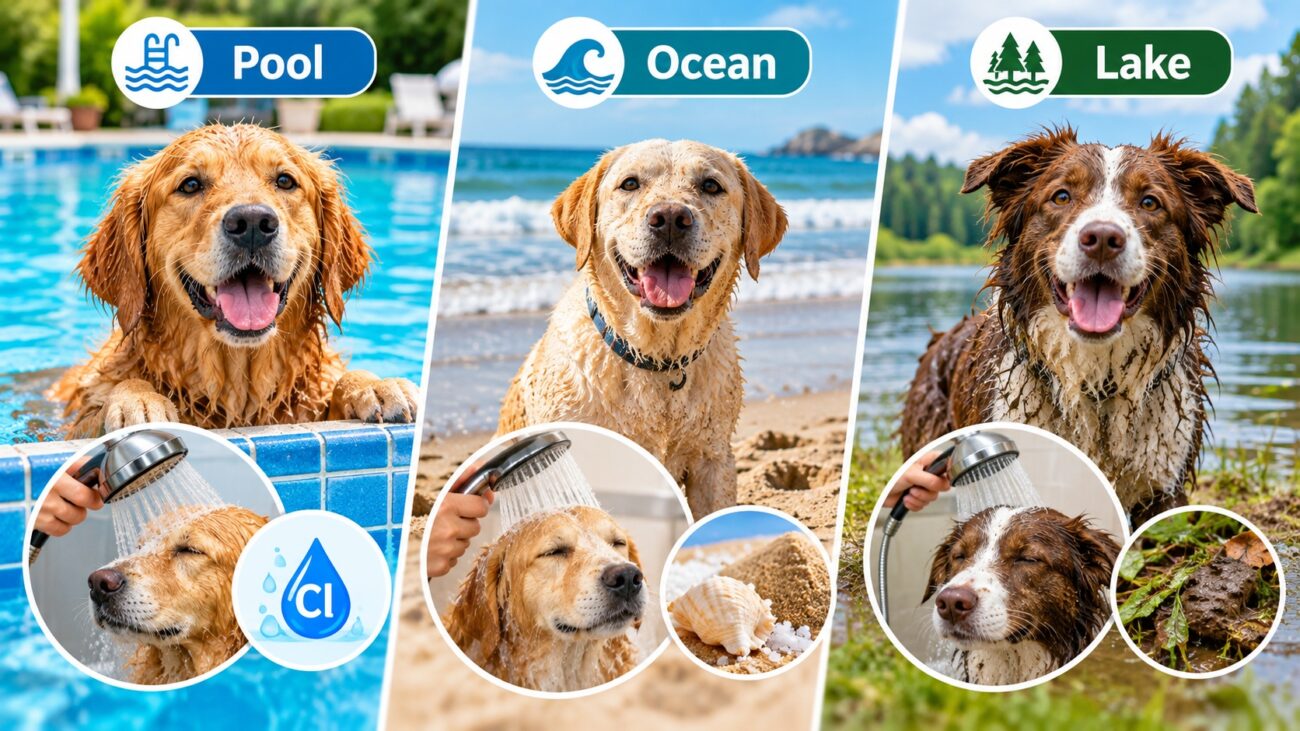
The basic routine remains similar, but the residue you are removing changes. Knowing what your dog swam in helps you choose how thorough the cleaning should be.
After Swimming in a Chlorinated Pool
Rinse the coat with fresh water after the swim. The goal is to remove residual chemicals rather than automatically shampooing after every pool session.
Keep pool chemicals and concentrated chlorine products securely away from pets. Drinking pool water should also be discouraged.
After Swimming in the Ocean
Fresh water helps remove salt and sand from the coat, paws, belly, and skin. Check carefully between the toes, where sand can remain hidden.
If the coat still feels gritty or sticky after rinsing, a mild dog shampoo may make sense. Rinse the shampoo completely afterward.
After Swimming in a Lake or Pond
Rinse away mud, organic material, vegetation, and visible debris. Check the entire dog closely because wet fur can conceal small scratches or attached plant material.
VCA’s dog water-safety guidance also advises rinsing dogs after swimming.
How Should You Care for Your Dog’s Ears After Swimming?
Dry the visible outer ears and surrounding fur after every swim. Moisture is especially important to manage in dogs with floppy ears or a history of recurring ear trouble.
The Merck Veterinary Manual notes that ear canals should be kept dry and that dogs that swim frequently may need veterinarian-recommended preventive ear care.
- Let your dog shake: Natural head shaking can move loose surface moisture outward.
- Blot the ear flap: Use a clean towel on visible areas.
- Dry surrounding hair: This matters for dogs with long or floppy ears.
- Avoid deep cotton swabs: Do not push objects down the ear canal.
- Ask before using cleaners: Use preventive ear products according to veterinary guidance.
For more detail, see how to keep water out of a dog’s ears during bathing.
How Do You Dry a Dog Properly After Swimming and Bathing?
Start with towels and finish according to coat type. The goal is to remove moisture from the skin and roots without creating tangles or overheating your dog.
- Let excess water drain from the coat.
- Gently squeeze longer fur with your hands.
- Press an absorbent towel into the coat.
- Replace saturated towels as needed.
- Check the belly, paws, folds, ears, and undercoat.
- Use cool or gentle moving air for dense coats when needed.
Don’t judge dryness only by the surface. Thick fur may feel dry on top while remaining damp next to the skin.
For a complete coat-specific routine, follow this guide on how to dry a dog after a bath.
What Post-Swim Bathing Mistakes Should You Avoid?
Most mistakes come from doing too much or rushing the parts that matter. Keep the routine focused on rinsing, observation, ear care, and drying.
- Shampooing after every swim automatically: A fresh-water rinse may be enough when the coat is already clean.
- Skipping the rinse: Pool chemicals, salt, sand, and debris can remain in wet fur.
- Ignoring the ears: Moisture can stay trapped around the ear opening.
- Using human shampoo: Choose a product made for dogs instead.
- Rushing thick coats: Dense fur needs deeper rinsing and drying.
- Scrubbing with towels: Aggressive rubbing can tangle long or curly coats.
- Using excessive heat: Focus on airflow rather than making the dryer hot.
- Missing skin problems: Wet fur can hide cuts, redness, sores, and irritation.
When Should You Contact a Veterinarian After Swimming?
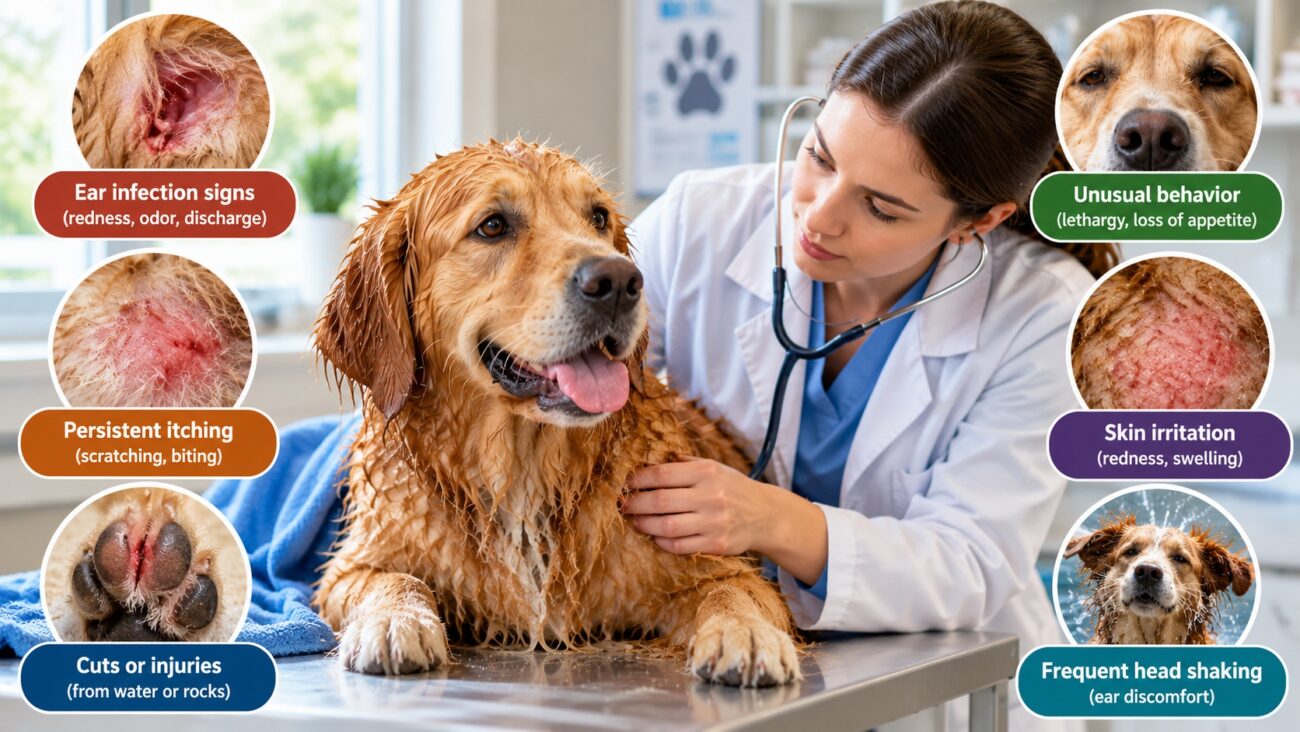
Contact your veterinarian when symptoms continue after the dog is rinsed and dried or when you see signs of significant irritation. Persistent ear or skin symptoms may need diagnosis rather than more home bathing.
- Repeated or forceful head shaking
- Persistent scratching at the ears or skin
- Strong or unusual ear odor
- Ear discharge, swelling, or obvious pain
- Open sores or raw skin
- Persistent redness or swelling
- Unusual hair loss
- Skin odor that returns quickly
- Vomiting, weakness, or other illness after water exposure
As of 2026, veterinary guidance continues to treat excessive ear moisture as a factor that can contribute to otitis externa. Dogs with recurring ear problems deserve an individualized prevention plan.
If you’re putting together a simple post-swim grooming kit, these are the types of products I’d consider first:
🏆 Best for Rinsing
Aquapaw Dog Bathing Tool
★★★★☆
This wearable rinsing tool keeps water control close to the coat while you work with one hand. I like this type of tool for flushing salt, sand, and pool residue without spraying broadly around the head.
🌿 Best Gentle Shampoo
Earthbath Oatmeal & Aloe Dog Shampoo
★★★★☆
This dog-specific shampoo is designed as a gentle cleansing option and includes oatmeal and aloe. I would consider it when a simple rinse isn’t enough and the dog needs a full wash after swimming.
💧 Best for Drying
The Absorber Dog Lover’s Towel
★★★★☆
An absorbent towel helps pull water from the coat without aggressive rubbing. I prefer blotting around the ears, legs, and belly before deciding whether a thick coat also needs moving air.
Frequently Asked Questions
Do I need to shampoo my dog every time after swimming?
No. A thorough fresh-water rinse may be enough when your dog’s coat is otherwise clean. Shampoo is more useful when dirt, salt, mud, odor, oil, or stubborn residue remains. Frequent shampooing should also be adjusted to your dog’s skin condition and veterinary advice.
Should I rinse my dog after swimming in a chlorine pool?
Yes. Rinsing with fresh water helps remove residual pool chemicals from the skin and coat. Dry the coat and outer ears afterward, and don’t allow your dog to drink large amounts of pool water.
Should I bathe my dog after swimming in the ocean?
At minimum, rinse your dog thoroughly with fresh water to remove salt and sand. Check between the toes and beneath longer fur. Use dog shampoo when the coat remains dirty, sticky, oily, or strongly scented after rinsing.
How do I prevent ear problems after my dog swims?
Dry the visible ear flaps and surrounding hair after swimming and avoid pushing cotton swabs deep into the canals. Dogs with recurrent ear problems may need a veterinarian-recommended drying or cleaning routine tailored to their ears.
Can I let my dog air-dry after swimming?
A short-coated dog may finish air-drying indoors after thorough towel drying when conditions are comfortably warm. Thick, long, curly, or double coats need closer checking because moisture can remain trapped near the skin even when the surface feels dry.
Final Takeaway
Learning how to bathe a dog after swimming starts with one important distinction: rinsing and shampooing are not always the same thing. Rinse away chlorine, salt, sand, mud, and outdoor debris first, then use dog shampoo only when the coat needs deeper cleaning.
Finish by drying the coat, paws, and ears carefully. If your dog develops persistent skin irritation, ear odor, discharge, pain, or repeated head shaking after swimming, contact your veterinarian instead of trying to solve the problem with repeated baths.