Quick Answer
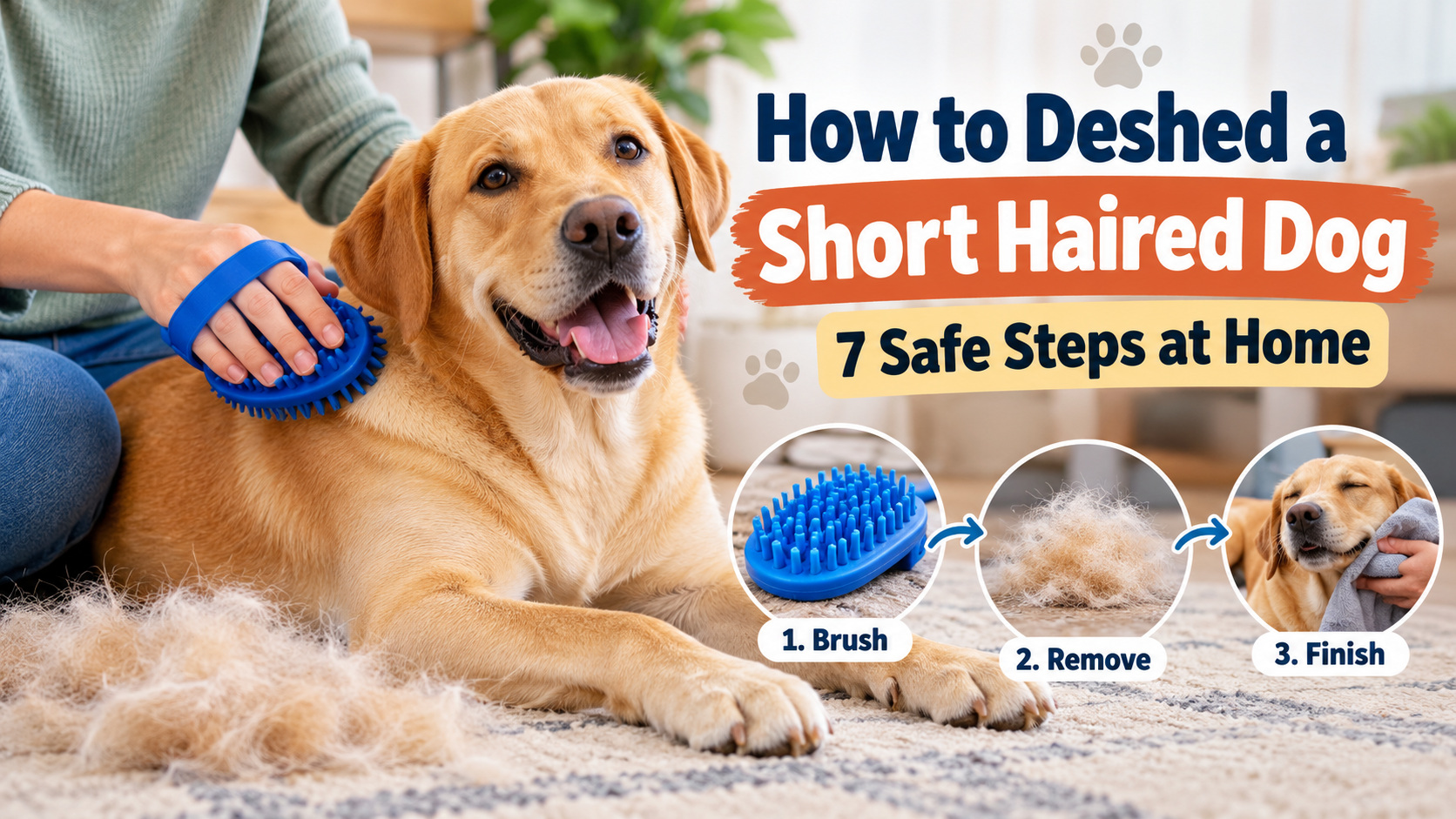
To deshed a short haired dog, use a soft rubber curry brush or grooming mitt to loosen dead hair. Brush gently in small sections, following the direction of hair growth. Finish with a soft bristle brush or damp cloth. Regular brushing helps control loose fur, but it won’t stop normal shedding. For a complete routine, see this dog deshedding guide.
7 Quick Steps to Deshed a Short Haired Dog
- Check the skin: Look for redness, sores, fleas, and sensitive areas.
- Choose a soft brush: Start with a rubber curry brush or grooming glove.
- Begin gently: Use light strokes along the shoulders and back.
- Work in sections: Groom the sides, chest, legs, and hindquarters.
- Remove loose hair: Lift away fur collected by the brush.
- Finish the coat: Use a soft bristle brush or slightly damp cloth.
- Reward your dog: Offer praise and a small treat after grooming.
One Important Safety Tip
- Never scrape the skin: Stop if brushing causes redness, discomfort, or repeated pulling away.
Short-haired dogs can leave a surprising amount of fur on furniture, clothes, and floors. Their tiny hairs often stick to fabric even when the coat looks perfectly smooth.
I recommend starting with gentle grooming instead of reaching for an aggressive deshedding tool. This guide explains how to remove loose short hair safely, choose the right brush, and build a simple routine.
What Does Deshedding a Short Haired Dog Mean?
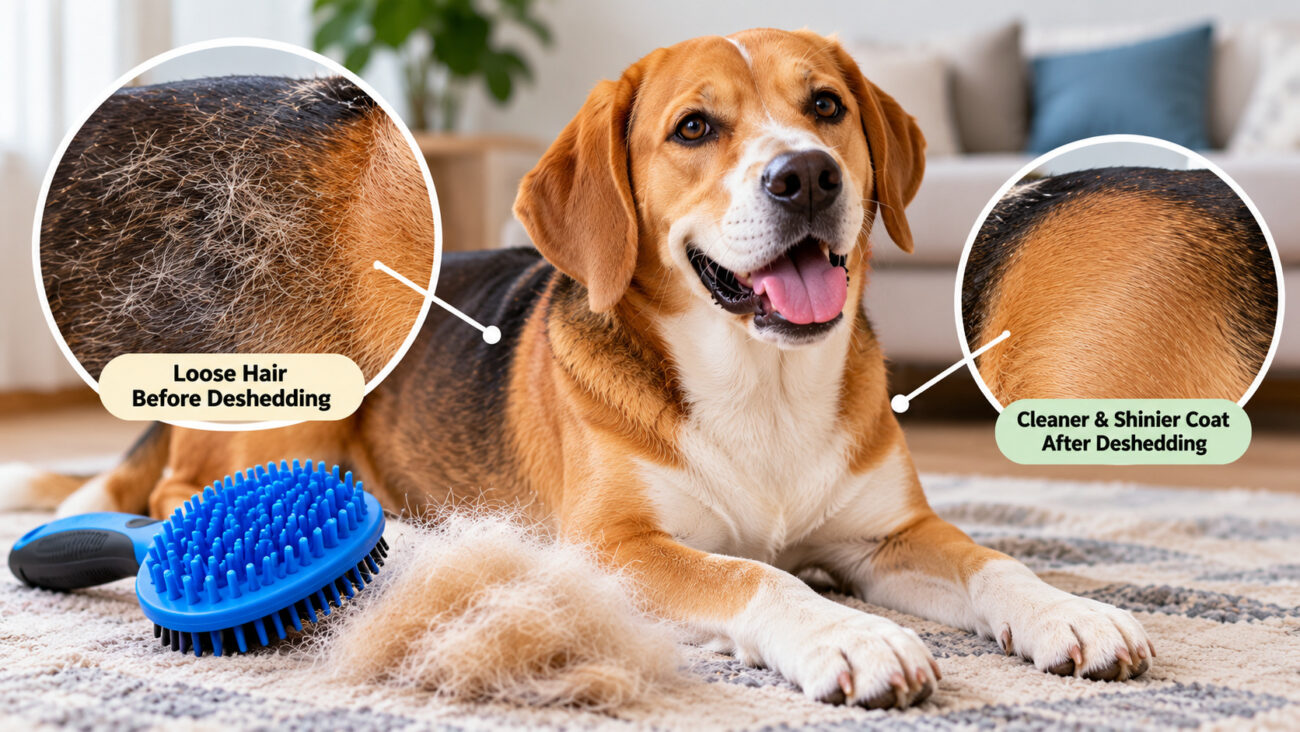
Deshedding a short-haired dog means removing loose, dead hair before it naturally falls onto furniture or floors. It helps manage shedding without shaving or shortening healthy coat hair.
Short-haired dogs still replace old hair as part of their normal hair-growth cycle. Some shed steadily throughout the year, while others experience heavier seasonal shedding.
Common short-haired breeds include:
- Beagles: Short, dense coats that can shed noticeably throughout the year.
- Boxers: Smooth, close-fitting coats that benefit from gentle brushing.
- Labrador Retrievers: Short, dense double coats with a substantial undercoat.
- Pugs: Short coats that may shed heavily despite their small size.
- Doberman Pinschers: Smooth coats that usually need gentle surface grooming.
- French Bulldogs: Short, smooth coats that may shed year-round.
The key difference is coat density. A Labrador’s short double coat needs different care from a Boxer’s smooth, close-fitting coat.
According to VCA Animal Hospitals’ grooming guidance, regular brushing removes loose hair, dead skin cells, and surface debris.
Does Deshedding Stop a Short Haired Dog From Shedding?
No. Deshedding collects hair that is already loose, but it cannot stop the natural shedding cycle.
You may notice less hair around your home after consistent grooming. The amount collected depends on your dog’s breed, coat condition, and shedding pattern.
Successful deshedding should leave the coat comfortable and healthy-looking. It should never create bald patches or irritated skin.
What Tools Do You Need to Deshed a Short Haired Dog?
Most short-haired dogs need only a soft grooming tool, a finishing brush, and a towel. Choose tools based on coat density rather than hair length alone.
I would start with a rubber curry brush for a smooth-coated dog. Its flexible teeth can loosen hair without the sharp pressure of a metal edge.
Best Deshedding Tools for Short Haired Dogs Compared
| Tool Type | Best Use | Coat Suitability | Main Limitation |
|---|---|---|---|
| Rubber curry brush | Loosening surface hair | Short, smooth coats | May miss dense undercoat |
| Grooming glove | Gentle handling | Smooth, short coats | Limited deep-hair removal |
| Soft bristle brush | Finishing and smoothing | Fine, smooth coats | Less effective on thick undercoat |
| Short-hair undercoat tool | Removing loose undercoat | Suitable dense, shedding coats | May irritate skin if misused |
| Damp microfiber cloth | Collecting remaining hair | Most short coats | Does not reach undercoat |
For smooth coats, a rubber curry and finishing brush usually make a useful combination. Dense double coats may need a more specialized tool.
The American Kennel Club’s shedding guide also recommends grooming gloves and bristle brushes for many short-coated breeds.
How to Deshed a Short Haired Dog Step by Step
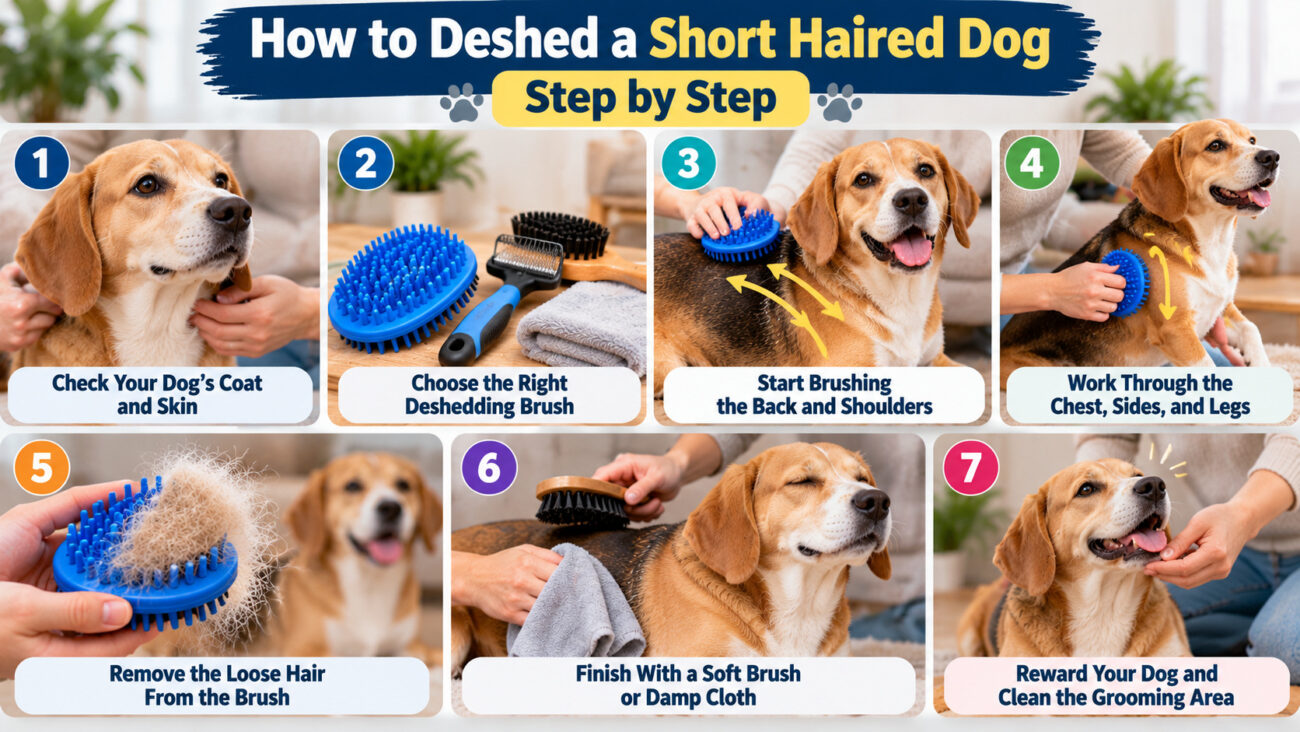
To deshed a short-haired dog safely, check the skin, choose a suitable brush, and work through the coat gently. Keep sessions comfortable and avoid excessive pressure.
A calm five-minute session is a useful starting point for many dogs. You can adjust the time based on your dog’s comfort and the amount of loose hair.
Step 1: Check Your Dog’s Coat and Skin
Run your hands gently over your dog’s body before brushing. Feel for lumps, bumps, tender spots, and unusual rough patches.
Look closely at areas with visible redness or thinning hair. Grooming over damaged skin can make an existing problem worse.
- Check the back and shoulders for loose fur.
- Inspect the belly and chest for irritation.
- Look around the neck for collar-related rubbing.
- Check for fleas, ticks, scabs, and bald patches.
Stop and contact your veterinarian if you discover open sores or unexplained hair loss. These problems need more than routine brushing.
Step 2: Choose the Right Deshedding Brush
Use a rubber curry brush or grooming mitt for most smooth, short coats. Soft bristles are another option for dogs with fine hair.
For dense double-coated breeds, a correctly sized undercoat tool may help during heavy shedding. Follow its instructions carefully and avoid using it on irritated skin.
Don’t assume a stronger brush works better. Comfort and coat suitability matter more than how much hair comes out.
Step 3: Start Brushing the Back and Shoulders
Begin on an area your dog enjoys being touched. Use short, light strokes following the direction of hair growth.
A flexible rubber curry can also work with small, gentle circular motions on healthy skin. Finish by smoothing the coat in its natural direction.
- Keep your wrist relaxed.
- Avoid pressing hard against the skin.
- Work slowly instead of brushing rapidly.
- Pause when your dog moves away.
Use praise or a treat when your dog stays relaxed. Short positive sessions can make future grooming easier.
Step 4: Work Through the Chest, Sides, and Legs
Move from the shoulders toward the hindquarters. Brush the chest, sides, and upper legs in manageable sections.
These areas may have different hair thicknesses. Reduce pressure around the belly, armpits, and other sensitive spots.
- Chest: Use smooth, controlled strokes.
- Sides: Brush with the direction of hair growth.
- Legs: Use lighter pressure near joints.
- Hindquarters: Remove loose hair without repeated scraping.
- Tail: Support it gently and avoid pulling.
Don’t force grooming around the face or ears. A soft cloth is often easier to control in these areas.
Step 5: Remove the Loose Hair From the Brush
Pause regularly to clear collected fur from the grooming tool. A clean brush can work more effectively.
Some rubber brushes loosen fur that remains sitting on the coat. Gather it with your hand, a soft bristle brush, or a damp cloth.
Dispose of collected hair instead of letting it scatter around the room. Grooming outdoors can also reduce cleanup when weather permits.
Step 6: Finish With a Soft Brush or Damp Cloth
After removing loose hair, make a final gentle pass over the coat. Use a soft bristle brush to smooth the remaining hair.
A slightly damp microfiber cloth can collect fine strands left on the surface. The cloth should be damp, not dripping wet.
Check the skin again before finishing. Healthy skin should not look scraped or newly inflamed after brushing.
Step 7: Reward Your Dog and Clean the Grooming Area
End the session while your dog is still comfortable. Offer calm praise, affection, or a favorite small treat.
Wash or clean the grooming tools according to their instructions. Remove any trapped hair and let wet equipment dry completely.
- Collect loose fur from the floor.
- Clean the brush or grooming glove.
- Check the dog’s coat for remaining loose hair.
- Give your dog a short break.
The goal is a routine your dog can tolerate repeatedly. You don’t need to remove every loose hair in one session.
How Often Should You Deshed a Short Haired Dog?
Many short-haired dogs benefit from gentle brushing one to three times weekly. Dogs with dense coats or heavy shedding may need more frequent light brushing.
Intensive undercoat removal should happen less often than everyday brushing. Your dog’s skin response and the tool manufacturer’s instructions should guide the schedule.
Suggested Brushing Schedule by Coat Type
| Coat Type | Starting Schedule | Suggested Tool |
|---|---|---|
| Smooth, light-shedding coat | About once weekly | Soft bristle or rubber brush |
| Moderately shedding short coat | Two or three times weekly | Rubber curry or grooming glove |
| Dense short double coat | Several gentle sessions weekly as needed | Rubber brush and appropriate undercoat tool |
| Heavy seasonal shedding | Brief daily brushing if tolerated | Coat-appropriate gentle brush |
These frequencies are starting points, not strict rules. Adjust them when shedding increases or the skin becomes sensitive.
Our guide to how often to deshed a dog explains how to adapt grooming to different shedding levels.
Should You Bathe a Short Haired Dog Before or After Deshedding?
Brush a short-haired dog before bathing to loosen surface hair and remove debris. Then use dog-safe shampoo, rinse thoroughly, and dry the coat.
After the coat is dry, a light finishing brush may collect remaining hair. Avoid aggressive grooming immediately after bathing if the skin looks irritated.
Safe Bathing and Deshedding Routine
- Brush first: Remove loose hair from the dry coat.
- Prepare the tub: Add a non-slip mat and use lukewarm water.
- Wash gently: Use shampoo formulated for dogs.
- Rinse thoroughly: Remove all shampoo residue.
- Dry carefully: Use clean, absorbent towels.
- Finish lightly: Brush the dry coat if your dog remains comfortable.
Don’t bathe your dog every time you notice shedding. Excessive bathing can contribute to dry or irritated skin.
For complete washing instructions, read how to bathe a short-haired dog safely.
What Common Deshedding Mistakes Should You Avoid?
The biggest mistake is using excessive pressure to remove more hair. Hard brushing can irritate skin and damage healthy fur.
Some owners also use undercoat tools on coats that don’t need them. A short coat does not automatically mean a dog has a dense undercoat.
7 Mistakes That Can Make Grooming Less Safe
- Using excessive force: Pressing hard can scratch or irritate the skin.
- Brushing too long: Repeated passes over one spot may cause redness.
- Choosing the wrong tool: Metal undercoat tools may not suit fine, single-layer coats.
- Ignoring discomfort: Flinching or pulling away means you should pause.
- Brushing damaged skin: Open sores and rashes need veterinary attention.
- Expecting zero shedding: Normal hair replacement will continue.
- Skipping coat checks: Grooming should include looking for changes in skin health.
Another mistake is brushing only when furniture becomes covered in fur. Smaller, regular sessions are often easier to manage.
As a practical rule, I prefer checking the skin after each section instead of waiting until the entire session ends. This helps catch early irritation.
How Can You Reduce Short Dog Hair Around the House?
Regular grooming reduces the amount of loose hair available to fall onto household surfaces. Cleaning furniture and bedding also helps control the remaining fur.
No brush will eliminate shedding completely. The best approach combines coat care with a manageable cleaning routine.
Simple Ways to Control Loose Hair Indoors
- Brush consistently: Remove loose hair before it reaches furniture.
- Wash dog bedding: Follow the bedding manufacturer’s washing instructions.
- Vacuum frequently: Focus on carpets, rugs, and upholstered furniture.
- Use washable throws: Cover favorite resting places.
- Clean grooming tools: Remove trapped fur after every session.
- Maintain balanced nutrition: Feed a complete diet appropriate for your dog’s needs.
- Address skin problems: Seek veterinary advice for abnormal hair loss or itching.
Short hairs can become embedded in textured fabric. A vacuum upholstery attachment or suitable lint-removal tool can make cleanup easier.
The ASPCA’s dog grooming advice explains why regular brushing helps manage normal shedding.
When Is Short Haired Dog Shedding a Health Concern?
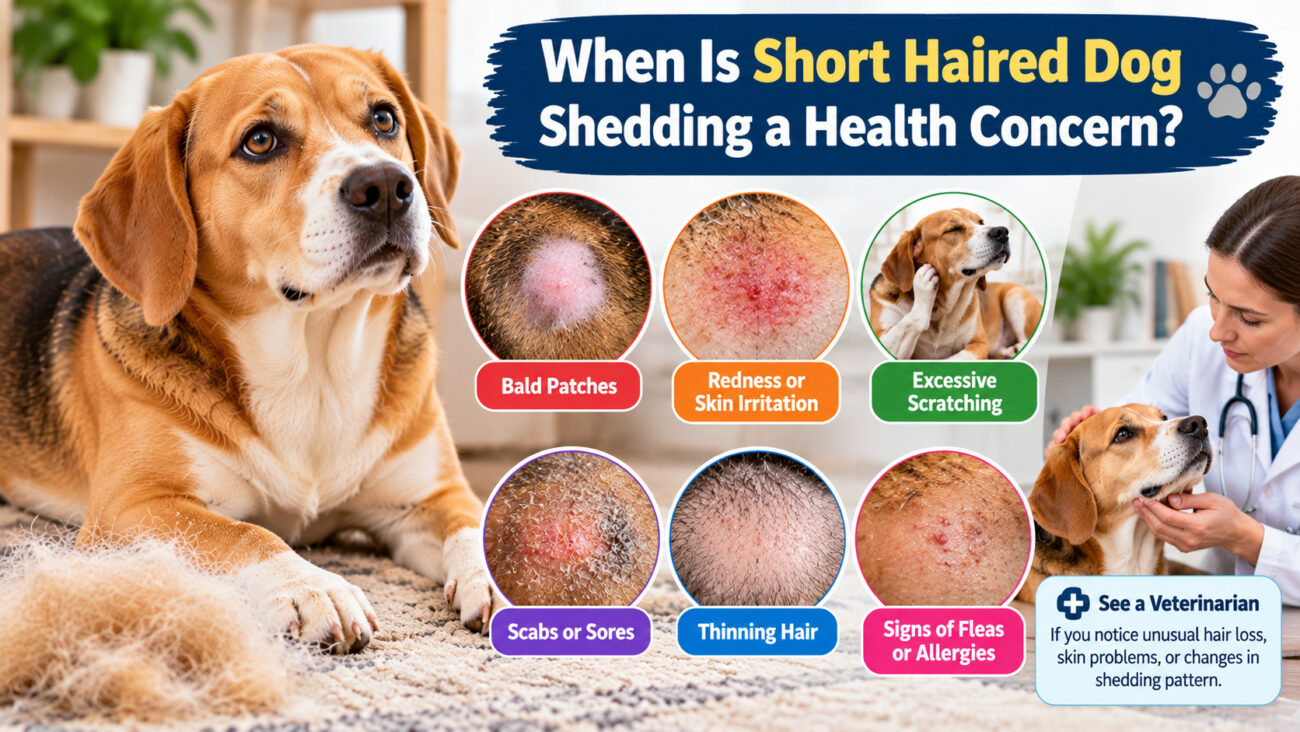
Normal shedding usually involves loose hair without significant skin damage. Sudden bald patches, inflamed skin, or intense itching may indicate an underlying problem.
Possible causes include parasites, allergies, infections, and certain medical conditions. Grooming tools cannot treat these problems.
Warning Signs That Need Veterinary Attention
- Sudden or unexplained bald patches.
- Persistent redness, rashes, or scabs.
- Frequent scratching, chewing, or licking.
- Skin odor, discharge, or open sores.
- Hair that breaks or pulls out unusually easily.
- Rapid changes in coat condition or shedding pattern.
Don’t increase brushing when these symptoms appear. Stop grooming affected areas and ask a veterinarian to assess the skin.
For more background, see VCA Animal Hospitals’ healthy dog coat and skin guidance.
Can You Use a FURminator on a Short Haired Dog?
Yes, a short-hair FURminator may suit some dogs with dense, shedding undercoats. However, it is not necessary or appropriate for every short-haired breed.
For a smooth, fine coat without much undercoat, a rubber curry brush is usually the gentler starting point. Use an undercoat tool only when the coat and manufacturer instructions support it.
When an Undercoat Tool May Help
- Your dog has a dense, shedding double coat.
- Loose undercoat builds up during seasonal changes.
- The tool is designed for your dog’s coat length and size.
- The skin is healthy and free from sores or irritation.
- You can groom lightly without scraping or pulling.
Avoid repeated passes over the same area. Stop immediately if the skin becomes red or your dog shows discomfort.
Recommended Deshedding Tools for Short Haired Dogs
If you’re choosing your first short-coat grooming tool, I would prioritize comfort and ease of use. These three established products suit different grooming needs.
The ratings below are editorial suitability assessments, not verified customer-review averages or results from hands-on testing.
🏆 Best for Smooth Coats
KONG ZoomGroom Dog Brush
★★★★★ 4.8/5 Editorial Suitability
This rubber grooming brush uses flexible teeth to loosen surface fur. I would consider it a strong first choice for routine grooming on healthy, smooth short coats. It also suits gentle bath-time brushing.
🐾 Best for Routine Grooming
FURminator Curry Comb
★★★★★ 4.6/5 Editorial Suitability
This curry comb has molded rubber teeth and an ergonomic grip. I would consider it for routine brushing of short and medium coats when an easy-to-hold tool matters.
⭐ Best for Dense Short Undercoats
FURminator Undercoat deShedding Tool for Short Hair
★★★★☆ 4.3/5 Editorial Suitability
The short-hair version uses a stainless steel deshedding edge to collect loose undercoat. I would reserve it for suitable dense coats rather than delicate, fine coats. Correct sizing and gentle use are essential.
Affiliate disclosure: As an Amazon Associate, we may earn from qualifying purchases if you buy through our affiliate links, at no additional cost to you.
Frequently Asked Questions About Deshedding Short Haired Dogs
1. What Is the Best Way to Deshed a Short Haired Dog?
The best starting method is gentle brushing with a rubber curry brush or grooming mitt. Work in small sections with light pressure, collect loose hair, and finish with a soft brush or damp cloth. Choose a specialized undercoat tool only for a suitable dense coat.
2. How Often Should I Brush My Short Haired Dog?
Start with brushing once or twice weekly for a lightly shedding short coat. Dogs that shed more heavily may benefit from several short sessions each week. During seasonal shedding, daily gentle brushing may help if your dog’s skin stays comfortable.
3. Can You Deshed a Short Haired Dog Without a Special Tool?
Yes. A soft bristle brush, suitable grooming glove, or slightly damp microfiber cloth can remove loose surface hair. These methods are especially useful for smooth-coated dogs. They may be less effective on breeds with dense undercoats, which sometimes need specialized grooming tools.
4. Does Bathing Help a Short Haired Dog Shed Less?
Bathing can loosen dead hair and wash away surface debris. However, bathing does not stop normal shedding or replace regular brushing. Use dog-safe shampoo, rinse thoroughly, and avoid unnecessary frequent baths that could dry or irritate the skin.
5. Why Is My Short Haired Dog Shedding So Much?
Heavy shedding may reflect normal seasonal changes, breed characteristics, or your dog’s individual coat cycle. Sudden excessive hair loss, bald spots, redness, or intense itching can indicate a medical problem. Contact your veterinarian when shedding changes dramatically or appears alongside skin symptoms.
Final Takeaway: Keep Short Haired Dog Deshedding Gentle
Learning how to deshed a short haired dog starts with understanding the coat. A soft rubber curry brush works well for many smooth coats, while dense double coats may require different tools.
Brush gently, pay attention to skin health, and adjust your routine to your dog’s shedding level. Consistency is more useful than aggressive brushing.
Start with a short grooming session this week. Choose a comfortable brush, remove loose fur carefully, and make the experience positive for your dog.