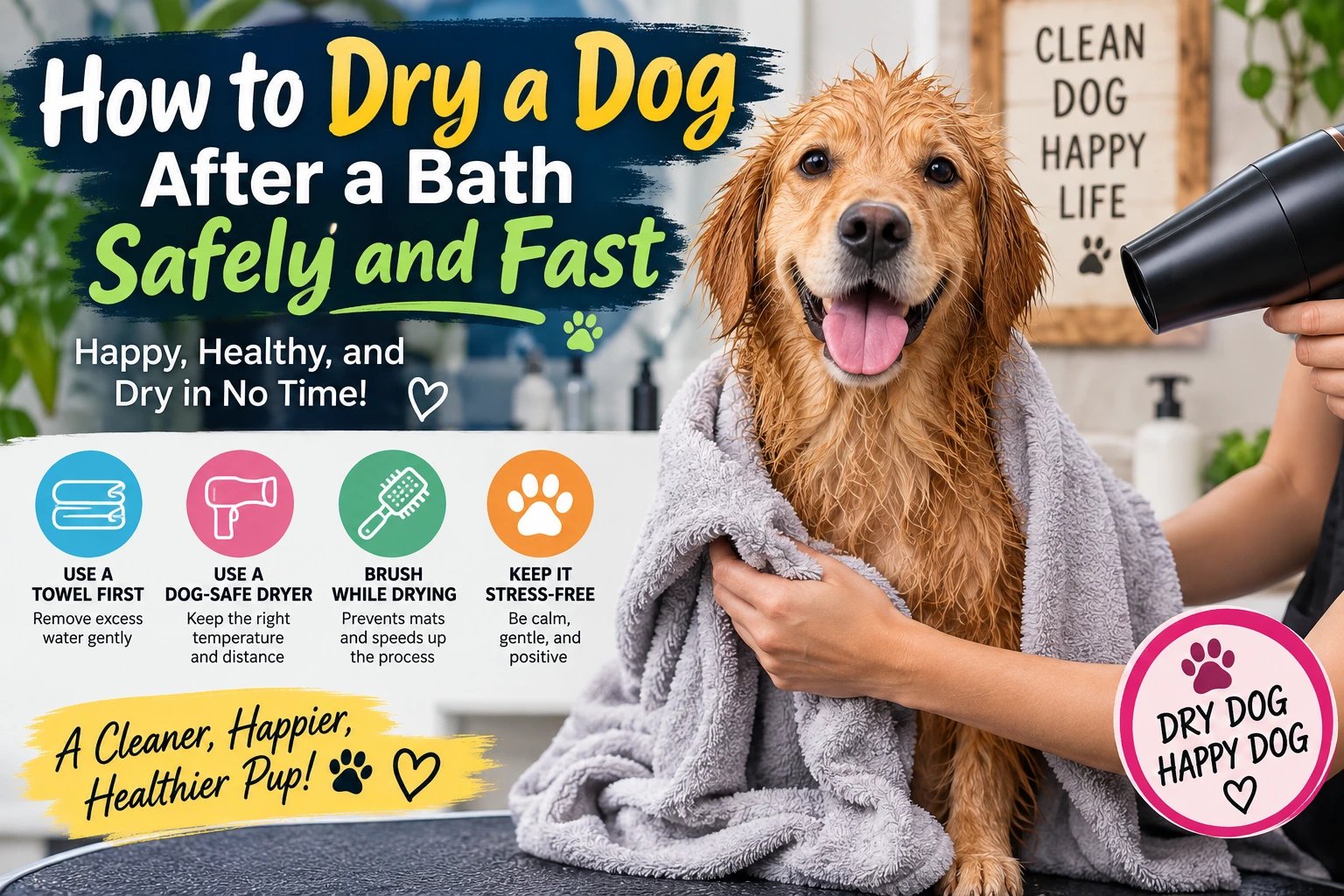
⚡ Quick Answer
Dry your dog by removing water in stages, not by rubbing hard. Start with gentle squeezing, then press with absorbent towels. Short coats can finish in a warm room. Long, curly, and double coats usually need cool moving air. Keep heat low and stop if your dog becomes distressed.
Fast post-bath drying order
- 1Gently squeeze excess water before leaving the tub.
- 2Press towels into the coat without rough rubbing.
- 3Finish dense coats with cool, moving airflow.
Drying mistakes that cause trouble
- ✓Do not scrub long hair with a towel.
- ✓Do not aim hot air at skin.
- ✓Do not leave dense undercoats damp.
You lift your dog from the tub, and water hits the floor instantly. The coat feels cold, heavy, and harder to manage than expected.
I’m Ashraful, and I favor a calm, coat-first drying routine. Start with towels, then add airflow only when the coat needs it. A clean rinse also matters before drying begins. For bath prep, see this dog shampoo guide.
The goal is simple: dry the skin without heat, tangles, or panic. The safest method changes with coat type and your dog’s comfort.
📌 Key Takeaways
- →Press, do not rub. Blotting removes water while reducing tangles.
- →Match the coat. Dense coats need more active drying near the skin.
- →Use cool airflow. High heat can burn sensitive canine skin.
- →Check hidden moisture. Feel roots, paws, folds, and undercoat before finishing.
How Do You Dry a Dog After a Bath Step by Step?

Start drying before your dog leaves the tub, while excess water stays controlled. Gently squeeze water from legs, tail, chest, and coat without twisting hair. Let your dog shake once, then move onto a dry, non-slip surface.
Press an absorbent towel into the coat instead of rubbing fast. Work from the neck toward the tail, then dry the belly and legs. Use a second towel once the first feels heavy and wet.
Check paws, skin folds, and outer ear flaps for trapped moisture. Short coats often finish well after thorough towel drying in a warm room. Long, curly, and double coats usually need cool moving air near skin level.
Finish only when the coat feels dry at the roots. The American Kennel Club drying guide also stresses complete drying. Cornell notes that dense coats often need brushing plus blow-drying.
🔢 Step-by-Step: A Calm Drying Routine
- 1
Squeeze excess water
Use gentle hand pressure before lifting your dog from the tub.
- 2
Blot with dry towels
Press sections firmly enough to absorb water without scrubbing the coat.
- 3
Add cool airflow
Use moving air for thick, curly, long, or double coats.
- ✓
Check the roots
Feel the undercoat and skin before calling the job finished.
If clipping comes next, the coat must be fully dry first. See why wet fur and dog clippers do not mix.
If trimming follows, compare these at-home dog clippers after drying.
Next, choose the right finish for your dog’s coat.
Should You Towel-Dry or Blow-Dry a Dog?
Use towels first for every dog, then decide whether airflow is still needed. A short, smooth coat often dries well after careful blotting and warm-room drying. A dense coat can stay wet near skin after the surface feels dry.
Long, curly, corded, and double coats need closer moisture checks. Cool moving air helps separate hair and reach trapped water near roots. A pet dryer works through airflow instead of relying on strong heat.
Keep the nozzle moving and avoid the face, eyes, and ear canals. Stop when your dog shows fear that does not ease. Towel-only drying is safer than forcing a frightened dog through loud airflow.
So, the best method is often a combination. Towels remove bulk water, while cool airflow finishes difficult coats. Your dog’s coat and stress level decide the final step.
Use this coat guide to pick the simplest safe finish.
The thicker the coat, the more important root-level dryness becomes.
Air drying sounds easier, but it has limits.
Can You Let a Dog Air-Dry After a Bath?
Yes, some dogs can finish drying naturally after strong towel drying. The room should be warm, dry, and free from cold drafts. This approach fits many short-coated dogs whose skin no longer feels damp.
Air drying is less reliable for thick or tightly curled coats. Moisture can remain near the skin while outer hair feels dry. That trapped dampness can encourage tangles, odor, and skin irritation.
Cold conditions also change the risk. A wet dog loses heat faster and can become chilled. Keep your dog indoors until the coat is fully dry.
Pay extra attention to paws, folds, belly hair, and dense undercoat. Cornell’s canine health guidance recommends thorough drying after water exposure. Dense coats can need brushing and blow-drying for a complete finish.
This matters after evening baths, when room temperatures often fall. Dry collars separately so damp fabric does not hold moisture near skin.
⚠️ Warning
Avoid hot airflow. Texas A&M warns that hair dryers can burn pets. Use cool airflow and keep it moving.
The next challenge is often noise, not moisture.
How Do You Dry a Dog That Hates the Hair Dryer?
Do not force a scared dog through a loud drying session. Start with towels and reduce water before introducing any airflow. Keep your dog on a stable surface and offer calm rewards.
First, let your dog see the dryer while it stays off. Reward relaxed sniffing, then turn it on from farther away. Use the lowest useful airflow and keep early sessions brief.
Move the dryer closer only while your dog stays loose and calm. Avoid aiming air at eyes, ears, nose, or mouth. Stop if your dog freezes, struggles, snaps, or tries escaping.
The goal is gradual comfort, not one perfect drying session. A short coat can finish in a warm room after towel work. A thick coat that stays wet needs safer professional help.
A helper can feed treats while you control the dryer. Keep one hand on your dog for calm, gentle guidance.
✅ Tip
Practice dryer sounds between baths. Keep sessions short, quiet, and paired with rewards.
Once fear is controlled, common drying myths become easier to spot.
What Most People Get Wrong About Drying a Dog After a Bath
Most drying mistakes come from trying to finish faster than the coat allows. One common belief says hard towel rubbing removes water best. It can tangle long hair and tighten developing mats.
Another belief says surface dryness means the whole coat is dry. Dense undercoats can remain wet after outer hair feels normal. Always check roots with your fingers before stopping.
A third belief says hotter air means quicker, better drying. Dog skin can burn when airflow becomes too hot. Texas A&M veterinary guidance advises cool settings for hair-dryer use.
The better rule is slower and simpler. Remove bulk water with towels, then use safe airflow as needed. Drying should protect skin, coat texture, and your dog’s sense of safety.
Fast drying only helps when the process stays gentle. The deepest coat layer decides when drying is done.
- Myth: Rub hard. Better: Press and blot in sections.
- Myth: Dry outside only. Better: Check roots and undercoat.
- Myth: Use more heat. Better: Use cool moving air.
That leaves one routine worth remembering.
What Is the Safest Drying Routine to Remember?
Towel first, then match the finish to your dog’s coat. Use cool airflow only when towels leave deeper moisture behind. Stop before stress or heat turns drying into a struggle. Right now, place two dry towels beside your dog’s bathing area.
Frequently Asked Questions
Can I use a human hair dryer on my dog?
Avoid hot human hair dryers because canine skin can burn faster than expected. A cool pet dryer is safer for thick coats needing active root-level drying indoors. If needed, use only cool air, move constantly, and keep distance from skin.
How long does it take a dog to dry after a bath?
No single drying time fits every dog after a bath, regardless of breed. Coat density, body size, room humidity, and drying method all change the total time. Stop when roots, undercoat, paws, and folds feel dry instead of cool or damp.
Is towel drying enough for a dog?
Towel drying is often enough for many short, smooth-coated dogs after a complete rinse. Press towels into the coat until the skin no longer feels damp underneath. Long, curly, and double coats often need cool moving air to dry their roots fully.
How do I dry my dog without a blow dryer?
Use several clean, soft absorbent towels, pressing each one into small coat sections. Replace a towel once saturated, then keep your dog warm and comfortable indoors. Keep checking roots and dense areas until no hidden moisture remains near the skin.
Why does my dog still smell after a bath?
A damp coat can keep wet-dog odor hanging around longer than expected at home. Check undercoat, paws, folds, and the collar area for hidden moisture or residue. Persistent odor with redness or itching needs a veterinary check for skin problems.
How do I dry my dog’s ears after a bath?
First, blot your dog’s outer ear flap gently with a clean, dry towel. Keep dryer airflow away from the ear canal, eyes, nose, and mouth. Repeated head shaking, odor, redness, discharge, or pain needs prompt professional veterinary attention after bathing.
Should I brush my dog while drying?
Gentle brushing during drying helps many long, curly, and double coats dry more evenly. Use the correct brush, work in sections, and never pull through wet tangles. Short smooth coats usually need far less brushing during the final drying stage.