Quick Answer
To bathe a dog outside safely, choose a warm day, use comfortably lukewarm water, secure your dog on a non-slip surface, and wash with dog-specific shampoo. Rinse the coat completely, towel-dry your dog, and move indoors if the weather turns cool. The same basic safety rules from this safe dog bathing guide still apply outdoors.
Quick Outdoor Dog Bath Steps
- Check the weather: Bathe outside only when conditions are comfortably warm.
- Prepare the area: Choose shade, good drainage, and secure footing.
- Use warm water: Avoid spraying your dog with cold garden-hose water.
- Wash gently: Use shampoo made specifically for dogs.
- Rinse completely: Remove shampoo from the chest, belly, legs, and paws.
- Dry promptly: Blot the coat with towels and keep your dog warm afterward.
When to Skip an Outdoor Bath
- Cold or windy weather: Use an indoor bathing area instead.
- Extreme heat: Wait until conditions become more comfortable.
- Skin disease: Follow your veterinarian’s bathing instructions.
Outdoor dog baths can be easier than wrestling a muddy dog into a bathtub. You get more space, easier cleanup, and fewer wet paw prints across the house.
The outdoor setting also creates new risks. Cold hose water, hot pavement, slippery concrete, wind, and direct sun can quickly make a simple bath uncomfortable.
As of 2026, my preferred approach is simple: treat the outdoor area like a proper bathing station. Control the water, footing, temperature, and drying before shampoo ever touches the coat.
Can You Bathe a Dog Outside Safely?
Yes, you can bathe a dog outside safely when the weather is warm and you have access to comfortable water. Outdoor bathing becomes a poor choice when your dog may become chilled before the coat dries.
Veterinary guidance from VCA Animal Hospitals notes that large dogs can be bathed outdoors during warm weather when the area drains properly.
- Good conditions: Warm, calm weather with access to lukewarm water.
- Good location: Shade, clean ground, drainage, and enough room to work.
- Poor conditions: Cold air, strong wind, intense sun, or very hot surfaces.
- Extra caution: Puppies, seniors, thin-coated dogs, and small dogs can lose heat faster.
The American Kennel Club also advises against outdoor bathing in cool or cold temperatures because body temperature can drop dangerously. That makes weather the first decision, not an afterthought.
What Temperature Should It Be to Bathe a Dog Outside?
There isn’t one universal outdoor air temperature that suits every dog. Your goal is a comfortably warm environment where your dog can stay warm during washing and drying.
Water temperature matters just as much. Use comfortably lukewarm water rather than cold water straight from a garden hose.
If you’re unsure what “lukewarm” should feel like, see this dog bath temperature guide before setting up your outdoor station.
| Condition | Outdoor Bath? | What to Do |
|---|---|---|
| Warm, mild weather | Usually suitable | Use shade and lukewarm water. |
| Cool or windy weather | Better indoors | Prevent chilling during rinsing and drying. |
| Hot direct sun | Use caution | Move into shade and check surface heat. |
| Cold garden-hose water | Avoid | Connect to a warm-water source when possible. |
My three-check rule: I would only proceed when the air feels comfortable, the ground isn’t too hot, and the water feels mild on my inner forearm.
What Do You Need Before Bathing a Dog Outside?
Prepare every item before bringing your dog to the bathing area. Once your dog is wet, leaving to find a towel or shampoo creates unnecessary stress.
- Dog-specific shampoo suited to your dog’s coat and skin.
- Garden hose or sprayer connected to a safe water supply.
- Warm-water access instead of relying on cold hose water.
- Non-slip mat or another secure standing surface.
- Brush or comb for removing loose hair before washing.
- Two or more towels for immediate drying.
- Washcloth for gently cleaning the face.
- Treats for rewarding calm behavior.
- Leash or helper if your dog may wander away.
Choose dog shampoo rather than human shampoo. The ASPCA’s grooming guidance recommends products formulated specifically for pets and advises protecting the eyes, ears, and nose from direct water.
Dogs with irritated skin need more careful product choices. This guide to bathing a dog with sensitive skin explains how to reduce extra irritation.
How Do You Bathe a Dog Outside Step by Step?
Start with preparation, then work in a calm order from brushing through drying. A predictable routine reduces scrambling and helps you rinse every part of the coat properly.
- Brush your dog before adding water. Remove loose fur, surface dirt, and manageable tangles.
- Move into a shaded bathing area. Avoid hot concrete and direct midday sun.
- Place your dog on secure footing. Use a non-slip mat when the surface becomes slick.
- Check the water temperature. Make sure it feels comfortably lukewarm.
- Wet the body gradually. Start around the shoulders and work toward the tail.
- Apply dog shampoo. Massage with your fingertips rather than scratching with your nails.
- Clean the face separately. Use a damp washcloth instead of spraying the eyes and ears.
- Rinse every area thoroughly. Check the chest, belly, armpits, groin, legs, paws, and tail.
- Remove excess water. Let your dog shake, then blot the coat with towels.
- Finish drying in warmth. Bring your dog indoors if the coat remains wet or the air turns cool.
The PetMD dog bathing guide also emphasizes warm water, secure footing, complete rinsing, and gentle towel drying.
How Should You Wet Your Dog With a Hose?
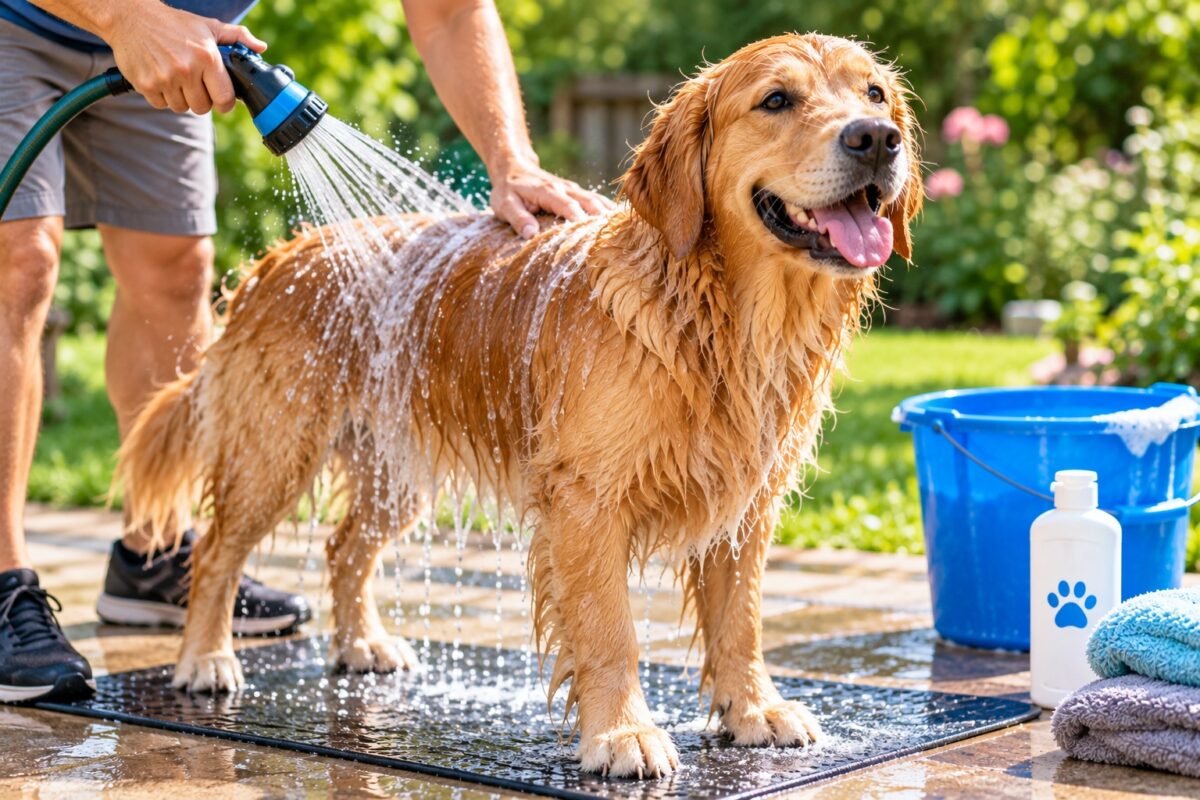
Keep the hose pressure gentle and begin below the head. Sudden water around the face can frighten dogs that already dislike bathing.
Move slowly enough for water to reach the skin. Thick or double coats can look wet on the surface while remaining dry underneath.
- Start high: Wet the shoulders before moving backward.
- Work in sections: Chest, back, sides, belly, legs, and tail.
- Protect the head: Use a washcloth around the muzzle and face.
- Lower pressure: Strong spray can make nervous dogs resist.
How Much Shampoo Should You Use?
Follow the directions printed on the shampoo label. More product does not automatically produce a cleaner dog and often makes rinsing harder.
Massage the shampoo through the coat gently. Avoid getting it into the eyes, nose, mouth, or ear canals.
If your veterinarian prescribed a medicated shampoo, follow its contact-time instructions exactly. VCA’s medicated shampoo guidance notes that these products may need to remain on the coat before rinsing.
How Do You Keep a Dog Calm During an Outdoor Bath?
Use slow water flow, steady footing, treats, and short pauses. Never assume the extra space outside means a frightened dog will automatically feel calmer.
Some dogs dislike the hose sound more than the bath itself. Introduce the equipment before soaking the coat.
- Let your dog investigate: Allow sniffing around the dry bathing area first.
- Reward calm behavior: Give small treats before the water starts.
- Use gentle pressure: Avoid blasting the coat with a narrow stream.
- Stay predictable: Work from the shoulders toward the rear instead of spraying randomly.
- Stop if panic builds: Forcing the bath can make future sessions harder.
If your dog freezes, scrambles away, or strongly resists water, use this guide for a dog scared of bath time before attempting another full wash.
How Do You Rinse and Dry a Dog Outside?
Rinse until no obvious shampoo remains and the coat no longer feels slippery. Residue hidden around the belly, chest, armpits, paws, and undercoat can irritate skin.
The ASPCA recommends thoroughly rinsing soap from the coat. Complete rinsing matters even more when a dog has dense fur.
- Rinse from top to bottom: Let clean water carry shampoo downward.
- Part thick fur: Check whether suds remain close to the skin.
- Inspect hidden areas: Look beneath the chest and behind the legs.
- Use extra towels: Dense coats can hold surprising amounts of water.
Blot rather than aggressively rubbing long or tangled coats. Rough towel rubbing can tighten knots and make later brushing harder.
If your dog has a dense undercoat, this thick-coat bathing guide covers deeper rinsing and drying techniques.
Outdoor Dog Bath vs Indoor Dog Bath: Which Is Better?
Neither location is automatically better. The best choice depends on weather, water temperature, your dog’s size, coat, mobility, and comfort.
| Factor | Outdoor Bath | Indoor Bath |
|---|---|---|
| Space | Excellent for large dogs | Can feel tight with large breeds |
| Cleanup | Usually easier | More indoor splashing |
| Temperature control | Depends on weather and plumbing | Usually easier to control |
| Footing | Needs careful setup | Tub still needs a non-slip mat |
| Cold-weather use | Poor choice | Usually preferred |
What Mistakes Should You Avoid When Bathing a Dog Outside?
Most outdoor bath problems come from temperature, footing, water pressure, and incomplete rinsing. These are preventable with a few checks before you begin.
- Using freezing hose water: A sunny day doesn’t guarantee comfortable water.
- Bathing in cold weather: Wet fur can quickly reduce your dog’s comfort.
- Using human shampoo: Choose a product formulated for dogs instead.
- Washing on hot pavement: Test the ground before asking your dog to stand there.
- Using high pressure: Strong spray can frighten your dog and make rinsing harder.
- Spraying the face: Clean the head carefully with a damp cloth.
- Leaving shampoo behind: Rinse thick coats in sections.
- Letting the dog stay wet: Towel-dry promptly and finish drying somewhere warm.
When Should You Avoid Bathing Your Dog Outside?
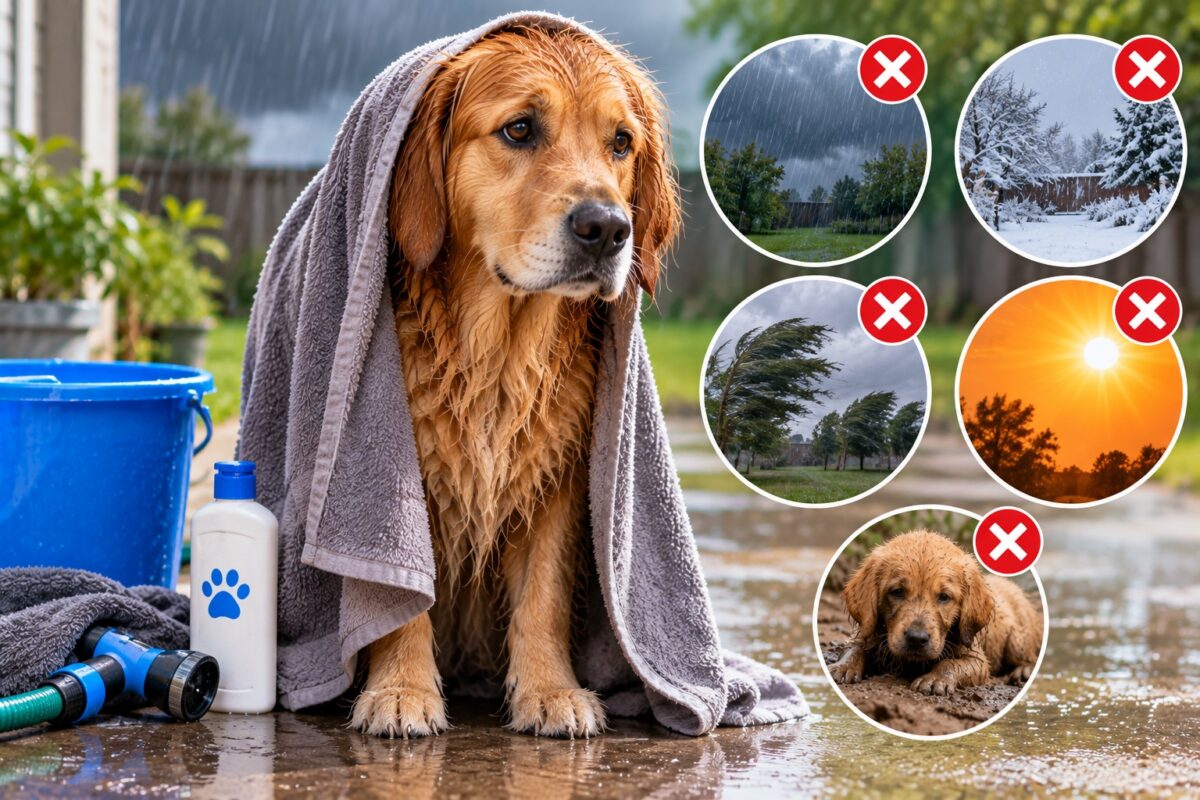
Skip the outdoor bath when weather, health, or stress makes the setup unsafe. Moving indoors is usually the easier solution.
- Cold, windy, or rainy conditions.
- Extreme heat or strong direct sunlight.
- A puppy or frail senior that struggles to maintain body warmth.
- Open wounds, painful skin, or unexplained sores.
- Severe itching, swelling, or ongoing skin infection.
- A dog showing panic or aggressive defensive behavior around water.
- A medicated bathing routine that requires precise veterinary instructions.
Persistent redness, hair loss, odor, sores, or intense scratching needs veterinary attention. Bathing repeatedly without identifying the cause can delay proper treatment.
Useful Gear for Bathing a Dog Outside
You don’t need complicated equipment. A controlled sprayer, dog shampoo, and absorbent towels solve most of the practical problems.
🏆 Best for Outdoor Rinsing
Aquapaw Pet Bathing Tool
★★★★½
This wearable sprayer combines water flow and a silicone scrubber, with adapters designed for shower or garden-hose use. I like the palm control because it reduces the need to reach repeatedly for the hose valve.
🌿 Best for Sensitive Skin
Earthbath Oatmeal & Aloe Fragrance-Free Shampoo
★★★★½
This soap-free formula uses colloidal oatmeal and aloe and contains no added fragrance. I would consider it when routine cleaning and fragrance avoidance are both priorities.
💧 Best for Fast Drying
Bone Dry Microfiber Pet Towel
★★★★☆
This microfiber pet towel is designed for absorbent drying and is easy to keep near an outdoor wash station. I prefer having at least two towels ready for medium, large, or thick-coated dogs.
Frequently Asked Questions
Can I bathe my dog outside with a garden hose?
Yes, but the water should be comfortably lukewarm rather than cold straight from the hose. Use gentle pressure, keep water away from the eyes and ears, and choose warm weather so your dog doesn’t become chilled while wet.
Is cold hose water safe for dogs?
Cold hose water isn’t ideal for routine outdoor bathing. Veterinary guidance recommends warm or lukewarm water for comfort, while cold outdoor bathing can make some dogs uncomfortable and may contribute to chilling in cooler conditions.
Can I wash my dog outside with human shampoo?
Human shampoo isn’t recommended for routine dog bathing. Choose a shampoo formulated specifically for dogs because canine skin differs from human skin and may react poorly to products designed for people.
Should I bathe my dog in direct sunlight?
Shade is usually the better outdoor bathing location. Direct sun can heat concrete and other surfaces quickly, while strong sunlight may make an already nervous dog uncomfortable during a longer wash.
How do I dry my dog after an outdoor bath?
Let your dog shake off excess water, then blot the coat with absorbent towels. Check dense fur close to the skin and move your dog into a warm indoor space if the coat remains wet or outdoor conditions become cool.
Final Takeaway
Bathing a dog outside works best when you control the environment instead of simply turning on the garden hose. Warm weather, lukewarm water, secure footing, dog shampoo, complete rinsing, and prompt drying make the process safer.
Prepare everything first and keep the routine calm. If the weather feels questionable or your dog can’t stay comfortably warm, move the bath indoors.