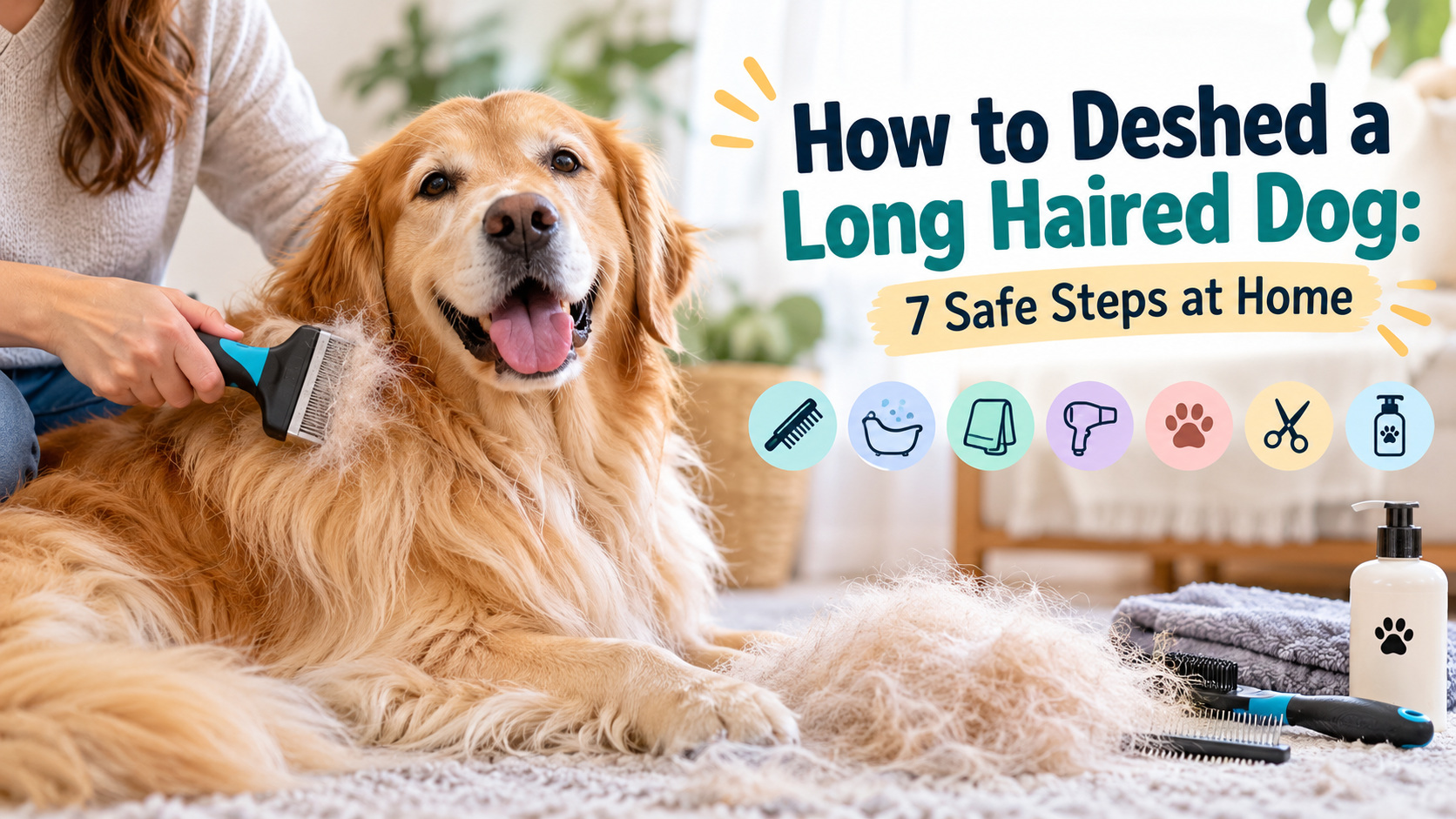
Quick Answer
To deshed a long haired dog, inspect the coat, remove loose tangles, and work through small sections using a gentle slicker brush and metal comb. For double-coated dogs, use an appropriate undercoat rake only where loose undercoat collects. Brush with light pressure, follow the direction of hair growth, and stop if the skin becomes irritated. For general handling techniques, see this step-by-step dog brushing guide.
7 Quick Deshedding Steps
- Inspect the coat: Check for mats, irritated skin, and trapped debris.
- Gather grooming tools: Select a slicker brush, metal comb, and suitable undercoat rake if needed.
- Loosen tangles: Gently separate small knots before deeper brushing.
- Brush in sections: Part the long hair and groom one layer at a time.
- Remove loose undercoat: Use a coat rake gently on suitable double coats.
- Check with a comb: Find remaining loose hair and hidden tangles.
- Finish comfortably: Inspect the skin, collect loose fur, and reward your dog.
Important Safety Tip
- Never force a tool through mats: Painful or tightly matted coats need professional grooming assistance.
Long dog hair looks beautiful until loose fur starts covering your furniture, clothes, and floors. Dense coats can also hide tangles that ordinary surface brushing misses.
When explaining how to deshed a long haired dog, I recommend starting with the coat’s texture and structure. This guide covers safe techniques, grooming tools, practical schedules, and mistakes worth avoiding.
What Does Deshedding a Long Haired Dog Mean?
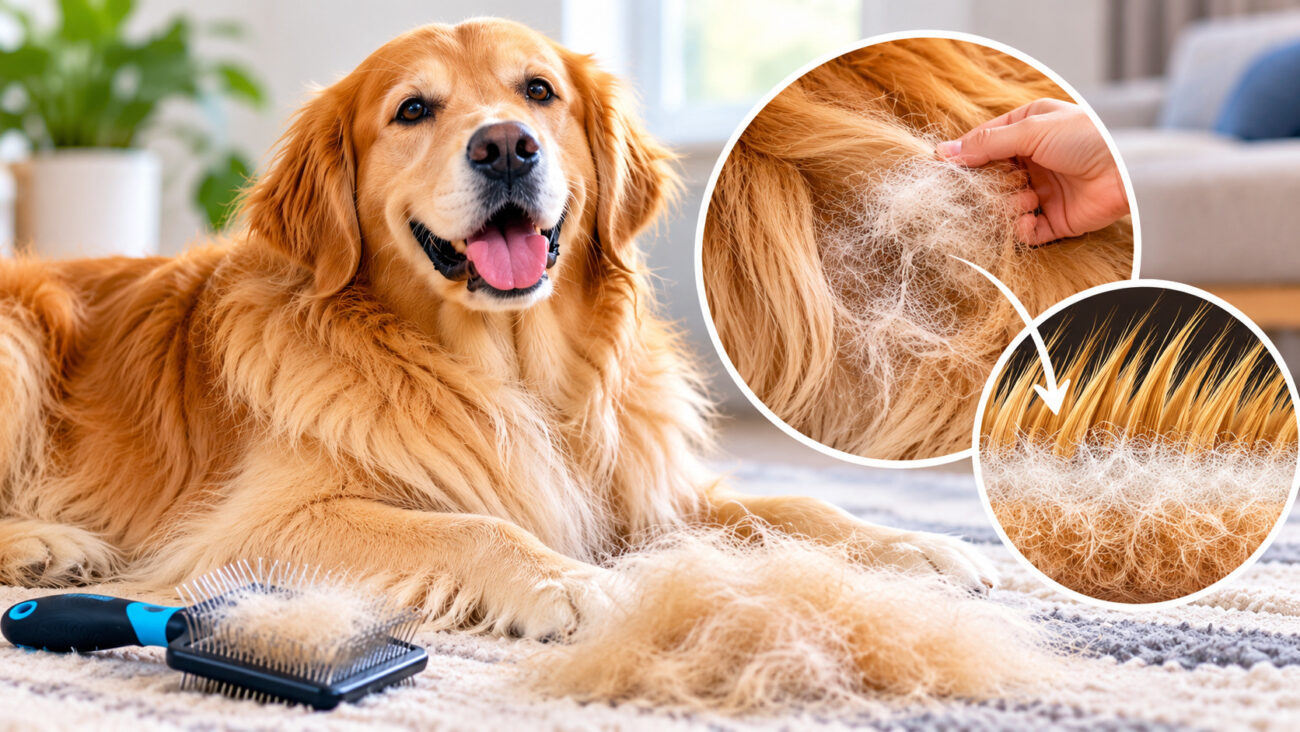
Deshedding is the process of removing loose, dead hair before it naturally falls away from a dog’s coat. For double-coated breeds, it often focuses on the soft undercoat beneath the longer protective hairs.
Not every long-haired dog has the same coat. A Golden Retriever, Yorkshire Terrier, and Poodle can require very different grooming techniques.
Long Hair vs. Double Coat: What’s the Difference?
Long hair describes the length of a dog’s coat, while a double coat describes its layered structure. Understanding that difference prevents unnecessary grooming damage.
- Long double coat: Golden Retrievers, Rough Collies, and Shetland Sheepdogs have longer outer hair with a softer undercoat.
- Long silky coat: Yorkshire Terriers and Maltese generally need detangling and careful combing rather than aggressive undercoat removal.
- Long curly coat: Poodles often retain shed hairs within their curls, making regular detangling especially important.
- Dense seasonal coat: Samoyeds and similar breeds can release substantial loose undercoat during seasonal shedding.
Deshedding doesn’t prevent normal hair growth or permanently stop shedding. It collects loose hair while helping keep the coat manageable.
What Tools Do You Need to Deshed a Long Haired Dog?
Most long-haired dogs benefit from a quality slicker brush and a stainless-steel grooming comb. Double-coated dogs may also need a suitable undercoat rake.
Tool choice matters more than owning numerous brushes. Match each tool to the coat’s length, density, and sensitivity.
Best Deshedding Tools for Long-Haired Dogs
| Grooming Tool | Best Use | Important Limitation |
|---|---|---|
| Long-pin slicker brush | Long, thick, curly, or tangle-prone coats | Excessive pressure can irritate skin. |
| Stainless-steel comb | Checking tangles and separating long hair | Must not be forced through tight knots. |
| Undercoat rake | Removing loose undercoat from suitable double coats | Not appropriate for every long coat. |
| Pin brush | Gentle maintenance of flowing long coats | May miss dense undercoat near the roots. |
| Pet-safe detangling spray | Helping loosen manageable tangles | Cannot safely fix severe matting alone. |
The American Kennel Club’s home grooming guidance explains how different brush designs suit different coat types.
How to Deshed a Long Haired Dog Step by Step
Start with a comfortable dog, a manageable section of coat, and gentle grooming tools. The following seven steps help remove loose hair without unnecessary pulling.
Step 1: Inspect Your Dog’s Coat and Skin
Run your fingers through the coat before brushing. Look closely around the ears, chest, belly, legs, and tail.
These areas can collect tangles and trapped fur. Check for problems that make grooming unsafe.
- Loose hair: Look for soft tufts that separate easily.
- Tangles: Identify small knots before brushing through them.
- Skin irritation: Watch for redness, sores, swelling, or unusual tenderness.
- Foreign material: Check for burrs, grass, dirt, and debris.
- Heavy matting: Arrange professional help for tight, painful mats.
If your dog has open wounds or irritated skin, avoid grooming those areas. Contact your veterinarian when the cause is unclear.
Step 2: Prepare the Right Grooming Tools
Place your tools nearby before starting. Choose a comfortable, nonslip surface with good lighting.
For a long double coat, I recommend beginning with a slicker brush and metal comb. Keep an undercoat rake available only when the coat needs one.
- Use a long-pin slicker for dense or longer fur.
- Choose a metal comb with suitable tooth spacing.
- Keep a pet-safe detangler for minor knots.
- Prepare treats to reward calm behavior.
- Keep a container nearby for collected fur.
A grooming session should feel controlled, not rushed. Introduce unfamiliar tools slowly if your dog seems nervous.
Step 3: Remove Small Tangles Before Deshedding
Gently separate manageable tangles with your fingers. Hold the hair near its base to reduce pulling against the skin.
For stubborn but loose knots, apply a suitable detangler according to its label. Then work gradually from the hair ends toward the roots.
- Start at the ends: Loosen small knots without dragging against the skin.
- Support the coat: Hold nearby hair to reduce discomfort.
- Use a comb carefully: Stop if it catches firmly.
- Avoid scissors: Tight mats can pull skin into the knot, making cutting dangerous.
Never treat a tightly matted coat as ordinary shedding. Professional groomers have safer methods for severe tangles.
Step 4: Brush the Coat in Small Sections
Section-by-section brushing, often called line brushing, helps reach hidden loose hair. It is especially helpful for long, dense coats.
Imagine a Golden Retriever with thick feathering along the hind legs. Brushing only the outer surface may leave loose hair trapped underneath.
- Choose a small, comfortable grooming area.
- Lift or part the upper layer of hair gently.
- Brush the exposed section with light strokes in the natural direction of growth.
- Avoid scraping the skin with the brush pins.
- Move to the neighboring section after the hair separates freely.
- Continue systematically across the dog’s body.
The goal is to reach the coat beneath the visible surface without digging into the skin. Reduce pressure whenever the brush begins catching.
Step 5: Remove Loose Undercoat Carefully
For double-coated dogs, a suitable undercoat rake can help remove hair that has already loosened. Use it sparingly and follow the manufacturer’s coat-specific instructions.
Do not assume an undercoat rake belongs on every long-haired dog. Silky and curly coats may need completely different maintenance.
- Check the coat type: Confirm that an undercoat rake is appropriate.
- Follow hair growth: Use short, gentle strokes.
- Lift loose fur: Remove hair that releases without force.
- Avoid repeated scraping: Excessive passes can irritate skin or damage coat.
- Stop at resistance: Never pull out firmly attached hair.
The AKC’s dog shedding guidance describes slickers and coat rakes as useful tools for appropriate longer and double coats.
Step 6: Check Your Work With a Metal Comb
After brushing, use a suitable grooming comb to check for remaining tangles. The comb should pass through manageable sections without catching or pulling.
Focus on areas where long hair overlaps or collects. These places often need closer attention.
- Behind the ears and around the neck
- Under the front legs
- Chest and belly feathering
- Rear legs and hindquarters
- Long tail hair
If the comb catches, return to gentle detangling instead of pulling harder. A smooth comb pass is a useful grooming check, not a reason to force the coat.
Step 7: Finish Grooming and Reward Your Dog
Inspect your dog’s skin after the session. Look for redness, scratching, or signs of discomfort.
Remove collected fur from your tools and reward your dog with praise or a small treat. Positive experiences can make future grooming easier.
- Check for overlooked tangles.
- Clean fur from the brush and comb.
- Inspect sensitive areas again.
- Offer a reward and allow your dog to rest.
- Record any unusual irritation or hair loss.
You don’t need to remove every loose hair in one sitting. A comfortable, consistent routine is more useful than aggressive grooming.
How Often Should You Deshed a Long Haired Dog?
Most long-haired dogs benefit from regular brushing, but the right frequency depends on coat type and shedding activity. Intensive undercoat removal should be less frequent than gentle maintenance brushing.
The following schedule offers flexible starting points rather than fixed veterinary rules.
| Coat Type | Starting Brushing Schedule | Deshedding Approach |
|---|---|---|
| Long double coat | 3–5 times weekly | Gentle undercoat removal as needed |
| Long silky coat | Often daily | Prioritize detangling and combing |
| Long curly coat | Daily or every other day | Prevent mats rather than stripping undercoat |
| Heavy seasonal shedder | Daily gentle brushing during peak shedding | Short, targeted sessions when needed |
Adjust the schedule to your dog’s tolerance and coat condition. Read the detailed guide on how often to deshed a dog for more practical examples.
Should You Bathe a Long Haired Dog Before or After Deshedding?
Remove loose tangles and accessible shed hair before bathing. After washing and thoroughly drying the coat, another gentle brushing can collect remaining loose fur.
Bathing a heavily tangled dog without preparation can make matting harder to manage. A gentle pre-bath inspection is especially important for dense coats.
A Safe Bathing and Deshedding Sequence
- Inspect the coat and remove manageable tangles.
- Brush out accessible loose hair.
- Bathe with a dog-appropriate shampoo and lukewarm water.
- Rinse thoroughly to remove shampoo residue.
- Blot excess water using absorbent towels.
- Dry carefully using cool or comfortably warm controlled airflow.
- Finish with gentle brushing after the coat is sufficiently dry.
A long, thick coat may remain damp close to the skin after the surface appears dry. Check carefully before ending the grooming session.
For dogs with dense undercoats, see the complete guide on how to bathe a double-coated dog.
What Are the Biggest Long-Haired Dog Deshedding Mistakes?
The most common mistakes involve unsuitable tools, excessive pressure, and brushing only the outer coat. These habits can leave tangles behind or make grooming uncomfortable.
7 Mistakes to Avoid
- Using too much pressure: Repeated scraping can irritate sensitive skin.
- Skipping coat inspection: Hidden mats and sores may cause pain during brushing.
- Pulling through tangles: Forceful brushing can damage hair and skin.
- Using the wrong rake: Aggressive undercoat tools can damage unsuitable coat types.
- Only brushing the surface: Loose fur and knots can remain near the roots.
- Grooming too aggressively: Intensive daily deshedding may irritate skin or remove healthy hair.
- Shaving a double coat unnecessarily: Routine shaving can interfere with the coat’s normal protective structure.
The AKC’s double-coated breed guidance explains why preserving the outer coat matters and why regular brushing is preferable to routine shaving.
Can You Deshed a Long Haired Dog Too Much?
Yes. Excessive deshedding can irritate skin, break healthy hair, and create uneven areas in the coat.
The amount of fur collected does not measure grooming quality. Pay closer attention to how comfortably the coat separates.
Signs You Should Stop Grooming
- Red skin: Brushing appears to cause irritation.
- Repeated flinching: Your dog reacts as if grooming hurts.
- Increased scratching: Recently brushed areas become uncomfortable.
- Coat thinning: Hair appears unusually sparse or damaged.
- Strong resistance: Your dog consistently tries to escape the session.
Stop if these signs appear. Contact a veterinarian if irritation, unusual shedding, or discomfort continues.
How Can You Reduce Long Dog Hair Around the House?
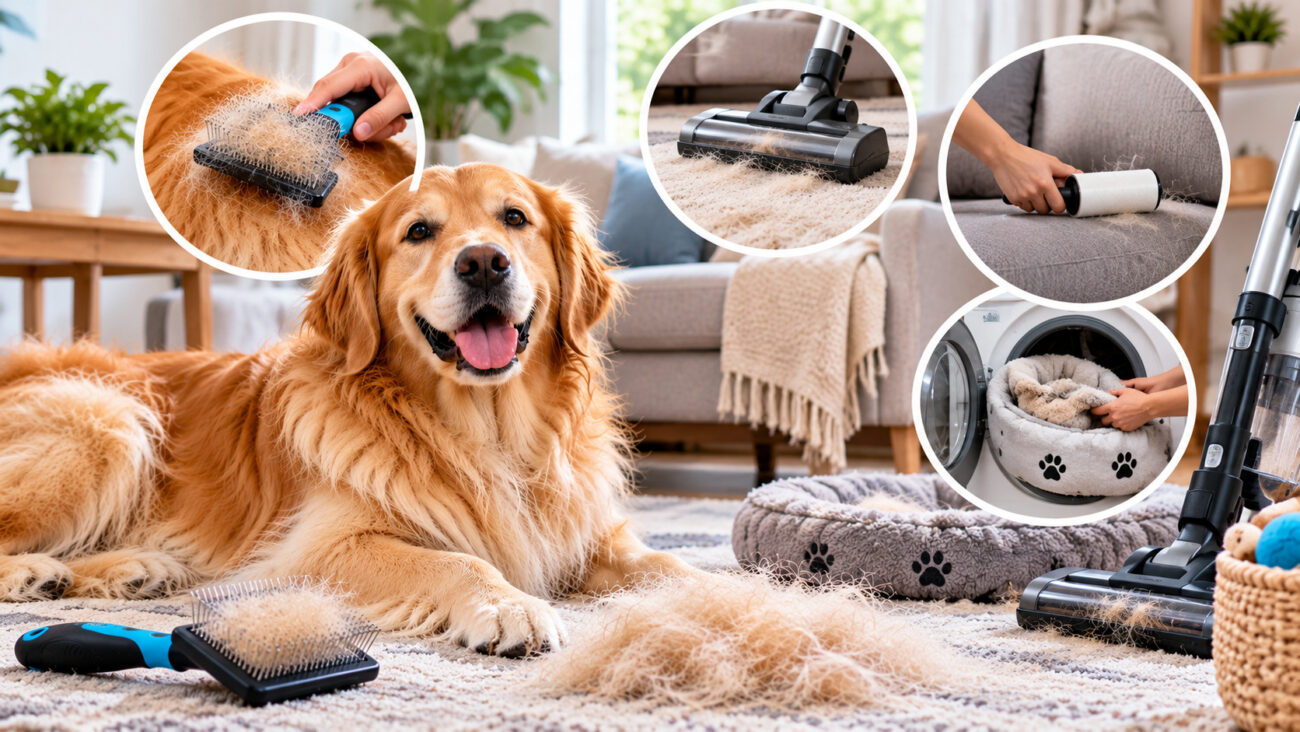
Consistent grooming helps collect loose hair before it reaches furniture and floors. However, normal shedding cannot be eliminated completely.
As of 2026, the core approach remains straightforward: maintain the coat, clean regularly, and investigate unusual shedding.
Practical Ways to Control Loose Fur
- Brush consistently: Follow a schedule suitable for the coat.
- Use washable bedding: Clean areas where your dog rests frequently.
- Vacuum regularly: Remove loose hair before it builds up.
- Maintain appropriate nutrition: Feed a complete, balanced diet suited to your dog.
- Check skin health: Watch for itching, bald patches, or unexpected hair loss.
- Schedule professional grooming: Get help with complex coats or repeated matting.
Normal shedding varies considerably by breed and season. Sudden bald patches, skin inflammation, or substantial unexpected hair loss deserve veterinary attention.
The AKC’s discussion of managing shedding provides additional advice on selecting tools for longer coats.
Recommended Deshedding Tools for Long-Haired Dogs
If you’re choosing home grooming equipment, I would prioritize a gentle slicker brush, a quality metal comb, and a coat-specific rake when appropriate.
These three products address different grooming needs. The suitability notes below are based on their tool designs and intended uses, not independent hands-on performance testing.
Affiliate disclosure: As an Amazon Associate, we may earn from qualifying purchases made through eligible links, at no additional cost to you.
🏆 Best for Dense Long Coats
Chris Christensen Big G Slicker Brush
★★★★☆ 4.7/5
Designed with long 27 mm pins and a cushioned pad for dense, curly, and longer coats. I would shortlist this premium slicker for owners who need regular line brushing, provided they use a gentle technique. Its price and pin length may be unnecessary for shorter or delicate coats.
🐕 Best for Comb Checking
Andis Steel Pet Comb
★★★★☆ 4.5/5
A steel grooming comb designed to separate hair and check for tangles. I would choose it as a finishing companion to a slicker brush, especially around feathering and longer coat sections. It isn’t intended to replace deeper brushing or force through mats.
🐾 Best for Loose Undercoat
Safari Undercoat Rake for Dogs
★★★★☆ 4.3/5
A coat-rake option intended to reach loose undercoat on compatible dense coats. I would consider it for double-coated dogs during seasonal shedding, but not for routine aggressive use on silky or curly coats. Choose the exact rake design carefully.
Ratings above are editorial suitability assessments, not verified customer-review averages or results from hands-on product testing. Check current specifications and seller details before purchasing.
Frequently Asked Questions About Deshedding Long-Haired Dogs
1. What is the best way to deshed a long haired dog?
The best approach is gentle brushing in small sections using tools suited to the coat. Start by removing manageable tangles, then use a slicker brush and metal comb. For suitable double coats, an undercoat rake may help remove loose hair without unnecessary pulling.
2. Can you use a deshedding tool on every long-haired dog?
No. Long-haired dogs have different coat structures, and not every coat needs intensive undercoat removal. Double-coated breeds may benefit from appropriate coat rakes, while silky and curly coats often need careful detangling instead. Always match the tool to the individual coat.
3. How often should I brush my long-haired dog?
Many long-haired dogs benefit from brushing several times weekly, while curly, silky, or mat-prone coats may need daily attention. During heavy seasonal shedding, double-coated dogs may benefit from more frequent gentle brushing. Intensive deshedding should happen only when needed.
4. Should I deshed my dog before or after a bath?
Remove accessible tangles and loose hair before bathing. Once the coat has been washed, rinsed, and thoroughly dried, a gentle finishing brush can collect additional loose fur. Avoid bathing a severely matted coat without professional advice, as wetting can complicate existing mats.
5. Is it normal for a long-haired dog to shed a lot?
Yes, many long-haired double-coated dogs shed noticeably, especially during seasonal coat changes. However, long hair alone doesn’t determine shedding volume. Sudden bald patches, irritated skin, unusual thinning, or a major change from your dog’s normal pattern should prompt veterinary evaluation.
Final Takeaway: How to Deshed a Long Haired Dog Safely
Learning how to deshed a long haired dog starts with understanding the coat rather than choosing the strongest grooming tool. Gentle, section-by-section brushing helps remove loose hair while protecting healthy fur.
Start with a suitable slicker brush and comb, add an undercoat rake only when appropriate, and adjust grooming to your dog’s comfort. For severe matting, skin problems, or unusually heavy hair loss, seek professional help.
Start with short, comfortable grooming sessions. A consistent routine will help keep your dog’s long coat manageable without unnecessary irritation.