
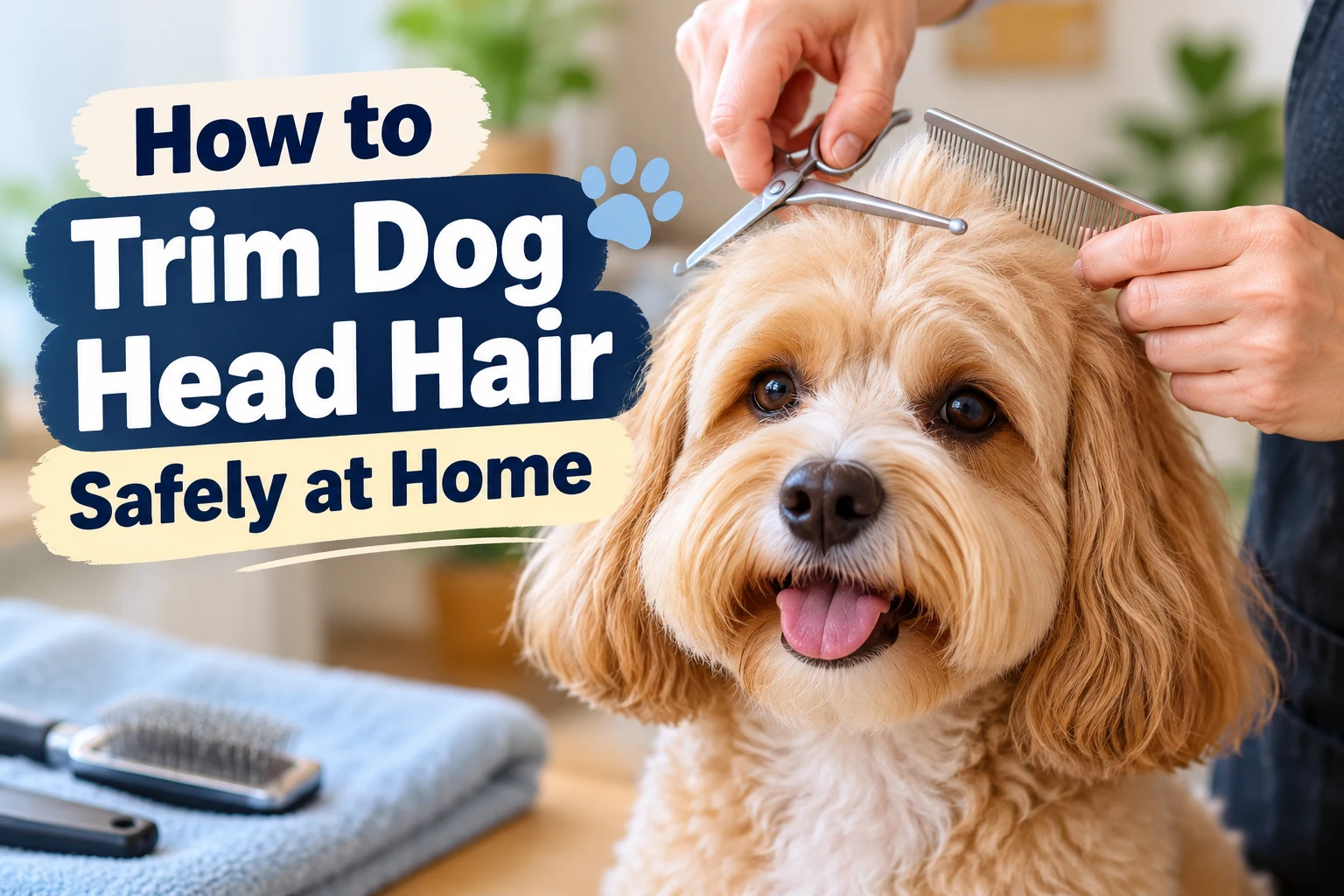
Quick Answer
To trim dog head hair safely, brush and comb the coat, identify the hair that needs shortening, and use rounded-tip grooming scissors to remove small amounts from the top and sides of the head. Keep cutting tools away from the eyes, ear edges, and loose facial skin. Work only while your dog remains calm and still. Leave close trimming around sensitive areas to a qualified groomer.
Trimming the hair on your dog’s head can improve comfort, keep an overgrown coat manageable, and create a neat appearance. However, the head requires more care than the back or body because the eyes, ears, mouth, and delicate skin are close to the cutting area.
The safest home approach is a conservative tidy-up rather than a complete facial haircut. This guide explains the equipment, preparation, basic trimming process, common mistakes, and situations where professional help is safer.
What Does It Mean to Trim Dog Head Hair?

Trimming dog head hair means shortening or shaping the coat on the top, sides, forehead, and other appropriate areas of the head without cutting the skin or interfering with the dog’s natural features.
It differs from shaving the entire head. A light trim removes excess length while preserving the dog’s normal coat shape.
Depending on the breed and coat type, head grooming may involve:
- Shortening long hair on the crown.
- Blending the sides of the head with the neck.
- Reducing hair that hangs over the forehead.
- Removing loose or uneven ends from a longer coat.
- Keeping hair from obstructing normal vision, with professional help when trimming close to the eyes is necessary.
Poodles, Shih Tzus, Maltese dogs, Bichon Frises, and some Doodle mixes often have growing head coats that require regular attention. Short-haired breeds usually need little or no head trimming.
The goal is not to make every dog’s head look identical. Good grooming preserves the coat’s natural appearance while prioritizing comfort and safety.
What Tools Do You Need to Trim Dog Head Hair?
Basic head grooming requires a small selection of suitable tools. Sharp, well-maintained grooming equipment is preferable to improvised household cutting tools.
- Rounded-tip grooming scissors: Useful for controlled trimming of accessible hair away from delicate facial features.
- Dog grooming comb: Helps separate hair, locate tangles, and check the finished shape.
- Soft slicker or appropriate grooming brush: Removes loose hair and prepares longer coats.
- Thinning or blending shears: Optional tools for experienced handlers who know how to use them safely.
- Pet grooming clippers with a suitable guard: Appropriate for selected coat areas when the operator is trained and the dog tolerates the equipment.
- Non-slip mat: Provides stable footing during grooming.
- Small rewards: Help reinforce calm behavior during handling.
Choose grooming equipment based on your dog’s coat thickness, hair texture, and tolerance for handling. Avoid kitchen scissors, damaged blades, and equipment that pulls the coat.
For basic home maintenance, a comb and rounded-tip grooming scissors are often sufficient. Clippers are not necessary for every head trim.
How Do You Prepare Your Dog for a Head Haircut?
Prepare your dog by making the coat clean, dry, untangled, and comfortable to handle before bringing cutting tools near the head.
Check the Coat and Skin
Examine the head for knots, redness, swelling, sores, or sensitive areas. Pay attention to hair behind the ears, around the cheeks, and beneath the chin, where tangles can develop.
Do not cut through a tight mat with scissors. Mats can pull skin into the hair, making it difficult to see where the skin begins. A professional groomer or veterinarian may be needed for painful or tightly matted areas.
Brush and Comb Carefully
Use an appropriate brush to remove loose hair. Follow with a comb, working gently through the longer portions of the coat without pulling.
Do not force a comb through resistant tangles. Stop if brushing causes discomfort.
Choose a Comfortable Grooming Position
Use a stable, non-slip surface and keep your dog within easy reach. Never leave a dog unattended on an elevated grooming table.
Introduce the comb and closed scissors gradually. Reward relaxed behavior and practice touching the head without cutting anything.
If your dog repeatedly jerks away, growls, or becomes distressed, postpone the haircut rather than attempting to restrain the head forcefully.
How to Trim Dog Head Hair Safely in 8 Steps
The following process is intended for a cooperative dog needing a light trim of accessible head hair. It is not a substitute for professional training in close eye, ear, or muzzle grooming.
- Step 1: Brush the entire head. Gently brush in the direction of hair growth. Comb the top and sides until the hair lies naturally and there are no obvious tangles in the intended cutting area.
- Step 2: Identify the hair that needs trimming. Look at your dog from the front and sides. Decide which longer ends need shortening instead of attempting to cut the whole head to one length.
- Step 3: Start on the top of the head. Comb a small section of hair upward. Where you can clearly separate the hair from the skin and facial features, shorten only the exposed ends with small, controlled snips. Keep the scissors well away from the eyes.
- Step 4: Check the shape before continuing. Let the trimmed hair fall naturally. Compare both sides and remove only obvious uneven ends. Avoid repeated cutting that gradually makes the coat shorter than intended.
- Step 5: Tidy the outer sides. Comb the hair around the sides of the head. Trim accessible loose ends while keeping the scissors away from the ears, facial folds, and mouth. Do not attempt to cut along an ear edge unless you have been shown a safe technique.
- Step 6: Blend the head into the neck. Check where the head coat meets the neck. Shorten noticeably protruding ends gradually so the transition looks natural. Maintain the coat’s normal shape rather than creating a sharply defined line.
- Step 7: Recheck the forehead and sensitive areas. Look for hair falling into the eyes. Do not point scissors toward an eye or attempt a close trim while your dog moves. Ask a qualified groomer to handle hair requiring precision near the eyes, ear openings, or muzzle.
- Step 8: Comb, inspect, and reward. Comb the hair back into position, remove loose cuttings, and check the skin for irritation. Finish with praise and a reward while the dog is still comfortable.
For many dogs, a small amount of trimming is enough. You do not need to create a perfectly rounded or symmetrical head during one session.
Safety Warning
Never point open scissors toward your dog’s eyes, ears, or mouth. If your dog moves unpredictably, stop cutting immediately. Do not continue a facial trim while trying to hold a struggling dog’s head still.
How Should You Handle Hair Around the Eyes, Ears, and Muzzle?
Hair around sensitive facial features requires more caution than hair on the top or outer sides of the head. These areas are best handled by a groomer unless you have received suitable hands-on instruction.
Hair Around the Eyes
Long hair can fall across the eyes and interfere with vision or contribute to irritation. However, cutting close to the eye can cause serious injury if the dog moves suddenly.
The American Kennel Club’s eye-care guidance discusses keeping long eye hair trimmed using suitable blunt-nose scissors.
If the hair requires cutting close to the eyelid, arrange professional grooming rather than attempting an unfamiliar technique.
Hair Around the Ears
The thin skin of the ear flap can be hidden inside long hair. Cutting an unseen ear edge is a significant risk.
Comb the surrounding coat gently and avoid inserting scissors or clippers into the ear canal. Do not remove inner-ear hair merely to make the ear look cleaner.
Hair Around the Muzzle
The muzzle includes sensitive skin, whiskers, lips, and moving facial structures. Never trim while your dog is licking, chewing, or moving the mouth.
Whiskers have sensory functions, so avoid cutting them unnecessarily. For a detailed muzzle shape, use a qualified groomer.
Should You Use Scissors or Clippers on Your Dog’s Head?
Scissors are generally more useful for conservative shaping of longer head hair, while clippers may be appropriate for specific grooming styles when used by an experienced handler.
| Consideration | Grooming Scissors | Dog Clippers |
|---|---|---|
| Primary use | Light shaping and trimming ends | Shortening larger coat areas |
| Main risk | Cuts from moving blades | Skin nicks, friction, and hot blades |
| Best suited to | Accessible longer hair | Suitable coat areas and trained handling |
| Facial precision | Requires careful positioning | Requires familiarity with anatomy and equipment |
Neither tool is automatically safe near a dog’s eyes or ears. Skill, visibility, the dog’s behavior, and the coat condition matter more than the tool alone.
For additional guidance, see AKC’s recommendations for grooming dogs at home, which emphasize the value of professional training for clipping and shaving sensitive areas.
How Does Head Trimming Change With Different Coat Types?
The ideal approach depends on whether your dog has a continuously growing coat, a curly coat, or a shorter shedding coat.
Curly and Wavy Coats
Poodles and many Doodle mixes may have dense head hair that needs regular brushing and shaping. Their coats can conceal tangles, so thorough preparation matters before cutting.
Long, Straight Coats
Shih Tzus, Maltese dogs, and Yorkshire Terriers may develop long forehead hair. Some owners prefer an appropriate topknot or gentle hair management instead of repeated cutting near the eyes.
Short and Double Coats
Dogs with short coats rarely need head haircuts. Many double-coated breeds benefit more from regular brushing than clipping.
Avoid shaving or dramatically shortening a double coat without a specific grooming or veterinary reason. Coat protection and regrowth patterns vary by breed and individual dog.
What Dog Head Hair Trimming Mistakes Should You Avoid?
The most common problems come from rushing, cutting too close, or attempting difficult areas without enough experience.
- Cutting too much at once: Start conservatively because removed hair cannot be restored immediately.
- Trimming tangled hair: Hidden skin folds may be caught by cutting tools.
- Using pointed household scissors: Unsuitable tools increase the risk of injury during sudden movement.
- Ignoring signs of discomfort: Pulling away, freezing, growling, and repeated head turning may indicate distress.
- Trying to correct every uneven section: Repeated adjustments can produce an unnecessarily short haircut.
- Trimming near moving facial features: Eyes, lips, ear edges, and loose skin need extra precautions.
- Using hot or poorly maintained clippers: Heat and blade friction can irritate or injure skin.
Focus on keeping the dog relaxed and comfortable rather than producing a salon-quality finish in one attempt.
When Should You Stop and Contact a Professional Groomer?
Stop a home head trim when your dog cannot remain safely still, the cutting area is difficult to see, or the task requires precision around delicate facial structures.
Professional help is especially appropriate when:
- Your dog has tight mats around the eyes or ears.
- The dog repeatedly jerks its head during trimming.
- Hair covers an eye and requires close cutting.
- The skin beneath the coat is inflamed or painful.
- Your dog has facial folds that are difficult to identify.
- You are unfamiliar with the intended breed-specific haircut.
If you accidentally cut the skin, stop grooming. Apply gentle pressure with clean gauze for minor bleeding, and contact a veterinarian for persistent bleeding, a deep wound, or an injury involving the eye or ear.
Eye redness, squinting, unusual discharge, or persistent rubbing also deserves veterinary evaluation rather than simply trimming surrounding hair.
How Can You Maintain Your Dog’s Head Hair Between Haircuts?
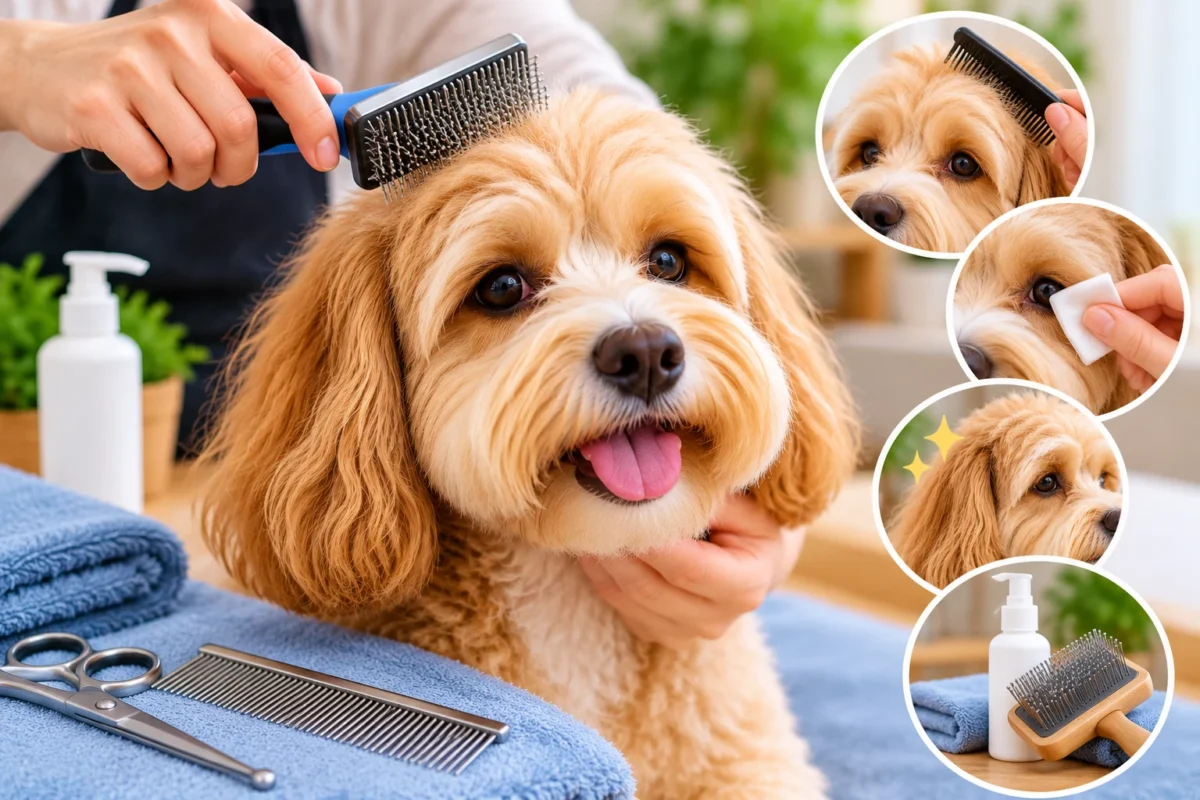
Regular coat maintenance reduces the amount of cutting needed and makes future grooming sessions easier.
Comb longer head hair frequently enough to prevent knots, paying attention to areas behind the ears and beneath the chin. The ideal schedule varies with coat length, texture, and matting tendency.
Clean minor facial debris gently with suitable materials instead of allowing dirt and dried discharge to accumulate in the coat.
Practice short handling sessions without scissors. Reward your dog for allowing gentle brushing, head examination, and normal grooming contact.
If you notice a few uneven ends, do not automatically begin another haircut. Small differences are generally less important than maintaining healthy skin and a calm grooming experience.
Practical Tip
Take a photo before and after a successful trim. It can help you communicate your preferred head shape to a professional groomer and avoid unnecessary extra cutting during future maintenance.
Relevant Grooming Product
Rounded-Tip Dog Grooming Scissors
Rounded-tip grooming scissors can help with light shaping of accessible head hair. Choose a comfortable size with well-maintained blades, and use them only when your dog remains still. Rounded tips do not eliminate the risk of injury.
As an Amazon Associate, we earn from qualifying purchases.
Frequently Asked Questions
1. Can I trim my dog’s head hair at home?
Yes, a calm dog with an untangled coat may tolerate a conservative trim of accessible head hair. Avoid close facial trimming unless you have appropriate training and can safely control the procedure.
2. How often should I trim my dog’s head hair?
There is no universal schedule. Trim when excess length affects coat maintenance or comfort. The interval depends on hair growth, breed, grooming style, and coat condition.
3. Can I use regular household scissors to trim dog head hair?
Household scissors are not recommended. Purpose-made, rounded-tip grooming scissors are more appropriate, although even these can cause injuries if the dog moves suddenly.
4. Should I cut my dog’s whiskers while trimming the head?
No. Avoid intentionally cutting whiskers because they are specialized sensory hairs. A professional groomer can help shape surrounding coat hair while preserving them.
5. What should I do if my dog moves while I am trimming?
Stop cutting immediately and move the scissors away. Allow the dog to settle. If head movement continues, end the session and seek professional grooming assistance.
6. Can I trim a puppy’s head hair?
A puppy can gradually learn to accept head brushing and gentle handling. Start with short, positive introductions to grooming tools. Leave difficult cutting tasks to a professional until the puppy is comfortable and safe to handle.
Final Thoughts
Learning how to trim dog head hair safely begins with proper preparation, suitable tools, and realistic expectations. Brush the coat first, work on accessible hair in small sections, and never sacrifice safety for a perfectly shaped haircut.
Keep sensitive facial trimming within your skill level, respect your dog’s comfort, and use a qualified groomer whenever the task becomes difficult. A simple, gentle routine is often the best way to keep your dog’s head coat neat and manageable.


