
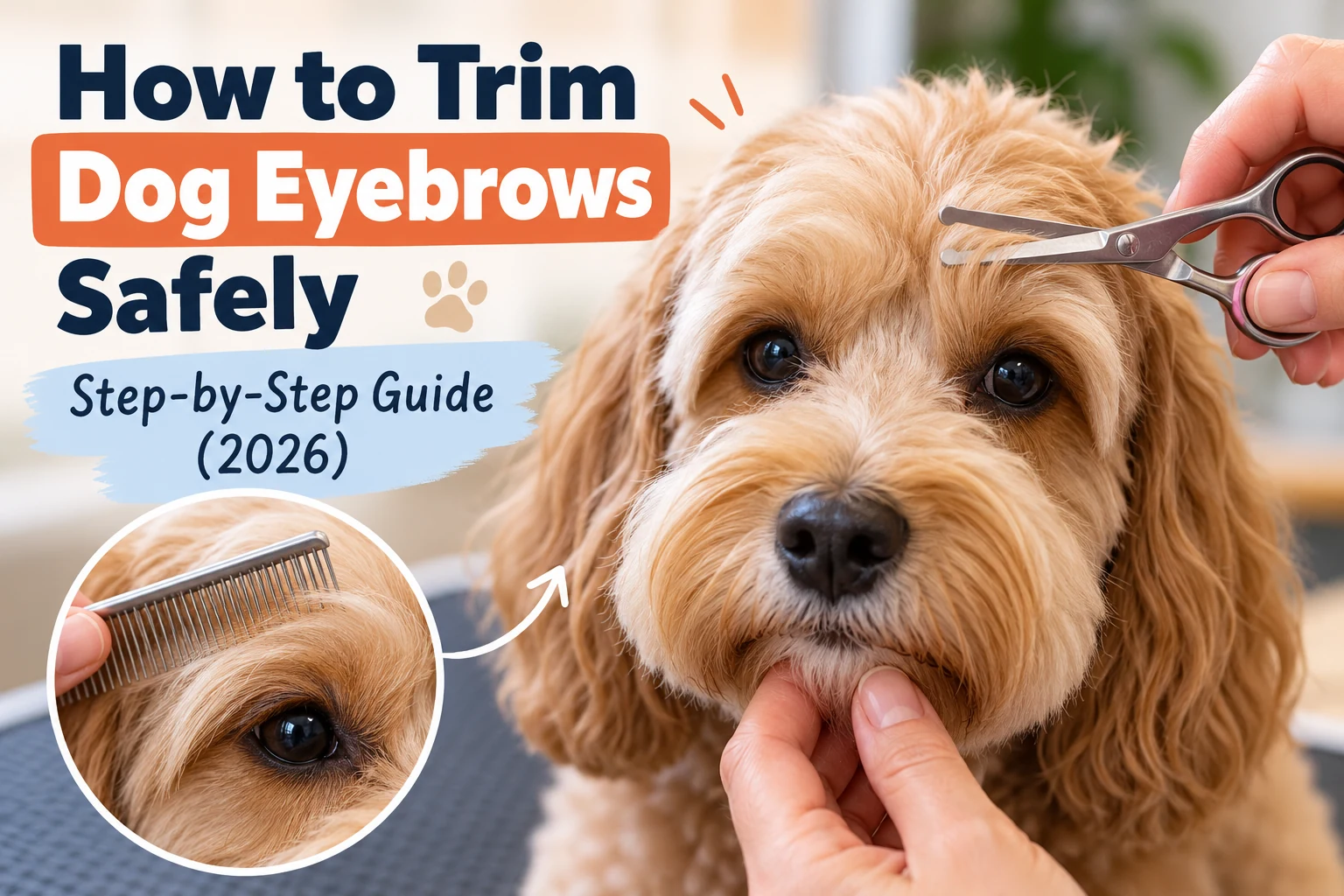
Quick Answer
To trim dog eyebrows safely, gently comb the hair, identify strands blocking vision, and trim only the excess fur with blunt-tipped grooming scissors. Keep sharp edges away from the eyeball and stop whenever your dog moves. Have a professional groomer or veterinarian demonstrate the technique before attempting your first eyebrow trim. The ASPCA’s dog grooming guidance explains why keeping hair away from the eyes matters.
Six quick steps
- Prepare your tools: Use a small facial comb and appropriate blunt-tipped grooming scissors.
- Calm your dog: Choose a quiet place with secure, nonslip footing.
- Comb the eyebrows: Gently separate the long strands without pulling.
- Check visibility: Identify hair that falls into or directly across the eyes.
- Trim cautiously: Work only on clearly visible excess hair, away from the eyelids.
- Check and reward: Stop, inspect the result, and praise your dog.
Safety first: Never point scissors toward the eyeball, cut close to an eyelid, or restrain a struggling dog to finish trimming.
Long eyebrows can make a dog look charming, but they sometimes interfere with vision or irritate sensitive eyes. Learning how to trim dog eyebrows safely helps you recognize when grooming is needed and when professional assistance is the better choice.
This guide covers eyebrow anatomy, grooming tools, preparation, trimming techniques, common mistakes, and practical maintenance. You’ll also learn why some breeds need a different approach.
What Does It Mean to Trim Dog Eyebrows?

Trimming dog eyebrows means shortening excess facial hair above the eyes without damaging the surrounding skin, eyelids, or natural coat structure. The goal is comfortable vision and neat grooming, not removing every visible eyebrow hair.
Dog eyebrows differ from human eyebrows. In many breeds, the visible brow consists of ordinary facial coat hair rather than a clearly defined eyebrow strip.
Some dogs also have longer sensory hairs around the face. These specialized hairs, called vibrissae or whiskers, contribute to touch awareness and should not be removed casually.
Where Are a Dog’s Eyebrows Located?
The eyebrow area sits above each eye, between the forehead and the upper eyelid. The amount and direction of hair growth vary significantly between dogs.
- Brow ridge: The area of facial structure above the eye.
- Eyebrow furnishings: Longer decorative coat hair growing above the eyes.
- Upper eyelid: Sensitive tissue that must remain protected.
- Facial whiskers: Specialized sensory hairs that may grow near the brow.
- Forehead coat: Hair that can fall forward and resemble overgrown eyebrows.
Understanding these differences helps prevent accidental overtrimming. Not every long hair above an eye needs cutting.
Why Should You Trim Your Dog’s Eyebrows?
Some dogs need eyebrow trimming because overgrown facial hair falls directly into their eyes or interferes with vision. Other dogs need little more than regular combing.
The RSPCA recommends managing hair that falls over the eyes because it can restrict vision and cause irritation.
What Are the Signs Your Dog Needs an Eyebrow Trim?
- Blocked vision: Long strands hang across the eyes.
- Eye contact: Hair repeatedly touches the eye surface.
- Frequent tangling: Brow furnishings develop knots.
- Uneven growth: Excess hair covers one eye more than the other.
- Persistent discomfort: Your dog rubs its face or blinks repeatedly.
Persistent rubbing, squinting, or unusual tearing can also indicate an eye problem. Arrange a veterinary examination rather than assuming grooming will solve these symptoms.
What Tools Do You Need to Trim Dog Eyebrows?
The safest tool choice depends on your dog’s temperament, coat thickness, and your grooming experience. A small comb is useful for nearly every dog, while cutting tools demand greater care.
| Tool | Purpose | Safety consideration |
|---|---|---|
| Small facial comb | Separates eyebrow strands | Comb gently without touching the eye |
| Blunt-tipped grooming scissors | Shortens loose excess hair | Use only after professional instruction |
| Thinning shears | Softens thick eyebrow outlines | Best handled by experienced groomers |
| Pet facial wipes | Removes loose surface dirt | Use only products suitable for the eye area |
| Nonslip grooming mat | Provides stable footing | Never leave a dog unattended on a raised table |
Are Rounded-Tip Scissors Safer Than Regular Scissors?
Blunt-tipped grooming scissors reduce the danger associated with sharp, pointed tips, but they cannot prevent every injury. Their cutting edges can still injure delicate eyelid tissue.
Ordinary household scissors are not appropriate for close facial grooming. Ask a trained groomer to demonstrate correct tool handling before attempting cuts around the eyes.
Can You Use Electric Clippers on Dog Eyebrows?
Professional groomers sometimes use small clippers or specialized trimmers around the face. However, vibration, noise, exposed blades, and sudden head movements create additional risks.
Beginners should avoid placing powered cutting tools near the eyelids without hands-on instruction. A frightened or moving dog is particularly vulnerable.
How Do You Prepare a Dog for Eyebrow Trimming?
Good preparation improves safety more than rushing to finish a haircut. Your dog should remain relaxed and willingly tolerate gentle facial handling before any scissors appear.
Step 1: Choose a Quiet Grooming Area
Choose a familiar room with comfortable lighting and minimal distractions. Place your dog on a secure nonslip surface and keep grooming tools within reach.
A floor-level setup may be safer for dogs likely to jump or move suddenly. Avoid unstable tables and slippery countertops.
Step 2: Introduce the Grooming Tools
Allow your dog to investigate the closed scissors and comb while the tools remain safely away from its face. Reward relaxed behavior with praise or a small treat.
Practice briefly over several sessions if needed. Never force your dog to tolerate equipment that creates fear.
Step 3: Inspect the Eyes and Surrounding Skin
Check for redness, swelling, squinting, discharge, visible scratches, or tenderness. These symptoms require veterinary attention before cosmetic grooming.
Do not attempt to cut away dried discharge attached to the eyelids. Ask your veterinarian how to soften and remove it safely.
Step 4: Clean and Dry the Facial Hair
Use a clean, slightly damp pad to remove surface debris without touching the eyeball. Follow your veterinarian’s advice when dealing with recurring discharge or irritation.
Let the eyebrow furnishings dry before assessing their length. Wet hair can sit differently from dry hair.
Step 5: Comb the Eyebrows Gently
Separate the eyebrow coat using a small grooming comb. Work slowly, following the natural direction of hair growth.
Do not pull knots close to the eyelid. A professional groomer should handle tight mats or hair tangled against sensitive skin.
How to Trim Dog Eyebrows Safely: 8 Easy Steps
A safe eyebrow trim removes only clearly identified excess hair while keeping cutting tools away from the eyes. The procedure below is intended for dogs that tolerate facial handling and owners who have already received professional instruction.
Step 1: Check Your Dog’s Comfort
Observe your dog’s posture, breathing, and facial expression before beginning. Relaxed behavior matters more than completing the haircut.
Stop if your dog freezes, repeatedly turns away, growls, or becomes distressed. Continue training on another day rather than forcing the session.
Step 2: Arrange Good Lighting
Use bright, even lighting to see individual eyebrow strands and the eyelid boundary. Shadows can make it difficult to judge the position of the hair.
Keep the room calm and free from sudden interruptions. Unexpected movement near open scissors can cause serious injury.
Step 3: Comb Hair Away From the Eyes
Lift or redirect the eyebrow furnishings with a small comb, keeping its teeth away from the eye. This helps identify which strands genuinely obstruct vision.
Some strands only appear excessive when pushed forward. Check their natural resting position before deciding whether cutting is necessary.
Step 4: Identify the Hair That Needs Trimming
Look for loose outer strands that repeatedly fall across the eye. Avoid sensory whiskers, eyelid margins, and hair attached to irritated skin.
The goal is a small improvement, not a dramatic change in appearance. Leave any uncertain areas for your groomer.
Step 5: Position Scissors Safely
Follow the scissor positioning demonstrated by your veterinarian or qualified groomer. Keep the cutting tool away from the globe of the eye and avoid directing its tips toward the eyeball.
Never place open scissors beneath loose eyelid skin or between tangled facial hairs. If you cannot clearly see the cutting area, do not cut.
Step 6: Remove Minimal Excess Hair
Make only small, controlled adjustments to hair that sits safely away from the eyelid. Reassess before making another cut.
Do not try to achieve perfect symmetry in one session. Overtrimming creates unnecessary risk and may remove the brow’s characteristic shape.
Step 7: Inspect Both Sides
Close and put down the scissors before inspecting your dog’s face. Allow the hair to return to its natural position.
Look from the front and both sides to determine whether hair still obstructs vision. If remaining strands sit too close to the eyes, arrange a professional trim.
Step 8: Reward and Finish
Reward your dog for calm participation and end on a positive note. Remove loose cut hair carefully without blowing it toward the eyes.
Check for unexpected blinking, rubbing, or discomfort afterward. Contact your veterinarian promptly if eye irritation develops.
How Short Should You Trim Dog Eyebrows?
Dog eyebrows should be trimmed only as short as necessary to prevent unwanted hair from entering or obscuring the eyes. There is no universal safe length measured in millimeters.
The correct finish depends on coat type, natural brow growth, facial structure, and the dog’s individual needs.
| Dog coat or face type | Common eyebrow concern | Suggested approach |
|---|---|---|
| Poodle | Curly facial hair grows forward | Maintain the eye opening while respecting the chosen haircut |
| Schnauzer | Long, distinctive brow furnishings | Preserve the characteristic eyebrow shape with professional shaping |
| Shih Tzu | Long forehead hair may cover the eyes | Use suitable coat management and professional face trimming |
| Yorkshire Terrier | Fine forehead hair falls forward | Comb or secure suitable coat hair away from the eyes |
| Short-coated breeds | Usually little excess eyebrow coat | Avoid unnecessary cutting of sensory hairs |
These examples are grooming considerations rather than fixed breed-specific cutting instructions. Each dog’s face needs individual assessment.
What Is the Difference Between Trimming and Shaping Dog Eyebrows?
Trimming focuses on removing excess hair that interferes with comfort or visibility. Shaping changes the eyebrow outline for a particular grooming style.
- Functional trimming: Prioritizes keeping the eyes clear.
- Cosmetic shaping: Creates a deliberate outline that complements the breed or haircut.
- Detailed scissoring: Uses advanced techniques to balance facial features.
- Routine maintenance: Relies on combing and occasional adjustments.
A beginner’s main priority should be eye safety. Elaborate eyebrow shaping is better handled by an experienced professional.
What Are the Most Common Dog Eyebrow Trimming Mistakes?
The most serious trimming mistakes involve cutting too close to the eye, rushing, or continuing while the dog moves. Even a short grooming session requires careful attention.
1. Cutting Too Close to the Eyelids
The eyelids contain thin, delicate tissue. A sudden head movement can bring this tissue into contact with the cutting edges.
Never attempt a close eyelid trim without professional training. Leave a generous margin and seek help for difficult areas.
2. Using Pointed Household Scissors
Long, pointed household scissors are poorly suited to delicate facial grooming. Their tips can cause injury during unexpected movement.
Use appropriate grooming equipment only when you understand its safe handling. Tool design cannot replace careful technique.
3. Holding a Struggling Dog Still
Forcing a frightened dog to remain still can increase distress and accident risk. Strong restraint does not make precision cutting safer.
Stop the session and work on gradual handling exercises. Ask a veterinarian about fear, pain, or behavior that interferes with grooming.
4. Cutting Hair Without Combing First
Uncombed facial hair can hide knots, whiskers, and uneven growth. This makes it harder to distinguish unwanted hair from natural furnishings.
Gently separate the coat before assessing it. Avoid pulling sensitive facial hair.
5. Removing Too Much Eyebrow Hair
Overtrimming can produce an uneven appearance and unnecessarily disturb the natural coat. It may also encourage repeated corrective cutting.
Keep changes minimal. Professional shaping is preferable when achieving a precise style.
6. Ignoring Eye Irritation
Eye redness, excessive tearing, squinting, or discharge should not be treated as ordinary grooming problems. These symptoms can indicate an underlying eye condition.
Pause grooming and consult a veterinarian. Do not apply cosmetic products or unapproved eye treatments.
How Can You Keep Your Dog Calm During Eyebrow Trimming?
Short, positive handling sessions help dogs become comfortable with facial grooming. Building trust should come before introducing scissors near the eyes.
- Start with gentle touches around the forehead, away from the eyes.
- Reward calm behavior immediately.
- Introduce a facial comb without attempting to cut hair.
- Practice brief sessions with frequent breaks.
- Gradually increase handling only while your dog remains comfortable.
- Stop if your dog shows avoidance, fear, or discomfort.
Some dogs become comfortable with eyebrow grooming quickly, while others need repeated practice. There is no benefit to forcing progress.
Professional grooming may remain the safest option for highly reactive dogs. Your veterinarian can also recommend appropriate behavior support.
How Often Should You Trim Dog Eyebrows?
Eyebrow trimming frequency depends on hair growth, coat texture, and whether the furnishings interfere with vision. Most dogs do not need eyebrow trimming on a fixed calendar schedule.
Inspect long facial hair during regular grooming instead. Arrange trimming when the coat begins touching the eyes or obstructing vision.
Does Every Dog Need Regular Eyebrow Trimming?
No. Many short-haired dogs naturally maintain clear vision without eyebrow haircuts.
Long-haired dogs may need more frequent checks and professional maintenance. Sensory hairs should not be shortened for cosmetic symmetry.
How Can You Maintain Dog Eyebrows Between Haircuts?
Regular combing and gentle facial hygiene can help keep eyebrow furnishings manageable between appointments. Many dogs benefit more from consistent maintenance than frequent cutting.
- Check daily: Watch for hair touching the eye surface.
- Comb gently: Separate loose strands without pulling.
- Keep the face clean: Follow veterinary guidance for eye discharge.
- Prevent matting: Address small tangles before they tighten.
- Monitor changes: Notice new redness, rubbing, or squinting.
- Book maintenance: Schedule professional grooming when excess coat becomes difficult to manage.
Some long-coated dogs can also benefit from a properly fitted topknot or other gentle coat-management method. Avoid tight bands and styles that pull the skin or irritate the eyes.
When Should You Ask a Professional to Trim Your Dog’s Eyebrows?
Professional help is the safer choice whenever eyebrow hair is close to the eyelids, the dog cannot remain relaxed, or the coat is tightly matted. You should also seek assistance when you are uncertain which hairs are safe to cut.
Contact a veterinarian promptly for eye symptoms, rather than visiting a groomer first.
Situations That Need Professional Help
- Hair is tightly tangled beside an eyelid.
- Your dog moves unpredictably during facial handling.
- Long hair grows directly against the eye surface.
- You cannot distinguish facial furnishings from whiskers.
- Your dog has unusual eye anatomy or an existing eye condition.
- You want detailed breed-specific eyebrow shaping.
Professional instruction is especially valuable before your first eyebrow trim. Watching correct hand positioning and tool handling provides guidance that written directions cannot fully replace.
What Should You Do If Your Dog Gets Hurt During Eyebrow Trimming?
Stop immediately if you suspect an injury near the eye. Do not resume trimming to finish the haircut.
If you suspect contact with the eyeball, an eyelid cut, or a foreign object in the eye, seek urgent veterinary care. Avoid rubbing the eye or applying medication without veterinary advice.
- Stop cutting: Close and remove the scissors.
- Prevent rubbing: Keep your dog from pawing at the affected area.
- Avoid pressure: Do not press on the eyeball.
- Seek veterinary help: Treat suspected eye injuries as urgent.
- Follow instructions: Use only treatments recommended by your veterinarian.
Even minor-looking eye injuries can require medical examination. Do not wait for worsening symptoms when the eyeball may have been contacted.
Which Grooming Tools Are Worth Considering for Dog Eyebrows?
For eyebrow maintenance, I would prioritize a gentle facial comb and professional instruction before buying additional cutting tools. These options are worth comparing according to the job they perform.
Affiliate disclosure: The product links below are Amazon search links. Qualifying purchases may earn a commission at no additional cost to you. Suitability scores describe editorial use-case fit, not customer reviews or hands-on test results.
Best for gentle combing
Safari Dog Flea Comb
Editorial suitability: 4/5
This fine-toothed comb can help separate suitable fine facial hair and identify loose debris. I would consider it for careful coat inspection, but not for pulling tight knots or combing against an eyelid.
Best for trained detail work
Master Grooming Tools Ball-Tip Scissors
Editorial suitability: 4/5
Ball-tip grooming scissors are intended for detail trimming where pointed tips would be undesirable. I would only recommend this tool for eye-area work after a qualified groomer demonstrates safe positioning and handling.
Frequently Asked Questions About Trimming Dog Eyebrows
Can I Trim My Dog’s Eyebrows at Home?
You may be able to maintain loose eyebrow furnishings at home after receiving proper instruction. However, using scissors close to the eyes carries significant risk. A professional groomer should handle difficult cuts, tight mats, or dogs that move suddenly. Never attempt close eye-area cutting if you lack confidence or experience.
Should You Cut the Hair Above a Dog’s Eyes?
Only hair that causes a genuine grooming or visibility problem may need trimming. Many dogs have naturally prominent eyebrows that do not require cutting. Avoid sensory whiskers and any hair attached to irritated skin. Ask a groomer to assess unusual facial hair growth before making cosmetic changes.
Can You Trim Schnauzer Eyebrows?
Yes, Schnauzers commonly receive carefully shaped eyebrow furnishings as part of professional grooming. The goal is to preserve their characteristic appearance without obscuring vision or irritating the eyes. Because detailed shaping requires precise control near sensitive tissue, inexperienced owners should ask a professional groomer to perform the cut.
Are Dog Eyebrow Whiskers Safe to Cut?
Eyebrow whiskers are specialized sensory hairs, also called vibrissae. They help dogs detect contact and nearby objects. Routine cosmetic trimming should avoid these hairs. If a medical issue makes removal necessary, your veterinarian can explain the appropriate approach and any potential effects.
What If My Dog Won’t Stay Still for an Eyebrow Trim?
Stop the grooming session and put the scissors away. Practice gradual facial handling with rewards, keeping each session short and comfortable. Do not force your dog’s head into position. If movement remains unpredictable, book a professional groomer and seek veterinary guidance if fear or discomfort is severe.
Final Thoughts: How to Trim Dog Eyebrows Safely
Learning how to trim dog eyebrows starts with understanding which hair genuinely needs attention. Gentle combing, calm handling, and keeping cutting tools away from the eyes matter more than creating a perfectly shaped haircut.
For beginners, the safest first step is a professional grooming demonstration. Keep your dog’s comfort and eye health at the center of every grooming decision.
Before the next grooming session, inspect your dog’s eyebrows in natural light and check whether any strands obstruct vision. If the hair needs cutting close to the eyes, let a qualified professional handle it.


