Quick Answer
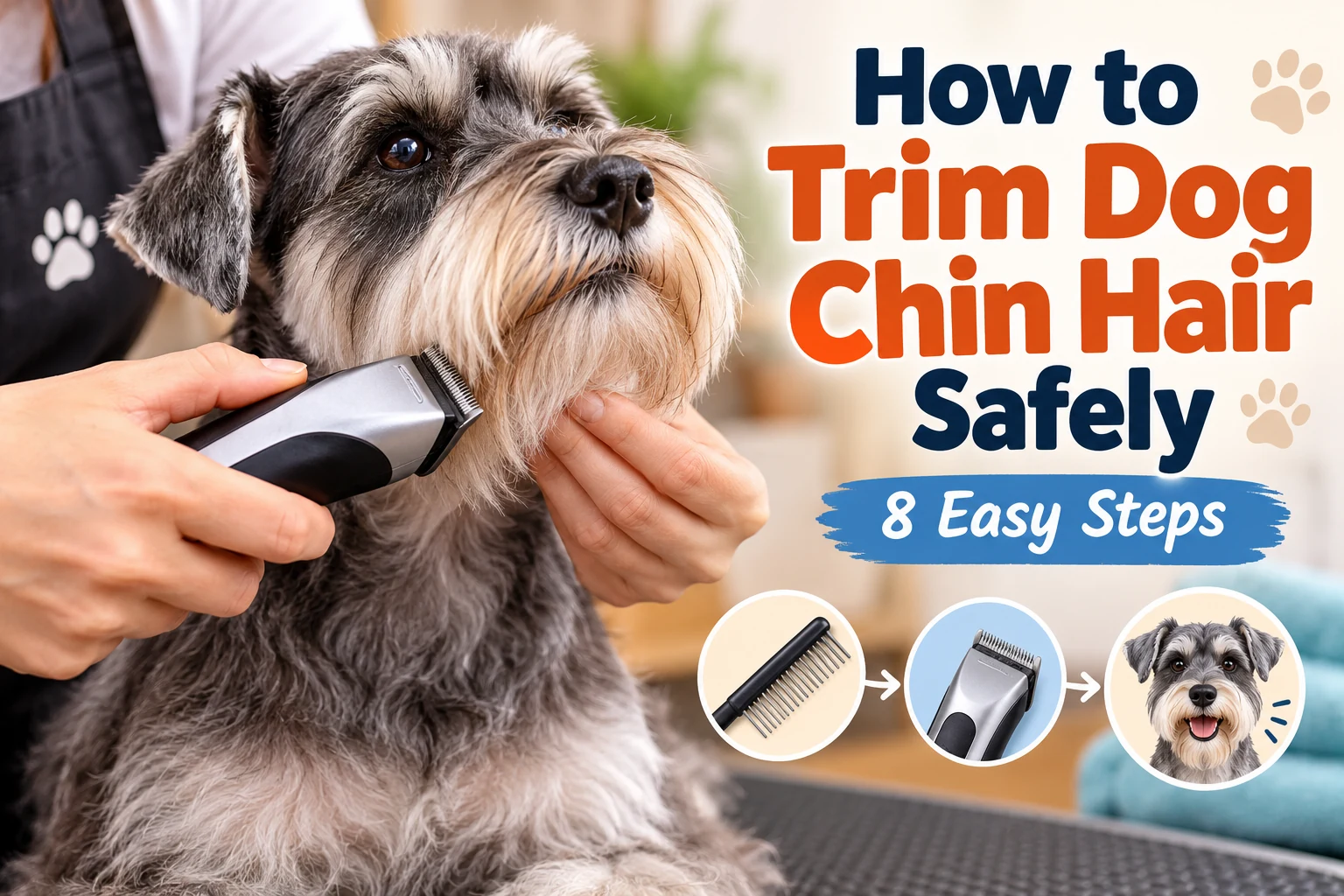
To trim dog chin hair safely, clean and dry the coat, gently comb out loose tangles, and identify the skin beneath the chin. If your dog remains calm, use a guarded, pet-safe detail trimmer for small adjustments after a professional has demonstrated the technique. Keep cutting tools away from lips and skin folds, and never cut through mats with scissors. The American Kennel Club’s grooming guidance recommends professional help for sensitive trimming tasks.
Quick Steps for Safer Chin Grooming
- Check the skin: Look for redness, sores, lumps, or hidden folds.
- Clean and dry: Remove food residue and moisture from the beard.
- Comb gently: Separate loose hair without pulling tangled skin.
- Prepare the tool: Use clean equipment and an appropriate guard.
- Trim conservatively: Work only on visible, accessible hair with safe clearance.
- Check and reward: Stop before your dog becomes uncomfortable.
Learning how to trim dog chin hair can make routine facial care easier, especially for dogs with long beards. However, the chin is a sensitive area where skin folds and sudden movements create real risks.
In this guide, I’ll explain the safest preparation methods, suitable tools, and common mistakes. You’ll also learn when professional grooming is the better choice.
What Does It Mean to Trim Dog Chin Hair?
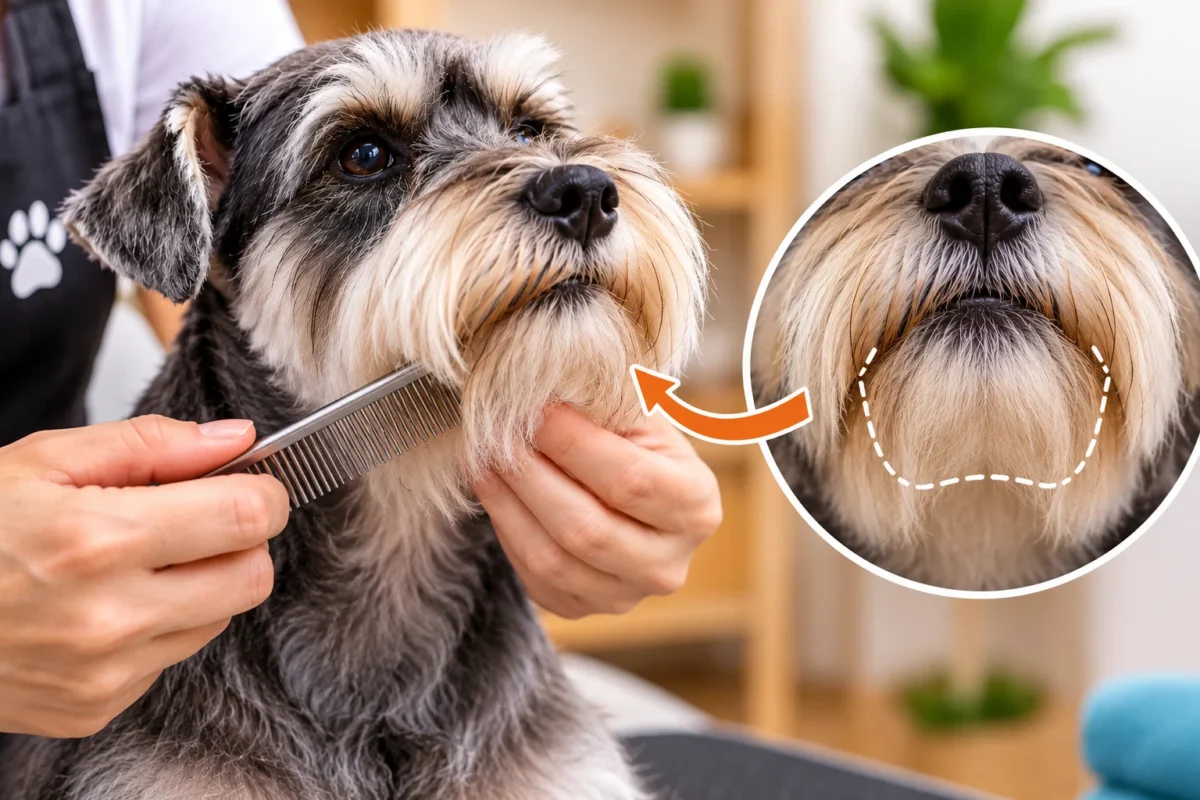
Trimming dog chin hair means shortening or tidying the fur beneath the lower jaw and around the beard. The goal is usually better hygiene, comfort, and a neat appearance.
This area includes hair below the mouth, along the jawline, and sometimes toward the upper throat. It does not mean shaving the skin closely.
Chin grooming is especially relevant for breeds with noticeable facial furnishings, including:
- Miniature Schnauzers: Their distinctive beards may collect moisture and food.
- Shih Tzus: Longer facial hair can require frequent cleaning and shaping.
- Yorkshire Terriers: Fine facial hair may tangle around the chin.
- Poodles: Their facial styles vary from fluffy beards to professionally clipped muzzles.
- Havanese: Soft, longer facial hair benefits from gentle combing.
Not every dog needs its chin hair shortened. Short-coated dogs often need only routine facial cleaning.
Why Should You Trim Your Dog’s Chin Hair?
Chin trimming can help manage hair that regularly catches food or becomes tangled. It also makes routine inspection and cleaning easier.
1. Reduce Food and Water Buildup
Long beard hair may become wet during drinking and collect food after meals. Repeated moisture can make the coat harder to maintain.
Wiping and drying the beard is often more important than shortening it. Trimming should support hygiene rather than replace cleaning.
2. Prevent Loose Hair From Tangling
Long facial furnishings may develop knots from friction, moisture, and everyday movement. Regular gentle combing helps prevent those knots from tightening.
Once hair becomes tightly matted against the skin, stop attempting a home trim. A professional should assess how to remove it safely.
3. Maintain a Comfortable Beard Shape
Some dogs have chin hair that extends unevenly or catches around the mouth. Carefully maintained beard length can make the coat easier to clean.
The correct length depends on breed, coat type, and individual preference. There is no universal chin-hair measurement that suits every dog.
What Tools Do You Need to Trim Dog Chin Hair?
Choose lightweight, pet-specific grooming equipment that offers good control. Avoid ordinary household scissors and oversized clippers around the mouth.
| Tool | Purpose | Safety Consideration |
|---|---|---|
| Fine or medium grooming comb | Separates loose beard hair | Never pull through tight mats |
| Pet detail trimmer | Shortens accessible hair | Requires proper technique and a calm dog |
| Compatible guard comb | Controls cutting length | Does not eliminate cutting risk |
| Rounded-tip grooming shears | Professional detail shaping | Still sharp; avoid untrained facial cutting |
| Non-slip mat | Improves footing | Use a stable, low surface |
I would prioritize a stable grooming surface and a comfortable dog over buying expensive equipment. Even a high-quality trimmer becomes unsafe when the dog suddenly moves.
How Do You Prepare Your Dog for Chin Trimming?
Good preparation reduces the need for repeated passes near sensitive skin. Start only when your dog is relaxed and willing to cooperate.
Check the Chin and Lower Jaw
Gently inspect the skin beneath the beard before using any cutting tool. Look for irritation, moisture, tight knots, and anything unusual.
Stop and contact your veterinarian if you notice suspicious sores, swelling, painful lumps, or inflamed skin. Do not trim directly over affected areas.
Clean and Dry the Beard
Use a damp cloth to remove ordinary food residue. If bathing is needed, choose a dog-safe product and keep it away from the eyes and mouth.
Dry the facial coat before trimming. Wet fur can clump together and make the final length harder to judge.
Introduce Grooming Tools Gradually
Let your dog investigate the comb while it is switched off or stationary. For an electric trimmer, introduce its sound away from the face.
Pair calm behavior with small rewards. Do not proceed if your dog is frightened by the equipment.
How to Trim Dog Chin Hair Safely in 8 Steps
A safe chin trim involves careful preparation and conservative cutting. Beginners should have a groomer demonstrate actual tool placement before attempting facial clipping.
Step 1: Choose a Quiet Grooming Area
Pick a well-lit place without distracting noises or sudden activity. A non-slip surface helps your dog maintain stable footing.
Keep sharp equipment out of reach while preparing. Never leave your dog unattended on a raised grooming table.
Step 2: Check Your Dog’s Comfort
Observe body language before touching the chin. A relaxed dog should accept gentle handling without pulling away or showing distress.
Watch for lip licking, freezing, growling, trembling, or repeated attempts to escape. These signals mean grooming should stop.
Step 3: Comb the Chin Hair Downward
Use a suitable grooming comb to separate loose hair in its natural growth direction. Keep movements gentle and avoid catching the skin.
If a knot resists combing, do not force it. Close-to-skin mats need professional attention.
Step 4: Identify the Safe Trimming Area
Find where the visible beard hair ends and the skin begins. Check around the lower lip, jawline, and throat folds.
Do not assume that every dark line beneath the beard is hair. Pigmented skin and folded tissue can be difficult to distinguish.
Step 5: Check the Trimmer and Guard
Inspect your tool for damage, debris, excessive heat, or loose attachments. Use the cutting guide recommended by its manufacturer.
Always start with a longer setting when length adjustment is appropriate. A short cutting setting increases the chance of an unwanted close shave.
Step 6: Trim Small Amounts of Accessible Hair
Only proceed if your dog remains still and you have learned safe tool handling. Work on clearly visible hair, away from the lips and loose skin.
Use brief, controlled passes following the manufacturer’s instructions. Do not push the tool into folds or attempt to clip beneath hidden skin.
A helper may offer treats from a safe position, but should not forcefully restrain the head. Stop immediately when you lose a clear view.
Step 7: Check the Shape Without Overcutting
Put the tool down and examine the beard from the front and both sides. Look for obvious uneven sections rather than trying to achieve perfect symmetry.
Keep enough hair to maintain the desired style. Cosmetic imperfections are safer than repeated cutting around an unsettled dog.
Step 8: Clean the Area and Reward Your Dog
Remove loose clippings with a soft cloth or gentle comb. Inspect the exposed skin for redness, scratches, or irritation.
Finish with praise and a reward your dog enjoys. Clean and maintain your grooming equipment before storing it.
Should You Use Scissors or Clippers for Dog Chin Hair?
A compact pet trimmer may offer controlled length reduction, while grooming shears allow precise styling. Neither tool is automatically safe around the chin.
| Feature | Pet Detail Trimmer | Grooming Scissors |
|---|---|---|
| Best application | Controlled length reduction | Detailed outline shaping |
| Main risk | Blade catching skin folds | Punctures and lacerations |
| Noise | Motor noise and vibration | No motor noise |
| Length control | Compatible guards or blade settings | Depends on hand technique |
| Beginner suitability | After supervised instruction | Best left to trained groomers |
For most beginners, I recommend learning how to clean and comb the beard first. Ask a professional groomer which cutting method suits your dog’s facial structure.
How Short Should You Trim Your Dog’s Chin Hair?
There is no standard chin-hair length for every breed. The appropriate length depends on facial anatomy, coat texture, and the desired grooming style.
Use the following approach when discussing grooming preferences with a professional:
- Long beard: Preserve the natural facial outline while removing loose tangles.
- Medium beard: Maintain a manageable shape with enough hair for the intended style.
- Short facial trim: Use a professional technique suited to the dog’s skin and coat.
- Sensitive skin: Avoid close trimming until a groomer or veterinarian advises otherwise.
Do not copy a clipper blade number from another dog’s haircut without checking its suitability. The same setting can produce different results across coat types.
What Are the Most Common Dog Chin Trimming Mistakes?
Most preventable grooming problems come from rushing, poor visibility, or cutting too close to sensitive skin. Recognizing these mistakes helps you decide when to stop.
Cutting Mats With Scissors
Never insert scissors beneath a tight chin mat. The trapped skin may rise into the tangled hair and become impossible to distinguish.
The Animal Medical Center’s grooming safety advice highlights the danger of scissor injuries when removing mats.
Trimming While Your Dog Moves
Sudden head movements can turn an ordinary trim into a serious injury. Stop whenever your dog pulls away, jerks, or resists handling.
Do not hold the mouth shut or force the jaw upward. Forced positioning can increase distress and reduce your control.
Using Hot or Dirty Blades
Clipper blades may become warm during operation. Dirty or poorly maintained blades can also pull hair rather than cut smoothly.
Check the equipment according to the manufacturer’s instructions. Switch off the trimmer when inspecting or adjusting the blade.
Removing Too Much Hair at Once
A short beard might look tidy, but aggressive trimming can expose sensitive skin unnecessarily. You cannot immediately restore hair once it has been cut.
Choose conservative grooming goals. A professional can refine the shape during a later appointment.
How Do You Trim Chin Hair on Different Dog Breeds?
Breed-specific facial styles require different grooming approaches. The best method also depends on each dog’s individual coat and temperament.
Miniature Schnauzers
Schnauzers often have long, recognizable beards. Regular cleaning and gentle combing help preserve the intended outline.
A groomer can shape the underside while maintaining the breed’s characteristic appearance.
Shih Tzus
Shih Tzus may have soft facial hair that collects moisture or develops small tangles. Routine cleaning often reduces how much trimming is needed.
Their short muzzle makes careful facial handling particularly important. Ask a groomer to demonstrate a suitable chin style.
Poodles
Poodles may wear closely clipped faces or fuller facial furnishings. These styles involve different blade techniques and finishing methods.
Close facial clipping is best performed by someone trained in safely handling the muzzle and jaw.
Yorkshire Terriers
Yorkies often have fine, silky hair around their faces. The hair may appear longer when wet or combed straight.
Gentle maintenance can help keep the beard tidy without removing too much length.
How Can You Keep Your Dog’s Chin Hair Clean Between Trims?
Routine beard care can reduce tangles and food buildup. Many dogs benefit more from consistent cleaning than frequent cutting.
- After meals: Gently wipe away visible food residue.
- After drinking: Dry a persistently wet beard with a soft cloth.
- During brushing: Check for loose knots without tugging.
- During skin checks: Look for redness, unpleasant odor, or tenderness.
- After outdoor activity: Remove debris from the chin and lower jaw.
The RSPCA’s grooming guidance recommends gentle brushing and stopping when an animal becomes uncomfortable.
For persistent chin irritation or an unusual smell, arrange a veterinary examination. Repeated trimming does not treat an underlying skin problem.
When Should You Stop and Contact a Professional Groomer?
Stop chin grooming whenever you cannot maintain a clear view of the cutting area. Professional help is safer when the coat or behavior becomes difficult to manage.
Book a groomer for the following situations:
- Tightly matted hair beneath the chin.
- A dog that repeatedly jerks or avoids facial handling.
- Skin folds that hide the cutting area.
- Complex beard shaping or close facial clipping.
- Uncertainty about tool size, blade selection, or positioning.
Contact a veterinarian rather than continuing to groom if you discover swelling, wounds, discharge, or painful skin. These signs need medical assessment.
If your dog suffers a cut, stop immediately and switch off the tool. Apply gentle pressure with clean gauze for bleeding and seek veterinary advice; urgent care is appropriate for deep wounds or persistent bleeding.
Which Grooming Tools Are Worth Considering?
For routine chin maintenance, a suitable comb and safe cleaning supplies are the starting point. Trimmers become useful only when you have learned an appropriate facial grooming technique.
The following are real product options with different uses. Their suitability depends on your dog’s coat, behavior, and the guidance of a professional groomer.
Best for Detail Trimming
Wahl BravMini+ Cordless Trimmer
Rating: Not independently tested
A lightweight cordless detail trimmer designed for delicate grooming areas. Its quiet operation and compatible cutting guide make it worth discussing with a groomer before using it on facial hair.
Best for Routine Beard Care
Andis Steel Pet Comb
Rating: Not independently tested
A metal grooming comb designed to help separate hair and identify developing tangles. For routine beard maintenance, I would prioritize comfortable combing before introducing cutting tools.
Affiliate disclosure: As an Amazon Associate, this website may earn from qualifying purchases. This does not change the price you pay.
Frequently Asked Questions About Trimming Dog Chin Hair
Can I trim my dog’s chin hair at home?
You can perform routine beard cleaning and gentle combing at home. Actual facial trimming requires calm handling, appropriate equipment, and an understanding of the skin beneath the fur.
For beginners, the safest approach is to learn the technique from a professional groomer before attempting it independently.
Can you use regular scissors to trim dog chin hair?
Regular household scissors are not appropriate for cutting hair close to a dog’s chin. Their blades can injure skin when the dog moves unexpectedly.
Even rounded-tip grooming shears remain sharp. Professional guidance is important before using scissors around the mouth.
How often should you trim dog chin hair?
The frequency depends on your dog’s coat growth, facial style, and hygiene needs. Some dogs need occasional professional beard shaping, while others require only regular cleaning and combing.
Check the beard routinely and arrange trimming when excess length becomes difficult to maintain. Avoid cutting simply because a fixed number of weeks has passed.
What should I do if my dog’s chin hair is matted?
Do not cut through a tight chin mat using scissors. Skin can become trapped inside the hair, making accidental cuts more likely.
If gentle combing does not release the tangle without discomfort, contact a professional groomer. Ask a veterinarian for help if the skin appears inflamed or painful.
What if my dog hates having its chin touched?
Stop grooming and work on gradual handling exercises instead. Begin with brief, positive interactions that do not involve cutting tools.
Reward voluntary cooperation and avoid forcing the dog’s head into position. A groomer or qualified behavior professional can help if fear persists.
Final Thoughts: How to Trim Dog Chin Hair Safely
Learning to trim dog chin hair starts with understanding your dog’s comfort and facial anatomy. Gentle cleaning, careful combing, and good preparation are the foundation of safe grooming.
For cutting tasks, work conservatively after receiving proper instruction. Never risk an injury to achieve a perfectly shaped beard.
If your dog has tight mats, sensitive skin, or difficulty remaining still, professional grooming is the safer option. A comfortable dog matters more than a perfect haircut.
Next step: Start with a gentle beard inspection and cleaning session, then ask your groomer to demonstrate an appropriate trim for your dog’s coat.