
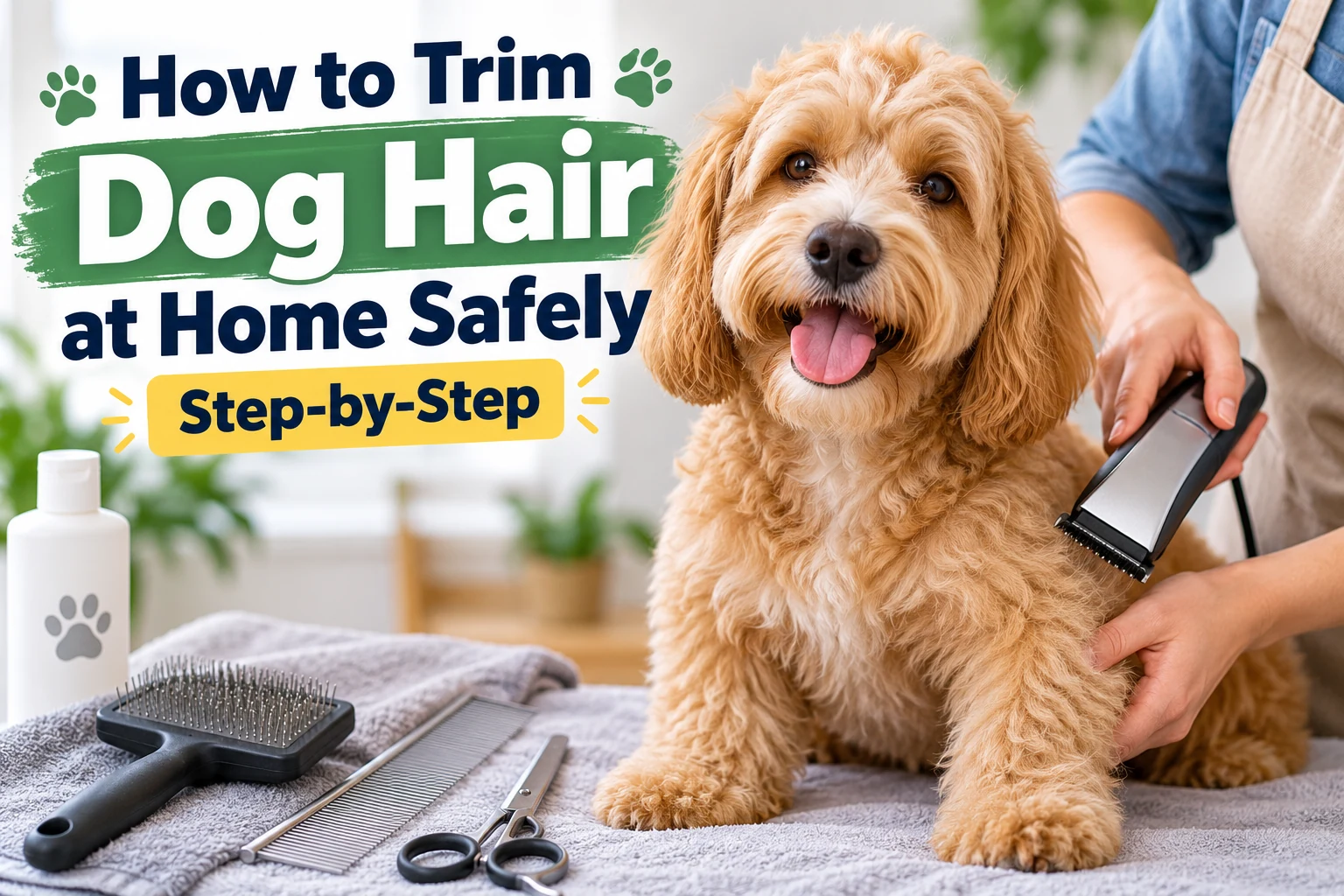
Quick Answer
To trim dog hair at home, brush the coat, clean and dry it thoroughly, and use appropriate dog grooming tools to shorten small amounts of excess hair. Work slowly, keep sharp tools away from skin folds and sensitive areas, and stop whenever your dog becomes uncomfortable. Beginners should start with simple maintenance trimming rather than attempting a complete haircut or shaving.
Learning how to trim dog hair can help keep your pet comfortable, tidy, and easier to groom between professional appointments. The safest approach is not necessarily the shortest haircut. It is a controlled trim suited to your dog’s coat type, skin condition, and tolerance for handling.
Some dogs need regular haircuts because their coats continue growing. Others mainly need brushing, shedding control, and occasional tidying. Understanding that difference is essential before picking up scissors or clippers.
What Should You Know Before Trimming Dog Hair?
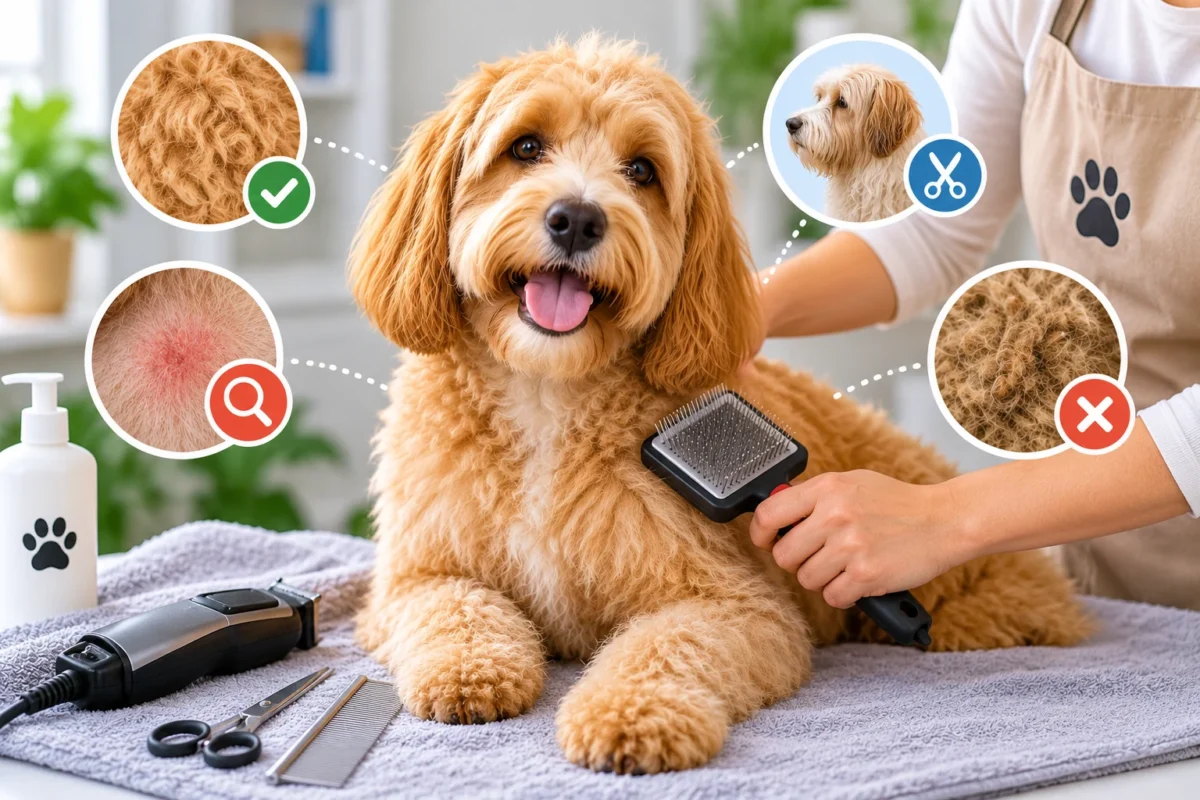
Before trimming, determine whether your dog actually needs a haircut and whether the work is safe to perform at home. Coat type, matting, skin health, and behavior all affect the decision.
Dogs with continuously growing coats, including many Poodles and Bichon Frises, often need routine trimming. Many short-coated breeds require little or no haircutting, while double-coated breeds usually benefit more from brushing and coat maintenance than shaving.
Understand Your Dog’s Coat Type
- Short, smooth coats: Usually require brushing and bathing rather than regular cutting.
- Long, flowing coats: May need occasional maintenance around the feet and other areas where excess hair interferes with cleanliness.
- Curly or continuously growing coats: Commonly require structured grooming and periodic professional haircuts.
- Double coats: Generally should not be shaved for routine maintenance because removing protective coat layers can affect skin protection and normal coat function.
- Wire coats: May require specialized hand-stripping techniques rather than ordinary clipper trimming.
If you cannot identify the appropriate grooming method, ask a veterinarian or qualified groomer before shortening the coat significantly.
Check the Skin and Coat First
Inspect the coat for tight mats, lumps, irritation, wounds, ticks, or unusual sensitivity. Hair may conceal skin folds and raised areas that can be injured by cutting tools.
Do not trim directly over damaged skin, and never pull a mat away from the skin to cut underneath it with scissors. Tight matting requires professional assessment because the skin may be caught inside the tangled hair.
What Tools Do You Need to Trim Dog Hair Safely?
Use grooming equipment designed for dogs, selected for the coat and the type of trim. Clean tools that cut smoothly are easier to control than dull or poorly maintained equipment.
- Coat-appropriate brush: Removes loose hair and helps identify tangles.
- Metal grooming comb: Checks whether the hair is thoroughly detangled.
- Dog grooming clippers: Suitable for coat-length maintenance when the owner has learned safe operation.
- Compatible guide combs: Help maintain a more consistent length on properly prepared coats.
- Rounded-tip grooming shears: Useful for limited finishing work when handled carefully.
- Non-slip mat: Provides secure footing during grooming.
- Dog treats: Reward calm handling and help build positive associations.
- Dog-safe shampoo and towels: Help prepare the coat when bathing is necessary.
Household scissors, damaged clipper blades, and unsuitable human grooming tools can increase the chance of a poor cut or injury. Even rounded-tip scissors have sharp cutting edges and must be kept away from moving skin.
How to Trim Dog Hair at Home: 8 Beginner-Friendly Steps
The following process is intended for light, manageable maintenance trims on cooperative dogs with healthy, untangled coats. It is not a substitute for hands-on training in full-body clipping or sensitive-area grooming.
Step 1: Prepare a Quiet Grooming Area
Select a well-lit space with a stable, non-slip surface. Remove distractions and place grooming supplies within reach so you do not have to leave your dog unattended.
Allow your dog to investigate the tools before beginning. If clippers will be used, introduce their sound and vibration gradually without immediately touching the coat.
Step 2: Brush and Comb the Coat
Brush gently in the direction of hair growth. Work through accessible sections without tugging or scraping the skin.
Follow with a grooming comb to identify hidden tangles. Pay particular attention to areas behind the ears, around the collar, and beneath the legs.
If a comb catches repeatedly, stop and address the tangles safely before attempting to clip. Do not force a guide comb through matted fur.
Step 3: Clean and Completely Dry the Hair
If the coat needs washing, use a dog-specific shampoo, rinse thoroughly, and dry the fur before trimming.
Clean, dry hair is generally easier to inspect and trim evenly. Dirt can interfere with clipper performance, while damp coats may make it harder for beginners to judge the finished length.
Do not bathe a severely matted dog without professional guidance, since wetting and drying can complicate tight tangles.
Step 4: Decide How Much Hair to Remove
Choose a conservative trim rather than trying to achieve an extremely short finish. Identify only the areas where excess hair needs attention.
For a first session, you might tidy a small amount of longer body hair or loose ends around an accessible area, depending on your dog’s coat.
Leave facial details, deep skin folds, ear edges, sanitary regions, and difficult paw-pad work to a trained professional unless you have received practical instruction.
Step 5: Trim an Easy, Flat Area First
If you have been shown how to use dog clippers correctly, begin on a relatively flat, accessible section of the body where the dog is comfortable being handled.
Use a compatible length guard over a fully combed coat. Keep the clipper in the orientation recommended by its manufacturer and avoid pressing the blade into the skin.
Move with smooth, controlled motions. Stop immediately if the hair pulls, the tool catches, or the dog reacts painfully.
Step 6: Work in Small Sections
Do not rush across the entire body. Complete one manageable area, inspect it, and continue only if your dog remains relaxed.
Check clipper blades frequently for heat. A blade that feels too warm against your own inner forearm should not be placed against your dog’s skin.
Never leave running clippers in contact with one spot. Avoid forcing the blade beneath a knot or into an area where you cannot see the skin clearly.
Step 7: Make Small Finishing Adjustments
After the main maintenance trim, comb the hair again and inspect the result from different angles.
Small uneven sections can often be left alone until the next grooming appointment. If using shears, work only where the dog is still, the skin is clearly separated from the cutting area, and you can maintain full control.
Do not repeatedly shorten one area to match another. Excessive correction can leave a patchy coat or expose sensitive skin.
Step 8: Check the Skin and Reward Your Dog
Inspect the trimmed coat for redness, irritation, or accidental nicks. Brush away loose cut hair and remove any hair that could irritate the eyes or skin.
Offer praise and a reward for calm behavior. Clean the grooming equipment according to the manufacturer’s instructions and store it safely.
End the session while your dog is still comfortable rather than continuing until the dog becomes exhausted or distressed.
Beginner Grooming Tip
Make your first trimming session a short practice session rather than a complete haircut. Focus on calm handling, clean tools, and one small area. A slightly uneven coat is preferable to an injured or frightened dog.
How Should You Approach Different Areas of Your Dog’s Body?
Different body areas require different levels of caution. Flat body sections are generally easier to manage than delicate areas where skin, ears, or moving joints can enter cutting tools.
Body and Back
These areas are often the most manageable for basic clipper practice because the skin is easier to see and the surface may be relatively flat.
However, loose skin, visible growths, and coat whorls can still create hazards. Use only the technique and guard length appropriate for the coat.
Face and Around the Eyes
Hair near the eyes may need maintenance, but sudden head movement makes trimming especially risky. Scissors or clippers close to the eyelids can cause serious injury.
For beginners, clean away discharge gently and arrange professional trimming when hair obstructs vision.
Paws and Between the Pads
Excess paw hair may collect dirt or interfere with traction. However, paw pads have folds and sensitive tissue that can easily be cut.
Let a groomer or veterinary professional demonstrate the correct technique before attempting close paw-pad trimming.
Ears, Belly, and Sanitary Areas
These areas have delicate skin and hidden folds. Ear leather can be difficult to distinguish from hair, while the armpits, groin, and belly can be caught by clipper blades.
Professional grooming is the safer choice when close trimming is necessary in these regions.
What Are the Most Common Dog Hair Trimming Mistakes?
Most preventable trimming problems come from inadequate coat preparation, using inappropriate tools, or continuing when the dog or equipment is no longer cooperating.
- Trimming over mats: Tangled hair can conceal skin and prevent clippers from moving safely.
- Using dull blades: Poorly maintained blades can tug instead of cutting cleanly.
- Cutting too close: A very short trim increases exposure of sensitive skin.
- Ignoring blade temperature: Heated blades may cause discomfort or burns.
- Restraining a frightened dog forcefully: Struggling increases injury risk and can worsen grooming anxiety.
- Trimming sensitive areas without instruction: Thin skin and unexpected movements can lead to accidental cuts.
- Shaving a double coat unnecessarily: This can interfere with normal coat protection and may change how the hair regrows.
The American Kennel Club’s home grooming guidance emphasizes appropriate tools, professional instruction for difficult trimming, and avoiding attempts to cut mats out with household scissors.
What Should You Do If Your Dog Moves or Becomes Frightened?
Stop using the cutting tool immediately if your dog jerks, pulls away, growls, trembles, or repeatedly tries to escape.
Put the equipment down, allow a break, and assess what caused the reaction. The dog may dislike vibration, sound, handling, pulling hair, or the unfamiliar environment.
For future sessions, practice handling without cutting, offer rewards, and gradually introduce the equipment. If the fear persists, seek help from a qualified groomer experienced with anxious dogs.
Do not attempt to overcome severe resistance through force. A restrained, panicking dog is at greater risk of injury, and the experience can make subsequent grooming more difficult.
When Should You Stop Trimming and Contact a Professional?
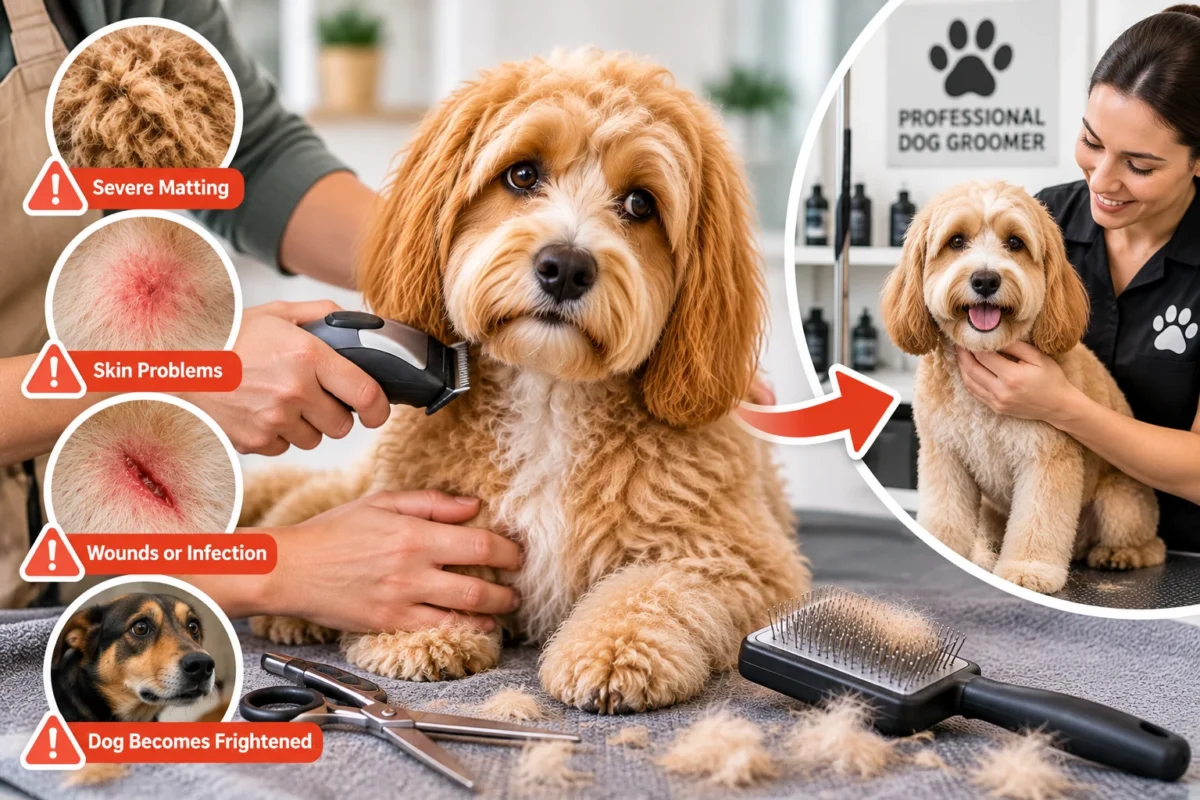
Stop the session whenever the risks outweigh the benefit of finishing the haircut. The need for a neat appearance does not justify proceeding through pain, fear, or uncertainty.
Arrange professional grooming or veterinary assistance for:
- Severe matting or tight knots close to the skin.
- Skin wounds, swelling, unusual lumps, or signs of infection.
- Trimming needed directly around the eyes, ears, genitals, or other delicate areas.
- A dog that cannot remain safely calm during cutting.
- Persistent clipper pulling, overheating, or unexplained skin irritation.
- Uncertainty about whether the breed should be clipped or hand-stripped.
The ASPCA’s at-home grooming recommendations support careful, limited maintenance trimming while emphasizing caution around the face, feet, and tail.
If an accidental cut occurs, stop grooming. Apply gentle pressure with clean gauze for minor bleeding and contact your veterinarian for guidance. Seek urgent veterinary care for deep wounds, eye injuries, significant bleeding, or bleeding that does not stop with gentle pressure.
How Can You Keep Dog Hair Neat Between Haircuts?
Routine coat maintenance often reduces how much trimming is required. Brushing prevents manageable tangles from developing into difficult mats, especially in long or curly coats.
Establish a grooming schedule based on your dog’s actual coat rather than following one interval for every breed.
Check friction areas behind collars and harnesses, clean dirty paws after outdoor activity, and remove loose hair with a coat-appropriate brush. Examine the skin during each session for new irritation or abnormalities.
For dogs requiring regular professional haircuts, book appointments before the coat becomes heavily tangled. Ask the groomer which small maintenance tasks are appropriate to perform safely between visits.
Relevant Grooming Tool
Dog Grooming Comb and Brush
A coat-appropriate grooming brush and metal comb help remove loose hair, identify tangles, and prepare the coat before any trimming. Choose tools according to your dog’s coat type and skin sensitivity.
As an Amazon Associate, we earn from qualifying purchases.
Frequently Asked Questions
Can I trim my dog’s hair with regular scissors?
Regular household scissors are not recommended for dog grooming. They can cause injuries when a dog moves suddenly. Use suitable dog grooming equipment, and leave sensitive or matted areas to a trained professional.
Should I trim my dog’s hair before or after a bath?
For ordinary maintenance trimming, clean, completely dry, detangled fur is usually easier to work with. Severely matted coats require professional assessment before bathing or cutting.
How often should I trim my dog’s hair?
It depends on coat type, growth rate, grooming style, and hygiene needs. Continuously growing coats often require periodic professional haircuts, while many short-coated dogs need little trimming.
Is it safe to cut matted dog hair at home?
Tight mats are not safe to cut out with scissors because the skin may be trapped inside them. A groomer or veterinarian should assess severe or skin-level matting and select a suitable removal method.
Can I trim dog hair while it is wet?
Beginners should generally work on a clean, dry coat. Wet fur can make it harder to judge cutting length and identify tangles. Professional grooming methods may differ depending on coat type and technique.
How do I know whether my dog needs a professional haircut?
Professional grooming is advisable when the coat requires complex shaping, there are substantial mats, delicate areas need trimming, or the dog becomes frightened or difficult to handle safely.
Final Thoughts
Learning how to trim dog hair safely begins with understanding the coat, preparing the right equipment, and recognizing your limits. Small maintenance trims can be useful, but complicated haircuts and sensitive areas are best handled by experienced professionals.
Prioritize a calm dog, healthy skin, and a manageable coat over a perfectly even haircut. Consistent brushing and timely professional grooming are often the most effective ways to keep your dog comfortable and looking tidy.


