Quick Answer
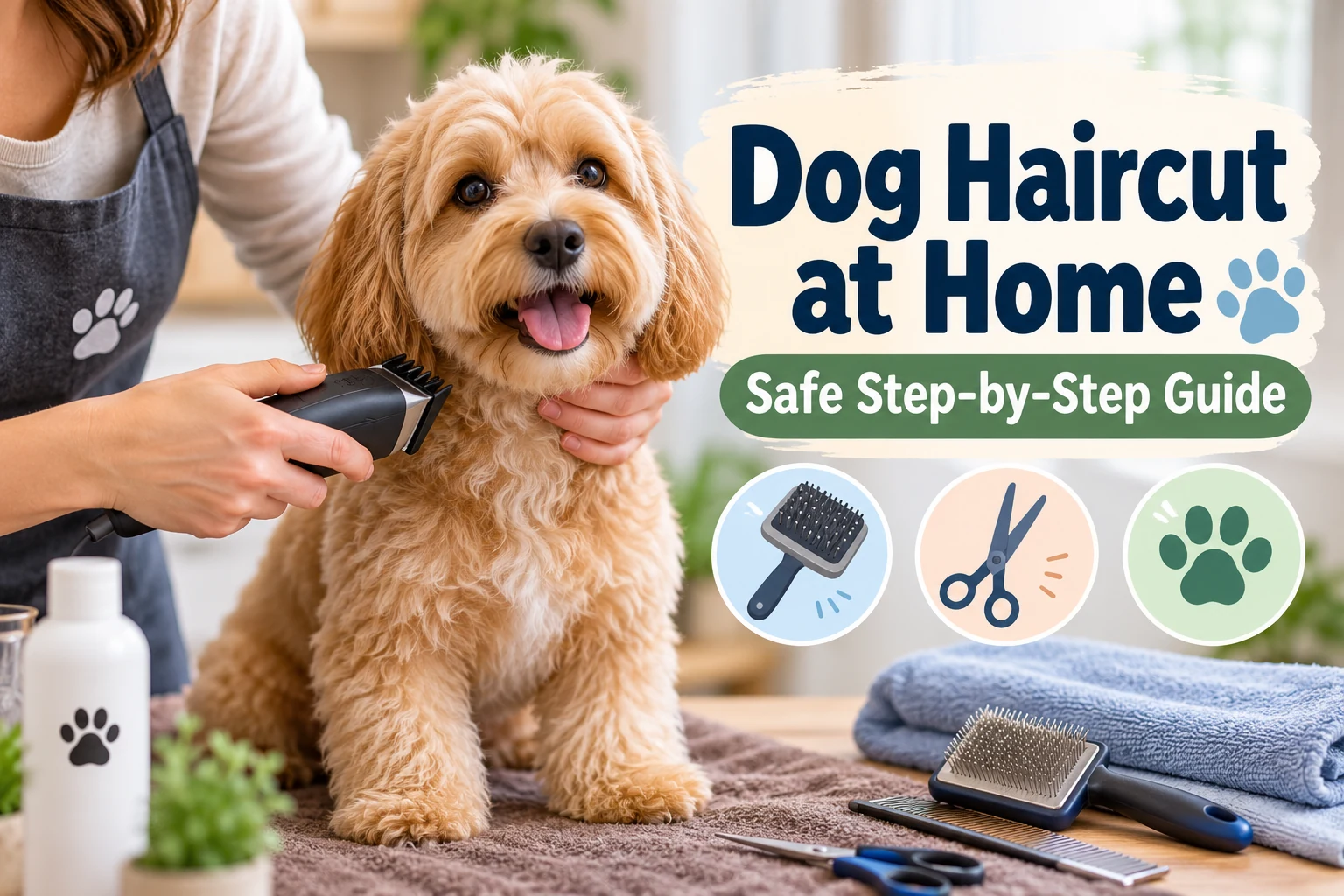
A dog haircut at home should begin with brushing, gentle handling, and choosing a trim appropriate for your dog’s coat. For beginners, minor maintenance trims are safer than attempting a complete professional-style haircut. Use dog-specific equipment, work on clean, dry, untangled fur, and stop if your dog becomes distressed. Leave close shaving, severe mats, and sensitive areas to a qualified groomer.
Giving your dog a haircut at home may help maintain a comfortable, tidy coat between professional appointments. However, cutting dog hair requires more than simply running clippers across the body.
Coat type, skin sensitivity, grooming experience, and your dog’s behavior all affect what you can safely accomplish. A small tidy-up may be manageable, while a full-body haircut requires additional training.
This guide explains how to prepare for home grooming, perform basic maintenance, recognize common problems, and decide when professional help is the better option.
Can You Give Your Dog a Haircut at Home?
Yes, some dogs can receive minor hair trims at home, particularly when they have healthy, manageable coats and tolerate grooming calmly. A complete haircut is more demanding and should not be attempted without appropriate training.
Dogs with continuously growing hair, such as many Poodle-type coats, often need regular trimming. Dogs with short, naturally shedding coats may need brushing rather than haircuts.
Double-coated breeds require particular care. Their outer guard hairs and insulating undercoat serve important protective functions. Shaving these coats unnecessarily may interfere with normal coat function and regrowth.
The ASPCA’s guidance on shaving pets explains why removing too much coat is not a suitable solution to summer heat.
For your first home grooming session, aim for comfort and cooperation rather than a dramatic change in appearance.
What Equipment Do You Need for a Dog Haircut at Home?
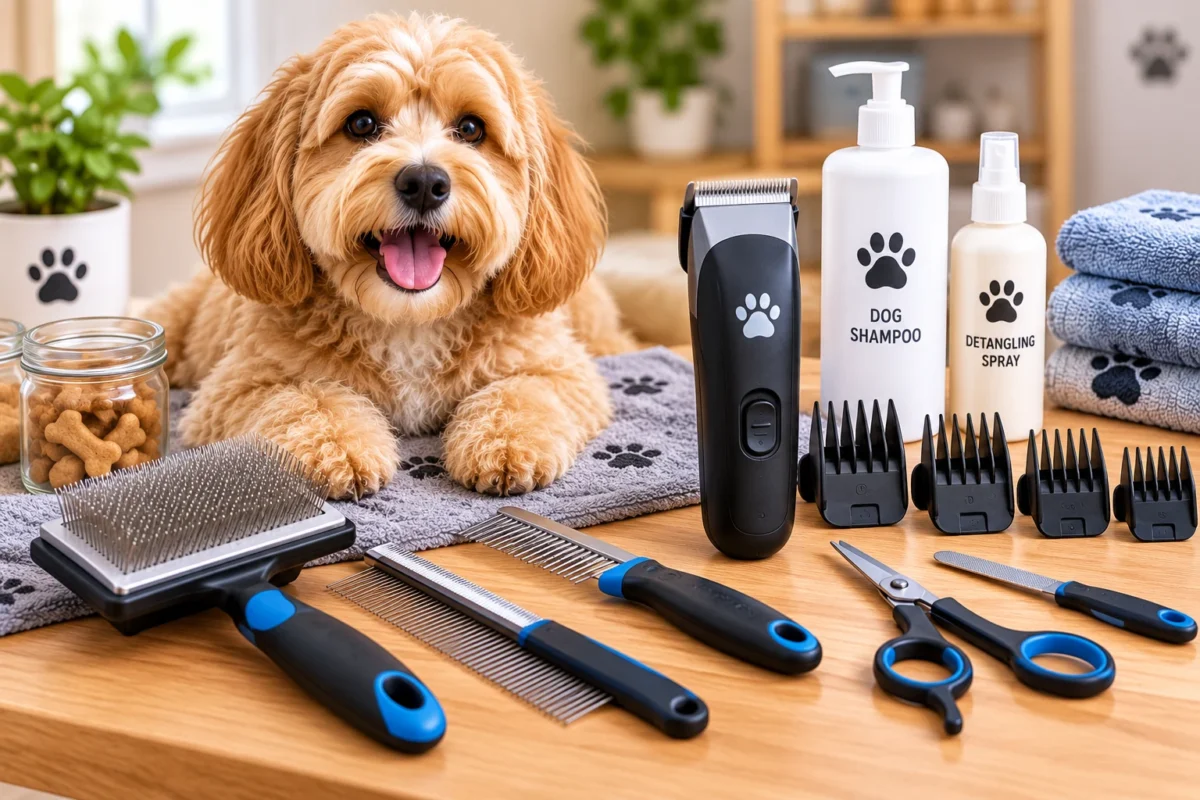
You need tools suited to your dog’s coat and the limited trimming you plan to perform. The safest equipment depends on coat thickness, hair texture, and the areas requiring attention.
- Dog grooming clippers: Properly maintained clippers designed for canine coats, used only after learning correct handling.
- Appropriate guard combs: Attachments that help maintain a longer cutting length on suitable, fully combed coats.
- Slicker brush or suitable coat brush: Helps remove loose hair and minor tangles.
- Metal grooming comb: Checks whether the coat is thoroughly detangled.
- Dog-specific shampoo: Cleans the coat before trimming when bathing is appropriate.
- Non-slip mat: Provides secure footing during grooming.
- Towels and pet-safe drying equipment: Help prepare a completely dry coat.
- Treats: Reward calm behavior and cooperation.
Professional grooming shears also exist, but beginners should not use sharp scissors near moving dogs, skin folds, ears, eyes, or other sensitive areas.
A guard comb does not make clipping automatically safe. It can snag tangled hair, detach if fitted incorrectly, or become difficult to control over an uneven coat.
How Should You Prepare Your Dog Before Cutting Hair?
Preparation is essential because a clean, dry, fully combed coat is easier to assess and less likely to pull during trimming.
Check the Coat and Skin
Inspect your dog’s body for knots, tight mats, bumps, sores, redness, and unusual sensitivity. Pay attention to areas behind the ears, under the legs, and around the collar.
If you find irritated skin, painful mats, or an unexplained lump, avoid clipping over the affected area. Ask a veterinarian or experienced groomer to assess the problem.
Brush Before Bathing
Gently brush in the direction of hair growth. Use a comb to identify tangles that brushing may have missed.
Do not force a brush through knots. Pulling can hurt your dog, and wetting a heavily tangled coat may make subsequent grooming more difficult.
Bathe and Dry When Appropriate
If the coat needs washing, use lukewarm water and shampoo formulated for dogs. Rinse thoroughly to remove residue.
Dry the coat completely before using ordinary grooming clippers. Avoid hot airflow directed at the skin, and monitor your dog’s comfort throughout drying.
A clean coat also helps reduce debris entering clipper blades.
Introduce Grooming Tools Gradually
Allow your dog to inspect unplugged or switched-off equipment. Reward calm behavior before introducing the sound of clippers at a comfortable distance.
If your dog backs away, trembles, growls, or becomes increasingly stressed, stop. Grooming should not depend on forceful restraint.
How Do You Give Your Dog a Haircut at Home? 8 Basic Steps
These steps describe a conservative maintenance session for a cooperative dog. They are not a substitute for hands-on training in full-body clipping or delicate-area grooming.
Step 1: Set Up a Safe Grooming Space
Choose a quiet, well-lit area with secure footing and enough room to move comfortably. Keep tools nearby without placing sharp equipment within your dog’s reach.
Use a stable surface. Never leave a dog unattended on an elevated grooming table.
Step 2: Decide Which Areas Actually Need Trimming
Look for overgrown hair that interferes with comfort, hygiene, or normal movement. A full coat-length reduction may not be necessary.
For beginners, it is reasonable to limit the session to brushing and inspecting the coat, leaving actual cutting to a trained groomer until the technique has been demonstrated.
Step 3: Confirm the Coat Is Ready
Run a suitable comb gently through the areas you intend to trim. The comb should move without catching or pulling.
If it repeatedly stops, do not push a guard comb or clipper blade through the resistance. Work on minor loose tangles gently, or arrange professional removal of stubborn mats.
Step 4: Check the Equipment
Inspect the clipper blade for damage, debris, and excessive heat. Confirm that any guard comb is securely attached and that the selected cutting length is appropriate.
If you have received proper clipping instruction, begin only on a broad, flat, easily visible area with healthy skin and an uncomplicated coat.
Step 5: Make Gentle, Controlled Passes
Follow the direction of hair growth using the technique demonstrated for your clipper and coat type. Avoid pressing the blade into the skin or repeatedly passing over one spot.
Never force clippers through resistance. Stop if the tool pulls hair, becomes hot, vibrates abnormally, or makes your dog uncomfortable.
Step 6: Leave Sensitive Areas to an Experienced Groomer
The face, ears, armpits, groin, sanitary area, and skin folds have a higher risk of injury. Thin skin can be caught by a blade even when the surrounding coat appears straightforward.
Trimming near the eyes, paw pads, or genitals should be performed only after appropriate hands-on instruction. Otherwise, book a professional appointment.
Step 7: Pause and Reassess
After a small amount of work, check the coat, skin, equipment temperature, and your dog’s behavior.
If the coat looks uneven, do not repeatedly cut shorter to correct the appearance. Excessive correction can turn a minor tidy-up into an unnecessarily close haircut.
Step 8: Brush Lightly and Inspect the Finished Area
Remove loose cut hair with a gentle brush. Check for redness, irritation, accidental nicks, or areas where clothing or a harness may rub.
Reward your dog and end the session before fatigue or frustration becomes a problem.
Safety Warning
Never cut tight mats with household scissors or clip blindly beneath tangled hair. Skin can be pulled into a mat and accidentally injured. Painful, extensive, or skin-level matting requires professional attention.
How Does Haircut Technique Change With Coat Type?
There is no single haircut technique suitable for every dog. Understanding coat structure helps prevent unnecessary cutting and damage.
| Coat Type | Typical Maintenance | Important Consideration |
|---|---|---|
| Short, smooth coat | Brushing and bathing | Usually does not need clipping |
| Curly, growing coat | Regular combing and professional-style trims | Can mat close to the skin |
| Long, silky coat | Careful detangling and occasional trimming | Tangles develop in friction areas |
| Double coat | Brushing and undercoat maintenance | Avoid unnecessary shaving |
| Wiry coat | Coat-specific grooming methods | Clipping can alter appearance and texture |
Breed labels alone do not establish the safest cutting technique. Mixed-breed dogs may have unusual combinations of coat density, curl, and shedding patterns.
What Common Dog Haircut Mistakes Should You Avoid?
Most beginner problems arise from rushing preparation, attempting advanced areas, or trying to finish a haircut after the dog has become uncomfortable.
- Cutting tangled hair: Clippers can snag and pull, while scissors can injure skin hidden inside mats.
- Clipping too closely: Very short cuts increase the risk of irritation and unnecessary exposure.
- Using overheated blades: Hot equipment can cause discomfort and skin injury.
- Ignoring body language: Panting, avoidance, trembling, freezing, or repeated attempts to escape can indicate stress.
- Using human grooming products: Shampoo and grooming equipment may not suit canine skin or coat structure.
- Attempting advanced trimming without instruction: Sensitive anatomy and sudden movement make injuries more likely.
- Overcorrecting uneven results: Chasing perfect symmetry can lead to excessive hair removal.
According to the American Kennel Club’s home grooming guidance, professional groomers have specialized training for handling sensitive areas safely.
What Should You Do If Your Dog Becomes Stressed or Gets Hurt?
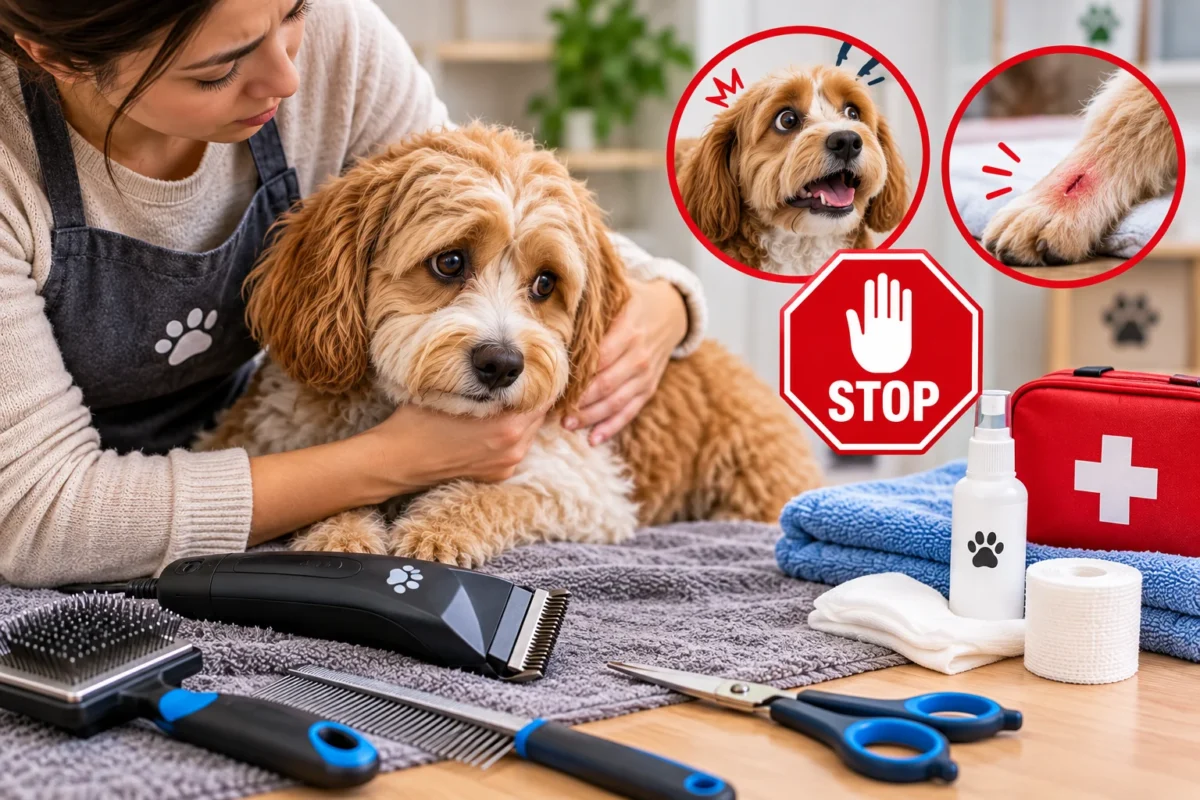
Stop grooming immediately if your dog becomes frightened, resists strongly, or appears painful. Turn off the equipment and allow your dog to move to a safe, quiet place.
Do not punish struggling behavior or forcibly continue. Future sessions may need to begin with shorter, reward-based handling exercises instead of cutting.
If an accidental cut occurs, stop the session. Apply gentle pressure with clean gauze if the area is bleeding, and contact your veterinarian for advice. Persistent bleeding, deep wounds, injuries near sensitive structures, or significant pain require prompt veterinary care.
Watch for skin redness or discomfort after grooming. Persistent irritation, swelling, discharge, or unusual behavior should be assessed by a veterinarian.
When Should You Choose a Professional Dog Groomer?
Professional grooming is the safer choice when the required task exceeds your skill level or your dog’s coat or behavior makes injury more likely.
Arrange professional help for severe matting, full-body haircuts, delicate facial shaping, sanitary clipping, extremely anxious dogs, or dogs with painful skin conditions.
The ASPCA’s matting prevention advice emphasizes that stubborn mats should be removed by a groomer or veterinarian rather than cut out at home.
You can also ask a groomer to demonstrate brushing techniques, explain your dog’s coat needs, and suggest a realistic home-maintenance routine.
How Can You Maintain Your Dog’s Hair Between Haircuts?
Regular maintenance reduces the need for major trimming sessions and makes coat problems easier to identify early.
Brush according to coat type and tangling tendency. Some long or curly coats need daily attention, while shorter coats may require less frequent brushing.
Check behind the ears, around the collar, under the legs, and wherever a harness rubs. These friction areas can develop knots before the rest of the coat looks tangled.
Keep bedding and grooming tools clean, use appropriate bathing intervals, and schedule professional appointments according to your dog’s actual coat needs.
Maintaining a healthy coat is more valuable than preserving a particular haircut style.
Frequently Asked Questions About Dog Haircuts at Home
1. Can beginners cut a dog’s hair at home?
Beginners can learn basic coat maintenance and minor trimming after suitable instruction. Full-body clipping and sensitive-area trimming are better left to trained groomers until the owner develops practical skills.
2. Should you cut dog hair when it is wet or dry?
For ordinary home clipper trimming, the coat should generally be clean and fully dry. Wet hair can behave differently and may interfere with equipment designed for dry-coat use.
3. Can you use human hair clippers on dogs?
Human clippers are not generally a good substitute for dog-specific equipment. Their blades, motors, attachments, and cutting performance may not suit dense canine coats.
4. How often does a dog need a haircut?
Frequency depends on coat type, growth rate, condition, and desired length. Some dogs require regular professional trimming, while naturally short-coated breeds may not need haircuts at all.
5. Is shaving a dog helpful in hot weather?
Not necessarily. Many dogs rely on their coats for insulation and protection. Double-coated dogs generally should not be shaved simply because the weather is hot.
6. What if my dog refuses to stay still during grooming?
Stop cutting and return to gentle, reward-based familiarization. If your dog remains distressed or requires difficult handling, seek help from an experienced groomer or a qualified behavior professional.
Final Thoughts
A successful dog haircut at home starts with understanding your dog’s coat, preparing the fur properly, and respecting the limits of your experience. Gentle maintenance can keep a coat comfortable between appointments, but advanced cutting is not worth risking an injury.
Start with brushing, build your dog’s confidence gradually, and seek professional instruction before attempting more complicated grooming. A safe, comfortable dog matters far more than a perfectly shaped haircut.