Quick Answer
To trim dog beard hair safely, gently clean and dry the muzzle, comb the beard downward, and remove only small amounts of loose, clearly visible hair using rounded-tip grooming scissors. Work below and away from the lips, keep each cut controlled, and stop whenever your dog moves or becomes uncomfortable. Leave tight mats, hair against the lip folds, and close facial clipping to a professional groomer.
A dog’s beard can collect food, water, dirt, and tangles throughout the day. For dogs with long facial furnishings, regular grooming helps keep the muzzle cleaner and the beard more manageable.
However, the beard sits directly beneath the mouth, where moving lips, sensitive skin, and sudden head movements make trimming more challenging than cutting body hair.
The safest approach is conservative. You do not need to create a perfect haircut in one session. A comfortable, tidy beard is more important than a sharply sculpted shape.
What Does It Mean to Trim a Dog’s Beard?
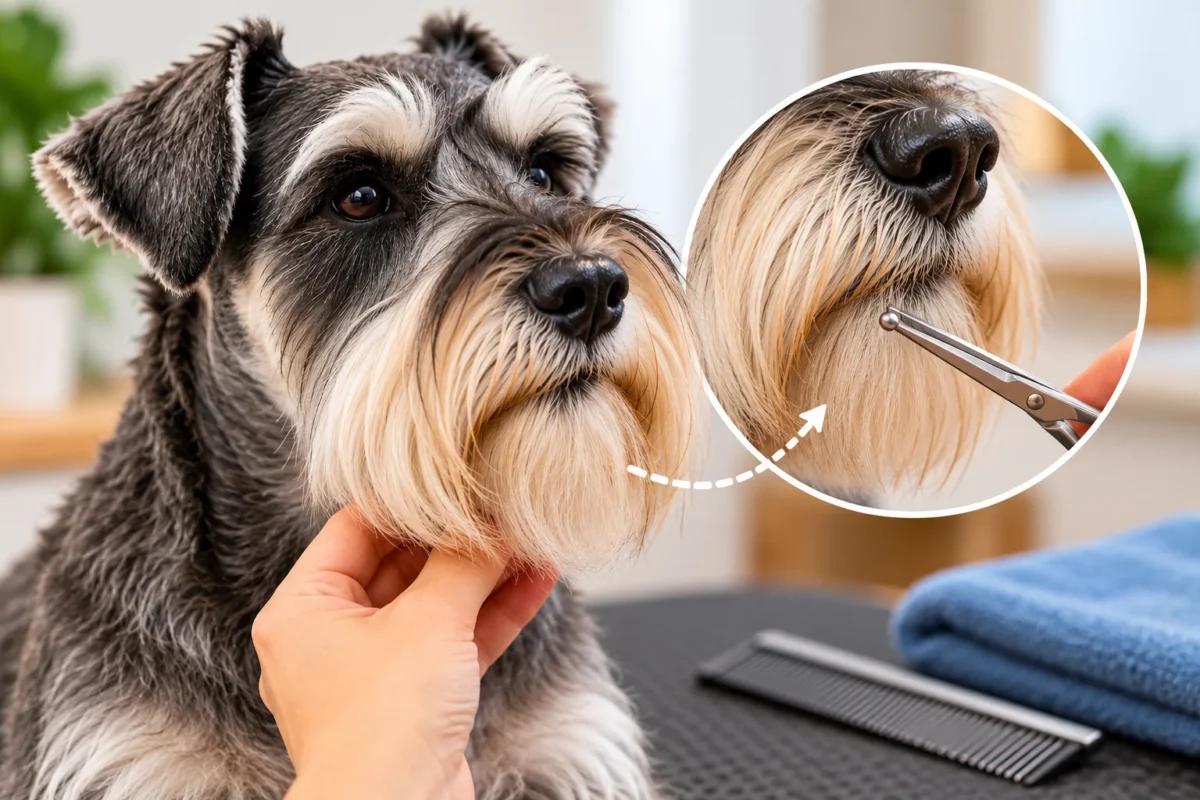
Trimming a dog’s beard means shortening or shaping the longer hair growing around the chin, lower muzzle, and sometimes the sides of the mouth.
This facial hair is often called beard hair or facial furnishings. Depending on the breed, it may hang below the jaw, frame the muzzle, or blend into the cheeks.
Breeds such as Schnauzers, Scottish Terriers, and some Poodles or Poodle mixes may have prominent beard or muzzle hair. Their grooming requirements differ according to coat texture and the desired appearance.
Beard trimming generally has three practical goals:
- Hygiene: Reduce excessive hair that repeatedly catches food and moisture.
- Comfort: Keep long strands from interfering with normal eating or getting caught around the mouth.
- Appearance: Maintain a balanced beard without unnecessarily removing its natural shape.
Trimming is different from shaving. A beard trim usually preserves visible length, while shaving removes substantially more hair and requires greater attention to the skin and lip folds.
There is no universally correct beard length. Coat type, facial anatomy, owner preference, and the dog’s tolerance for grooming should determine how much hair is shortened.
What Tools Do You Need to Trim Dog Beard Hair?
For a simple home maintenance trim, choose a few appropriate grooming tools rather than a large collection of equipment.
- Rounded-tip grooming scissors: Designed for controlled finishing work, although they can still cause injury.
- Small metal grooming comb: Helps separate loose hair and reveal the beard’s natural shape.
- Soft brush: Useful for gently smoothing suitable coat types.
- Clean damp cloth: Removes food residue before grooming.
- Absorbent towel: Dries the beard after cleaning.
- Non-slip mat: Gives your dog secure footing.
- Small treats: Reward calm handling and cooperation.
A quiet grooming trimmer may be useful for experienced handlers, but it is not necessary for a basic beard tidy-up. Motorized blades near the lips can cause cuts or irritation if used incorrectly.
The American Kennel Club’s home grooming guidance emphasizes appropriate equipment and recommends professional instruction before owners attempt sensitive clipping work.
Avoid large household scissors, damaged blades, and tools that require awkward hand positions.
Safety Warning
Never use scissors to cut through a tight beard mat or trim hair you cannot clearly separate from the lips or skin. These areas can be injured by even a small unexpected movement. Ask a qualified groomer or veterinarian for help.
How Do You Prepare Your Dog’s Beard Before Trimming?
Preparation makes the beard easier to examine and reduces the temptation to pull or cut tangled hair.
Begin when your dog is relaxed, preferably in a quiet room without unnecessary distractions. Allow your dog to investigate the comb and closed scissors before attempting any cutting.
Gently wipe away food debris with a damp cloth. If the beard is noticeably dirty, clean it using an appropriate dog-safe grooming routine and dry it thoroughly before assessing its length.
For more washing and drying guidance, see our dog bathing guide for safe home grooming.
Once the hair is dry, comb slowly from the ends toward the roots, working through easily loosened tangles without pulling against the skin.
Inspect the chin and mouth corners. Look for tight knots, redness, painful areas, or debris caught against the skin.
If the dog resists light touching around the muzzle, do not proceed to scissors. Practice gentle handling separately or seek professional help.
How to Trim Dog Beard Hair Safely: 8 Steps
For a cooperative dog with clean, untangled beard hair, the following sequence provides a conservative method for tidying the visible outer beard.
Choose a stable grooming location.Position your dog on a secure, non-slip surface. Keep supplies nearby, and make sure there is enough light to distinguish hair from skin.
Let your dog settle.Touch the chin gently and reward relaxed behavior. Do not force the muzzle into position or hold the mouth shut. If your dog pulls away repeatedly, end the session.
Comb the beard into its natural position.Bring the longer chin hair gently downward. Comb the side furnishings outward only enough to identify their shape. Avoid pulling against the corners of the mouth.
Choose a modest finishing line.Look at the beard from the front and side. Identify loose ends hanging noticeably below the main outline. Keep your first goal small rather than deciding to shorten the entire beard.
Trim only clearly isolated outer ends.With your dog completely still, make small, controlled cuts in hair that is visibly separated from the skin and mouth. Keep the cutting tool away from the lips, tongue, and facial folds. Never reach underneath an obscured area with open scissors.
Recomb and inspect the outline.Put the scissors down before repositioning the hair. Check whether the trim already looks tidy. A few uneven strands are preferable to repeated cuts near a sensitive area.
Leave the mouth corners to a professional if necessary.Hair around the lip edges can conceal delicate skin. Do not follow a strand into the mouth corner or attempt to create an extremely short muzzle cut without hands-on instruction.
Finish with a comfort check.Remove loose cut hair with a soft brush or cloth. Examine the visible skin for irritation, offer a reward, and allow your dog to rest.
Never continue cutting while your dog is turning, licking, snapping, or trying to escape. A safe session may involve no cutting at all if the dog is not ready.
Practical Grooming Tip
Work in short sessions with frequent breaks. After each small adjustment, comb the beard again before deciding whether anything else needs trimming. This helps prevent accidental overcutting.
Should You Use Scissors or Clippers on a Dog’s Beard?
Neither tool is automatically safe simply because it is sold for pet grooming. The right choice depends on the task, the dog’s behavior, and the handler’s training.
Rounded-tip scissors may be appropriate for a few loose outer beard ends on a calm dog. They are not appropriate for cutting through mats or blindly trimming against the muzzle.
Clippers can shorten larger areas more evenly, but their blades introduce risks around loose lip skin, folds, and moving facial features. Blade temperature and incorrect technique can also irritate the skin.
For beginners, the safest decision is often to maintain the beard through cleaning and combing and have a professional perform its initial shaping.
After a groomer has established the outline and demonstrated suitable maintenance, small home touch-ups may become easier.
How Should You Trim Different Dog Beard Styles?
Different beard shapes require different degrees of maintenance. Avoid treating every long-haired muzzle as though it needs the same haircut.
Schnauzer-Style Beards
A traditional Schnauzer beard emphasizes longer facial furnishings beneath the muzzle. Removing too much hair can change the intended shape.
Focus home maintenance on cleaning, combing, and tidying obvious loose ends. Leave major shaping around the muzzle and cheeks to a groomer familiar with the breed’s style.
Curly Beards on Poodle Mixes
Curly facial hair can hide tangles and make the visible outline deceptive. A beard may appear short on the outside while containing compacted hair underneath.
Gently check for knots before any trim. If the comb cannot pass through without pulling, do not assume a quick scissor cut will solve the problem.
Long, Straight Facial Hair
Some dogs have straighter strands that hang below the chin or extend toward the mouth.
These may be easier to comb into an orderly outline, but the same restrictions apply near the lips. Only isolated ends clearly away from sensitive tissue should be considered for a beginner’s touch-up.
What Dog Beard Trimming Mistakes Should You Avoid?
Most home grooming problems begin when the handler tries to accomplish too much or continues despite uncertainty.
- Cutting large sections at once: This makes it harder to control the final length and blade position.
- Trimming while the dog moves: Head movement can bring skin or lips into the cutting area.
- Pulling the beard tightly: This can cause discomfort and distort the natural outline.
- Cutting through hidden knots: Skin can be trapped inside a mat.
- Shaping too close to the mouth: Lip folds and the tongue create additional injury risks.
- Ignoring stress signals: Repeated head turning, freezing, growling, or struggling means the session should stop.
- Prioritizing symmetry over comfort: Repeated corrections increase handling time and risk.
The PetMD guidance on handling matted hair warns against cutting mats with household scissors because they may sit very close to the skin.
If you accidentally nick the skin, stop grooming. Apply gentle pressure with clean gauze if bleeding occurs, and contact your veterinarian for advice. Persistent bleeding, a deep wound, or an injury involving the lip or mouth requires prompt veterinary attention.
How Can You Maintain Your Dog’s Beard Between Trims?
Beard maintenance does not need to involve scissors every time. Regular gentle cleaning can keep the hair manageable between professional appointments.
Wipe away visible food residue after messy meals. After drinking, gently blot excessive moisture when your dog accepts the handling.
Comb the beard according to its coat texture and how quickly it tangles. Long or curly hair may need frequent attention, while shorter facial hair may require less.
Pay particular attention to the chin and mouth corners, where moisture and debris can accumulate. Check for unusual odor, red skin, or clumped hair rather than assuming every problem needs trimming.
A consistent routine helps you notice changes early and reduces the need for major corrections.
Do not apply human styling products, strong perfumes, or irritating cleaning solutions around the muzzle. Use dog-appropriate products and follow veterinary advice for skin problems.
When Should You Visit a Professional Groomer or Veterinarian?
Choose a professional groomer when beard hair is tightly matted, the shape needs substantial correction, or your dog cannot remain relaxed during facial handling.
A groomer can also demonstrate how much beard should be maintained for your dog’s coat and preferred style.
Veterinary attention is more appropriate when you notice painful swelling, sores, persistent inflammation, discharge, bleeding, or a strong unusual odor around the mouth.
These signs should not be dismissed as ordinary dirty beard hair. Problems involving the lips, skin, or teeth may require examination rather than cosmetic grooming.
If your dog reacts aggressively or panics when the muzzle is touched, do not attempt to overpower or restrain the dog for a haircut. Discuss a safer handling plan with a qualified professional.
Frequently Asked Questions
Can you trim a puppy’s beard?
Yes, but a puppy should first become comfortable with gentle face touching, combing, and grooming equipment. Avoid forcing a full beard haircut during early training. A groomer can introduce safe trimming gradually.
How often should a dog’s beard be trimmed?
There is no fixed schedule for every dog. Trim frequency depends on beard growth, coat texture, preferred style, and how easily the hair becomes dirty or tangled. Cleaning and combing may be needed more frequently than cutting.
Can you trim a dog’s beard while it is wet?
A clean, dry beard is generally easier for a beginner to assess because its natural shape and length are visible. Wet strands may sit differently once dry, resulting in an unexpectedly uneven or short trim.
Should you shave a dog’s beard completely?
Usually, full shaving is unnecessary for simple beard maintenance. It changes the appearance and can bring cutting tools close to sensitive facial skin. Discuss medical, matting, or hygiene-related reasons for close clipping with a professional.
What if a dog’s beard smells bad after washing?
Check whether the beard remains damp or has trapped food. Persistent odor, especially with redness, discharge, pain, or changes around the mouth, warrants a veterinary examination rather than repeated washing or trimming.
How do you keep a dog still for beard trimming?
Use calm handling, a stable surface, rewards, and short sessions. Teach your dog to accept gentle muzzle touching before introducing cutting tools. Never force the head into position, and stop if the dog resists.
Final Thoughts
Learning how to trim dog beard hair safely starts with preparation, gentle combing, and realistic expectations. The goal is a clean, comfortable beard, not an aggressive close shave.
For minor maintenance, make only small adjustments to clearly visible outer hair while your dog remains relaxed. Leave difficult facial shaping, tight mats, and sensitive mouth areas to a professional.
Regular beard cleaning and calm handling practice can make future grooming sessions safer and easier for both you and your dog.