

Quick Answer
A safe dog haircut starts with understanding your dog’s coat, removing loose tangles, and using appropriate grooming equipment. Beginners should focus on gentle brushing and minor maintenance trims rather than attempting complicated full-body cuts. The American Kennel Club’s grooming guidance recommends professional training before attempting potentially risky clipping.
Seven steps for a safer haircut
- Identify the coat: Determine whether your dog has a single, double, curly, or wire coat.
- Inspect the skin: Check for wounds, irritation, and tight mats.
- Prepare equipment: Gather dog-safe grooming tools and treats.
- Brush gently: Remove loose tangles without pulling the skin.
- Clean and dry: Use dog shampoo when bathing is appropriate.
- Trim cautiously: Follow professional guidance for any clipping or scissor work.
- Check the result: Examine the skin and reward your dog.
Giving your dog a haircut can seem simple until you encounter tangled fur, sensitive skin, or a nervous puppy. A little preparation makes a difference.
In this dog haircut guide, I’ll explain the equipment, coat types, haircut styles, and safety decisions beginners should understand. The goal is a comfortable dog, not a perfect salon finish.
What Is a Dog Haircut?
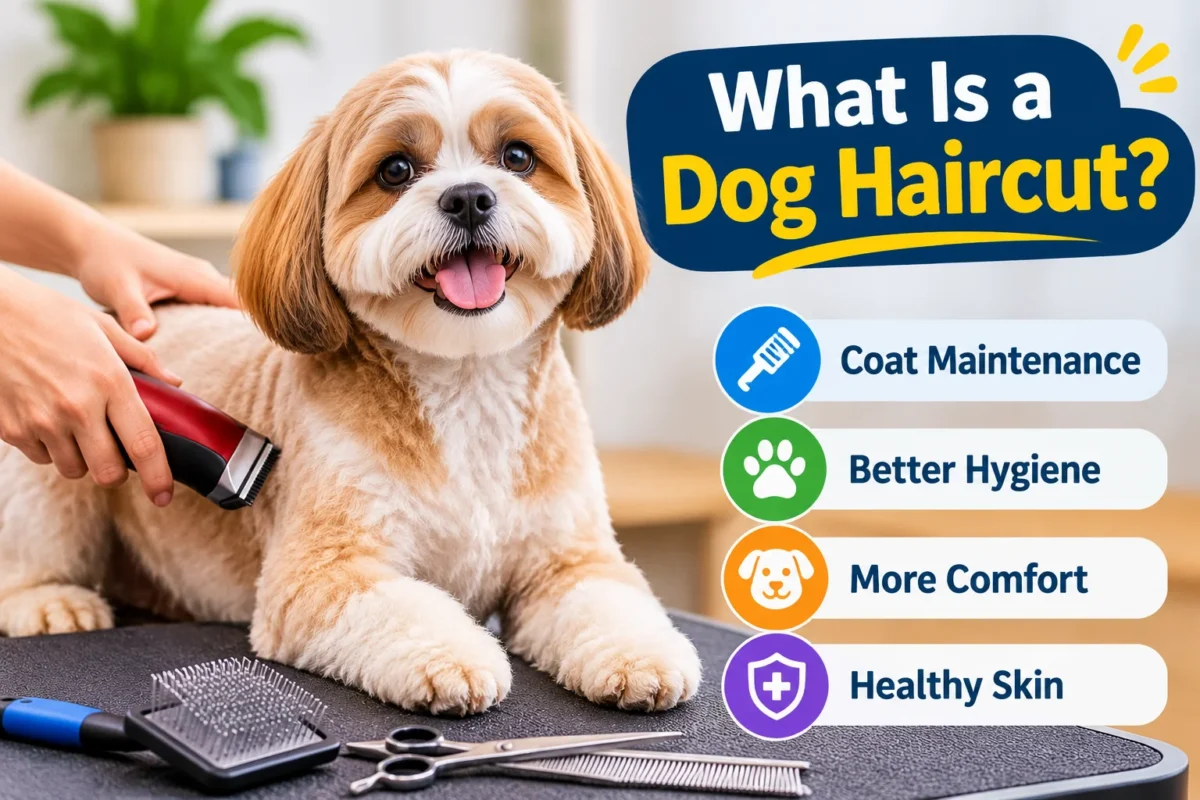
A dog haircut is the controlled trimming or shortening of a dog’s coat to support cleanliness, comfort, and a manageable appearance. Unlike human haircuts, the right technique depends heavily on coat structure.
Some dogs need regular clipping because their hair continues growing. Others have protective double coats that generally should not be shaved for cosmetic reasons.
Common grooming goals include:
- Coat maintenance: Keeping continuously growing hair manageable.
- Hygiene: Reducing excessive fur around areas that collect dirt.
- Comfort: Managing tangles and preventing painful matting.
- Appearance: Maintaining a breed-appropriate or practical style.
- Skin inspection: Making it easier to notice irritation or injuries.
A haircut is only one part of grooming. Brushing, bathing, nail care, and ear checks also support your dog’s wellbeing.
Does Every Dog Need a Haircut?
No. Dogs with continuously growing coats often benefit from regular haircuts, while many short-haired and double-coated breeds primarily need brushing.
Coat type matters more than appearance. Cutting the wrong coat too short can interfere with its protective function.
Single-Coated and Continuously Growing Hair
Poodles, many doodles, and several companion breeds have coats that commonly require routine trimming. Their grooming schedules depend on coat length, texture, and brushing habits.
These coats can develop uncomfortable mats when maintenance is neglected. A groomer can recommend a practical length for your dog’s lifestyle.
Double-Coated Dogs
Golden Retrievers, Huskies, and German Shepherds have layered coats that typically benefit from regular brushing rather than close shaving.
The ASPCA explains why shaving a dog’s protective coat is not a reliable way to keep them cooler. Medical exceptions should follow veterinary guidance.
Wire-Coated Dogs
Some terriers and other wire-coated breeds need specialized coat maintenance. Hand-stripping preserves certain coat textures that conventional clipping can change.
Ask a breed-experienced groomer which method suits your dog. Avoid choosing a haircut based only on photographs.
What Tools Do You Need for a Dog Haircut?
A beginner’s grooming kit should prioritize coat preparation and safe handling. Expensive equipment cannot replace knowledge of the dog’s anatomy.
Start with these essentials:
- Dog grooming brush: Choose a slicker, pin, or bristle brush suited to the coat.
- Metal comb: Check whether tangles remain beneath the surface.
- Dog grooming clippers: Use only with appropriate training and coat-compatible blades.
- Guard combs: Help maintain a selected cutting length on suitable, tangle-free coats.
- Dog-safe shampoo: Removes dirt before a haircut when bathing is needed.
- Absorbent towels: Help dry the coat without excessive heat.
- Non-slip surface: Helps your dog stand securely.
- Small treats: Reinforce calm behavior during short sessions.
Blunt-tip grooming shears may be useful in trained hands. Beginners should not use scissors close to loose skin, ears, eyes, or tight mats.
Dog Clippers vs. Scissors: Which Is Better?
Clippers can create more consistent lengths across suitable coats, while scissors allow precise shaping. Both tools can injure a moving dog.
| Feature | Dog Clippers | Grooming Scissors |
|---|---|---|
| Main purpose | Even coat-length reduction | Detail shaping |
| Typical application | Suitable body-coat clipping | Trimming longer coat ends |
| Main risk | Nicks, blade heat, irritation | Accidental skin cuts |
| Beginner suitability | Requires instruction and practice | Requires instruction, especially near skin |
Neither tool is automatically safer. The best choice depends on the coat, body area, handling skills, and your dog’s cooperation.
How Do You Give a Dog a Haircut at Home?
A safe dog haircut routine begins long before switching on the clippers. For beginners, the best first session may involve preparation and brushing without cutting anything.
Use the following steps as a preparation and safety checklist. Have a professional demonstrate the actual cutting technique before attempting a full haircut.
Step 1: Identify Your Dog’s Coat Type
Examine the coat’s thickness, growth pattern, and underlying texture. A Poodle’s grooming requirements differ considerably from a Husky’s.
Check the breed’s grooming recommendations before choosing a style. Mixed-breed dogs may require an individual assessment.
Step 2: Inspect the Skin and Fur
Run your fingers gently through the coat and examine common matting areas. Look behind the ears, around the collar, under the legs, and near the tail.
Stop if you find any of these conditions:
- Redness, swelling, or open wounds.
- Dense mats attached tightly to the skin.
- Unusual lumps or painful areas.
- Signs of infection or persistent scratching.
- Strong resistance to touch or handling.
Consult your veterinarian about skin problems or painful areas. A professional groomer can assess safely removing difficult mats.
Step 3: Prepare a Calm Grooming Area
Choose a quiet location with adequate lighting and a non-slip surface. Keep tools within reach without leaving sharp equipment accessible to your dog.
Start by rewarding your dog for standing calmly. Introduce grooming tools gradually rather than forcing an immediate haircut.
Step 4: Brush and Detangle the Coat
Use a suitable brush to remove loose fur and minor tangles. Work in small sections without applying excessive pressure.
Follow with a comb to identify remaining knots. Never pull aggressively or force the comb through matted hair.
Severe mats may conceal skin folds. Do not attempt to cut underneath them with household scissors.
Step 5: Bathe and Dry When Appropriate
For many clipper haircuts, a clean, fully dry coat is easier to work with. Dirt and moisture can affect equipment performance.
Use a mild shampoo made for dogs, rinse thoroughly, and follow the drying method appropriate for the coat.
The AKC’s dog grooming recommendations cover brushing, bathing, drying, and general coat care.
Step 6: Introduce the Clippers Gradually
Allow your dog to become comfortable with the clipper’s presence and sound. Begin with the tool switched off and reward relaxed behavior.
Move to brief sound exposure at a comfortable distance. Stop if your dog becomes frightened or distressed.
For a real haircut, follow an in-person demonstration of the correct blade, guard, cutting direction, and skin-handling techniques.
Step 7: Trim Only Areas You Can Handle Safely
For beginners, routine brushing and professionally demonstrated maintenance trims are a sensible starting point. Avoid improvising around delicate anatomy.
The highest-risk areas include:
- Face: Eyes, lips, whisker pads, and nose folds.
- Ears: Thin ear leather that can be hidden by fur.
- Paws: Toe webs and sensitive skin between pads.
- Armpits: Loose, folded skin.
- Sanitary area: Genitals, anus, and surrounding skin.
Leave these areas to a trained groomer unless you’ve received specific instruction. A tidy haircut is not worth an injury.
Step 8: Finish With a Skin Check
Inspect the skin for redness, scratches, or irritation. Use a gentle brush to remove loose trimmed hair.
Reward your dog and allow time to rest. Clean and maintain the equipment according to the manufacturer’s instructions.
What Are the Most Popular Dog Haircut Styles?
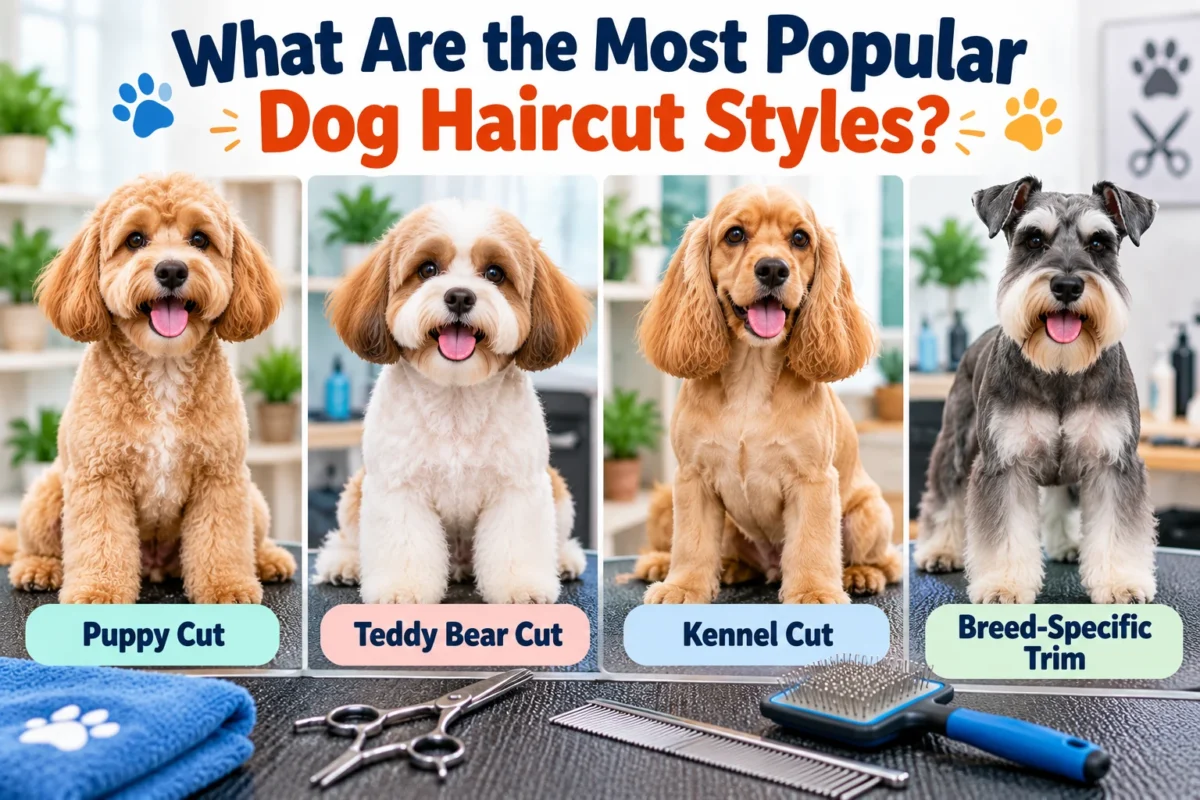
Different coat types suit different styles. Select a haircut that supports your dog’s comfort and practical maintenance needs.
Puppy Cut
A puppy cut generally means a manageable, relatively even trim. The exact length and shape vary between groomers and breeds.
It works well as a maintenance concept for many continuously growing coats. Discuss the desired finish and appropriate length with your groomer.
Teddy Bear Cut
A teddy bear cut features a rounded facial appearance and a soft-looking body coat. It is often requested for Poodles and similar coat types.
Facial shaping requires control and precision near sensitive structures. A professional groomer is the safer choice for this detail work.
Kennel or Utility Cut
A utility cut emphasizes practical maintenance rather than elaborate styling. It is often chosen for dogs that spend considerable time outdoors.
The correct length depends on the coat and climate. Do not assume that the shortest possible cut is best.
Breed-Specific Trim
Some breeds have established trimming patterns and coat-care methods. These styles may involve specialized scissoring, clipping, or hand-stripping.
Choose a groomer experienced with your breed. This helps preserve the intended coat texture and shape.
How Often Should You Give Your Dog a Haircut?
Haircut frequency depends on growth rate, coat length, matting tendency, and your preferred style. A single schedule cannot fit every dog.
Many continuously growing coats receive professional trims roughly every four to eight weeks. Individual dogs may need shorter or longer intervals.
| Coat Category | Haircut Approach | Maintenance Priority |
|---|---|---|
| Continuously growing | Regular scheduled trimming | Brushing and mat prevention |
| Short, smooth | Usually no full haircut | Brushing and skin checks |
| Double-coated | Avoid routine close shaving | Undercoat management |
| Wire-coated | Breed-specific grooming | Texture preservation |
These are general care patterns, not universal schedules. Ask your groomer to recommend an interval based on your dog’s individual coat.
What Dog Haircut Mistakes Should Beginners Avoid?
Most preventable grooming problems begin with rushing, unsuitable tools, or attempting a cut beyond the owner’s skill level. Recognizing these mistakes makes grooming safer.
- Cutting tight mats: Skin can become trapped inside the mat and accidentally cut.
- Using human clippers: Equipment may be unsuitable for a dog’s coat and grooming needs.
- Ignoring blade temperature: Hot blades can irritate or burn skin.
- Clipping over dirty fur: Debris can affect cutting performance.
- Shaving double coats: Unnecessary shaving can damage the coat’s protective function.
- Rushing sensitive areas: Sudden movement can cause serious injuries.
- Forcing an anxious dog: Stress increases handling difficulty and accident risk.
- Skipping maintenance: Dirty or damaged tools can pull hair and irritate skin.
The RSPCA’s grooming guidance highlights the importance of maintained equipment, competent handling, and safe grooming environments.
How Can You Keep Your Dog Calm During a Haircut?
Calm grooming develops through gradual exposure, positive reinforcement, and predictable routines. A dog shouldn’t have to endure a frightening full haircut to learn grooming skills.
Begin with these habits:
- Practice brief handling sessions without cutting.
- Offer treats when your dog remains relaxed.
- Introduce one grooming tool at a time.
- Keep initial sessions short.
- Watch for panting, avoidance, trembling, or attempts to escape.
- Take breaks before your dog becomes overwhelmed.
- Seek professional behavioral or veterinary help for severe grooming anxiety.
Don’t restrain a panicking dog to finish a haircut. Persistent fear often requires a slower training plan.
When Should You Choose a Professional Dog Groomer?
Professional grooming is the better option whenever the haircut involves substantial risk, complicated coat care, or handling difficulties. Even experienced owners benefit from professional support.
Book professional help if your dog has:
- Tight or extensive matting.
- Skin folds that complicate clipping.
- A history of grooming-related injuries.
- Severe fear, aggression, or distress.
- A haircut requiring detailed face or sanitary-area work.
- Specialized breed-specific grooming requirements.
Veterinary attention comes first for painful skin conditions, suspicious growths, or open wounds. Groomers should not be expected to diagnose medical problems.
How Do You Maintain a Dog’s Haircut Between Grooming Sessions?
The best haircut stays manageable when you follow a consistent maintenance routine. Regular coat care also helps you identify changes before they become serious.
Try this simple checklist:
- Daily or frequent brushing: Adjust to coat length and matting risk.
- Weekly skin checks: Examine hidden areas for redness and irritation.
- Regular comb checks: Find small tangles before they tighten.
- Appropriate bathing: Clean the coat based on your dog’s needs.
- Scheduled grooming: Avoid waiting until the coat becomes unmanageable.
- Tool cleaning: Remove collected hair and maintain equipment.
Between haircuts, prioritize comfort over keeping every strand perfectly aligned. The ASPCA’s dog grooming tips offer additional guidance on brushing and preventing mats.
Which Dog Grooming Tools Are Worth Considering in 2026?
For owners preparing a suitable grooming kit, these established tools cover different needs. The right purchase depends on your dog’s coat and whether you’ve learned to use the equipment safely.
Affiliate disclosure: The links below are Amazon search links. Qualifying purchases may earn a commission at no additional cost to you. The selections are based on tool categories and intended uses, not claimed personal testing.
Best for cordless grooming
Wahl Bravura Lithium Ion Clipper
★★★★☆
This cordless grooming clipper offers an adjustable blade system for compatible trimming tasks. Its cordless format is worth considering for owners who have learned safe clipper handling.
Best for demanding clipping tasks
Andis AGC2 2-Speed Clipper
★★★★☆
The Andis AGC2 is a corded, two-speed clipper designed for pet grooming. It makes sense for more extensive clipping work when the user understands blade selection, maintenance, and safe technique.
Best for coat preparation
Safari Self-Cleaning Slicker Brush
★★★★☆
This slicker brush helps remove loose hair and manageable tangles from suitable coat types. It’s a practical preparation tool, although brush size and pin type must match your dog’s skin sensitivity and coat.
Note: Star symbols are illustrative editorial suitability indicators, not verified customer review averages or hands-on performance scores. Confirm model specifications and compatibility before purchasing.
Frequently Asked Questions About Dog Haircuts
Can I give my dog a haircut myself?
You can learn basic coat maintenance at home, but a full haircut requires knowledge of anatomy, coat structure, and safe tool handling. Begin with brushing and calm handling exercises.
Ask a professional groomer to demonstrate trimming techniques before attempting complicated areas or substantial coat removal.
Should I cut my dog’s hair before or after bathing?
Many routine clipper haircuts work best on a clean, fully dry, tangle-free coat. Grooming professionals may handle severely matted coats differently, depending on the dog’s skin and condition.
Never bathe a severely matted dog without first seeking appropriate grooming advice.
How short should I cut my dog’s hair?
The correct length depends on coat type, skin condition, lifestyle, and grooming goals. There is no universally safe blade length for every dog.
Consult a trained groomer about appropriate blade and guard combinations, especially for thin-skinned or double-coated breeds.
Can dog clippers cut a dog’s skin?
Yes. Clipper blades can nick skin, especially around folds, ears, armpits, and other sensitive areas. Heat and repeated friction can also cause irritation.
Stop grooming immediately if an injury occurs. Seek veterinary advice for cuts, bleeding, burns, or persistent discomfort.
What is the easiest dog haircut for beginners?
A simple, professionally demonstrated maintenance trim on a suitable, healthy coat is usually easier than a complicated breed-specific haircut. However, no cutting style is automatically safe for every beginner.
Brushing and coat preparation are better starting skills than attempting a complete haircut without instruction.
Final Thoughts: Start With Safety, Not Style
A good dog haircut guide should help you recognize when to groom at home and when to ask for assistance. Understanding the coat is your first responsibility.
Practice gentle brushing, maintain clean equipment, and keep each session calm. Learn clipping techniques from a trained professional before attempting a full-body haircut.
Most importantly, your dog’s comfort should guide every decision. A healthy, relaxed dog matters far more than a perfectly even trim.


