

Quick Answer
A teddy bear face trim gives your dog a soft, rounded head, full cheeks, and a neatly shaped muzzle. To create this look, brush and comb the facial hair, establish a balanced outline, and carefully shape the longer coat. For safety, have a trained groomer handle cutting close to the eyes and mouth. The American Kennel Club’s home grooming guidance explains why sensitive areas need special care.
Six Steps for a Teddy Bear Face
- Prepare the coat: Gently brush out loose hair and minor tangles.
- Check the face: Look for skin irritation, mats, or eye discharge.
- Clear the eyes: Ask a trained groomer to remove obstructing hair safely.
- Shape the muzzle: Keep the beard rounded rather than sharply squared.
- Blend the cheeks: Maintain enough fullness for a plush appearance.
- Check symmetry: Comb the coat outward and inspect the finished outline.
Essential Safety Tip
- Never force a trim: Stop if your dog pulls away, becomes frightened, or cannot hold still.
Few grooming styles make a dog look as adorable as a rounded teddy bear face. But creating that fluffy appearance involves much more than shortening facial hair.
In this guide, I’ll explain how the style works, which tools help, and where professional grooming becomes essential. You’ll also learn how to maintain the rounded appearance between appointments.
What Is a Teddy Bear Face Trim for Dogs?
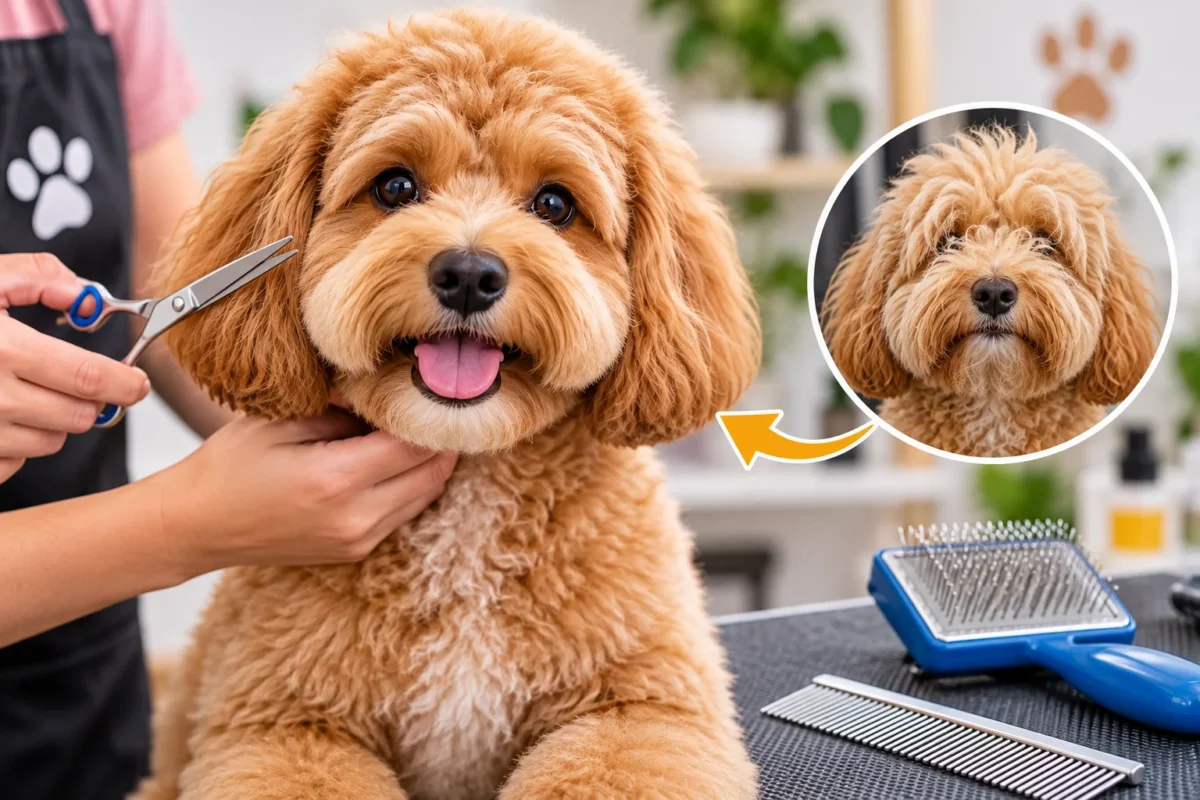
A teddy bear face trim dog style is a grooming technique that creates a rounded, plush-looking face. The groomer blends the forehead, cheeks, muzzle, and sometimes the ears into a soft outline.
The result resembles a stuffed teddy bear. Unlike a closely shaved face, this style preserves visible facial fullness.
What Does a Teddy Bear Face Look Like?
A well-shaped teddy bear face usually has several recognizable features.
- Rounded forehead: The upper head forms a gentle curve.
- Full cheeks: The sides remain softly rounded rather than narrow.
- Plush muzzle: Hair around the nose looks balanced and fluffy.
- Visible eyes: Hair does not obstruct normal vision.
- Blended ears: The ears complement the overall head shape.
- Natural expression: The cut suits the dog’s facial structure.
Not every teddy bear face should look identical. A Poodle’s muzzle differs considerably from a Shih Tzu’s shorter facial structure.
Which Dogs Can Have a Teddy Bear Face Trim?
The style works especially well with coats that can hold a rounded shape. Curly, wavy, and longer silky coats offer different possibilities.
- Toy and Miniature Poodles: Curly hair can support a rounded outline.
- Goldendoodles: Wavy or curly facial hair often creates noticeable fullness.
- Maltipoos: Soft coats can produce a gentle teddy bear appearance.
- Bichon Frises: Dense, fluffy hair offers excellent shaping potential.
- Shih Tzus: Longer facial hair can be shaped around the dog’s shorter muzzle.
- Havanese: Silky hair can create a softer, less sculpted version.
Some short-coated dogs cannot achieve the same effect because they lack sufficient facial hair. The coat’s growth pattern also influences the finished result.
What Tools Do You Need for a Teddy Bear Face Trim?
A safe grooming setup begins with coat preparation tools, not scissors. Proper brushing makes facial hair easier to inspect and shape.
For beginners, I recommend separating routine maintenance tools from professional cutting equipment. That distinction helps prevent unnecessary risks.
| Tool | Main Purpose | Who Should Use It? |
|---|---|---|
| Soft slicker brush | Lift and separate facial hair | Owners using gentle technique |
| Stainless steel comb | Check for tangles and uneven hair | Owners and groomers |
| Rounded-tip grooming shears | Detail trimming where appropriate | Trained users; caution near eyes |
| Curved grooming shears | Create rounded contours | Experienced groomers |
| Thinning shears | Soften visible cutting lines | Experienced groomers |
| Small pet grooming clippers | Shorten selected facial areas | Trained groomers |
Rounded-tip scissors reduce exposed-point hazards but cannot eliminate cutting injuries. Never assume any sharp tool is automatically safe near a moving dog’s eyes.
How Do You Give a Dog a Teddy Bear Face Trim Safely?
The safest approach is to prepare and maintain your dog’s face at home while leaving close facial cutting to a trained groomer. These eight steps explain the full process and identify the tasks needing professional skill.
Step 1: Prepare a Safe Grooming Area
Choose a quiet, well-lit place with a stable, nonslip surface. Keep grooming equipment within reach before bringing your dog into position.
- Remove unnecessary distractions.
- Use a nonslip grooming mat.
- Keep sharp tools outside your dog’s reach.
- Offer calm praise and suitable rewards.
- Allow breaks whenever needed.
A second adult may help supervise a calm dog, but nobody should forcibly hold its head for cutting. Professional handling is preferable when secure positioning becomes difficult.
Step 2: Brush and Comb the Facial Hair
Start with gentle brushing along the cheeks and outer facial coat. Avoid dragging a brush against delicate skin or across the eyes.
Use a suitable comb to check for hidden tangles. If a knot resists gentle separation, do not pull harder.
- Brush in small sections.
- Work gradually from the hair ends toward the roots.
- Avoid tugging around the lips and ears.
- Stop when brushing causes discomfort.
Professional assistance is best for tight facial mats. Cutting tangled hair with scissors can injure skin concealed inside the knot.
Step 3: Clean and Inspect the Face
Use a soft, slightly damp cloth to gently remove ordinary surface debris. Keep moisture away from the eyes, nostrils, and ear canals.
Look carefully for redness, swelling, sores, or unusual discharge. Contact your veterinarian if you notice concerning symptoms.
The ASPCA’s dog grooming guidance provides useful information about routine eye and coat care.
Step 4: Establish the Rounded Head Shape
A trained groomer first studies your dog’s natural head shape. The goal is a balanced curve rather than a perfectly geometric circle.
The groomer then combs the prepared coat outward to reveal uneven areas. Controlled shaping removes excess length while preserving suitable fullness.
- Keep the forehead softly rounded.
- Preserve enough cheek hair for balance.
- Avoid creating flat areas on the sides.
- Check the shape from multiple angles.
At home, you can evaluate this outline through combing and photographs. Leave major shaping cuts to someone trained in safe facial scissoring.
Step 5: Carefully Clear Hair Around the Eyes
Visible eyes are important for a practical teddy bear trim. Hair should not continually brush the eyeball or obstruct your dog’s vision.
However, cutting close to the eyes is among the riskiest grooming tasks. A sudden head movement can cause a serious injury.
- Do not point scissors toward an eyeball.
- Never use household scissors around the eyes.
- Avoid pulling eyelids or facial skin.
- Do not cut while your dog struggles.
- Ask a trained groomer to perform close eye trimming.
For routine maintenance, gently comb hair away from the eyes without forcing the dog. Persistent tearing, squinting, or redness requires veterinary attention.
Step 6: Shape the Muzzle and Beard
The rounded muzzle is one of the teddy bear style’s defining features. It needs enough hair to look plush without interfering with eating or comfort.
Professional groomers shape the outer beard and muzzle into a soft curve. They also preserve a practical opening around the lips and nose.
- Keep the nose unobstructed.
- Avoid excessive bulk over the mouth.
- Preserve a gentle rounded silhouette.
- Blend the beard with the cheeks.
- Check that the dog can eat comfortably.
Never insert cutting tools into the mouth or trim blindly beneath facial folds. Short-muzzled dogs need particular care because their facial anatomy provides limited working space.
Step 7: Blend the Cheeks and Ears
The cheeks connect the rounded muzzle with the upper head. Removing too much hair here can make the face look narrow.
Groomers typically preserve cheek fullness and blend the surrounding hair gradually. Ear length depends on breed, coat condition, and the desired appearance.
Some teddy bear trims feature rounded, compact ears. Others leave longer ears that frame the face.
Step 8: Check the Finished Shape
After shaping, the groomer combs the facial coat outward again. This reveals any remaining irregularities and helps confirm a balanced outline.
Check the finished face from the front and both sides.
- Are both cheeks reasonably balanced?
- Can the dog see comfortably?
- Is the muzzle clear of the nostrils?
- Are the ears sitting naturally?
- Does the dog appear relaxed?
Perfect symmetry is not necessary. Comfort, clear vision, and a natural appearance matter more.
What Is the Difference Between a Teddy Bear Face Trim and a Puppy Cut?

A teddy bear face trim focuses on the rounded appearance of the head and muzzle. A puppy cut usually describes a simple, manageable overall haircut.
These terms are not standardized across grooming salons. Show reference photographs instead of relying on the haircut name alone.
| Feature | Teddy Bear Face | Puppy Cut |
|---|---|---|
| Main focus | Rounded facial shape | Manageable overall coat |
| Muzzle | Typically full and rounded | Varies by preference |
| Head | Soft circular outline | May be rounded or natural |
| Body length | Can vary independently | Usually requested as a practical length |
| Maintenance | Regular facial brushing and shaping | Depends on coat and chosen length |
You can combine these styles. For example, a dog may have a shorter puppy-cut body with a fuller teddy bear face.
How Short Should a Teddy Bear Face Be?
There is no universal facial hair length for this haircut. The best length depends on muzzle shape, coat density, and how well the hair stands up.
For a dog with a longer curly coat, a groomer may preserve more muzzle fullness. A fine silky coat may need a shorter, softer outline.
What Determines the Right Length?
- Coat texture: Curly coats often hold a rounded shape better than flat silky coats.
- Facial anatomy: Short and long muzzles require different proportions.
- Eye clearance: Hair must not block vision or irritate the eyes.
- Matting: Tangled coats may need a shorter practical style.
- Home maintenance: Longer hair generally needs more brushing.
In practice, I would prioritize a coat length the owner can comfortably maintain. A beautiful face trim loses its appeal when hidden tangles develop underneath.
What Teddy Bear Face Trimming Mistakes Should You Avoid?
The most common problems involve removing too much hair, ignoring tangles, or trying to trim sensitive areas without proper training. Most are preventable with careful preparation.
1. Cutting Too Close to the Eyes
Eye injuries can occur when scissors or clipper blades come too close to the eyeball. Even a calm dog can move unexpectedly.
Have a trained groomer handle close trimming. Do not attempt it simply because the dog tolerated brushing.
2. Removing Too Much Cheek Hair
Short cheeks can make the head appear narrow or pointed. This changes the soft silhouette that defines the style.
Ask your groomer to maintain fuller cheeks while keeping the coat manageable.
3. Trimming a Matted Face With Scissors
Mats often pull skin into the tangled hair. Cutting them blindly can cause serious injuries.
According to VCA Animal Hospitals’ veterinary care resources, severe matting requires special caution and may need professional attention.
4. Making the Muzzle Too Bulky
An oversized beard may collect food, trap moisture, or interfere with normal activities. More facial hair does not always mean a better teddy bear look.
Balance fullness with cleanliness and comfort. Keep the mouth and nose clear.
5. Forcing a Nervous Dog to Stay Still
Fearful dogs may jerk, struggle, or bite during facial grooming. Forcing the procedure increases the chance of injury.
Stop immediately when stress becomes significant. Gradual handling practice or professional assistance offers a safer alternative.
6. Copying Another Dog’s Haircut Exactly
A photograph may show a different breed, muzzle length, or coat type. Trying to reproduce every detail can lead to unrealistic expectations.
Use photographs as inspiration, then adapt the style to your own dog’s structure.
How Can You Maintain a Teddy Bear Face Between Grooming Sessions?
Regular brushing is the easiest way to preserve the rounded appearance. Consistent coat care also helps reveal tangles before they become severe.
Your maintenance schedule should reflect the coat, not a rigid universal rule.
Daily or Frequent Face Care
- Check the eyes for discharge or irritation.
- Remove ordinary food debris from the beard with a damp cloth.
- Gently separate facial hair with an appropriate comb.
- Inspect behind the ears for knots.
- Keep the muzzle clean and dry.
Weekly Coat Maintenance
Brush the facial coat thoroughly enough to identify developing tangles. Dense curly coats may require daily attention rather than weekly brushing.
Check whether your comb can move gently through the coat without pulling. If it catches on a tight knot, seek appropriate grooming help.
When Should You Schedule Another Trim?
Many dogs benefit from professional grooming approximately every four to eight weeks. The ideal interval varies with coat growth, tangling, and the haircut’s length.
Some dogs need earlier facial maintenance because hair obstructs their vision. Others can maintain a comfortable shape for longer.
When Should You Stop Grooming and Contact a Professional?
Stop grooming whenever the situation becomes unsafe or your dog shows significant distress. Facial injuries can occur quickly, especially around the eyes and lips.
Seek a professional groomer for tasks that require specialized cutting skill.
- Severe or tight facial matting
- Repeated head movement during trimming
- Fear, growling, snapping, or struggling
- Hair that needs cutting extremely close to the eyes
- Complex facial folds or difficult muzzle anatomy
- Uncertainty about safe clipping techniques
Contact your veterinarian for eye redness, squinting, swelling, bleeding, wounds, or suspected injury. An eye injury needs prompt veterinary assessment rather than another grooming attempt.
The AKC professional grooming educational standards emphasize equipment safety, humane handling, and proper attention to sensitive areas.
Which Grooming Tools Help Maintain a Teddy Bear Face?
Good grooming tools support the teddy bear appearance without requiring frequent home haircuts. For most owners, I would start with gentle brushing and combing equipment.
These are two specific tools worth comparing for suitable coat types. The scores below are editorial suitability assessments, not verified customer-review ratings.
🏆 Best for Dense Curly Coats
Chris Christensen Big G Slicker Brush
★★★★☆ 4.5/5 — Editorial Suitability
The Big G uses 27 mm pins designed for longer, dense coats and coat fluffing. I would consider a suitably sized version for a curly-coated dog that needs regular detangling, while avoiding pressure on delicate facial areas.
✨ Best for Comb Checks
Chris Christensen 5-Inch Face and Feet Buttercomb
★★★★☆ 4.5/5 — Editorial Suitability
This compact professional grooming comb is intended for smaller grooming areas. I would choose a face-sized comb for gently checking loose tangles and arranging outer facial hair without reaching for scissors.
Affiliate disclosure: As an Amazon Associate, qualifying purchases made through eligible links may earn a commission at no additional cost to you. Product availability and prices can change.
Frequently Asked Questions About Teddy Bear Face Trims
Can I Give My Dog a Teddy Bear Face Trim at Home?
You can safely handle routine brushing, combing, and gentle facial cleaning at home. However, the actual haircut involves sharp tools around sensitive areas.
If you lack facial grooming training, let a professional handle cutting near the eyes, mouth, and skin folds. Start with coat maintenance rather than attempting a complete facial haircut.
How Often Does a Teddy Bear Face Need Trimming?
Many dogs need a professional grooming visit every four to eight weeks, although some require more frequent facial tidying. Coat growth, haircut length, and matting determine the ideal interval.
Arrange an earlier appointment if hair starts obstructing the eyes or interfering with comfortable eating.
Is a Teddy Bear Face Trim Suitable for a Goldendoodle?
Yes. Many Goldendoodles have wavy or curly facial coats that can support a rounded teddy bear shape.
The exact result depends on coat texture and muzzle structure. Regular brushing is particularly important because longer doodle facial hair can develop tangles.
What Is the Difference Between a Teddy Bear Face and a Round Face Trim?
Both terms describe a rounded facial outline, and groomers may use them interchangeably. A teddy bear face generally emphasizes a soft muzzle, full cheeks, and a plush expression.
Because terminology varies, provide a reference photograph and discuss eye clearance, muzzle fullness, and ear shape with your groomer.
Will a Teddy Bear Face Trim Work on a Shih Tzu?
Yes. A Shih Tzu can have a soft, rounded teddy bear face when its facial hair is shaped appropriately.
However, its shorter muzzle and prominent eyes require special caution. Ask a trained groomer to keep the eyes and nostrils clear while maintaining a comfortable, practical haircut.
Final Thoughts: Is a Teddy Bear Face Trim Right for Your Dog?
A teddy bear face trim can give your dog a soft, cheerful appearance while keeping facial hair manageable. The best version respects your dog’s coat type, anatomy, and grooming tolerance.
Focus on gentle brushing, clear vision, a clean muzzle, and regular professional maintenance. A comfortable dog with a naturally rounded face looks better than one subjected to an unsafe pursuit of perfection.
Before the next grooming appointment, save a reference photograph and discuss your preferred cheek fullness, muzzle shape, and ear length. Clear communication is the simplest way to get the teddy bear look you want.


