Quick Answer
Dog deshedding is the process of removing loose, dead fur before it falls around your home. The safest approach combines regular brushing, a coat-appropriate deshedding tool, and gentle grooming techniques. Deshedding cannot stop natural shedding, but it can help manage loose hair, particularly in double-coated dogs. The ASPCA’s dog grooming guidance also recommends regular brushing to help manage shedding.
How to deshed your dog safely:
- Identify the coat: Check whether your dog has a short, long, single, or double coat.
- Choose the right brush: Match the tool to coat length, density, and skin sensitivity.
- Remove tangles: Gently loosen knots before using an undercoat tool.
- Brush gently: Work in the direction of hair growth without pressing into the skin.
- Check the skin: Stop if you notice redness, pain, irritation, or discomfort.
- Maintain a routine: Adjust grooming frequency to your dog’s shedding pattern.
If your dog leaves fur on the couch, carpets, and clothes, you’re probably looking for a practical way to control it. Dog deshedding can make a noticeable difference when you choose the right tools and avoid brushing too aggressively.
In this guide, I’ll explain how deshedding works, which tools suit different coats, and how to build a comfortable grooming routine. I’ll also cover common mistakes and signs that shedding needs veterinary attention.
What Is Dog Deshedding?
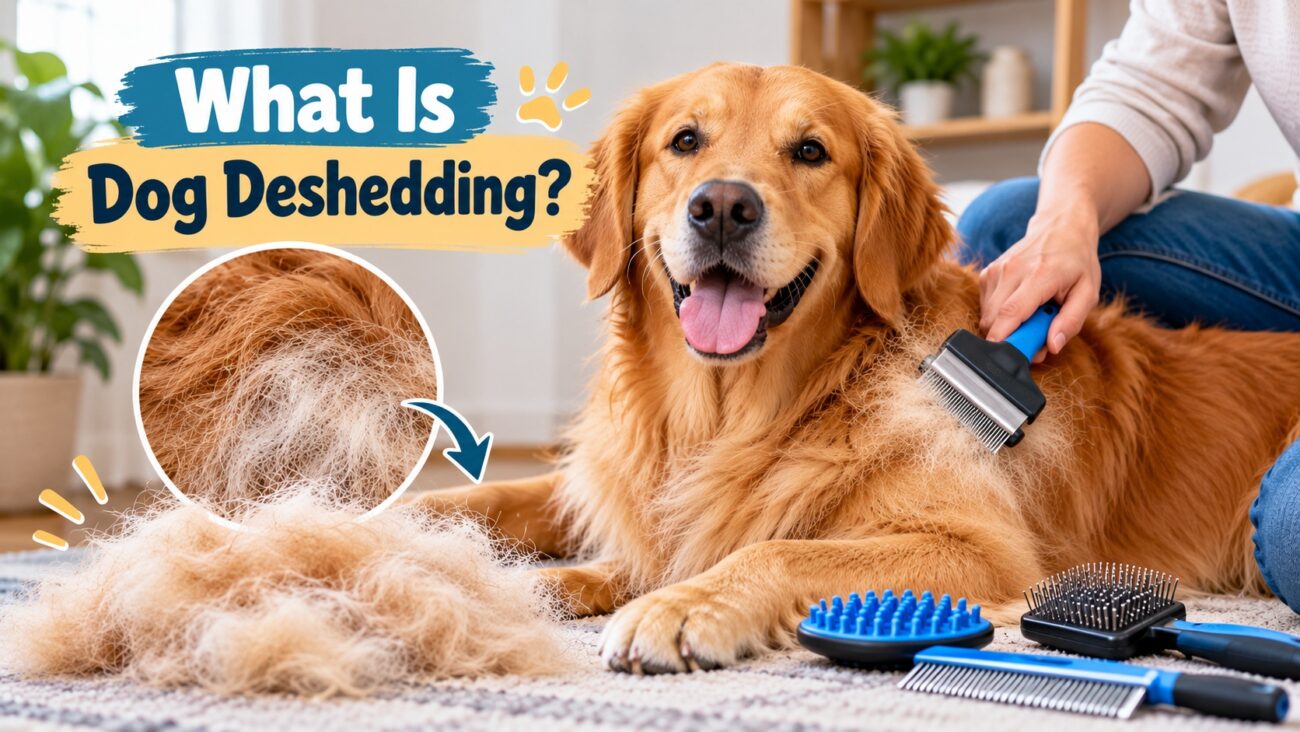
Dog deshedding is a grooming method that removes loose hair from a dog’s coat, especially dead undercoat fur. Unlike shaving or trimming, proper deshedding targets hair that is already ready to come away.
Dogs naturally replace old hairs as part of their coat growth cycle. Deshedding helps collect some of those hairs before they end up throughout your home.
- Loose hair removal: Collects dead fur from the coat.
- Undercoat maintenance: Helps prevent loose undercoat from accumulating in dense coats.
- Tangle prevention: Supports regular grooming that limits knots and matting.
- Skin inspection: Creates opportunities to notice irritation, parasites, or unusual changes.
- Household cleanliness: Reduces some of the fur left on furniture and clothing.
Deshedding does not permanently stop a dog from shedding. A healthy coat continues growing and releasing hair throughout the dog’s life.
Why Do Dogs Shed So Much Hair?
Dogs shed because their hair grows, ages, and is replaced naturally. The amount depends on genetics, coat type, seasonal changes, environment, and overall health.
Some dogs release small amounts throughout the year. Others experience periods when large amounts of undercoat become loose.
Seasonal Shedding
Many double-coated breeds experience heavier shedding during seasonal coat changes. Owners often call this process “blowing coat.”
During these periods, loose undercoat may collect in visible tufts. More frequent gentle grooming can help manage it.
Year-Round Shedding
Dogs living indoors may shed fairly consistently because their environment experiences fewer seasonal changes. Breeds such as Labrador Retrievers can also shed throughout the year.
Regular maintenance often works better than waiting for heavy fur buildup. Even brief brushing sessions can help.
Shedding Caused by Health Problems
Unusual hair loss is different from normal shedding. Allergies, parasites, infections, and some hormonal disorders can affect the coat.
Watch for these warning signs:
- Sudden bald patches or obvious thinning
- Redness, scabs, or irritated skin
- Persistent scratching or licking
- Strong skin odors or unusual flaking
- Rapid changes in coat appearance
Contact your veterinarian if these symptoms appear. More brushing will not resolve an underlying medical condition.
Which Dogs Benefit Most From Deshedding?

Dogs with dense undercoats often benefit most from specialized deshedding. However, grooming tools should always match the individual coat rather than the breed name alone.
Double-Coated Dogs
Double-coated dogs have protective outer hairs and a softer insulating undercoat. Examples include Siberian Huskies, German Shepherds, Golden Retrievers, and many Corgis.
Their loose undercoat can become trapped beneath the outer layer. An appropriate undercoat rake or deshedding tool may help remove it.
Short-Haired Shedding Dogs
Short-haired dogs can release surprising amounts of fur. Beagles, Pugs, and Boxers may benefit from rubber curry brushes or grooming mitts.
These tools often provide a gentler starting point than aggressive metal-edged tools. Always consider skin sensitivity and coat density.
Long-Haired Dogs
Longer coats need careful tangle prevention as well as loose hair removal. A slicker brush and metal comb may be more important than a blade-style deshedder.
For thick, long double coats, a suitable undercoat rake can help. Severe mats need professional attention rather than forceful brushing.
Low-Shedding and Curly-Coated Dogs
Poodles and similar low-shedding breeds generally need regular combing, trimming, and mat prevention. Aggressive undercoat deshedding tools may be unsuitable.
These dogs can still develop painful tangles. Their grooming needs simply differ from those of heavy-shedding breeds.
Dog Deshedding Tools: Which One Should You Use?
The best deshedding tool depends on coat length, density, and skin sensitivity. No single brush suits every dog.
Here is a practical comparison of common tools.
| Tool | Best For | Main Benefit | Important Caution |
|---|---|---|---|
| Undercoat rake | Medium or long double coats | Lifts loose undercoat | Avoid pulling through tight mats |
| Slicker brush | Long, curly, or dense coats | Removes loose hair and small tangles | Excessive pressure can scratch skin |
| Rubber curry brush | Short, smooth coats | Loosens surface fur | Avoid vigorous rubbing on irritated areas |
| Metal deshedding tool | Suitable shedding coats with undercoat | Collects loose undercoat efficiently | Overuse may irritate skin or damage coat |
| Steel comb | Long coats and finishing checks | Finds hidden tangles | Do not force through knots |
I recommend starting with a gentle grooming tool before considering an aggressive deshedding edge. A comfortable dog and an undamaged coat matter more than collecting the largest pile of fur.
How Do You Deshed a Dog Step by Step?
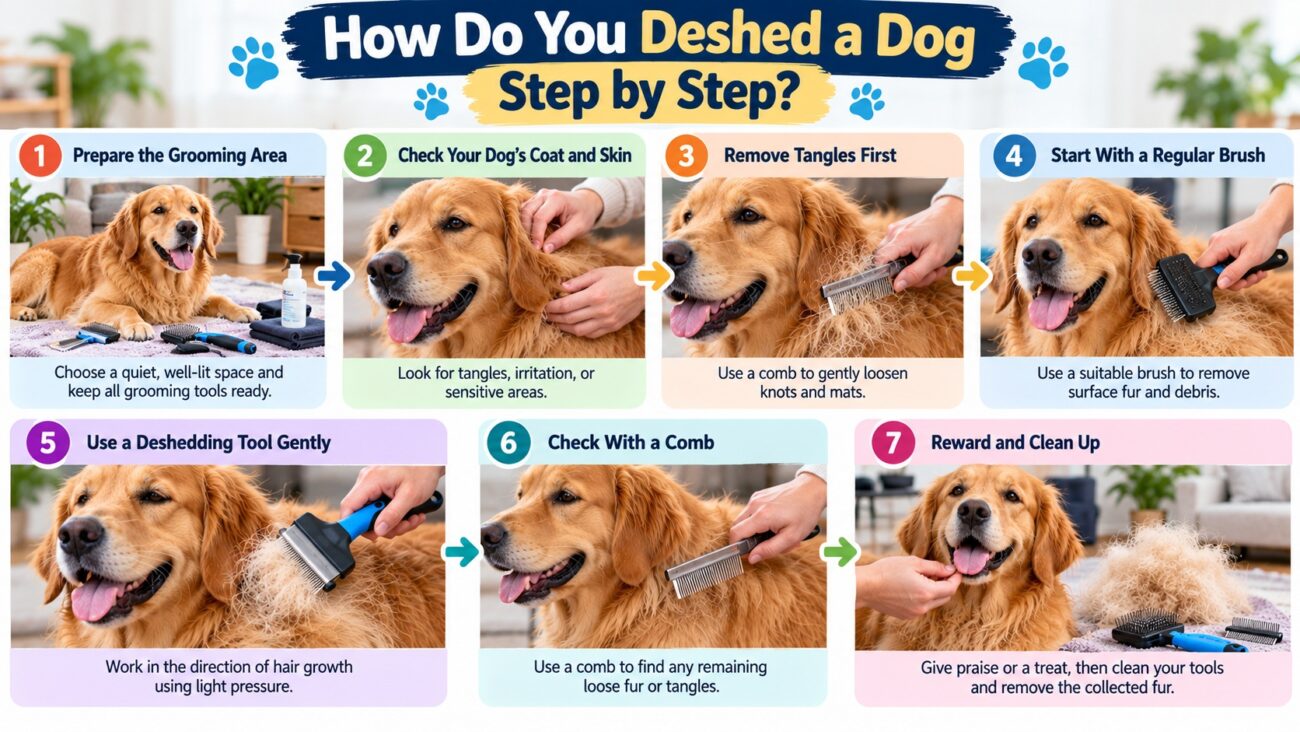
Start with a calm dog, a suitable brush, and a comfortable grooming area. Work slowly and check the skin throughout the session.
This seven-step method is a practical starting routine for home grooming.
Step 1: Prepare the Grooming Area
Choose a quiet location with good lighting and a nonslip surface. Keep grooming tools, a towel, and small treats within reach.
Outdoor grooming can make cleanup easier when weather conditions are comfortable. Never leave a dog unattended on an elevated grooming surface.
Step 2: Inspect Your Dog’s Coat and Skin
Run your hands gently through the fur before brushing. Look for mats, sensitive areas, cuts, parasites, and skin irritation.
Pay attention to the neck, shoulders, chest, hindquarters, and behind the ears. These areas can collect tangles or loose undercoat.
Step 3: Remove Small Tangles First
Use your fingers or an appropriate comb to loosen minor tangles. Hold the fur close to the skin when possible to reduce pulling.
Never drag a deshedding blade through a tight mat. Ask a groomer for help when knots are extensive or painful.
Step 4: Begin With a Regular Brush
Use a coat-appropriate brush to remove surface debris and loose hair. This also helps you identify areas that need closer attention.
Keep your movements slow and predictable. Reward calm behavior throughout the session.
Step 5: Use the Deshedding Tool Gently
For a suitable coat, move the deshedding tool in the direction of hair growth. Follow the manufacturer’s directions and use minimal pressure.
- Work on small sections rather than the entire coat at once.
- Avoid repeatedly scraping the same area.
- Keep metal edges away from irritated skin.
- Use extra care around bony areas and sensitive body parts.
- Stop immediately if the dog shows pain or the skin becomes red.
A large pile of collected fur does not automatically mean the session was better. Gentle, controlled removal is the goal.
Step 6: Check With a Comb
Use a suitable comb to inspect longer sections of the coat. The comb should move without significant resistance or painful pulling.
Do not force the comb through remaining mats. Professional help is safer for stubborn tangles.
Step 7: Reward and Clean Up
Finish with praise, treats, or a short break. A positive ending helps make future grooming easier.
Remove fur from your tools and clean them according to their instructions. Check the coat once more for irritation.
How Often Should You Deshed Your Dog?
Deshedding frequency depends on coat type, shedding intensity, and the tool being used. Regular gentle brushing may be appropriate more often than specialized metal-edge deshedding.
Use these starting points, then adjust according to your dog’s comfort and coat condition.
- Short, smooth coats: Try gentle brushing once or twice weekly, increasing when needed.
- Medium double coats: Brush several times weekly and increase frequency during heavy shedding.
- Heavy double coats: Some dogs benefit from daily gentle brushing during seasonal coat changes.
- Long or curly coats: Comb regularly to prevent mats, following breed-specific grooming needs.
- Specialized deshedding edges: Follow manufacturer guidance rather than using them automatically every day.
For example, FURminator generally recommends its undercoat deshedding tool one or two times weekly for suitable dogs. Its guidance describes sessions of roughly 10–20 minutes, adjusted to coat condition and individual needs.
That is product-specific guidance, not a universal rule for every brush. Shorter sessions may be necessary for sensitive dogs.
Should You Bathe Your Dog Before Deshedding?
A bath can help loosen dirt and dead fur, but every dog does not need bathing before deshedding. The right sequence depends on coat condition and the manufacturer’s grooming instructions.
For many dogs, a useful approach is to remove obvious tangles, bathe when necessary, dry thoroughly, and brush afterward.
Before the Bath
Check for mats and tangles before wetting the coat. Water can make some tangled coats more difficult to manage.
Use a regular brush to remove accessible loose fur. Do not aggressively brush sensitive skin.
During the Bath
Use a dog-appropriate shampoo and lukewarm water. Massage gently rather than scrubbing tangled areas.
Rinse thoroughly so shampoo residue does not remain against the skin. Use conditioner when suitable for your dog’s coat and skin.
After the Bath
Dry the coat properly, particularly when the dog has a dense undercoat. Damp fur trapped near the skin may contribute to discomfort.
Once completely dry, follow with a suitable brush or deshedding tool. Avoid hot dryer settings and keep airflow comfortable.
Can Deshedding Damage a Dog’s Coat?
Yes. Incorrect tools, excessive pressure, or repeated brushing can irritate the skin and damage healthy hair.
Deshedding should remove loose fur without scraping the skin or forcibly extracting attached hairs. Stop whenever discomfort appears.
Common Dog Deshedding Mistakes
- Using excessive pressure: Metal edges may scratch or irritate the skin.
- Brushing one spot repeatedly: This can cause friction and discomfort.
- Choosing the wrong tool: Some deshedding edges are unsuitable for curly or low-shedding coats.
- Pulling through mats: Tight knots can be painful and may require professional removal.
- Grooming irritated skin: Existing sores or inflammation can worsen.
- Ignoring body language: Repeated attempts to escape or signs of pain mean the session should stop.
- Shaving a double coat unnecessarily: Shaving may interfere with its protective functions and regrowth.
For double-coated breeds, preserving healthy guard hairs is important. Consult a veterinarian or professional groomer before considering extensive coat removal.
Is Professional Dog Deshedding Worth It?
Professional deshedding can be helpful for dogs with dense coats, heavy seasonal shedding, or difficult grooming needs. A groomer may have suitable equipment and experience handling thick undercoats.
However, professional grooming does not replace regular home maintenance. Loose hair continues accumulating between appointments.
What Happens During Professional Deshedding?
A professional session may include coat inspection, brushing, bathing, conditioning, controlled drying, and undercoat removal. The exact process depends on the dog’s coat and tolerance.
Some groomers use high-velocity dryers to help release loose undercoat. Those tools require careful handling, especially near sensitive areas.
When Should You Choose a Professional?
- Your dog’s coat contains extensive tangles or compacted undercoat.
- Home brushing causes distress or resistance.
- You cannot safely reach certain areas.
- Your dog needs breed-specific coat maintenance.
- You want guidance on selecting appropriate tools.
Professional grooming is not a substitute for veterinary care. Skin infections, sudden hair loss, or painful lesions require veterinary assessment.
How Can You Reduce Dog Shedding Around the House?
Regular brushing is the most useful starting point for controlling loose fur at home. Cleaning habits and appropriate coat care support the routine.
Focus on these practical actions:
- Brush consistently: Collect loose fur before it spreads through the house.
- Vacuum frequently: Focus on rugs, upholstered furniture, and pet resting areas.
- Wash dog bedding: Follow the manufacturer’s washing instructions.
- Maintain balanced nutrition: Feed a complete diet appropriate for your dog’s life stage.
- Support skin health: Ask your veterinarian about persistent dryness, itching, or unusual shedding.
- Keep grooming comfortable: A sustainable routine works better than occasional aggressive brushing.
Avoid relying on supplements that promise to eliminate shedding. Healthy dogs naturally release fur, and supplements should address a genuine nutritional or medical need.
Dog Deshedding Tools I Would Consider
If you’re choosing grooming equipment, start with your dog’s coat type rather than a product’s popularity. These three established options serve different grooming needs.
The suitability scores below are editorial comparisons based on intended uses and features, not hands-on tests or verified customer review averages.
🏆 Best for suitable shedding undercoats
FURminator Undercoat deShedding Tool for Dogs
★★★★☆ 4.5/5
This tool uses a stainless steel deshedding edge to collect loose undercoat. It comes in coat-length and dog-size variations, making proper selection especially important.
I’d consider it for an appropriate shedding coat, but not for aggressive daily brushing or sensitive, irritated skin.
🐕 Best for dense, longer coats
Safari by Coastal Double Row Undercoat Rake with Rotating Pins
★★★★☆ 4.4/5
This rake features two rows of rotating pins designed for thick coats. Its rounded pin tips and long-coat focus make it worth considering for dense undercoat maintenance.
I would prioritize this style for a long double coat that needs careful undercoat work without unnecessary tugging.
✨ Best for regular slicker brushing
Safari by Coastal Dog Self-Cleaning Slicker Brush
★★★★☆ 4.3/5
This slicker-style brush is intended for general coat maintenance and loose hair removal. A self-cleaning mechanism can make clearing accumulated fur more convenient.
I’d consider it for regular brushing on a suitable coat, using light pressure and checking frequently for skin discomfort.
Affiliate disclosure: As an Amazon Associate, we may earn from qualifying purchases made through eligible links, at no additional cost to you. Product suitability scores are editorial assessments, not verified purchaser ratings.
Frequently Asked Questions About Dog Deshedding
Does deshedding actually reduce dog shedding?
Deshedding helps remove loose fur before it falls around your home. It does not change the normal hair growth cycle or permanently prevent shedding. Regular brushing and suitable tools can make loose fur easier to manage, particularly during seasonal undercoat changes.
Can I deshed my dog every day?
Some dogs benefit from daily gentle brushing during heavy shedding periods. However, specialized metal-edge deshedding tools should not automatically be used every day. Follow the manufacturer’s recommended frequency, watch for irritation, and adapt your routine to the dog’s coat and skin condition.
Is deshedding painful for dogs?
Proper deshedding should not be painful. Discomfort may occur when tools pull on tangled fur, scrape the skin, or are used with excessive pressure. Stop grooming if your dog cries, repeatedly pulls away, or develops redness. Seek professional help for difficult mats.
Should you deshed a wet or dry dog?
The answer depends on the grooming tool and coat condition. Many metal-edge deshedding tools are designed for completely dry coats. Some undercoat rakes can be used on wet or dry fur according to their manufacturers. Always check the specific tool’s directions before use.
Can you use a deshedding tool on a puppy?
Puppies should become comfortable with gentle grooming early, but aggressive deshedding tools may be inappropriate for their developing coats. Start with a soft puppy-safe brush and brief, positive sessions. Ask a groomer or veterinarian when more specialized equipment becomes suitable.
Final Thoughts: What Is the Best Way to Deshed a Dog?
The best dog deshedding routine is gentle, consistent, and suited to the individual coat. Regular brushing, suitable tools, and careful skin checks help manage loose fur without unnecessary discomfort.
Start with short grooming sessions and increase only when your dog remains comfortable. If excessive shedding comes with bald patches, itching, or inflammation, contact your veterinarian rather than brushing harder.
A healthy coat is the priority. Less loose fur around the home is a welcome benefit.