
Quick Answer
To deshed a dog blowing coat, remove loose undercoat with gentle, section-by-section brushing using a suitable slicker brush, undercoat rake, and finishing comb. Start with a dry coat, loosen releasing fur without pulling, bathe only when needed, and dry the undercoat thoroughly. Short, frequent grooming sessions are safer than aggressive brushing. Never shave a healthy double coat simply to stop shedding.
When your dog starts blowing coat, loose fur can appear everywhere. Soft tufts may stick out around the neck, hindquarters, and shoulders, while ordinary brushing seems to collect an endless supply of hair.
This heavy seasonal shedding is common in double-coated dogs. The goal is not to remove every hair in one grooming session. It is to help already-loose undercoat come away comfortably while preserving healthy guard hairs and protecting the skin.
How Can You Tell Your Dog Is Blowing Coat?
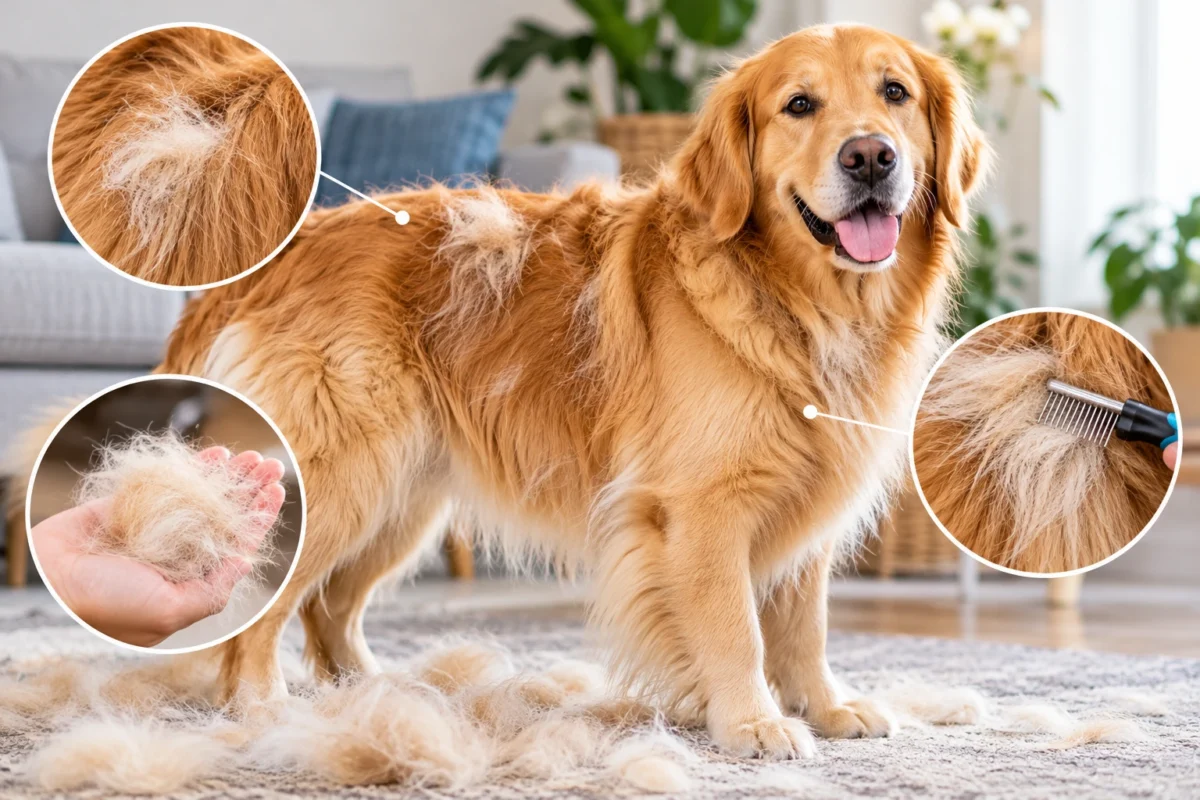
A dog is blowing coat when large amounts of seasonal undercoat loosen and shed over a relatively concentrated period. Unlike everyday shedding, coat blowing may produce visible clumps of soft fur.
Common signs include:
- Soft, fluffy tufts protruding through the outer coat.
- Much more loose hair appearing during normal brushing.
- Dense undercoat coming away easily in sections.
- Extra shedding around the neck, chest, thighs, and tail.
- A temporarily uneven appearance as loose undercoat releases.
Siberian Huskies, German Shepherds, Golden Retrievers, Samoyeds, Corgis, and many other double-coated breeds can experience noticeable coat blows.
The important distinction is between loose seasonal undercoat and abnormal hair loss. Healthy coat blowing should not produce inflamed skin, painful sores, or unexplained bald patches.
If you want a closer explanation of the coat structure, see our double-coat deshedding guide.
What Tools Do You Need for a Dog Blowing Coat?
The most useful tools reach loose undercoat without scraping the skin or cutting healthy outer hair. Choose them according to coat length and density rather than the amount of fur a product promises to remove.
| Tool | Best Use | Precaution |
|---|---|---|
| Slicker brush | Loose hair and light tangles | Avoid repeated scraping |
| Undercoat rake | Dense, releasing undercoat | Use gentle strokes |
| Metal comb | Checking remaining tangles | Never force through mats |
| Grooming mitt | Gentle surface grooming | May not reach thick undercoat |
The American Kennel Club’s guide to dog brushes explains how different brush types suit different coat structures.
You do not need every tool in the table. A suitable brush, rake, and comb are enough for many double-coated dogs.
How to Deshed a Dog Blowing Coat: 7 Safe Steps
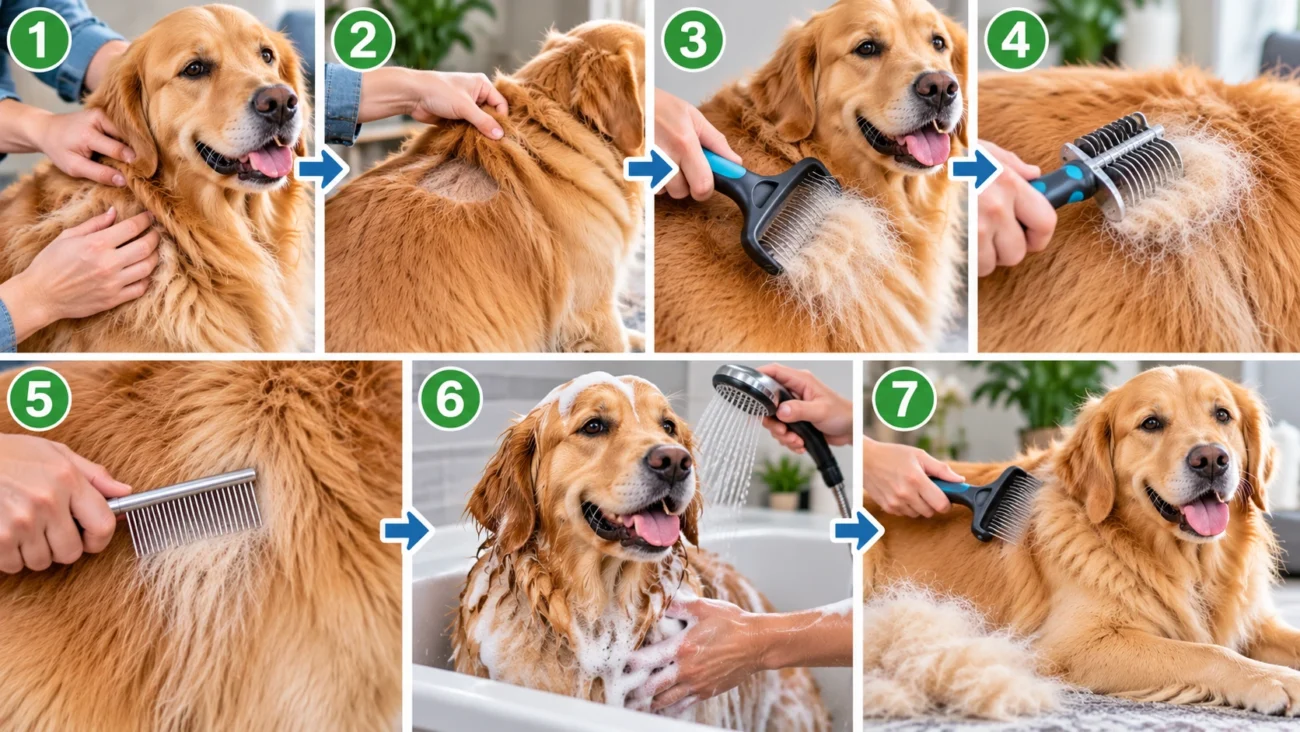
Start with a comfortable grooming area and work through the coat systematically. These steps are designed for dogs with healthy skin and loose seasonal undercoat, not severe matting or unexplained hair loss.
Step 1: Inspect the Coat and Skin
Before brushing, part the fur with your fingers and look at the skin underneath.
Check for:
- Redness, sores, scabs, or sensitive areas.
- Dense mats or compacted hair.
- Ticks, fleas, or unusual debris.
- Areas where touching causes discomfort.
Pay attention to the armpits, behind the ears, and the base of the tail. These areas can hide tangles that make brushing uncomfortable.
If the coat is healthy, begin grooming. If you find painful mats or inflamed skin, address those problems before attempting intensive deshedding.
Step 2: Divide the Coat Into Small Sections
Working in sections is more effective than repeatedly brushing the visible surface.
Start around the shoulders or upper back, where many dogs tolerate handling comfortably. Lift a manageable layer of fur and expose the undercoat beneath it.
Work gradually through the neck, chest, sides, back, hindquarters, and tail. This approach is often called line brushing.
For a more detailed explanation, our step-by-step double-coated dog brushing guide covers how to reach hidden undercoat safely.
Step 3: Remove Surface Hair Gently
Begin with a suitable slicker or pin brush to remove surface-level loose hair and manageable tangles.
Use controlled strokes following the natural direction of hair growth. Avoid pressing the brush against the skin.
Clean accumulated fur from the brush frequently. A packed brush may catch hair instead of moving smoothly through it.
If the dog becomes restless, pause and reward calm behavior. Deshedding should be cooperative, not a struggle.
Step 4: Lift Loose Undercoat With a Rake
Once the surface is manageable, use an undercoat rake appropriate for your dog’s coat length and density.
Guide it gently through small sections, collecting the soft hair that has already loosened. Never force the rake through resistance.
Heavy shedding often concentrates around the neck ruff, shoulders, rear thighs, and tail base. Give these areas attention without repeatedly scraping the same patch.
A common mistake is treating every hair that comes out as proof that more brushing is needed. Stop when loose fur collection slows or the tool starts pulling.
Step 5: Check Your Work With a Comb
For medium and long double coats, carefully pass a suitable metal comb through each completed section.
The comb helps identify hidden tangles and remaining loose undercoat.
If it catches, do not pull harder. Separate the fur, find the obstruction, and work gently with an appropriate brush.
Tight mats close to the skin should be evaluated by a professional groomer because pulling them can cause pain and skin injury.
Step 6: Bathe and Dry When Needed
A bath can help remove released hair, dirt, and coat buildup, but every coat blow does not require an immediate bath.
If bathing is appropriate, remove easy tangles first. Use lukewarm water and dog-specific shampoo, rinse through the entire coat, and blot with towels.
Dry the undercoat thoroughly with safe, comfortable airflow. Keep the dryer moving and avoid excessive heat. Never leave a dense undercoat damp near the skin simply because the outer fur feels dry.
Our guide on how to bathe a double-coated dog explains the washing and drying sequence.
Step 7: Finish With a Light Brush and Skin Check
After the coat is fully dry, use a gentle finishing brush to collect additional released fur.
Part the coat and inspect the skin again. You should not see fresh redness, scratch marks, or painful areas caused by grooming.
The session is complete when the coat feels more manageable, obvious loose clumps are reduced, and your dog remains comfortable.
Some shedding will continue. That is expected during an active coat blow.
Practical Grooming Tip
Split heavy deshedding into short sessions across several days. Focus on one or two coat areas per session instead of trying to clear the entire undercoat at once. This also makes it easier to notice sensitivity before irritation develops.
How Often Should You Deshed During an Active Coat Blow?
During heavy seasonal shedding, some dogs benefit from gentle brushing daily or every other day. More intensive undercoat-removal sessions should be less frequent and adjusted according to the coat, tool instructions, and skin tolerance.
There is no universal schedule because coat density, shedding activity, age, and skin sensitivity vary.
Use the amount of loose undercoat as your guide. If a short brushing session removes significant released fur comfortably, continued gentle maintenance may help. If the brush is collecting very little or the skin appears sensitive, reduce your grooming intensity.
For additional schedule considerations, see our guide to how often you should deshed a dog.
What Mistakes Can Damage a Blowing Double Coat?
Several common grooming mistakes can make a normal coat blow uncomfortable.
- Using excessive pressure: Metal grooming tools can irritate skin when pressed too firmly.
- Repeatedly brushing one area: More strokes do not necessarily mean more useful undercoat removal.
- Pulling through tight mats: This can hurt the dog and damage the coat.
- Overusing blade-style tools: Some tools may cut or thin healthy guard hairs when used aggressively.
- Leaving the undercoat damp: Dense fur may retain moisture even when the surface feels dry.
- Shaving for routine shedding: Removing protective coat layers does not stop the underlying shedding cycle.
The AKC’s double-coat care guidance explains why routine shaving is generally discouraged for these breeds.
Warning
Stop deshedding if you notice reddened skin, sores, bleeding, pain, or repeated pulling. Do not attempt to remove tightly matted fur using force. Seek qualified grooming or veterinary assistance when necessary.
When Is Heavy Shedding a Reason to Contact a Veterinarian?
Seasonal coat blowing typically involves loose fur releasing from an otherwise healthy coat. Sudden bald patches, intense itching, inflamed skin, scabs, unpleasant odor, or painful areas suggest that something more than routine seasonal shedding may be happening.
These changes can have several causes and cannot be diagnosed simply by looking at shed hair.
VCA Animal Hospitals explains that itching, inflammation, and hair loss can accompany underlying skin disorders.
If your dog develops these signs, pause intensive brushing and arrange veterinary advice. Continuing to remove fur aggressively could irritate an already uncomfortable area.
Related Grooming Tool for Heavy Coat Blowing
A coat-appropriate undercoat rake can help lift loose seasonal fur that an ordinary surface brush may miss. Choose rounded, smooth teeth and spacing appropriate for your dog’s coat rather than selecting the most aggressive tool available.
Undercoat Rake for Double-Coated Dogs
Useful for carefully collecting loose undercoat during seasonal shedding. Check the tooth design and suitability for your dog’s coat before purchasing.
Find Undercoat Rakes on Amazon
As an Amazon Associate, we earn from qualifying purchases.
Frequently Asked Questions
How long does a dog’s coat blow last?
A coat blow may continue for several weeks, although the exact duration varies by breed, coat density, climate, and the individual dog. Grooming removes released fur but does not instantly end the shedding cycle.
Can I pull loose tufts of fur out with my fingers?
You can gently lift fur that comes away without resistance. Never tug attached hair or pull against the dog’s skin. A suitable grooming tool generally provides more controlled removal.
Should I deshed my dog indoors or outdoors?
Either can work. Choose a secure, comfortable location with a non-slip surface and enough room to handle the dog safely. If grooming outdoors, prevent loose fur from blowing into neighboring areas or wildlife habitats.
Can a grooming blower replace brushing?
No. A suitable grooming dryer may help move loose hair through a dense coat, but controlled brushing and checking for tangles are still useful. Dogs sensitive to noise or airflow may need a quieter approach.
Is coat blowing more common in spring or fall?
Many double-coated dogs show heavier seasonal shedding around spring and autumn. Individual patterns differ, and indoor lighting, climate, and breed characteristics can influence how noticeable each coat blow becomes.
Why does my dog keep shedding after a deshedding bath?
A bath removes some existing loose hair but does not stop new undercoat from releasing. Continue gentle maintenance while the coat naturally transitions, and monitor for unusual skin changes.
Final Thoughts
Deshedding a dog during an active coat blow works best when you follow the natural shedding process rather than trying to force it. Use tools suited to the coat, work through small sections, and remove only loose undercoat without damaging healthy hair or skin.
A consistent, gentle routine can make heavy shedding more manageable while keeping grooming comfortable for your dog.


