
Quick Answer
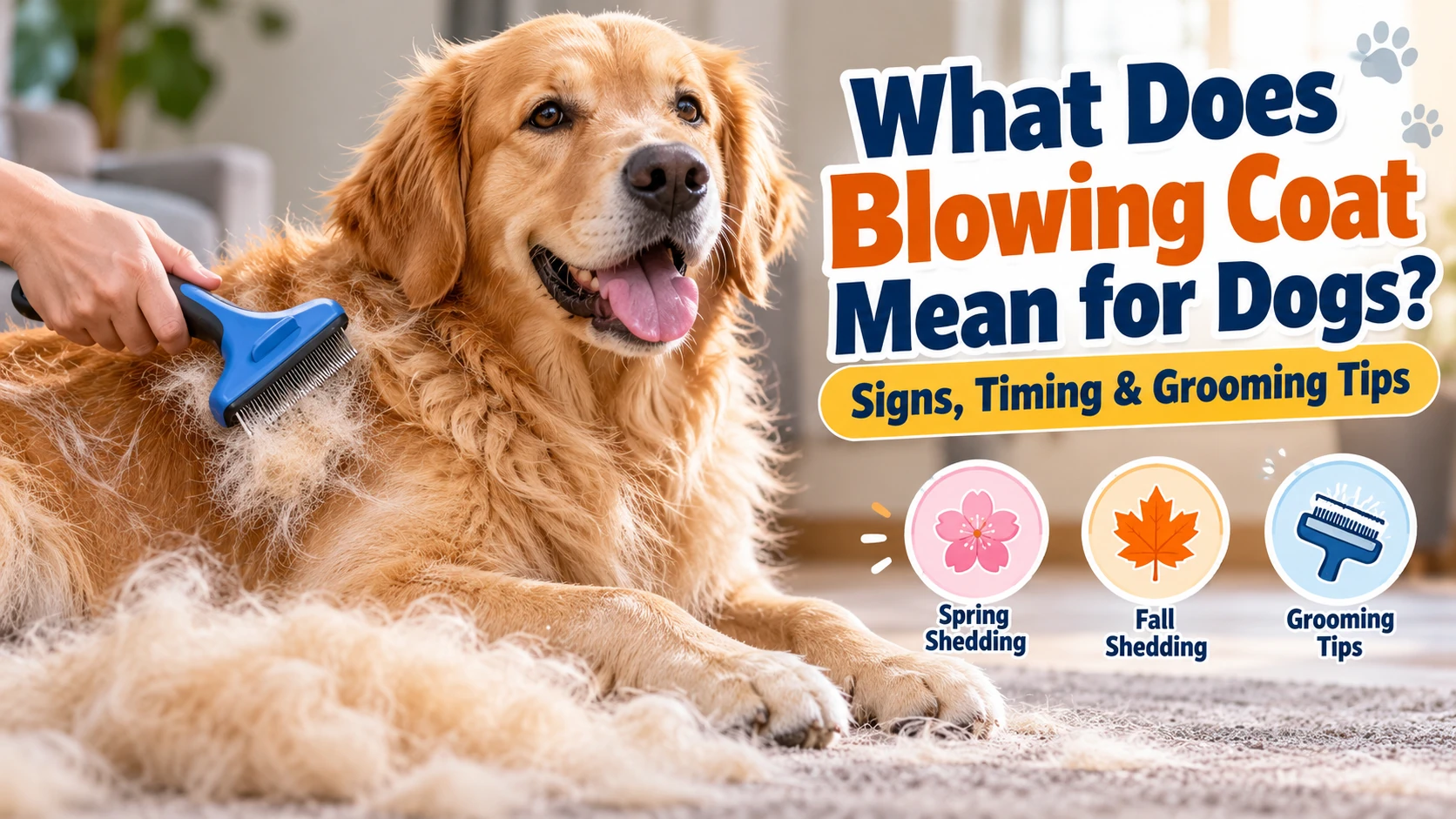
Blowing coat means a dog is shedding large amounts of its loose undercoat during a seasonal coat change. It commonly happens in spring and fall, especially in double-coated breeds such as Huskies, German Shepherds, and Golden Retrievers. This natural process can produce noticeable clumps of fur over several weeks. Gentle brushing and proper dog deshedding techniques help manage the loose hair.
Common Signs of Blowing Coat
- Large fur clumps: Soft undercoat releases in visible tufts.
- Heavier shedding: More loose hair appears on furniture and clothing.
- Uneven coat density: Some areas look temporarily less fluffy.
- Seasonal timing: Shedding often increases during spring or fall.
- Healthy skin: Normal shedding should not cause sores, painful skin, or unexplained bald patches.
When to Get Help
- Check unusual changes: Contact a veterinarian if shedding causes bald spots, redness, persistent itching, or skin irritation.
Finding handfuls of loose fur around your home can make you wonder whether your dog is shedding normally. Sometimes, that dramatic hair loss simply means your dog is blowing its coat.
I’ll explain what happens during this seasonal change, how long it lasts, and which grooming methods help. You’ll also learn how to recognize shedding that deserves veterinary attention.
What Does Blowing Coat Mean for Dogs?

Blowing coat is the natural process in which a dog releases substantial amounts of its old undercoat. It usually happens during seasonal changes when the coat adjusts to different weather conditions.
The term mainly describes heavy shedding in dogs with double coats. These dogs have two distinct layers of fur.
Understanding the Two Layers of a Dog’s Coat
- Outer coat: Longer guard hairs help protect against sunlight, moisture, dirt, and environmental exposure.
- Undercoat: Softer, shorter hairs provide insulation and change density with seasonal coat cycles.
- Loose undercoat: Older hairs release naturally and can become trapped beneath the protective outer layer.
According to the American Kennel Club’s double-coat guidance, these layers have different protective functions. They also shed at different rates.
When a dog blows its coat, much of the visible hair comes from the insulating undercoat. The outer guard hairs generally remain in place.
Why Is It Called Blowing Coat?
The expression describes how quickly and dramatically loose fur can appear. A dog might seem normally fluffy one week and release handfuls of undercoat the next.
Some owners notice small clouds of loose hair when brushing their dogs. The shedding can look surprisingly dramatic without indicating a health problem.
Important distinction: Blowing coat is not the same as shaving, trimming, or losing fur because of a medical condition.
Why Do Dogs Blow Their Coat?
Dogs blow their coats because their natural hair-growth cycles respond to seasonal environmental changes. Changes in daylight and temperature influence how the undercoat grows and sheds.
The process helps replace old insulating hair as seasons change.
Spring Coat Blowing
Spring is a common time for heavy undercoat shedding. Many double-coated dogs begin releasing some of the dense fur they developed for winter.
- Daylight hours increase as the season changes.
- Dense winter undercoat begins loosening.
- Large quantities of soft fur become easier to remove.
- The remaining coat may feel lighter and less bulky.
Spring shedding can be particularly noticeable in northern breeds with thick coats. However, each dog’s timing and shedding intensity differ.
Fall Coat Blowing
Dogs can also blow their coats in fall. During this period, older summer coat hairs are replaced as the dog develops its winter coat.
Fall shedding doesn’t mean the dog is losing all its insulation. It is part of replacing the existing coat.
VCA Animal Hospitals explains seasonal coat blowing as a normal process that can release substantial amounts of fur in both spring and fall.
Can Indoor Dogs Blow Their Coat?
Yes. Indoor dogs can experience seasonal coat blowing, although their patterns may be less distinct.
Artificial lighting, indoor temperatures, breed genetics, and climate can affect shedding. Some indoor dogs release undercoat gradually throughout the year instead of experiencing sharply defined seasonal changes.
What Are the Signs Your Dog Is Blowing Its Coat?
The clearest sign is a sudden increase in loose, soft undercoat. You may notice fur collecting in tufts during gentle brushing or petting.
Normal coat blowing generally happens without significant skin irritation or discomfort.
Five Common Signs
- Loose tufts of fur: Soft hair separates easily from the coat without pulling.
- Increased household hair: Furniture, flooring, and clothing collect more fur than usual.
- Changes in coat thickness: Dense areas begin feeling lighter as loose undercoat releases.
- More hair during brushing: A grooming brush collects noticeably larger amounts of fur.
- Seasonal repetition: Similar shedding patterns may return around the same seasons each year.
One useful observation is how easily the hair releases. Naturally loose undercoat should separate with gentle grooming.
A healthy coat should not require forceful pulling to remove large amounts of hair.
What Does a Blowing Coat Look Like?
A dog blowing its coat may have fluffy patches of loosened undercoat around the hips, shoulders, chest, or hindquarters. These tufts sometimes protrude through the longer outer hair.
After gentle grooming, the coat may appear smoother or less bulky. However, noticeable bald patches or inflamed skin require a different explanation.
Which Dog Breeds Blow Their Coat the Most?
Breeds with dense double coats are especially likely to experience noticeable coat blowing. The amount of shedding depends on undercoat density, individual genetics, and environmental conditions.
Some breeds produce much larger collections of loose fur than others.
Common Heavy Coat-Blowing Breeds
- Siberian Husky: Has a dense insulating undercoat that may shed heavily during seasonal changes.
- Alaskan Malamute: Carries a thick northern coat requiring regular undercoat maintenance.
- German Shepherd: Often sheds throughout the year, with heavier seasonal periods.
- Golden Retriever: Has a soft undercoat beneath longer protective hair and feathering.
- Samoyed: Possesses abundant insulating fur that can release substantial loose undercoat.
- Pembroke Welsh Corgi: Has a dense double coat despite its smaller body size.
- Labrador Retriever: Has short outer hair covering a dense, shedding undercoat.
A Labrador and a Husky can both blow their coats, but their grooming needs differ. Hair length and coat texture matter as much as the breed.
Blowing Coat vs. Normal Shedding: What’s the Difference?
Normal shedding happens as individual hairs complete their growth cycles. Blowing coat describes a particularly heavy period of undercoat shedding.
Both processes can be healthy, but their appearance and intensity differ.
| Feature | Normal Shedding | Blowing Coat |
|---|---|---|
| Hair quantity | Usually lighter or gradual | Often heavy, with visible tufts |
| Common timing | Can occur year-round | Often spring and fall |
| Main hair released | Individual loose hairs | Large amounts of undercoat |
| Most associated coats | Many coat types | Dense double coats |
| Grooming | Routine brushing | More frequent gentle brushing |
| Typical duration | Ongoing hair replacement | Often several weeks |
Neither normal shedding nor coat blowing should routinely cause painful skin, sores, or unexplained bald patches. Those changes need veterinary assessment.
How Long Does Blowing Coat Last in Dogs?
Blowing coat commonly lasts several weeks, but there is no fixed duration for every dog. Some dogs finish their heaviest shedding sooner, while others release undercoat more gradually.
Breed, climate, daylight exposure, and coat density all affect the timeline.
What Affects the Duration?
- Breed: Dense northern coats may release substantial amounts of hair over an extended period.
- Coat density: Thicker undercoats contain more hair that must loosen naturally.
- Indoor environment: Consistent lighting and temperatures may make seasonal shedding less distinct.
- Grooming frequency: Brushing removes hair already loose, reducing how long it remains trapped in the coat.
- Individual variation: Two dogs of the same breed can follow different shedding patterns.
As of 2026, there is no universal number of days that defines healthy coat blowing. The dog’s usual pattern and skin condition provide more useful clues.
How Do You Groom a Dog That Is Blowing Its Coat?
The safest approach is to remove loose undercoat gently while protecting the skin and healthy guard hairs. Regular short sessions are often preferable to one aggressive grooming session.
Use tools that match your dog’s actual coat type.
Step 1: Inspect the Skin and Coat
Before brushing, check for redness, sores, tangles, and sensitive areas. Stop if touching the coat causes pain.
Avoid running deshedding tools over irritated skin or tight mats.
Step 2: Choose the Right Brush
For many thick double coats, an appropriately sized undercoat rake can lift loose fur. A slicker brush may help manage surface hair and minor tangles.
Shorter double coats may respond better to gentler grooming tools. Choose equipment according to coat length and density.
Step 3: Brush in Small Sections
Begin around the shoulders and work gradually toward the hindquarters. Follow the direction of hair growth and use light pressure.
- Separate manageable sections of fur.
- Remove loose hair with gentle strokes.
- Clean accumulated hair from the brush frequently.
- Check sensitive areas before proceeding.
- Stop if the skin becomes red or your dog shows discomfort.
Step 4: Remove Loose Undercoat Carefully
Use a coat-appropriate rake only where the undercoat releases naturally. Repeated scraping or pulling can irritate the skin and damage healthy hair.
For a detailed method, follow this guide on how to remove loose undercoat from a dog.
Step 5: Bathe Only When Needed
A suitable dog bath can help loosen hair that is ready to shed. However, unnecessary frequent bathing may dry or irritate some dogs’ skin.
Use dog-formulated shampoo, rinse thoroughly, and dry the coat appropriately. Avoid leaving dense undercoat damp for extended periods.
Step 6: Finish With a Gentle Coat Check
Run your fingers or a suitable comb through manageable sections after brushing. Check whether loose hair remains trapped or tangles need attention.
End the session with praise or a reward. Grooming should remain comfortable and calm.
How Often Should You Brush a Dog That Is Blowing Coat?
Many dogs benefit from more frequent brushing during heavy seasonal shedding. Daily light brushing may be appropriate for some dogs, provided their skin tolerates it.
Intensive deshedding tools usually require a more cautious schedule.
Practical Brushing Schedule
- Light seasonal shedding: Start with brushing two or three times weekly.
- Moderate shedding: Consider gentle brushing several times weekly.
- Heavy coat blowing: Short daily sessions may help collect loose hair.
- Sensitive skin: Reduce pressure, duration, and frequency when needed.
- Specialized deshedding tools: Follow manufacturer instructions and avoid excessive repeated passes.
These are practical starting points rather than strict medical schedules. Adjust them to your dog’s coat and comfort.
For additional guidance, read how often you should deshed a dog.
Should You Shave a Dog That Is Blowing Coat?
No. Shaving a healthy double-coated dog solely to control seasonal shedding is generally not recommended.
The outer and inner coat layers serve important protective functions. Removing them can expose the skin and interfere with normal coat performance.
Why Shaving Is Usually the Wrong Solution
- It removes protective outer hair rather than simply collecting loose undercoat.
- It can increase exposure to sunlight and environmental irritation.
- It does not stop the natural shedding cycle.
- Some double coats may regrow unevenly after clipping.
Veterinary and grooming guidance from the American Kennel Club explains why preserving the double coat is generally preferred.
Medical treatment or severe matting may require clipping in special circumstances. Those decisions are best made with a veterinarian or experienced professional groomer.
How Can You Keep Your Home Clean During Coat Blowing?

Managing coat blowing works best when grooming and household cleaning happen together. The goal is to collect loose hair before it spreads everywhere.
You cannot stop healthy seasonal shedding entirely.
Simple Ways to Reduce Loose Fur Indoors
- Brush regularly: Collect naturally loosened undercoat before it falls onto furniture.
- Vacuum frequently: Focus on carpets, upholstery, and your dog’s favorite resting areas.
- Wash bedding: Clean washable dog beds and blankets according to their care instructions.
- Use washable covers: Protect heavily used furniture during peak shedding.
- Groom in a suitable area: Choose an easy-to-clean, safe surface with secure footing.
- Maintain healthy nutrition: Feed a complete, balanced diet appropriate for your dog’s needs.
For more practical ideas, explore these dog shedding control methods.
When Is Coat Blowing a Sign of a Health Problem?
Coat blowing itself is normal, but unusual hair loss can resemble seasonal shedding. Skin irritation, bald patches, and persistent itching are warning signs.
Never assume every sudden change in fur loss is harmless.
Warning Signs to Watch For
- Bald patches: Distinct areas of missing fur rather than a generally thinner undercoat.
- Red or inflamed skin: Irritation that accompanies shedding.
- Persistent scratching: Frequent itching, licking, or chewing at the skin.
- Scabs or sores: Damaged skin beneath the coat.
- Unusual odor: A persistent unpleasant smell, especially with skin inflammation.
- Unexpected hair loss: Rapid or unusual thinning that does not match your dog’s normal seasonal pattern.
Potential medical causes include allergies, parasites, infections, and hormonal disorders. These problems require veterinary evaluation rather than more aggressive brushing.
The AKC’s guidance on hair loss in dogs explains why bald spots and irritated skin should not be dismissed as ordinary shedding.
Best Grooming Tools for Dogs Blowing Their Coat
Choosing the correct grooming tool can make seasonal coat care easier. I would prioritize gentle hair removal and coat compatibility over tools that promise the largest possible pile of fur.
These three options suit different grooming needs. The ratings below are editorial suitability assessments, not verified customer-review averages or hands-on test scores.
🏆 Best for Dense Undercoats
Safari Undercoat Rake
★★★★☆ 4.5/5
A metal-tooth undercoat rake designed to reach loose hair beneath the outer coat. I’d consider it for thick-coated dogs such as Huskies or German Shepherds, provided the tooth length suits the coat and the tool does not pull.
✨ Best for Routine Brushing
Hertzko Self-Cleaning Slicker Brush
★★★★☆ 4.3/5
A slicker brush with fine metal pins and a mechanism for releasing collected hair. I’d consider it for routine loose-fur removal and manageable tangles, using light pressure to avoid irritating the skin.
🐾 Best for Gentle Short-Coat Grooming
KONG ZoomGroom Dog Brush
★★★★☆ 4.2/5
A flexible rubber grooming brush designed to collect loose surface hair while massaging the coat. I’d choose this gentler option for compatible short coats, though it cannot replace a suitable undercoat rake on exceptionally dense fur.
Affiliate disclosure: As an Amazon Associate, Go Pet Zone may earn from qualifying purchases through affiliate links, at no additional cost to you.
Frequently Asked Questions About Dogs Blowing Their Coat
Is blowing coat normal for dogs?
Yes. Blowing coat is a natural seasonal shedding process, especially in breeds with dense double coats. It often produces large amounts of loose undercoat without harming the dog. However, bald patches, persistent itching, inflamed skin, or unexplained hair loss should be evaluated by a veterinarian.
How many times a year do dogs blow their coat?
Many double-coated dogs experience their heaviest seasonal shedding around spring and fall, often described as two major coat changes annually. However, indoor conditions, breed, and climate can influence the pattern. Some dogs shed heavily once a year, while others release undercoat more gradually throughout the year.
Does blowing coat hurt dogs?
Normal coat blowing should not hurt. Loose undercoat is naturally released through the hair-growth cycle. Grooming can become uncomfortable if someone pulls attached hair, scrapes the skin, or forces a brush through mats. Always use gentle pressure and stop when a dog shows discomfort.
Can you stop a dog from blowing its coat?
No. Seasonal shedding is part of a healthy dog’s natural hair replacement process. Brushing, appropriate bathing, and regular grooming can collect loose fur and reduce household mess, but they cannot permanently stop normal shedding. Avoid shaving or excessive deshedding as shortcuts.
Does every dog breed blow its coat?
No. The term mainly applies to dogs that experience heavy seasonal undercoat shedding. Breeds with dense double coats are especially likely to blow their coats. Dogs with continuously growing hair or different coat structures may shed less noticeably and need different grooming routines.
Final Thoughts: What Does Blowing Coat Mean for Dogs?
Blowing coat means your dog is naturally releasing a large amount of old undercoat, usually during a seasonal transition. For many double-coated breeds, this is a normal part of maintaining a functional coat.
The best approach is gentle, consistent grooming rather than aggressive hair removal. Choose tools that match your dog’s coat and monitor the skin for unusual changes.
If your dog seems comfortable and the skin looks healthy, the extra fur may simply be seasonal shedding. When hair loss comes with bald patches, redness, or persistent itching, consult your veterinarian.


