
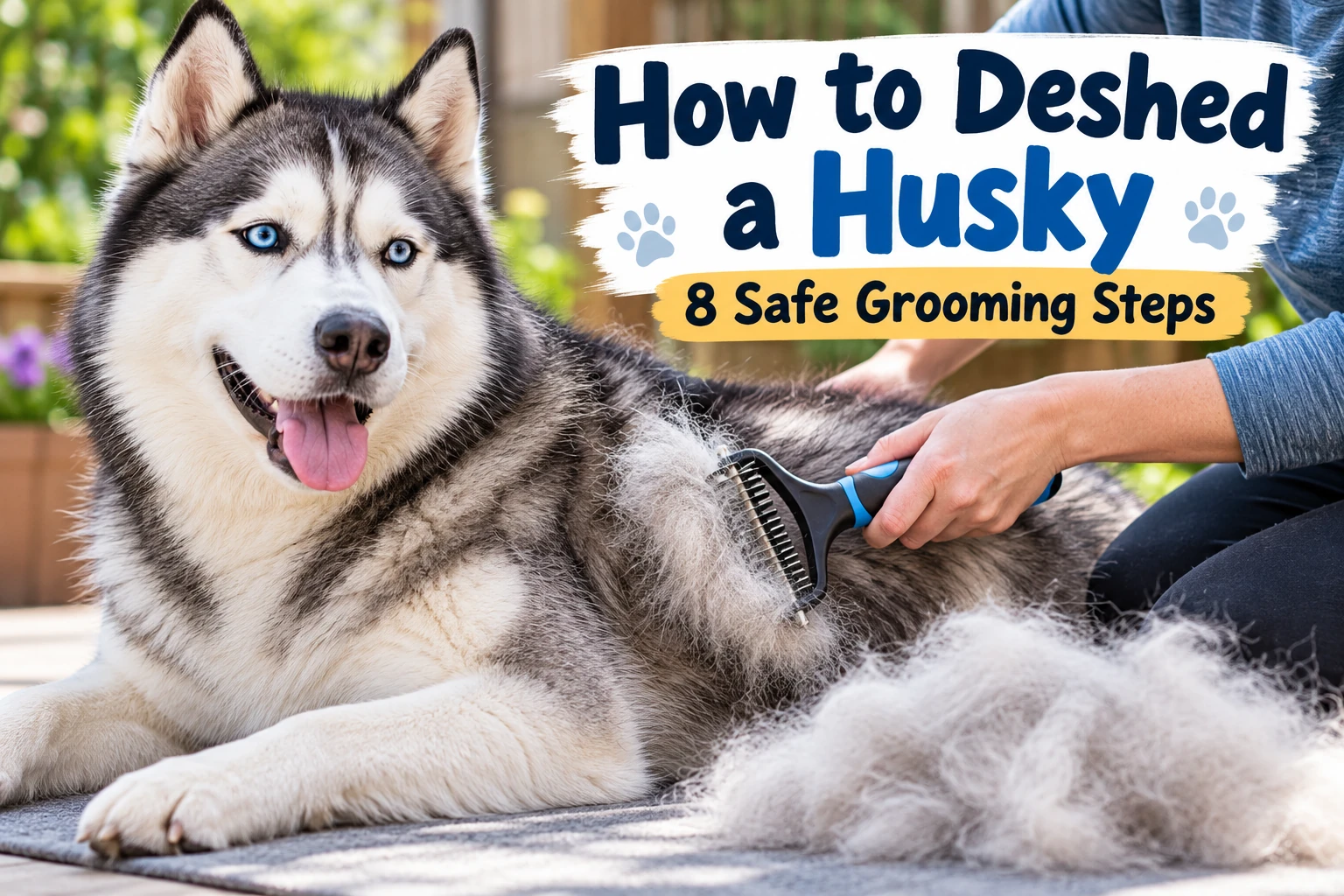
Quick Answer
To deshed a Husky, gently loosen the outer coat with a pin or slicker brush, remove shedding undercoat in small sections with a suitable undercoat rake, and finish with a metal comb. Brush at least weekly and more frequently during heavy shedding. Bathing and careful drying can release additional loose fur, but never shave your Husky’s double coat to control shedding.
Husky fur has a way of appearing everywhere: on furniture, clothing, floors, and sometimes in enormous fluffy clumps. During a seasonal coat blow, even a recently brushed Husky can leave another pile of hair behind.
The solution is not to remove as much fur as possible in one session. It is to release the loose undercoat without pulling healthy hair, irritating the skin, or damaging the protective outer coat.
Here’s how to make that process safer, more comfortable, and easier to maintain at home.
What Do You Need to Deshed a Husky?
You need a few coat-appropriate grooming tools rather than an assortment of aggressive shedding blades. Each tool should have a specific purpose.
| Tool | Best Use | Precaution |
|---|---|---|
| Pin brush | Loosening surface fur | Use light pressure |
| Slicker brush | Removing loose hair and small tangles | Avoid repeated scraping |
| Undercoat rake | Releasing loose, dense undercoat | Choose suitable tooth length |
| Steel comb | Checking for remaining tangles | Never force through knots |
| Dog-safe dryer | Drying after bathing and loosening fur | Avoid excessive heat and airflow near the face |
The American Kennel Club’s brush selection guidance explains why undercoat rakes and other grooming tools need to match a dog’s coat length and texture.
For a Husky, a non-cutting rake with appropriately spaced, smooth teeth is generally a sensible choice. A cutting-style deshedding tool can damage healthy guard hairs if used too aggressively.
How to Deshed a Husky Step by Step
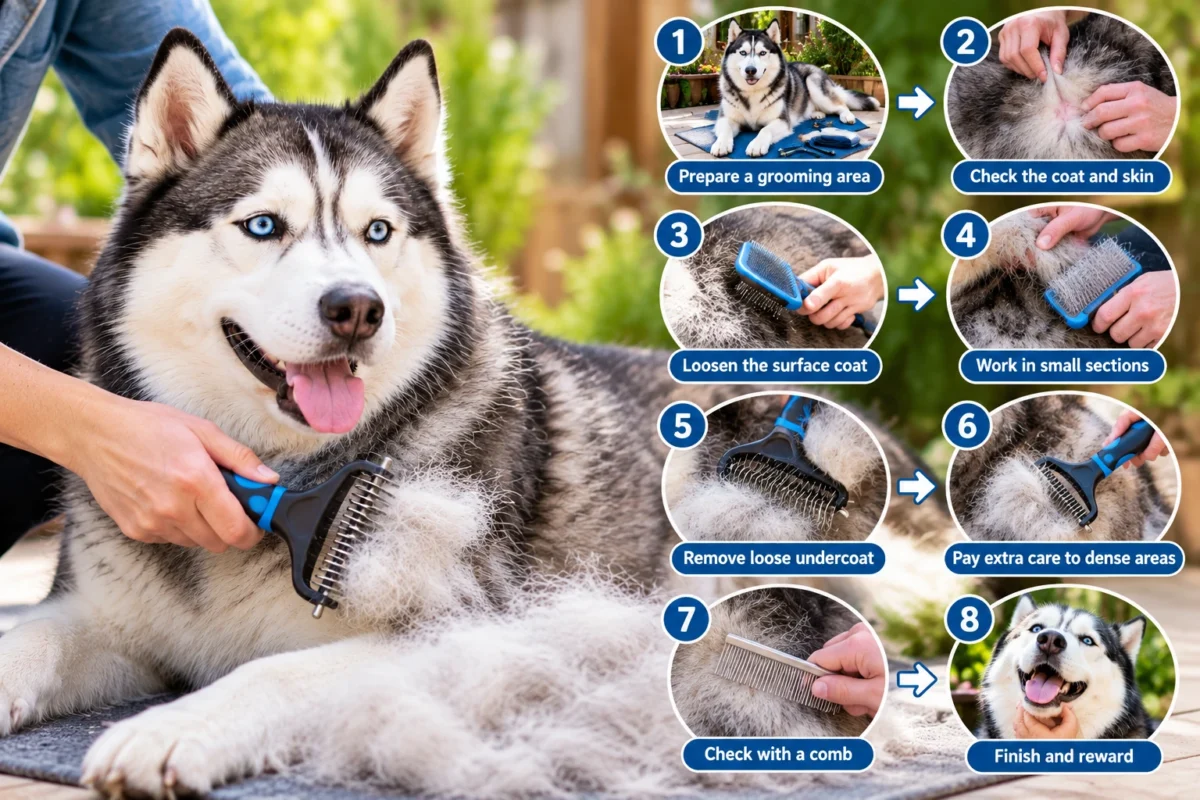
Start with a dry, manageable coat and work through one small area at a time. The following eight steps prioritize loose-hair removal without turning grooming into an uncomfortable struggle.
Prepare a comfortable grooming area.Choose a quiet location with secure, non-slip footing. Keep your brushes, comb, treats, and a container for collected fur nearby. Groom outdoors only in a securely enclosed area with comfortable weather.
Let your Husky inspect the tools before beginning. A short, relaxed session is more useful than forcing an anxious dog to remain still.
Inspect the coat and skin.Part the fur with your fingers and check for redness, sores, parasites, knots, or tightly compacted areas. Pay attention to the neck, chest, hindquarters, and areas behind the legs.
If the skin appears painful or inflamed, postpone intensive deshedding until the problem has been assessed.
Loosen the surface coat.Use a pin brush or suitable slicker brush in the direction the hair naturally grows. Work gently from the shoulders toward the back and sides.
Use short strokes and lift the brush away rather than dragging it along the skin. This first pass helps reveal areas containing heavier loose undercoat.
Divide the coat into manageable sections.Use your free hand to lift a small layer of fur, exposing the coat underneath. Brush the section gently before moving to the next layer.
This method is often called line brushing. It helps you reach the undercoat instead of repeatedly brushing only the visible surface.
Remove loose undercoat with a rake.Move the undercoat rake slowly in the direction of hair growth. Allow the teeth to collect fur that is already releasing rather than applying enough force to pull firmly attached hair.
Clear the rake frequently. If it catches, stop and examine the area instead of pulling harder.
Give dense and sensitive areas extra care.The chest, rear thighs, neck, and tail may hold considerable loose fur. Use smaller movements in these areas, especially around thin skin and joints.
For the belly, armpits, and other sensitive spots, reduce pressure and switch to a gentler brush or comb as needed.
Check your progress with a metal comb.After working through a section, pass a suitable wide-tooth comb gently through the fur. It should move without repeatedly catching on packed hair.
If you encounter resistance, separate the fur with your fingers and reassess it. A tight mat may need professional attention rather than repeated pulling.
Finish with gentle brushing and rewards.Make a final light pass through the coat, collect loose fur, and check the skin for irritation. Praise your Husky and offer a reward.
If substantial loose fur remains but your dog is becoming restless, continue in another short session rather than trying to remove everything immediately.
Grooming Tip
Use the skin as your pressure guide. Effective deshedding should collect loose fur without leaving redness, scratches, or obvious discomfort. Stop repeated strokes over an area once little additional fur comes away.
If you are unfamiliar with line brushing or brushing direction, the step-by-step dog brushing guide explains the underlying techniques for different coat types.
Why Do Huskies Shed So Much Fur?
Huskies shed heavily because they have a double coat consisting of two different hair layers. The dense, soft undercoat provides insulation, while longer guard hairs help protect the dog from weather and environmental exposure.
As the undercoat renews, old hairs loosen and fall out. Seasonal changes can trigger particularly noticeable periods of shedding, commonly called blowing coat.
The Siberian Husky Club of America’s coat standard recognizes that a Husky may naturally have very little undercoat during shedding season.
Many Huskies experience major coat changes around twice yearly, although the timing and intensity vary with environment, daylight, and individual coat characteristics.
Regular grooming removes hair that is already shedding. It cannot permanently stop the normal replacement of coat hairs.
How Often Should You Deshed a Husky?
Brush your Husky at least weekly during ordinary maintenance, increasing the frequency when loose undercoat accumulates quickly. During a heavy coat blow, brief daily attention may be useful if your dog’s skin remains comfortable.
That does not mean performing an intensive rake session every day. Gentle brushing and targeted undercoat removal are different levels of grooming.
- Normal shedding: Begin with a thorough weekly brushing and adjust according to coat condition.
- Active coat blowing: Check the coat daily and remove easily released fur in short sessions.
- Sensitive skin: Reduce intensity and use gentler tools; seek veterinary advice if irritation persists.
- Heavy tangling: Arrange professional grooming if the coat cannot be separated comfortably.
The goal is to prevent loose fur from becoming packed, not to keep brushing until no hair comes out.
Our guide to how often to brush a dog explains how to adjust grooming frequency according to coat type and seasonal shedding.
Does Bathing Help Deshed a Husky?

Yes. An occasional bath followed by thorough, appropriate drying can loosen fur that ordinary brushing has not removed. However, a Husky does not need a bath every time shedding increases.
For a coat that is dirty or heavily packed with loose hair, follow this approach:
- Brush away loose surface fur and manageable tangles before bathing.
- Wet the coat thoroughly with comfortably lukewarm water.
- Use a dog-specific shampoo suitable for your Husky’s skin.
- Massage gently without rubbing tangles tighter.
- Rinse thoroughly, checking the dense coat near the skin.
- Blot excess water with towels and dry the undercoat completely.
- After drying, gently brush out the newly released loose fur.
A professional high-velocity dryer can help separate dense fur and release shedding undercoat. Keep airflow controlled, avoid the face and ears, and stop if the dog becomes frightened or uncomfortable.
Do not use excessive heat or force high-pressure air against sensitive skin. A groomer familiar with double coats may be the better choice if you lack suitable equipment.
For washing and drying details, follow our guide to bathing a dog with a thick coat.
What Deshedding Mistakes Should You Avoid?
The most common problems come from excessive force, inappropriate tools, or treating normal shedding as something that must be stopped completely.
- Shaving the double coat: This can compromise the protective guard coat and cause uneven regrowth. Shaving is not a routine shedding solution.
- Using cutting blades aggressively: These can remove or damage healthy hair instead of simply collecting loose undercoat.
- Brushing the same spot repeatedly: Excessive friction can irritate skin even with a suitable tool.
- Pulling through compacted mats: Painful tangles should be assessed before continuing.
- Bathing too frequently: Unnecessary washing may dry or irritate the skin.
- Leaving the undercoat damp: Dense fur can retain moisture long after the surface feels dry.
Important Warning
Never shave a healthy Husky simply to reduce shedding or help with hot weather. If shaving becomes medically necessary or severe matting makes other grooming methods unsafe, follow a veterinarian’s or qualified groomer’s guidance.
When Is Husky Shedding a Reason to Contact a Veterinarian?
Heavy seasonal shedding is usually normal, but noticeable hair loss is not always the same thing as coat blowing.
Arrange veterinary evaluation if shedding is accompanied by bald patches, inflamed skin, persistent scratching, unusual odor, sores, or a marked change in coat quality.
Parasites, skin infections, allergies, and other health problems can sometimes cause abnormal hair loss. Brushing harder will not address those underlying conditions.
A useful distinction is that ordinary coat blowing usually releases loose hair across broad areas, while concerning hair loss may involve visible skin changes or localized patches.
If grooming repeatedly causes pain or your Husky reacts defensively when a particular area is touched, stop and investigate before continuing.
How Can You Reduce Loose Husky Hair Around Your Home?
You cannot eliminate normal Husky shedding, but a consistent maintenance routine can make the loose fur easier to manage.
Brush in a designated location, collect removed fur immediately, and vacuum the areas where your Husky rests most often. Wash removable bedding according to its care instructions.
Keep grooming sessions predictable. If your Husky dislikes brushes, begin with gentle handling, reward calm behavior, and gradually introduce the tools rather than attempting a complete coat blowout immediately.
During especially heavy shedding, a professional bath-and-blowout service may remove substantial loose undercoat while reducing the work required at home.
Remember that the amount of hair left on the floor is not a reliable measure of grooming success. Healthy skin, an untangled coat, and a comfortable dog matter more.
Related Grooming Tool: Undercoat Rake for Huskies
A non-cutting undercoat rake with smooth, appropriately spaced teeth can help remove loose fur from a Husky’s dense double coat. Select a tool suited to the coat length and use gentle pressure.
As an Amazon Associate, we earn from qualifying purchases.
Frequently Asked Questions
1. Can you completely stop a Husky from shedding?
No. Shedding is a normal part of the Husky’s hair-growth cycle. Regular brushing helps collect loose hair and reduce the amount spreading indoors, but it cannot eliminate natural shedding.
2. How long does a Husky coat blow last?
A major coat blow may last several weeks, but duration varies between dogs and living conditions. Continue gentle grooming while loose undercoat is releasing rather than trying to remove everything in one session.
3. Can you deshed a Husky puppy?
Yes, but start with very gentle brushing and handling rather than intensive undercoat removal. Use a soft, puppy-appropriate brush and gradually introduce other tools as the adult coat develops.
4. Is an undercoat rake better than a slicker brush for Huskies?
Neither replaces the other. An undercoat rake helps remove loose hair from deeper coat layers, while a suitable slicker brush helps loosen surface fur and light tangles. Both should be used gently.
5. Should you deshed a Husky when the coat is wet?
For ordinary home brushing, work primarily on a dry coat. After bathing, dry the dense undercoat appropriately before a finishing brush. Professional groomers may use specialized wet-coat techniques and controlled dryers.
6. How do you know when to stop deshedding?
Stop when the coat moves freely, little additional loose fur comes away, or your Husky begins showing discomfort. Do not continue scraping or pulling simply because some hair still releases.
Conclusion
Learning how to deshed a Husky means understanding when fur is ready to come out and when brushing is doing more harm than good.
Use a gentle surface brush, a suitable undercoat rake, and a finishing comb. Work in small sections, increase grooming during seasonal coat blowing, and use occasional bathing and careful drying when needed.
Most importantly, protect the double coat rather than shaving it or aggressively removing hair. A steady routine will make shedding easier to manage while keeping your Husky comfortable and its skin and coat in good condition.


