
Quick Answer
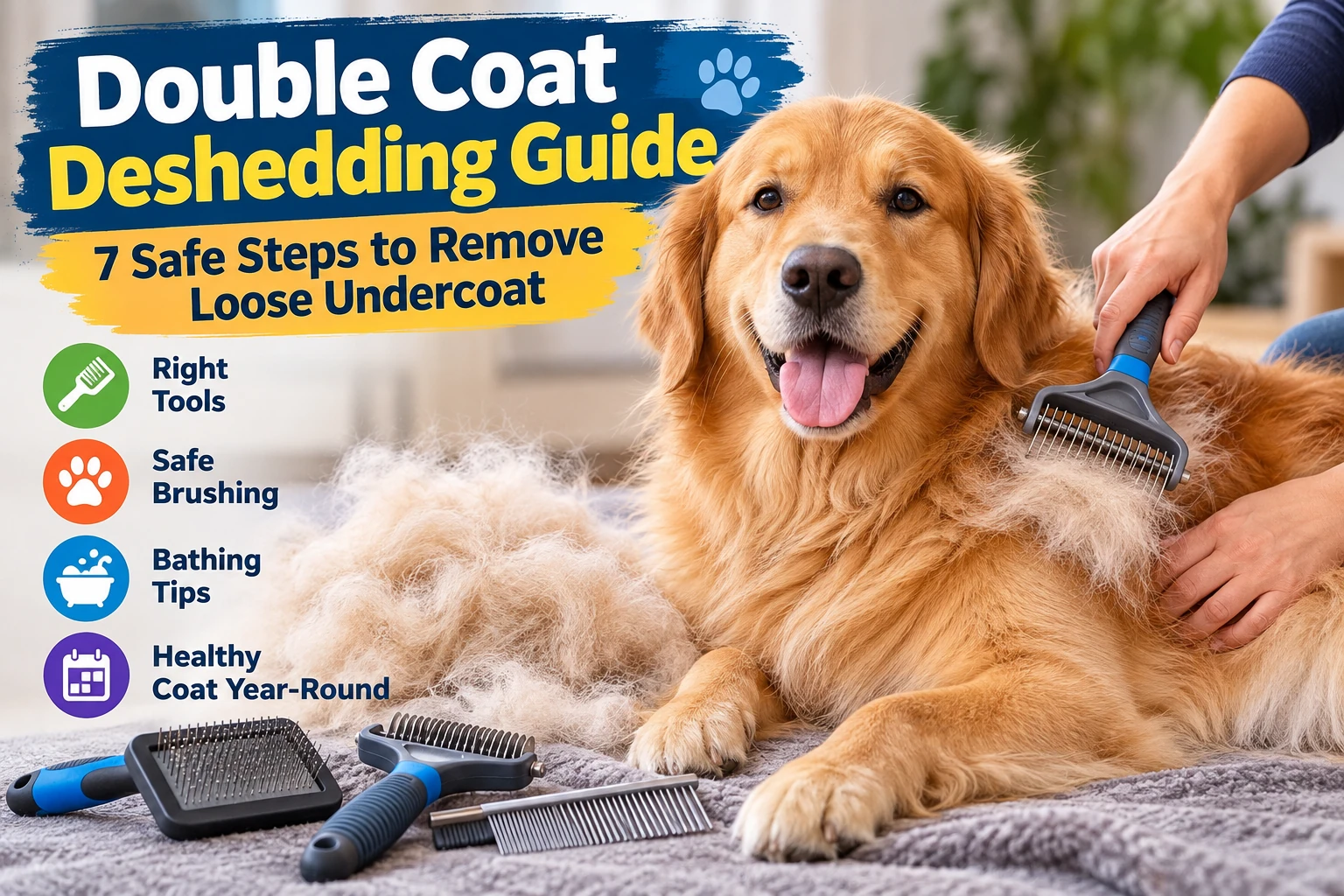
The safest way to deshed a double-coated dog is to remove loose undercoat with gentle, section-by-section brushing while protecting the outer guard hairs. Use a suitable slicker brush, undercoat rake, and comb. Brush at least weekly, increase gentle grooming during heavy shedding, and avoid shaving a healthy double coat. For more brushing basics, see this double-coated dog brushing guide.
7 Quick Deshedding Steps
- 1. Inspect the coat: Check for mats, irritation, and sensitive skin.
- 2. Choose your tools: Match the rake, brush, and comb to the coat.
- 3. Divide the fur: Work through small sections instead of random areas.
- 4. Remove loose undercoat: Brush gently with the direction of hair growth.
- 5. Check with a comb: Find remaining tangles without pulling.
- 6. Bathe when needed: Rinse thoroughly and dry the dense coat carefully.
- 7. Maintain the results: Repeat gentle brushing on a consistent schedule.
Important Safety Rule
- Never force the process: Stop if grooming causes pain, scraping, redness, or repeated snagging.
Finding handfuls of fur around your home can make double-coated dog grooming feel endless. But removing more hair isn’t always the right goal.
I prefer a gentle routine that protects healthy fur while collecting the loose undercoat. This guide covers the tools, brushing technique, bathing process, and mistakes worth avoiding in 2026.
What Is a Double Coat, and Why Does It Shed?
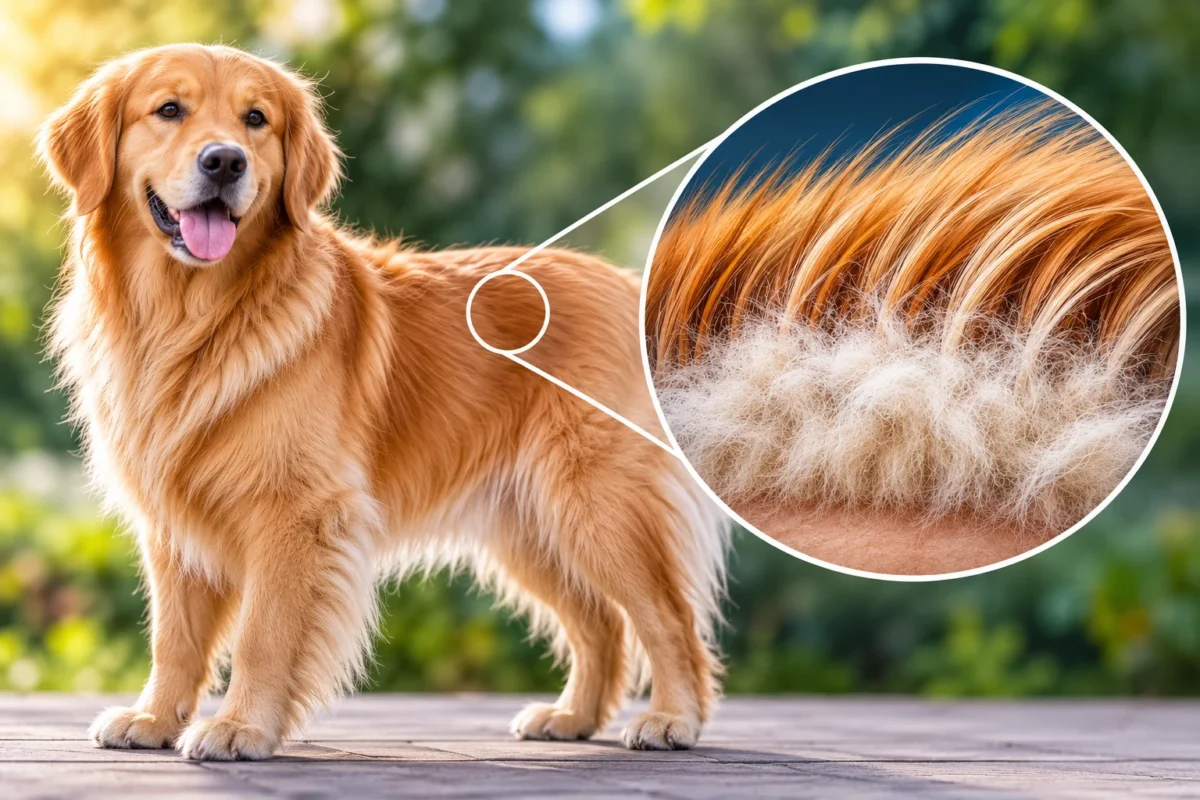
A double coat has two distinct layers of hair: a protective outer layer and a softer, insulating undercoat. These layers perform different jobs, so they need careful grooming.
- Topcoat: Longer guard hairs help shield the skin from moisture, debris, sunlight, and environmental exposure.
- Undercoat: Shorter, softer hairs provide insulation and change with seasonal growth cycles.
- Seasonal shedding: Many dogs release considerable undercoat during spring and fall.
- Year-round shedding: Indoor living, climate, breed, and individual coat cycles can affect how often hair falls out.
The American Kennel Club’s coat-type guidance explains why both layers matter.
Which Dogs Have Double Coats?
Double coats occur in many working, herding, sporting, and northern breeds. However, hair length and undercoat density differ considerably.
- Siberian Husky: Dense undercoat with substantial seasonal shedding.
- German Shepherd: Thick coat that commonly sheds throughout the year.
- Golden Retriever: Medium-to-long coat with feathering that can tangle.
- Labrador Retriever: Short outer hair covering a dense undercoat.
- Australian Shepherd: Medium coat requiring attention around feathered areas.
- Samoyed: Plush, dense coat requiring careful section-by-section maintenance.
- Pembroke Welsh Corgi: Shorter outer hair with surprisingly abundant undercoat.
Breed labels offer a starting point, not a perfect grooming prescription. Check your dog’s actual hair length, density, and skin condition before choosing tools.
What Tools Do You Need to Deshed a Double-Coated Dog?
A basic grooming kit should remove loose undercoat without scraping skin or cutting healthy guard hairs. Most owners don’t need expensive equipment.
The most practical approach combines a brush, a coat-appropriate rake, and a checking comb.
| Grooming Tool | Best Use | Main Precaution |
|---|---|---|
| Slicker brush | Loose hair and light tangles in medium or long coats | Avoid scratching the skin with the pins |
| Undercoat rake | Releasing loose fur from dense undercoats | Match pin length to coat depth |
| Steel grooming comb | Checking for remaining tangles and packed hair | Never pull through resistance |
| Fixed-edge deshedding tool | Targeted removal of loose hair on compatible coats | Overuse may damage healthy hair or irritate skin |
| High-velocity pet dryer | Helping separate and release loose fur after bathing | Introduce gradually; avoid heat and sensitive areas |
For tool selection, the AKC dog brush guide explains the differences between rakes, slickers, and other brushes.
Is an Undercoat Rake Better Than a Slicker Brush?
Neither tool is universally better. A rake reaches loose undercoat, while a slicker brush helps separate hair and manage minor tangles.
For a heavily shedding Husky, an appropriately sized rake may collect more loose undercoat. For a Golden Retriever’s feathered legs, a gentle slicker and comb may be more useful.
How Do You Deshed a Double-Coated Dog Step by Step?
Work slowly, keep grooming comfortable, and remove only hair that releases easily. The seven steps below provide a repeatable home routine.
Step 1: Check the Coat and Skin
Run your fingers through the coat before picking up a brush. Look for skin problems or tangles that could make grooming painful.
- Redness, scabs, cuts, or irritated patches
- Firm mats behind the ears or under the legs
- Fleas, ticks, or unusual debris
- Areas where touching or brushing causes discomfort
Don’t brush over sores or force a tool through tight mats. Ask a veterinarian or experienced groomer to assess concerning areas.
Step 2: Prepare a Comfortable Grooming Area
Choose a quiet space with a non-slip surface and good lighting. Keep brushes, a comb, treats, and a fur collection bag nearby.
For a nervous dog, begin with just a few gentle strokes. Reward cooperation before gradually extending the session.
Step 3: Divide the Coat Into Sections
Working in small sections helps you reach beneath the visible outer coat. This is often called line brushing.
- Start near a comfortable shoulder or side area.
- Lift a small layer of hair to expose the coat underneath.
- Brush the exposed section gently, following hair growth.
- Move to the next small section.
- Repeat across the body without repeatedly brushing the same spot.
Pay attention to the chest, hindquarters, and feathered areas. These regions can hold substantial loose undercoat.
Step 4: Remove Loose Undercoat Gently
Use a rake that matches your dog’s coat length and density. Let the tool move through loose hair without pressing its teeth into the skin.
Short, controlled strokes work better than forceful pulling. If the rake catches, stop and investigate the resistance.
- Follow the natural direction of hair growth.
- Lift away released fur between passes.
- Use minimal pressure on thin or sensitive areas.
- Avoid repeated strokes over one patch.
- Stop if hair seems to be breaking rather than releasing.
Removing loose fur should not hurt. A bigger pile of hair doesn’t automatically mean a better grooming session.
Step 5: Follow With a Slicker Brush and Comb
After the undercoat rake, use a suitable slicker brush to tidy the coat. On longer coats, follow with a steel comb.
The comb helps identify remaining tangles that a brush might have missed.
- Comb moves freely: Continue to the next section.
- Minor tangle: Hold nearby hair and loosen it carefully from the ends.
- Tight resistance: Stop rather than pulling against the skin.
- Painful mat: Arrange professional grooming assistance.
This extra check matters for breeds with long feathering. A coat can appear tidy on top while hiding tangles underneath.
Step 6: Bathe and Dry When Necessary
Bathing can help release dirt and loose fur, but every deshedding session doesn’t need a bath. Base bath frequency on odor, dirt, coat condition, and veterinary guidance.
- Remove manageable loose hair and tangles before wetting the coat.
- Use lukewarm water and a dog-safe shampoo.
- Massage the product gently through the coat.
- Rinse until shampoo residue is completely removed.
- Apply a suitable dog conditioner if needed, following its label.
- Rinse again and dry with towels and appropriate pet-grooming equipment.
Dense undercoats can hold moisture for a long time. Check that the coat near the skin is drying properly rather than relying on surface dryness.
A high-velocity dryer can release loose coat during professional grooming. At home, use only equipment and techniques your dog tolerates safely.
Step 7: Finish and Maintain the Coat
Make a final, gentle pass with the appropriate comb or brush. Check that the coat moves freely and the skin shows no fresh redness.
End with praise or a reward. A comfortable session makes future grooming easier.
How Often Should You Deshed a Double-Coated Dog?

Most double-coated dogs need regular brushing throughout the year, with increased attention during seasonal shedding. Intensive deshedding tools should generally be used less often than gentle maintenance brushes.
The exact schedule depends on coat density, season, and skin sensitivity. Here’s a useful starting point.
| Coat Situation | Suggested Routine | Main Goal |
|---|---|---|
| Short, dense double coat | About 1–2 gentle sessions weekly | Collect loose hair |
| Medium or long double coat | About 2–3 brushing sessions weekly | Prevent tangles and buildup |
| Heavy seasonal shedding | Daily light brushing when comfortable | Manage releasing undercoat |
| Sensitive or irritated skin | Modify routine with veterinary advice | Avoid further irritation |
These are starting ranges, not mandatory schedules. For a fuller breakdown, see how often to deshed a dog.
I would prioritize shorter, comfortable sessions over a single exhausting grooming day. A regular routine also helps you notice changes in your dog’s skin and coat.
What Is Coat Blowing in Double-Coated Dogs?
Coat blowing is a period of unusually heavy undercoat shedding, often associated with seasonal changes. Loose fur may appear in clumps as older undercoat releases.
It commonly occurs in spring and fall, although timing varies. Climate and indoor living conditions can influence the pattern.
How Can You Manage Heavy Seasonal Shedding?
Increase gentle brushing during coat-blowing periods. Avoid increasing pressure or repeatedly using aggressive grooming tools.
- Brush loose hair in manageable sections.
- Check areas where thick undercoat collects.
- Use a coat-appropriate comb to monitor tangles.
- Keep grooming sessions comfortable and predictable.
- Vacuum and clean bedding more frequently.
- Arrange professional deshedding when the coat becomes difficult to manage.
It’s normal to collect substantial loose hair during a seasonal coat change. However, the amount removed shouldn’t be treated as a performance target.
Should You Shave a Double-Coated Dog to Reduce Shedding?
No. Shaving a healthy double coat is generally not recommended for shedding control or summer cooling.
The protective outer hairs and insulating undercoat serve different purposes. Removing both layers can expose skin and affect how the coat regrows.
- Sun exposure: Removing protective hair can increase skin exposure.
- Uneven regrowth: Coat layers may return at different rates.
- Continued shedding: Shorter hair can still fall out.
- Coat changes: Texture and appearance may change after clipping.
The AKC’s advice on shaving dogs explains these risks.
Severe matting or medical needs can justify clipping under professional guidance. Don’t attempt a close shave at home simply because shedding is heavy.
What Double Coat Deshedding Mistakes Should You Avoid?
The most common problems come from excessive pressure, poorly matched tools, and rushed grooming. Gentle technique protects both the dog and its coat.
- Brushing too hard: Excessive pressure may scrape or irritate the skin.
- Using the wrong rake: Teeth that don’t match coat depth may snag.
- Overusing blade tools: Repeated passes can remove or damage healthy hair.
- Ignoring tight mats: Pulling can hurt and damage sensitive skin.
- Bathing tangled hair: Existing mats may become harder to manage.
- Leaving dense fur damp: Trapped moisture may contribute to skin problems.
- Forcing nervous dogs: Stress can make future grooming more difficult.
- Shaving unnecessarily: Removing healthy protective hair doesn’t solve the shedding cycle.
One useful rule is to stop whenever a tool requires force. Brushing should separate the coat, not fight against it.
How Can You Tell Whether Deshedding Is Working?
Good deshedding leaves the coat more manageable without causing pain, skin irritation, or obvious hair damage. The goal isn’t to remove every loose hair in one session.
I would judge progress by these practical checks rather than the size of the fur pile.
- Coat movement: Hair separates more easily during gentle brushing.
- Comb check: Appropriate sections have fewer snags.
- Skin comfort: No new redness, scratching, or visible irritation develops.
- Dog’s behavior: The dog remains reasonably relaxed during grooming.
- Loose hair: Less accumulated fur may appear between sessions.
Shedding won’t disappear completely. To understand what regular brushing can realistically achieve, read how to brush a dog correctly.
When Is Shedding a Sign of a Health Problem?
Normal shedding usually follows an individual dog’s typical pattern. Sudden hair loss, bald patches, or irritated skin deserve closer attention.
Grooming tools cannot treat an underlying skin or medical condition.
- Sudden or unusually excessive hair loss
- Bald patches or visibly thinning areas
- Persistent itching, chewing, or licking
- Redness, sores, scabs, or unpleasant odor
- Unusual dandruff or greasy skin
- Coat changes alongside lethargy or other symptoms
These signs may have several causes, including parasites, allergies, or other health conditions. A veterinarian can evaluate the cause rather than relying on grooming alone.
For general guidance, see VCA Animal Hospitals’ explanation of canine wellness examinations.
Which Deshedding Tools Are Worth Considering?
For most double-coated dogs, I would start with a suitable rake or slicker rather than buying several aggressive shedding tools. Match every choice to coat length and sensitivity.
These three established products cover different grooming needs. The ratings below are editorial suitability scores, not verified customer-review averages or hands-on test results.
🏆 Best for Dense Undercoats
Safari Double Row Undercoat Rake
★★★★☆ 4.5/5
This double-row rake targets loose undercoat in dense fur. I would consider it for thick-coated breeds when the tooth length suits the coat and the dog tolerates gentle raking.
✨ Best for Routine Brushing
Safari Self-Cleaning Slicker Brush
★★★★☆ 4.5/5
The retractable-pin cleaning mechanism helps remove collected hair from the brush. I would favor this style for routine coat maintenance, using a soft touch on sensitive skin.
🐕 Best for Targeted Deshedding
FURminator Undercoat deShedding Tool for Dogs
★★★★☆ 4/5
This tool uses a stainless-steel deshedding edge and hair-release button. I would reserve it for occasional, light passes on compatible coats rather than repeated aggressive brushing.
Affiliate disclosure: As an Amazon Associate, we may earn from qualifying purchases at no additional cost to you. Product availability, sizing, and prices can change. Choose a tool suited to your dog’s coat.
Frequently Asked Questions About Double Coat Deshedding
1. Can you deshed a double-coated dog every day?
Daily gentle brushing can help during heavy seasonal shedding, provided the dog remains comfortable. However, aggressive daily use of fixed-edge deshedding tools or harsh rakes can irritate skin and damage hair. Adjust frequency based on coat density, tool design, and your dog’s response.
2. Should you deshed a double-coated dog before or after bathing?
Remove loose hair and manageable tangles before bathing. After washing, rinsing, and appropriate drying, gently comb or brush out additional released undercoat. Avoid bathing over tight mats, and don’t force grooming tools through wet, tangled hair.
3. Does deshedding stop dog shedding completely?
No. Deshedding removes loose hair that is ready to release, but it doesn’t stop the natural hair growth cycle. Regular grooming may reduce the amount of fur accumulating around your home, especially during seasonal shedding, without eliminating shedding entirely.
4. What is the best deshedding brush for a Husky?
A suitable undercoat rake, gentle slicker brush, and steel comb can work well for a Husky’s dense coat. Choose tools that reach loose undercoat without scraping skin. A professional groomer can help if the coat becomes heavily compacted or difficult to manage.
5. Can deshedding damage a dog’s double coat?
Yes. Excessive pressure, repeated blade-tool passes, and forceful removal of tangled hair can irritate skin or damage healthy guard hairs. Use appropriate tools, work in small sections, and stop when a tool repeatedly catches or the dog shows discomfort.
Final Takeaway: Keep Double Coat Deshedding Gentle and Consistent
The best double coat deshedding routine protects healthy fur while removing loose undercoat. You don’t need to remove every shedding hair in one session.
Start with suitable tools, work in sections, and adjust the schedule during coat-blowing seasons. Avoid unnecessary shaving and seek professional help for severe mats or skin problems.
For ongoing maintenance, use our dog brushing frequency guide to build a routine that fits your dog’s coat.
Remember: Healthy grooming should leave your dog comfortable, not sore. Consistency matters more than force.


