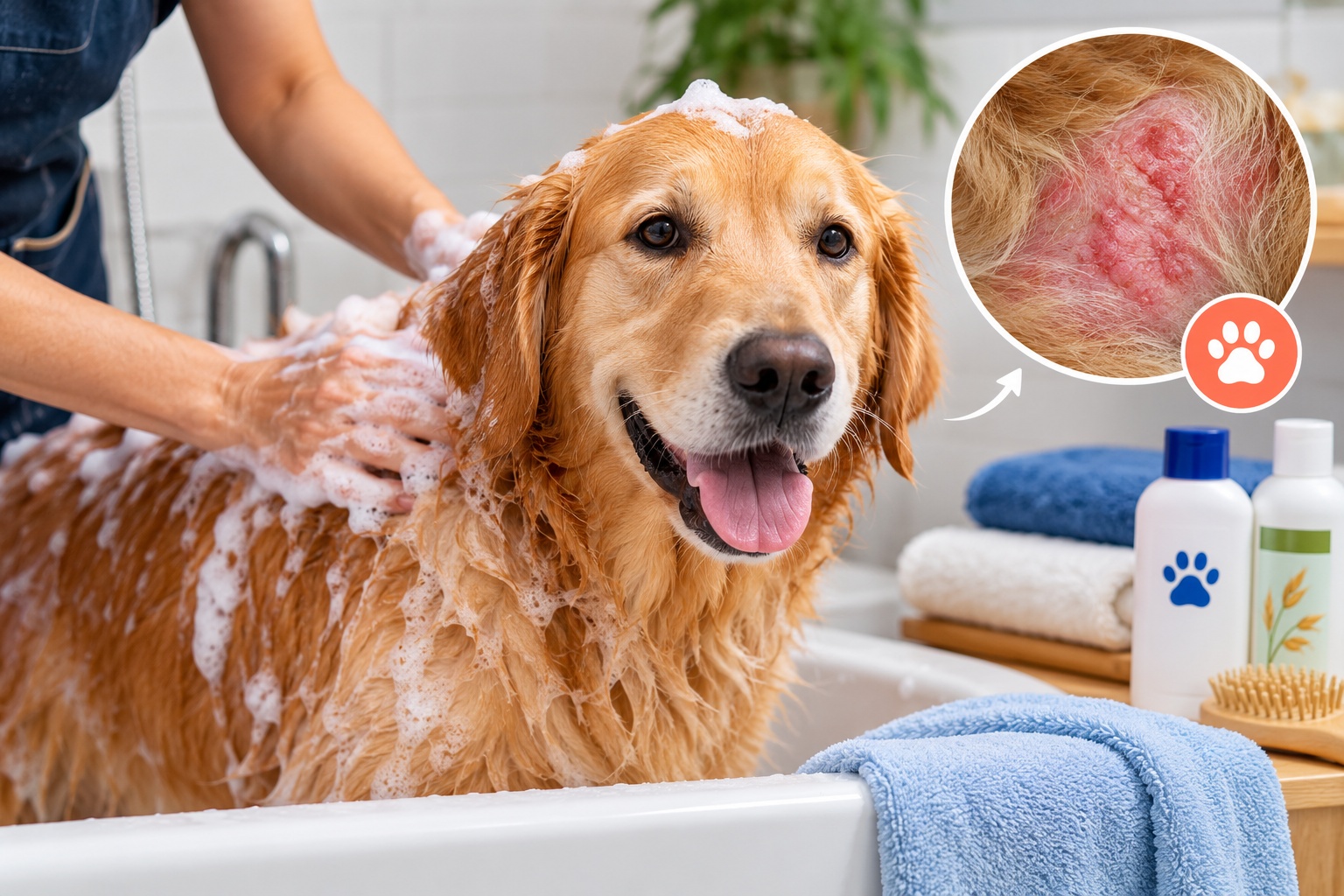
Quick Answer
To bathe a dog with skin allergies, use comfortable lukewarm water and a gentle dog-specific shampoo chosen for the dog’s skin problem. Massage without scratching, follow any prescribed shampoo contact time, rinse every trace of product away, and blot the coat dry. For the basic technique, follow this safe dog bathing routine.
Allergy-Safe Bath Steps
- Check the skin: Look for open sores, discharge, swelling, odor, crusts, and painful areas before bathing.
- Use mild water: Choose comfortably lukewarm water unless your veterinarian or shampoo directions specify otherwise.
- Choose carefully: Use dog-specific hypoallergenic, moisturizing, or veterinarian-prescribed shampoo appropriate for the condition.
- Massage gently: Work the product through the coat with your fingertips instead of scratching irritated skin.
- Time treatment: If using medicated shampoo, follow the label or veterinary instructions for contact time.
- Rinse completely: Keep rinsing until no slippery shampoo residue remains against the skin.
Call Your Veterinarian If
- The skin has open wounds, severe redness, pus, swelling, a strong odor, rapid hair loss, or intense itching.
- Bathing repeatedly makes the problem worse instead of more comfortable.
A dog with allergies can turn an ordinary bath into a delicate job. Scrubbing harder or trying a stronger shampoo may make already-irritated skin feel worse.
My approach is simple: treat the skin gently and make every step purposeful. As of 2026, veterinary guidance still includes bathing and topical therapy as useful parts of allergy management, but the exact routine depends on the cause.
What Does It Mean When a Dog Has Skin Allergies?
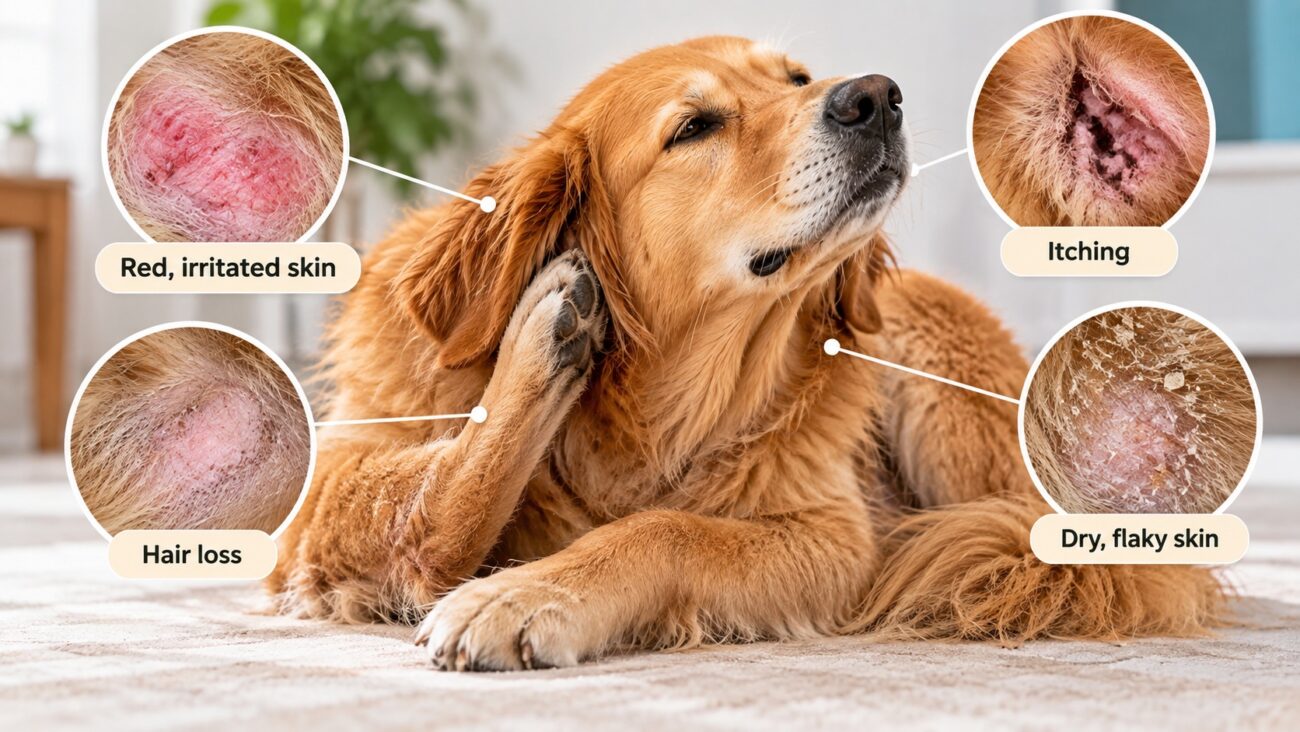
Skin allergies in dogs are immune-related reactions that can cause itching and inflammation after exposure to certain environmental, food, flea, or other triggers.
They are not the only cause of itchy skin. Parasites, bacterial infections, yeast, dry skin, and other problems can create similar signs.
Important: “Allergic skin” describes a medical problem, not simply skin that seems sensitive after grooming. Persistent itching deserves a veterinary diagnosis rather than repeated shampoo experiments.
The American Animal Hospital Association explains that allergic skin disease management often requires more than one treatment approach. Diagnosis can involve examining the skin, checking for parasites or secondary infections, and investigating possible allergy triggers.
You can read the AAHA allergic skin disease guidance for a veterinary overview.
Should You Bathe a Dog With Skin Allergies?
Yes, bathing can be useful for many dogs with allergic skin disease when the shampoo and bathing schedule match the dog’s needs.
A bath can remove dirt and material from the skin and coat. Certain moisturizing or therapeutic shampoos can also support the skin as part of a broader treatment plan.
- Environmental allergies: Bathing may help remove material such as pollen from the coat.
- Dry, irritated skin: A gentle moisturizing formula may help reduce unnecessary stripping of skin oils.
- Secondary infection: A veterinarian may prescribe an antibacterial or antifungal shampoo.
- Atopic dermatitis: Topical skin care may form one part of long-term management.
However, more bathing is not automatically better. The ideal frequency can change when a dog has an active skin disease.
If your dog’s main problem is dryness, my separate guide to bathing a dog with dry skin explains how to reduce unnecessary irritation.
How Do You Bathe a Dog With Skin Allergies Step by Step?
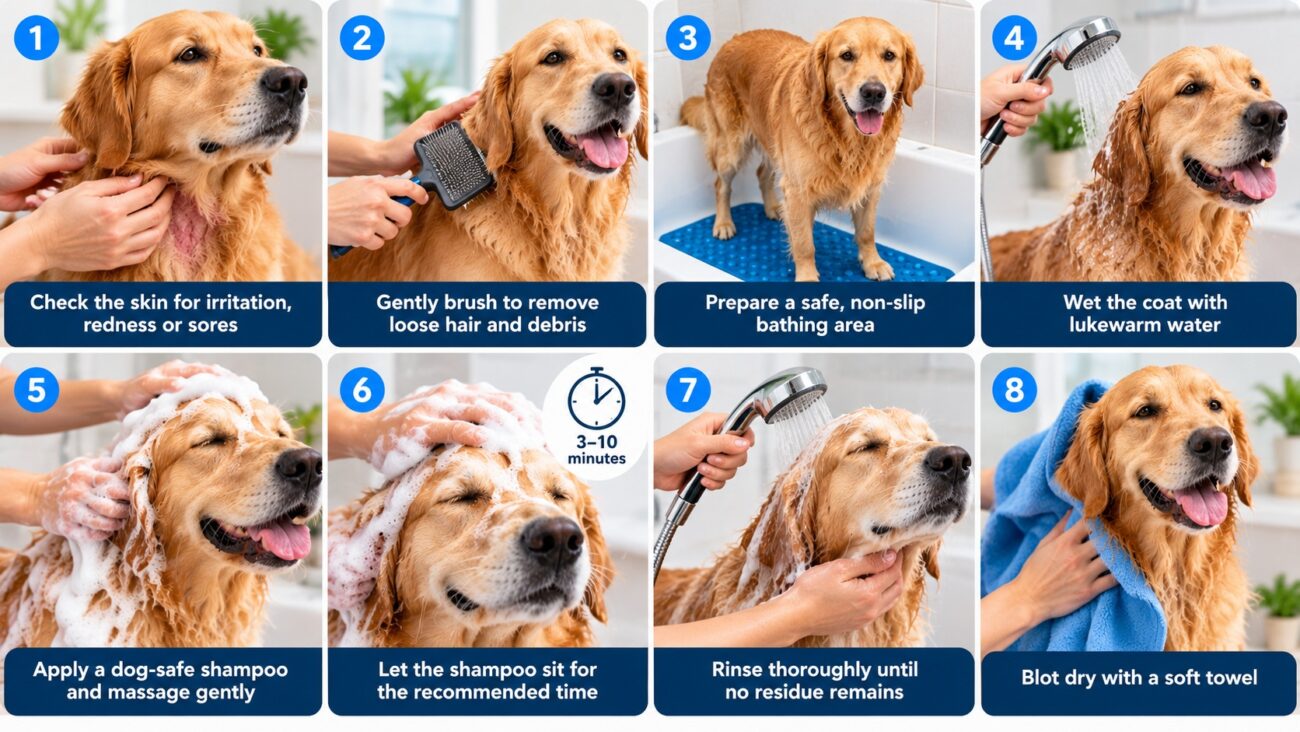
Keep the process controlled and gentle. I prepare everything before turning on the water so the dog does not spend extra time wet, nervous, or standing in the tub.
- Inspect the skin first. Check the belly, paws, armpits, groin, ears, neck, and other itchy areas for sores, swelling, discharge, odor, or obvious infection.
- Brush gently when appropriate. Remove loose hair and easy surface debris, but do not drag a brush across raw or painful skin.
- Add secure footing. Put a non-slip mat in the tub or shower to reduce scrambling and unnecessary friction.
- Use comfortable lukewarm water. Test the stream on your inner forearm before wetting your dog.
- Wet the coat gradually. Start around the shoulders and body while keeping direct spray away from the eyes, nose, and ear openings.
- Apply the correct shampoo. Follow the bottle directions or your veterinarian’s instructions instead of automatically using a large amount.
- Massage with fingertips. Work through the coat without using your fingernails or aggressively rubbing irritated areas.
- Observe the contact time. Medicated shampoos may need several minutes on the skin to work correctly.
- Rinse extremely well. Continue until the coat no longer feels slippery and hidden areas are free of shampoo.
- Blot the coat dry. Use soft towels instead of vigorous rubbing, then keep your dog comfortable until fully dry.
For water-temperature details, see my guide to safe dog bath temperature.
Why Does Shampoo Contact Time Matter?
A therapeutic shampoo may need time against the skin before rinsing. Washing it off immediately can defeat the purpose of the prescribed routine.
VCA’s guidance for medicated shampoo notes that some products may require around 10 minutes of contact, although the correct time is whatever your veterinarian or the specific product directs.
See VCA’s medicated shampoo bathing guidance for more detail.
What Shampoo Is Best for a Dog With Skin Allergies?
The best shampoo depends on what is causing the skin problem. There is no single allergy shampoo that fits every itchy dog.
For routine bathing, many dogs need a gentle dog-specific cleanser. Diagnosed infections or significant allergic dermatitis may require a different product selected by a veterinarian.
| Shampoo Type | Best Fit | Main Purpose | Main Caution |
|---|---|---|---|
| Hypoallergenic shampoo | Sensitive or easily irritated skin | Gentle routine cleansing | Does not diagnose or treat every cause of itching |
| Moisturizing/oatmeal shampoo | Dry, itchy or sensitive skin | Cleansing plus moisture support | Not enough for an untreated infection |
| Antibacterial shampoo | Certain bacterial skin problems | Targeted topical therapy | Use according to veterinary or label directions |
| Antifungal shampoo | Certain yeast or fungal problems | Targeted topical therapy | Diagnosis matters before treatment |
I would not choose a treatment shampoo only because the label says “itch relief.” Itching is a symptom, and the underlying problem determines which active ingredients make sense.
Can You Use Human Shampoo on an Allergic Dog?
I would avoid human shampoo, including baby shampoo, for routine dog bathing. Dog skin differs from human skin, and veterinary guidance recommends products formulated for dogs.
VCA also recommends dog-specific products and notes that hypoallergenic formulas without added perfume may be appropriate for routine bathing. Their dog skin and coat guidance explains this in more detail.
How Thoroughly Should You Rinse Allergic Skin?
Rinsing is one of the parts I spend the most time on. Even a carefully selected shampoo can irritate skin when product remains trapped against it.
Dense coats deserve extra attention because the surface can look clean while shampoo remains close to the skin.
- Check the armpits.
- Rinse beneath the chest.
- Work through the belly and groin.
- Check behind the ears.
- Rinse under the collar area.
- Work through the legs and paws.
- Separate dense undercoat with your fingers.
VCA specifically advises removing all medicated shampoo rather than leaving residue on the skin unless the product is intentionally designed as a leave-in treatment.
How Often Should You Bathe a Dog With Skin Allergies?
There is no universal bathing schedule for allergic dogs. Frequency depends on the diagnosis, shampoo, current flare, coat, and treatment plan.
A healthy dog receiving ordinary grooming may bathe only when needed. A dog using a prescribed therapeutic shampoo may temporarily need much more frequent bathing.
- Routine cleaning: Bathe based on dirt, odor, coat needs, and skin response.
- Active allergy management: Follow the schedule recommended for the specific skin problem.
- Medicated treatment: Do not reduce or increase frequency without checking the instructions.
- Skin worsening after baths: Stop experimenting and contact your veterinarian.
AAHA notes that bathing with moisturizing shampoos can be an adjunctive option for atopic dogs. Anti-infective topical products may also be used when recurrent secondary infections are part of the problem.
What Bathing Mistakes Can Make Allergic Skin Worse?
Most problems I try to avoid come from excess heat, friction, residue, or using the wrong product.
- Using hot water: Keep the bath comfortably mild rather than copying a hot human shower.
- Using human shampoo: Choose a cleanser formulated for canine skin.
- Scrubbing hard: Allergic skin does not need more friction.
- Ignoring product directions: Therapeutic shampoos can have specific dosing and contact-time instructions.
- Leaving residue: Thorough rinsing is essential.
- Rubbing with towels: Blot sensitive areas instead.
- Changing products constantly: Repeated experimentation makes reactions harder to interpret.
- Treating infection as “just allergies”: Odor, discharge, sores, and crusting deserve veterinary attention.
If irritation happens easily even without a diagnosed allergy, read my guide on bathing dogs with sensitive skin.
When Should You Skip the Home Bath and Call a Vet?
Pause home grooming when the skin looks painful, infected, or dramatically worse. A bath should not delay diagnosis of a medical problem.
- Open or bleeding sores
- Pus or unusual discharge
- Strong or abnormal skin odor
- Extensive crusting
- Rapid hair loss
- Swelling of the face or skin
- Severe redness
- Persistent ear problems
- Intense scratching, biting, or licking
- Symptoms that repeatedly return after treatment
Allergies can also occur alongside bacterial or yeast infections. Treating only the itch may miss another problem that needs targeted care.
If you’re ready to choose a gentle bathing product, these are three formulas I would consider based on their intended use. A veterinarian should still choose the treatment when your dog has diagnosed skin disease.
🏆 SOOTHING PICK
DOUXO S3 CALM Shampoo
★★★★☆
Designed for itchy, irritated and allergy-prone skin, with a formula aimed at soothing and hydration. I like it when the priority is allergy-focused topical skin support rather than simple deodorizing.
🌾 DRY-SKIN PICK
Virbac EPI-SOOTHE Shampoo
★★★★☆
A soap-free, oat-based shampoo designed for dry and sensitive skin. I would consider it when gentle routine cleansing and moisture support matter more than a strong medicated formula.
💰 SIMPLE SENSITIVE-SKIN PICK
Veterinary Formula Clinical Care Hypoallergenic Shampoo
★★★★☆
A fragrance-free hypoallergenic formula intended for sensitive skin and routine cleansing. I see it as a simpler grooming option rather than a replacement for prescription treatment.
Frequently Asked Questions
Can bathing help a dog with environmental allergies?
Bathing may help remove environmental material such as pollen from the coat and skin. Some allergic dogs also benefit from moisturizing or therapeutic shampoos. However, bathing is usually one part of management rather than a cure for the underlying allergy.
Is oatmeal shampoo good for dogs with allergies?
Oat-based shampoos can be soothing for some dogs with dry, itchy, or sensitive skin. They are not appropriate treatment for every cause of itching, though. A dog with infection, severe inflammation, or another diagnosed condition may need a different product.
Can I bathe my allergic dog every week?
Possibly, but the right frequency depends on the dog’s diagnosis and shampoo. Veterinarians sometimes recommend weekly or more frequent therapeutic baths for certain conditions. Do not assume that schedule is appropriate for every allergic dog.
Why is my dog itchier after a bath?
Post-bath itching may be linked to shampoo residue, an irritating product, excess heat, frequent washing, dryness, or an underlying skin problem. Review what changed during the bath and contact your veterinarian if the reaction is significant or keeps happening.
Should I use medicated shampoo without seeing a veterinarian?
I would avoid choosing strong medicated products by guesswork. Antibacterial, antifungal, and other therapeutic shampoos target different problems. A veterinarian can determine whether infection or another condition is contributing to the itch and select a more appropriate treatment.
Final Takeaway
Bathing an allergic dog is less about producing lots of foam and more about protecting irritated skin. Use mild water, the correct dog-specific shampoo, gentle hand pressure, complete rinsing, and careful drying.
Most importantly, treat recurring itching as a health problem rather than a grooming failure. Once you know what is causing the irritation, bath time can become a useful part of your dog’s long-term skin-care routine.
– The supplied sitemap endpoint could not be directly parsed by the browsing interface, so the internal pages were verified individually instead.
—