Quick Answer
The safest choice for washing your dog is a mild shampoo made specifically for dogs. If you have no dog shampoo, plain lukewarm water is usually the safest temporary option for light dirt, while you wait until you can follow a complete safe dog bathing routine.
Best Options for Washing Your Dog
- Dog shampoo: The best routine choice because it is formulated for canine skin and coat.
- Plain lukewarm water: Useful for rinsing light mud, dust, salt, or surface dirt when shampoo is unavailable.
- Sensitive-skin dog shampoo: A better option for dogs prone to dryness or irritation.
- Veterinary shampoo: Use medicated products only for the condition and schedule your veterinarian recommends.
- Waterless dog shampoo: Handy between full baths when a product specifically made for dogs is used as directed.
What Should You Avoid?
- Human shampoo: It is designed for human skin, not routine canine bathing.
- Dish soap: Do not make a strong degreasing detergent your everyday dog shampoo.
- Random home remedies: Avoid vinegar, essential oils, detergents, or other mixtures unless your veterinarian approves them.
You need to wash your dog, but the dog-shampoo bottle is empty. That situation often leads to the same question: what can I safely use instead?
My practical rule is simple. I would rather rinse a mildly dirty dog with plain water than experiment with a household cleaner that could irritate the skin.
What Can I Use to Wash My Dog Safely?
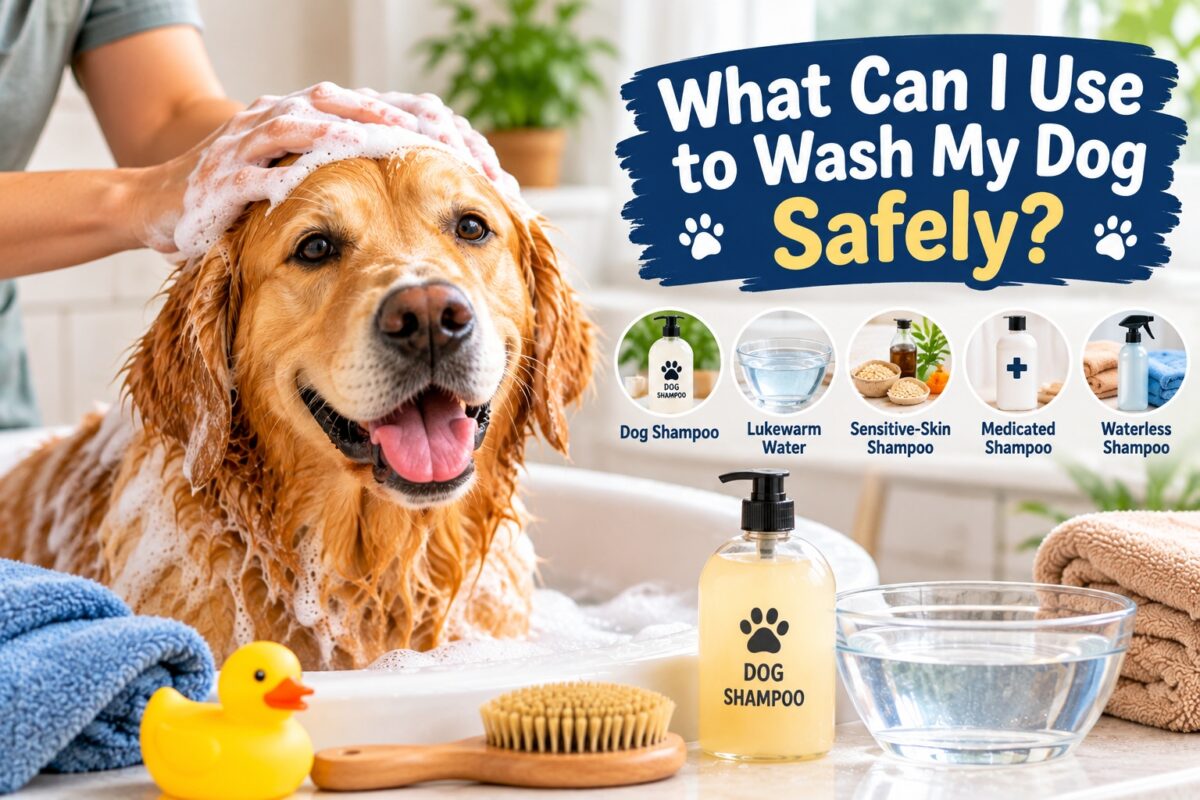
For a normal bath, use a shampoo specifically formulated for dogs. For light dirt when shampoo is unavailable, a thorough rinse with comfortably lukewarm water is a sensible short-term alternative.
Dog-safe washing products are cleansers formulated for canine skin and coat rather than human skin, dishes, floors, or other household uses.
- Regular dog shampoo: Best for routine cleaning of a healthy coat.
- Hypoallergenic or fragrance-free dog shampoo: Worth considering when a dog reacts easily to grooming products.
- Oatmeal dog shampoo: Commonly sold for dry or sensitive skin.
- Medicated shampoo: Intended for specific skin problems and best selected with veterinary guidance.
- Waterless dog shampoo: Useful for quick cleaning between full wet baths.
- Plain lukewarm water: A good temporary rinse for dust, loose mud, sand, or similar debris.
The American Kennel Club’s dog shampoo guidance recommends choosing shampoo made for dogs and matching the formula to the individual dog’s coat and skin needs.
What Can I Use If I Don’t Have Dog Shampoo?
If your dog is only dusty or muddy, start with plain lukewarm water. Rinsing can remove more surface dirt than many owners expect.
This is especially useful after a muddy walk or swimming session. You don’t automatically need detergent every time your dog’s coat gets wet or dirty.
- Loose dirt: Brush first, then rinse if needed.
- Light mud: Let heavy mud loosen, then rinse thoroughly.
- Sand: Flush it from the coat, belly, legs, and paws with fresh water.
- Swimming residue: Fresh water can rinse away salt, chlorine, or lake debris.
- Strong odor or greasy dirt: Wait for an appropriate dog shampoo when practical.
If outdoor dirt is the problem, my approach is to remove dry debris first. You can follow the same method in this guide to bathing a muddy dog after an outdoor adventure.
Is Plain Water Enough to Clean a Dog?
Plain water can handle light surface dirt, but it does not replace shampoo for every bath. Grease, strong odors, and heavy contamination usually need a suitable canine cleanser.
That distinction matters. A dog doesn’t need to smell perfumed after every rinse to be clean enough.
Can I Use Human Shampoo on My Dog?
Human shampoo is not a good choice for routine dog bathing. Dog skin differs from human skin, so products designed for people may disrupt the skin barrier or trigger dryness and irritation.
VCA Animal Hospitals specifically advises using shampoo formulated for pets. Its dog grooming and coat-care guidance also recommends dog-specific shampoo rather than baby shampoo.
| Product | Routine Dog Bath? | Best Use | My Take |
|---|---|---|---|
| Dog shampoo | Yes | Normal full baths | Best overall option |
| Lukewarm water | Yes, when only rinsing | Light dirt, mud, sand, swimming residue | Safest simple backup |
| Human shampoo | No | Human hair and scalp | Skip it for routine dog care |
| Dish soap | No | Household degreasing | Too harsh for routine baths |
| Medicated dog shampoo | Only as directed | Diagnosed skin conditions | Follow veterinary instructions |
Can I Use Dish Soap to Wash My Dog?
Dish soap should not become your normal dog shampoo. Degreasing detergents are designed to remove oils, which is not the goal of ordinary coat maintenance.
If your dog has contacted grease, chemicals, paint, fuel, or another questionable substance, the problem changes from grooming to possible exposure. Call a veterinarian or animal poison service for advice before improvising with cleaners.
For normal mud and dirt, a dog shampoo is the better option. Plain water is a safer stopgap when your dog does not require a true degreasing wash.
Can I Use Baby Shampoo on My Dog?
I would not use baby shampoo as a routine substitute for dog shampoo. The fact that a human product feels gentle to people does not mean it was formulated for canine skin.
VCA’s current grooming guidance advises against human shampoo, including baby shampoo. When I have the choice between baby shampoo and simply delaying a non-urgent bath, I would delay the shampoo bath.
What About Homemade Dog Shampoo?
Homemade recipes are popular online, but “natural” does not automatically mean gentle or safe. Concentration, ingredients, skin condition, and what the dog may lick afterward all matter.
I would especially avoid casually adding essential oils. Some concentrated plant oils can cause problems for pets when used incorrectly.
- Don’t mix random cleaners: Household products were not designed as canine grooming formulas.
- Don’t assume vinegar fixes itching: Itching can come from allergies, parasites, infection, or other causes.
- Don’t add essential oils casually: Safety depends on the specific oil, concentration, exposure route, and dog.
- Don’t treat skin disease by trial and error: Persistent skin symptoms deserve veterinary assessment.
If your dog already has irritation, use the gentler routine in this guide to bathing a dog with sensitive skin.
What Should I Use for a Dog With Dry or Itchy Skin?

Choose a gentle dog-specific formula and avoid treating unexplained itching with repeated baths. Ongoing itching can have causes that shampoo alone will not solve.
Fragrance-free or hypoallergenic dog shampoos are often simpler starting points. Some dog shampoos also contain colloidal oatmeal or aloe for dry or sensitive skin.
- Dry skin: Look for a mild moisturizing dog shampoo.
- Fragrance sensitivity: Consider a fragrance-free canine formula.
- Recurring redness: Ask your veterinarian before repeatedly switching products.
- Open sores or discharge: Get veterinary guidance rather than experimenting with shampoo.
- Diagnosed disease: Follow the prescribed bathing schedule and contact time.
Medicated shampoo works differently from normal grooming shampoo. VCA notes that some veterinary shampoos require a specific contact period before they are rinsed away in its medicated dog shampoo guidance.
How Should You Wash a Dog Once You Choose the Right Product?
Good shampoo cannot compensate for poor bathing technique. Use comfortable water, protect the face and ears, and rinse much more carefully than most first-time owners expect.
- Brush the dry coat. Remove loose fur, debris, and manageable tangles before adding water.
- Prepare secure footing. Put a non-slip mat or another stable surface under your dog’s paws.
- Use lukewarm water. Test it before wetting the coat.
- Wet from the neck down. Keep direct spray away from the eyes and ear canals.
- Apply dog shampoo. Follow the label rather than assuming more shampoo cleans better.
- Massage gently. Use your fingertips instead of scratching with your nails.
- Rinse completely. Check the chest, belly, armpits, legs, paws, groin, and tail.
- Blot the coat dry. Avoid aggressive rubbing through long or tangled hair.
- Keep your dog comfortable. Finish drying before exposing a wet dog to cold conditions.
Water temperature makes a bigger difference than many owners realize. See the full dog bath temperature guide if you are unsure how warm the water should feel.
Should You Brush Before Washing Your Dog?
For most dogs, yes. Brushing first removes loose hair and manageable tangles before water makes the coat harder to work through.
My preferred order is brush, wash, rinse, dry, then finish with another gentle brush when appropriate. The full sequence is explained in whether to brush your dog before or after a bath.
How Do You Protect Your Dog’s Eyes and Ears?
Keep shampoo and direct spray away from the eyes, nose, mouth, and ear canals. A damp washcloth gives you much better control around the face.
Water should flow down the coat instead of directly toward the ear openings. Dogs with recurring ear problems may need a veterinarian-directed routine.
- Face: Wipe gently with a damp cloth.
- Eyes: Keep shampoo and spray away from them.
- Ears: Avoid spraying water into the canals.
- Afterward: Dry the visible outer ear and surrounding fur.
When Should You Stop Washing and Call a Veterinarian?
Stop treating the problem as routine grooming when your dog’s skin looks painful, infected, or persistently abnormal. Washing more often can hide symptoms without addressing the cause.
- Open wounds or raw skin
- Marked swelling
- Persistent or intense itching
- Strong skin or ear odor
- Yellow, bloody, or pus-like discharge
- Large areas of hair loss
- Repeated redness after bathing
- Pain when the skin or ears are touched
Skin disease may require antibacterial, antifungal, antiseptic, or another medicated product. Let the diagnosis guide the shampoo rather than choosing one from the symptom alone.
Dog Washing Products I Would Consider
If you’re ready to choose a proper dog-cleaning product, these are three practical options for different situations.
🏆 Best for Sensitive Skin
Earthbath Oatmeal & Aloe Fragrance Free Shampoo
★★★★½
This soap-free formula uses colloidal oatmeal and aloe and avoids added fragrance. I like this type of formula when gentle routine cleaning and fragrance avoidance are priorities.
💰 Budget-Friendly Pick
Burt’s Bees Oatmeal Shampoo for Dogs
★★★★☆
This dog-specific formula contains colloidal oatmeal, honey, and gentle cleansing ingredients. I would consider it as a straightforward everyday option when you want an oatmeal-based shampoo without moving into medicated products.
💧 Best Between Baths
Vet’s Best Waterless Dog Bath
★★★★☆
This no-rinse foam contains ingredients including oatmeal, aloe vera, vitamin E, and neem oil. I see it as a convenience product for light cleaning between full baths, not a replacement for rinsing away heavy mud or contamination.
Frequently Asked Questions
What can I use to wash my dog if I have no dog shampoo?
Use plain lukewarm water for light dirt until you can get dog shampoo. Rinse thoroughly and dry your dog well. Avoid turning household soap, dish detergent, human shampoo, or homemade mixtures into routine substitutes.
Can I wash my dog with Dawn dish soap?
I would not use dish soap for a normal dog bath because degreasing detergents can be harsher than dog shampoo. If your dog has contacted grease, chemicals, or another hazardous substance, ask a veterinarian how to decontaminate the coat safely.
Can I wash my dog with just water?
Yes, plain lukewarm water can be enough for light mud, dust, sand, or swimming residue. It will not remove every greasy substance or strong odor, but it is a useful option when a full shampoo bath is unnecessary.
Can I use baby shampoo on my dog?
Baby shampoo is still formulated for human skin, so it should not be your regular dog shampoo. Veterinary guidance recommends using products made specifically for dogs. For a non-urgent bath, waiting for dog shampoo is usually the simpler choice.
What is the best soap to wash a dog with?
Instead of ordinary bar soap or household soap, choose a mild liquid cleanser specifically labeled as dog shampoo. Match the formula to your dog’s skin and coat, and ask your veterinarian before using medicated products for persistent itching, odor, redness, or infection.
Final Takeaway
The easiest answer to “What can I use to wash my dog?” is still dog-specific shampoo. It is made for the animal you are washing rather than borrowed from another household job.
If you’ve run out and your dog only needs light cleaning, use lukewarm water and wait for the right shampoo. Keep the bath gentle, rinse carefully, dry well, and get veterinary help when skin problems go beyond ordinary dirt.