
Winter changes more than the temperature outside. Heated indoor air, low humidity, cold wind, wet paws, and a damp coat can all change how a dog’s skin feels after a bath.
I don’t use one winter bathing schedule for every dog. I look at the coat, skin, activity level, odor, and how quickly the dog dries before deciding whether another full bath is necessary.
How Often Should Dogs Be Bathed in Winter?
For many healthy dogs, bathing roughly every 4–8 weeks is a reasonable winter starting range. It isn’t a medical rule, and some dogs need baths sooner or much less often.
Veterinary guidance generally recommends occasional bathing based on dirt, odor, coat type, lifestyle, and health rather than a rigid schedule.
- Mostly indoor dog: Often needs fewer winter baths because the coat stays cleaner.
- Active outdoor dog: May need washing sooner after mud, dirty water, or messy walks.
- Long-haired dog: Needs regular brushing even when full baths are spaced farther apart.
- Oily-coated dog: May naturally need more frequent cleaning.
- Dry or sensitive skin: May benefit from fewer unnecessary baths and gentler products.
- Medicated bathing plan: Follow the veterinarian’s schedule instead of general winter advice.
VCA Animal Hospitals notes that many healthy non-shedding dogs are commonly bathed around every six to eight weeks. Their guidance also stresses that individual needs vary with lifestyle, coat, age, and health.
You can review their broader dog grooming and coat-care guidance for more context.
Why Might Dogs Need Fewer Baths During Winter?
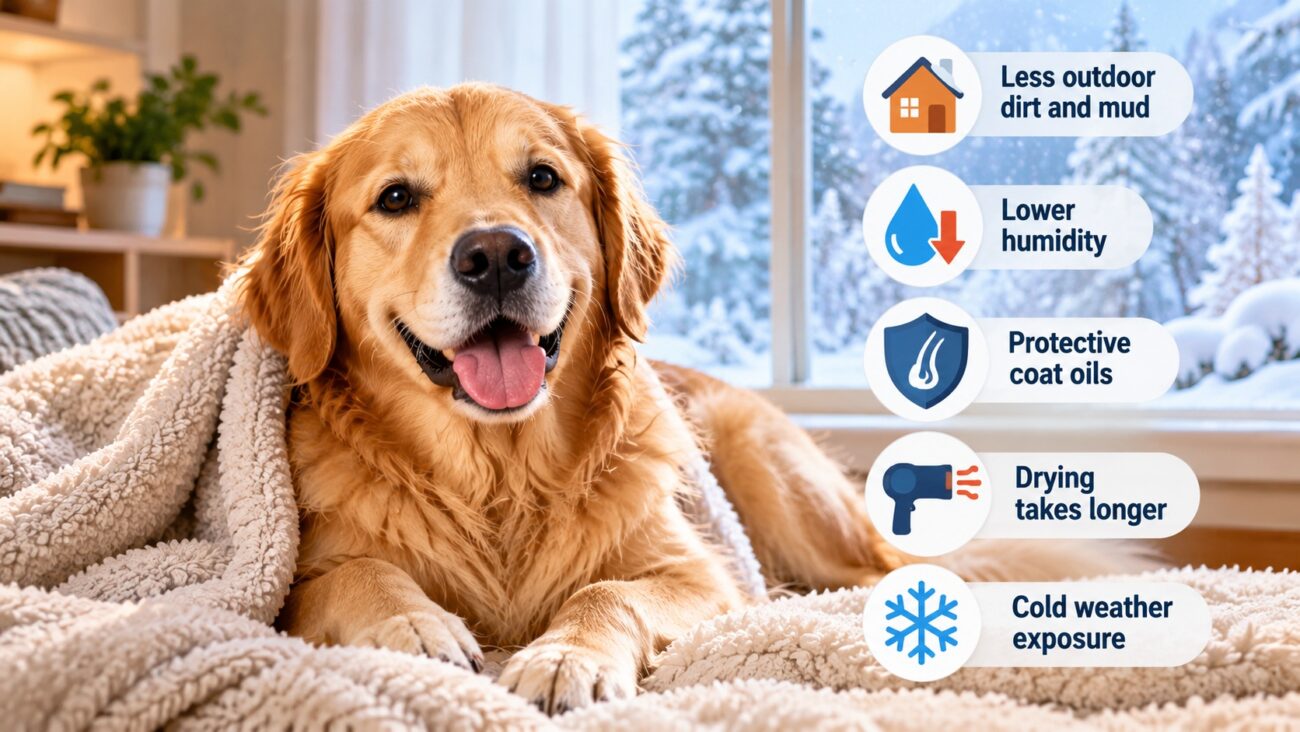
Winter air can be dry, especially inside heated homes. Repeated shampooing can remove protective oils from the skin and coat, which may make dryness or irritation more noticeable.
This doesn’t mean winter bathing is harmful. It means each bath should have a reason.
- Less outdoor dirt: Some dogs spend less time outside during cold weather.
- Lower humidity: Dry air can contribute to flaky or itchy skin.
- Natural coat oils: Excessive washing can reduce the oils that help maintain the coat.
- Drying takes longer: Dense coats can remain damp near the skin after the surface feels dry.
- Cold exposure: A wet dog loses comfort quickly if taken into cold air before drying.
The American Kennel Club also advises against overbathing because frequent shampooing may strip natural oils. Its dog bathing frequency guidance explains why coat type matters.
Winter Dog Bathing Schedule by Coat and Lifestyle
I use the table below as a starting framework rather than a fixed prescription. Your dog’s skin response should always matter more than hitting an exact date.
| Dog Type | Practical Winter Starting Point | What Matters Most |
|---|---|---|
| Healthy indoor dog | About every 4–8 weeks or when needed | Odor, visible dirt, and skin condition |
| Short-haired dog | Often 4–8 weeks or as needed | Lifestyle and natural oil level |
| Long-haired dog | Often 4–6 weeks, adjusted individually | Brushing, tangles, dirt, and complete drying |
| Double-coated dog | Only when genuinely needed | Undercoat care and thorough drying |
| Dog with dry skin | Often several weeks apart | Skin response and shampoo choice |
| Dog using medicated shampoo | Veterinarian-directed | Diagnosis and treatment instructions |
A dog that smells clean, has comfortable skin, and has no visible grime usually doesn’t need a bath simply because several weeks have passed.
On the other hand, mud, feces, sticky contaminants, or a strong odor can justify an earlier bath.
How Can You Tell When Your Dog Needs a Winter Bath?

Your dog’s condition gives better clues than a calendar. I check the coat with my hands before deciding to fill the tub.
- Noticeable odor: A persistent dirty-dog smell can signal that bathing is due.
- Visible grime: Mud, oily dirt, or sticky debris deserves proper cleaning.
- Dirty belly or legs: Winter walks can coat low areas with wet road debris.
- Greasy coat: Some dogs naturally become oily sooner than others.
- Contaminated fur: Waste or questionable substances should be cleaned promptly.
Small amounts of surface dirt don’t always require a complete bath. Brushing, paw rinsing, or wiping the belly with a damp cloth can sometimes solve the problem.
That approach reduces unnecessary shampoo exposure while keeping the dog comfortable.
Does Dry Winter Skin Mean You Should Bathe Less?
Often, yes. If your otherwise healthy dog becomes dry or flaky after bathing, increasing the gap between routine baths may help.
That doesn’t mean persistent itching should simply be treated by avoiding baths. Allergies, parasites, infections, and other skin conditions can cause similar signs.
- Watch for persistent scratching or licking.
- Check for redness, crusting, sores, or hair loss.
- Notice unusual skin odor or greasy patches.
- Look for flakes that keep returning.
- Contact your veterinarian when symptoms persist or worsen.
If dryness is already a concern, see my guide on how often to bathe a dog with dry skin.
PetMD also notes that winter conditions can make dry skin more common and that bathing frequency should still depend on dirt, coat, lifestyle, and individual needs. Their dog bathing overview provides additional veterinary context.
How Should You Bathe a Dog Safely in Winter?
Winter bathing should happen indoors in a warm, draft-free area. I prepare the drying setup before getting the dog wet because that is where cold-weather bathing often goes wrong.
- Brush the dry coat first. Remove loose fur and manageable tangles before adding water.
- Warm the room. Avoid cold drafts around the tub or shower.
- Add secure footing. Place a non-slip mat beneath your dog’s paws.
- Use lukewarm water. Avoid water that feels noticeably hot or cold.
- Apply dog-specific shampoo. Follow the product label rather than using extra shampoo.
- Protect the face and ears. Use controlled water flow instead of spraying directly at the head.
- Rinse completely. Check the belly, legs, armpits, paws, and dense coat areas.
- Dry immediately. Blot with towels and use safe airflow if the coat requires it.
- Stay indoors. Don’t send a damp dog outside into winter air.
For water temperature details, see my guide to safe dog bath temperature.
How Dry Should a Dog Be Before Going Outside?
A dog should be fully dry before returning to cold outdoor conditions. With thick and double coats, the surface can feel dry while the undercoat remains damp.
I run my fingers down toward the skin around the chest, neck, belly, and hindquarters. If those areas still feel damp or cool, drying isn’t finished.
- Press towels into the coat rather than rubbing aggressively.
- Use several towels for large or dense-coated dogs.
- Use cool or low safe airflow when necessary.
- Avoid holding hot dryer air close to the skin.
My complete post-bath dog drying guide covers this process in more detail.
What Winter Bathing Mistakes Should You Avoid?
The biggest winter mistakes involve overbathing, harsh products, and incomplete drying. These problems can turn a simple grooming session into days of skin irritation or discomfort.
- Bathing every week without a reason: Healthy dogs don’t automatically need weekly shampooing.
- Using human shampoo: Choose products formulated specifically for dogs.
- Using very hot water: Hot water can be uncomfortable and may aggravate already-dry skin.
- Bathing outdoors: Avoid outdoor baths during cool or cold winter weather.
- Skipping the rinse: Shampoo residue may contribute to irritation.
- Leaving dense fur damp: Check the undercoat instead of judging only the surface.
- Ignoring worsening skin: Repeated itching, redness, odor, sores, or hair loss deserves veterinary attention.
What Should You Do Between Winter Baths?
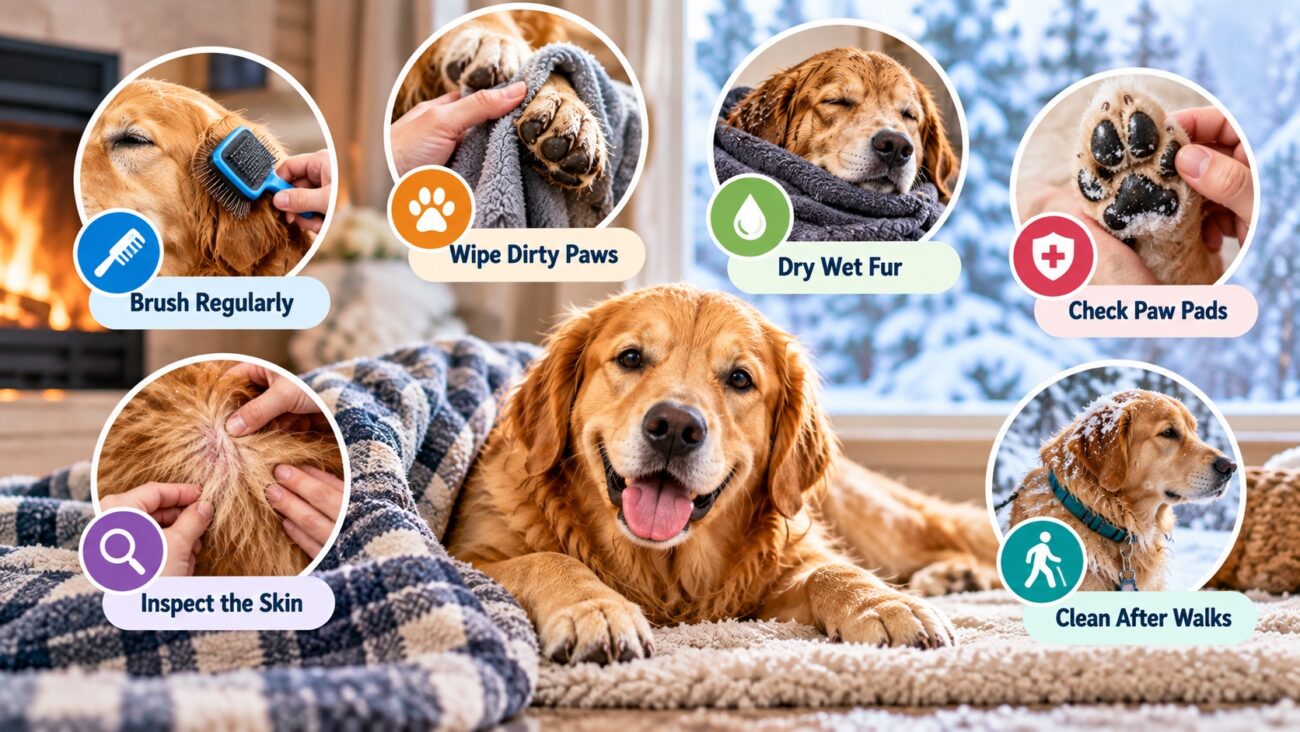
Full shampoo baths are only one part of winter grooming. Regular brushing often does more day-to-day work than bathing.
- Brush regularly: Remove loose hair, debris, and developing tangles.
- Wipe dirty paws: Clean mud and winter road residue after walks.
- Dry wet fur: Towel off snow, rain, or moisture as soon as your dog comes indoors.
- Check paw pads: Look for cracking, irritation, or material trapped between toes.
- Inspect the skin: Grooming gives you a chance to spot redness, lumps, flakes, or parasites.
As of 2026, this is still the routine I prefer: brush first, spot-clean when possible, and save full baths for when they’re genuinely useful.
It keeps grooming simple and prevents me from treating a calendar date as more important than the dog in front of me.
What Products Are Useful for Winter Dog Baths?
If you’re preparing a winter bathing kit, I favor gentle shampoo and efficient drying equipment over heavily fragranced products.
🏆 Winter Dry-Skin Pick
earthbath Oatmeal & Aloe Fragrance-Free Shampoo
★★★★☆
This dog shampoo uses colloidal oatmeal and aloe and is marketed for dry, itchy, sensitive skin. I like the fragrance-free option when I’m trying to keep a winter routine simple.
🧴 Gentle-Skin Option
earthbath Hypoallergenic Dog Shampoo
★★★★☆
This is another mild option designed for dogs with sensitive skin. I would still check with a veterinarian before choosing any product for a dog with an active skin disorder.
💧 Best Bath-Day Essential
Absorbent Microfiber Dog Drying Towels
★★★★☆
Several absorbent towels make winter baths easier because they remove surface water before airflow drying begins. I keep more than one ready for large or double-coated dogs.
Frequently Asked Questions
Can I bathe my dog once a week in winter?
Most healthy dogs don’t need a routine weekly winter bath. Frequent bathing may dry the skin and coat, although dogs using veterinarian-prescribed medicated shampoo may need weekly or even more frequent baths as part of treatment.
Is once a month too often to bathe a dog in winter?
Not necessarily. Monthly bathing can work for many dogs if the skin stays comfortable and the coat genuinely needs cleaning. Dogs with dry skin, heavy undercoats, or low outdoor activity may be able to go longer between baths.
Can I bathe my dog outside during winter?
Outdoor winter bathing is best avoided. Wash your dog indoors with lukewarm water, then keep them in a warm area until the entire coat is dry, especially when the dog has a thick undercoat.
Should I use warmer water for my dog’s winter bath?
Use comfortably lukewarm water rather than making the bath hot. Hot water isn’t necessary for cleaning and can be uncomfortable, especially when the dog’s skin is already dry or irritated.
What if my dog smells bad between winter baths?
First try brushing and cleaning only the dirty areas. If the odor quickly returns despite a clean coat, or it comes with greasy skin, redness, discharge, sores, or intense itching, ask your veterinarian to check for an underlying problem.
Final Takeaway
So, how often should dogs be bathed in winter? For many healthy dogs, roughly every 4–8 weeks or whenever genuinely dirty is a sensible starting point rather than a strict rule.
Pay more attention to your dog’s coat, skin, lifestyle, and veterinary needs than the calendar. Use dog-specific shampoo, keep winter baths indoors, rinse completely, and never send a damp dog back into cold weather.