⚡ Quick Answer
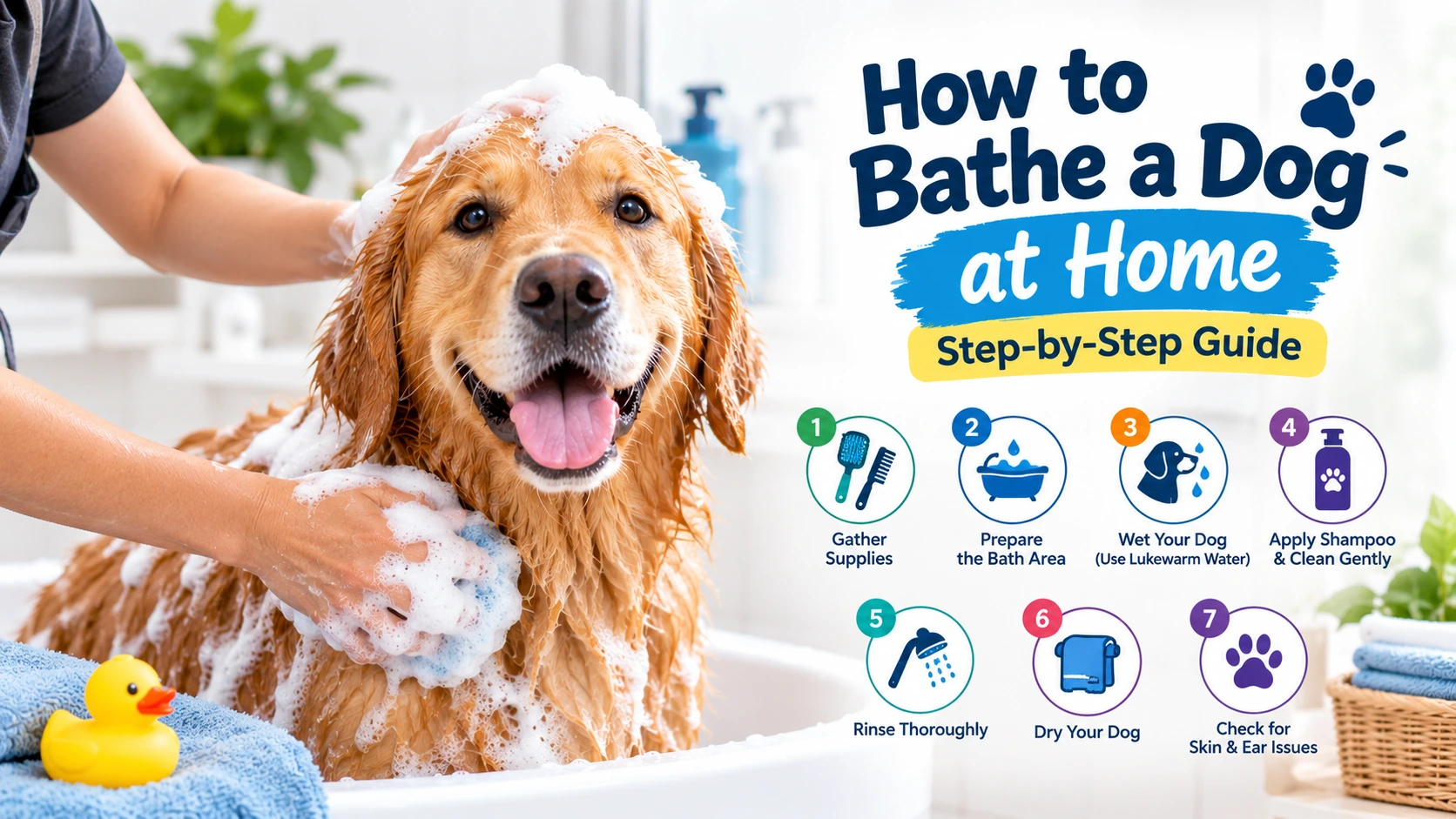
Bathing a dog at home is simple when you prepare first and work calmly. Brush the coat, use lukewarm water, apply dog shampoo, rinse every area well, and dry gently. Keep water and shampoo away from the eyes and ear canals. Stop if your dog becomes highly stressed or shows skin pain.
Your 5-Step Home Dog Bath
- 1Brush the dry coat and remove loose hair.
- 2Wet the coat fully with lukewarm water.
- 3Massage dog shampoo through the wet coat.
- 4Rinse until no shampoo remains.
- 5Towel-dry and keep your dog warm.
Bath Mistakes to Avoid
- ✓Don’t use human shampoo.
- ✓Don’t spray water into the ears.
- ✓Don’t leave shampoo in the coat.
Warm water hits the tub while wet paws shift on the floor. Bath time can turn messy fast when your supplies aren’t ready.
Ashraful’s approach is simple: prepare first, then follow the same calm order. Good technique protects your dog’s skin, coat, eyes, ears, and confidence.
The biggest gains come from brushing, careful rinsing, and gentle drying. Get those steps right, and the whole bath becomes easier.
📌 Key Takeaways
- →Brush first: Water can tighten existing tangles and mats.
- →Use dog shampoo: Human shampoo can irritate canine skin.
- →Rinse well: Shampoo left behind can cause skin irritation.
- →Watch the skin: Ongoing redness or itching needs veterinary advice.
What Do You Need Before Bathing a Dog at Home?
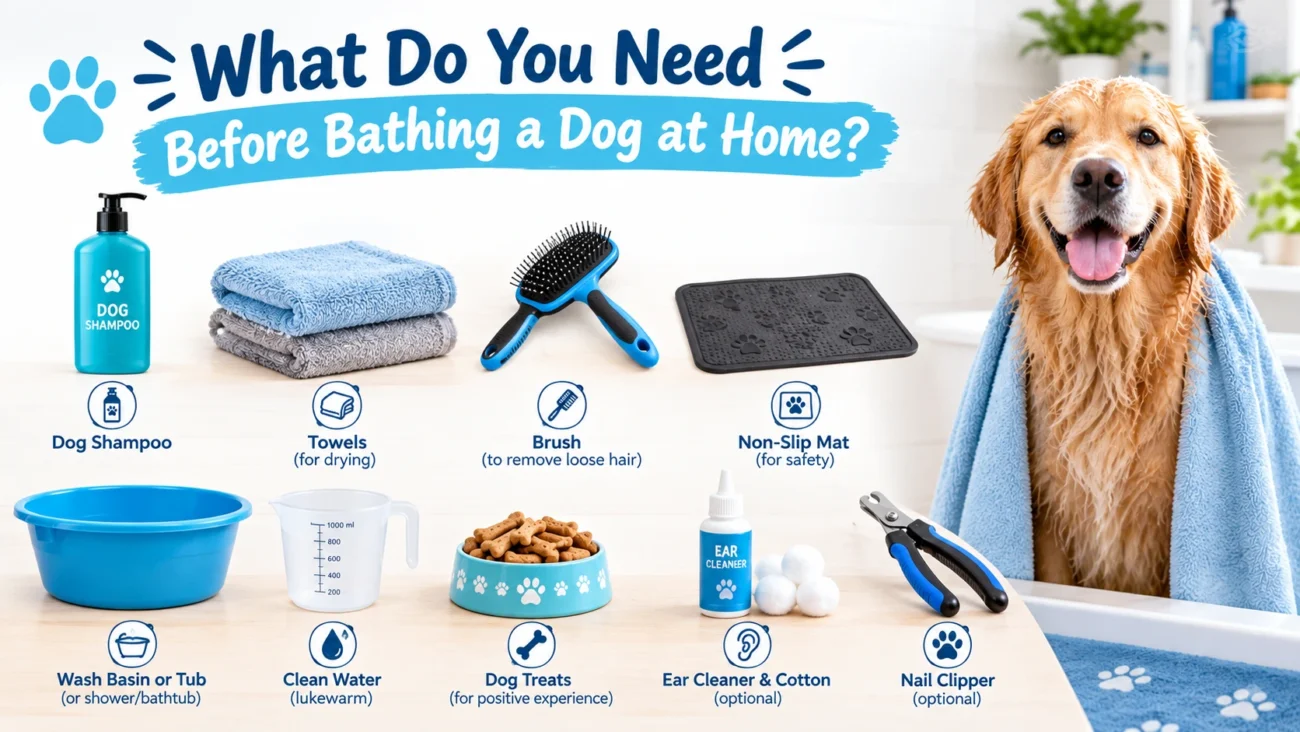
Prepare every bath item before bringing your dog into the washing area. You need dog shampoo, towels, a brush, treats, and a non-slip surface. A cup or gentle spray nozzle also makes rinsing easier.
Brush the coat while it’s dry. Loose hair comes out faster, while tangles stay easier to handle.
A pin or bristle brush works well for many everyday coats. See this Safari Pin & Bristle Brush review if you need a brushing option.
✅ Tip
Place shampoo and towels within one arm’s reach. Never leave a wet dog unattended.
A non-slip mat gives nervous dogs firmer footing. PetMD’s dog bath guide also lists a non-slip mat among useful bath supplies.
Preparation saves you from reaching across wet floors. Next comes the part that matters most: washing in the right order.
How Do You Bathe a Dog at Home Step by Step?
Start with a fully brushed coat and comfortable lukewarm water. Wet the body slowly before adding dog-specific shampoo. Massage the coat gently, protect the face, rinse completely, then remove excess water.
Keep the routine calm and predictable. Sudden sprays, slippery footing, and rushed handling can raise stress.
🔢 Step-by-Step: A Safe Home Dog Bath
-
1
Brush the coat
Remove loose fur and work out light tangles before adding water.
-
2
Wet from the neck down
Soak the coat to the skin using a gentle water flow.
-
3
Apply dog shampoo
Follow the label and massage the shampoo through the whole coat.
-
4
Clean sensitive areas gently
Use a damp cloth around the face instead of direct spray.
-
5
Rinse every area
Check the chest, belly, legs, armpits, paws, and tail.
-
✓
Finish with gentle drying
Blot away water and keep your dog comfortable until fully dry.
What Shampoo Should You Use?
Choose shampoo made for dogs and suited to your dog’s skin. Human shampoo has different properties and can irritate canine skin.
The VCA grooming and coat care guide recommends shampoo made for dogs. For another option, review Go Pet Zone’s Earthbath All Natural Pet Shampoo review.
Puppies often need milder products made for their age and skin. Compare the site’s best puppy shampoos before choosing one.
How Should You Wash the Face and Ears?
Don’t aim the spray at your dog’s eyes, nose, or ear canals. Use a soft damp cloth around the face.
Wipe the outer ear flap only during the bath. Ask your vet about ear-cleaning products when your dog needs deeper care.
How Long Should You Rinse?
Rinse until you can’t feel or see shampoo in the coat. Thick coats need extra attention near hidden folds and under the body.
Here’s why that matters. Shampoo residue can dry or irritate sensitive skin.
Once the rinse water stays clear, drying becomes your next job. That step changes with coat thickness.
How Do You Dry a Dog Safely After a Bath?
Start by letting water drip from the coat into the tub. Then press towels against the fur instead of scrubbing hard. Heavy rubbing can tangle long coats and make brushing harder.
Dogs with short coats often dry well with towels. Thick or long coats can hold moisture close to the skin.
If you use a dryer, choose gentle airflow and low heat. Keep it moving and stop if your dog shows fear.
⚠️ Warning
Never use hot dryer air against one skin area. Heat can cause pain or burns.
Don’t start trimming a damp coat with standard electric clippers. See why using dog clippers on wet hair creates problems.
Drying also gives you time to check the coat and skin. Redness or sore patches deserve closer attention.
How Often Should You Bathe a Dog?
There isn’t one correct bath schedule for every dog. Coat type, skin health, activity, dirt, and odor all change the right timing. A healthy indoor dog can need fewer baths than an active outdoor dog.
A common starting point is about once each month. Adjust that routine based on your dog’s coat and veterinary advice.
The American Kennel Club’s bathing guidance also stresses breed, coat, lifestyle, and health. That makes a fixed calendar less useful than watching your dog.
These factors help you decide whether bath day should come sooner or later.
Your dog’s condition should guide the schedule more than a fixed date.
Bathing more often isn’t always cleaner or healthier. That’s one of several common bath myths worth fixing.
What Most People Get Wrong About Dog Bathing
Most bath mistakes come from trying to make the process faster. Owners often use the wrong shampoo, skip brushing, or stop rinsing too soon. Those shortcuts can leave the coat tangled or the skin irritated.
- Myth: Human shampoo is gentle enough. Dog skin needs products made for dogs.
- Myth: More shampoo means a cleaner dog. Follow the product label instead.
- Myth: A fast rinse is enough. Dense coats can hide shampoo near the skin.
Another mistake is forcing a frightened dog through the whole bath. Fear can grow when each session ends in a struggle.
Instead, keep early sessions short and reward calm behavior. Practice standing in the dry tub before adding water.
💡 Key Insight
A calm bath starts before the water turns on. Preparation often matters more than speed.
But some problems shouldn’t become another home bath. Skin changes and severe fear need a different plan.
When Should You Call a Vet or Professional Groomer?
Contact your veterinarian when bathing reveals sores, swelling, bleeding, or strong ongoing itching. A sudden foul odor can also point to a skin or ear problem. Washing again can hide signs without treating the cause.
Dogs with known skin disease can need medicated shampoo and timed contact periods. Follow the exact veterinary plan and product label.
A groomer can help with severe mats, dense coats, or difficult drying. Professional help also makes sense when safe handling becomes hard.
Stop the bath when fear turns into frantic escape or defensive behavior. Safety matters more than finishing one wash.
Once health and safety are covered, the goal stays simple. Make each future bath predictable and easier than the last.
What Should You Remember for Your Dog’s Next Bath?
Prepare first, brush the dry coat, and use lukewarm water. Choose dog shampoo and rinse until the coat feels clean.
Dry gently and watch your dog’s comfort from start to finish. A calm routine builds better bath habits over time.
Right now, put your dog’s shampoo, towel, and non-slip mat together. You’ll save time before the next bath.
Frequently Asked Questions
Can I use human shampoo on my dog?
No, regular human shampoo isn’t a good choice for routine dog baths. Dog skin differs from human skin and needs dog-specific products. Choose a mild dog shampoo that matches your pet’s coat and skin needs. Ask your veterinarian before using medicated products.
What can I use if I don’t have dog shampoo?
For normal dirt, postpone the full bath until you have dog shampoo. You can rinse muddy areas with plain lukewarm water when needed. Avoid making household soap your regular substitute. Skin problems need advice from your veterinarian instead of homemade treatments.
Can I use Dawn dish soap to wash my dog?
Don’t use dish soap for routine dog bathing. Strong detergents can remove oils from the skin and coat. Use shampoo made for dogs instead. If your dog contacts oil, chemicals, or another risky substance, call a veterinarian before washing.
What temperature water is best for a dog bath?
Use comfortable lukewarm water for most home dog baths. Test the water against your wrist before wetting your dog. Avoid hot water and sudden cold sprays. A gentle temperature keeps bath time calmer and reduces discomfort for sensitive dogs.
How do I bathe my dog for the first time?
Keep the first bath short, calm, and easy. Let your dog explore the dry tub before adding water. Use treats for calm behavior and keep your movements gentle. Stop before fear becomes intense, then build confidence through short practice sessions.
How do I bathe a dog that is scared of water?
Start without water and reward your dog for standing calmly near the bath. Add each new step slowly across short sessions. Use gentle water pressure and stable footing. Severe fear, panic, or defensive behavior needs help from a skilled trainer or groomer.
Can bathing too often harm a dog’s skin?
Yes, excessive bathing can dry some dogs’ skin and coat. The correct schedule depends on coat type, activity, shampoo, and skin health. Don’t follow a fixed calendar without considering those factors. Your veterinarian can set the best schedule for dogs with skin disease.