Quick Answer
Dog brushing removes loose hair, dirt, and small tangles while helping you check the coat and skin for problems. Most dogs benefit from regular brushing, but the right frequency and brush depend on coat type. When bath day arrives, I recommend you brush your dog before the bath so loose fur and tangles are easier to manage.
Simple dog brushing routine
- Choose the tool: Match the brush to your dog’s coat length, density, and shedding level.
- Check first: Look for mats, sores, ticks, tender skin, or anything unusual before brushing.
- Brush gently: Work in the direction the coat grows and avoid pressing hard against the skin.
- Reach the undercoat: Double-coated dogs need attention below the visible outer coat.
- Use short sessions: Stop before your dog becomes frustrated, especially during early training.
- Reward calm behavior: Treats and praise can help your dog build a positive grooming routine.
One rule to remember
- If brushing repeatedly catches, pulls, or hurts, stop and find the cause instead of forcing the brush through.
Dog brushing looks simple, but technique matters more than most owners expect. The wrong brush or too much pressure can turn a useful grooming session into an uncomfortable fight.
My rule is straightforward: brush for the coat you have, not the dog you imagine you have. A smooth Boxer, curly Poodle, and double-coated Husky need different tools and different routines.
What Is Dog Brushing?
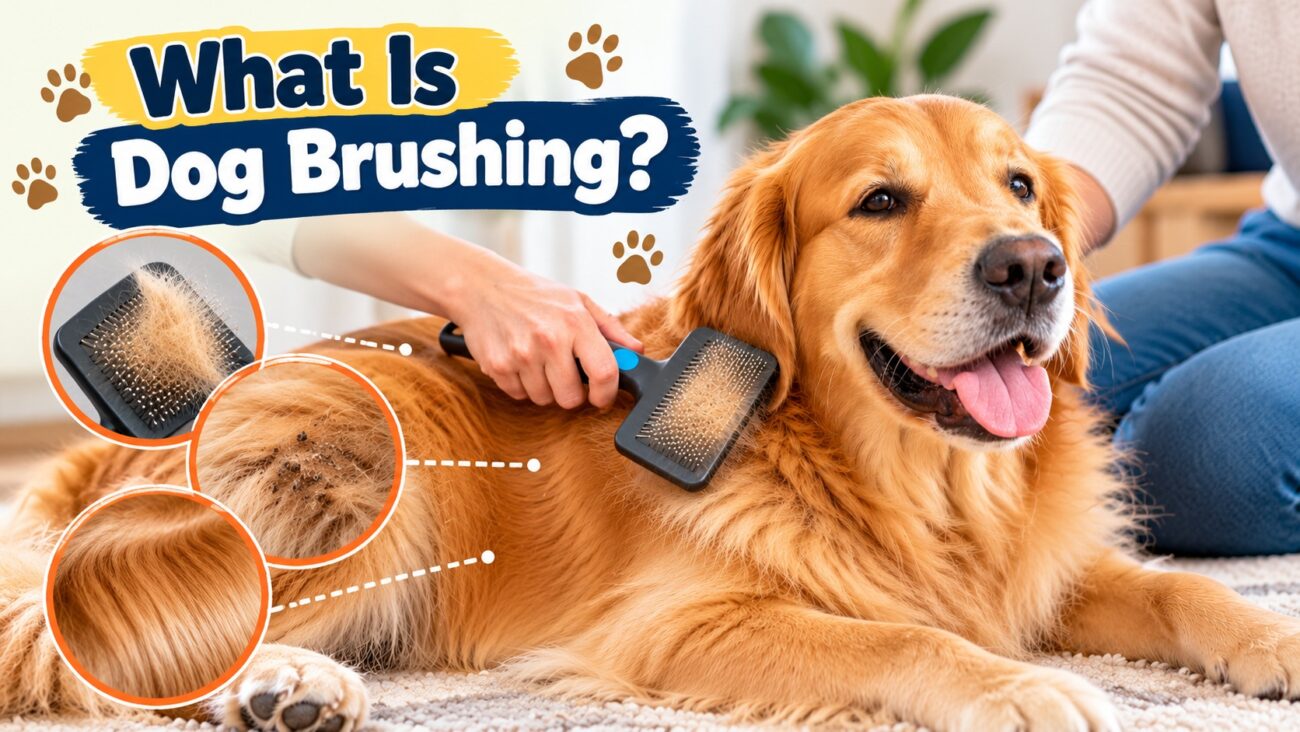
Dog brushing is routine coat care that removes loose hair, debris, and tangles with a brush, comb, rake, or similar grooming tool. It also gives you regular access to the skin beneath the coat.
That second benefit matters. Brushing is one of the easiest times to notice redness, sores, burrs, ticks, unusual lumps, or areas your dog suddenly dislikes having touched.
- Loose hair: Brushing collects dead or shedding coat before much of it reaches your floors and furniture.
- Dirt and debris: Dry mud, grass, plant material, and surface dirt can often be removed before bathing.
- Tangles: Regular brushing can stop small tangles from becoming tight mats.
- Coat inspection: Parting and brushing the hair lets you see areas hidden during normal petting.
- Handling practice: Calm grooming helps dogs become more comfortable with their body, legs, paws, and coat being touched.
The ASPCA’s dog grooming guidance also recommends regular brushing or combing based on coat type.
Why Should You Brush Your Dog Regularly?
Regular brushing keeps loose coat and tangles under better control. It also creates a predictable moment when you can inspect your dog’s skin and body.
Think of brushing as maintenance rather than cosmetic polishing. A shiny coat is useful, but comfort and early problem detection matter more.
- Controls shedding: Loose hair gets captured in the brush rather than gradually falling around the home.
- Reduces tangles: Small knots are easier to handle before they tighten into mats.
- Removes debris: Dust, dried dirt, loose dandruff, and outdoor material can collect in the coat.
- Supports skin checks: You can spot tender patches or visible changes while working through the coat.
- Improves grooming tolerance: Short, gentle sessions help many dogs learn that handling does not have to be stressful.
The American Kennel Club’s home grooming guidance similarly notes that brushing removes dirt, debris, loose hair, and dandruff while helping owners inspect the coat.
How Often Should You Brush a Dog?
There is no single brushing schedule for every dog. Coat length, undercoat density, shedding, activity, and matting tendency all affect frequency.
As a practical 2026 starting point, smooth coats may need only a short weekly session. Long, curly, or mat-prone coats often need attention several times per week or even daily.
| Coat Type | Starting Frequency | Useful Tool | Main Goal |
|---|---|---|---|
| Smooth, short coat | About once weekly | Bristle or rubber brush | Loose hair and surface dirt |
| Short, dense coat | Weekly or more during shedding | Slicker plus appropriate de-shedding tool | Loose undercoat |
| Long coat | Several times weekly to daily | Pin brush plus comb | Tangle and mat prevention |
| Curly coat | Frequent, often near-daily | Slicker plus metal comb | Prevent hidden matting |
| Double coat | At least weekly; more in shedding season | Slicker, rake, or suitable de-shedding tool | Reach loose undercoat |
Use the table as a starting point, not a strict calendar. If you find tangles every session, shorten the interval between sessions.
Which Dog Brush Should You Use?
The best dog brush is the one that matches the coat’s structure. No single brush performs every grooming job well.
If you’re unsure, start with the coat rather than the marketing label. Ask whether you need to smooth, detangle, remove undercoat, or lift loose short hair.
Bristle Brush
Bristle brushes work well for many smooth and short coats. They help lift loose surface hair while giving the finished coat a neat appearance.
They’re usually less useful for reaching a thick undercoat. Dense or heavily shedding coats often need another tool first.
Pin Brush
Pin brushes suit many medium and long coats because the longer pins can move through more coat depth. They are useful for routine detangling when the coat is not tightly matted.
A two-sided option can be convenient for general home grooming. Our Safari Pin & Bristle Brush review explains where the pin side and bristle side work best.
Slicker Brush
A slicker uses many fine wire pins to catch loose hair and work through small tangles. It is common for medium, long, curly, and some dense coats.
Use light pressure. The wire pins should move through hair rather than scrape repeatedly across the skin.
If convenience matters, see our Hertzko Self-Cleaning Slicker Brush review for a closer look at a retractable-pin design.
Undercoat Rake or De-Shedding Tool
These tools target loose hair beneath the visible topcoat. They are most useful on suitable double-coated breeds rather than every dog.
Technique matters because repeated passes or heavy pressure can make grooming uncomfortable. Our FURminator Short Hair deShedding Tool review covers its strengths and limits for short, dense coats.
Metal Comb
A comb is excellent for checking your work after brushing. If a comb cannot move comfortably through a long or curly coat, hidden tangles may still remain.
I especially like the comb as a final check around feathering, legs, and other areas where a brush can glide over the surface.
How Do You Brush a Dog Step by Step?
Brush in a calm, predictable order and use light pressure. The goal is to work through the coat without repeatedly pulling the skin.
- Choose a quiet area. Use a stable, non-slip surface where your dog can stand or lie comfortably.
- Inspect the coat first. Look for mats, sores, ticks, cuts, burrs, or sensitive areas before brushing.
- Start with an easy area. The shoulder or back is often easier than paws, tail, ears, or belly.
- Brush with coat growth. Use short, controlled strokes instead of long, forceful passes.
- Work in sections. Part thicker coats so you reach deeper hair rather than polishing only the surface.
- Handle tangles carefully. Hold the coat nearer the skin when possible so pulling is not transferred directly to the skin.
- Check with a comb. On longer coats, use a comb after brushing to locate remaining tangles.
- Finish positively. Reward calm behavior and end before your dog becomes overwhelmed.
For double coats, don’t forget the undercoat. The AKC’s guide to dog brush types specifically advises owners to brush the undercoat as well as the outer coat.
Should You Brush With or Against the Dog’s Hair?
For routine home brushing, working mainly in the direction of hair growth is the gentler default. It reduces unnecessary pulling and is easier for most dogs to tolerate.
Some grooming methods briefly lift or fluff portions of the coat in another direction. Those techniques should still avoid scraping skin or repeatedly dragging through resistance.
- Routine smoothing: Follow the natural coat direction.
- Thick coats: Part sections so you can reach the undercoat.
- Tangles: Work from the outer end toward the base rather than yanking from the root.
- Sensitive spots: Use shorter strokes and less pressure.
How Do You Brush a Dog With Mats or Tangles?
Do not rip a brush through a tight mat. A mat pulls on skin, and forcing tools through it can cause pain or injury.
Start by deciding whether the tangle is loose enough for gentle home work. Tight, skin-level, widespread, or painful matting is better handled by an experienced groomer or veterinarian.
- Locate the base. Identify where the tangle ends and normal coat begins.
- Stabilize the hair. Hold the coat gently between the tangle and skin when safe to reduce pulling.
- Start at the ends. Work small portions rather than dragging from root to tip.
- Use the right tool. A comb or suitable detangling brush may give better control than aggressive brushing.
- Stop if it hurts. Flinching, snapping, crying, or intense avoidance means you should reassess.
Avoid household scissors around tight mats. The skin can be pulled upward inside the mat, making it difficult to see where the skin ends and the hair begins.
The AKC’s home grooming safety guidance also advises owners not to cut mats out with household scissors.
Should You Brush a Dog Before or After Bathing?
Brush before bathing in most routine situations. Removing loose coat and manageable tangles first makes washing, rinsing, and drying easier.
Water can make existing tangles harder to deal with. A gentle finishing brush after the coat is fully dry may also help, depending on coat type.
- Before bathing: Remove loose hair, dirt, debris, and manageable tangles.
- During bathing: Wash gently without rubbing long hair into new knots.
- After bathing: Dry the coat properly before deeper brushing.
- Final check: Comb or brush areas that commonly tangle.
For the complete wash sequence, follow our dog bathing guide.
What Are the Most Common Dog Brushing Mistakes?
The biggest brushing mistakes come from using too much force or choosing a tool that does not match the coat. More brushing is not automatically better brushing.
- Pressing too hard: Wire pins and de-shedding edges should not repeatedly scrape the skin.
- Brushing only the surface: Thick coats can look tidy while loose undercoat remains underneath.
- Pulling through mats: Tight tangles need patient handling rather than force.
- Using one brush for everything: A finishing brush may not detangle, and a de-shedding tool is not a universal daily brush.
- Making sessions too long: Stop while your dog is still cooperating.
- Ignoring sudden sensitivity: A new painful reaction can signal a skin, coat, or body problem that deserves attention.
My favorite test is simple: watch the dog, not the brush. If your dog repeatedly moves away from one area, inspect that area before continuing.
How Can You Help a Dog That Hates Being Brushed?
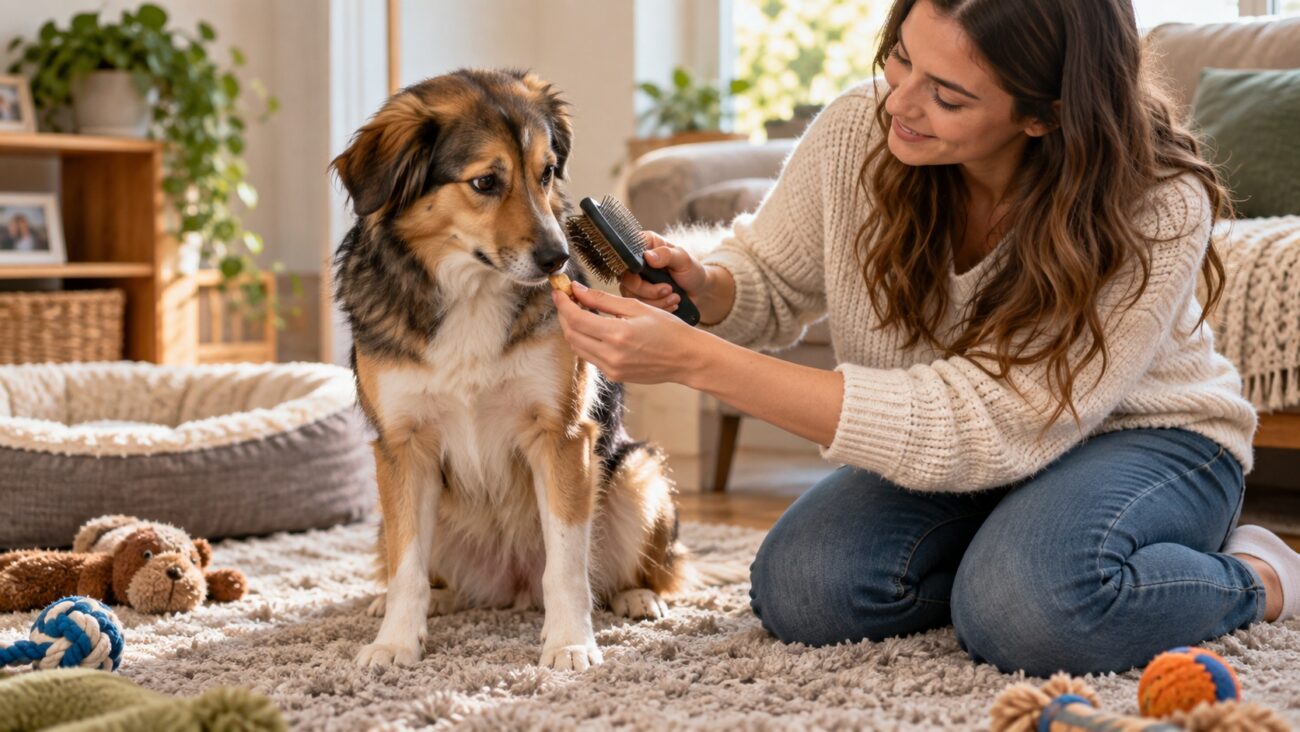
Make brushing shorter and easier before trying to make it more thorough. A fearful dog learns faster from ten calm seconds than from a forced ten-minute session.
- Show the brush. Reward your dog for staying relaxed near it.
- Touch without brushing. Briefly touch the shoulder or back with the tool, then reward.
- Make one gentle stroke. Stop before avoidance starts.
- Repeat gradually. Add strokes over multiple sessions instead of one long session.
- Save difficult areas for later. Paws, tail, belly, and ears often need slower handling practice.
Never punish growling or avoidance during grooming. Those behaviors communicate discomfort and give you useful information about where the process is failing.
The AKC also notes that previous painful or frightening grooming experiences can contribute to brushing resistance.
When Should You Stop Brushing and Call a Professional?
Home brushing works best for routine maintenance. It is not the right tool for every skin problem or severe mat.
- Large mats sit tightly against the skin.
- The dog cries, snaps, or shows obvious pain when a specific area is touched.
- You find bleeding, open sores, swelling, discharge, or significant redness.
- Hair loss appears suddenly or in unusual patches.
- You find a foreign object embedded in the skin or coat.
- You cannot safely see where a mat ends and the skin begins.
A professional groomer can help with difficult coat maintenance. A veterinarian is the better choice when you suspect pain, infection, injury, parasites, or a medical skin problem.
If you’re ready to choose a brushing tool, these are the three options I’d consider first for different coat needs:
🏆 Best Everyday Slicker
Hertzko Self-Cleaning Slicker Brush
★★★★☆ 4.3/5
Fine wire pins and a retractable cleaning mechanism make this a practical option for routine loose-hair removal and light tangles. I like it most for owners who want fast cleanup after regular brushing sessions.
🐕 Best for Heavy Shedding
FURminator Short Hair deShedding Tool
★★★★☆ 4.4/5
The stainless de-shedding edge is designed to reach loose undercoat on suitable short, dense coats. I would choose it for a heavy shedder rather than use it as an aggressive everyday brush.
✨ Best Two-in-One Option
Safari Pin & Bristle Combo Dog Brush
★★★★☆
The pin side handles everyday detangling while the bristle side gives the coat a smoother finish. I like the two-sided format for owners who want one simple brush for light routine grooming.
Frequently Asked Questions About Dog Brushing
How many times a week should I brush my dog?
Brushing frequency depends mainly on coat type. A smooth short-coated dog may do well with weekly brushing, while long, curly, double, or mat-prone coats may need several sessions per week or daily attention.
Can I brush my dog every day?
Daily brushing can suit dogs with long, curly, or easily tangled coats when you use a suitable tool and gentle technique. Daily use of an aggressive de-shedding tool is different and may irritate the coat or skin, so always follow the tool’s instructions.
Does brushing a dog reduce shedding?
Brushing helps collect loose hair before it naturally falls around your home. For double-coated heavy shedders, a tool that reaches loose undercoat may remove more shedding hair than a simple surface brush.
Is it better to brush a dog wet or dry?
Routine detangling is usually easiest on a dry coat before bathing. Wet hair can make existing tangles harder to manage, although some coat-care methods use specific brushes with conditioner or other grooming products under professional guidance.
How do I know if I am brushing too hard?
Watch your dog’s body language and inspect the skin. Flinching, repeated attempts to escape, redness, scraping sounds against skin, or obvious discomfort suggest that you should reduce pressure, change tools, or stop the session.
Final Takeaway
Good dog brushing is not about brushing harder or owning the most tools. It is about matching the tool, pressure, and frequency to your dog’s coat.
Start gently, work in small sections, and pay attention to what the coat and your dog are telling you. A consistent brushing routine can make shedding, tangles, bath time, and general coat care much easier.
If you discover painful mats, skin changes, sores, or unusual sensitivity, don’t force the grooming session. Get help from a professional groomer or veterinarian when the situation goes beyond routine coat maintenance.