Quick Answer
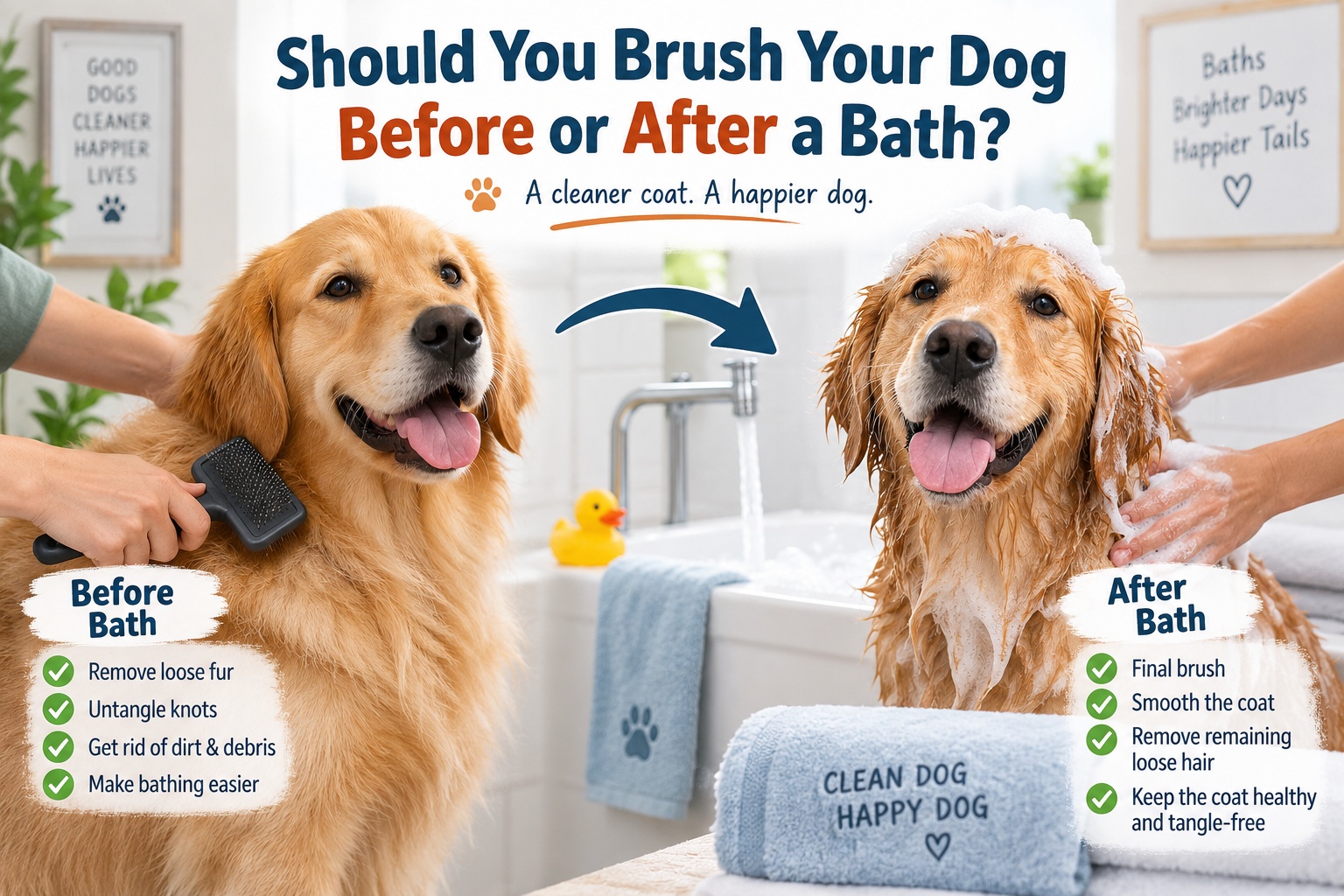
Brush your dog before the bath to remove loose fur, dirt, light tangles, and mats before they get wet. After bathing, dry the coat properly and give it a gentle finishing brush when appropriate for the coat type. This order fits naturally into a safe home dog bath routine.
Before vs. After the Bath
- Brush first: Remove loose hair, debris, and easy tangles while the coat is dry.
- Check for mats: Deal with significant matting before water makes the problem harder to manage.
- Bathe second: Shampoo can reach the coat more evenly after excess loose fur is removed.
- Dry carefully: Blot first and use safe airflow when the coat needs deeper drying.
- Brush again: Finish gently after drying to smooth the coat and collect remaining loose hair.
If you only remember one rule, make it this: brush before you turn on the bath water. That simple step makes washing, rinsing, and drying much easier.
I treat the pre-bath brush as preparation rather than styling. The final brush is the finishing step, and the exact technique depends on your dog’s coat.
Should You Brush Your Dog Before or After a Bath?
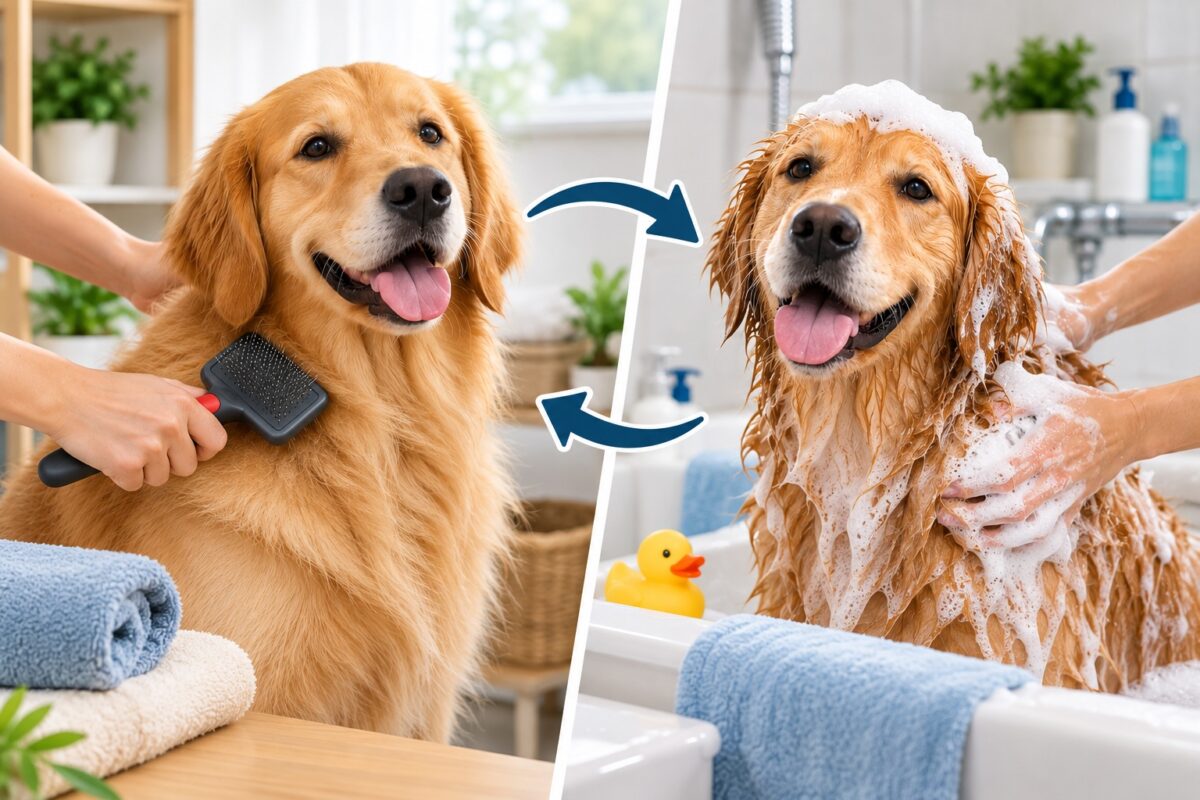
For most dogs, you should brush before the bath and again after the coat is dry. The first session prepares the coat, while the second tidies it after washing and drying.
Pre-bath brushing means gently removing loose hair, surface debris, light tangles, and manageable knots from a dry coat before washing.
| Stage | Main Goal | What to Do | What to Avoid |
|---|---|---|---|
| Before bath | Prepare the coat | Remove loose fur, debris, and light tangles | Pulling hard through tight mats |
| During bath | Clean and rinse | Use dog shampoo and rinse thoroughly | Aggressive scrubbing or tangling the coat |
| After bath | Dry and finish | Blot, dry, then brush or comb gently | Pulling a brush through stubborn wet tangles |
The American Kennel Club recommends thoroughly brushing before washing to remove loose hair, dirt, and debris. Its dog bathing guidance also places brushing before shampooing.
Why Should You Brush a Dog Before a Bath?
Pre-bath brushing removes material that would otherwise become soaked and harder to manage. It also lets you inspect the coat and skin before shampoo hides what is underneath.
- Loose hair comes out first: Less dead fur stays trapped in the coat during washing.
- Light tangles get handled dry: You can work carefully before water complicates them.
- Dirt and debris loosen: Burrs, plant material, and surface dirt can be found before bathing.
- You can inspect the skin: Look for redness, bumps, sores, parasites, or tender areas.
- Rinsing becomes easier: A coat with less loose hair is simpler to separate and check for shampoo residue.
The ASPCA also advises giving a dog a good brushing before bathing to remove dead hair and mats. Its broader dog grooming guidance explains that regular brushing also removes dirt and helps prevent tangles.
What Happens If You Bathe a Dog With Mats?
Bathing a badly matted coat can make an already difficult grooming job worse. Tight clumps can hold water, shampoo, and moisture close to the skin.
Minor tangles may come apart with patient brushing before the bath. Severe or skin-tight mats deserve professional help rather than aggressive home detangling.
- Do not yank: Pulling a tight mat also pulls the skin underneath it.
- Avoid household scissors: Dog skin can be drawn up inside a mat where you cannot see it.
- Stop if brushing hurts: Pain, struggling, or skin irritation means the session has gone too far.
- Get help for severe matting: A groomer or veterinarian can choose a safer removal method.
VCA Animal Hospitals advises removing burrs and tangles before bathing and warns that severe matting may need professional care. You can read its grooming and coat-care guidance for more detail.
Should You Brush Your Dog After a Bath Too?
Yes, a gentle post-bath brush can be useful once the coat is properly dried or during controlled drying for coat types that need it. This finishing pass removes remaining loose hair and leaves the coat more orderly.
Do not treat the after-bath brush as a chance to force out knots you skipped earlier. Wet or damp tangles should never be attacked with hard pulling.
- Short coats: Finish after towel drying and complete drying with a soft bristle or rubber grooming tool.
- Long coats: Work in small sections with a pin brush and comb as the coat dries.
- Curly coats: Gentle brushing during controlled drying can help separate the coat before curls tighten again.
- Double coats: Make sure the undercoat is dry before doing the final shedding brush.
Drying is part of the grooming sequence, not an afterthought. Follow a safe post-bath dog drying routine before you decide the coat is ready for its final brush.
Does the Best Brushing Order Change With Coat Type?
The basic order stays similar, but the tool and amount of brushing should match the coat. A Labrador, Poodle, Yorkshire Terrier, and Husky should not all be brushed the same way.
| Coat Type | Useful Tool | Before Bath | After Bath |
|---|---|---|---|
| Short, smooth | Rubber curry or bristle brush | Remove surface hair and dirt | Light finishing brush |
| Medium or long | Pin brush plus comb | Work out light tangles carefully | Brush in sections after or during safe drying |
| Curly | Slicker brush plus comb | Check thoroughly for hidden knots | Brush gently while drying in sections |
| Double coat | Slicker or undercoat tool | Remove loose undercoat without overworking one spot | Finish only after deeper layers are dry |
My practical rule is to use the gentlest tool that still reaches the layer you need to groom. More aggressive brushing does not automatically mean a cleaner coat.
What Is the Best Brushing and Bathing Order?
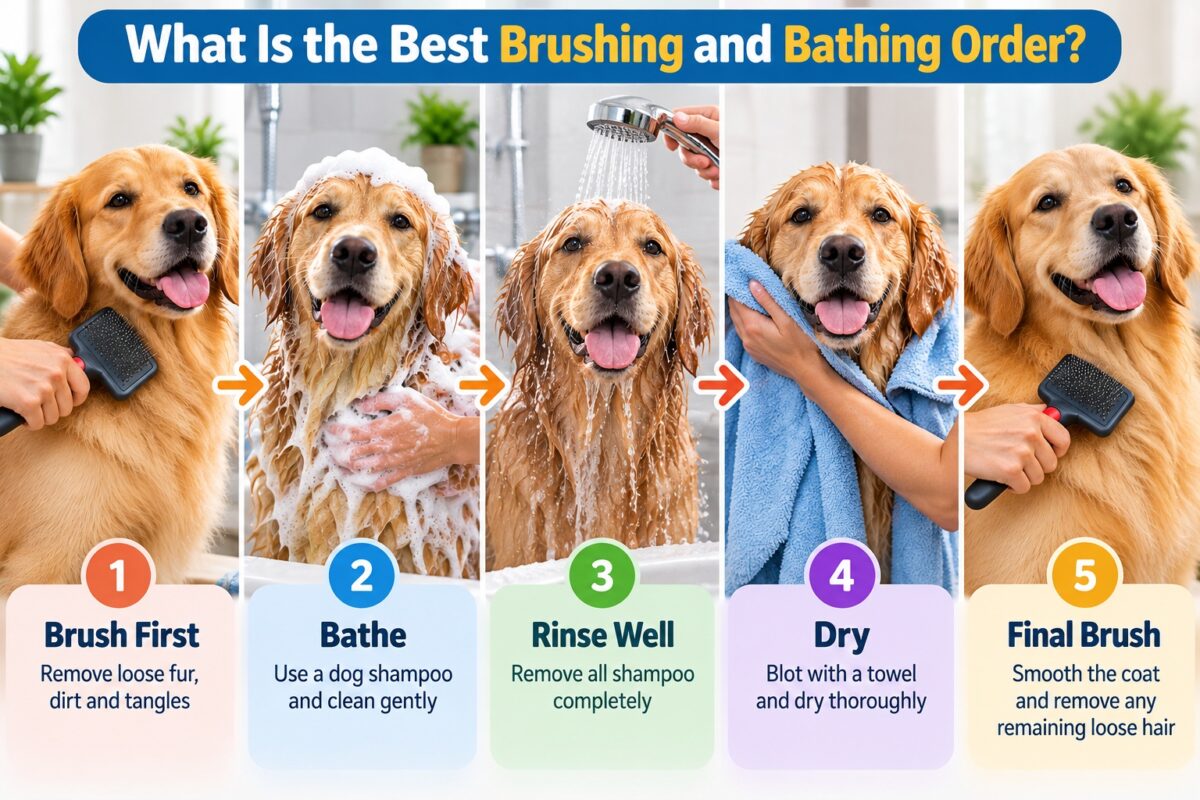
A predictable sequence keeps the coat manageable from start to finish. As of 2026, this same brush-first approach remains consistent across major dog-grooming guidance.
- Inspect the dry coat. Check for mats, burrs, sores, redness, and tender areas.
- Brush before bathing. Remove loose fur and work out only tangles that come apart comfortably.
- Prepare lukewarm water. Avoid water that feels distinctly hot or cold.
- Wet and shampoo gently. Use a shampoo formulated for dogs and follow its label.
- Rinse thoroughly. Pay extra attention to dense areas, the chest, legs, belly, and armpits.
- Blot away excess water. Press towels into the coat rather than rubbing long hair aggressively.
- Dry according to coat type. Dense and long coats may need cool moving air near the roots.
- Finish with a gentle brush. Smooth and separate the dry coat without repeatedly scraping one area.
If you are unsure about the water, use comfortably mild water rather than copying your own hot-shower preference. This guide to safe dog bath temperature explains the practical check.
Does Brushing Before a Bath Help With Shedding?
Yes, brushing beforehand can remove loose hair before it ends up in the tub, towels, or drying area. It is especially useful during periods when a shedding coat releases more undercoat.
The goal is not to remove every hair in one session. Repeated hard strokes over the same area can irritate skin and turn normal grooming into an uncomfortable experience.
- Use light pressure: Let the tool collect loose hair instead of scraping the skin.
- Follow coat growth: Routine strokes generally feel more comfortable in the natural direction of the hair.
- Check the skin often: Stop if you notice redness or sensitivity.
- Know when you are done: A brush collecting less loose hair is a good reason to finish.
What Brushing Mistakes Should You Avoid Around Bath Time?
Most problems happen when brushing becomes rushed or forceful. A calm five-minute session is more useful than turning one stubborn knot into a wrestling match.
- Skipping the pre-bath check: You can miss mats that become harder to handle after soaking.
- Pulling through tight knots: Detangle gently from manageable sections instead.
- Using one brush for every coat: Choose a tool based on coat length, density, and texture.
- Brushing irritated skin: Red, sore, broken, or infected-looking skin needs extra caution.
- Finishing before the coat is dry: Dense undercoats can remain damp near the skin.
- Overbrushing heavy shedders: More passes are not always better.
Pay attention to scratching after the bath as well. Persistent irritation, redness, odor, sores, or hair loss can signal something beyond normal grooming, as explained in our guide to why dogs may itch after a bath.
When Should You Avoid Brushing and Get Professional Help?
Stop home brushing when the coat or skin problem is beyond routine grooming. Painful mats, open sores, severe inflammation, or defensive behavior deserve a safer plan.
- Skin-tight or widespread matting
- Open wounds, bleeding, or moist sores
- Strong pain when the coat is touched
- Severe redness, swelling, or discharge
- Repeated snapping or panic during grooming
- Persistent hair loss, odor, or intense itching
A veterinarian can investigate skin disease, parasites, allergies, or infection. An experienced groomer can also handle difficult coats with equipment and techniques that are harder to reproduce safely at home.
Which Dog Brushes Work Well Around Bath Time?
You do not need a huge grooming kit for routine brushing. I would choose a tool around your dog’s actual coat rather than buying the most aggressive brush available.
If you are ready to choose one, these are three practical options for different grooming needs:
💰 Best Budget 2-in-1
Safari Pin & Bristle Combo Brush
★★★★☆ 4.3/5
A two-sided design combines metal pins for light detangling with bristles for surface finishing. I like this format for medium and longer coats that need everyday maintenance without a highly specialized tool.
🧹 Best for Easy Cleanup
Hertzko Self-Cleaning Slicker Brush
★★★★☆ 4.5/5
Retractable slicker pins let collected hair release when you press the cleaning button. I would consider it for routine short-to-medium coat maintenance where quick cleanup matters more than deep undercoat penetration.
🐕 Best for Heavy Shedding
FURminator Short Hair deShedding Tool
★★★★☆ 4.4/5
Its stainless deShedding edge is designed for loose undercoat in short-haired shedding dogs. I would reserve this type of tool for suitable double coats and use light pressure rather than treating it as an everyday brush.
Frequently Asked Questions
Can You Brush a Dog While the Coat Is Wet?
Some long, curly, or grooming-intensive coats can be gently brushed or combed during controlled drying. Do not pull forcefully through wet tangles. For most routine home baths, remove tangles before bathing, blot the coat carefully, and use gentle finishing strokes once the coat is manageable.
Does Brushing Before a Bath Reduce Dog Hair in the Tub?
Yes. Pre-bath brushing removes part of the loose coat before water and shampoo are introduced, so less shed hair reaches the tub and towels. It will not stop normal shedding, but it can make washing and cleanup easier, especially on dogs releasing a seasonal undercoat.
Should You Bathe a Dog Before Removing Mats?
Usually no. Work out manageable tangles while the coat is dry, and seek professional help for severe mats. Water can make tangled hair more difficult to separate, while tight matting can trap moisture and shampoo close to the skin after bathing.
How Long Should You Wait to Brush a Dog After a Bath?
There is no universal waiting time. Judge the coat instead of the clock. Short coats may be ready after thorough towel drying, while long and double coats need more drying. Finish when you can brush gently without pulling through wet knots or leaving dense roots damp.
Do Short-Haired Dogs Need Brushing Before a Bath?
Yes. Short-haired dogs may not tangle like long-haired dogs, but brushing can still remove loose fur, dirt, and debris before washing. A rubber curry tool, grooming glove, or suitable bristle brush often works well for a smooth short coat.
What Is the Bottom Line?
Brush your dog before the bath first. Remove loose fur and manageable tangles, check the skin, then wash and rinse the coat thoroughly.
Afterward, dry your dog carefully and finish with a gentle brush that suits the coat. That simple before-bath and after-drying routine keeps grooming easier, safer, and more comfortable for both of you.