Quick Answer
To detangle dog hair before trimming, start with a dry coat, separate the fur into small sections, and gently loosen minor knots with your fingers. Use a suitable brush and wide-tooth comb, working from the hair ends toward the roots without pulling the skin. Stop if the coat is tightly matted or your dog shows pain. Severe mats need professional removal rather than forceful brushing.
Detangling your dog’s coat before a haircut helps you identify knots, check the skin, and prepare the fur for safer trimming. It also reduces the chance of grooming tools catching on tangled hair.
However, not every knot should be brushed out. Loose tangles can often be managed at home, while dense mats may pull tightly against the skin and require professional clipping.
The goal is a comfortable, manageable coat—not removing every knot at the expense of your dog’s comfort.
Why Should You Detangle Dog Hair Before Trimming?

You should detangle dog hair before trimming because knots can interfere with brushing, conceal irritated skin, and make it harder to guide grooming tools smoothly through the coat.
Loose hair, friction, moisture, and ordinary movement can cause strands to twist together. Over time, small tangles may become compact mats, particularly in long, curly, or dense coats.
Detangling before trimming helps you:
- Identify problem areas: Locate knots before grooming tools catch on them.
- Inspect the skin: Look for redness, irritation, or hidden debris.
- Improve coat separation: Make it easier to determine which areas can be trimmed safely.
- Reduce unnecessary pulling: Prevent loose tangles from catching in brushes and combs.
- Choose an appropriate haircut: Understand whether the coat can be maintained at its current length.
There is an important exception: severely matted hair should not be repeatedly brushed simply to preserve coat length. In that situation, professional clipping may be safer and more comfortable.
What Tools Do You Need to Detangle Dog Hair?
For mild tangles, a suitable brush, a wide-tooth comb, and your fingers are often enough. The correct tools depend on coat texture, length, density, and the dog’s tolerance for grooming.
- Wide-tooth comb: Helps separate loose tangles without immediately forcing fine teeth through dense hair.
- Slicker brush: Useful for gently working through some longer and curly coats when used with light pressure.
- Metal grooming comb: Helps check whether a brushed section is actually free of small knots.
- Dog-safe detangling spray: May provide additional slip for minor tangles when used according to the label.
- Soft brush: Useful for sensitive dogs and routine surface brushing.
- Non-slip grooming surface: Helps your dog maintain secure footing during grooming.
Do not assume that a sharper or more aggressive grooming tool will produce better results. Bladed dematting tools can injure skin if handled incorrectly and are not an appropriate substitute for professional removal of tight mats.
The VCA guidance on dog grooming and coat care recommends gentle brushing and avoiding excessive pulling on tangles.
How to Detangle Dog Hair Before Trimming: 8 Safe Steps
Follow these steps only for small, loose tangles that separate without significant resistance. If the fur is tightly matted against the skin, arrange professional grooming rather than attempting to force the knot apart.
Step 1: Help Your Dog Feel Comfortable
Choose a quiet location with secure footing. Allow your dog to see and sniff the grooming tools before beginning.
Start with short, gentle handling sessions. Reward relaxed behavior and allow breaks. Avoid restraining a distressed dog just to finish grooming.
Step 2: Examine the Coat for Knots and Mats
Use your fingers to separate the coat and identify tangled areas. Pay particular attention to friction points such as behind the ears, under the collar, armpits, chest, legs, and tail.
Check whether individual knots move freely away from the skin. If a mat feels like a dense sheet attached close to the body, do not attempt to comb through it.
Step 3: Work With a Dry Coat
For ordinary pre-trim detangling, begin with a dry coat unless a professional or a specific grooming product directs otherwise.
Bathing an already tangled dog without addressing the knots can make some mats harder to manage. Shampoo and water also may not reach the skin properly beneath dense matting.
Remove manageable loose tangles before bathing. If significant matting is present, ask a groomer how the coat should be handled before washing.
Step 4: Divide the Coat Into Small Sections
Separate longer hair into manageable sections with your fingers. Work in an organized order so you can tell which areas have already been checked.
Lift a small section of hair and inspect near the roots without pulling upward on the skin. This is especially helpful with curly coats, where the outer surface can look smooth while knots remain underneath.
Step 5: Loosen Small Tangles With Your Fingers
Hold the hair near the base of a loose knot to reduce tension on the skin. Gently separate small groups of strands from the outside of the tangle.
Do not pull the whole knot away from the body or try to break it with force. If the hair does not begin to separate easily, stop working on that section.
Step 6: Use a Suitable Brush or Comb
Begin at the free ends of the hair, using short and gentle strokes. Gradually work closer to the roots as the strands become separated.
Use light pressure and support the hair near its base. Avoid repeatedly dragging a brush across the same sensitive spot.
For a loose knot, a small amount of dog-safe detangling spray may help. Follow product instructions and avoid the eyes, mouth, and irritated skin.
Step 7: Check the Section With a Grooming Comb
After brushing, pass a suitable comb gently through the section. A comb that catches may indicate a remaining knot, but it should never be forced through resistance.
Check both the surface and deeper layers of the coat. Stop if the skin becomes red or your dog starts resisting the process.
Step 8: Reassess Before Trimming
Once the manageable coat is detangled, inspect the skin again. Confirm that the dog is comfortable and the remaining hair is suitable for the intended trimming method.
If you plan to use clippers, follow the clipper manufacturer’s instructions and use appropriate equipment for the coat. Never force a blade under a remaining mat or into skin folds.
If stubborn knots remain, leave those areas untouched and arrange professional help.
Practical Tip
Use the comb as a gentle finishing check, not as a tool for pulling knots apart. If it repeatedly catches in the same place, reassess that section instead of applying more force.
How Can You Tell Whether a Tangle Is Safe to Remove?
A loose tangle that separates easily is different from a tight mat that compresses the hair against the skin. The dog’s comfort and the amount of resistance matter more than the visible size of the knot.
| Coat condition | Recommended action |
|---|---|
| Minor loose knot | Gently separate with fingers and a suitable comb. |
| Several small tangles | Work in short sessions if the dog remains comfortable. |
| Dense mat close to skin | Stop and arrange professional removal. |
| Mat near eyes, ears, or genitals | Do not attempt home cutting or aggressive detangling. |
| Mat with redness, moisture, or pain | Seek veterinary assessment. |
Do not use a finger-width test as a guarantee that a mat is safe to remove. Folded skin can be hidden inside knots, even when some hair appears loose.
Should You Use a Detangling Spray Before Cutting Dog Hair?
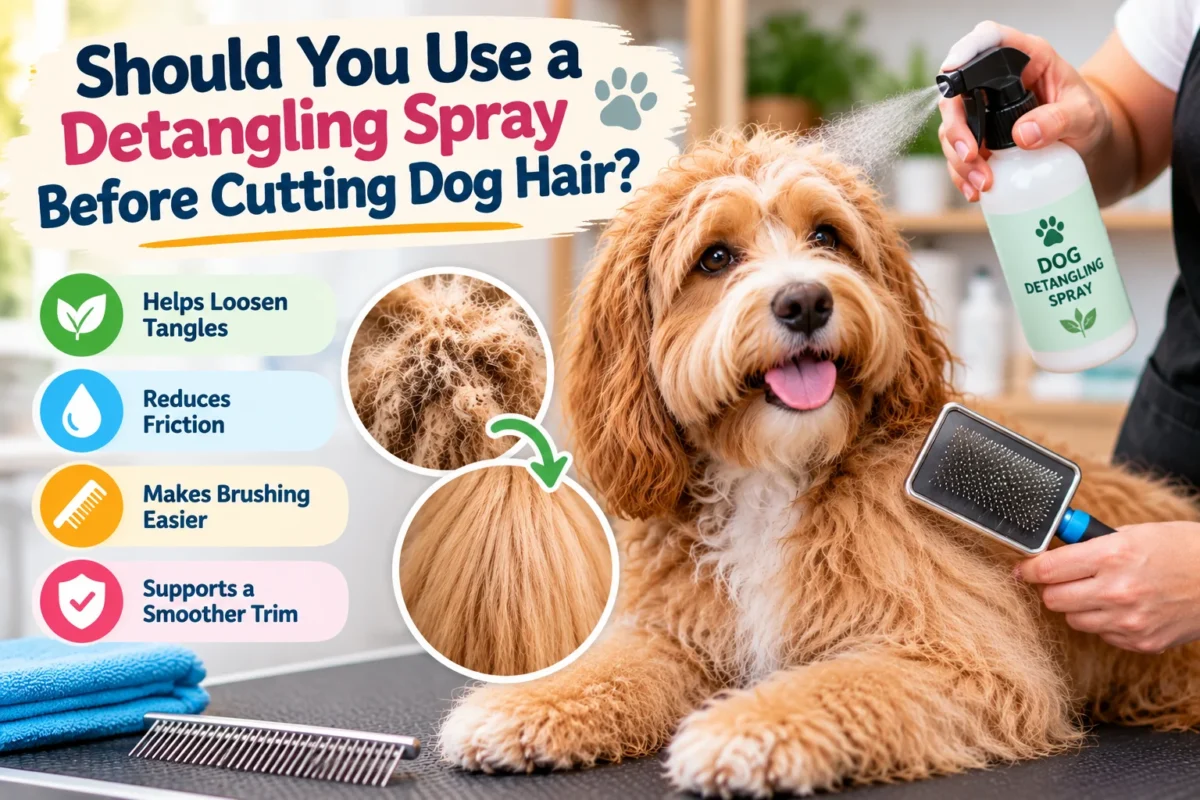
A dog-safe detangling spray can help with certain mild knots, but it cannot safely dissolve a dense mat attached to the skin.
Choose a product specifically labeled for dogs and suitable for your dog’s coat. Use only the directed amount, and avoid applying it to broken or inflamed skin unless your veterinarian approves.
Sprays may reduce friction between strands, making gentle separation easier. However, adding more product does not justify stronger brushing.
Avoid improvising with household oils, human hair products, or fragranced mixtures. Ingredients suitable for human hair are not automatically appropriate for dogs, especially when they may lick the residue.
What Detangling Mistakes Should You Avoid?
The most damaging mistakes usually involve excessive pulling, unsuitable tools, or continuing after a dog shows discomfort.
- Brushing directly through a tight mat: This can pull the skin and cause pain.
- Using scissors beneath tangles: Skin may be trapped or folded inside the mat.
- Applying excessive pressure: Repeated harsh brushing can irritate the skin.
- Rushing the process: Long sessions may increase stress and resistance.
- Ignoring hidden knots: A brushed outer layer does not guarantee the undercoat is clear.
- Using unsuitable tools: Aggressive dematting blades can injure sensitive skin.
- Continuing after warning signs: Painful grooming can make future handling more difficult.
According to PetMD’s veterinary guide to handling matting, large, tight, or painful mats should be addressed by a groomer or veterinarian rather than cut out with household scissors.
Safety Warning
Never cut a tight mat out with ordinary scissors. Dog skin is flexible and can be pulled into the hair. A mat that looks separate from the body may contain hidden folds of skin.
How Does Detangling Change for Different Dog Coats?
Coat structure affects how easily tangles develop and which grooming tools are appropriate. A method suitable for a curly dog may be unnecessary or uncomfortable for a short-coated dog.
Long and Silky Coats
Long hair may knot behind the ears, beneath collars, and around the legs. Separate the coat into narrow sections and gently work from the ends inward.
Use a suitable comb to check areas where hair rubs against clothing, harnesses, or other fur.
Curly and Woolly Coats
Curly coats can hide knots beneath the outer hair. Section-by-section brushing followed by a comb check can help identify tangles before they become dense.
Dogs with heavily compacted curly coats may need a shorter professional haircut rather than prolonged dematting.
Double Coats
Some double-coated dogs accumulate loose undercoat that requires regular brushing. Choose tools appropriate to the coat and avoid damaging the protective topcoat.
Routine undercoat care is different from shaving or trimming a double coat. Do not assume a shorter haircut is necessary simply because the dog sheds heavily.
Short and Smooth Coats
Short-coated dogs usually need less detangling, although debris and localized knots can still occur. A soft brush may be sufficient for routine care.
When Should You Stop Detangling and Contact a Professional?
Stop immediately if brushing causes pain, the skin appears irritated, or the mat cannot be separated with gentle handling.
Arrange help from a professional groomer when the coat has extensive tight matting, especially near delicate body areas.
Contact a veterinarian if you notice:
- Red, swollen, or broken skin beneath the hair.
- Moisture, discharge, or an unpleasant odor under mats.
- Persistent pain or pronounced sensitivity to touch.
- Bleeding or an accidental grooming injury.
- Matting that interferes with comfortable movement or normal hygiene.
A professional may recommend clipping away severely matted hair rather than attempting to preserve its length. This is sometimes the more humane option.
How Can You Prevent Dog Hair From Tangling Before the Next Haircut?
Consistent coat maintenance helps prevent loose knots from developing into painful mats. The most effective routine depends on coat type, activity, and how readily the hair tangles.
Brush regularly with appropriate tools, inspect high-friction areas, and check the coat after outdoor activities. Remove minor tangles while they remain loose.
Keep grooming sessions positive and manageable. Dogs that resist handling may benefit from gradual desensitization and shorter sessions rather than prolonged restraint.
Ask a professional groomer to recommend a practical brushing schedule and haircut length. Maintaining a shorter, manageable coat may be preferable to repeatedly struggling with tangles.
Key Insight
A comfortable haircut begins with realistic coat care. When a dog’s fur repeatedly becomes tightly matted, a simpler grooming routine and shorter professional trim may protect comfort better than attempting to maintain longer hair.
Related Grooming Tool: Wide-Tooth Metal Comb
A dog grooming comb with smooth, rounded teeth can help separate minor loose tangles and check longer coats after brushing. Choose a size appropriate for your dog’s coat and never force the comb through compacted mats.
Choose grooming tools based on coat type and your dog’s comfort. A comb is not a substitute for professional removal of severe matting.
Frequently Asked Questions
1. Can You Trim Dog Hair Without Detangling It First?
Minor tangles should generally be addressed before routine trimming. However, a severely matted coat may require professional clipping rather than detangling. Never force cutting tools through hidden knots.
2. Should You Brush a Dog Before or After Bathing?
Check and gently remove manageable tangles before bathing. Existing mats may become more difficult to manage when wet. Severely matted dogs should be assessed by a groomer before washing.
3. Can You Use Human Conditioner to Detangle Dog Hair?
Dog-specific grooming products are preferable. Human conditioners may contain fragrances or other ingredients that are unsuitable for canine skin or for animals that lick their coats.
4. How Long Should You Spend Detangling Your Dog?
There is no universally safe time limit. Keep sessions short enough that your dog remains relaxed, and stop when brushing becomes uncomfortable. Do not prolong painful dematting simply to finish the coat.
5. Why Does My Dog’s Hair Keep Matting After Brushing?
Possible reasons include incomplete brushing near the roots, friction from harnesses, loose undercoat, and a coat length that is difficult to maintain. A groomer can help identify the cause and recommend an appropriate routine.
6. Is It Better to Shave Severely Matted Dog Hair?
Professional clipping is often safer and less painful than extensive brushing of tight mats. The appropriate method depends on coat condition, skin health, and the dog’s tolerance. A groomer or veterinarian should assess severe matting.
Final Thoughts
Learning how to detangle dog hair before trimming makes at-home grooming more manageable when the coat has only mild knots. Work gently, choose suitable tools, and prioritize your dog’s comfort over preserving hair length.
If the fur is tightly matted, painful, or hiding damaged skin, stop and seek professional care. Regular brushing and an achievable coat-maintenance routine are the best starting points for preventing future problems.