Quick Answer
A dog haircut checklist helps you prepare your dog, choose safe grooming tools, and complete a comfortable trim. Before starting, inspect the skin, gently brush the coat, and check for painful mats. Keep your dog calm, use suitable equipment, and stop whenever grooming becomes unsafe. The ASPCA grooming guidance explains important coat-care precautions.
Your essential haircut checklist
- Check coat type: Confirm whether your dog’s coat needs trimming or another grooming method.
- Inspect skin: Look for sores, irritation, parasites, and tightly matted fur.
- Gather equipment: Prepare clippers, appropriate attachments, brushes, combs, towels, and rewards.
- Prepare the coat: Brush, wash if appropriate, and dry thoroughly before clipping.
- Trim carefully: Work slowly with suitable guards while avoiding sensitive areas.
- Check comfort: Pause for stress, hot blades, pulling, or unusual skin reactions.
Before you begin
- Safety first: Leave severe matting, sensitive-area clipping, and difficult haircuts to trained professionals.
Giving your dog a haircut at home takes more than switching on a clipper. I prefer following a clear checklist because it makes preparation easier and keeps safety at the center of every decision.
This guide covers what to prepare, what to inspect, when to stop, and how to care for your dog’s coat afterward. You can also use the printable-style checklist before each grooming session.
What Is a Dog Haircut Checklist?
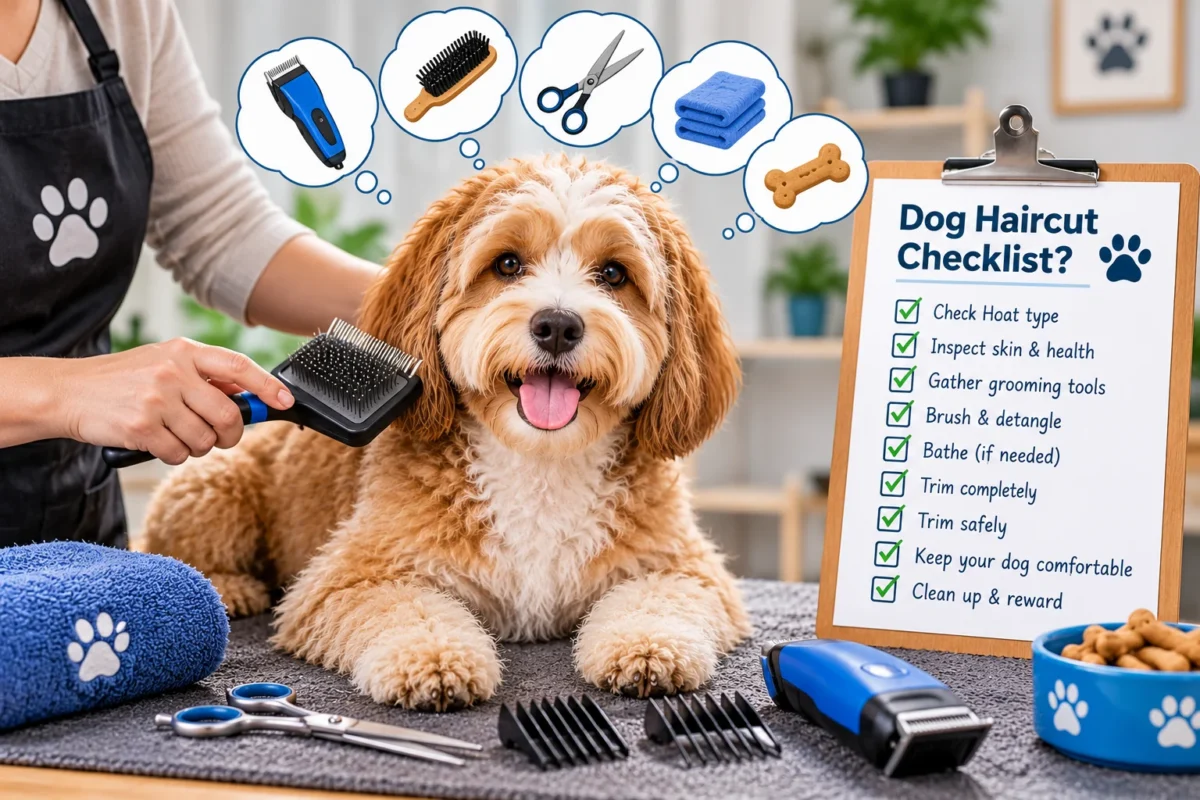
A dog haircut checklist is a step-by-step preparation and safety guide for trimming a dog’s coat. It covers equipment, coat condition, grooming techniques, stress signals, and aftercare.
Its purpose isn’t simply producing a neat haircut. A good checklist helps prevent avoidable discomfort and identifies situations requiring professional assistance.
Why Does a Checklist Matter?
Dogs have different coat structures, skin sensitivities, and grooming requirements. A procedure suitable for a Poodle may be inappropriate for a Labrador Retriever.
- Better preparation: You can organize your tools before handling your dog.
- Safer decisions: Skin problems and painful mats become easier to recognize.
- Less interruption: Clean equipment and a prepared workspace reduce unnecessary delays.
- Consistent grooming: A checklist helps you remember important checks between haircuts.
- Improved comfort: Planned breaks and rewards make sessions more manageable.
According to the American Kennel Club’s home grooming guidance, owners should use coat-appropriate tools and seek professional help for tasks beyond their training.
What Equipment Do You Need Before Giving a Dog a Haircut?
Prepare grooming equipment that matches your dog’s coat and the procedure you’re qualified to perform. Not every dog needs electric clippers, and not every haircut requires scissors.
Essential Grooming Supplies
- Dog grooming clippers: A suitable model for coats that require clipping.
- Compatible guard combs: Attachments that help control cutting length when appropriate.
- Slicker or pin brush: Select according to coat texture and grooming needs.
- Metal grooming comb: Helps identify remaining tangles and assess coat condition.
- Dog-specific shampoo: Use when bathing is appropriate before grooming.
- Towels and dryer: Dry the coat completely without overheating the dog.
- Non-slip surface: Helps maintain secure footing.
- Grooming treats: Reward calm behavior throughout the process.
- Clipper lubricant and cleaning brush: Maintain equipment according to manufacturer instructions.
- Pet first-aid supplies: Keep them accessible and know when veterinary care is needed.
I recommend placing everything within reach before bringing your dog into the grooming area. Repeatedly searching for supplies can make an already nervous dog more restless.
Which Grooming Tools Are Best for Different Tasks?
| Tool | Main purpose | Safety consideration |
|---|---|---|
| Clippers | Trimming suitable body coats | Monitor blade temperature and avoid skin folds. |
| Guard combs | Controlling coat length | Use only compatible guards on properly prepared fur. |
| Slicker brush | Removing loose hair and light tangles | Avoid excessive pressure or repeated scraping. |
| Metal comb | Checking coat separation | Never force it through tight mats. |
| Grooming scissors | Controlled finishing by trained handlers | Avoid moving dogs and sensitive areas. |
The right tool depends on coat type, not just convenience. Ask your groomer which equipment suits your particular dog.
What Should You Check Before Starting a Dog Haircut?
Before clipping, confirm your dog is comfortable, the coat is suitable, and the skin is healthy. These checks matter more than achieving a particular hairstyle.
Inspect the Skin and Coat
- Check for redness, swelling, scratches, wounds, and unusual bumps.
- Look for fleas, ticks, and other visible parasites.
- Examine behind the ears, beneath the collar, and around the legs.
- Identify mats that pull tightly against the skin.
- Notice tenderness, excessive licking, or reactions to touch.
If you discover sores, unexplained lumps, or painful skin, postpone the haircut and consult a veterinarian. Never clip directly over an irritated or injured area.
Understand Your Dog’s Coat Type
Coat type determines whether cutting is appropriate and how much hair should remain. Some curly and continuously growing coats require regular trims, while many double coats benefit primarily from brushing and shedding management.
Double-coated breeds, such as Huskies and Golden Retrievers, generally shouldn’t receive a routine all-over shave. Discuss exceptions, including medical procedures or severe matting, with a veterinarian or qualified groomer.
Dog Haircut Checklist: 15 Steps to Follow
Use this checklist before and during a home grooming session. Complete only those tasks that match your dog’s needs and your demonstrated grooming skills.
Before the Haircut
- Confirm the haircut is appropriate. Identify your dog’s coat type and the specific areas needing trimming.
- Check health and skin condition. Postpone grooming when you notice wounds, inflammation, pain, or unusual symptoms.
- Assess matting. Separate loose tangles gently; leave tight, painful mats to a professional.
- Choose the cutting length. Select a conservative length appropriate for the coat and season.
- Prepare the workspace. Use good lighting, secure footing, comfortable room temperature, and minimal distractions.
- Inspect all equipment. Check blades, guards, cords, batteries, and clipper operation.
- Brush the coat. Remove loose fur and manageable tangles without pulling at the skin.
- Bathe when appropriate. Use dog-specific shampoo and rinse thoroughly without forcing shampoo into the eyes or ears.
- Dry completely. Ensure the coat is thoroughly dry before using ordinary dry-coat grooming clippers.
During the Haircut
- Introduce the equipment. Let your dog become comfortable with clipper sounds before attempting a trim.
- Start with a manageable body area. If you’ve been trained in clipping, use smooth, controlled movements on an appropriate section of coat.
- Monitor blade temperature. Switch off the clipper periodically and check for excessive heat.
- Avoid sensitive areas. Leave difficult face, ear, paw, armpit, and sanitary-area trimming to a trained groomer.
- Take regular breaks. Stop when your dog becomes stressed, fatigued, restless, or uncomfortable.
After the Haircut
- Complete the final inspection. Check for irritation, remove loose clippings, reward your dog, and clean your equipment.
My practical rule is to prioritize a calm, comfortable dog over a perfectly even haircut. A slightly uneven finish is preferable to pushing through fear or discomfort.
How Should You Prepare Your Dog for a Haircut?
Preparation begins with familiarization, gentle handling, and positive experiences. Dogs that tolerate brushing and grooming sounds are generally easier to manage than dogs introduced to everything simultaneously.
Practice Handling Before Clipping
- Gently touch the shoulders, back, legs, and feet when your dog is relaxed.
- Reward calm responses with small, suitable treats.
- Introduce the switched-off clippers from a comfortable distance.
- Gradually expose your dog to brief clipper sounds without forcing contact.
- Keep introductory sessions short and stop before your dog becomes overwhelmed.
Some dogs need several separate practice sessions. That’s normal, and a gradual approach is often safer than trying to complete everything on the first day.
Should You Bathe Your Dog Before a Haircut?
A bath is often helpful when dirt and oil would interfere with safe clipping. However, washing isn’t always necessary immediately before every trim.
Brush and assess the coat before bathing. If you find tight mats, ask a professional how to address them before getting them wet.
The AKC dog grooming guide explains the importance of suitable shampoo, careful rinsing, and proper drying.
How Do You Keep Your Dog Safe During a Haircut?
Safe grooming requires careful handling, suitable equipment, and attention to your dog’s behavior. Stop immediately if a tool pulls hair, touches damaged skin, or causes distress.
Watch for Warning Signs
- Repeated pulling away: Your dog may feel uncomfortable or frightened.
- Growling or snapping: Stop handling and give your dog space.
- Excessive panting: Consider stress, heat, and the surrounding environment.
- Tucked tail or trembling: Pause and reassess your dog’s comfort.
- Yelping or sudden flinching: Stop immediately and check for injury.
- Persistent skin redness: Discontinue clipping and consult a veterinarian when appropriate.
Never physically force a frightened dog to remain in position. Consider a qualified fear-free or low-stress groomer if handling remains difficult.
How Can You Prevent Clipper Burn?
Clipper burn refers to skin irritation associated with clipping, often involving heat, friction, pressure, or inappropriate blade selection. Prevention starts with clean equipment and correct technique.
- Follow the clipper manufacturer’s cleaning and lubrication instructions.
- Check blade temperature frequently.
- Avoid repeatedly passing clippers over the same skin area.
- Use appropriate cutting attachments and gentle pressure.
- Stop if the blade snags or the skin becomes red.
If irritation develops, stop grooming rather than attempting another pass. Contact your veterinarian if redness persists, worsens, or appears painful.
What Dog Haircut Mistakes Should You Avoid?
The most serious grooming mistakes often involve improper tools, insufficient preparation, and continuing despite warning signs. You can prevent many problems by making safety checks routine.
- Clipping a dirty or tangled coat: Debris and tangles may interfere with smooth cutting.
- Using inappropriate blades: Incorrect equipment can increase the risk of skin injury.
- Cutting mats with household scissors: Skin can become trapped within tightly matted fur.
- Shaving double coats unnecessarily: Removing protective coat layers may cause unwanted coat changes.
- Trimming too close: Excessively short cuts can leave sensitive skin vulnerable.
- Ignoring clipper heat: Hot blades may irritate or burn skin.
- Rushing sensitive areas: Sudden movements around ears, paws, or skin folds increase injury risk.
- Skipping breaks: Long sessions can increase stress and reduce cooperation.
I find it useful to separate grooming into smaller tasks rather than treating it as one uninterrupted appointment. Preparation, brushing, and appropriate trimming don’t always need to happen together.
When Should You Choose a Professional Groomer Instead?
Professional grooming is preferable whenever a haircut exceeds your training or your dog cannot tolerate safe handling. Severe matting and complex trimming require particular care.
Situations That Need Professional Help
- Severe or widespread matting close to the skin.
- Repeated panic, aggressive responses, or inability to remain safely handled.
- Haircuts requiring precision around the eyes, ears, paws, or genitals.
- Uncertainty about the correct grooming method for a specialized coat.
- Previous clipping injuries or repeated equipment-related problems.
Seek veterinary advice first when you find wounds, painful swelling, suspected infection, or underlying health concerns. A groomer should not replace veterinary assessment of a medical problem.
How Do You Care for Your Dog After a Haircut?
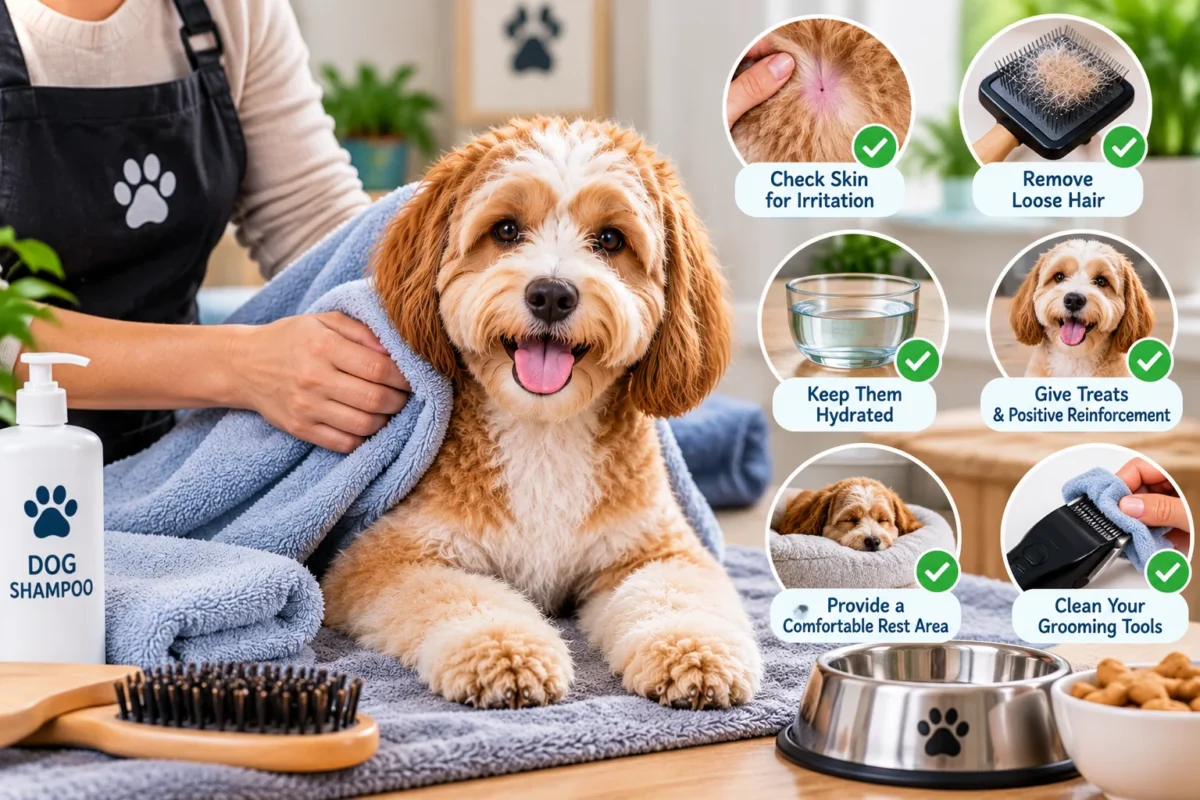
Aftercare involves checking the skin, clearing loose hair, and allowing your dog to rest. It’s also an opportunity to recognize problems before they become more uncomfortable.
Post-Haircut Checklist
- Gently inspect the trimmed areas for redness, cuts, and irritation.
- Remove loose clippings with a suitable brush or soft cloth.
- Keep your dog comfortable and avoid unnecessary friction on newly trimmed skin.
- Offer water and a calm resting place.
- Reward cooperative behavior.
- Clean, dry, and store grooming equipment properly.
- Record any sensitive areas or difficulties for future sessions.
Watch for repeated scratching, unusual licking, or painful skin afterward. Contact your veterinarian if concerning symptoms appear.
How Often Should You Repeat the Checklist?
Review the full checklist before each haircut. Smaller maintenance tasks, including brushing and skin inspection, may need to happen more frequently.
Coat growth, breed, age, lifestyle, and skin health affect grooming intervals. Avoid assuming every dog needs the same four-week or six-week haircut schedule.
Which Dog Grooming Products Are Worth Considering?
Useful grooming products depend on your dog’s coat and your experience. The following are recognizable options to discuss with a groomer before purchasing.
Affiliate disclosure: This article contains Amazon affiliate search links. Qualifying purchases may earn a commission at no additional cost to you.
🏆 Professional Clipper Option
Andis AGC2 2-Speed Clipper
★★★★☆
A corded, two-speed grooming clipper commonly used for coat trimming. I’d consider it for someone with appropriate clipper training who prefers consistent power and doesn’t mind managing a cord.
🔋 Cordless Grooming Option
Wahl Bravura Lithium Ion Clipper
★★★★☆
A cordless clipper with an adjustable cutting blade designed for certain grooming tasks. I’d consider its maneuverability useful, while checking coat compatibility and blade settings before any trim.
🐶 Coat Preparation Option
Chris Christensen Big G Slicker Brush
★★★★☆
A slicker brush designed for grooming suitable longer or denser coats. I’d consider it when coat preparation is the main challenge, provided the brush size and pin design suit the dog.
Editorial suitability scores are subjective assessments of intended use, not verified customer ratings or hands-on test results. Confirm current product specifications before buying.
Frequently Asked Questions About Dog Haircut Checklists
What should I do first before cutting my dog’s hair?
First, identify your dog’s coat type and check whether trimming is appropriate. Inspect the skin and fur for irritation, wounds, painful mats, and parasites. Prepare suitable equipment and confirm your dog can tolerate gentle handling before attempting any clipping.
Can beginners give their dogs haircuts at home?
Beginners can learn basic maintenance grooming, but full haircuts require appropriate technique and training. Start with brushing, gentle handling, and equipment familiarization. Ask a professional groomer to demonstrate safe methods before attempting clipper work, especially around sensitive body areas.
Do dogs need bathing before every haircut?
No. Bathing depends on the coat’s condition, the planned trim, and your dog’s skin needs. Clean, completely dry fur is generally easier to clip. However, severe matting should be assessed before bathing, and overbathing can irritate sensitive skin.
How long should a dog haircut take?
Haircut duration depends on breed, coat condition, haircut complexity, and the dog’s tolerance. A simple maintenance trim may be shorter than a full professional groom. Never impose a fixed completion time; prioritize comfort, safe handling, and breaks when necessary.
What should I do if my dog gets injured during grooming?
Stop grooming immediately and assess the injury without further irritating the area. Contact your veterinarian for cuts, burns, significant pain, persistent bleeding, or other concerning symptoms. Don’t continue clipping over injured skin, and avoid applying human treatments without veterinary guidance.
Final Dog Haircut Checklist: Safety Comes First
A reliable dog haircut checklist should make grooming safer, more organized, and less stressful. The most important steps are understanding coat type, preparing equipment, checking skin condition, and recognizing when to stop.
Keep this checklist accessible before your next appointment or home grooming session. When a task seems difficult or unsafe, a qualified groomer or veterinarian is the better choice.
For additional guidance on everyday coat maintenance, explore the AKC grooming tools and supplies guide.