Quick Answer
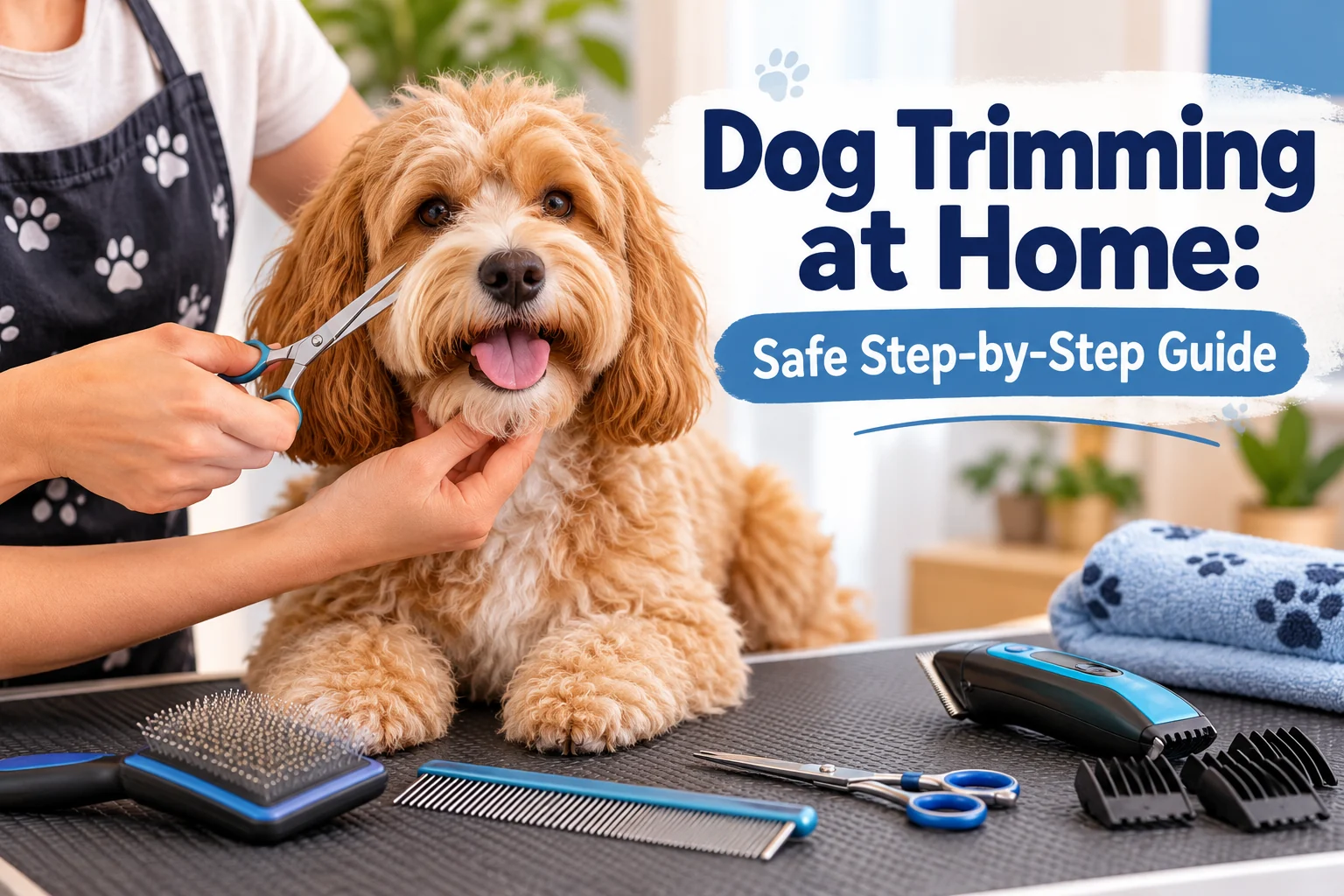
Dog trimming means shortening or tidying a dog’s coat to maintain comfort, cleanliness, and appearance. For beginners, the safest approach is to brush the coat, work with clean and completely dry fur, and trim only small amounts of excess hair using suitable pet-grooming tools. Avoid cutting mats, shaving double coats, or trimming sensitive areas without professional guidance.
Dog trimming is an important part of coat maintenance for many breeds. Overgrown hair can collect dirt, become tangled, obstruct vision, or make everyday cleaning more difficult.
However, not every dog needs a haircut. Some coats require regular clipping, while others benefit primarily from brushing and occasional tidying.
This guide explains which dogs need trimming, how to prepare, what beginners can safely attempt, and when professional grooming is the better choice.
What Is Dog Trimming, and Why Is It Important?
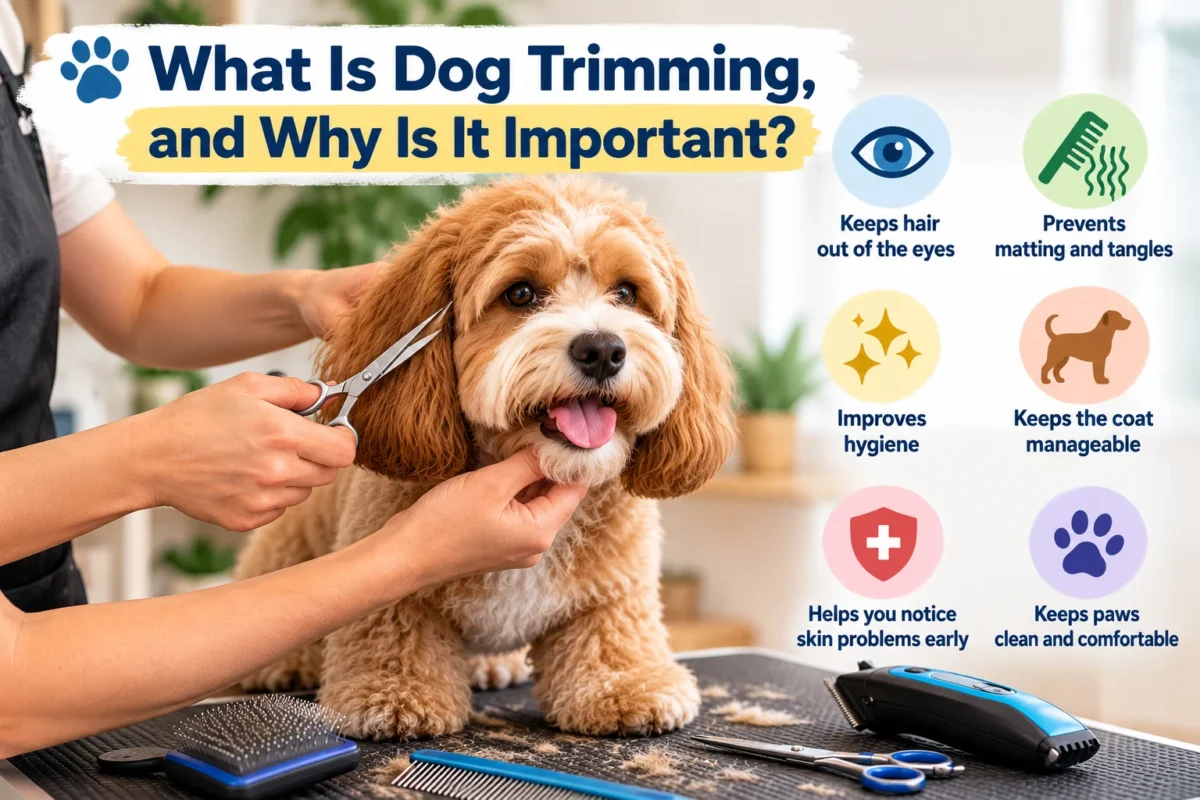
Dog trimming is the controlled removal of excess coat hair using grooming scissors or electric clippers. It may involve a small tidy-up around the feet or a complete haircut performed by an experienced groomer.
The purpose depends on the dog’s coat and individual needs. Trimming can help:
- Keep long hair from covering the eyes.
- Reduce unwanted hair around the paw pads.
- Maintain a manageable coat length in continuously growing coats.
- Improve hygiene around areas where waste can collect.
- Maintain a practical hairstyle between grooming appointments.
Trimming does not replace brushing. Cutting the outer hair shorter does not necessarily remove tangles or loose undercoat.
A well-maintained coat also makes it easier to notice skin irritation, unusual lumps, parasites, and other changes that might otherwise remain hidden beneath the fur.
Which Dogs Need Regular Hair Trimming?
Dogs with continuously growing or long coats often need more frequent trimming than short-coated breeds. Coat structure, matting tendency, activity, and the chosen haircut determine the actual schedule.
| Coat Type | Typical Trimming Needs |
|---|---|
| Curly, growing coats | Regular haircuts and thorough brushing |
| Long, silky coats | Occasional or frequent trimming, depending on length |
| Double coats | Primarily brushing and undercoat care; shaving generally avoided |
| Short, smooth coats | Usually minimal or no hair trimming |
| Wire coats | Breed-specific maintenance, sometimes including hand-stripping |
For example, a Poodle may need scheduled haircuts to maintain a manageable length, while a Labrador Retriever usually needs brushing rather than an all-over haircut.
Double-coated dogs such as Huskies and Golden Retrievers generally should not be shaved for routine cooling or cosmetic purposes. Their coats have protective functions, and removal can affect how the coat grows back.
What Tools Do You Need for Dog Trimming?
For a basic home tidy-up, use equipment specifically intended for pet grooming. Household scissors and human hair clippers may not be suitable for a dog’s coat or delicate skin.
- Dog grooming scissors: Rounded-tip scissors can help with carefully supervised minor touch-ups away from the eyes and skin.
- Pet grooming clippers: Appropriate for experienced users working on suitable, properly prepared coats.
- Guide combs: Help maintain a more consistent cutting length on compatible clippers.
- Slicker brush: Helps loosen appropriate tangles and remove loose fur.
- Metal grooming comb: Checks whether the coat is thoroughly detangled.
- Non-slip mat: Provides stable footing during grooming.
- Treats: Help reward calm, cooperative behavior.
Clean and inspect tools before use. Damaged teeth, poorly aligned blades, and overheating equipment can injure a dog.
If clippers are unfamiliar, ask a professional groomer to demonstrate safe handling and explain the correct blade and attachment combination for your dog’s coat.
How Do You Prepare Your Dog Before Trimming?
Preparation should begin before any hair is cut. A calm dog with a clean, dry, manageable coat is easier to groom safely.
1. Inspect the Skin and Coat
Look for tangles, tight mats, cuts, redness, sensitive areas, and unusual lumps. Pay particular attention to the armpits, behind the ears, and around the legs.
Do not trim directly over irritated or injured skin. Seek veterinary guidance when the skin appears painful, inflamed, or infected.
2. Brush and Check for Tangles
Brush gently in manageable sections and check with a comb. Avoid tugging on knots or forcing a comb through dense mats.
According to VCA Animal Hospitals’ coat-care guidance, severe matting should be managed professionally, and scissors should not be used to cut mats close to the skin.
3. Clean and Dry the Coat
When bathing is appropriate, use a dog-specific shampoo, rinse completely, and allow the coat to dry thoroughly before trimming.
Do not bathe a heavily matted coat without professional advice because wetting and drying can make some tangles more difficult to remove.
4. Help Your Dog Feel Comfortable
Introduce grooming tools gradually. Allow your dog to see and smell them before progressing to gentle contact and, eventually, the sound of powered clippers.
Reward calm behavior and begin with very short sessions. Never restrain a panicking dog simply to finish a haircut.
How Do You Trim Your Dog’s Hair at Home? 7 Steps
The following steps are intended for minor maintenance rather than an unsupervised full-body clipper haircut. First-time owners should have a groomer demonstrate techniques for their dog’s coat and sensitive areas.
- Choose a safe location. Use a quiet, well-lit space with stable, non-slip footing. Keep tools within reach, and never leave your dog unattended on an elevated surface.
- Decide which hair actually needs trimming. Identify small, accessible areas of excess hair rather than attempting to shorten the entire coat immediately.
- Comb the target area. Separate the hair gently so you can distinguish the strands from the skin, ears, paw pads, and other structures.
- Start with a minimal trim. Remove only clearly visible excess hair using a suitable tool you have been taught to handle. Avoid cutting close to the skin.
- Work in small sections. Stop frequently to check the outline and your dog’s body language. Do not chase a perfectly even appearance.
- Check equipment and skin. If using clippers, inspect blade temperature frequently and stop if the blade becomes warm or the skin appears irritated.
- Finish with a gentle brush and inspection. Remove loose cut hair, check for irritation, reward your dog, and end the session before fatigue or stress increases.
Practical Tip
For a beginner, successfully trimming one small, safe area while your dog remains relaxed is better than attempting an entire haircut in one session.
How Should You Handle the Face, Paws, and Sanitary Areas?
These are among the most injury-prone trimming locations. The skin can be thin, folded, or difficult to see, while sudden movement can bring a blade dangerously close to sensitive tissue.
Hair Around the Eyes and Face
Hair that obstructs vision may need trimming, but scissors close to the eyes pose a serious injury risk. A beginner should ask a groomer or veterinary professional to perform or demonstrate this task rather than experimenting near the eyeball or eyelids.
Hair Around the Paw Pads
Long hair extending beyond the pads can collect debris and become tangled. When trimming is necessary, the goal is generally to tidy excess hair rather than remove fur deep between the toes.
The American Kennel Club’s home-grooming guidance recommends learning appropriate techniques from an experienced professional before trimming hair around the paw pads.
Sanitary and Belly Areas
Hair near the genitals and anus may trap waste, making a hygienic trim useful for some long-coated dogs.
However, the folds and thin skin in these areas make clipper injuries possible. Leave close sanitary clipping to a qualified groomer or veterinary team unless you have received hands-on instruction.
How Often Should You Trim Your Dog’s Hair?
There is no universal trimming schedule. Dogs with fast-growing or continuously growing coats may benefit from professional grooming approximately every four to eight weeks, but actual intervals vary.
A long-coated dog kept in a short, manageable style may need fewer touch-ups than the same dog maintained in a longer show-style coat.
Instead of relying only on the calendar, check whether:
- Hair is beginning to obstruct vision.
- The coat becomes difficult to brush completely.
- Hair around the feet collects excessive dirt.
- Sanitary hair is repeatedly becoming soiled.
- The coat is losing its intended manageable length.
A groomer can recommend an interval based on breed, coat texture, lifestyle, and previous matting history.
What Dog Trimming Mistakes Should You Avoid?
Many grooming injuries happen when people rush, use inappropriate tools, or attempt difficult areas without enough training.
- Cutting mats with scissors: Skin can be pulled inside a mat and accidentally cut. Seek professional mat removal.
- Using hot clipper blades: Blade friction can create enough heat to injure skin.
- Forcing a frightened dog: Stress increases sudden movement and the likelihood of injury.
- Cutting too close: Removing unnecessary coat length may expose sensitive skin and create uneven patches.
- Ignoring coat type: A technique suitable for a Poodle may be inappropriate for a Husky.
- Trimming wet or dirty fur: Poor coat preparation can make cutting uneven and tools less effective.
- Prioritizing appearance over safety: A minor uneven patch is preferable to risking a cut while correcting it.
Warning
Stop trimming if your dog yelps, repeatedly pulls away, attempts to bite, or develops skin irritation. If a cut occurs, stop grooming and contact your veterinarian for advice; deep wounds, ongoing bleeding, or eye injuries require urgent veterinary care.
When Should You Choose Professional Dog Trimming?

Professional grooming is the safer choice when trimming requires close work near sensitive skin, substantial coat removal, or specialized handling.
Book professional help when your dog has:
- Severe or tight matting.
- Haircuts requiring unfamiliar clipper techniques.
- Skin conditions, wounds, or painful lumps.
- Extreme fear, struggling, or bite attempts.
- A coat requiring specialized breed-specific maintenance.
- Complex trimming needs around the face, paws, or sanitary areas.
A veterinarian is more appropriate than a routine grooming appointment if matting has caused inflammation, the dog is painful, or a medical condition makes handling unsafe.
Professional grooming does not mean you must stop maintaining your dog’s coat at home. Regular brushing, gentle handling exercises, and basic inspection can make future appointments more comfortable.
Frequently Asked Questions About Dog Trimming
1. Can I trim my dog’s hair myself?
Yes, some minor touch-ups can be managed at home after learning safe techniques. Full-body haircuts, close clipping, and sensitive-area trimming are better handled by an experienced groomer until you have appropriate training.
2. Is it better to trim dog hair wet or dry?
For most home coat trimming, work with clean, completely dry hair. Drying allows you to see the coat’s natural shape and helps avoid cutting more length than intended.
3. Can I use human hair clippers on my dog?
Dog-specific clippers are generally preferable because canine coats vary considerably in density and texture. Human clippers may struggle with thick coats or inappropriate attachments and can become uncomfortable or unsafe.
4. Does every dog need a haircut?
No. Many short-coated dogs need brushing and occasional bathing rather than haircuts. Regular trimming is more relevant to continuously growing coats and certain long-haired breeds.
5. What should I do if my dog moves during trimming?
Stop cutting immediately, allow your dog to settle, and reward calm behavior. If movement continues, end the session. Never try to finish a risky cut while your dog is struggling.
6. Can trimming help prevent dog hair matting?
Keeping an appropriate coat length can make maintenance easier, but trimming alone does not prevent mats. Consistent brushing and combing remain essential, particularly for curly and long-haired coats.
Final Thoughts: Keep Dog Trimming Safe and Comfortable
Successful dog trimming starts with understanding your dog’s coat, preparing properly, and working within your skill level. Not every breed needs a haircut, and beginners should focus on safe maintenance rather than complicated styling.
Use appropriate grooming tools, make each session a positive experience, and never force difficult trimming around sensitive areas. When the coat is severely matted or the dog is frightened or uncomfortable, professional help is the safer option.