
Quick Answer
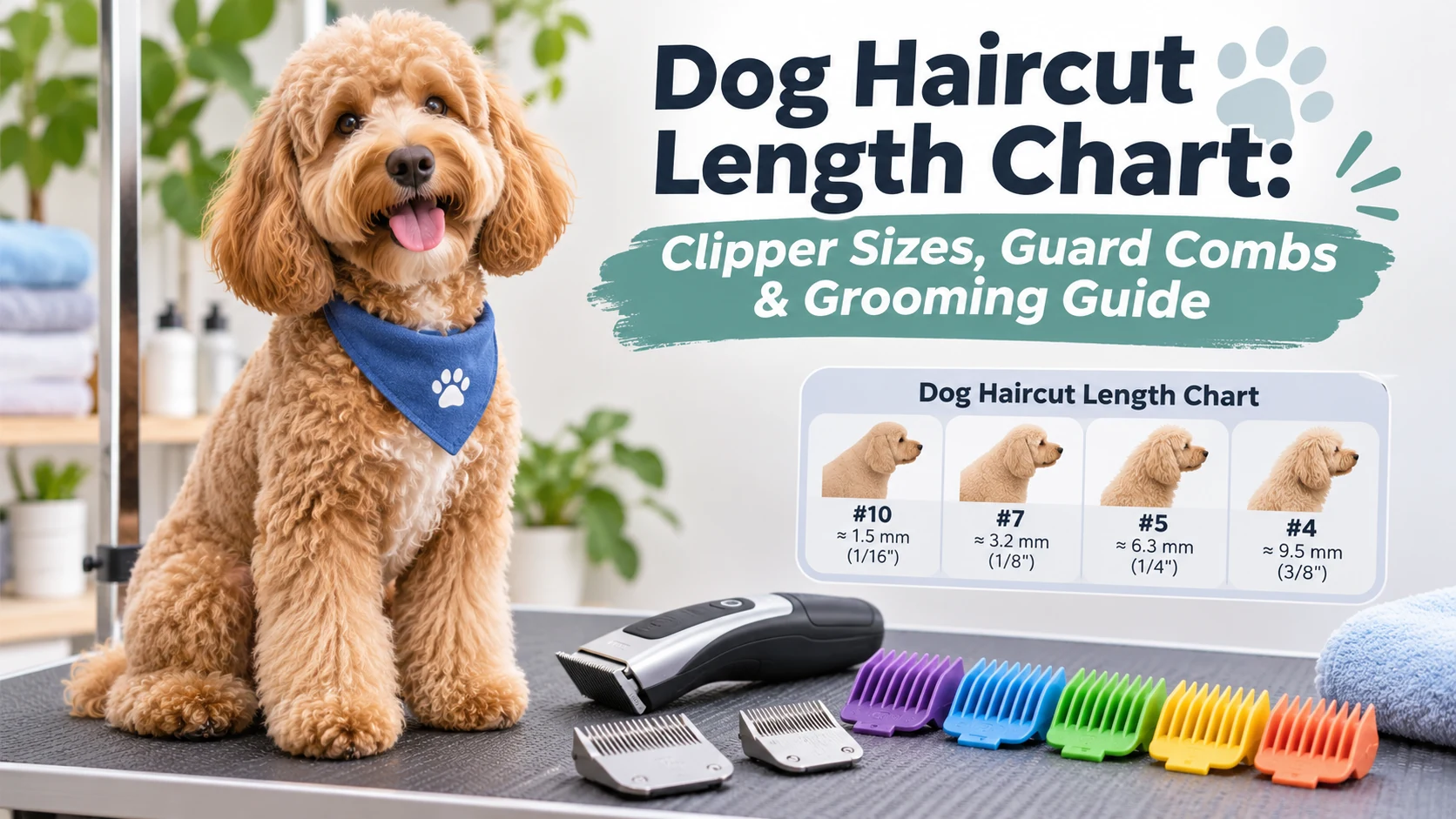
A dog haircut length chart shows how much coat remains after using different clipper blades or attachment combs. A #10 blade leaves approximately 1/16 inch (1.5–1.6 mm), while a #4F leaves 3/8 inch (9.5 mm). For longer, fluffy styles, attachment combs can leave up to 1 inch or more. Always consider coat type and follow safe dog grooming guidance before choosing a cutting length.
Common Dog Haircut Lengths
- #10 blade: 1/16 inch (1.5–1.6 mm) for close trimming and selected sanitary areas.
- #7F blade: 1/8 inch (3.2 mm) for short body trims.
- #5F blade: 1/4 inch (6.3 mm) for manageable short haircuts.
- #4F blade: 3/8 inch (9.5 mm) for fuller, medium-short finishes.
- 1/2-inch comb: 13 mm for a softer, slightly fluffy appearance.
- 1-inch comb: 25.4 mm for longer styles on thoroughly brushed coats.
Important: Higher detachable-blade numbers generally mean shorter cuts. Attachment combs follow their labeled cutting lengths instead.
Choosing a dog haircut length can feel confusing when blades have numbers instead of measurements. I’ve put together this guide to make those numbers easier to understand.
You’ll find practical length charts, coat-type examples, grooming tips, and equipment recommendations. The goal is to help you choose a comfortable, appropriate trim rather than simply the shortest possible haircut.
What Is a Dog Haircut Length Chart?
A dog haircut length chart is a reference showing how much hair a grooming blade or attachment comb leaves behind. It helps groomers choose consistent haircut lengths.
Most charts show measurements in inches and millimeters. They also explain where different cutting lengths work best.
For example, a #5F blade leaves approximately 1/4 inch of coat. A 3/4-inch attachment comb leaves substantially more hair, assuming the coat is suitable for clipping.
Why Does Haircut Length Matter?
Haircut length influences your dog’s appearance, coat maintenance, and skin protection. A shorter trim isn’t automatically better for every dog.
- Comfort: Appropriate trimming can help manage certain continuously growing coats.
- Maintenance: Shorter styles may reduce daily brushing demands.
- Skin protection: Leaving adequate coat helps protect against sun exposure and irritation.
- Appearance: Longer cuts maintain a rounded, fluffy look.
- Coat health: Correct grooming methods help prevent pulling and unnecessary coat damage.
A dog’s coat type matters more than a fashionable haircut. Double-coated breeds often need brushing and undercoat maintenance rather than shaving.
Dog Haircut Length Chart: What Do Clipper Blade Numbers Mean?
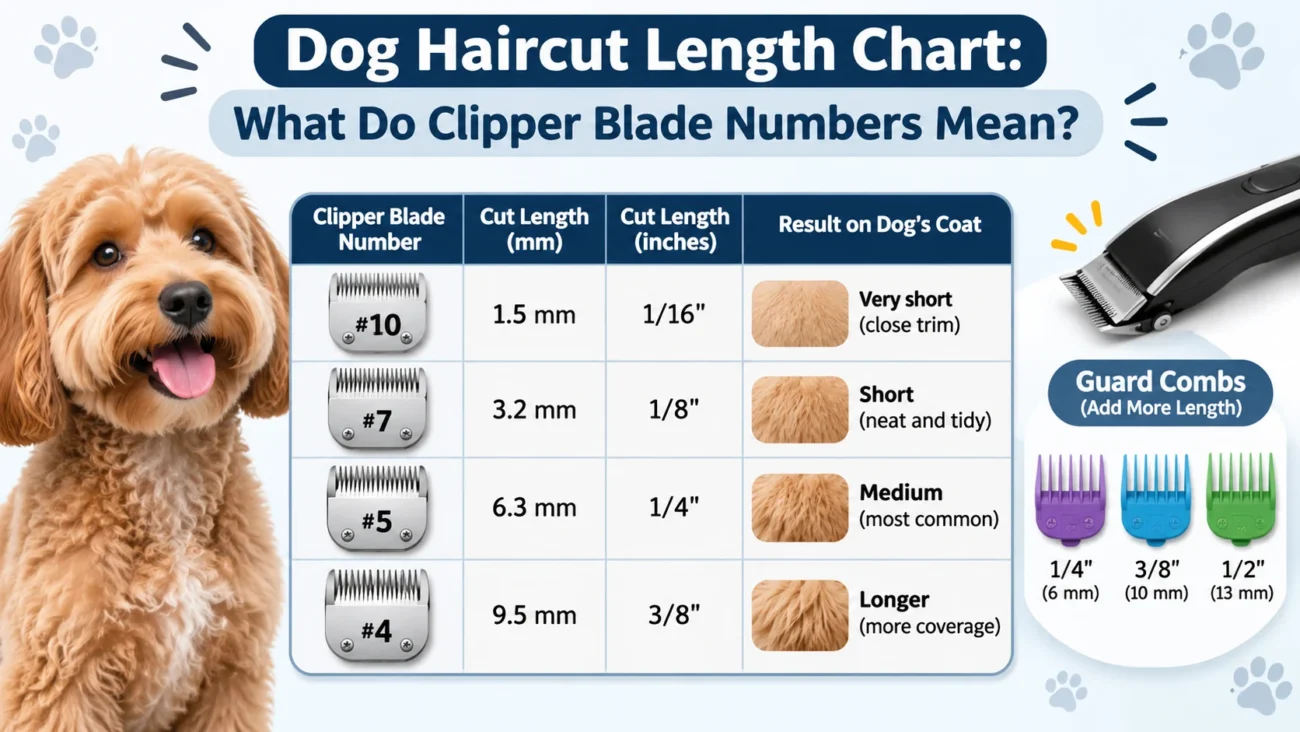
On common detachable dog-grooming blades, a higher blade number generally produces a shorter haircut. The number isn’t the measurement itself.
The following chart shows approximate cutting lengths for widely used detachable blades. Always check your blade manufacturer’s specifications.
| Blade Size | Inches | Millimeters | Typical Application |
|---|---|---|---|
| #40 | 1/100″ | 0.25 mm | Specialized, extremely close clipping |
| #30 | 1/50″ | 0.5 mm | Base blade for compatible guide combs |
| #15 | 3/64″ | 1.2 mm | Close detail work by trained groomers |
| #10 | 1/16″ | 1.5–1.6 mm | Close trimming and selected detail areas |
| #9 | 5/64″ | 2 mm | Short, close finish |
| #7F | 1/8″ | 3.2 mm | Short body haircut |
| #5F | 1/4″ | 6.3 mm | Short, practical body trim |
| #4F | 3/8″ | 9.5 mm | Medium-short body trim |
| #3¾F | 1/2″ | 13 mm | Longer, fuller body finish |
Note: These are nominal lengths. Actual results vary with the blade model, coat texture, clipping direction, and grooming technique.
Manufacturers such as Andis publish blade specifications that help confirm the correct cutting length.
What Is the Difference Between Clipper Blades and Guard Combs?
Clipper blades cut hair at their designated lengths. Attachment combs fit over compatible blades and help leave longer coat.
This distinction matters when comparing a #4F blade with a 1/2-inch guide comb. They use different cutting systems and leave different amounts of hair.
Dog Haircut Guard Comb Length Chart
Attachment combs are useful for fluffy styles and longer body trims. However, they work best on clean, dry, thoroughly detangled coats.
| Comb Length | Approx. mm | Finished Appearance |
|---|---|---|
| 1/8″ | 3.2 mm | Very short |
| 1/4″ | 6.4 mm | Short and tidy |
| 3/8″ | 9.5 mm | Neat medium-short trim |
| 1/2″ | 12.7 mm | Soft and moderately fluffy |
| 5/8″ | 15.9 mm | Fuller plush coat |
| 3/4″ | 19.1 mm | Fluffy companion style |
| 7/8″ | 22.2 mm | Long, rounded finish |
| 1″ | 25.4 mm | Long and fluffy |
Some comb sets include different lengths, so don’t rely on color alone. Read the measurement printed on each attachment.
Many professional guide combs fit over a #30 blade, although compatibility varies. Always confirm the approved blade and comb combination before use.
Which Option Is Better for Beginners?
For suitable, fully brushed coats, a longer attachment comb offers more room for error than close clipping. It also gives beginners a clearer idea of the finished length.
Still, a guard comb doesn’t eliminate injury risks. Never force it through tangled hair or assume it protects against every skin fold.
How Do You Choose the Right Haircut Length for Your Dog?
Start with your dog’s coat type, skin condition, and grooming needs. Then decide how much coat you want to maintain between appointments.
I suggest thinking about the finished length in inches before choosing a blade number. That makes conversations with groomers easier.
1. Identify Your Dog’s Coat Type
Different coats need different grooming approaches. Some grow continuously, while others naturally shed and renew their hair.
- Curly coats: Poodles often suit clipped styles maintained with regular brushing.
- Wavy coats: Many doodle mixes need frequent line brushing and professional trimming.
- Silky coats: Shih Tzus and similar breeds may suit manageable companion cuts.
- Double coats: Huskies, Golden Retrievers, and similar dogs generally shouldn’t receive routine close body shaving.
- Wire coats: Some terriers need hand-stripping to preserve their traditional coat texture.
The American Kennel Club explains why shaving double-coated dogs can create problems. A shorter coat isn’t a universal solution to summer heat.
2. Consider Daily Maintenance
Longer haircuts usually require more brushing. Shorter styles often simplify coat maintenance but don’t replace regular grooming.
- Short style: Approximately 1/4–3/8 inch for suitable coat types.
- Medium style: Approximately 1/2–5/8 inch.
- Long style: Approximately 3/4–1 inch or more.
These ranges describe common appearance goals, not universal breed standards. Your groomer may recommend different lengths based on coat condition.
3. Check for Mats and Skin Problems
A tangled coat can prevent a longer comb from passing through evenly. Severe matting may require professional removal rather than brushing or home clipping.
Never slide scissors underneath tight mats. Skin can become trapped inside them, creating a serious cutting hazard.
What Haircut Length Works Best for Different Dog Breeds?
There isn’t one ideal haircut length for every breed. Even dogs of the same breed may need different trims.
The following examples describe possible companion styles for healthy, well-maintained coats. They are not instructions to shave every listed breed.
| Breed or Coat | Possible Length | Grooming Consideration |
|---|---|---|
| Poodle | 1/4–1 inch | Choose a manageable pet clip; brush longer styles. |
| Shih Tzu | 3/8–3/4 inch | Maintain face, eye, and body hygiene. |
| Maltese | 1/2–1 inch | Brush silky hair to prevent tangles. |
| Yorkshire Terrier | 3/8–3/4 inch | Shorter companion cuts can simplify care. |
| Goldendoodle | 1/2–1 inch | Coat type varies; thorough brushing is essential. |
| Cocker Spaniel | Variable | Body and feathering often need different techniques. |
| Husky / Golden Retriever | No routine body shave | Prioritize coat brushing and appropriate professional care. |
What Is the Best Haircut Length for a Poodle?
For a Poodle’s body, 1/2 inch is one possible low-maintenance companion length. A longer 3/4–1-inch style preserves more fluff but needs regular brushing.
Traditional Poodle grooming also involves specialized face, feet, and tail work. Those areas require more skill than a basic body clip.
What Length Is Best for a Goldendoodle?
Many owners request a 1/2–3/4-inch body trim for a manageable doodle appearance. However, curly and wavy doodle coats can behave differently.
For example, a densely curled dog may require far more brushing than a loosely wavy dog at the same length. Ask the groomer to assess the actual coat.
How Short Should You Cut Dog Hair in Summer?
Summer grooming should prioritize coat health, cooling, and comfort rather than automatically removing as much hair as possible. The safest choice depends on the coat.
Some single-coated dogs benefit from shorter professional trims. Double-coated dogs generally need regular brushing and shed-coat removal instead of shaving.
What About Winter Haircuts?
Winter grooming also depends on coat type and lifestyle. Dogs with continuously growing coats still need regular maintenance to prevent matting.
A slightly longer haircut may be appropriate for some dogs. However, brushing remains necessary, and a coat or sweater may be more practical in cold conditions.
How Do You Give a Dog an Even Haircut at Home?
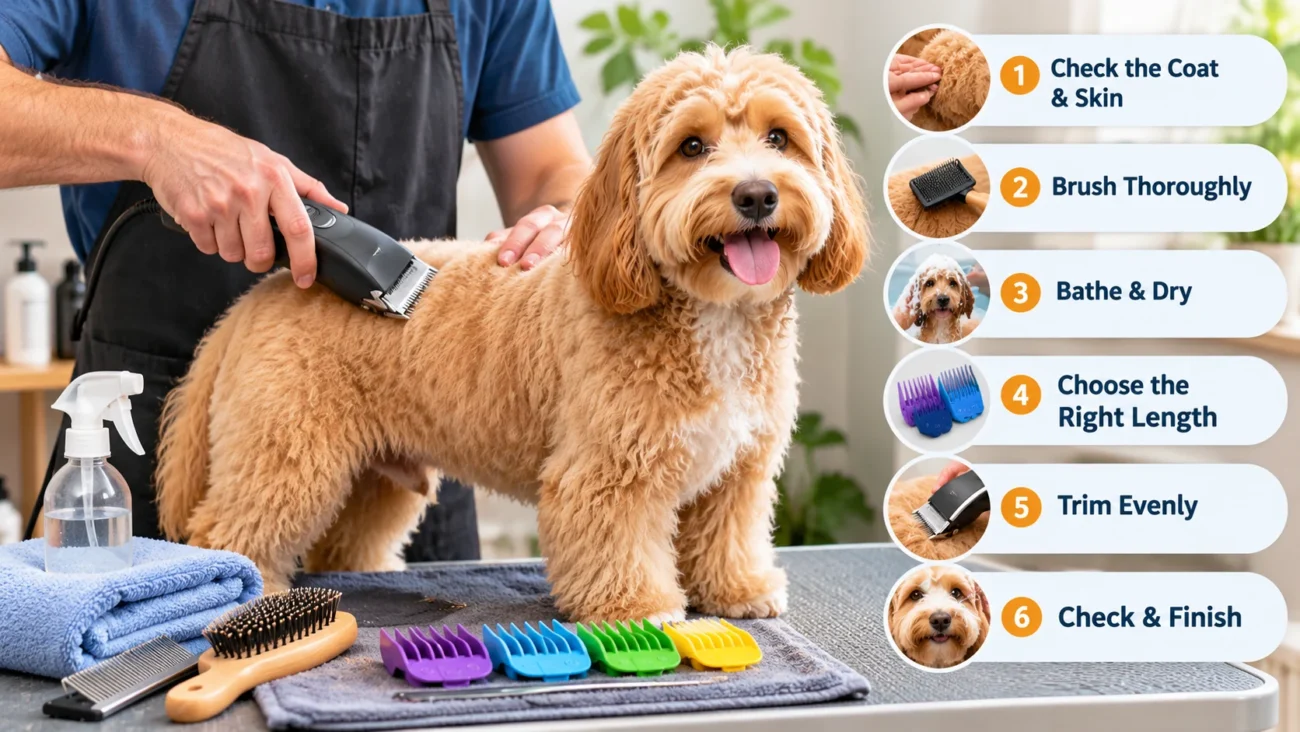
An even haircut begins with preparation, not the first clipper pass. Clean, dry, tangle-free hair is easier to trim consistently.
Home clipping also carries risks, especially near sensitive areas. If you’re inexperienced, have a professional demonstrate safe technique first.
Step 1: Check the Coat and Skin
Examine your dog’s body for tangles, lumps, sores, and irritated skin. Stop if you notice anything requiring veterinary attention.
Step 2: Brush Thoroughly
Use a suitable brush and metal comb to check for tangles. Work gently and avoid pulling painfully at knots.
If the comb cannot pass through the coat comfortably, don’t force a clipper attachment through it. A professional groomer can evaluate the matting.
Step 3: Bathe and Dry When Appropriate
For ordinary grooming, a clean, fully dried coat usually clips more evenly. Use dog-appropriate shampoo and dry thoroughly without overheating the skin.
Heavily matted coats may need a different professional process. Bathing tight mats without proper assessment can worsen the problem.
Step 4: Select a Conservative Cutting Length
Choose a longer setting when you’re uncertain about the final appearance. Verify that every blade and guide comb fits your clipper.
Keep the manufacturer instructions nearby. Different clipper systems aren’t always interchangeable.
Step 5: Trim Carefully
On suitable body areas, gentle passes with the coat’s growth direction can create a more natural finish. Use minimal pressure and keep the blade flat.
Never rush across loose skin, folds, or moving joints. Stop immediately if your dog becomes uncomfortable or struggles.
Step 6: Check the Blade Temperature
Clipper blades can become hot during use. Stop frequently and check the blade’s temperature according to the manufacturer instructions.
A hot blade can burn skin. Switch to a cool blade or allow the equipment to cool before continuing.
Step 7: Inspect the Finished Coat
Brush the hair lightly and look for uneven areas. Avoid repeatedly shaving one spot just to remove small imperfections.
Reward your dog and keep sessions manageable. A comfortable grooming experience matters more than a perfect finish.
What Are the Most Common Dog Haircut Length Mistakes?
Most haircut problems begin with an unsuitable tool, incorrect length, or rushed preparation. The following mistakes are worth avoiding.
- Confusing blade numbers: A #10 blade cuts shorter than a #5F blade.
- Relying on comb colors: Different manufacturers may use different color systems.
- Clipping matted coats at home: Tight mats can conceal skin and cause injuries.
- Using excessive pressure: Pressing too hard increases discomfort and injury risk.
- Ignoring blade heat: Hot blades can damage sensitive skin.
- Shaving double coats: Removing the insulating coat may cause unwanted consequences.
- Cutting sensitive areas without training: Eyes, ears, groin, and skin folds need specialized care.
One important distinction is that finish-cut blades and skip-tooth blades aren’t identical. A finish-cut blade has more closely spaced teeth designed for a smoother result.
Skip-tooth blades have wider tooth spacing and can present additional cutting hazards. They aren’t a good starting point for inexperienced home groomers.
Which Dog Grooming Tools Are Worth Buying?
Choosing equipment is easier once you know the haircut lengths you want. Clipper compatibility matters as much as the cutting length.
For a practical setup, I’d prioritize reliable equipment, a compatible blade system, and tools that suit the dog’s actual coat. Here are three products worth comparing.
🏆 Best for heavy-duty clipping
Wahl KM10 2-Speed Professional Animal Clipper
★★★★☆ 4/5 Editor’s suitability score
This corded, two-speed clipper supports detachable blades for different cutting lengths. I’d consider it for experienced users who need a dedicated tool for demanding coat work, rather than occasional light trimming.
✂️ Best for medium-short finishes
Andis UltraEdge Size 4FC Detachable Blade
★★★★☆ 4/5 Editor’s suitability score
The 4FC blade leaves approximately 3/8 inch (9.5 mm) and uses a finish-cut design. It’s a practical option when a smooth medium-short trim is appropriate and the clipper supports this blade.
🐶 Best for longer haircut options
Wahl Stainless Steel Attachment Guide Comb Set
★★★★☆ 4/5 Editor’s suitability score
Wahl offers stainless steel guide combs for selected clipper systems, providing longer cutting-length options. I’d prioritize a compatible set when preserving a fluffy finish matters more than close clipping.
Shopping note: These scores are editorial suitability assessments, not verified customer ratings or hands-on test results. Confirm current specifications, compatibility, availability, and prices before purchasing.
Frequently Asked Questions About Dog Haircut Lengths
What is the most common dog haircut length?
There is no single standard length for all dogs. For suitable continuously growing coats, 1/4–1/2 inch can be a practical short companion style. Longer 3/4–1-inch cuts are also common when owners prefer a fluffy appearance and can maintain the coat properly.
What is the difference between a #7 and a #10 dog grooming blade?
A #7F blade generally leaves 1/8 inch (3.2 mm) of coat, while a #10 blade leaves about 1/16 inch (1.5–1.6 mm). Therefore, the #10 creates a closer haircut. The #7F is often used for short body trims, while #10 blades serve selected close-trimming purposes.
Is a 1/2-inch dog haircut considered short?
A 1/2-inch haircut is generally a medium-short companion trim, although the visual result depends on coat texture. Curly hair may look fuller than straight hair at the same cutting length. It can offer a balance between easy maintenance and a softer appearance.
Can I use human hair clippers on my dog?
Human clippers may not handle dense animal coats effectively, and their blades and attachments can differ from pet-grooming systems. Purpose-built dog clippers are usually the more appropriate choice. Select equipment designed for your dog’s coat and follow the manufacturer’s safety instructions.
How often should a dog get a haircut?
Dogs with continuously growing coats may need professional haircuts roughly every four to eight weeks, depending on coat type, length, and home maintenance. Other breeds may need little or no body clipping. Ask your groomer to recommend a schedule based on your dog’s individual needs.
Final Thoughts: Which Dog Haircut Length Should You Choose?
The best dog haircut length balances coat health, comfort, appearance, and maintenance. Use the chart to understand blade measurements, but don’t choose a haircut by blade number alone.
For suitable coat types, a #5F leaves a short 1/4-inch finish, while a #4F preserves a fuller 3/8-inch coat. Longer guide combs are useful when the hair is healthy, brushed, and appropriate for clipping.
Before your next grooming appointment, save this dog haircut length chart and discuss your preferred finish with your groomer. That simple preparation can help you request a more suitable haircut for your dog.


