
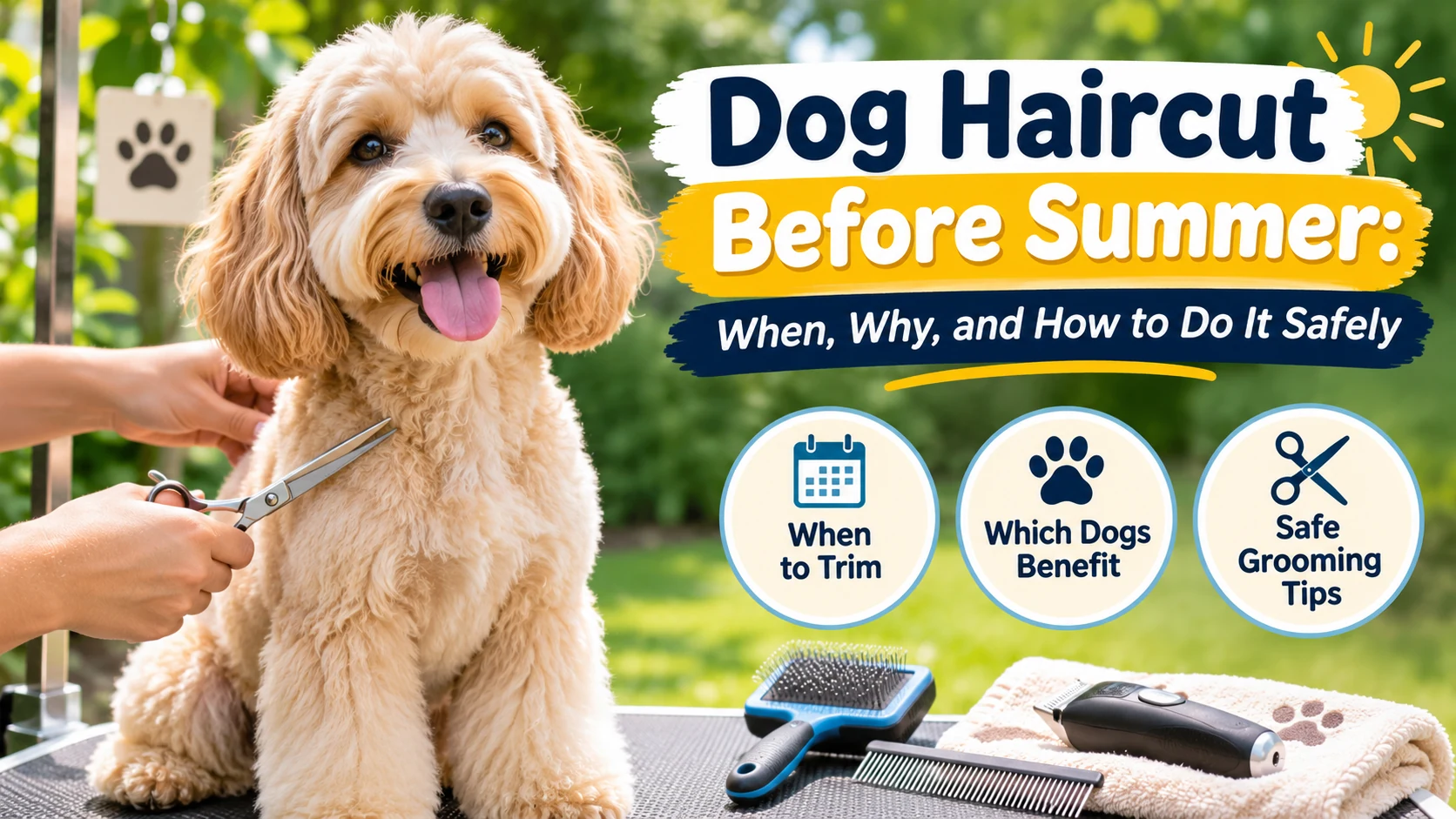
Quick Answer
A dog haircut before summer can make grooming easier and reduce tangles, but not every dog needs one. Long, continuously growing coats may benefit from a moderate trim, while double-coated breeds usually need brushing instead of shaving. The ASPCA’s hot-weather safety guidance recommends protecting your dog’s natural coat and avoiding close shaving.
5 steps for safer summer grooming
- Identify the coat: Check whether your dog has a single, double, curly, or continuously growing coat.
- Choose the right trim: Keep enough hair to protect the skin from sunlight and irritation.
- Remove loose fur: Brush thoroughly before considering a haircut.
- Protect sensitive areas: Let a professional handle matted hair and delicate trimming.
- Prevent overheating: Provide drinking water, shade, airflow, and cool resting areas.
Important reminder
- Don’t shave automatically: A shorter haircut does not guarantee better temperature control.
When summer approaches, it’s tempting to give your fluffy dog a dramatic haircut. I understand the reasoning: less hair seems like it should mean less heat.
However, a dog’s coat works differently from human clothing. This guide explains which dogs benefit from summer trimming, which breeds should keep their natural coats, and how to groom safely.
What Is a Dog Haircut Before Summer?
A dog haircut before summer is a seasonal grooming service that shortens or shapes a dog’s coat before warmer weather arrives. Its main purpose is to improve coat maintenance, hygiene, and comfort without compromising natural protection.
Summer grooming isn’t the same as shaving. Depending on the coat, it may involve trimming, brushing, bathing, or removing loose undercoat.
Why do owners consider summer haircuts?
Dogs with long or curly hair can develop tangles that trap dirt and moisture. A practical trim makes these coats easier to maintain.
- Fewer tangles: Shorter, manageable hair may be easier to brush.
- Cleaner paws: Trimming excessive hair around paw pads can improve hygiene.
- Easier inspection: Grooming helps you notice ticks, irritation, and skin problems.
- Less debris: A maintained coat collects fewer burrs and plant fragments.
- Better coat care: Bathing and brushing remove loose hair and surface dirt.
These benefits depend on your dog’s individual coat. A haircut should solve a grooming problem rather than follow a seasonal trend.
Should You Cut Your Dog’s Hair Before Summer?
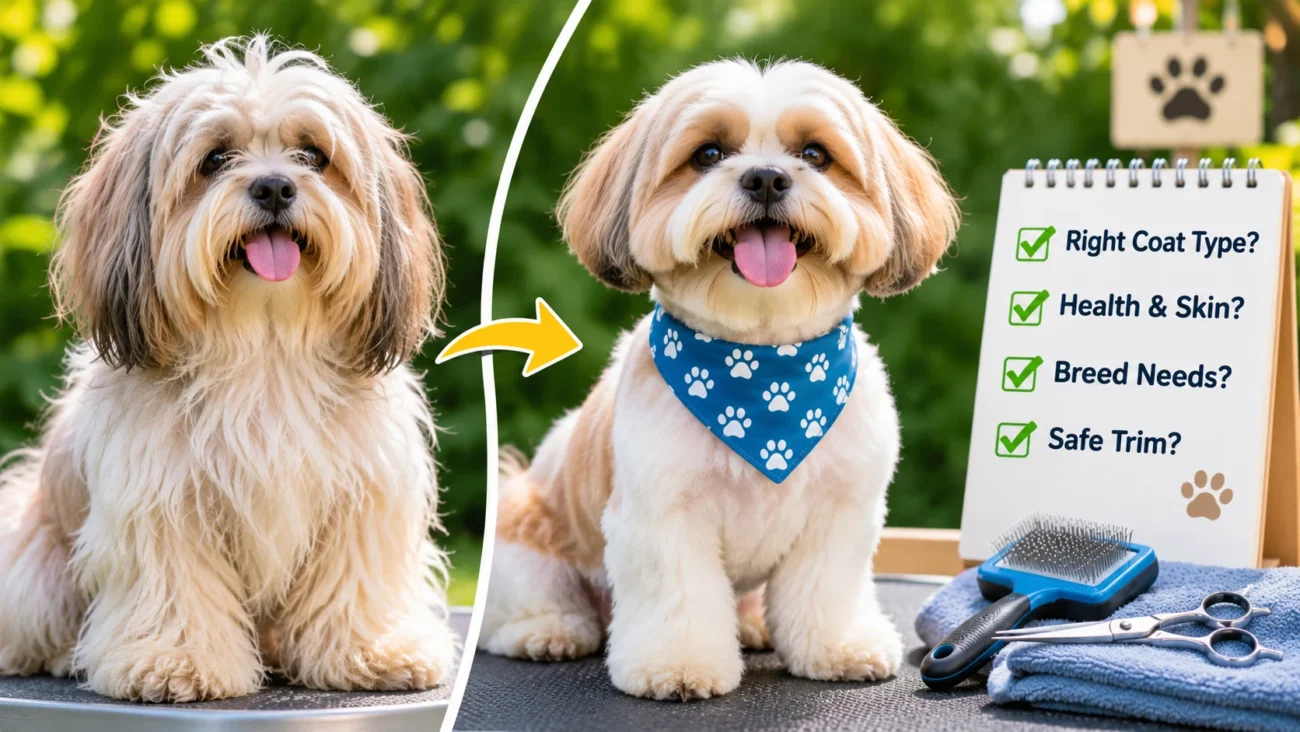
Some dogs benefit from a summer haircut, especially breeds with continuously growing hair. Others are better served by brushing, bathing, and undercoat maintenance.
The most important factor is coat structure. Breed appearance alone doesn’t tell the whole story, particularly with mixed-breed dogs.
Which dogs may benefit from trimming?
Dogs with continuously growing or easily tangled coats often need regular haircuts throughout the year. Summer can be a convenient time to choose a manageable style.
- Poodles: Their curly, continuously growing coats need regular clipping.
- Shih Tzus: Moderate trims can simplify daily brushing and cleaning.
- Maltese: A practical shorter style can reduce maintenance.
- Yorkshire Terriers: Longer hair may benefit from controlled trimming.
- Some doodle mixes: Coat texture varies, so individual assessment matters.
I recommend choosing a style you can maintain between grooming appointments. An attractive haircut quickly loses its benefits when tangles return.
Which dogs usually shouldn’t be shaved?
Double-coated breeds have an outer layer of protective guard hairs and a softer undercoat. Removing both layers can interfere with coat protection and create regrowth problems.
- Siberian Huskies
- Golden Retrievers
- German Shepherds
- Samoyeds
- Pomeranians
- Many Labrador Retrievers
These breeds generally benefit more from appropriate brushing and removal of loose undercoat. A veterinarian may recommend clipping for specific medical reasons, but that’s different from routine summer shaving.
Dog Summer Haircut vs. Regular Grooming: What’s the Difference?
A haircut changes coat length, while regular grooming maintains coat health and cleanliness. Your dog may need one, both, or neither type of intensive grooming at a particular time.
| Coat type | Examples | Summer approach | Shaving? |
|---|---|---|---|
| Continuously growing | Poodle, Maltese | Regular moderate haircut | Avoid skin-close cuts |
| Long silky hair | Yorkshire Terrier | Manageable trim and brushing | Usually unnecessary |
| Dense double coat | Husky, Samoyed | Brush and remove loose undercoat | Generally avoid |
| Short smooth coat | Beagle, Boxer | Routine brushing and bathing | Not routinely needed |
| Wire coat | Some terriers | Breed-specific stripping or clipping | Ask a specialist |
This table is a starting point, not an individual grooming prescription. Your veterinarian or qualified groomer can assess mixed coats, medical concerns, and severe matting.
When Should You Schedule a Dog Haircut Before Summer?
Schedule grooming before long periods of hot weather, ideally while your dog still has time to adjust comfortably. There isn’t one correct calendar date for every climate or breed.
For a dog already receiving routine haircuts, the usual grooming schedule often works well. Avoid waiting until a coat becomes badly tangled.
How often should summer grooming happen?
Many continuously growing coats need professional grooming approximately every four to eight weeks. Exact intervals depend on hair length, texture, activity, and home brushing.
- Daily or frequent checks: Look for tangles, debris, and irritated skin.
- Several weekly brushing sessions: Maintain coats that tangle or shed heavily.
- Regular professional appointments: Follow the schedule appropriate for the coat.
- Extra checks after outdoor play: Remove burrs and inspect for ticks.
Some curly or long coats need daily attention. Other dogs remain comfortable with less frequent brushing.
How Do You Prepare Your Dog for a Summer Haircut?
Start by checking the coat and skin, then decide whether a haircut is necessary. Good preparation can make grooming safer and less stressful.
Step 1: Check the skin and coat
Look beneath the fur for redness, flakes, sores, parasites, and tightly tangled areas. Contact your veterinarian before grooming if you discover painful or unusual skin changes.
Step 2: Brush gently
Use a brush designed for your dog’s coat type. Work through small sections without pulling on knots or scraping the skin.
A metal comb can help you check whether tangles remain near the skin. Stop if your dog shows pain or distress.
Step 3: Choose an appropriate haircut
Discuss the desired coat length with your groomer before clipping starts. Explain whether your priority is easier brushing, cleaner paws, or reduced matting.
Don’t request an extremely short cut merely because the weather is hot. Preserving healthy coat coverage matters.
Step 4: Prepare your dog for handling
Let your dog become comfortable with gentle brushing, paw handling, and grooming sounds. Reward calm behavior and keep practice sessions short.
A nervous dog may need multiple short appointments instead of one long session. Safety matters more than finishing quickly.
Step 5: Monitor the finished haircut
After grooming, check for redness, irritation, uneven clipping, or excessive scratching. Keep freshly exposed skin protected from strong sunlight.
If your dog develops discomfort after grooming, contact your veterinarian. Don’t apply human skincare products without professional advice.
What Are the Best Summer Haircut Styles for Dogs?
The best summer haircut balances manageable length, skin protection, and coat health. The correct choice depends on the individual dog rather than the style’s popularity.
1. Puppy cut
A puppy cut generally means trimming the coat to a relatively even, manageable length. It is a popular practical option for many continuously growing coats.
The exact length varies between groomers. Agree on a specific finish before the appointment.
2. Teddy bear cut
A teddy bear cut usually leaves a rounded face and soft-looking body shape. It suits certain curly or fluffy coats when maintained properly.
This style can require frequent face brushing. Decorative length should never interfere with your dog’s vision.
3. Sanitary trim
A sanitary trim removes excessive hair around areas where waste can collect. It helps improve cleanliness without dramatically changing the entire coat.
These areas are sensitive and easy to injure. I recommend professional trimming when the dog is difficult to handle.
4. Paw-pad trim
A paw-pad trim removes excessive hair extending between or beneath the pads. This can make it easier to inspect paws and remove dirt.
Clipping too close can cause injuries. Use trained grooming assistance for delicate work.
5. Light outline trim
An outline trim tidies protruding hair while preserving the dog’s natural appearance. It may be suitable for certain longer-coated breeds.
Double-coated dogs generally need coat-preserving grooming rather than an overall clipper haircut. Ask a knowledgeable groomer before modifying the coat.
Why Can Shaving a Dog Before Summer Be Harmful?
Close shaving can remove natural coat protection and expose sensitive skin to ultraviolet radiation. It can also affect regrowth in some double-coated breeds.
The American Kennel Club’s shaving guidance explains why coat structure matters during hot weather.
- Sun exposure: Closely clipped skin has less protection from sunlight.
- Coat changes: Double coats may regrow unevenly after shaving.
- Skin irritation: Very close clipping can cause razor irritation.
- False confidence: A shaved dog can still develop dangerous overheating.
Medical exceptions exist, including certain procedures and severe matting. Let a veterinarian determine when removing protective coat layers is justified.
Can You Give Your Dog a Summer Haircut at Home?
Simple coat maintenance is possible at home, but clipping requires training and appropriate equipment. Professional grooming is safer for complicated coats, nervous dogs, and sensitive areas.
I suggest beginning with brushing and routine coat inspection rather than a full haircut. These habits offer practical benefits without unnecessary clipping risks.
Essential home grooming supplies
- Coat-appropriate brush: Removes loose hair and minor tangles.
- Stainless-steel comb: Helps locate knots hidden beneath the surface.
- Dog-specific shampoo: Cleans without relying on human hair products.
- Absorbent towels: Help dry the coat after bathing.
- Non-slip surface: Provides steadier footing during grooming.
Use clippers and trimming tools only after learning safe handling methods. Scissors can easily injure skin hidden beneath matted fur.
When should you hire a professional groomer?
A professional groomer is a better choice when mats are tight, haircuts require precision, or your dog reacts unpredictably. Groomers can also recommend a maintenance schedule suited to the coat.
- Severely tangled or felted coats
- Haircuts around the eyes or sanitary areas
- Dogs that panic during grooming
- Unfamiliar mixed or double coats
- Owners without clipping experience
For open sores, painful skin, or suspected infection, contact a veterinarian first. Grooming should not replace medical assessment.
What Summer Grooming Mistakes Should You Avoid?
The most common mistake is treating all coats alike. A haircut suitable for a Poodle may be inappropriate for a Husky.
- Shaving a double coat: Removing protective layers can cause coat and skin problems.
- Cutting mats with scissors: Skin can become trapped inside tight tangles.
- Using human shampoo: Products formulated for people may irritate canine skin.
- Brushing too aggressively: Excessive pressure can cause pain and irritation.
- Ignoring heat safety: A haircut cannot replace shade, water, and reduced activity.
- Choosing style over function: Decorative haircuts can create unnecessary maintenance.
- Skipping skin checks: Hidden irritation may worsen without attention.
The ASPCA’s dog grooming tips provide additional guidance for routine coat maintenance and identifying grooming concerns.
How Can You Keep Your Dog Cool Without Shaving?
Shade, hydration, ventilation, and sensible exercise schedules are more reliable heat-safety measures than shaving. Dogs regulate body temperature primarily through panting, so environmental conditions matter greatly.
Build a practical hot-weather routine
- Provide fresh water: Keep clean drinking water accessible throughout the day.
- Offer shade: Ensure your dog can rest away from direct sunlight.
- Walk during cooler hours: Avoid strenuous exercise during intense heat.
- Check pavement: Hot asphalt can injure paw pads.
- Brush regularly: Remove loose hair without stripping protective coat layers.
- Use cool indoor spaces: Fans or air conditioning can help maintain a comfortable environment.
- Never leave dogs in parked cars: Interior temperatures can become dangerous rapidly.
Some dogs have greater heat-related risks, including brachycephalic breeds, older dogs, puppies, and those with certain medical conditions. Ask your veterinarian about additional precautions.
What are the warning signs of overheating?
Heatstroke is a medical emergency. Warning signs can include excessive panting, heavy drooling, weakness, vomiting, confusion, collapse, or seizures.
Move a potentially overheated dog into a cooler environment immediately and contact an emergency veterinarian. Begin cooling with cool, not ice-cold, water and airflow while arranging urgent veterinary care.
Don’t wait for symptoms to disappear before seeking help. The VCA Animal Hospitals summer grooming resource also explains the importance of routine brushing and appropriate coat care.
Which Grooming Tools Are Worth Considering Before Summer?
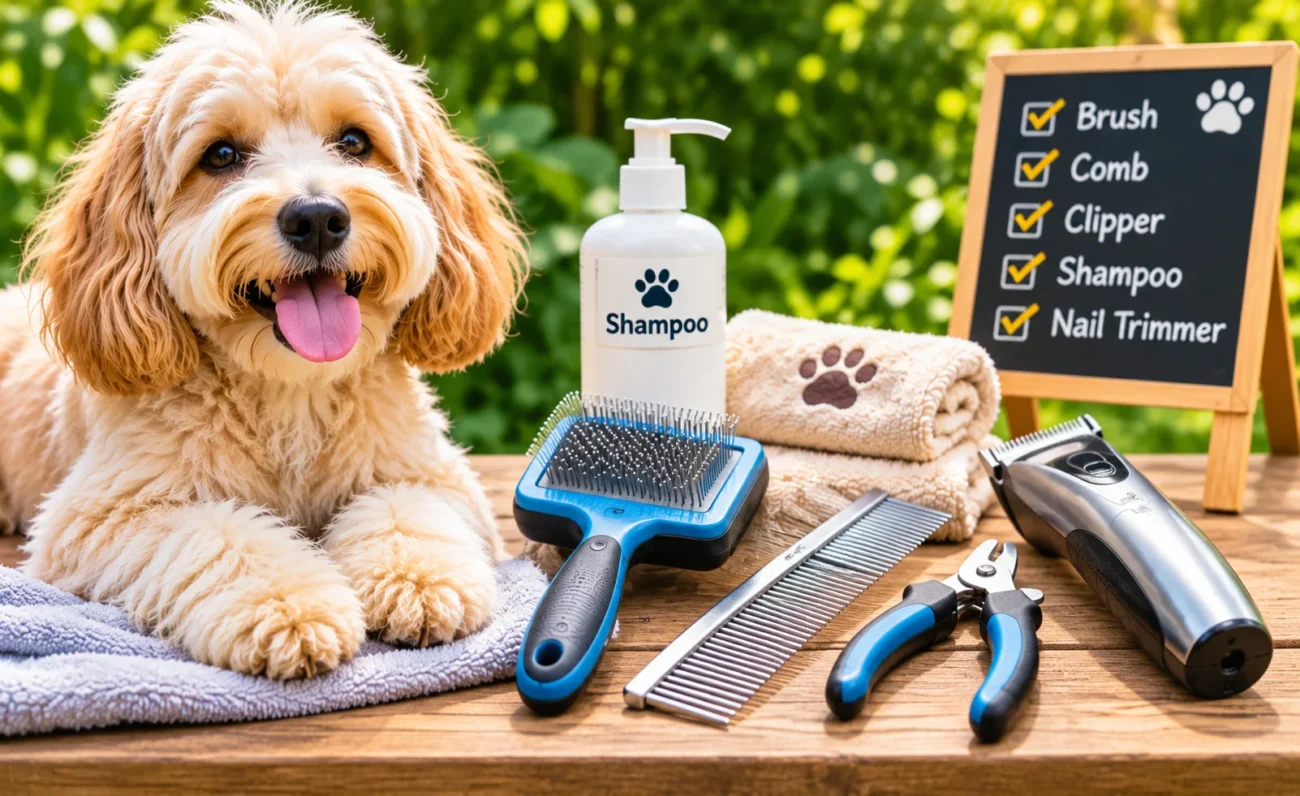
Before buying clippers, I’d prioritize tools that help you maintain your dog’s natural coat. The following products serve different grooming needs.
These are equipment suggestions, not substitutes for coat-specific professional advice. The suitability scores below are editorial assessments, not verified customer ratings or hands-on test results.
🏆 Best for routine brushing
Safari Self-Cleaning Slicker Brush
★★★★☆ 4.5/5 editorial suitability
This slicker-style brush helps remove loose fur and minor tangles from suitable coats. I’d choose this type for regular maintenance, using light pressure to protect sensitive skin.
🐾 Best for coat checks
Andis Steel Pet Comb
★★★★☆ 4.5/5 editorial suitability
This stainless-steel grooming comb helps identify tangles that brushing may miss. I recommend a comb for checking longer coats after a gentle brushing session.
✂️ Best for trained home groomers
Wahl Bravura Lithium-Ion Clipper
★★★★☆ 4/5 editorial suitability
This cordless grooming clipper is designed for controlled clipping tasks. I’d reserve it for owners trained in safe clipper handling and dogs whose coats genuinely require trimming.
Frequently Asked Questions About Dog Haircuts Before Summer
Is it good to cut a dog’s hair before summer?
It can be helpful for dogs with continuously growing or easily tangled hair. However, double-coated breeds usually benefit more from brushing and loose-undercoat removal than close clipping. Choose grooming based on coat type, skin condition, and professional advice rather than temperature alone.
How short should I cut my dog’s hair in summer?
There is no universal summer haircut length. Dogs with suitable coats can receive moderate trims that preserve skin protection, while double-coated breeds generally should not be shaved. Ask a professional groomer to recommend a safe length based on your dog’s coat and lifestyle.
Will shaving my dog make it cooler?
Not necessarily. A dog’s coat provides insulation and protection from direct sunlight, and shaving does not prevent heatstroke. For most double-coated dogs, proper brushing and environmental cooling are better options than removing protective coat layers.
Should I bathe my dog before or after a haircut?
Professional grooming often includes bathing and thorough drying before clipping suitable coats. However, severely matted fur may require a different approach because water can complicate tight tangles. Follow your groomer’s guidance and avoid trying to cut out mats yourself.
Can dogs get sunburned after a summer haircut?
Yes. Closely trimmed or naturally thin-haired dogs can have greater skin exposure to ultraviolet radiation. Provide shade, limit intense sun exposure, and ask your veterinarian about dog-safe sun protection when necessary. Never assume human sunscreen products are suitable for pets.
Final Verdict: Does Your Dog Need a Haircut Before Summer?
A dog haircut before summer can be useful, but only when it suits the coat. For many Poodles, Maltese, and similar dogs, a manageable trim simplifies warm-weather grooming.
For Huskies, Golden Retrievers, and other double-coated breeds, regular brushing is usually the better approach. Protecting the coat is often more important than making it shorter.
My recommendation is simple: identify the coat type, prioritize skin health, and discuss uncertain grooming decisions with a qualified professional. Combine the right grooming routine with fresh water, shade, and safe summer activities to help your dog stay comfortable.
Next step: Check your dog’s coat today and schedule a suitable grooming appointment before tangles or hot-weather conditions become difficult to manage.


