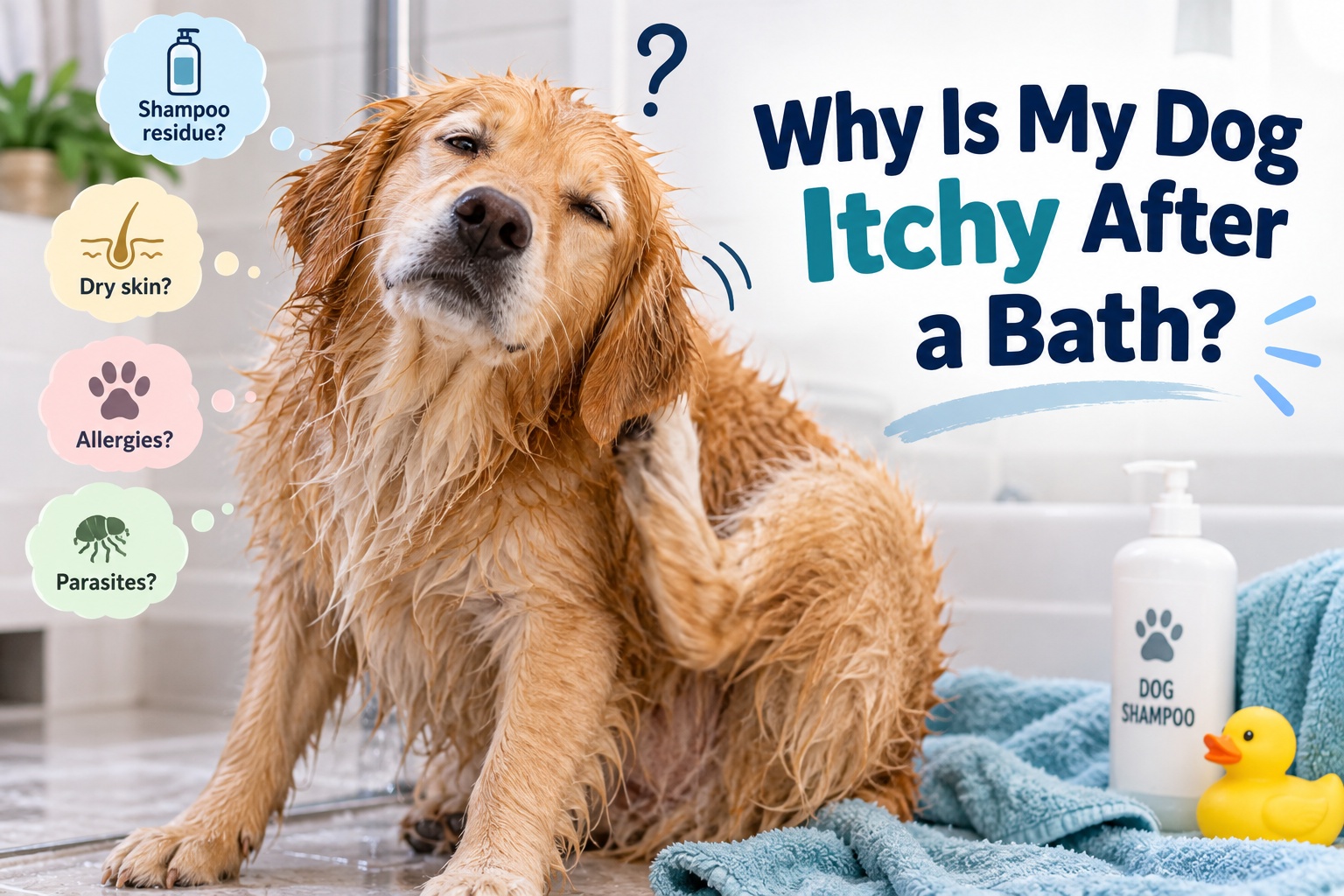
⚡ Quick Answer
A dog can become itchy after a bath because shampoo residue, dry skin, product sensitivity, hot water, or an existing skin problem irritates the skin. Mild itching may settle quickly. Persistent scratching, redness, sores, odor, swelling, or hair loss needs closer attention and may require a veterinarian.
Common reasons for post-bath itching
- Shampoo residue: Soap left near the skin can cause irritation.
- Dry skin: Frequent washing can disturb protective skin oils.
- Product sensitivity: Shampoo ingredients can irritate sensitive dogs.
- Skin disease: Allergies, parasites, yeast, or bacteria can cause itching.
Help prevent itching after the next bath
- ✓Use a mild shampoo made for dogs.
- ✓Rinse dense areas longer than you think necessary.
- ✓Use comfortably lukewarm water, not hot water.
Your dog steps out of the tub smelling clean, shakes water across the room, and then starts scratching. Within minutes, those back paws may be working overtime.
That can be confusing when the bath was supposed to make your dog more comfortable. Ashraful recommends looking first at the bathing process and then at the skin itself. Shampoo residue, dryness, and sensitivity are common explanations, while allergies, parasites, and infections can also cause itching that becomes more noticeable after washing.
The timing, severity, and other skin signs can help you decide what to do next.
📌 Key Takeaways
- →Rinse thoroughly. Veterinary guidance warns against leaving shampoo residue on canine skin.
- →Check products. Shampoos and other contact allergens can trigger itchy skin.
- →Watch patterns. Repeated post-bath itching can point to a product or skin issue.
- →Notice warning signs. Severe itching, sores, odor, or swelling deserves veterinary care.
Why Is My Dog Itchy After a Bath?
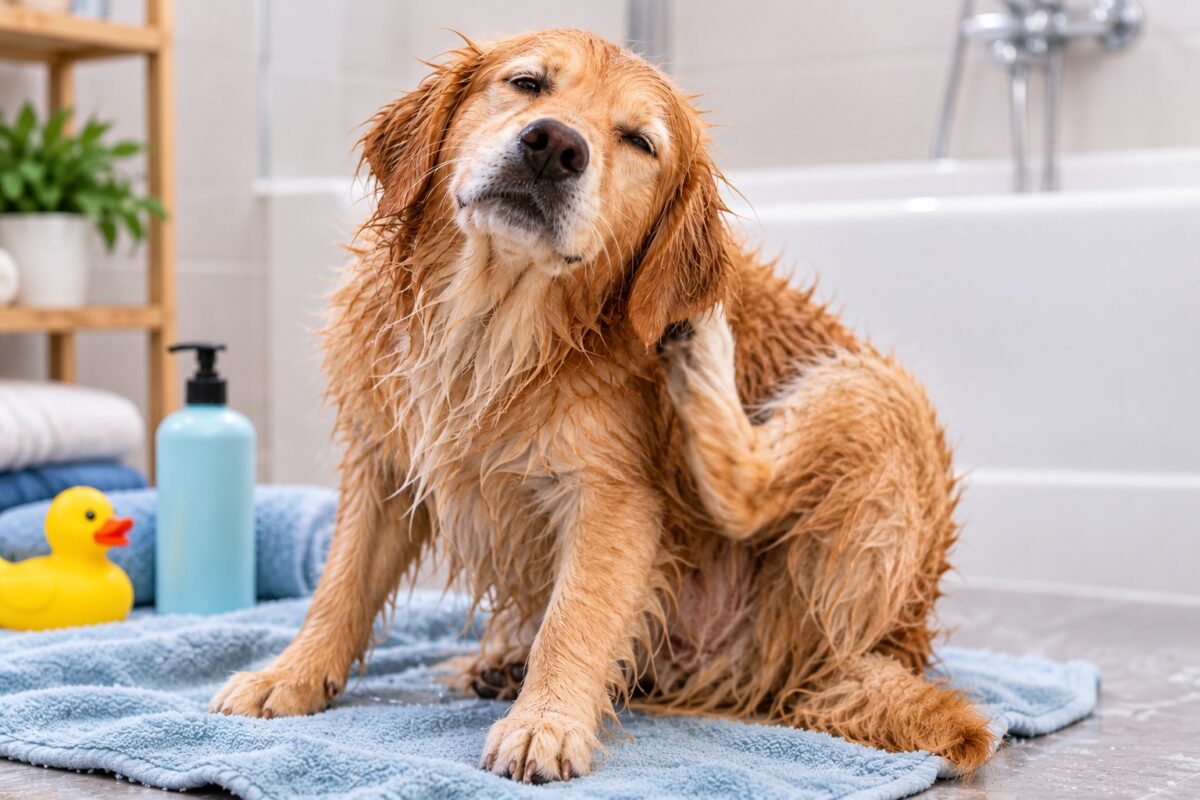
A bath can trigger or expose itching in several ways. Shampoo left in the coat can irritate the skin, while repeated bathing can contribute to dryness in some dogs. A dog can also react to an ingredient in shampoo, conditioner, fragrance, or another grooming product. VCA Animal Hospitals specifically advises rinsing all shampoo from a dog’s coat because residual shampoo should not remain on the skin.
The bath isn’t always the true cause, though. Allergies, fleas, other parasites, bacterial or yeast infections, and existing inflammation can make a dog itchy whether you bathe them or not. The American Kennel Club lists flea, food, environmental, and contact allergies among important causes of canine itching.
Timing provides a useful clue. Scratching that begins soon after using a new shampoo puts the product or bathing process higher on the list. Itching that was present before the bath, keeps returning, or comes with skin changes suggests that you should look beyond the bath itself.
Use these clues to narrow down what may be irritating your dog’s skin.
These signs aren’t a diagnosis, but they can help you decide what deserves attention first.
You might be thinking the bath caused every new symptom. The timing matters, but washing can also make an existing skin problem easier to notice.
That distinction becomes clearer when you look at the most common bath-related causes one by one.
Can Shampoo Residue Make a Dog Itchy?
Yes. Shampoo residue can irritate a dog’s skin, which is why a complete rinse is one of the most important parts of bathing. VCA’s veterinary bathing guidance says to rinse shampoo from all areas and notes that this can take several minutes.
Residue is easy to miss in thick coats. Check the armpits, groin, belly, chest, paws, neck, and under any dense undercoat. Those areas can hold diluted shampoo even when the outer fur looks clean.
If you suspect residue and your dog’s skin isn’t raw or painful, a careful rinse with comfortably lukewarm water can remove what remains. Don’t add more shampoo just because the dog is scratching.
For future baths, spend more time rinsing than you think you need. Go Pet Zone’s dog bathing guide also explains how complete rinsing fits into a safe home bath.
💡 QUICK CHECK
Part the coat in several places after rinsing. If you still feel slippery product near the skin, keep rinsing.
Residue is only one possibility. Sometimes the skin feels itchy because bathing has left it too dry.
Can Bathing Make a Dog’s Skin Too Dry
Bathing too often can contribute to dry, itchy skin in some dogs, especially when the shampoo doesn’t suit the dog’s skin. PetMD notes that excessive bathing can strip natural oils and disturb the skin and coat balance.
Dryness can show up as flakes, dandruff-like debris, a dull coat, or repeated scratching. The key is not to assume every itchy dog simply needs fewer baths. Dogs with diagnosed skin disease can need scheduled medicated bathing, and that schedule may be quite different from routine grooming. VCA notes that medicated bath frequency depends on the condition being treated.
You might be thinking there’s one ideal bathing schedule for every dog. There isn’t. Coat type, activity, skin health, and veterinary treatment all change the answer.
So if your dog gets itchy after frequent routine baths, review the schedule and shampoo. If the baths are prescribed for a skin problem, follow the veterinarian’s plan rather than reducing them on your own.
The next clue is even more specific: itching that follows a certain shampoo or grooming product.
Can a Dog Be Sensitive or Allergic to Shampoo?
Yes. A dog can develop irritation or a contact reaction after exposure to grooming products. The American Kennel Club includes shampoos among substances associated with contact allergies, and affected dogs often itch where the triggering substance touched the skin.
Pay special attention when the problem began after switching products. Redness, repeated licking, rubbing, or scratching after each use strengthens the case for reviewing that product with your veterinarian.
Don’t assume labels such as “natural” automatically mean a shampoo will suit every dog. Dogs can have individual sensitivities, and a product that works well for one pet isn’t proof that it will work for another.
If routine bathing is needed, use a dog-specific shampoo appropriate for your pet’s skin. Dogs with diagnosed allergies or skin disease may need a medicated or veterinary-recommended formula.
You might be thinking you should keep testing shampoos until one works. Repeated trials on inflamed skin can make the situation harder to interpret. Persistent reactions are a reason to involve your veterinarian.
Product choice matters, but so does something simpler: the temperature of the water touching already sensitive skin.
Can Hot Bath Water Make Itching Worse?
For routine dog bathing, comfortably lukewarm water is a safer choice than distinctly hot water. When skin is already sensitive or inflamed, avoiding temperature extremes also makes the bath more comfortable.
Test the running water against your inner forearm before wetting your dog. Recheck it whenever you adjust the faucet. Go Pet Zone’s guide to safe dog bath temperature explains why lukewarm water is the practical target for home bathing.
Don’t try to fix itching by making the next bath hotter. Water temperature won’t treat allergies, parasites, or infection.
You might be thinking that a thick coat protects the skin from hot water. Once the coat becomes saturated, water reaches the skin, so comfortable temperature still matters.
When good shampoo, careful rinsing, and lukewarm water don’t solve the problem, the bath may not be the real source of the itc
What Skin Problems Can Look Like Post-Bath Itching?
Allergies, fleas and other parasites, bacterial or yeast problems, and other skin conditions can cause itching that continues after bathing. A bath may remove dirt without treating the underlying inflammation. AKC identifies flea, food, environmental, and contact allergies as major allergy-related causes of canine itching.
Parasites also belong on the list. AKC notes that dry, flaky skin can occur with parasitic problems such as canine scabies, Demodex mites, cheyletiellosis, or lice.
Skin infections deserve attention when itching comes with odor, inflamed skin, discharge, greasy areas, or sores. VCA explains that medicated shampoos can be prescribed for bacterial infections, yeast infections, and skin allergies, depending on the diagnosis.
An itchy ear after a bath is another situation to watch. Moisture can be associated with ear problems, while allergies can also contribute. A veterinarian should examine persistent ear scratching, odor, discharge, pain, or redness rather than having home remedies poured into the ear.
⚠️ WARNING SIGNS
Contact your veterinarian for intense or persistent itching, open sores, swelling, strong odor, discharge, widespread redness, or worsening skin changes. Seek urgent veterinary care for facial swelling, collapse, or breathing difficulty.
You might be thinking another bath will wash the problem away. If the underlying cause is allergy, parasites, or infection, repeated routine washing isn’t a substitute for diagnosis.
Once serious causes are separated from mild irritation, you can focus on what to do immediately after an itchy b
What Should I Do If My Dog Is Itchy After a Bath?
Start by assessing how uncomfortable your dog is and checking the skin. Mild scratching with otherwise normal skin calls for a different response than nonstop scratching, swelling, bleeding, or painful red areas. Avoid adding several new remedies at once because that can make the cause harder to identify.
- Check the skin. Look for redness, flakes, bumps, sores, swelling, or parasites.
- Think about the shampoo. Note whether it was new or used differently.
- Consider residue. If shampoo may remain, rinse thoroughly with lukewarm water.
- Stop repeat exposure. Don’t reuse a product that appears linked to irritation until you get advice.
- Watch the pattern. Note where your dog scratches and how long it lasts.
- Call your vet when needed. Persistent or severe symptoms need proper diagnosis.
PetMD notes that mild itching can sometimes be supported at home, while severe itching or skin changes can indicate allergies, parasites, or infection requiring veterinary care.
Avoid giving human medication without veterinary guidance. The right drug and dose depend on the dog and the cause of the itch.
You might be thinking that immediate relief matters more than finding the cause. Relief matters, but identifying the trigger is what helps stop the same cycle after the next bath.
That makes prevention the most useful next step.
How Can I Prevent My Dog From Itching After Future Baths?
Preventing post-bath itching starts with a simple routine: use a suitable dog shampoo, lukewarm water, complete rinsing, and careful drying. Keep a note of products that seem to trigger symptoms so you don’t unknowingly repeat the same exposure.
For a complete washing sequence, the step-by-step guide to bathing a dog at home covers preparation, washing, rinsing, and drying.
- Brush first: Remove loose hair and expose areas that need checking.
- Choose dog-specific shampoo: Match it to your dog’s skin needs.
- Use lukewarm water: Avoid distinctly hot water.
- Follow the label: Don’t assume more shampoo cleans better.
- Rinse every area: Spend extra time on thick or dense coats.
- Dry carefully: Pay attention to folds, paws, armpits, and dense fur.
- Track reactions: Record which products were used before a flare.
If your dog has diagnosed allergies or recurring skin disease, prevention may require more than grooming changes. Your veterinarian can help choose products and set a bathing schedule based on the actual condition.
You might be thinking the goal is to bathe as rarely as possible. The better goal is to bathe when appropriate and use a routine that fits your dog’s coat and skin.
Even with good technique, a few common bath myths can send owners in the wrong direction.
What Do Most People Get Wrong About Post-Bath Itching?
The first misconception is that scratching after a bath always means the dog is allergic to shampoo. Product sensitivity is possible, but residue, dry skin, parasites, existing allergies, and infection can produce similar signs.
The second misconception is that more shampoo will fix a dog that still feels dirty or itchy. Extra product can make complete rinsing harder, while shampoo cannot diagnose or cure every skin condition.
The third misconception is that bathing automatically fixes itching. Bathing can remove surface debris and some allergens, and prescribed medicated shampoos can be part of treatment, but the correct approach depends on the cause. VCA notes that different medicated shampoos are selected for specific conditions such as bacterial infection, yeast infection, or allergy-related inflammation.
You might be thinking every post-bath scratch deserves an emergency visit. A brief mild itch without skin changes is different from severe or worsening symptoms. The pattern and accompanying signs matter.
Knowing those differences makes the final decision much easier: watch, adjust the bathing routine, or call your veterinarian.
When Should Post-Bath Itching Be Checked by a Vet?
Veterinary attention is appropriate when itching is severe, persistent, recurrent, or paired with significant skin changes. Open sores, hair loss, strong odor, discharge, swelling, painful skin, or signs of infection shouldn’t be treated as a simple grooming problem.
AKC warns that excessive scratching and licking can damage the skin and contribute to wounds and secondary infections. PetMD likewise advises veterinary care when itching is severe or accompanied by skin changes.
Also call your veterinarian when the same reaction happens after every bath despite changing your technique. A repeated pattern can help the vet narrow down allergies, skin disease, parasites, or product-related irritation.
Seek urgent veterinary help if itching occurs with trouble breathing, collapse, or marked facial swelling.
Once serious problems are ruled out, you and your veterinarian can build a bathing routine that keeps the coat clean without repeatedly upsetting the skin.
What Should You Remember About an Itchy Dog After a Bath?
Post-bath itching often starts with residue, dryness, or sensitivity, but the bath isn’t always the underlying cause. Persistent itching can point to allergies, parasites, infection, or another skin problem. Good rinsing, dog-safe products, and lukewarm water can prevent many grooming-related problems. Right now, part your dog’s coat and check the skin for redness, residue, sores, or swelling.
Frequently Asked Questions
Is It Normal for a Dog to Scratch After a Bath?
A small amount of brief scratching can happen, but persistent or intense itching isn’t something to ignore. Check for shampoo residue, dry or red skin, and other changes. If scratching continues, worsens, or causes skin damage, contact your veterinarian to look for allergies, parasites, infection, or another cause.
How Long Should Itching Last After a Dog’s Bath?
There isn’t one normal time limit because the cause matters. Mild, short-lived scratching is different from itching that continues for hours, returns after each bath, or gets worse. Persistent itching, redness, sores, hair loss, swelling, odor, or discharge should prompt veterinary advice rather than repeated home treatment.
Can Leftover Shampoo Make My Dog Itchy?
Yes. Shampoo left in the coat can irritate the skin. VCA recommends thoroughly rinsing all shampoo and notes that rinsing can take several minutes. Dense fur deserves extra attention around the belly, chest, armpits, groin, paws, neck, and undercoat where diluted product can remain hidden.
Why Is My Dog Itchy After Using a New Shampoo?
A new shampoo can cause irritation or expose a sensitivity to one of its ingredients. Stop reusing a product that repeatedly seems linked to symptoms and discuss the reaction with your veterinarian. Contact allergies can involve shampoos, while other skin conditions can cause similar itching and need to be ruled out.
Can Bathing a Dog Too Often Cause Itching?
Frequent routine bathing can contribute to dry skin in some dogs by disturbing natural skin oils. However, dogs receiving treatment for a skin condition can need scheduled medicated baths. Don’t reduce prescribed bathing on your own; follow the schedule and product instructions provided by your veterinarian.
Why Does My Dog Smell and Itch Even After a Bath?
Persistent odor plus itching can point to a problem that ordinary shampoo won’t solve. Skin infections, yeast, allergies, and other conditions can cause odor and itching. If the smell quickly returns or you notice greasy skin, redness, sores, or constant scratching, arrange a veterinary examination instead of giving repeated baths.
Why Is My Dog Scratching Their Ears After a Bath?
Moisture around the ears can contribute to irritation, but repeated ear scratching can also occur with infection or underlying allergies. Watch for redness, odor, pain, discharge, or head shaking. A veterinarian can examine the ear and check for yeast or bacteria rather than relying on home remedies.