Quick Answer
To make bath time easier for your dog, prepare everything first, add secure footing, use lukewarm water, and keep the routine calm and predictable. Reward cooperation, avoid spraying the face, and stop pushing forward if your dog becomes overwhelmed. These habits fit naturally into a safe dog bathing routine.
Make Bath Time Easier in 6 Steps
- Prepare first: Put shampoo, towels, treats, and rinsing tools within arm’s reach.
- Add traction: Use a secure non-slip mat so wet paws don’t slide.
- Start calmly: Let your dog enter the bathing area without rushing or dragging them.
- Control the water: Use lukewarm water with a soft, predictable flow.
- Reward cooperation: Pair calm standing and handling with small high-value treats.
- Finish comfortably: Rinse completely, towel-blot, and keep your dog warm while drying.
One Rule That Matters Most
- Don’t turn bathing into a wrestling match: If fear keeps rising, reduce the challenge instead of using more force.
Bath time becomes much easier when I stop treating it as a washing problem and start treating it as a setup problem. Slippery paws, loud water, missing towels, and rushed handling can upset a dog before shampoo even appears.
In this 2026 guide, I’ll show you how I make a home bath calmer, faster, and easier to repeat. The goal isn’t a perfectly behaved dog; it’s a dog who understands what’s happening and can cope with each step.
What Does Making Bath Time Easier for a Dog Actually Mean?
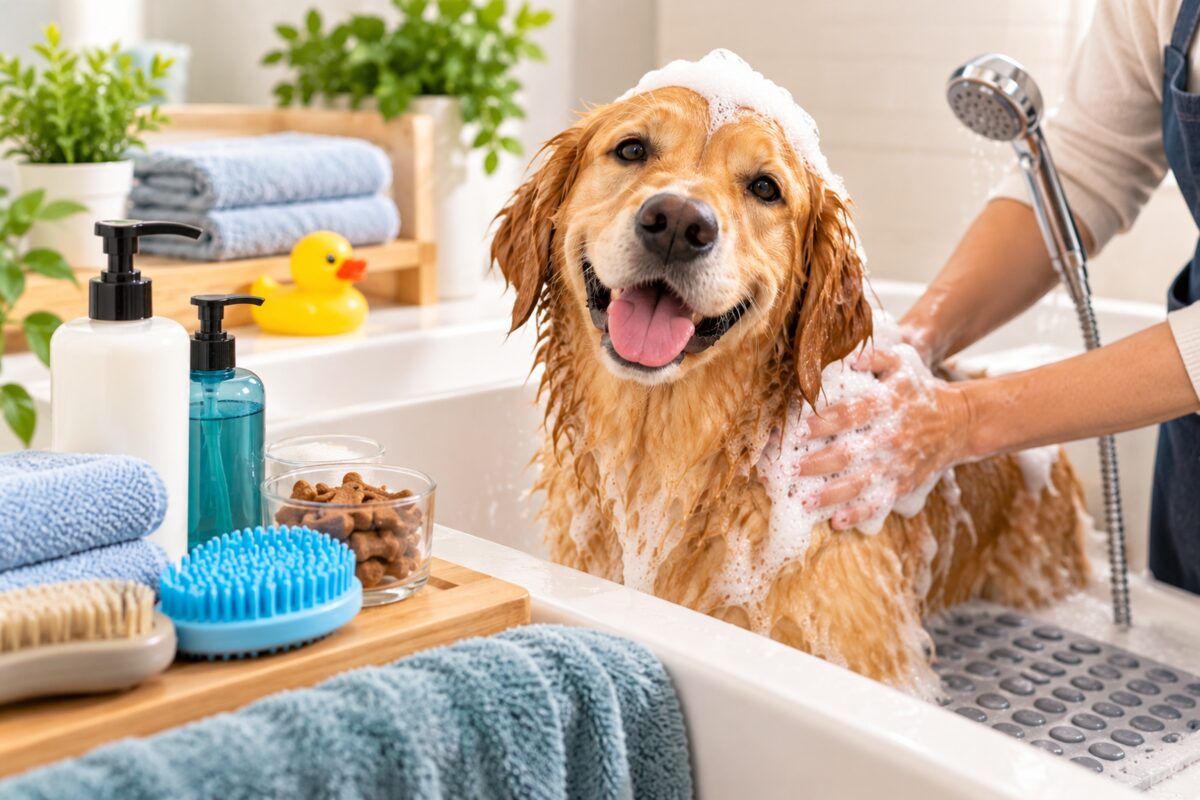
An easier dog bath is a predictable grooming routine that reduces slipping, startling, unnecessary restraint, and prolonged handling. It also makes washing easier for the person giving the bath.
That distinction matters. A faster bath isn’t automatically a better bath if your dog spends the entire time trying to escape.
- For your dog: secure footing, comfortable water, gentle handling, and clear rewards.
- For you: organized supplies, controlled water, fewer escape attempts, and simpler rinsing.
- For future baths: a routine your dog can learn instead of fear.
I judge a successful bath by more than clean fur. If the dog finishes without becoming increasingly distressed, the next bath usually starts from a better place.
How Do You Prepare for an Easier Dog Bath?
Prepare the entire bathing station before bringing your dog into it. Once a wet dog is standing in the tub, that isn’t the time to discover your towel is across the house.
I keep everything close enough to reach with one hand. That lets me keep the other hand available for the dog.
- Dog-specific shampoo
- Two or more absorbent towels
- Secure non-slip bath mat
- Handheld sprayer, cup, or pitcher
- Small high-value treats
- Washcloth for the face
- Brush or comb suited to the coat
- Dog conditioner when needed
Brush loose hair and manageable tangles before adding water. Wet tangles can become harder to handle, especially on long or dense coats.
The American Kennel Club’s home grooming guidance also recommends dog-specific shampoo and complete rinsing as part of safe bathing.
Why Does a Non-Slip Mat Make Such a Difference?
A smooth bathtub can make a calm dog feel insecure within seconds. When the paws repeatedly slide, the dog may scramble, brace, or try to climb out.
A secure rubber surface gives the dog something predictable underfoot. For me, traction is one of the highest-value bath upgrades because it helps without adding more handling.
How Can You Help Your Dog Feel Calm Before the Water Starts?
Let the bathing area become familiar before it becomes wet. This is especially useful for puppies, nervous dogs, and dogs with a history of fighting the bath.
You don’t need to give a complete bath during every practice session. Sometimes I want the dog to enter, take a reward, stand briefly, and leave.
- Visit the bathroom: Give a treat and leave without bathing.
- Approach the tub: Reward calm investigation.
- Enter the dry tub: Use a non-slip mat and reward relaxed standing.
- Add handling: Briefly touch the shoulders, paws, chest, and legs.
- Introduce water later: Start with a gentle sound and low flow.
This kind of gradual introduction is particularly important when you’re dealing with a dog that’s scared of bath time. Forcing a frightened dog through repeated full baths can make the tub predict another unpleasant experience.
The AKC also describes cooperative husbandry training, where dogs learn to participate more willingly in grooming through gradual handling and rewards.
What Makes a Dog Bath Easier: Calm Setup vs Rushed Setup?

The biggest differences usually happen before shampooing. A few minutes of preparation can remove several common reasons dogs struggle.
| Bath Element | Easier Approach | Harder Approach |
|---|---|---|
| Footing | Secure non-slip mat | Smooth wet tub floor |
| Water | Lukewarm, gentle flow | Sudden strong spray |
| Face cleaning | Damp washcloth | Direct spray toward face |
| Supplies | Everything within reach | Leaving a wet dog unattended |
| Handling | Steady, predictable movements | Grabbing and frequent repositioning |
| Rewards | Given during calm cooperation | No positive association |
How Do You Make the Actual Washing Process Easier?
Use the same washing order each time. Predictability helps your dog, and it prevents you from repeatedly moving between different parts of the body.
I usually work from the shoulders backward. I handle the face separately rather than making it part of the main spraying routine.
1. Wet the Coat Slowly
Use comfortably lukewarm water and begin around the shoulders. Move along the back, chest, belly, legs, and tail as your dog settles.
Avoid surprising the dog with a strong stream. Water control matters more than water speed.
2. Use Shampoo Made for Dogs
Choose a dog-specific shampoo suited to your dog’s coat and skin. Human shampoos aren’t my choice for routine canine bathing.
If your dog regularly becomes itchy or irritated after bathing, follow a gentler sensitive-skin bathing routine and ask your veterinarian about persistent symptoms.
VCA Animal Hospitals’ coat-care guidance also recommends shampoo formulated for dogs and emphasizes thorough rinsing.
3. Wash the Face Separately
A damp washcloth gives me more control around the muzzle, cheeks, and forehead. I don’t need to send a shower stream toward the dog’s eyes or nose.
Keep shampoo and direct water away from the eyes and ear canals. Slow handling here often prevents a calm bath from suddenly becoming stressful.
4. Rinse Methodically
Don’t race through rinsing because your dog looks ready to leave. Product can hide around the armpits, chest, belly, legs, and dense areas of coat.
- Rinse the back and sides.
- Check underneath the neck.
- Rinse behind the front legs.
- Check the belly and inner legs.
- Inspect dense fur near the skin.
- Finish only when the coat no longer feels soapy.
Do Treats and Lick Mats Make Dog Baths Easier?
They can. Food doesn’t replace good handling, but it can make calm bath behavior more rewarding.
I prefer small rewards that don’t interrupt the whole bath. A lick mat can also occupy some food-motivated dogs while their body is being washed.
- Reward entering: Reinforce voluntary movement toward the bathing area.
- Reward standing: Give a small treat when your dog settles on the mat.
- Reward handling: Pair easy paw, chest, or leg handling with food.
- Reward finishing: End the routine with something your dog enjoys.
Use dog-safe food and account for those treats in your dog’s daily intake. A lick mat also needs supervision rather than being treated as a restraint device.
What Should You Do If Your Dog Keeps Trying to Escape?
First identify what happens immediately before the escape attempt. Your dog may be reacting to unstable footing, water pressure, face spraying, restraint, or simply too much time in the tub.
Fix the trigger where possible instead of holding the dog more tightly.
- Sliding paws: Improve traction.
- Fear of spray: Reduce pressure or use a cup.
- Face sensitivity: Switch to a washcloth.
- Long sessions: Prepare better and simplify your sequence.
- Growing panic: Stop escalating the bath.
If a dog freezes, trembles intensely, repeatedly tries to flee, or becomes defensive, I don’t treat that as stubbornness. Severe fear deserves a slower training plan or professional guidance.
How Can You Make Drying Easier After the Bath?
Have towels open and ready before the rinse ends. A dripping dog running through the house makes the final stage harder than it needs to be.
Let your dog shake in a controlled area when practical. Then gently squeeze longer coat sections and press towels into the fur rather than scrubbing aggressively.
- Short coats: Thorough towel drying may handle most moisture.
- Long coats: Blot rather than creating friction and tangles.
- Dense coats: Check near the roots because the surface can feel dry first.
- Dryer-sensitive dogs: Introduce airflow gradually rather than starting at full force.
For coat-specific techniques, see the complete guide on how to dry a dog after a bath.
What Dog Bath Mistakes Make the Process Harder?
Most difficult baths aren’t caused by one dramatic mistake. Several small problems often stack together until the dog becomes difficult to manage.
- Starting unprepared: You leave the dog to find shampoo or towels.
- Using a slippery tub: The dog never feels physically secure.
- Turning the water on suddenly: Noise and pressure arrive without warning.
- Spraying the face: A sensitive area becomes unnecessarily stressful.
- Using more restraint: Fear turns into a physical struggle.
- Rushing the rinse: Shampoo remains hidden in the coat.
- Rough towel rubbing: Long coats become tangled.
- Changing the routine constantly: Your dog can’t predict what happens next.
One change I find especially useful is keeping the same general order every time. Dogs learn patterns quickly, and predictability removes some uncertainty.
When Should You Stop the Bath and Ask for Help?
Stop treating bath time as a simple home-grooming issue when your dog becomes dangerous, appears painful, or develops unexplained skin problems. A veterinarian or qualified behavior professional may be the safer next step.
- Your dog attempts to bite during bathing or handling.
- Your dog repeatedly injures themselves trying to escape.
- A previously calm dog suddenly becomes highly fearful.
- You notice open sores, painful skin, swelling, or strong unusual odor.
- Your dog’s anxiety prevents even basic cleaning.
- Your dog has a medical skin condition requiring prescribed bathing instructions.
There’s no prize for completing a routine bath at any cost. Safety matters more than finishing the shampoo bottle.
Dog Bath Products I Would Consider
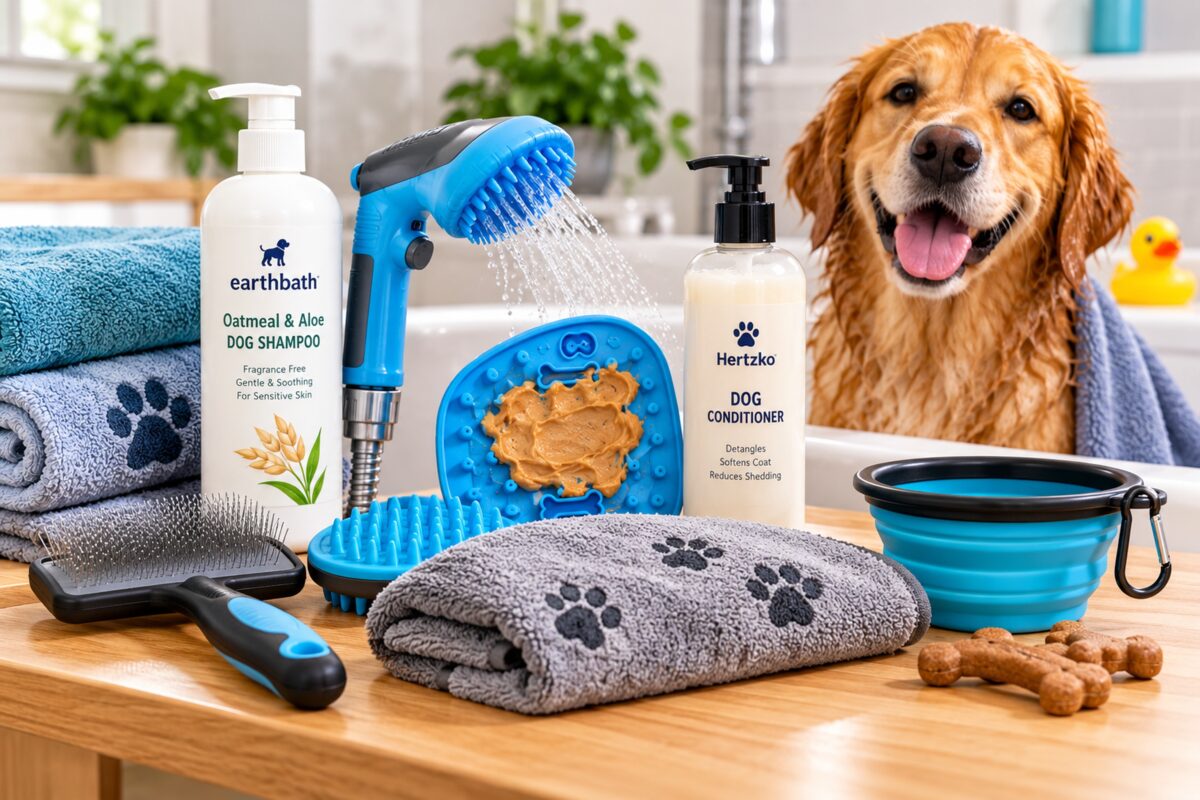
If you’re trying to improve your home setup, I’d spend money on products that solve specific bath problems. Better water control, a gentle shampoo, and an engaging reward tool are more useful to me than collecting unnecessary grooming accessories.
🏆 Best for Water Control
Aquapaw Pet Bathing Tool
★★★★½
This wearable tool combines a sprayer and scrubber, letting you control water close to the coat. I like the concept for dogs that become uneasy when a large shower spray moves around them.
🌿 Gentle Shampoo Pick
earthbath Oatmeal & Aloe Fragrance Free Shampoo
★★★★½
This fragrance-free dog shampoo contains colloidal oatmeal and aloe and is designed for dry or sensitive skin. I prefer a straightforward dog-specific formula when strong fragrance isn’t necessary.
🐾 Best for Distraction
Aquapaw Slow Treater
★★★★☆
This suction-style slow feeder attaches to a smooth surface and holds a spreadable treat. For food-motivated dogs, I like this type of tool as a reward while keeping my hands available for washing.
Frequently Asked Questions
Why does my dog make bath time so difficult?
Dogs may struggle during baths because of slippery footing, loud water, strong spray, restraint, unfamiliar handling, or previous bad experiences. Watch what happens immediately before your dog becomes uncomfortable. Fixing that specific trigger is usually more useful than adding stronger restraint.
How do I keep my dog calm during a bath?
Use a non-slip surface, lukewarm water, gentle handling, and small rewards for calm behavior. Keep the bathing order predictable and avoid spraying the face. For a nervous dog, practice entering and standing in a dry tub before attempting another full bath.
Can I give my dog treats during a bath?
Yes, small dog-safe treats can reward calm participation during bathing. A supervised lick mat can also work for some food-motivated dogs. Treats should support a comfortable routine rather than distract a panicking dog while you continue something that is frightening them.
What is the easiest way to rinse a dog?
A handheld sprayer usually gives you good control because you can direct water close to the coat. A cup or pitcher also works. Use a gentle flow, rinse systematically from the upper body downward, and check the chest, belly, legs, armpits, and dense coat areas.
What should I do if my dog absolutely hates baths?
Stop forcing complete baths and rebuild the routine in smaller stages. Practice visiting the bathroom, entering a dry tub, standing on a non-slip mat, and hearing low water flow. Seek veterinary or qualified behavior help if fear causes aggression or dangerous escape attempts.
Final Takeaway: Make the Next Bath Easier, Not Just Faster
Learning how to make bath time easier for your dog starts before the faucet turns on. Prepare your supplies, give the paws traction, control the water, reward cooperation, and follow the same calm routine each time.
Start with one improvement today. Put a secure mat in the dry tub, let your dog step inside for a reward, and finish before any water appears.