Quick Answer
To disinfect dog clippers, turn them off, unplug them, and remove loose hair from the blades. Apply a clipper-compatible disinfectant, keep the treated surfaces wet for the product’s required contact time, and allow them to dry as directed. Finish with blade oil when required. Follow the CDC’s cleaning and disinfection guidance and your clipper manufacturer’s instructions.
6 Quick Steps
- 1. Disconnect power: Switch off the clippers and unplug the cord or disconnect the detachable battery.
- 2. Remove hair: Brush away trapped fur, skin flakes, and visible debris.
- 3. Clean blades: Remove oily buildup using a manufacturer-approved cleaning method.
- 4. Apply disinfectant: Use a product labeled for your blade material and the intended disinfection purpose.
- 5. Respect contact time: Keep surfaces wet for the label’s full required period.
- 6. Dry and oil: Follow the product’s drying directions, lubricate the blades, and store them dry.
Important Safety Tip
- Never soak the clipper body: Keep liquid away from the motor, charging port, and electrical connections. Only immerse removable blades if both manufacturers explicitly permit it.
Dog clippers collect more than loose fur. Skin oils, dirt, and tiny flakes can build up around the cutting teeth, creating a hygiene problem when you reuse the tool.
I recommend treating disinfection as part of the grooming routine, not an occasional deep-cleaning job. This guide covers the right products, safe cleaning steps, and common mistakes that can damage your clippers.
What Does It Mean to Disinfect Dog Clippers?

Disinfecting dog clippers means using an appropriate chemical product to kill specified microorganisms on the clipper’s treated surfaces. Cleaning comes first because trapped hair and oily residue can interfere with disinfection.
Disinfection is different from cleaning, sanitizing, and sterilization. Knowing the difference helps you choose the right process.
- Cleaning: Physically removes loose fur, dirt, skin flakes, and some germs.
- Sanitizing: Reduces certain microorganisms to levels defined by applicable standards.
- Disinfecting: Uses an approved chemical product to kill specified germs under labeled conditions.
- Sterilizing: Uses a validated process to destroy all forms of microbial life, including bacterial spores.
Routine clipper care usually involves cleaning followed by disinfection. Chemical disinfectants do not automatically sterilize grooming equipment.
Why Should You Disinfect Dog Clippers After Grooming?
Clippers come into contact with a dog’s coat and skin throughout grooming. Proper cleaning and disinfection help reduce the chance of transferring microorganisms between grooming sessions.
This matters even more when one set of clippers serves several dogs. Shared equipment needs careful attention between animals.
Can dirty dog clippers spread skin infections?
Contaminated grooming equipment can contribute to the transfer of infectious material. The level of risk depends on the organism, the equipment, and the dog’s skin condition.
Ringworm is one concern because fungal material can contaminate grooming tools. Dogs with suspected contagious skin disease should not share equipment until an appropriate cleaning and disinfection procedure has been completed.
Does disinfection protect the clipper blades?
Disinfection and blade maintenance serve different purposes. Disinfection addresses microorganisms, while brushing, drying, and lubrication help maintain cutting performance.
Some specialized blade sprays combine several functions. However, even a multipurpose product may not replace regular blade oil.
What Do You Need to Disinfect Dog Clippers?
Gather everything before starting. A small maintenance kit makes routine cleaning easier and helps avoid handling chemicals while searching for supplies.
- Clipper cleaning brush: Removes hair from the blade teeth and housing.
- Compatible disinfectant: A blade-safe product with clear disinfection directions.
- Lint-free cloth: Removes loosened debris and permitted excess product.
- Clipper blade oil: Protects metal cutting surfaces and reduces friction.
- Protective gloves: Use when required by the disinfectant label.
- Clean work surface: Keeps disinfected parts away from dirty grooming tools.
- Manufacturer’s manual: Confirms blade removal, chemical compatibility, and drying requirements.
A dedicated clipper disinfectant is generally more practical than experimenting with household cleaners. Choose one compatible with your exact blade type.
How to Disinfect Dog Clippers Safely: 8 Steps
The safest procedure combines mechanical cleaning, proper chemical contact time, and careful drying. Follow these eight steps after grooming.
Step 1: Turn Off and Disconnect the Clippers
Switch off the clippers before touching the cutting assembly. Unplug corded models and disconnect removable batteries where applicable.
For cordless models with sealed batteries, follow the maker’s maintenance instructions. Never dismantle a battery compartment simply to disinfect the blades.
Step 2: Remove the Blade If the Design Allows It
Many professional detachable-blade clippers let you release the blade assembly for cleaning. Other models use fixed or adjustable cutting heads that require a different approach.
Consult the manual before removing screws or other components. Incorrect disassembly can affect blade alignment.
Step 3: Brush Away Hair and Debris
Use a small brush to remove fur from the blade teeth, underside, and accessible cutting surfaces. Brush gently to avoid damaging the moving cutter.
Inspect the blade’s lower edge for compacted hair. This area often needs extra attention because buildup may remain hidden during normal grooming.
Step 4: Remove Oil and Visible Buildup
Cleaning must happen before disinfection unless the disinfectant’s label specifically supports a combined cleaning-and-disinfection procedure. Dirty surfaces can prevent the chemical from contacting microorganisms effectively.
Use a compatible blade cleaner and follow its directions. Avoid saturating the motor housing or using household detergent on parts that the manufacturer says must remain dry.
Step 5: Apply a Compatible Clipper Disinfectant
Choose a disinfectant whose label permits use on your blade material. Check its claims and directions before applying it.
For an approved spray, position the clipper or detached blade as instructed and treat the specified surfaces. Avoid spraying directly into vents, switches, and charging connections.
Some products require a specific spray distance or application method. Follow that label rather than assuming every disinfectant works the same way.
Step 6: Allow the Full Disinfectant Contact Time
Contact time is the period a disinfectant must remain on a surface to achieve its labeled antimicrobial effect. The required period depends on the product and targeted microorganisms.
For example, Wahl Clini-Clip advertises a two-minute disinfection process. That timing does not apply to unrelated disinfectants.
Keep the treated surface visibly wet for the full period required by the product label. Follow any manufacturer limits on blade exposure.
Step 7: Dry and Inspect the Blades
After the required contact time, follow the disinfectant’s directions for wiping, rinsing, or air-drying. Do not remove the chemical early.
Check for moisture, residue, corrosion, and damaged teeth before reassembly. Never reconnect power while electrical components remain wet.
Step 8: Apply Blade Oil and Store Properly
Apply clipper blade oil according to the manufacturer’s instructions. Lubrication reduces friction and helps limit metal wear and corrosion.
Reconnect or reassemble the clippers only after the applicable drying requirements are met. Run the clippers briefly if the oiling procedure requires it, then switch them off and store them in a dry location.
Which Disinfectant Is Best for Dog Clipper Blades?
A product designed for clipper blades is usually the easiest starting point. However, the best choice depends on your equipment and the product’s approved antimicrobial claims.
Here is how common cleaning and disinfection methods compare.
| Method | Disinfects? | Best Use | Main Limitation |
|---|---|---|---|
| EPA-registered clipper disinfectant | Yes, for labeled organisms | Routine blade disinfection | Requires correct contact time and compatible materials |
| Multipurpose disinfectant blade spray | Yes, when labeled for disinfection | Blade hygiene and maintenance | May not replace dedicated blade oil |
| 70% rubbing alcohol | Not automatically validated for this use | Only where explicitly approved | Compatibility, evaporation, and organism coverage vary |
| Soap or blade cleaner | No, unless specifically disinfectant-labeled | Removing debris before disinfection | Cleaning alone does not provide a verified disinfection result |
| Household bleach | Can disinfect suitable surfaces | Only manufacturer-approved applications | May corrode metal or damage equipment |
The EPA’s disinfectant resources explain why approved claims and contact times matter. An EPA registration alone does not establish suitability for every clipper or pathogen.
Can You Use Rubbing Alcohol to Disinfect Dog Clippers?
Rubbing alcohol may have antimicrobial activity, but that does not make every alcohol product a suitable clipper disinfectant. Concentration, contact time, material compatibility, and validated claims all matter.
A fast-drying alcohol may evaporate before the required wet contact period. Some clipper manufacturers also discourage alternative chemicals because they can affect finishes or warranties.
For consistent results, I would choose a blade-specific disinfectant approved for the equipment rather than an improvised alcohol routine. Never combine alcohol with another cleaning chemical.
Can You Use Bleach or Vinegar on Dog Clippers?
Household bleach and vinegar are poor default choices for dog clipper blades. Bleach can damage susceptible metals, while ordinary household vinegar is not a reliable substitute for a registered disinfectant.
The main risks include:
- Metal corrosion: Incompatible solutions can damage cutting surfaces.
- Improper dilution: Incorrect chemical strength may be ineffective or damaging.
- Residual moisture: Water trapped between blade components can encourage rust.
- Unverified germ control: Homemade solutions may lack validated claims against the relevant organisms.
Never mix bleach with vinegar, ammonia, or other cleaning chemicals. Dangerous gases can form.
The CDC’s bleach guidance covers safe preparation and use on suitable surfaces, but it does not establish that bleach is safe for clipper assemblies.
How Often Should You Disinfect Dog Clippers?
Clean dog clippers after every grooming session and disinfect shared blades between dogs. The appropriate frequency also depends on your grooming environment, the manufacturer, and possible exposure to infectious material.
Use this practical schedule:
- After each dog: Remove hair, clean the blades, and complete the required disinfection process before sharing equipment.
- During long sessions: Brush away accumulating hair and check blade temperature as needed.
- After suspected infection exposure: Stop using the contaminated equipment until an effective pathogen-appropriate procedure is confirmed.
- Before storage: Check for moisture, lubricate the blades, and store them dry.
- Periodically: Inspect blade teeth, screws, cutting alignment, and signs of corrosion.
Professional grooming facilities may need additional hygiene protocols under local rules. A household schedule should not replace those requirements.
How Do You Disinfect Clippers After Grooming a Dog With a Skin Infection?
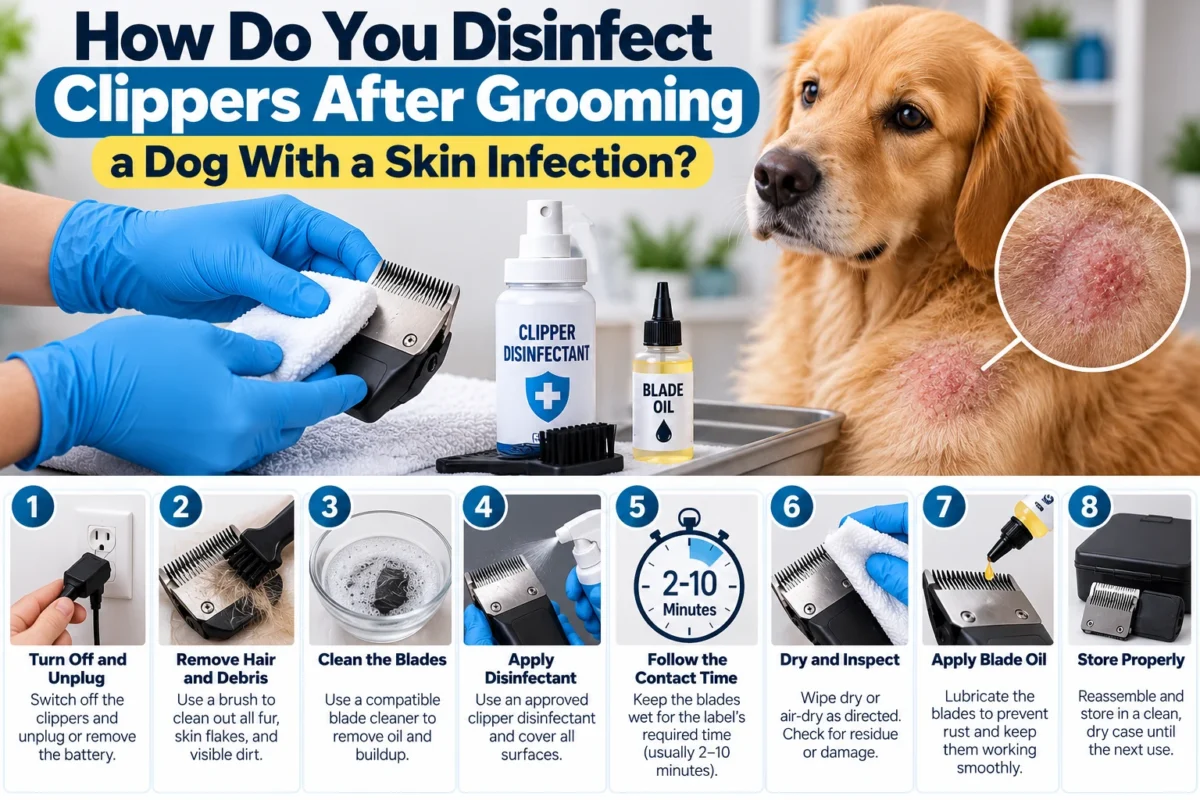
Clippers exposed to a suspected contagious skin infection need extra care. Routine spraying is not automatically effective against every fungus, bacterium, or virus.
Start by keeping the equipment separate from clean tools. Do not use it on another animal until proper decontamination has been established.
- Stop grooming and isolate the potentially contaminated tools.
- Identify the suspected pathogen with veterinary guidance when possible.
- Remove visible contamination without spreading debris.
- Select a blade-compatible disinfectant with an appropriate label claim.
- Follow the complete cleaning, wet contact time, drying, and maintenance instructions.
- Clean and disinfect other contaminated grooming surfaces and equipment.
- Replace equipment that cannot be adequately disinfected when the infection risk warrants it.
Ringworm and other contagious conditions may require more specific procedures than ordinary maintenance. Ask a veterinarian about appropriate infection-control measures when the diagnosis or product effectiveness is uncertain.
Do not spray disinfectant onto your dog. Equipment disinfectants are intended for approved surfaces, not pet skin.
How Do You Disinfect Detachable and Fixed Clipper Blades?
Detachable blades and fixed cutting heads may require different handling. The key difference is how much of the assembly you can safely expose to a cleaning product.
Detachable Clipper Blades
Professional detachable blades often allow easier access to hair trapped beneath the cutting surfaces. Remove them according to the manufacturer’s directions before cleaning.
Some detached blades may support approved immersion procedures, but others do not. Never assume a blade can be soaked simply because it can be removed.
Fixed and Adjustable Clipper Blades
Fixed cutting heads typically require cleaning while attached to the tool. Follow the manufacturer’s approved spray or wiping method without saturating the electrical housing.
Use a soft brush around exposed teeth and moving parts. Avoid loosening alignment screws unless the manufacturer specifically instructs you to do so.
What Mistakes Should You Avoid When Disinfecting Dog Clippers?
Many clipper maintenance problems come from choosing the wrong chemical or rushing the process. Small mistakes can also make disinfection less effective.
- Skipping pre-cleaning: Hair and grime can block disinfectant contact.
- Guessing contact time: Follow the product’s stated time for the intended antimicrobial claim.
- Using incompatible chemicals: Household products may corrode blades or damage finishes.
- Soaking electrical parts: Liquid can damage motors, switches, and battery connections.
- Mixing products: Chemical combinations may create hazardous reactions.
- Forgetting blade oil: Dry blades can develop friction, wear, and rust.
- Storing damp equipment: Residual moisture may damage cutting surfaces.
- Assuming all germs are covered: Every disinfectant has specific approved claims.
One especially useful habit is separating cleaning from disinfection in your routine. First remove the debris, then complete the chemical process without interruption.
How Can You Keep Dog Clippers Clean Between Grooming Sessions?
Good storage reduces unnecessary buildup and protects the work you’ve already done. Store equipment only after completing the required drying and lubrication steps.
- Keep clippers in a clean, dry case or designated storage area.
- Use a protective blade cover where recommended.
- Store clean blades separately from used grooming accessories.
- Wash reusable cleaning cloths regularly.
- Replace heavily worn brushes that no longer remove debris effectively.
- Inspect blades before every grooming session.
I also recommend keeping a dedicated brush and cloth with the clipper kit. That reduces the temptation to reuse dirty cleaning supplies.
For additional maintenance guidance, see the Andis grooming equipment FAQ, which emphasizes blade oiling and regular disinfection.
Which Products Help Clean and Disinfect Dog Clippers?
If you’re building a clipper maintenance kit, start with a compatible disinfectant and a dedicated lubricant. These are two useful product options from established grooming-tool manufacturers.
Disclosure: Some shopping links below are affiliate links. Qualifying purchases may earn a commission at no additional cost to you.
🏆 Dedicated Blade Disinfectant
Wahl Clini-Clip Disinfectant Spray
★★★★☆
Wahl Clini-Clip is a dedicated blade disinfectant advertised with a two-minute disinfection process. I favor this type of product when the clipper maker approves it, because its purpose and application directions are clear.
🛠 Multipurpose Maintenance Spray
Andis Cool Care Plus 5-in-1 Spray
★★★★☆
Andis Cool Care Plus combines cleaning, cooling, disinfection, light lubrication, and rust protection functions. I would consider it for compatible grooming tools, while still following Andis’s recommendation to use regular blade oil.
💧 Essential Blade Lubricant
Wahl Premium Clipper Blade Oil
★★★★☆
Wahl blade oil is intended to lubricate metal cutting blades and help reduce friction and corrosion. It is a useful maintenance product after cleaning, but it does not replace a disinfectant.
Product ratings above are editorial suitability indicators, not verified customer-review averages. Check the current product label and your clipper manual before purchasing.
Frequently Asked Questions About Disinfecting Dog Clippers
Can I disinfect dog clippers with 70% alcohol?
Only use 70% alcohol when the specific product and your clipper manufacturer approve that application. Alcohol concentration alone does not establish an effective disinfection process, and rapid evaporation may prevent the necessary contact time. A registered, compatible clipper disinfectant with clear instructions is a more reliable option.
Do I need to disinfect dog clippers after every use?
Clean your clippers after every grooming session and disinfect shared blades between dogs. A single-dog household may have different exposure risks, but regular blade hygiene remains worthwhile. Follow the equipment maker’s instructions and increase precautions when a contagious skin condition is suspected.
Can I soak dog clipper blades in disinfectant?
Only soak detachable blades when both the blade manufacturer and disinfectant label specifically permit immersion. Some blades have components that can trap moisture or suffer corrosion. Never immerse the powered clipper body, sealed battery assembly, charging connections, or other electrical parts.
How long should disinfectant stay on clipper blades?
Use the contact time stated on the product label for the targeted microorganisms. Some clipper disinfectants specify approximately two minutes, while others require different periods. The treated surface must remain wet for the required time, and the product’s instructions determine subsequent drying or wiping.
Does clipper blade oil kill germs?
Ordinary clipper blade oil is a lubricant, not a disinfectant. Its main role is to reduce friction, protect metal cutting surfaces, and support blade performance. Clean and disinfect the equipment with suitable products first, then apply blade oil as directed by the manufacturer.
Final Takeaway: What’s the Safest Way to Disinfect Dog Clippers?
Safe clipper disinfection starts with thorough cleaning and ends with proper maintenance. Remove hair, apply a compatible disinfectant, observe its full contact time, and follow the drying and oiling directions.
The most important rule is simple: clean first, disinfect correctly, and never expose electrical components to unnecessary moisture.
Make this routine part of every grooming session, especially when sharing tools between dogs. Well-maintained equipment supports cleaner, safer, and more consistent grooming.