
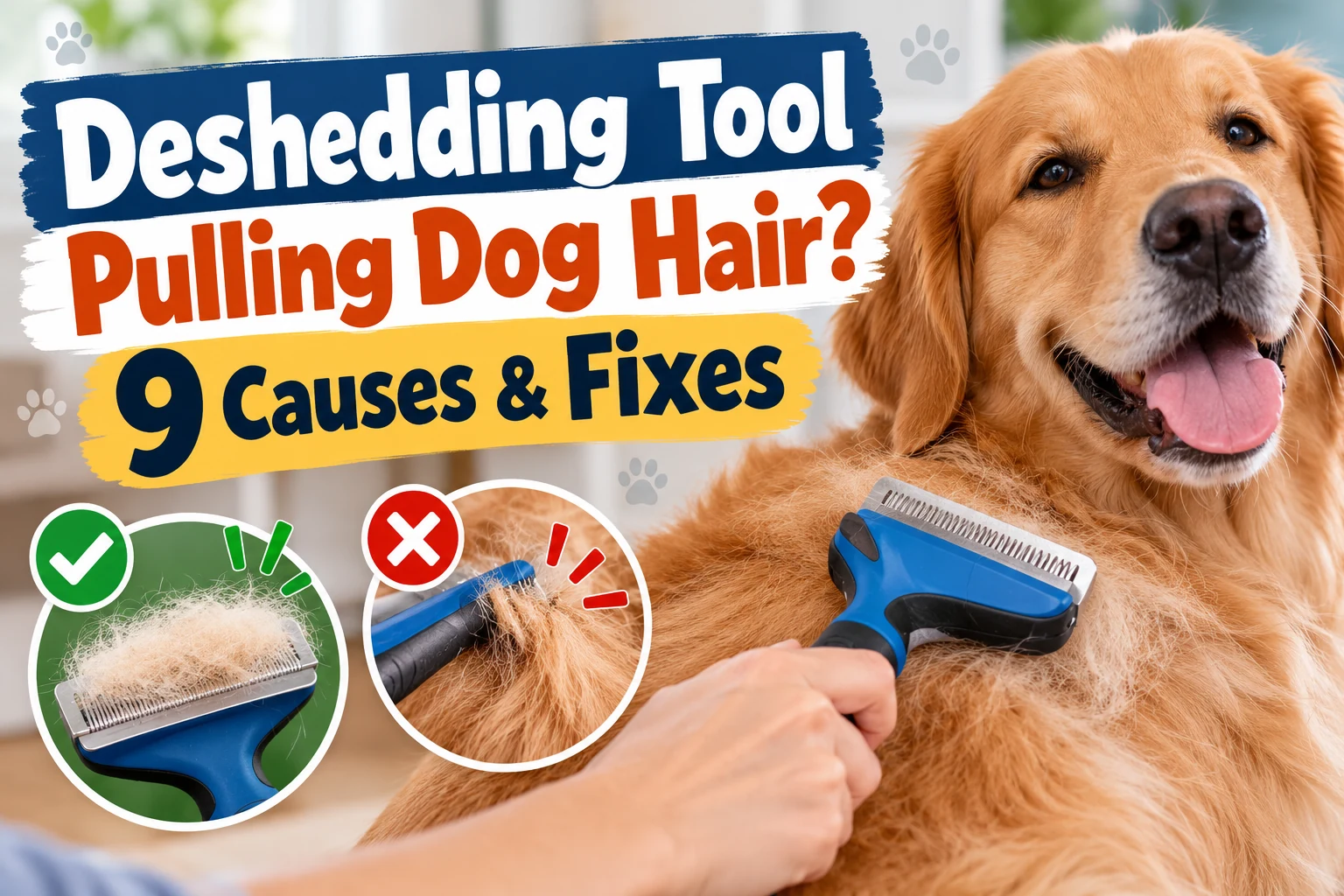
Quick Answer
If your deshedding tool is pulling your dog’s hair instead of gliding through it, stop and check for tangles, excessive pressure, incorrect technique, or an unsuitable tool. A deshedding tool should remove loose undercoat without painful tugging. If your dog yelps, pulls away, or develops redness, stop grooming and investigate before trying again.
A deshedding tool can collect impressive amounts of loose fur, but it should not feel like you are pulling hair out of your dog’s skin. When the tool catches, jerks, or repeatedly snags, something about the coat, tool, or grooming method needs attention.
The challenge is distinguishing normal undercoat removal from uncomfortable hair pulling. Both can produce a handful of fur, but they are not the same process.
Here is how to recognize the difference, identify nine possible causes, and make deshedding safer for your dog.
Is It Normal for a Deshedding Tool to Pull Dog Hair?
Removing loose hair is normal; forcefully tugging attached hair is not. A suitable deshedding tool works through the coat to collect undercoat hairs that are ready to shed. It should move smoothly with gentle pressure.
Some resistance is possible in particularly dense fur, but repeated snagging, a jerking motion, or visible discomfort means you should stop and reassess.
The amount of hair collected does not prove that the technique is safe. A tool can gather substantial fur while also irritating the skin if it is pressed too firmly or used repeatedly over one spot.
How can you tell loose hair removal from painful pulling?
| Usually normal | Potential warning sign |
|---|---|
| Tool moves smoothly through the coat | Tool catches or jerks repeatedly |
| Dog remains comfortable and relaxed | Dog flinches, yelps, or tries to escape |
| Loose fur collects without force | Hair comes out only with strong pulling |
| Skin looks unchanged afterward | Redness, scratching, or sore patches appear |
These signs are more useful than judging the size of the fur pile. If your dog shows distress, do not continue simply because the tool is still removing hair.
Why Is Your Deshedding Tool Pulling Dog Hair? 9 Possible Causes
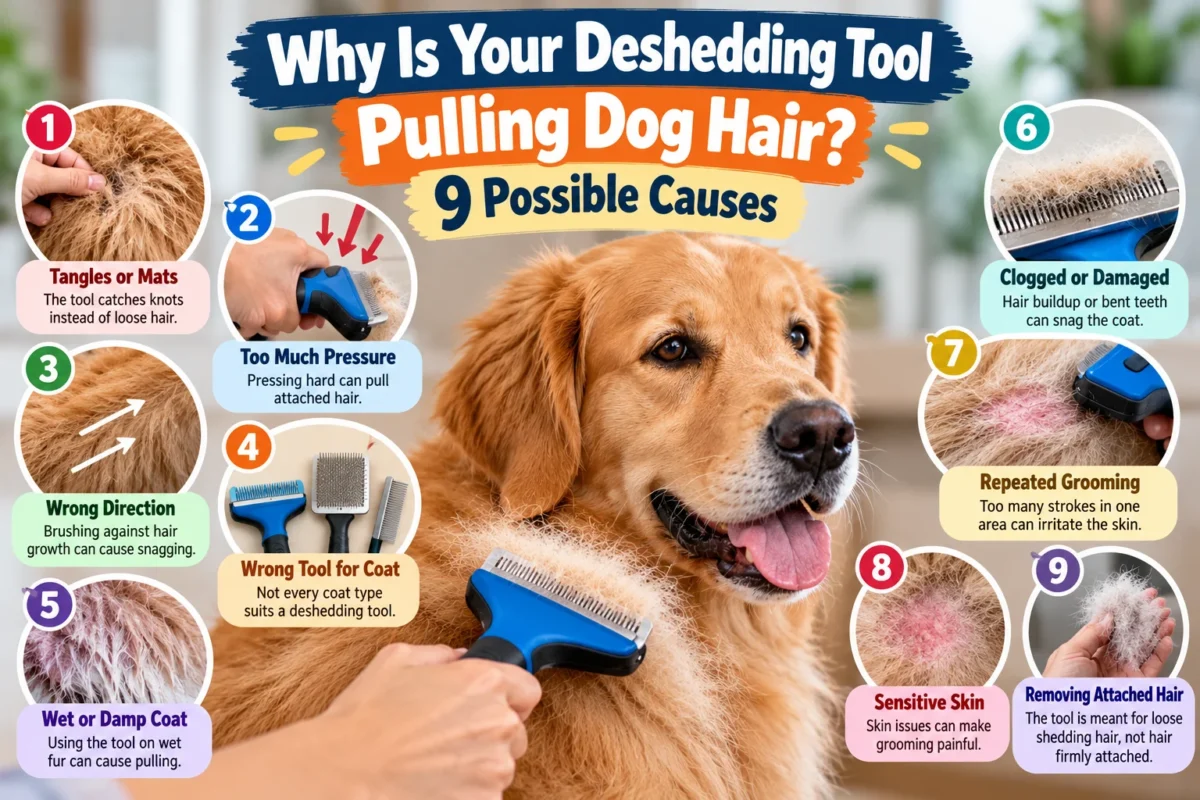
Start with the simplest explanation: resistance from tangles or excessive pressure. If those are ruled out, consider tool design, coat type, and possible skin discomfort.
1. Your Dog Has Hidden Tangles or Mats
Small tangles can hide beneath the visible topcoat, especially around the hips, chest, ears, and backs of the legs. A deshedding edge may catch these hairs instead of moving freely through them.
What to do: Separate the coat with your fingers and check for knots before deshedding. Work on minor tangles with an appropriate detangling tool, using gentle movements.
Do not pull a deshedding blade through a mat. Tight mats, especially those close to the skin, are better handled by a qualified groomer or veterinarian.
2. You Are Pressing the Tool Too Hard
More pressure does not necessarily mean better undercoat removal. Pushing a metal deshedding edge into the coat can increase friction against the skin and cause discomfort.
What to do: Let the tool’s design perform the work. Use light, controlled strokes instead of pushing downward. If removing hair requires force, stop and examine the coat.
3. You Are Brushing Against Hair Growth
Many deshedding tools are intended to travel in the natural direction of hair growth. Moving against the coat can lift and catch hairs unnecessarily.
What to do: Observe how the fur lies and follow that direction. Adjust your hand position around curved areas instead of maintaining one rigid brushing angle.
4. The Tool Is Wrong for Your Dog’s Coat
Not every dog benefits from an undercoat deshedding blade. Dogs with dense double coats have different grooming needs from dogs with continuously growing curly hair, delicate coats, or little undercoat.
What to do: Check the manufacturer’s suitability guidance for your dog’s actual coat type, not just the breed name. A slicker brush, comb, or another grooming method may be more appropriate.
5. The Coat Is Wet or Not Fully Dry
Some undercoat deshedding tools specifically require a completely dry coat. Wet or damp hair can behave differently during grooming and may make it harder to use the tool as intended.
What to do: Follow the instructions for your particular tool. For dry-coat-only deshedding blades, wait until the fur has dried completely before using them.
6. The Teeth Are Clogged, Bent, or Damaged
Collected hair and debris can interfere with a tool’s movement. Bent, rough, or damaged teeth may also snag the coat unexpectedly.
What to do: Remove collected hair regularly and inspect the edge in good lighting. Clean the tool according to its instructions and replace it if the teeth or blade are damaged.
Do not try to force a defective grooming tool through your dog’s coat.
7. You Are Repeatedly Grooming the Same Area
Repeated strokes across the same small patch can irritate the skin, even when each individual stroke seems gentle. This is particularly important with close-contact undercoat tools.
What to do: Work methodically across the coat instead of repeatedly chasing every remaining hair. Stop when the area has been adequately groomed or your dog begins showing discomfort.
8. Your Dog’s Skin Is Already Sensitive or Irritated
Skin inflammation, sores, infections, or other dermatological problems can make ordinary grooming uncomfortable. A tool that previously worked well may suddenly seem to cause pulling or pain.
What to do: Look for redness, scabs, bumps, unusual hair loss, or areas your dog resists having touched. Avoid grooming affected skin and seek veterinary guidance when these signs are present.
9. You Are Using a Deshedding Blade to Remove Attached Hair
A deshedding tool is intended primarily for loose, shedding hair. Trying to remove fur that is firmly attached by increasing pressure, changing angles, or repeatedly scraping is not appropriate deshedding.
What to do: Accept that some hair is not ready to shed. Stop rather than forcing removal. The objective is comfortable coat maintenance, not collecting the largest possible amount of fur.
What Should You Do Immediately When a Deshedding Tool Starts Pulling?
Stop the stroke and release the tension. Do not yank the tool through the snag or hold your dog still while pulling harder.
- Put the tool down. Give your dog an opportunity to relax and move away.
- Check the skin. Look for redness, broken skin, soreness, or an unusual reaction to touch.
- Inspect the coat. Gently separate the hair where the tool caught and look for knots or mats.
- Examine the tool. Check for packed hair, damaged teeth, or an unsuitable edge.
- Decide whether to stop completely. If your dog seems painful, the skin is irritated, or the cause remains unclear, do not resume deshedding.
Warning
Never use scissors to cut tightly matted fur close to a dog’s skin. Mats can pull skin into the tangled hair, making accidental cuts more likely. Seek professional help for tight or extensive matting.
How Can You Use a Deshedding Tool Without Pulling Hair?
For a dog with a suitable coat and healthy skin, a careful preparation-and-grooming routine can reduce snagging. Follow your specific tool’s instructions if they differ.
- Confirm coat compatibility. Make sure the tool is designed for your dog’s coat texture, length, and undercoat.
- Check the skin first. Do not deshed across wounds, irritated patches, or unexplained bald spots.
- Prepare the fur. Use an appropriate brush or comb to check for and gently remove minor tangles. Refer difficult mats to a professional.
- Start with a dry coat. Completely dry the fur when required by the tool’s manufacturer.
- Use light pressure. Position the tool as directed and move gently in the direction of hair growth.
- Work through manageable sections. Avoid excessive passes over one patch and take extra care near sensitive areas.
- Monitor your dog’s response. Stop if your dog flinches, becomes distressed, or the edge begins catching.
A successful session does not need to remove every loose hair. Comfortable, appropriate grooming is more valuable than an unusually large pile of fur.
Practical Tip
Before using an undercoat tool, gently test whether a suitable comb can move through the area without snagging. If the comb cannot pass comfortably, investigate the tangle rather than forcing the deshedding edge through it.
Can a Deshedding Tool Pull Out Healthy Hair or Damage the Coat?
Improper deshedding can cause hair breakage, coat thinning, or skin irritation. This risk increases when an unsuitable tool is used, pressure is excessive, or the same area receives too many strokes.
However, finding long hairs mixed with undercoat does not automatically prove damage. Different coat types shed different kinds of hair, and some naturally shed guard hairs as part of their normal hair cycle.
Focus on the accompanying signs: broken-looking hair, new thin patches, skin redness, or obvious discomfort. Those findings are more concerning than the appearance of the collected fur alone.
Manufacturer guidance from FURminator’s official FAQs explains that its undercoat tool is intended for appropriate shedding coats and should not be used on particularly sensitive skin.
When Should You Stop Deshedding and Contact a Veterinarian?
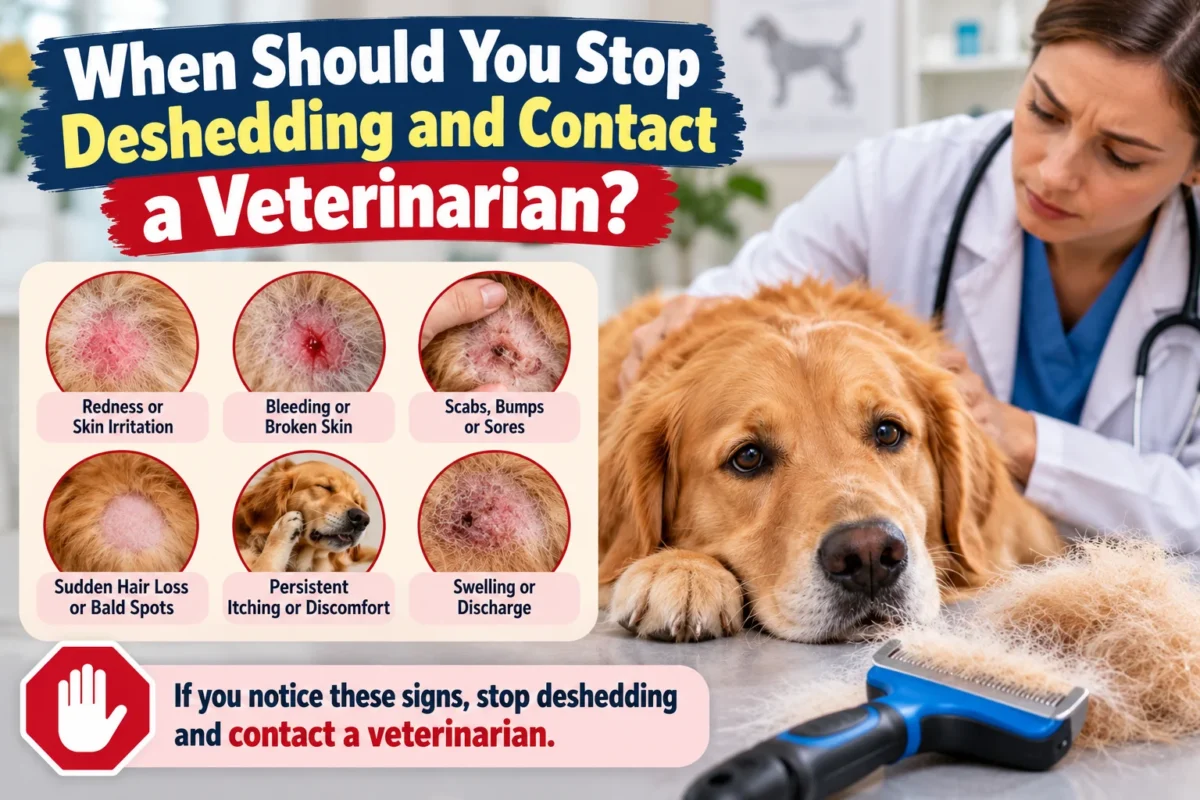
Stop using the tool and arrange veterinary assessment if grooming reveals bleeding, broken skin, painful swelling, pronounced redness, or sudden unexplained hair loss.
Persistent scratching, scabs, discharge, or obvious tenderness also deserve attention, particularly if they were present before grooming.
According to VCA Animal Hospitals’ coat-care guidance, grooming should avoid excessive pulling, and severe matting or skin irritation may require professional treatment.
If your dog has a tight mat but otherwise healthy skin, a professional groomer may be the appropriate first contact. If the skin looks injured or diseased, veterinary assessment should take priority.
Should You Switch to a Different Grooming Tool?
Switching tools makes sense when the current deshedder repeatedly catches despite correct preparation and gentle technique, or when it is not suitable for your dog’s coat.
A slicker brush may help maintain and detangle some coats. A grooming rake may be appropriate for certain dense coats, while a comb can help identify remaining tangles. These tools have different purposes and are not universally interchangeable.
If your dog is consistently uncomfortable, consult a qualified groomer about the coat type and suitable maintenance tools rather than buying a more aggressive deshedding blade.
Related Product
Gentle Dog Grooming Comb
A coat-appropriate grooming comb can help identify small tangles before deshedding, reducing the chance of unexpected snagging.
As an Amazon Associate, we earn from qualifying purchases.
Frequently Asked Questions
Does deshedding hurt dogs?
Proper deshedding should not be painful. A suitable tool used gently on a healthy, tangle-free coat generally removes loose hair without force. Stop if your dog shows pain or distress.
Why does my dog bite the deshedding brush?
Biting may indicate discomfort, fear, frustration, or playful behavior. Stop grooming and check for snags, skin sensitivity, or stressful handling rather than assuming the reaction is harmless.
Can I use a deshedding tool on a short-haired dog?
Some short-haired dogs with shedding undercoats can benefit from appropriately designed tools. Coat structure matters more than length alone, so follow the manufacturer’s compatibility guidance.
Is it normal for long hairs to come out with the undercoat?
Some longer hairs naturally shed, so their presence does not automatically mean damage. Concern increases if you notice broken hairs, thinning patches, irritated skin, or painful tugging.
How often should I use a deshedding tool?
Frequency depends on the tool, coat type, skin condition, and manufacturer instructions. FURminator suggests one or two weekly sessions for its undercoat tool, but this is not a universal schedule for every dog or grooming device.
Can I deshed my dog again after the tool causes redness?
No. Stop using the tool on irritated skin. If redness persists, worsens, or is accompanied by pain, sores, or other symptoms, seek veterinary advice before resuming.
Final Thoughts
A deshedding tool that painfully pulls dog hair is a signal to change something, not to apply more force. Start by checking for tangles, confirming coat compatibility, inspecting the tool, and correcting your technique.
Gentle grooming should collect loose hair while keeping your dog comfortable. When pulling continues despite those adjustments—or skin irritation appears—stop deshedding and seek appropriate professional guidance.


