
Quick Answer
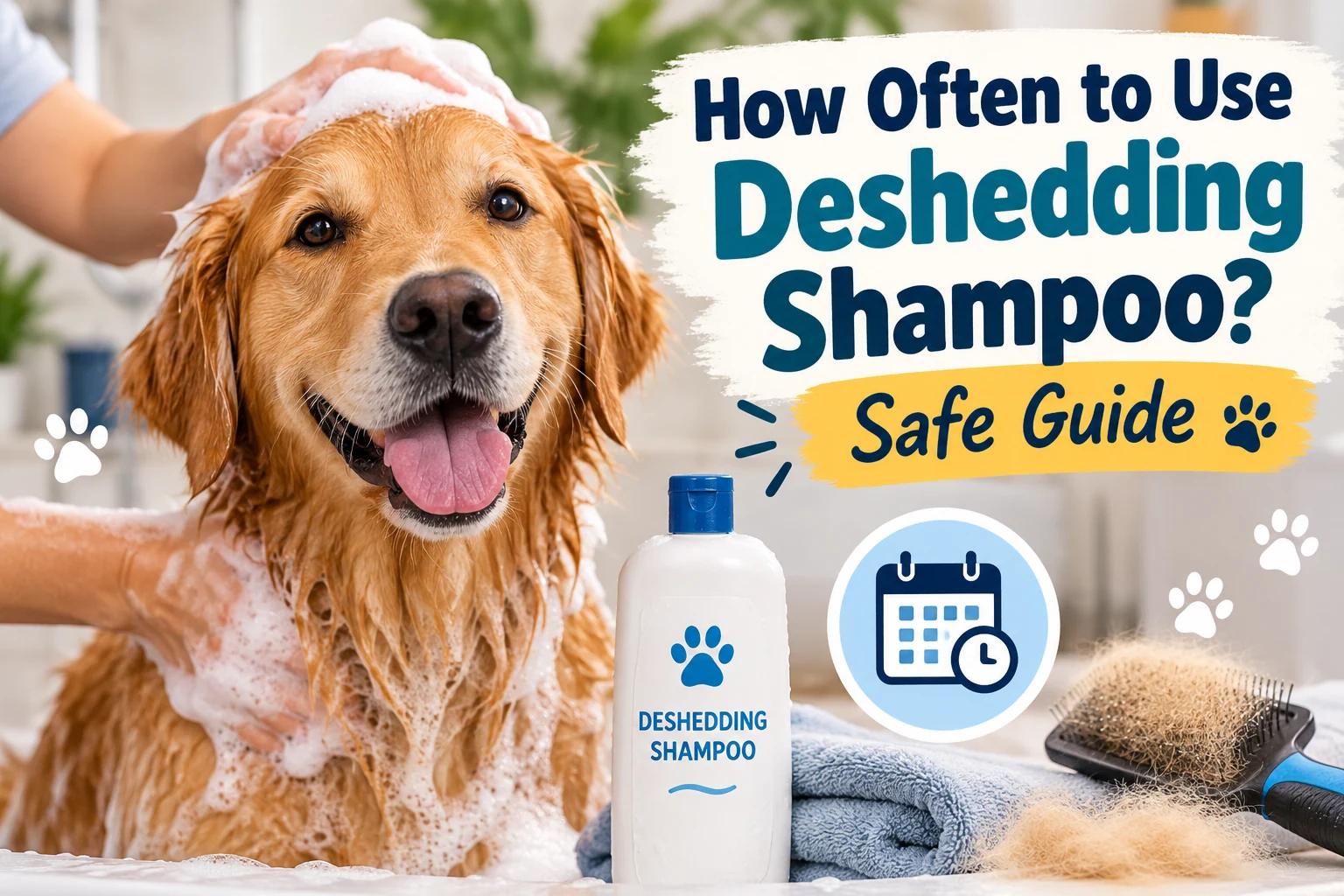
Most healthy dogs can start with deshedding shampoo about once every 4–6 weeks, provided the product label allows it. Some manufacturers, including FURminator, recommend monthly use. Adjust the schedule for your dog’s coat, bathing needs, and skin condition. More frequent washing is not automatically better for shedding.
Finding loose dog hair on your furniture, clothes, and floors can make frequent bathing seem like an obvious solution. However, using deshedding shampoo too often may leave some dogs with dry or irritated skin.
The goal is to remove loose fur while protecting the natural oils that keep your dog’s coat comfortable. That means treating deshedding shampoo as part of a grooming routine rather than using it every time you notice hair falling out.
Here is how to choose a sensible bathing schedule, recognize when it needs adjusting, and manage shedding between washes.
How Often Should You Use Deshedding Shampoo?

For many healthy adult dogs, one deshedding bath approximately every four to six weeks is a reasonable starting point. This is general grooming guidance, not a universal veterinary prescription.
For example, FURminator recommends monthly use of its deShedding Ultra Premium Shampoo. Other formulas may have different directions, so the specific bottle label should guide your decision.
Bath frequency and deshedding-shampoo frequency are not necessarily the same. If your dog gets muddy between scheduled deshedding baths, you may need to clean them without repeating the specialty treatment.
The following table shows practical starting approaches rather than fixed medical recommendations.
| Dog’s situation | Suggested approach |
|---|---|
| Healthy dog with moderate shedding | Consider every 4–6 weeks, following the label. |
| Heavy seasonal shedder | Maintain label-approved bathing and increase gentle brushing. |
| Dog with sensitive or dry skin | Discuss a suitable shampoo and schedule with a veterinarian. |
| Low-shedding coat | Use only if the formula suits the coat and there is a clear need. |
| Dog receiving skin treatment | Follow the veterinary bathing plan. |
These differences matter because a dog’s normal shedding level does not, by itself, determine how often its skin should be exposed to shampoo.
Why Does Deshedding Shampoo Frequency Matter?
Deshedding shampoos are formulated to clean the coat while helping release loose fur during bathing and grooming. Some also contain conditioning ingredients intended to improve how the coat feels and handles.
They do not stop the natural hair-growth cycle or prevent all future shedding. New loose hair will continue to appear between baths.
Washing too frequently can disturb the coat’s natural oils, particularly when the shampoo is not suitable for the dog’s skin or is rinsed inadequately.
The VCA Animal Hospitals grooming guidance explains that bathing needs vary with coat type, lifestyle, age, and health. It also recommends discussing frequent bathing with a veterinarian.
Key Insight
Deshedding shampoo helps manage loose hair during a bath. Regular brushing removes loose fur between baths. These are complementary grooming methods, not interchangeable treatments.
Should You Use Deshedding Shampoo More Often During Shedding Season?
Not necessarily. Increased seasonal shedding is usually a reason to brush more frequently, not automatically to shampoo more frequently.
Dogs with dense double coats, including Golden Retrievers, German Shepherds, and Siberian Huskies, can release substantial amounts of undercoat during seasonal changes.
A bath may help remove accumulated loose fur, but it cannot prevent the remaining undercoat from shedding naturally.
During an active shedding period, start by increasing gentle brushing and monitoring how much loose hair accumulates. Keep deshedding baths within the manufacturer’s recommendations unless your veterinarian advises another approach.
For a more detailed maintenance schedule, see our guide on how often to deshed during shedding season.
What if your dog sheds heavily all year?
Some breeds shed continuously, although the amount may vary. Year-round shedding does not necessarily mean the dog needs year-round intensive bathing.
Instead, maintain a comfortable grooming schedule, check the skin regularly, and look for changes from your dog’s usual shedding pattern.
If shedding suddenly increases or comes with bald patches, redness, or persistent itching, seek veterinary evaluation rather than repeatedly applying deshedding shampoo.
How to Use Deshedding Shampoo Properly
Correct bathing technique is just as important as frequency. A rushed bath may leave loose hair trapped in the coat or shampoo residue against the skin.
- Inspect the coat. Check for irritation, sores, parasites, and tangles before starting. Do not scrub inflamed skin with a new product.
- Brush before bathing. Gently remove loose fur and manageable tangles using a brush appropriate for the coat.
- Wet the coat thoroughly. Use comfortably lukewarm water, working carefully through thick fur without spraying directly into the eyes or ears.
- Apply the shampoo. Follow the product’s dosage and dilution instructions. Work it through the coat gently without scratching the skin.
- Observe the contact time. Leave the shampoo on only for the duration stated on the label. FURminator’s current product directions specify five to ten minutes.
- Rinse completely. Continue rinsing until shampoo is removed from the coat, including dense areas around the chest, legs, and tail.
- Condition if appropriate. Use a compatible dog conditioner according to its own instructions.
- Dry and brush gently. Dry the coat appropriately and remove remaining loose hair with a suitable brush when the coat is ready.
For additional brushing techniques, see our dog brushing guide, which explains how to choose tools and avoid excessive pressure.
Grooming Tip
Take a moment to check the coat near the skin after drying, especially on double-coated dogs. The outer fur may feel dry while the dense undercoat still holds moisture.
How Can You Tell If You’re Using Deshedding Shampoo Too Often?
Dryness, flaking, redness, or increased scratching after bathing can indicate that the product or routine is not agreeing with your dog’s skin.
Watch for these changes:
- New dandruff or unusually flaky skin
- Persistent scratching or rubbing after baths
- Redness or tenderness
- A coat that feels unusually dry or brittle
- Discomfort whenever shampoo is applied
These signs do not prove that shampoo frequency is the only cause. Allergies, parasites, infections, and other skin conditions may produce similar symptoms.
If irritation develops, stop using the product and contact your veterinarian. Do not try to correct abnormal shedding by increasing the frequency of bathing.
Warning
Sudden patchy hair loss, open sores, persistent itching, or inflamed skin requires veterinary attention. Deshedding shampoo is a grooming product, not a treatment for an undiagnosed skin disease.
Does Coat Type Change the Bathing Schedule?
Yes. Coat type affects how much brushing a dog needs, how easily loose fur becomes trapped, and whether deshedding shampoo is especially useful.
Double-coated dogs
Dogs with dense undercoats often benefit from coordinated bathing, conditioning, drying, and brushing. Their coats may release large quantities of loose hair during seasonal changes.
For these dogs, a monthly or approximately four-to-six-week deshedding bath may be practical if the product allows it and the skin remains healthy. Routine undercoat care continues between baths.
Short-haired dogs
Short-haired dogs can shed considerably, but not every short coat benefits from intensive undercoat treatment.
Use a mild, appropriate formula when a bath is necessary. A rubber grooming mitt or soft brush may be sufficient for removing loose surface hair.
Curly and low-shedding dogs
For many Poodles and similar curly-coated dogs, preventing mats and tangles is more important than releasing large amounts of shedding undercoat.
Regular detangling, appropriate shampoo, and coat maintenance may be more useful than a specialized deshedding wash.
Our complete dog deshedding guide explains how coat characteristics affect the choice of grooming method.
What Should You Do Between Deshedding Baths?

Focus on brushing, not repeated shampooing. Consistent grooming helps collect hair that would otherwise accumulate around the house.
Texas A&M’s veterinary school describes brushing three to four times weekly for five to ten minutes as a helpful general shedding-management practice. Your dog’s actual needs may be lighter or heavier.
A practical routine includes:
- Checking the coat regularly for loose hair and tangles.
- Using a gentle brush suited to the coat type.
- Brushing more frequently during heavy seasonal shedding.
- Spot-cleaning dirt when a full bath is unnecessary.
- Keeping grooming sessions comfortable and stopping if the skin becomes irritated.
See our dog brushing frequency guide for a more detailed schedule by coat type.
Is Deshedding Shampoo Better Than Regular Dog Shampoo?
Neither is automatically better. They serve somewhat different grooming purposes.
Deshedding shampoo may be useful when a healthy dog has considerable loose fur and the formula is compatible with its coat.
Regular dog shampoo is often sufficient when the primary goal is cleaning dirt or odor. Dogs with sensitive skin may do better with a gentle, fragrance-free formula recommended by a veterinarian.
The most important choice is not which label promises greater shedding reduction. It is whether the product suits your dog’s actual skin and coat needs.
Related Grooming Product: Deshedding Shampoo
FURminator deShedding Ultra Premium Shampoo
This dog shampoo is designed to support coat cleansing and manage excess loose fur. The manufacturer recommends using it monthly and following the wash with its compatible conditioner for best results.
Check the current product label and confirm that the formula suits your dog’s age and skin condition before use.
As an Amazon Associate, we earn from qualifying purchases.
Frequently Asked Questions
Can I use deshedding shampoo every week?
Do not assume weekly use is appropriate. Some dogs can tolerate frequent bathing with certain products, but many deshedding shampoos recommend less frequent use. Check the label and ask your veterinarian before establishing weekly treatments.
How often should I use FURminator deshedding shampoo?
FURminator’s official directions recommend monthly use of its deShedding Ultra Premium Shampoo. Follow the instructions on your particular bottle, as formulas and labels may change.
Can I use deshedding shampoo on a puppy?
Only use a formula specifically approved for your puppy’s age. FURminator currently labels its referenced shampoo for dogs older than six weeks, but other products may have different restrictions. Ask your veterinarian if your puppy has sensitive skin.
Will deshedding shampoo stop my dog from shedding?
No. It can help remove loose hair during grooming but cannot stop the natural shedding cycle. Regular brushing remains necessary.
Should I use conditioner after deshedding shampoo?
A compatible dog conditioner can help maintain coat softness and manageability. Use one appropriate for your dog’s coat and follow its instructions, particularly if the shampoo manufacturer recommends a matching conditioner.
What if my dog still sheds heavily after a deshedding bath?
Continued shedding can be normal, particularly during seasonal coat changes. Maintain gentle brushing instead of immediately repeating the bath. If shedding becomes unusual or is accompanied by skin changes, arrange a veterinary examination.
Final Thoughts
For many healthy dogs, using deshedding shampoo every four to six weeks is a sensible starting point, while some specific formulas recommend monthly use.
Follow the product label, adjust to your dog’s coat and skin needs, and rely on gentle brushing between baths. The best grooming routine removes loose fur without sacrificing skin comfort.


