Quick Answer
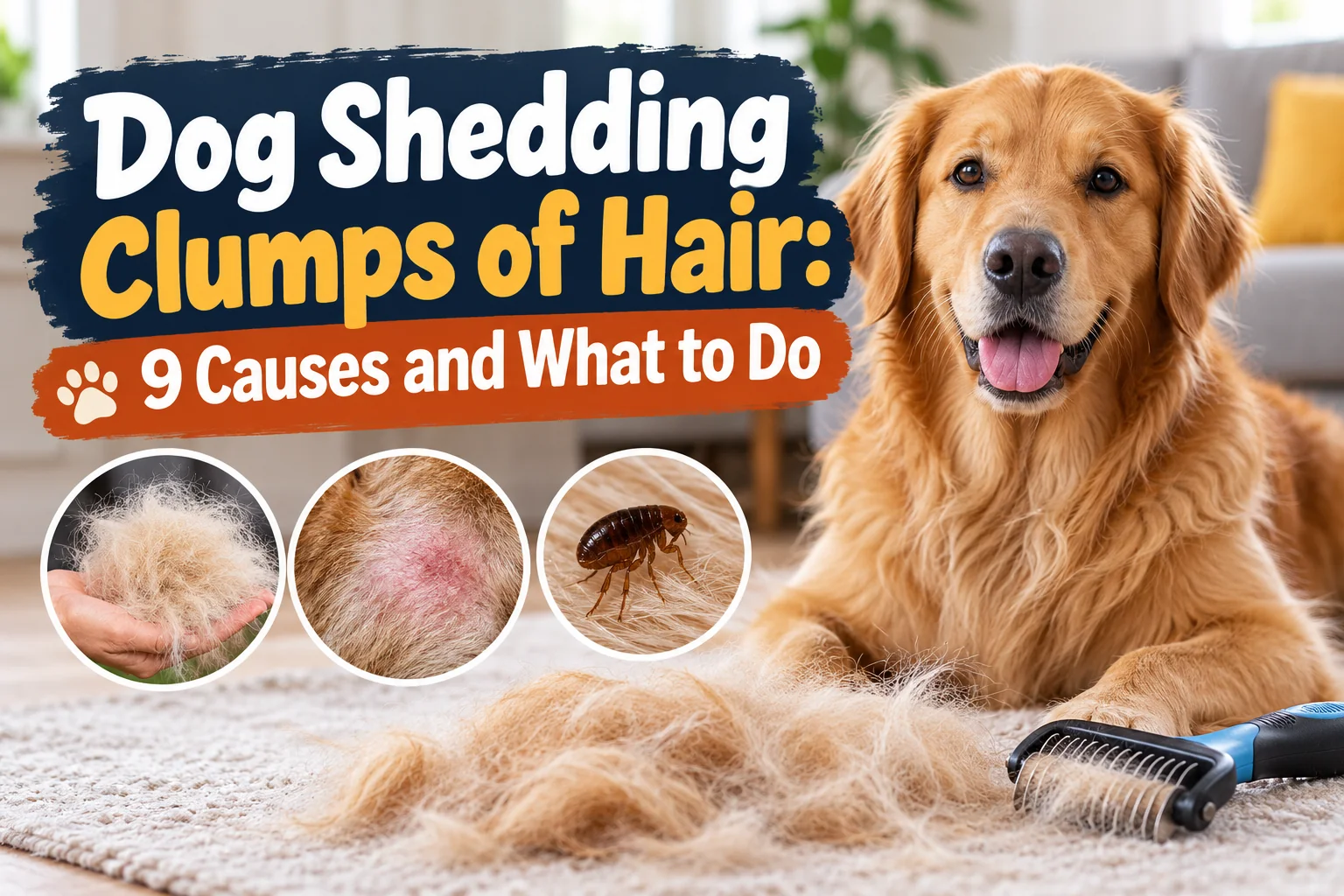
A dog shedding clumps of hair may be experiencing normal seasonal shedding, especially if it has a thick double coat. However, clumps accompanied by bald patches, redness, itching, sores, or changes in behavior can indicate a health problem. Check the skin beneath the loose fur and seek veterinary care if anything looks abnormal. Learn more about how dogs blow their coats.
Five Signs to Check First
- Loose fluffy clumps: Often normal when a double-coated dog sheds its undercoat.
- Visible bald patches: May indicate abnormal hair loss requiring examination.
- Red or itchy skin: Can suggest allergies, parasites, or skin infections.
- Scabs or unusual odor: May indicate inflammation or infection.
- Sudden coat changes: Deserve attention when accompanied by illness or low energy.
What Should You Do?
- Inspect the skin: Part the fur and look for irritated or bare areas.
- Brush gently: Remove loose hair only when the skin appears healthy.
- Contact your veterinarian: Arrange an examination for bald spots, persistent itching, or other concerning symptoms.
Finding handfuls of fur on your dog’s bed can be alarming. Sometimes, it looks as though an entire section of the coat has fallen out overnight.
The important question isn’t simply how much fur you’re finding. It’s whether healthy hair remains underneath and whether your dog shows other symptoms.
I’ll explain nine possible causes, how to spot warning signs, and what you can safely do at home.
What Does It Mean When a Dog Sheds Clumps of Hair?
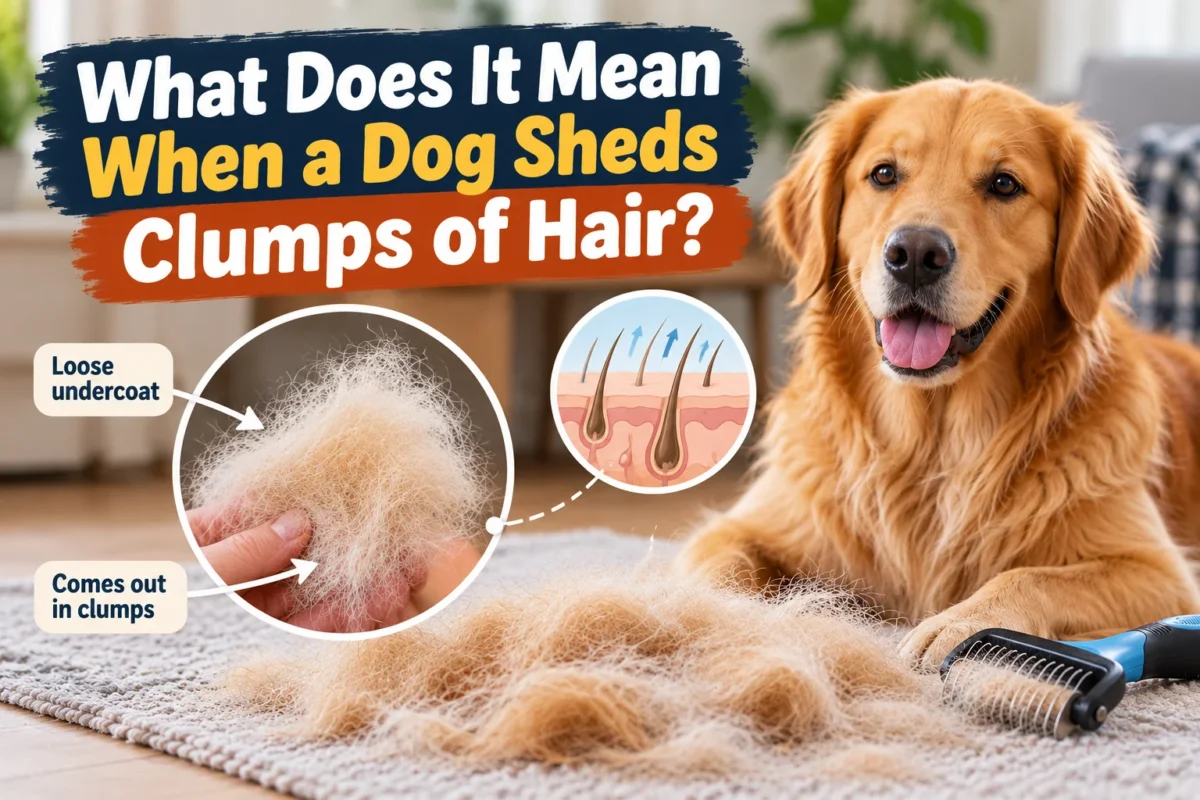
Shedding clumps of hair means several loose hairs are coming away together rather than individually. This can happen naturally when a dog releases its thick undercoat.
Veterinarians use the term alopecia for partial or complete hair loss in areas that normally grow hair. Alopecia differs from ordinary shedding because it can leave visibly thin or bald areas.
According to the Merck Veterinary Manual, shedding without bald patches is more likely to reflect normal coat replacement.
Why Does Dog Fur Come Out in Tufts?
Double-coated dogs have a soft undercoat beneath longer protective hairs. When the undercoat releases, detached hairs can remain trapped until brushing or movement dislodges them.
Common examples include:
- Siberian Huskies: Dense undercoats may release noticeable fluffy tufts.
- German Shepherds: Seasonal shedding can produce large piles of loose hair.
- Golden Retrievers: Longer fur may collect in clumps around the body.
- Alaskan Malamutes: Thick undercoats can shed heavily during coat changes.
- Pembroke Welsh Corgis: Shorter outer hair can conceal substantial undercoat shedding.
The amount of loose fur alone cannot confirm whether shedding is healthy. The skin and remaining coat provide better clues.
What Are the 9 Most Common Causes of Dogs Shedding Hair in Clumps?
Seasonal coat changes are one possible explanation, but skin disease and internal health problems can also cause excessive hair loss.
These nine causes are important to consider before choosing a treatment.
1. Seasonal Shedding and Blowing Coat
Seasonal shedding is a common reason double-coated dogs lose large amounts of fur. Many shed more heavily during spring and fall.
During a coat blow, soft undercoat hairs loosen across broad areas. Owners may notice tufts sticking out around the shoulders, hips, and neck.
- Hair releases easily during gentle brushing.
- The skin underneath looks normal.
- The coat remains reasonably even without obvious bald spots.
- The dog behaves normally and doesn’t seem uncomfortable.
The American Kennel Club’s shedding guidance explains how coat type and seasonal changes influence normal hair loss.
2. Fleas and Flea Allergy Dermatitis
Fleas can cause intense itching, particularly in dogs sensitive to flea saliva. Scratching, licking, and chewing may then remove patches of hair.
Hair loss often appears around the lower back, tail base, and rear thighs.
- Repeated biting or scratching near the tail
- Small scabs or irritated bumps
- Broken hair and thinning fur
- Dark flea dirt or visible fleas, although these may be absent
A dog with flea allergy dermatitis may react even when few fleas are visible. Ask your veterinarian about an appropriate flea-control plan.
3. Environmental or Food Allergies
Allergic skin disease can produce itching and secondary hair loss. Dogs may scratch, lick, or rub themselves until their coats become thin.
Environmental triggers can include pollen, dust mites, and molds. Food allergies are another possibility, although appearance alone cannot identify the trigger.
- Frequent paw licking
- Recurrent ear irritation
- Red skin around the belly or armpits
- Repeated scratching or rubbing
- Recurring skin or ear infections
Don’t begin restrictive homemade diets without veterinary guidance. Proper allergy investigation helps avoid unnecessary diet changes.
4. Mites and Mange
Microscopic mites can damage the skin and contribute to significant hair loss. Some infestations cause severe itching, while others may initially cause little discomfort.
Sarcoptic mange commonly produces itching and inflammation. Demodectic mange may cause localized hair loss and can develop secondary infections.
- Patchy hair loss around the face or limbs
- Crusty or scaly skin
- Increasing scratching
- Inflamed or thickened areas
Different mites require different treatments. A veterinarian may use skin scrapings or other tests to investigate.
5. Bacterial or Fungal Skin Infections
Skin infections can weaken hairs, inflame follicles, and create patches of missing fur. Bacterial infections may occur after another problem damages the skin barrier.
Ringworm is a fungal infection that can produce scaly areas and hair loss. Despite its name, it isn’t caused by a worm.
- Redness, pustules, or crusts
- Unpleasant skin odor
- Round or irregular areas of hair loss
- Scaling, broken hairs, or irritated skin
Some fungal infections, including ringworm, can spread to people. Arrange veterinary assessment and take sensible hygiene precautions.
6. Thyroid and Other Hormonal Disorders
Hormonal conditions can change how hair grows and sheds. Hypothyroidism and Cushing’s syndrome are examples veterinarians may investigate.
Unlike many allergic conditions, hormonal hair loss may occur without significant itching.
- Symmetrical thinning along the body
- Slow hair regrowth after clipping
- Dry or dull coat
- Changes in weight, energy, thirst, or appetite
These signs aren’t specific enough for diagnosis. Your veterinarian may recommend bloodwork and other tests based on the examination.
7. Poor Nutrition or Nutritional Imbalances
Healthy hair growth depends on adequate protein, essential fatty acids, vitamins, and minerals. An incomplete diet can contribute to poor coat quality.
Nutritional problems may develop with unbalanced homemade diets, inadequate food intake, or certain illnesses affecting nutrient absorption.
- Dull or brittle hair
- Dry, flaky skin
- Excessive shedding
- Poor body condition or additional health changes
Choose a complete, balanced diet appropriate for your dog’s life stage. Avoid adding supplements automatically because excess nutrients can also cause problems.
8. Stress, Illness, or Recent Physical Changes
Stress and illness can affect normal hair growth and coat condition. Some dogs experience increased shedding after significant physical stress.
A recent illness, major routine change, or period of poor health may be relevant when discussing sudden shedding with your veterinarian.
However, stress should not become the default explanation for bald patches or inflamed skin.
Review these details:
- Recent illness or fever
- Changes in medication
- Unusual changes in appetite or energy
- Major routine or environmental changes
9. Excessive Grooming, Friction, or Coat Damage
Repeated scratching, licking, tight equipment, and harsh grooming can damage hair shafts. The resulting patches may resemble spontaneous hair loss.
Collars and harnesses can cause localized friction. Excessive brushing with inappropriate tools may also irritate the skin.
- Thinning beneath collars or harness straps
- Broken rather than naturally released hairs
- Redness after grooming
- Localized patches where the dog repeatedly licks
Check equipment fit and stop irritating grooming practices. Persistent licking still warrants investigation because allergies or pain may be involved.
How Can You Tell Normal Shedding From Abnormal Hair Loss?
The most useful distinction is whether loose fur reveals healthy skin or leaves bald, inflamed, or uncomfortable areas.
Use this comparison as an initial guide, not a diagnosis.
| What to Check | More Consistent With Normal Shedding | Potential Warning Sign |
|---|---|---|
| Hair pattern | Loose fur across the coat | Distinct bald or thinning patches |
| Skin appearance | Normal color and texture | Redness, sores, scaling, or crusts |
| Itching | No unusual scratching | Persistent scratching or chewing |
| Timing | Matches the dog’s usual seasonal pattern | Unexpected or progressive loss |
| General health | Normal appetite and behavior | Lethargy, appetite changes, or other illness signs |
Practical observation: A large pile of brushed-out undercoat can look dramatic even when the remaining coat is healthy. A small bald patch with irritated skin can be more concerning.
Always assess the dog’s skin rather than judging the amount of loose hair alone.
What Should You Do When Your Dog Starts Shedding Hair in Clumps?
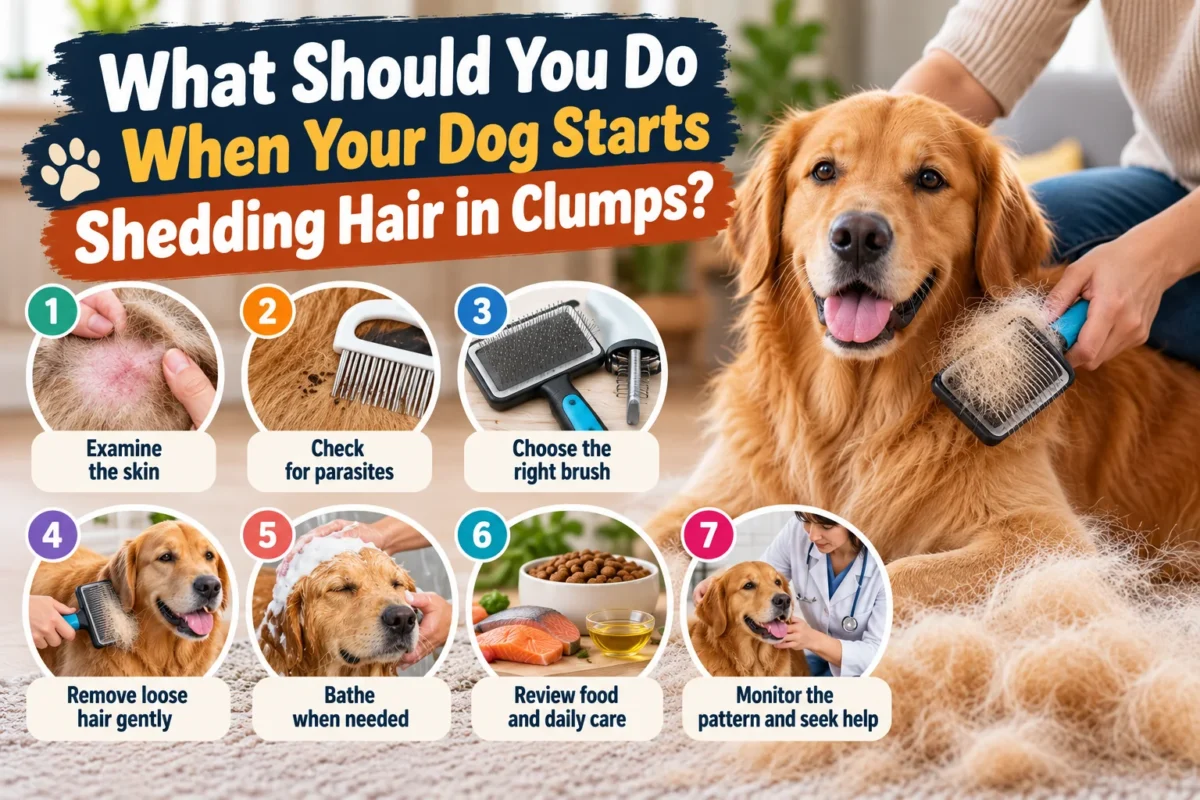
Start by checking the skin, your dog’s comfort, and whether the coat remains evenly covered. Avoid treating every shedding episode with aggressive brushing.
Step 1: Examine the Skin Beneath the Fur
Part the hair gently with your fingers in a well-lit room. Look carefully at the areas where the largest tufts have appeared.
- Check for bare patches or exposed skin.
- Look for redness, scabs, or unusual bumps.
- Notice whether touching the area causes discomfort.
- Photograph suspicious spots to document changes.
Step 2: Check for Parasites
Use a fine flea comb where appropriate, particularly near the tail base. Small dark particles or visible fleas can suggest an infestation.
However, failing to find fleas doesn’t exclude flea allergy. Consult your veterinarian when itching persists.
Step 3: Choose a Brush for Your Dog’s Coat
Match the grooming tool to the coat instead of choosing the most aggressive shedding device.
- Short smooth coats: Try a soft rubber curry brush.
- Dense double coats: Use a suitable undercoat rake and gentle slicker brush.
- Long silky coats: Choose a pin brush and finishing comb.
- Curly coats: Focus on careful detangling and preventing mats.
For more detail, follow this step-by-step double-coat deshedding guide.
Step 4: Remove Loose Hair Without Pulling
Brush in the direction of hair growth using short, light strokes. Work through manageable sections and stop if the dog becomes uncomfortable.
Don’t repeatedly scrape the same area to produce a larger pile of fur. Removing healthy hairs can create irritation and additional coat damage.
Step 5: Bathe Only When Needed
A bath may help loosen detached hair, but frequent shampooing isn’t a treatment for unexplained hair loss.
Use a dog-appropriate shampoo, rinse thoroughly, and dry the coat comfortably. Avoid washing over painful mats or irritated skin without professional advice.
This post-bath deshedding guide explains the grooming sequence for a healthy coat.
Step 6: Review Food and Everyday Care
Check whether your dog receives a complete diet and consistent parasite prevention. Record recent changes that may help your veterinarian identify the cause.
Keep grooming sessions calm, offer breaks, and ensure fresh water is available.
Step 7: Monitor the Pattern and Seek Help
Photograph the same areas under similar lighting if the problem continues. Record changes in scratching, coat coverage, appetite, and behavior.
If bald spots or inflammation develop, schedule veterinary care rather than extending home grooming experiments.
When Should You Worry About a Dog Losing Hair in Clumps?
You should be concerned when clumps leave bare skin, the skin looks unhealthy, or your dog seems sick. These findings may indicate more than ordinary seasonal shedding.
The Merck Veterinary Manual’s guidance on itching identifies parasites, infection, and allergies as important causes to investigate.
Arrange a Veterinary Appointment for These Signs
- Visible bald patches or progressive thinning
- Persistent scratching, biting, or excessive licking
- Redness, swelling, crusts, or recurring dandruff
- Unusual skin odor or discharge
- Slow coat regrowth or symmetrical hair loss
- Changes in weight, appetite, or energy
When Is Immediate Veterinary Care Necessary?
Seek urgent veterinary advice if hair loss accompanies severe pain, rapidly spreading painful skin lesions, marked lethargy, or other serious illness.
Breathing difficulty, collapse, or rapidly worsening systemic symptoms require emergency veterinary care regardless of the shedding.
Hair loss alone is not usually an emergency. The accompanying symptoms determine how quickly your dog needs attention.
How Will a Veterinarian Diagnose Hair Loss in Dogs?
A veterinarian usually starts with the dog’s medical history and a detailed skin examination. Testing depends on the pattern of hair loss and associated symptoms.
| Possible Test | What It May Help Investigate |
|---|---|
| Flea combing and skin examination | Parasites and visible skin changes |
| Skin scraping | Certain mites |
| Skin cytology | Bacterial or yeast overgrowth |
| Fungal testing | Dermatophyte infection such as ringworm |
| Bloodwork | Selected hormonal or systemic disorders |
Some dogs require additional testing or a skin biopsy. Treatment works best when it targets the underlying cause instead of shedding alone.
How Can You Reduce Clumps of Dog Hair Around Your Home?
Regular grooming can collect already-loose fur before it reaches your furniture. It cannot permanently stop the natural hair-growth cycle.
Build a routine around the dog’s coat and tolerance rather than a fixed amount of hair to remove.
- Use gentle brushing: Increase frequency temporarily during heavy seasonal shedding.
- Clean grooming tools: Remove collected fur regularly.
- Wash bedding: Follow fabric care instructions to reduce accumulated loose hair.
- Vacuum often: Focus on rugs, furniture, and places where your dog rests.
- Maintain veterinary care: Keep parasite prevention and health checks appropriate for your dog.
For a manageable weekly approach, follow this dog deshedding routine.
Remember that intensive undercoat removal isn’t necessary every day. Frequent ordinary brushing and occasional targeted deshedding are different activities.
Which Grooming Tools Help With Heavy Dog Shedding?
For dogs with healthy skin and normal coat shedding, the right brush can make cleanup easier. Choose tools based on the coat rather than the size of the hair pile.
Affiliate disclosure: As an Amazon Associate, we may earn from qualifying purchases at no additional cost to you.
🏆 For Thick Undercoats
FURminator Grooming Rake
★★★★☆ 4/5 — Editorial Fit
Its rotating metal teeth help release loose hair from dense coats. I’d prioritize this type of rake for a healthy thick undercoat, using gentle strokes rather than force.
✨ For Medium to Long Coats
KONG Large Self-Cleaning Slicker Brush
★★★★☆ 4/5 — Editorial Fit
Angled metal pins help collect loose hair and manage light tangles. The self-cleaning button is convenient when brushing produces large amounts of fur.
🐾 For Short-Coat Maintenance
FURminator Curry Comb
★★★★☆ 4/5 — Editorial Fit
The rubber teeth provide a gentler option for loosening surface hair. I’d consider a curry comb before an aggressive undercoat tool for many short-coated dogs.
Important: These editorial fit scores are not customer-review ratings or results of hands-on product testing. Avoid using grooming tools over sores, unexplained bald patches, or painful skin.
Frequently Asked Questions About Dogs Shedding Clumps of Hair
Is It Normal for a Dog to Shed Hair in Large Clumps?
Yes, large clumps can be normal during seasonal undercoat shedding, particularly in double-coated breeds. The skin should remain healthy, and obvious bald patches shouldn’t develop. If hair loss creates bare areas or accompanies itching, sores, or unusual behavior, arrange a veterinary examination.
Why Is My Dog Losing Tufts of Fur but Not Bald?
Your dog may be releasing loose undercoat while retaining healthy outer hair. This commonly happens during a seasonal coat blow. Gentle brushing can remove detached tufts, but continue checking for irritation, thinning, or changes in the shedding pattern.
Why Is My Dog Shedding Clumps of Hair in Winter?
Some double-coated dogs experience seasonal coat changes as daylight and environmental conditions shift. Indoor conditions can also influence shedding patterns. Winter hair loss accompanied by bald patches, itching, or poor health should not automatically be considered seasonal shedding.
Can Stress Cause a Dog to Lose Hair in Clumps?
Stress and illness can influence coat quality and shedding, but they are not the only explanations for sudden hair loss. Parasites, infections, allergies, and hormonal conditions can produce similar changes. Seek veterinary advice when shedding is severe, persistent, or accompanied by other symptoms.
Should I Shave My Dog if It Is Shedding in Clumps?
Usually not. Shaving doesn’t stop the natural shedding cycle and may disrupt a double coat’s protective function. Gentle brushing is generally preferable for healthy seasonal shedding. Consult a veterinarian or qualified groomer before clipping a heavily matted coat or treating abnormal hair loss.
Final Thoughts: What Should You Do About Dog Hair Coming Out in Clumps?
A dog shedding clumps of hair isn’t automatically sick. Thick-coated breeds often release substantial amounts of undercoat during normal seasonal changes.
Still, never judge shedding by the size of the fur pile alone. Examine the skin, watch for unusual symptoms, and track changes in the coat.
If your dog’s skin looks healthy, choose gentle, coat-appropriate grooming. If bald patches, inflammation, or illness appear, get veterinary guidance before trying stronger products.
The goal is a healthy dog and comfortable skin—not a completely shed-free home.