
Quick Answer
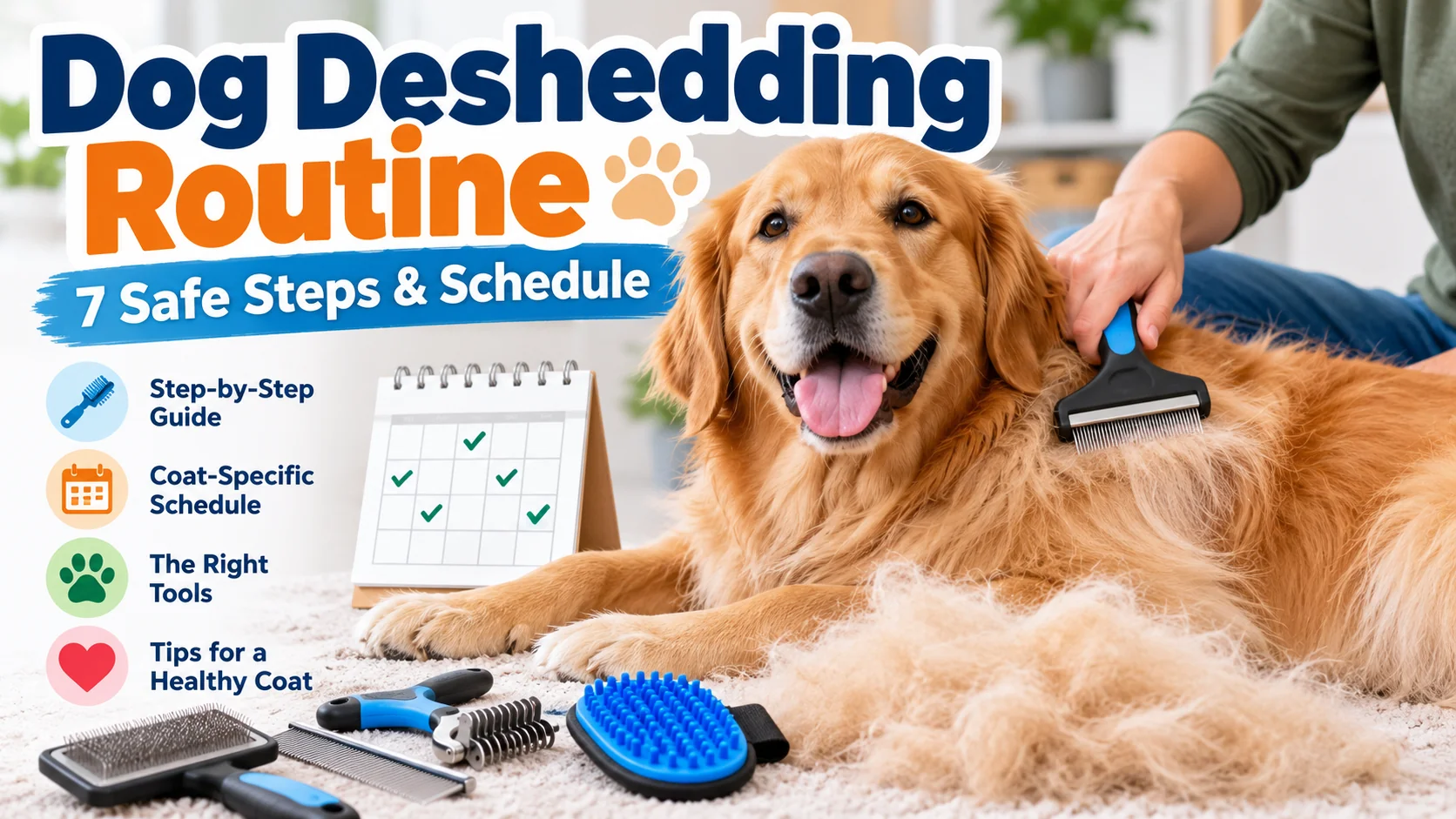
A safe dog deshedding routine combines regular gentle brushing, occasional targeted removal of loose undercoat, skin checks, and baths when needed. Brush according to your dog’s coat type and shedding level, work in the direction of hair growth, and avoid repeated scraping or pulling. Heavy shedders may benefit from frequent ordinary brushing, but intensive deshedding is not necessary every day.
A good dog deshedding routine does more than collect fur before it reaches your furniture. It helps prevent loose undercoat from becoming trapped, makes tangles easier to spot, and gives you regular opportunities to examine your dog’s skin.
The challenge is finding the right balance. Too little grooming can leave loose hair tangled in dense coats, while overusing an aggressive shedding tool can irritate the skin or damage healthy hair.
The following routine explains what to do, how often to do it, and when to adjust your approach for different coats.
What Should a Weekly Dog Deshedding Routine Look Like?
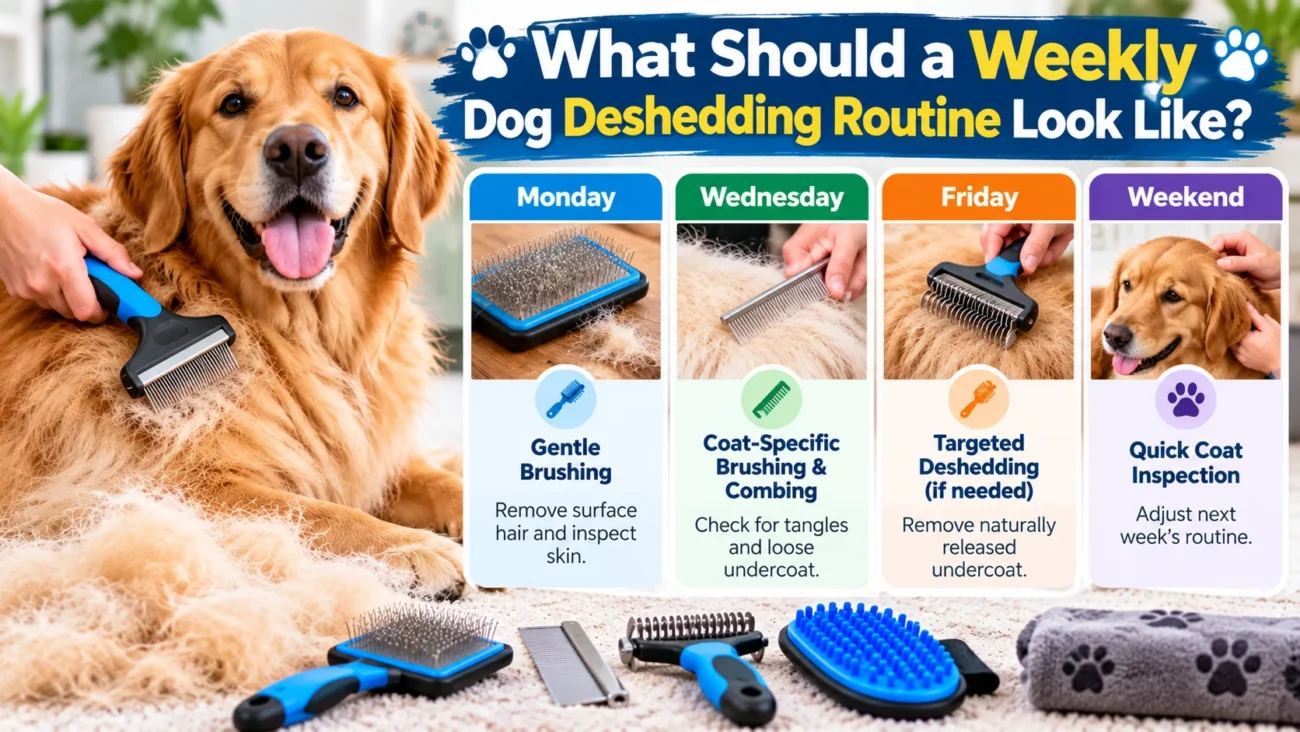
Start with short, comfortable brushing sessions during the week. Add targeted undercoat removal only when loose undercoat is present and your dog tolerates the tool well.
This sample schedule is a starting point, not a universal grooming requirement:
| When | Activity | Purpose |
|---|---|---|
| Monday | Gentle brushing | Remove surface hair and inspect skin |
| Wednesday | Coat-specific brushing and combing | Check for tangles and loose undercoat |
| Friday | Targeted deshedding if needed | Remove naturally released undercoat |
| Weekend | Quick coat inspection | Adjust next week’s routine |
Dogs with long, tangle-prone coats may need daily gentle combing. During seasonal shedding, double-coated dogs may also need extra brushing sessions. If the coat is already tidy and little loose hair remains, skip the intensive session.
The American Animal Hospital Association’s shedding guidance supports regular brushing while emphasizing coat-specific tools and attention to unusual hair loss.
How to Deshed Your Dog Safely in 7 Steps
Follow this process on a dry, comfortable coat unless the particular grooming tool is specifically designed for wet use. Keep each stage gentle and stop if your dog becomes distressed.
Step 1: Check the Skin and Coat
Part the fur in several areas before picking up a shedding tool. Look for redness, scratches, sores, ticks, bald patches, and tight mats.
Pay particular attention behind the ears, beneath the collar, under the front legs, and around the hindquarters. These are common areas for friction and tangles.
Do not run a deshedding blade over irritated or broken skin. If you discover painful mats or unexplained hair loss, address that problem before continuing.
Step 2: Choose a Tool That Matches the Coat
A rubber grooming mitt can lift loose hair from many short coats. A slicker brush and metal comb help maintain longer coats, while a suitable undercoat rake can remove loose hair beneath the outer coat of certain double-coated breeds.
Check the manufacturer’s instructions before using any tool with a cutting or blade-like edge. Not every deshedding tool suits every coat.
Step 3: Loosen Surface Hair First
Begin with an ordinary brush or grooming mitt. Work in small sections using smooth, controlled strokes and remove collected hair from the brush regularly.
For long coats, gently separate the hair so you can work through the full coat without dragging the brush across the skin.
Do not force a brush through knots. Resolve minor tangles carefully with an appropriate comb before attempting deeper undercoat work.
Step 4: Remove Loose Undercoat Gently
For dogs with a shedding undercoat, use a suitable rake or deshedding tool in the direction of hair growth. Make a few gentle passes, lifting the tool away between strokes.
Concentrate on areas holding loose fur rather than repeatedly brushing the same patch. The goal is to collect hair that is already releasing naturally, not to pull out firmly attached hair.
If the tool snags, scratches, or appears to cut healthy guard hairs, stop and reassess the tool and technique.
Step 5: Check the Coat With a Comb
Follow with an appropriate comb or soft brush. For longer coats, use the comb to check whether small tangles remain near the skin.
A comb that moves comfortably through the section without pulling indicates that the area is reasonably free of loose tangles. Never insist on forcing it through a knot.
Step 6: Finish With a Gentle Brush
Use a soft brush to collect remaining loose hair and smooth the outer coat. Examine the skin again for any new redness.
Give your dog a short break if necessary. Grooming does not need to continue until the brush collects absolutely no hair; shedding is an ongoing natural process.
Step 7: Reward Your Dog and Record the Results
End with praise, a small reward, or a favorite relaxing activity. Record the approximate amount of loose fur, any tangles, and how comfortably your dog tolerated the session.
After a few weeks, these observations can help you recognize seasonal changes and decide whether your routine needs more frequent gentle brushing or fewer intensive sessions.
Practical Tip
Start with a few comfortable minutes rather than trying to finish the entire dog at once. Several calm, successful sessions are more useful than one exhausting session that makes your dog avoid brushing.
How Often Should You Deshed a Dog Based on Coat Type?
There is no single ideal deshedding frequency for every dog. Coat length, undercoat density, seasonal shedding, skin sensitivity, and grooming-tool design all matter.
| Coat Type | Routine Starting Point | Suitable Approach |
|---|---|---|
| Short, smooth | About 1–2 times weekly | Soft bristle brush or rubber mitt |
| Medium double coat | Several brushing sessions weekly | Slicker brush, comb, appropriate rake |
| Dense double coat | Frequent brushing during heavy shedding | Gentle line brushing and targeted undercoat removal |
| Long, silky, or curly | Often daily tangle prevention | Coat-appropriate brush and comb; not automatically an undercoat blade |
These are illustrative maintenance starting points, not veterinary-prescribed frequencies. Ordinary brushing may happen more often than intensive deshedding.
For example, a Golden Retriever releasing large amounts of seasonal undercoat may benefit from extra gentle brushing, while a Poodle’s coat usually needs regular detangling rather than repeated use of a shedding blade.
The important distinction is between removing loose hair and preserving the healthy coat that remains.
Should You Deshed Before or After Bathing?
For a dog that needs a bath, begin by checking the coat and gently removing loose tangles before washing. After bathing, rinse thoroughly, dry the coat appropriately, and brush again when the coat and tools are suitable.
Pre-bath brushing removes debris and can prevent existing tangles from tightening or becoming harder to manage when wet.
Post-bath brushing helps collect hair loosened during washing and drying. However, bathing is not required for every deshedding session.
Use dog-specific shampoo and follow your veterinarian’s recommendations if your dog has allergies, skin disease, or a prescribed bathing schedule.
The VCA Animal Hospitals’ grooming guidance explains the importance of removing tangles before bathing and seeking professional assistance with extensive mats.
How Should Your Routine Change During Shedding Season?
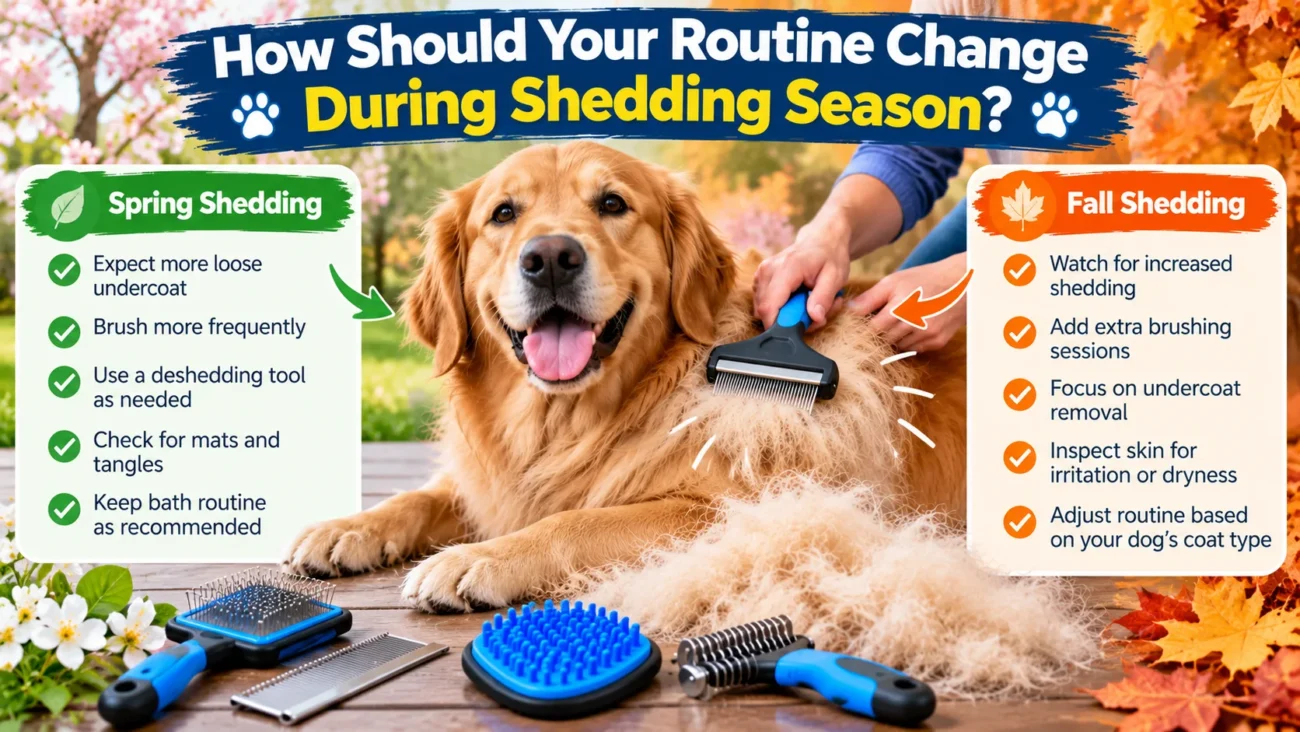
During periods of heavy seasonal shedding, increase the frequency of gentle brushing before increasing the intensity of deshedding tools.
Many double-coated dogs release more undercoat during seasonal transitions. This can produce large clumps of loose hair even when the skin and coat are healthy.
Try dividing grooming into shorter sessions across the week. Work on different body areas as needed and reduce intensive passes once loose hair becomes less abundant.
Do not assume a thick coat needs shaving to solve shedding. Shaving may interfere with the function and appearance of some double coats and does not stop natural hair growth cycles. Discuss coat clipping decisions with a knowledgeable professional.
What Are the Most Common Deshedding Mistakes?
Most avoidable problems come from excessive pressure, unsuitable tools, or attempting to remove too much hair in one session.
- Using a blade on the wrong coat: Some coats require detangling rather than specialized undercoat stripping.
- Brushing too hard: Pressure can irritate skin, particularly over bony areas.
- Repeating strokes excessively: More passes do not automatically create a healthier coat.
- Pulling through mats: Tight knots can be painful and may require professional removal.
- Ignoring stress signals: Moving away, flinching, growling, or repeatedly turning toward the tool means the session should be reassessed.
- Using baths as a substitute for brushing: Washing alone does not maintain a tangle-free coat.
Warning
Do not cut close-fitting mats with household scissors. Dog skin can be pulled into the mat and accidentally injured. Extensive matting, painful tangles, or irritated skin warrant help from a professional groomer or veterinarian.
How Do You Know Whether Your Routine Is Working?
A successful routine leaves the coat manageable and the dog comfortable, rather than promising to eliminate shedding entirely.
Look for these practical signs:
- The coat feels easier to brush and comb without snagging.
- Fewer loose clumps remain trapped beneath the outer coat.
- The skin remains free of new redness or tenderness.
- Your dog tolerates grooming without increasing resistance.
- Loose fur around the home becomes more manageable over time.
If your dog continues shedding normally but the coat is comfortable and well maintained, the routine may already be doing its job. A shedding tool cannot permanently stop a natural hair cycle.
When Is Shedding a Reason to Contact a Veterinarian?
Contact your veterinarian if shedding changes suddenly or involves bald patches, thinning areas, itching, redness, scabs, or skin discomfort.
Normal seasonal shedding usually involves loose hair being released from an otherwise healthy-looking coat. Patchy hair loss, broken or inflamed skin, and persistent scratching are different concerns.
Potential explanations range from parasites and allergies to infections or underlying health conditions. Grooming alone cannot establish the cause, and aggressive brushing may worsen already irritated skin.
Pause intensive deshedding until the skin problem has been assessed.
Related Product
Dog Undercoat Rake
An appropriately sized undercoat rake can help remove naturally loose fur from certain dense double coats. Choose a design suitable for your dog’s coat and skin sensitivity.
As an Amazon Associate, we earn from qualifying purchases.
Frequently Asked Questions
1. Can you deshed a dog every day?
Daily gentle brushing may be appropriate for some dogs, especially those with long or heavily shedding coats. Daily intensive deshedding with a blade-style tool is generally unnecessary and can irritate the skin or damage hair if overused.
2. How long should a dog deshedding session last?
Start with a few comfortable minutes and adjust to your dog’s coat, size, behavior, and the amount of loose fur. Several short sessions may be preferable to one prolonged session. Stop if your dog becomes uncomfortable.
3. Is deshedding painful for dogs?
Correctly performed gentle brushing and removal of loose undercoat should not be painful. Pulling mats, scraping the skin, or using an unsuitable tool can cause discomfort. Stop if your dog flinches or shows signs of pain.
4. Can you use a deshedding tool on a puppy?
Puppies can begin with gentle brushing and positive handling practice. Use soft, age-appropriate grooming tools rather than aggressive undercoat removers unless a qualified groomer or veterinarian recommends a specific approach.
5. Does deshedding stop a dog from shedding?
No. Deshedding removes hair that has already loosened, but it cannot stop the natural hair growth and shedding cycle. Regular coat maintenance can reduce the amount of loose fur that collects around your home.
6. What should you do if your dog hates deshedding?
Begin with very short sessions using a soft brush or grooming mitt. Reward calm behavior, allow breaks, and introduce the tool gradually. If resistance seems related to pain, matting, or skin sensitivity, seek veterinary or professional grooming advice.
Final Thoughts
The most effective dog deshedding routine is consistent, gentle, and tailored to the individual coat. Start with regular brushing, remove loose undercoat only when appropriate, inspect the skin, and adjust during seasonal shedding.
Comfort and coat condition matter more than the amount of fur collected. A simple routine that your dog tolerates is easier to maintain and supports healthier long-term grooming habits.


