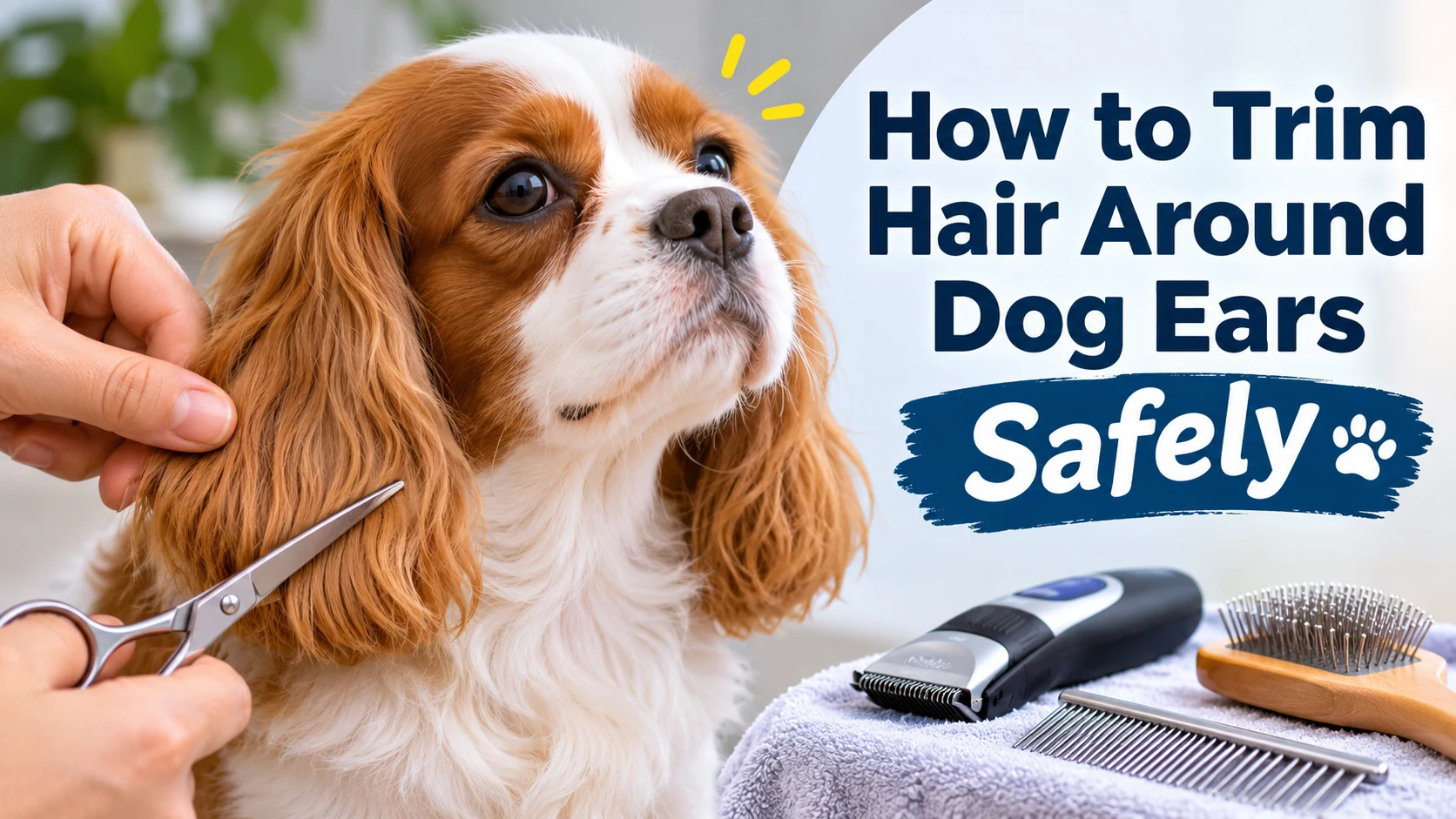
Quick Answer
To trim hair around dog ears safely, brush out loose tangles, identify the ear flap’s edges, and carefully shorten only the visible outer fur. Use an appropriate pet grooming tool, support the ear gently, and keep blades away from skin folds and the ear canal. Stop if your dog moves, becomes uncomfortable, or has irritated ears. Leave tight mats and inner-ear hair removal to a qualified professional.
Hair around a dog’s ears can become long, tangled, or untidy, especially in breeds with feathered or fluffy coats. Trimming that hair can improve the appearance of the ears and make routine coat maintenance easier.
However, ears are among the most delicate areas to groom. The ear flap contains thin skin, folds, and edges that may be hidden under thick fur. A sudden head movement can turn a simple haircut into an injury.
The safest approach is to identify exactly which hair needs trimming, use controlled movements, and avoid cutting close to any skin you cannot clearly see.
What Does Trimming Hair Around a Dog’s Ears Involve?
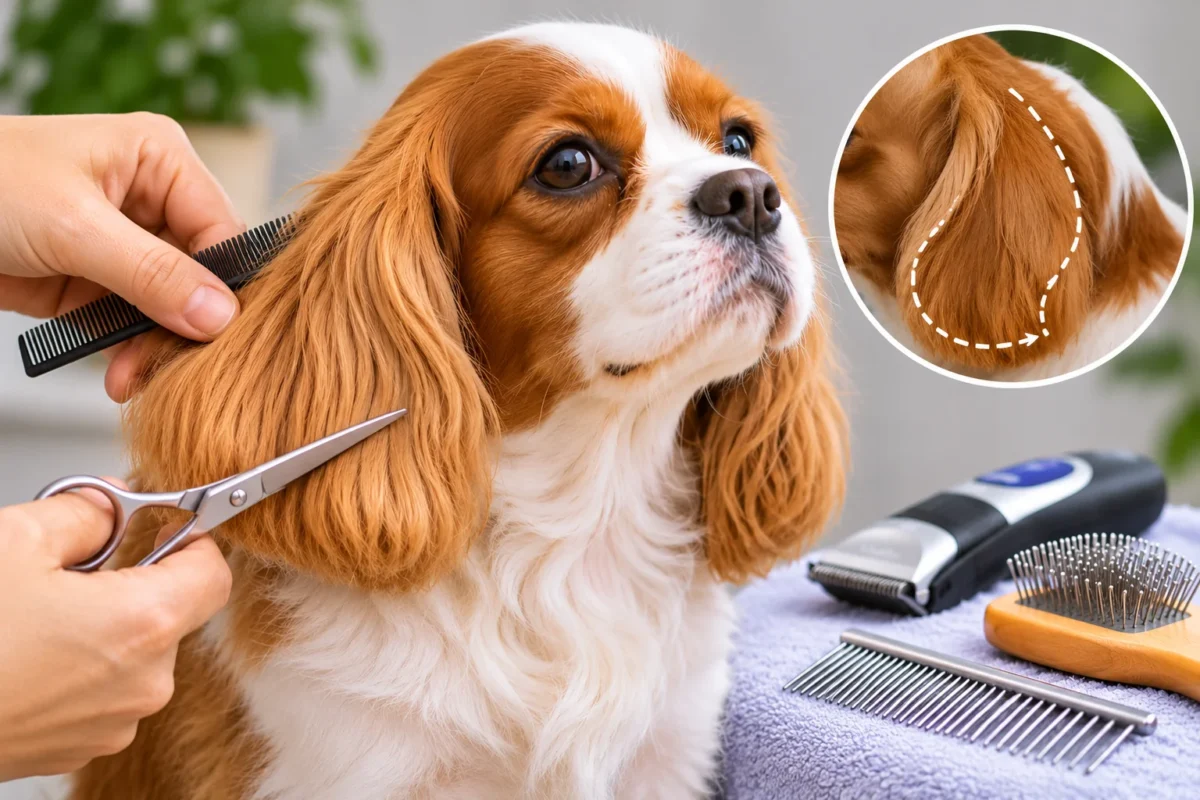
Trimming hair around dog ears means shortening excess fur on the outside of the ear flap, around its visible edges, or where the ear joins the head.
It is different from removing hair inside the ear canal. The outer ear flap, also called the pinna, can be covered with long hair that may require occasional coat maintenance. The ear canal is a sensitive anatomical structure that should not be approached with scissors or grooming clippers at home.
The main grooming areas include:
- Behind the ears: Long fur that may collect tangles where the ear meets the head.
- Outer ear flap: Visible hair growing across the ear’s surface.
- Ear edges: Feathering that extends beyond the ear’s natural outline.
- Near the ear opening: Surface fur that may obstruct visibility, but must not be confused with hair growing inside the canal.
Not every dog needs these areas shortened. Dogs with naturally short coats may need little more than routine ear inspections.
Dogs with long, curly, or heavily feathered coats may benefit from more regular brushing and occasional professional trimming.
What Tools Do You Need to Trim Hair Around Dog Ears?
Choose tools that allow controlled grooming without forcing you to work close to hidden skin.
- Small grooming comb: Separates loose fur and helps identify tangles.
- Soft brush: Removes loose hair without excessive pulling.
- Pet grooming trimmer: Useful for carefully shortening accessible outer fur when you have been shown the correct technique.
- Rounded-tip grooming scissors: Suitable for limited finishing work in experienced hands, but not for cutting through hidden mats or along an ear edge you cannot clearly identify.
- Non-slip grooming surface: Helps the dog maintain a stable position.
- Small treats: Reward cooperation and encourage calm behavior.
- Good lighting: Makes skin folds and the ear’s natural outline easier to distinguish.
Full-size clippers may be difficult to maneuver around small ears. A smaller grooming trimmer can offer better control, but a small blade can still cut skin if used incorrectly.
Before cutting any hair on the ear flap itself, ask a professional groomer or veterinary team member to demonstrate safe handling and tool positioning.
Safety Warning
Never insert scissors, clipper blades, or grooming attachments into a dog’s ear canal. Do not cut through mats when the skin underneath is hidden. Ear flaps can be accidentally cut because their thin edges may be difficult to distinguish from the surrounding hair.
How to Trim Hair Around Dog Ears Safely in 8 Steps
These steps are intended for light maintenance of visible outer fur on a healthy, cooperative dog. They are not instructions for shaving infected ears, removing tight mats, or extracting hair from the ear canal.
Step 1: Choose a Quiet, Well-Lit Grooming Area
Begin in a familiar location where your dog can stand or sit comfortably. Use a non-slip mat on a stable surface and gather your grooming tools before starting.
Allow your dog to investigate the brush and turned-off trimmer. Reward calm behavior with praise or treats.
If your dog is frightened by the equipment, spend several short sessions getting them comfortable with the tools before attempting a haircut.
A helper can offer treats and calmly supervise the dog’s position, but should not restrain a struggling animal so that cutting can continue.
Step 2: Check Both Ears Before Grooming
Gently lift each ear flap and inspect the visible skin and surrounding coat.
Look for redness, swelling, unusual discharge, unpleasant odor, scabs, or discomfort when the area is touched.
If you notice any of these signs, postpone trimming and contact your veterinarian. Grooming an inflamed or painful ear may worsen irritation.
The ASPCA’s dog grooming guidance recommends regular ear checks and identifies symptoms that can indicate ear problems.
Step 3: Gently Brush and Separate the Ear Hair
Use a soft brush or small comb to organize the fur before trimming. Work gently in the direction of hair growth.
Begin with loose surface hair and avoid pulling at tangles close to the skin.
Brushing helps reveal the natural outline of the ear and shows whether the coat contains simple loose tangles or tightly felted mats.
If a knot cannot be loosened without pulling or if the ear skin disappears inside a thick mat, stop. Have a trained groomer assess it instead of trying to cut it out.
Step 4: Identify the Natural Ear Shape
Before removing hair, determine where the actual ear flap begins and ends.
Support the ear gently and locate its edges with your fingers. Do not pull the ear tightly or twist it into an unnatural position.
Pay particular attention to folded skin, the ear tip, and the area where the ear attaches to the head.
Long hair may extend well beyond the real ear edge, making the ear appear larger than it is. Never assume that everything beneath a thick tuft is just fur.
If the edge remains unclear, leave that section untrimmed.
Step 5: Shorten Loose Hair Behind the Ears
Start with accessible, unmatted hair behind the ear rather than working immediately along the delicate ear edge.
Comb the fur away from the skin and identify only the excess length that needs shortening.
For a minor cosmetic trim, an experienced handler may use appropriate grooming scissors on freely separated hair, keeping the cutting action away from the dog’s skin.
For close trimming near the ear attachment, use a professionally demonstrated clipper technique or ask a groomer to perform the work.
Avoid removing too much coat in one pass. A gradual approach makes it easier to preserve the ear’s natural appearance.
Step 6: Carefully Trim the Visible Outer Ear Fur
Only continue if your dog remains relaxed and you are confident handling the tool.
Support the ear flap in your hand and keep the skin flat without stretching it. Identify the ear’s edges before applying a clipper to the outer coat.
Follow the grooming technique demonstrated for your dog’s particular ear shape and coat type. Avoid pressing the blade against the skin, dragging across folds, or running it into the canal opening.
Manufacturer guidance from Wahl’s pet clipping guide describes supporting the ear in the hand while clipping and protecting the skin when tidying ear edges.
For beginners, leaving a little extra hair is preferable to attempting a very short cut.
Step 7: Check the Outline and Make Minimal Adjustments
Pause and let the ear fall naturally against the dog’s head.
Compare both ears and identify any remaining loose feathering that can be safely separated from the skin.
Do not chase perfect symmetry with repeated cutting. Ear shapes and hair growth patterns are not always identical.
Use a comb to lift the hair and inspect the result rather than repeatedly cutting close to the ear flap.
If additional trimming would require working against a hidden edge or skin fold, leave it for a professional.
Step 8: Inspect the Ears and Reward Your Dog
When finished, gently brush away loose clippings from the external coat and inspect the visible skin for irritation.
Do not push hair fragments or cleaning tools into the ear canal. If your dog begins shaking their head repeatedly, scratching, or showing discomfort, contact your veterinarian.
Clean your grooming equipment according to its manufacturer’s instructions and reward your dog for cooperating.
Keeping the experience short and calm is more valuable than completing a complicated haircut in one session.
Grooming Tip
Practice gently lifting the ears, touching the surrounding coat, and brushing for a few seconds before introducing cutting tools. Reward calm cooperation. This helps your dog become familiar with ear handling without requiring a full grooming session.
Should You Use Scissors or Clippers Around Dog Ears?
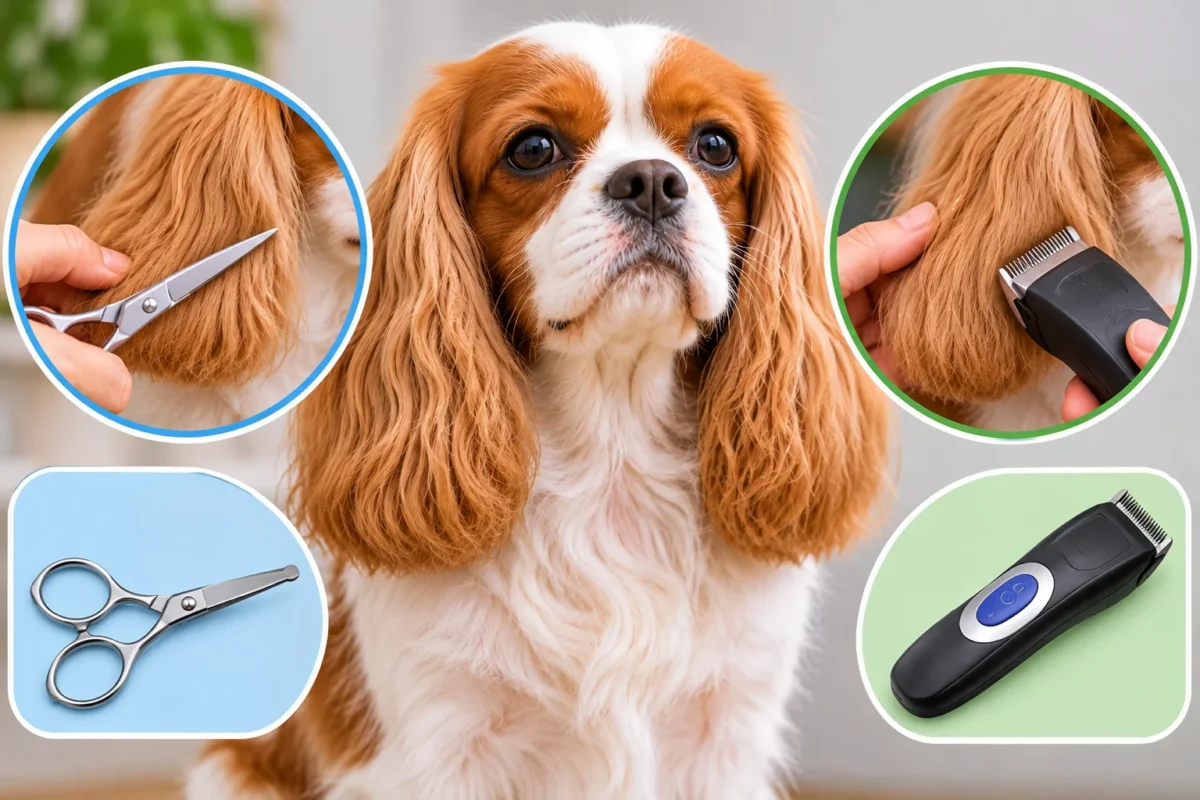
Neither tool is automatically safe. The better option depends on the specific coat, the location being trimmed, your experience, and whether you can clearly see the skin.
| Tool | Potential use | Main limitation |
|---|---|---|
| Rounded-tip grooming scissors | Minor finishing on clearly separated outer hair | Can cut thin ear skin or hidden folds |
| Small pet trimmer | Controlled trimming of accessible outer coat | Blades may catch folds or irritate skin |
| Full-size grooming clipper | Professional coat shaping on suitable ear types | More difficult to control in small, sensitive areas |
A comb and brush are the safest starting tools for routine home maintenance. Cutting tools require more skill, especially where the ear edge is hidden.
Should You Trim or Pluck Hair Inside a Dog’s Ear?
Do not routinely pluck hair from a healthy dog’s ear canal. Hair inside the ear canal is different from the visible fur around the ear flap.
Some dogs naturally have substantial inner-ear hair without experiencing problems. Pulling that hair unnecessarily can irritate the sensitive lining.
According to the Merck Veterinary Manual, routine removal of ear-canal hair that is not causing problems can provoke inflammation. Excess hair may occasionally need professional management when it interferes with ventilation, examination, or treatment.
If hair seems to block the ear opening, or your dog has recurring ear problems, ask your veterinarian whether any removal is appropriate.
Do not insert a trimmer into the canal or attempt to pull out deep hair yourself.
What Common Mistakes Should You Avoid?
The most serious ear-trimming mistakes usually involve hidden skin, sudden movement, excessive cutting, or confusing routine grooming with treatment for an ear condition.
- Cutting without identifying the ear edge: Fur can disguise thin ear tissue, particularly around the tips.
- Using ordinary household scissors: Large blades can be difficult to control around small, delicate ears.
- Cutting tight mats: Skin may be drawn into a mat and injured when the clump is cut.
- Trimming a struggling dog: Sudden movement greatly increases the risk of injury.
- Shaving extremely close: Unnecessary close cutting can irritate sensitive skin.
- Removing canal hair routinely: Plucking or cutting inside the canal is not the same as trimming the outer coat.
- Ignoring signs of disease: Redness, discharge, odor, or pain require veterinary assessment rather than cosmetic grooming.
If your dog resists ear handling, stop and work on gradual handling practice. Do not hold the head forcibly or rush through the remaining trim.
How Should You Handle Matted Hair Behind Dog Ears?
Loose tangles can sometimes be separated with gentle brushing, but tight mats near the ear should be handled by a professional.
The area behind the ears is particularly vulnerable to tangling because the coat moves and rubs against surrounding hair.
Start by assessing whether the hair separates easily without pulling the skin. If it does, carefully comb small sections while supporting the coat near its base.
If the hair forms a hard clump or the skin beneath cannot be identified, stop. Do not slide scissors underneath the mat, even if it appears to be hanging away from the ear.
A groomer may need to remove a severe mat with appropriately selected equipment. If the skin looks inflamed or painful, veterinary assessment is preferable before grooming.
How Often Should You Trim Hair Around Dog Ears?
There is no universal trimming schedule. The appropriate interval depends on coat growth, ear shape, tangling, and the dog’s grooming needs.
Long-haired dogs may need regular brushing around the ears even when no cutting is necessary. Short-haired dogs may rarely need ear-hair trimming at all.
Check the coat during normal brushing sessions and consider a trim when loose feathering becomes difficult to maintain or begins forming tangles.
Avoid trimming merely because a fixed number of weeks has passed. The goal is a manageable, comfortable coat, not permanently short ear hair.
Professional groomers can help determine a suitable maintenance interval for breeds with complicated ear furnishings or distinctive coat styles.
When Should You Visit a Groomer or Veterinarian?
Choose a professional groomer when the task requires close clipper work, precise ear shaping, or removing mats attached near delicate skin.
Veterinary attention is more appropriate when the ear shows signs of pain, inflammation, or disease.
Stop home grooming and seek advice if you notice persistent scratching, head shaking, strong odor, redness, swelling, unusual discharge, or sensitivity when the ear is touched.
A dog with severe pain, balance problems, or a sudden head tilt needs prompt veterinary assessment.
If an accidental cut occurs, stop trimming immediately. Apply gentle pressure with clean gauze to visible bleeding, and contact a veterinarian, especially if the wound is deep, the edges separate, or bleeding does not stop promptly.
A cosmetic haircut cannot treat an ear infection. In those situations, resolving the medical problem must come before the grooming result.
Frequently Asked Questions
1. Can I trim my dog’s ear hair at home?
Yes, minor trimming of clearly visible outer fur may be manageable at home when your dog is cooperative and you have learned the correct technique. Close cutting along the ear edge or skin folds is better handled by a trained groomer.
2. Does trimming ear hair prevent ear infections?
Not necessarily. Trimming excess surface hair may help with grooming and, in selected cases, ventilation, but it does not guarantee infection prevention. Ear infections can have underlying causes that require veterinary diagnosis.
3. Can I trim hair around a puppy’s ears?
Begin with gentle handling and short, positive brushing sessions. If actual cutting is necessary, have a professional demonstrate or perform the technique rather than attempting close trimming on a puppy that moves unpredictably.
4. Should I shave my dog’s ear flaps completely?
Usually not for routine home grooming. Complete shaving may be unnecessary and requires careful handling of thin skin. The appropriate coat length depends on the dog’s breed, condition, and grooming needs.
5. What if my dog keeps moving during an ear trim?
Stop using cutting tools immediately. Reward calm behavior and return to gentle handling practice. If your dog cannot remain comfortable and still, arrange professional grooming rather than attempting to restrain them through the procedure.
6. Can I trim ear hair if my dog has an ear infection?
Postpone cosmetic trimming and contact your veterinarian. Inflamed ears may be painful, and hair removal needed for treatment should be guided by the veterinary team.
Final Thoughts
Learning how to trim hair around dog ears starts with understanding the difference between harmless outer coat maintenance and potentially risky cutting near delicate skin.
Brush first, identify the natural ear outline, shorten only accessible fur, and stop whenever your dog becomes uncomfortable or the skin is difficult to see.
For tight mats, detailed ear shaping, or hair growing inside the ear canal, professional guidance is the safer choice. A comfortable, healthy dog matters more than a perfectly shaped haircut.