
Quick Answer
A round dog feet trim creates a neat, softly curved outline around each paw without exposing the toes excessively. Start with clean, dry, detangled fur. Comb the hair outward, trim only the excess around the outer paw outline using appropriate rounded-tip grooming scissors, and check the shape while your dog stands naturally. Keep cutting tools away from the skin between toes and paw pads. Leave difficult pad trimming and tight mats to a professional.
Fluffy paws can look adorable until the hair grows past the toes, collects dirt, or hides the natural shape of the foot. A round dog feet trim helps restore a tidy appearance while preserving the comfortable, cushioned look many owners prefer.
The goal is not to make every paw perfectly spherical. A well-shaped foot should follow the dog’s natural anatomy, blend into the lower leg, and look balanced when the dog stands and walks.
For beginners, the safest approach is conservative trimming. Removing a little hair at a time allows you to evaluate the result without cutting unnecessarily close to sensitive skin.
What Is a Round Dog Feet Trim?
A round dog feet trim is a grooming technique that shapes the coat around a dog’s paws into a soft, curved silhouette. Instead of allowing long hair to extend unevenly beyond the toes, the groomer removes protruding ends and creates a balanced outline.
This technique is particularly useful for dogs with curly, wavy, or long hair around their feet. Poodles, Bichon Frises, Shih Tzus, Maltese, and many doodle-type dogs can have coats that accommodate this rounded appearance.
However, the finished style depends on coat texture, natural paw proportions, and the length of surrounding leg hair. A silky coat may create a softer outline, while dense curls may hold a fuller shape.
Round feet are different from clean feet. A clean-feet grooming style removes much of the hair around the toes, making the individual toes more visible. A rounded trim preserves a fuller coat while tidying its edges.
What Tools Do You Need to Trim Round Dog Feet?
You need a few suitable grooming tools, good lighting, and secure footing. Complicated equipment is unnecessary for a basic outer-paw tidy.
- Rounded-tip grooming scissors: Suitable for cautiously trimming visible hair around the outside of the foot when the dog remains still and the skin is clearly separated from the cutting area.
- Metal grooming comb: Helps lift the coat and reveal uneven lengths.
- Soft slicker brush: Useful for gently separating loose tangles in appropriate coat types.
- Non-slip mat: Provides stable footing during handling.
- Small paw trimmer: An optional tool for experienced handlers who have been shown safe pad-trimming technique.
- Treats: Reinforce comfortable, cooperative paw handling.
- Good lighting: Makes it easier to identify the coat edge and avoid accidental contact with skin.
A beginner should focus on the visible hair outside the foot. Trimming inside the pad spaces requires additional skill because loose skin and sensitive tissue can be injured.
Safety Warning
Never insert scissors between paw pads or try to cut tight mats away from the skin. A sudden movement can cause serious injury. The Zoetis paw-care guidance recommends clippers rather than scissors for trimming hair between the pads and advises professional help when needed.
How Do You Trim Round Dog Feet Step by Step?
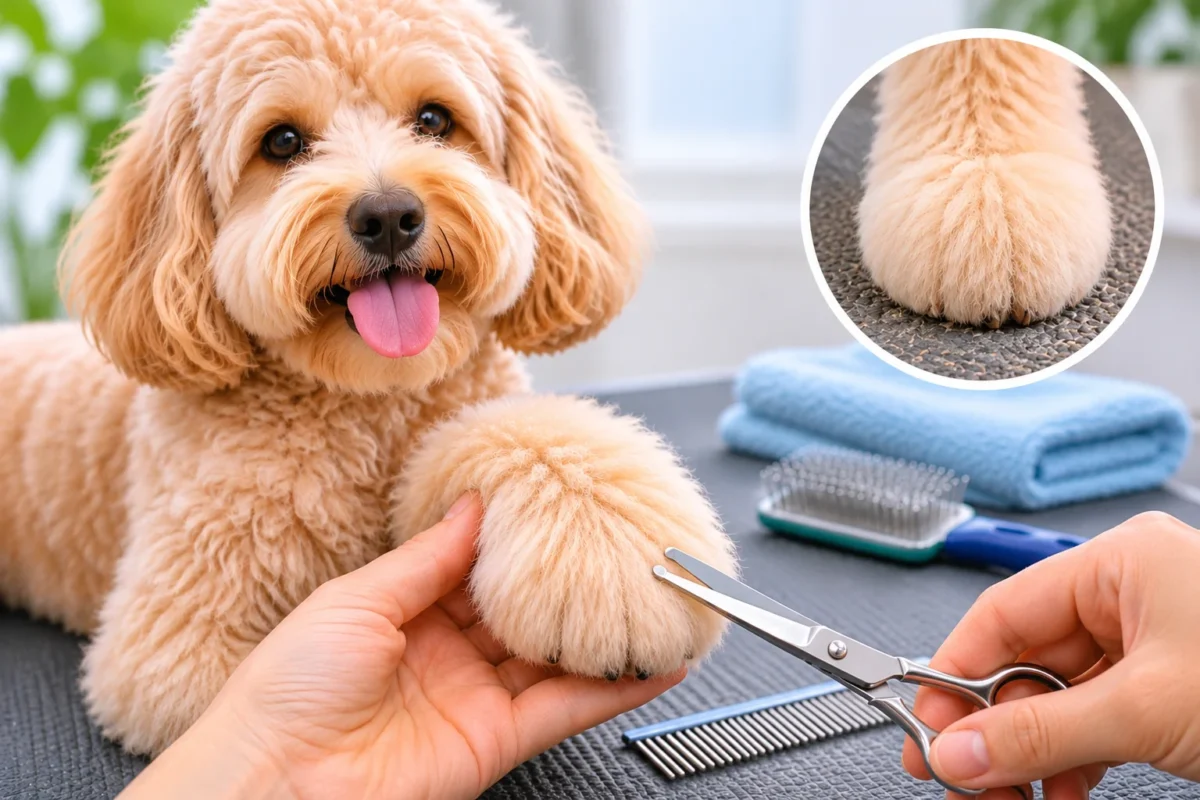
Follow these eight steps to create a rounded appearance while prioritizing your dog’s comfort. If your dog struggles, stop before using cutting tools.
Step 1: Clean and Dry the Paws
Begin with clean, completely dry paw hair. Remove loose dirt using a damp cloth or an appropriate washing routine, then dry thoroughly.
Wet hair tends to gather into clumps and makes it harder to judge the finished outline. Dry, separated hair allows more controlled trimming.
If your dog needs a complete wash, follow a safe dog bathing and drying routine before shaping the feet.
Step 2: Inspect Each Paw Carefully
Look for irritated skin, trapped debris, swollen areas, cracked pads, or painful tangles. Gently separate the toes only as much as your dog comfortably allows.
If the paw looks painful or inflamed, postpone cosmetic trimming. A veterinarian should assess persistent swelling, wounds, discharge, or unexplained discomfort.
This inspection also helps distinguish ordinary overgrown coat from a mat that needs professional removal.
Step 3: Brush and Comb the Paw Hair
Gently brush the fur downward and outward, following the coat’s natural direction. Work through easy tangles without pulling against the skin.
Next, use a comb to lift the longer strands around the front and sides of the paw.
The objective is to reveal the hair extending beyond the desired outline. Never force a comb through tight mats.
Step 4: Position the Dog Comfortably
Place your dog on a stable, non-slip surface. Whenever possible, evaluate the paw while it rests naturally on the ground.
Use gentle support rather than pulling the leg sideways or bending the wrist into an uncomfortable position.
If your dog repeatedly withdraws the paw, return to reward-based handling practice instead of restraining the foot for a haircut.
Step 5: Establish the Outer Paw Outline
Look at the foot from the front and both sides. Identify hair that extends beyond the natural outer curve, especially along the front toes.
With suitable rounded-tip grooming scissors, carefully trim small amounts of clearly visible, free-hanging hair outside the paw. Keep the cutting path away from toes and skin.
Make several conservative adjustments rather than removing a large section in one cut. If you cannot clearly distinguish fur from skin, do not cut.
Step 6: Shape the Rounded Front and Sides
Comb the hair outward again. Check whether the front edge appears curved rather than pointed or flattened.
Remove isolated long ends around the visible perimeter, following the natural shape of the paw. Avoid reaching between toes to create artificial separation.
A full, soft-looking foot is usually easier to achieve by preserving adequate hair length than by cutting everything extremely short.
Step 7: Blend the Paw Into the Lower Leg
Examine the transition from the foot to the lower leg. A rounded paw should look connected to the surrounding coat rather than appearing as a separate ball.
Comb downward and lightly tidy any obvious long strands that disrupt the outline. Leave enough length to preserve a smooth transition.
Dogs with fuller leg styles may need slightly fuller feet, while shorter leg trims often suit a more compact outline.
Step 8: Check the Shape While Your Dog Stands
Allow your dog to stand naturally and inspect the paws from the front, side, and slightly above.
Look for protruding tufts, uneven edges, or hair dragging beneath the foot. Comb once more before deciding whether any additional trimming is necessary.
Compare the overall appearance without forcing all four paws to look identical. Natural foot shape and coat growth can differ.
Finish with praise or a reward. A comfortable dog and a slightly imperfect trim are preferable to pushing through a stressful grooming session.
Grooming Tip
Comb, inspect, trim a small amount, and inspect again. This repeat-check method helps prevent overtrimming and makes it easier to preserve a natural rounded silhouette.
Should You Trim Hair Between the Paw Pads?
Excessive hair around the pads may need attention when it becomes matted, collects debris, or extends across the contact surfaces.
However, trimming between the pads is a different task from shaping the outside of rounded feet. The spaces between pads contain delicate skin and can be difficult to see clearly.
The ASPCA’s dog grooming guidance recommends inspecting paws for injuries and debris and keeping excessive hair around the pads managed to help prevent matting.
For home grooming, avoid digging into pad pockets or attempting to expose every patch of skin. Ask a professional groomer to demonstrate safe technique if this area requires trimming.
Rounded feet can remain attractive without aggressively removing the hair between the toes.
How Do You Choose the Right Round Feet Shape?
The best outline follows the dog’s natural paw and complements the surrounding coat. A perfectly circular appearance is neither necessary nor appropriate for every breed.
| Coat or Style | Suggested Appearance |
|---|---|
| Dense curly coat | Soft, full rounded outline |
| Fine silky coat | Lightly rounded, natural finish |
| Shorter leg haircut | Compact and proportionate |
| Fluffy teddy-bear style | Fuller paws blended into legs |
These are appearance guidelines rather than fixed breed requirements. Coat density, grooming tolerance, and everyday comfort should determine how much fur remains.
What Common Round Dog Feet Trimming Mistakes Should You Avoid?
Most problems occur when a groomer removes too much hair, loses sight of the skin, or continues after the dog becomes uncomfortable.
- Cutting too close to the toes: This can expose sensitive skin and leave an uneven appearance.
- Using household scissors: Unsuitable blades and pointed tips increase the risk of accidental injury.
- Trimming a moving paw: Even a small sudden movement can change where the blades contact.
- Cutting tight mats: Mats can conceal folded skin and should not be removed blindly.
- Ignoring coat direction: Hair may look even when brushed upward but uneven when it falls naturally.
- Over-rounding the outline: Trying to make a geometrically perfect circle can create an unnatural shape.
- Ignoring painful paws: Cosmetic trimming should not continue when skin problems or discomfort are present.
If the first paw looks slightly uneven, stop and reassess before removing more hair. You can tidy a longer outline later, but you cannot immediately restore hair that has been cut too short.
How Often Should You Maintain Rounded Dog Feet?
Check the feet during regular grooming and tidy the outline when the hair begins obscuring the paw shape, dragging on the floor, or collecting debris.
The exact interval varies according to coat growth, haircut length, activity, and individual grooming needs. Dogs with rapidly growing curly coats may need attention sooner than dogs with naturally shorter paw hair.
Between trims, gently comb the feet, inspect the pads, and remove loose surface dirt. Address small tangles before they develop into painful mats.
Nail maintenance is separate from coat shaping. If nails are excessively long or affect walking, seek appropriate nail-care guidance rather than trying to correct the problem through fur trimming.
When Should You Ask a Professional Groomer or Veterinarian for Help?
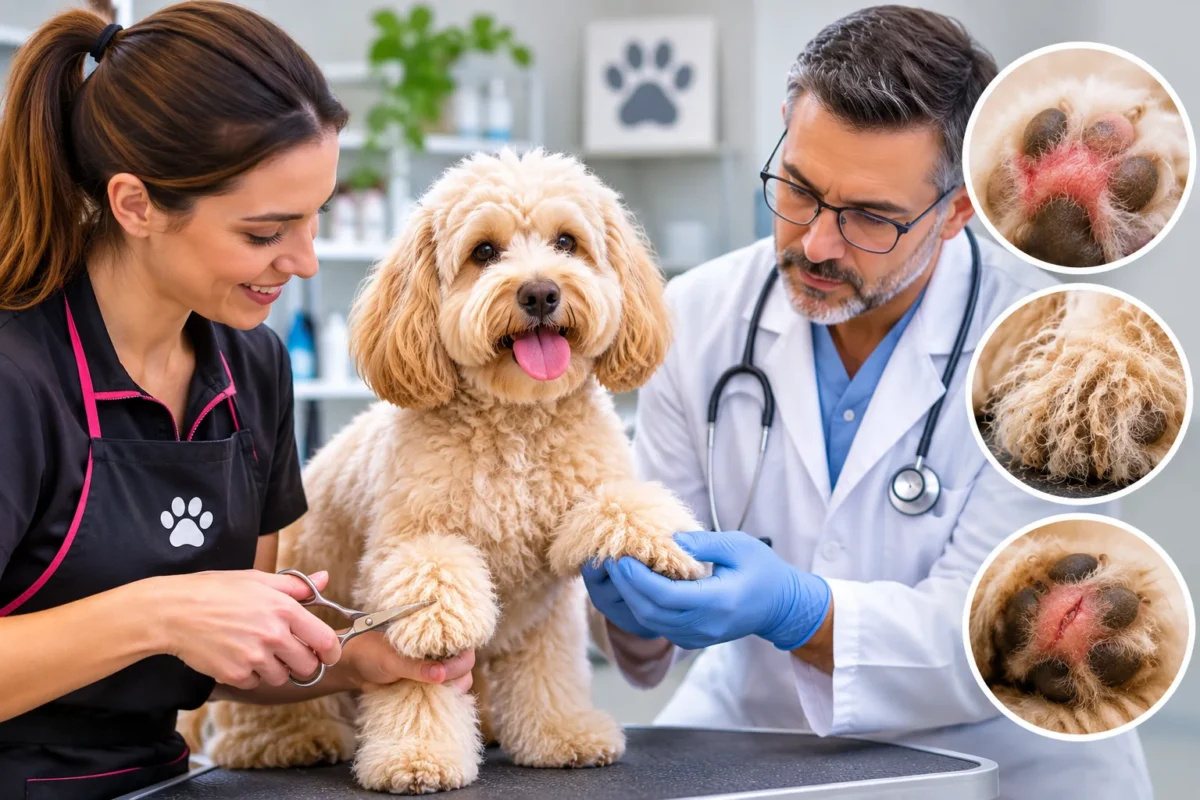
Professional grooming is the safer option when mats sit against the skin, the dog cannot remain calm, or the paw-pad area needs work beyond your handling experience.
Contact your veterinarian when you notice persistent redness, swelling, bleeding, discharge, limping, or significant pain. These problems require evaluation rather than a cosmetic haircut.
A professional groomer can also help establish a rounded style suited to the dog’s coat. Once the initial shape is created safely, light maintenance may become easier at home.
For anxious dogs, gradual paw-handling practice can be more valuable than immediately completing a trim. Short, reward-based sessions help develop cooperation without forcing a stressful procedure.
Related Grooming Tool: Rounded-Tip Dog Grooming Scissors
Suitable grooming scissors can help with carefully tidying visible hair around the outer paw outline. Choose an appropriate size and use them only when your dog remains still and the cutting area is clearly visible. Do not use them between the paw pads or to remove tight mats.
As an Amazon Associate, we earn from qualifying purchases. Product availability and listings may change.
Frequently Asked Questions
Can beginners trim rounded dog feet at home?
Beginners can learn basic outer-paw tidying with appropriate tools and a calm, cooperative dog. Start with very small adjustments and avoid sensitive areas. Ask a groomer to demonstrate the technique if you are unfamiliar with safe scissor handling.
Is a round feet trim suitable for puppies?
Yes, gentle grooming preparation may be suitable for puppies that are comfortable with paw handling. Begin with touching, combing, and rewarding calm behavior. Avoid attempting a full scissor trim if the puppy moves unpredictably.
Do round dog feet need to be the same size?
No. The goal is a visually balanced appearance rather than identical dimensions. Differences in paw anatomy, coat density, and hair growth can affect the finished shape.
Can you use regular scissors for dog feet?
Household scissors are not recommended for paw grooming. Appropriate dog grooming tools provide better control, although even rounded-tip grooming scissors can cause injury if used too close to skin or on a moving dog.
What if one dog paw looks uneven after trimming?
Comb the coat into its natural position and inspect the outline while the dog stands. Tidy only clearly protruding hair. Avoid repeatedly shortening the entire paw to compensate for a small uneven section.
Should you trim round dog feet before or after bathing?
Final shaping is generally easier on clean, completely dry, detangled fur because the hair’s natural outline is easier to evaluate. Address any painful matting before bathing, preferably with professional help when mats are tight.
Final Thoughts
A successful round dog feet trim combines careful shaping with safe, comfortable handling. Clean and comb the coat first, follow the natural paw outline, and remove only visible excess hair.
Keep the sensitive pad spaces protected, avoid trimming tight mats with scissors, and stop whenever your dog becomes distressed. The best result is a neat, balanced paw that remains comfortable during everyday movement.


